
lovethailand home >Northeastern Travel Attractions >Bueng Kan Travel Attractions >Seka >SeKa > Wat Seka Chetiyaram
TL;DR: Wat Seka Chetiyaram is located at Seka Subdistrict, Seka District, Bueng Kan Province, open Daily, hours 08.30 – 16.30.
Wat Seka Chetiyaram
Open Days: Daily
Opening Hours: 08.30 – 16.30
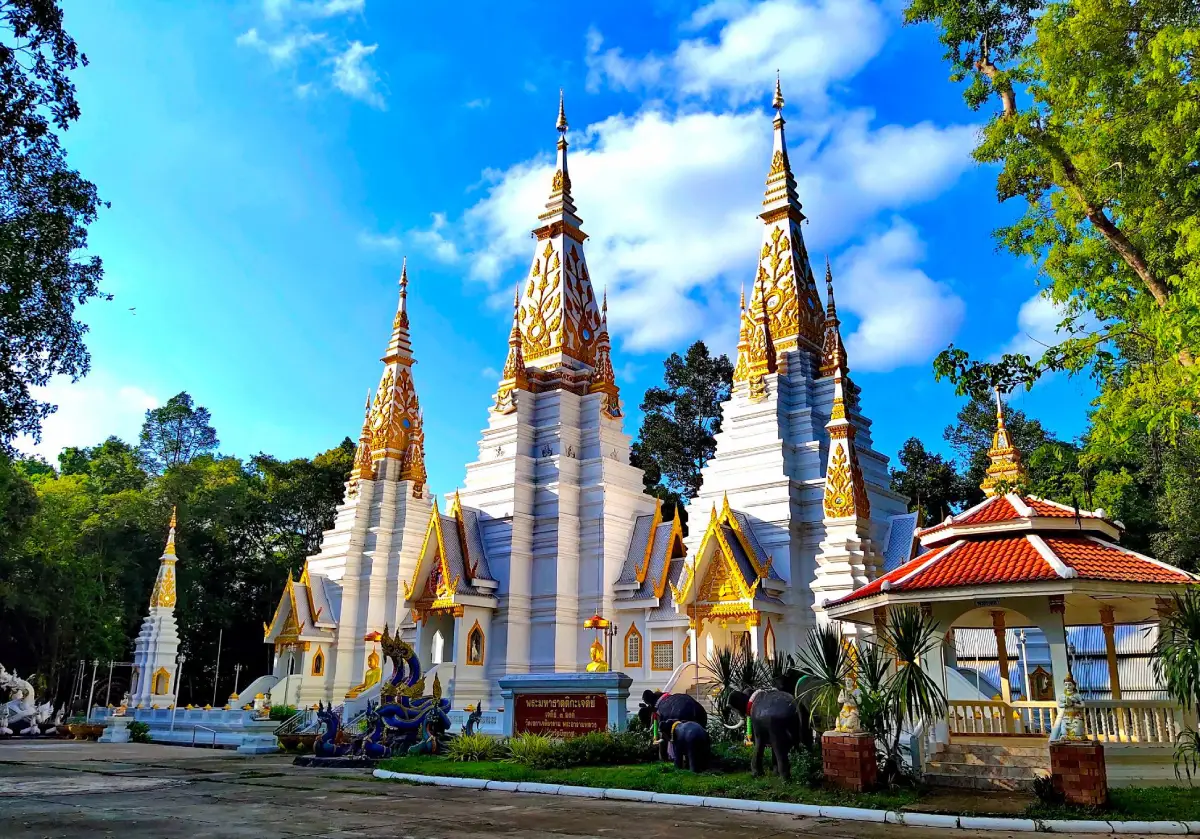
Wat Seka Chetiyaram, Phra Aram Luang, is an important royal Buddhist temple in Seka Subdistrict, Seka District, Bueng Kan Province. It is one of the key religious landmarks of Bueng Kan and a meaningful cultural stop for travelers exploring the Seka, Bueng Khong Long, and Phu Tok routes. The temple is known for its status as a royal temple, the elegant white Phra Maha That Tika Chedi or three-chedi group, Phra Chao Mun Mueang Seka enshrined in the ordination hall, Phra That Katanyu containing relics of the Buddha, the Maharacha Ordination Hall, and the Sala Maharachini. It is suitable for worship, merit-making, cultural photography, learning local Buddhist history, and understanding the spiritual identity of Seka District.
Wat Seka Chetiyaram has a distinctive atmosphere compared with many ordinary local temples. It combines royal-temple architecture, community faith, forest-like surroundings, and several important sacred structures within one spacious compound. Visitors can walk through the temple grounds in a calm rhythm, moving from the ordination hall to the chedis, the royal commemorative hall, and the wider ceremony area. This makes the temple not only a place for worship, but also a cultural site where visitors can see how Buddhism continues to shape community life in northeastern Thailand.
The temple was formerly known as Wat Santimahawan before becoming Wat Ban Seka and later Wat Seka Chetiyaram. Its present name reflects its role as a temple of chedis, merit, and sacred remembrance. The founding story is closely connected with Phra Ajahn Prasong Phuripanyo, widely known as Luang Pu Thepa, who began developing the temple from a quiet forested area into a permanent Buddhist site. This origin gives the temple a strong foundation as both a community temple and a place of practice before it developed into a royal temple of Bueng Kan Province.
The temple’s history became clearer in 1974 when Phra Ajahn Prasong Phuripanyo stayed in the forest area known locally as Pa Dong Rai. In 1975, he decided to establish the temple and remain there for the rains retreat. The temple was first called Wat Santimahawan. It later received permission to be established as a temple in 1980 and was named Wat Ban Seka in 1982 to preserve its connection with the local community. In 1984, the temple received its Wisungkhamsima, giving it proper legal status for Buddhist ordination functions. In 2009, the Sangha Supreme Council approved the change of name to Wat Seka Chetiyaram.
The change of name was more than an administrative update. It reflected the temple’s development from a local forest temple into a religious center with significant chedis and sacred structures. The temple was later elevated as a royal temple of Bueng Kan Province, which strengthened its role in major Buddhist ceremonies, provincial religious events, royal merit-making activities, and community gatherings. Today, it remains a center of Buddhist faith and unity for the people of Seka and Bueng Kan.
One of the most important sacred objects at Wat Seka Chetiyaram is Phra Chao Mun Mueang Seka, a revered Buddha image enshrined inside the ordination hall. Many local people and visitors come to pay respect to this image for blessings related to life, work, family, protection, and peace of mind. The name “Mun Mueang” carries the meaning of local foundation and stability, making the image a spiritual symbol of Seka’s identity.
The ordination hall is a central religious space of the temple. It is associated with the name Ubosot Maharacha, or Maharacha Ordination Hall, and is important both for Sangha functions and for visitors who come to worship. The hall reflects devotion, community support, and gratitude to the nation and the monarchy. Visitors should enter this area with respectful conduct, as it is one of the most sacred spaces in the temple.
Another important structure is the Sala Chaloem Phrakiat 72 Phansa Borom Rachininat, often referred to as Sala Maharachini. This hall was built as a royal merit-making structure and serves as a space for Buddhist activities, ceremonies, community events, and religious gatherings. Together, the Maharacha Ordination Hall and Sala Maharachini give the temple a distinctive symbolic identity, connecting Buddhism, community merit, and gratitude to the Thai monarchy.
Phra That Katanyu is one of the most meaningful sacred structures in the temple because it enshrines relics of the Buddha. Its creation is associated with the Kathin Katanyu merit-making event in 2007, during the period of His Majesty King Bhumibol Adulyadej’s 80th birthday. Luang Pu Thepa and his disciples joined together to build the chedi as an act of gratitude and royal merit-making. The name Katanyu means gratitude, and the chedi represents gratitude to the Buddha, teachers, the nation, and the monarchy.
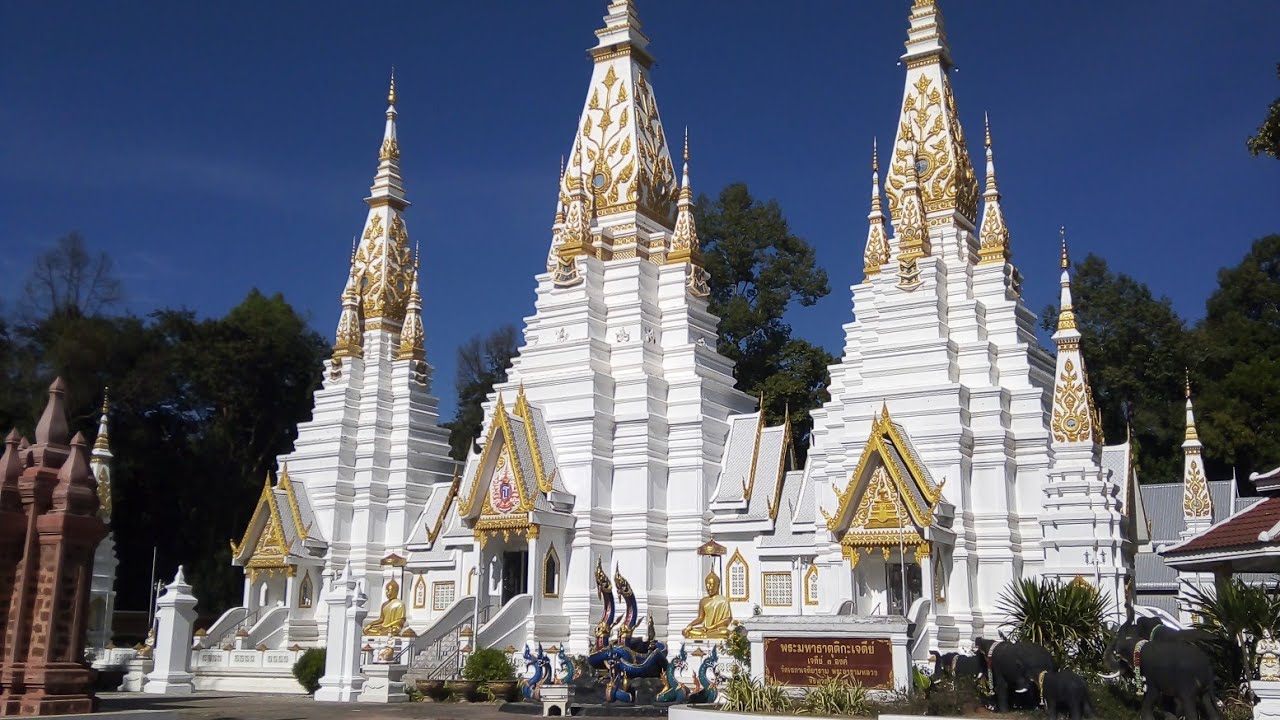
The Phra Maha That Tika Chedi, often recognized as the group of three white chedis, is one of the temple’s most memorable visual highlights. The white chedis decorated with gold details create an elegant and dignified appearance. They are especially beautiful in the morning or late afternoon light. For visitors interested in photography, this area offers some of the best angles in the temple. For Buddhist visitors, the chedis also represent devotion to the Triple Gem and the continuity of Buddhist faith.
Wat Seka Chetiyaram plays an important role in provincial and district-level religious events. In 2022, the temple held the 10th anniversary celebration of its royal-temple status. The event included Buddhist chanting, royal robe offerings, merit-making ceremonies, restoration offerings, community performances, traditional dance, local activities, and food offerings for participants. This event shows that the temple is not only a quiet place for personal worship, but also a living center of public ceremonies and community unity.
The temple also supports Buddhist education and community-based religious activities. It is associated with Sunday Buddhist study programs, summer novice ordination activities, and major Buddhist holy day ceremonies. These activities make the temple a learning space for children, youth, and local residents. Visitors can therefore understand the temple not just as an attraction, but as a place where Buddhist values are taught and practiced across generations.
The abbot of Wat Seka Chetiyaram is Phra Ratchaphawana Sophon Wi. (Prasong Phuripanyo), who also serves as the Ecclesiastical Provincial Governor of Bueng Kan. He is the monk closely connected with the founding and development of the temple. His long involvement gives the temple a strong continuity from its early forest setting to its present status as a royal temple. For local devotees, Luang Pu Thepa remains a central figure of faith and respect.
The atmosphere of the temple is best appreciated slowly. Visitors should begin by paying respect to Phra Chao Mun Mueang Seka inside the ordination hall, then continue to the Phra Maha That Tika Chedi, Phra That Katanyu, Sala Maharachini, and the wider temple grounds. This walking sequence helps visitors understand the temple’s layered identity: a place of worship, a royal temple, a community center, and a landmark of local Buddhist history.
For those interested in Buddhist architecture, Wat Seka Chetiyaram offers several details worth observing. The white chedis convey purity and calmness, while the gold ornamentation adds elegance and ceremonial importance. The layout of the temple connects sacred structures with open spaces and greenery, creating a balanced environment for worship and reflection. Visitors who enjoy cultural photography can capture the chedis, entrance gate, ordination hall, and temple courtyards while maintaining respectful behavior.
The temple is also a good introduction to Seka District. Many travelers pass through Seka on the way to Bueng Khong Long, Phu Tok, or Naka Cave-related routes, but Wat Seka Chetiyaram shows that Seka itself has a strong cultural and spiritual identity. A visit here adds depth to a Bueng Kan itinerary because it connects natural sightseeing with local faith, community memory, and provincial religious life.
Getting There is most convenient by private car, rental car, or hired local transport. From Bueng Kan town, travel toward Seka District using the main road network that connects Bueng Kan with Seka and Bueng Khong Long. Once reaching Seka town, use a navigation map to enter the temple area in Seka Subdistrict. The temple can be combined easily with Wat Trai Phum, Bueng Khong Long, Phu Tok, and other attractions in the eastern part of Bueng Kan Province.
A half-day route can begin at Wat Seka Chetiyaram for worship and chedi viewing, followed by Wat Trai Phum or restaurants in Seka town. A full-day route can continue to Wat Phu Tok, Bueng Khong Long, Don Pho Island, Pu U Lue Naga Shrine, or Tham Phra Waterfall. The temple is therefore a practical and meaningful stop for both cultural travelers and those continuing toward nature attractions.
The best time to visit is in the morning or late afternoon when the weather is more comfortable and the light is suitable for photographing the white chedis. On major Buddhist holy days or during Kathin season, the temple becomes more active and shows its role as a royal temple clearly. Visitors seeking a quieter experience may prefer weekdays or mornings without major ceremonies.
A typical visit takes about 1 to 2 hours. Visitors who mainly want to worship and see the main points may spend around 1 hour. Those who want to explore the chedis, hall, ordination hall, ceremony areas, and temple surroundings should allow 2 hours or more. The temple is best experienced with enough time to observe its history, architecture, and peaceful atmosphere.
Visitors should dress respectfully, remove shoes before entering sacred buildings, speak quietly, avoid climbing on religious structures, and keep the temple clean. Photography should be done respectfully, especially around the ordination hall and areas where monks or worshippers are present. This respectful approach helps preserve the temple’s peaceful atmosphere and sacred character.
For families, Wat Seka Chetiyaram is a good place to introduce children and young travelers to Buddhist culture and local history. They can learn what a royal temple is, why chedis are important, how Buddhist ceremonies bring a community together, and how local temples remain active parts of everyday life. Elderly visitors can also enjoy the temple at a relaxed pace because the main areas are within the temple compound.
For foreign travelers, Wat Seka Chetiyaram offers a valuable view of Buddhism in Thailand beyond the major tourist cities. It shows how temples in local districts continue to function as places of worship, education, ceremony, and community gathering. The temple also helps explain how Buddhist architecture, royal merit-making, monastic leadership, and local devotion come together in northeastern Thailand.
Overall, Wat Seka Chetiyaram is a meaningful destination for travelers interested in temples, Buddhist history, local culture, and sacred architecture. It has a complete story: a forest origin, a founding monk, a former community name, royal-temple status, an important abbot, sacred Buddha image, relic chedi, ceremonial halls, and ongoing Buddhist activities. Visiting this temple is not just a short stop for worship, but an opportunity to understand the spiritual foundation of Seka District and another important side of Bueng Kan Province.
| Name | Wat Seka Chetiyaram, Phra Aram Luang |
| Type / Status | Royal Buddhist temple of Bueng Kan Province |
| Location | Seka Subdistrict, Seka District, Bueng Kan Province |
| Address | Seka Subdistrict, Seka District, Bueng Kan 38150, Thailand |
| Coordinates | 17.92197, 103.93601 |
| Highlights | Phra Maha That Tika Chedi or three white chedis, Phra Chao Mun Mueang Seka, Phra That Katanyu, Maharacha Ordination Hall, Sala Maharachini, and a peaceful royal-temple atmosphere |
| History | The temple began from a forest area where Luang Pu Thepa Phuripanyo stayed in 1974. It was established in 1975, permitted as a temple in 1980, named Wat Ban Seka in 1982, received Wisungkhamsima in 1984, and became Wat Seka Chetiyaram in 2009. |
| Name Origin | The temple was formerly Wat Santimahawan and Wat Ban Seka before becoming Wat Seka Chetiyaram, a name reflecting its role as a sacred chedi-centered temple of Seka District. |
| Distinctive Features | A royal temple with important chedis, an ordination hall, royal commemorative hall, revered Buddha image, relic chedi, and a calm natural setting |
| Main Sacred Points | Phra Chao Mun Mueang Seka, Phra Maha That Tika Chedi, Phra That Katanyu, Maharacha Ordination Hall, and Sala Maharachini |
| Travel Information | From Bueng Kan town, travel by private car, rental car, or hired local transport toward Seka District. Use a navigation map once reaching Seka Subdistrict. The temple can be combined with Bueng Khong Long and Wat Phu Tok routes. |
| Current Status | Open for visitors, worshippers, and Buddhist activities |
| Open Days | Daily |
| Opening Hours | 08.30 – 16.30 |
| Facilities | Parking area, worship areas, ordination hall, ceremonial halls, temple courtyard, photo spots, and walking areas within the temple grounds |
| Main Areas / Zones | 1. Ordination Hall And Phra Chao Mun Mueang Seka Zone 2. Phra Maha That Tika Chedi Or Three-Chedi Zone 3. Phra That Katanyu Relic Chedi Zone 4. Maharacha Ordination Hall Zone 5. Sala Maharachini Zone 6. Temple Courtyard And Buddhist Ceremony Area 7. Shaded Temple Grounds And Photo Spots |
| Abbot / Caretaker | Phra Ratchaphawana Sophon Wi. (Prasong Phuripanyo), Abbot of Wat Seka Chetiyaram and Ecclesiastical Provincial Governor of Bueng Kan |
| Nearby Tourist Attractions | 1. Wat Trai Phum, Seka District, about 3 km 2. BKL Happy World, Seka District, about 15 km 3. Wat Jetiyakhiri Wihan, or Wat Phu Tok, about 35 km 4. Bueng Khong Long, about 38 km 5. Pu U Lue Naga Shrine, Don Pho Island, about 40 km 6. Tham Phra Waterfall, about 45 km |
| Nearby Restaurants | 1. Sum Hua Na Seka, about 1 km 2. Fanny Pizza Seka Bueng Kan, about 1 km, Tel. 042-086-463 3. Tem Tueng Seka, about 2 km, Tel. 085-519-1633 4. Pizza Ja Seka Branch, about 2 km, Tel. 082-901-9719 5. Ta Tee Zab Woer Shabu Moo Kratha Seka, about 2 km, Tel. 061-457-3926 6. YAYSA Pizza & Cafe, about 3 km, Tel. 061-156-6452 |
| Nearby Accommodations | 1. Small Ville, about 2 km 2. DD Grand Hotel, about 2 km 3. Sweet Home Villa Seka, about 3 km, Tel. 085-750-9928 4. Yoga Homestay Seka, about 3 km, Tel. 098-617-2875 5. Ban Kanda, about 5 km 6. View Inn Seka, about 5 km |
Frequently Asked Questions (FAQ)
Q: Where is Wat Seka Chetiyaram located?
A: Wat Seka Chetiyaram is located in Seka Subdistrict, Seka District, Bueng Kan Province. It is a royal Buddhist temple and one of the main religious landmarks of Seka District.
Q: What are the main highlights of Wat Seka Chetiyaram?
A: The main highlights include the Phra Maha That Tika Chedi, Phra Chao Mun Mueang Seka, Phra That Katanyu, the Maharacha Ordination Hall, Sala Maharachini, and the peaceful royal-temple atmosphere.
Q: What are the opening hours of Wat Seka Chetiyaram?
A: The temple is open daily from 08.30 to 16.30.
Q: Who is the abbot of Wat Seka Chetiyaram?
A: The abbot is Phra Ratchaphawana Sophon Wi. (Prasong Phuripanyo), who also serves as the Ecclesiastical Provincial Governor of Bueng Kan.
Q: What was the former name of Wat Seka Chetiyaram?
A: The temple was formerly known as Wat Santimahawan and later Wat Ban Seka before becoming Wat Seka Chetiyaram in 2009.
Q: How long should visitors spend at Wat Seka Chetiyaram?
A: Visitors should allow about 1 to 2 hours to worship, see the ordination hall, visit the chedis, walk around the temple grounds, and take respectful photographs.
Q: How can visitors travel to Wat Seka Chetiyaram?
A: The most convenient way is by private car, rental car, or hired local transport from Bueng Kan town to Seka District. Use a navigation map once reaching Seka Subdistrict.
Q: What attractions can be visited after Wat Seka Chetiyaram?
A: Nearby and onward attractions include Wat Trai Phum, BKL Happy World, Wat Phu Tok, Bueng Khong Long, Pu U Lue Naga Shrine on Don Pho Island, and Tham Phra Waterfall.
 Category: ●Places of Worship
 Group: ●Temple
Last Update : 2 MonthAgo
 Last Update : 2 MonthAgo
 Click to Access the Navigation Map GPS
Wat Seka Chetiyaram Map
Recommend

 Art, Culture and Heritage
 Landmarks and Memorials(1)
 Museums(1)
Temple(12)
 Other Sacred Sites(4)
 Suburban Living
 Local Market(1)
 Nature and Wildlife
 National Parks and Marine Reserves(1)
 Mountain (Doi)(3)
 Waterfalls(5)
 Caves(1)
 River, Canal(4)
 Bays and Beaches(1)
 Islands(1)
 Entertainment and Agricultural
 Waterpark(1)
 Shopping
 Shopping and Night Market(1)
 Travel Articles, Recipes
 Travel Review, Food Review(1)


