
lovethailand home >South Travel Attractions >Songkhla Travel Attractions >Muang Songkhla >Bo Yang > Rajamangala University of technology Srivijaya (So..
TL;DR: Rajamangala University of technology Srivijaya (Songkhla Campus) is located at 1 Ratchadamnoen Nok Road, Bo Yang Subdistrict, Mueang Songkhla District, Songkhla 90000, Thailand.
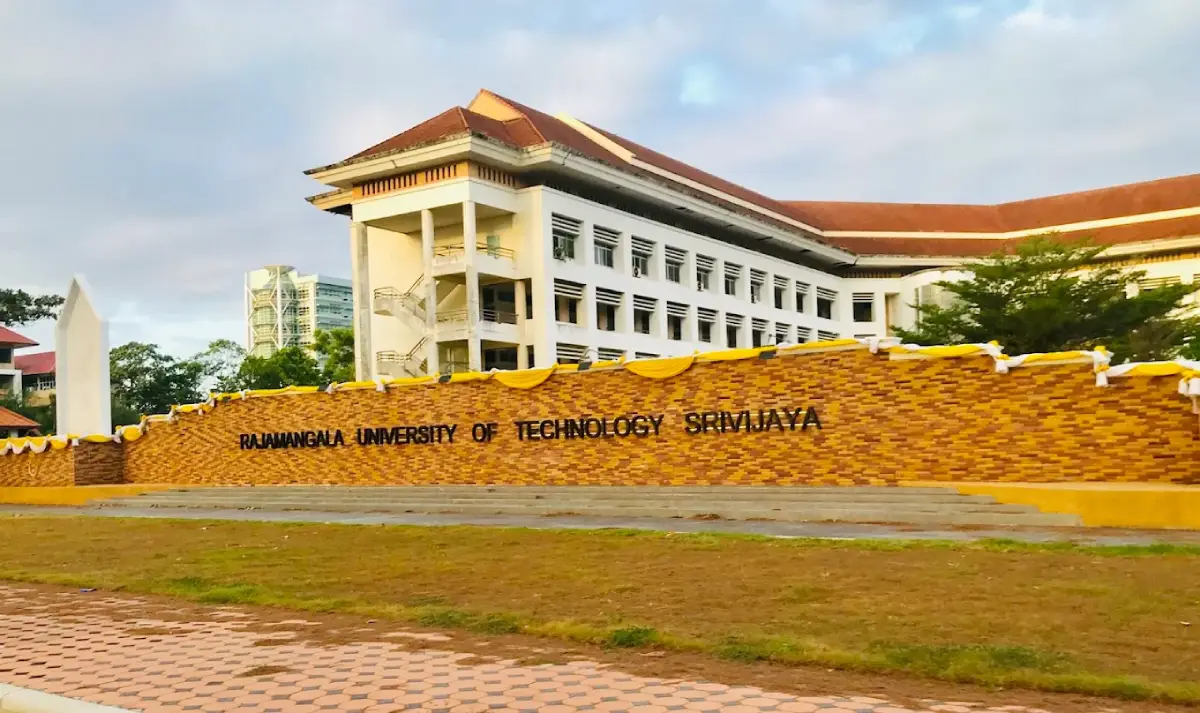
Rajamangala University of technology Srivijaya (Songkhla Campus)
Open Days (Office of Academic Promotion and Registration): Monday – Friday
Opening Hours (Office of Academic Promotion and Registration): 08:30 – 16:30
Rajamangala University of Technology Srivijaya, Songkhla Campus (RMUTSV, also known as RUTS) is a public university specializing in professional education, applied sciences, engineering, technology, business administration, liberal arts, architecture, and industrial education. Its main campus is located at 1 Ratchadamnoen Nok Road, Bo Yang Subdistrict, Mueang Songkhla District, Songkhla Province, Thailand. Covering approximately 262 rai, the campus traces its institutional roots to the former Rajamangala Institute of Technology, Southern Campus. The university was formally established on January 18, 2005, under the Rajamangala University of Technology Act of 2005. Today, the Songkhla campus serves as the university's principal administrative center and an important hub for undergraduate and postgraduate education, practical training, research, and innovation in southern Thailand.
The campus occupies a distinctive position within Songkhla, a historic coastal city overlooking the Gulf of Thailand. Situated along Ratchadamnoen Nok Road, the university is connected to residential neighborhoods, educational institutions, commercial districts, and the nearby Chalatat Beach area. This location provides a useful setting for academic activities involving engineering, coastal environments, urban planning, tourism, hospitality, architecture, and technology. It also allows the university to maintain a close relationship with the surrounding community and regional economy.
Rajamangala University of Technology Srivijaya is particularly significant because of its place in Thailand's development of vocational and technological higher education. The institution continues a longstanding tradition of preparing graduates with both academic knowledge and practical professional skills. Its educational approach emphasizes learning through application, laboratory work, industrial practice, design projects, and collaboration with external organizations. This combination has remained central to the Rajamangala educational identity through the transition from an institute of technology to a full university.
Before the establishment of Rajamangala University of Technology Srivijaya, the Songkhla site operated as the Southern Campus of the Rajamangala Institute of Technology. The former campus played an important role in providing technical and professional education for students from southern Thailand. Its educational mission developed alongside regional economic growth and the increasing demand for trained personnel in engineering, industry, business, and services. Practical competence and occupational readiness were therefore central concerns long before the institution received university status.
A major transformation took place through the restructuring of Thailand's technological higher education system in 2005. King Bhumibol Adulyadej, King Rama IX, signed the Rajamangala University of Technology Act on January 8, 2005. The legislation was published in the Royal Gazette on January 18, 2005, establishing nine separate Rajamangala Universities of Technology across Thailand. Rajamangala University of Technology Srivijaya was one of the universities created through this reorganization.
The new university was formed by combining five educational units of the former Rajamangala Institute of Technology in southern Thailand. These were the Southern Campus in Songkhla; the Nakhon Si Thammarat Campus at Sai Yai in Nakhon Si Thammarat Province; the Srivijaya Campus in Khanom District, Nakhon Si Thammarat; the Faculty of Agriculture in Thung Yai District, Nakhon Si Thammarat; and the Faculty of Science and Fisheries Technology in Trang Province. This merger created a university with a broad range of professional disciplines and an extensive regional network of educational facilities.
January 18, 2005, is recognized as the university's official foundation date. In 2026, Rajamangala University of Technology Srivijaya celebrated its 21st anniversary as a university. Its institutional heritage, however, extends further back through the former Rajamangala Institute of Technology and its constituent campuses. The transition into a university provided a more comprehensive administrative and academic framework for degree-level education, research, professional development, and community service.
Section 7 of the Rajamangala University of Technology Act of 2005 defines the institution's role in providing education and promoting advanced academic and professional knowledge with a particular emphasis on practical learning. The university's responsibilities include teaching, research, vocational teacher education, academic services in science and technology, the preservation of arts and culture, and environmental conservation. These responsibilities reflect a model of higher education designed to connect knowledge with professional practice and public benefit.
Following its establishment, the university developed its own identity, academic administration, and degree-awarding practices. Graduates began using the university's own academic regalia in the 2006 academic year. In 2009, the university held its graduation ceremony for the 2007–2008 academic years at the International Convention Center of Prince of Songkla University, Hat Yai Campus, for the first time. Such developments formed part of the institution's early evolution as an independent university.
Rajamangala University of Technology Srivijaya subsequently expanded its academic and administrative structure across southern Thailand. The university now has 15 faculty-level and college-level educational units, with operations extending across Songkhla, Trang, and Nakhon Si Thammarat, as well as supporting facilities in Chumphon. Its regional organization allows different educational locations to develop expertise that reflects their surroundings, including engineering and business in Songkhla, fisheries and tourism in Trang, and agriculture and industrial technology in Nakhon Si Thammarat.
Within Songkhla Province, the university operates two separate educational locations. The principal Songkhla campus is located at 1 Ratchadamnoen Nok Road in Mueang Songkhla District, while Rattaphum College is situated in Tha Chamuang Subdistrict, Rattaphum District. Although both belong to Rajamangala University of Technology Srivijaya, they are not the same campus. The main Songkhla site houses the university's central administration and five major faculties, whereas Rattaphum College operates at its own location with its own academic programs and facilities.
The university's name connects its royal educational heritage with the history of southern Thailand. The term “Rajamangala” expresses the idea of royal auspiciousness, while “Srivijaya” refers to the historical Srivijaya maritime civilization, which played an important role in trade and cultural exchange across Southeast Asia. Together, the words express the institution's identity as a technological university with deep connections to the history and development of the South.
The university emblem incorporates the royal cypher of King Rama IX, an eight-petalled lotus, the numeral 9, and the Great Crown of Victory. The lotus represents the flourishing of wisdom and knowledge, while the royal elements commemorate the institution's relationship with the monarchy and its Rajamangala heritage. The emblem is used in university identity materials, academic regalia, and official activities, serving as an important symbol of belonging for students, staff, and alumni.
The official university color is yellow, symbolizing brightness, achievement, prosperity, and auspiciousness. The university tree is the Yang Na tree, scientifically known as Dipterocarpus alatus Roxb. This tall tropical tree produces winged fruits that are carried away from the parent tree by the wind. The university associates this natural characteristic with the spread of knowledge and intellectual progress throughout society, making the tree an appropriate symbol for an institution dedicated to education and development.
Songkhla Campus contains a combination of academic buildings, administrative offices, laboratories, sports facilities, and landscaped areas within its approximately 262-rai grounds. The campus layout supports daily teaching activities as well as student events and professional training. Internal roads connect the various faculties and service buildings, while the combination of indoor facilities and outdoor spaces provides an environment for formal instruction, practical exercises, independent study, and social interaction.
One of the important support institutions on campus is the Office of Academic Resources and Information Technology. It provides access to learning resources and supports the university's information technology infrastructure. Library facilities, digital services, and information networks are essential to the operation of a multidisciplinary university, particularly one whose academic programs rely heavily on digital tools, technical information, and the exchange of research knowledge.
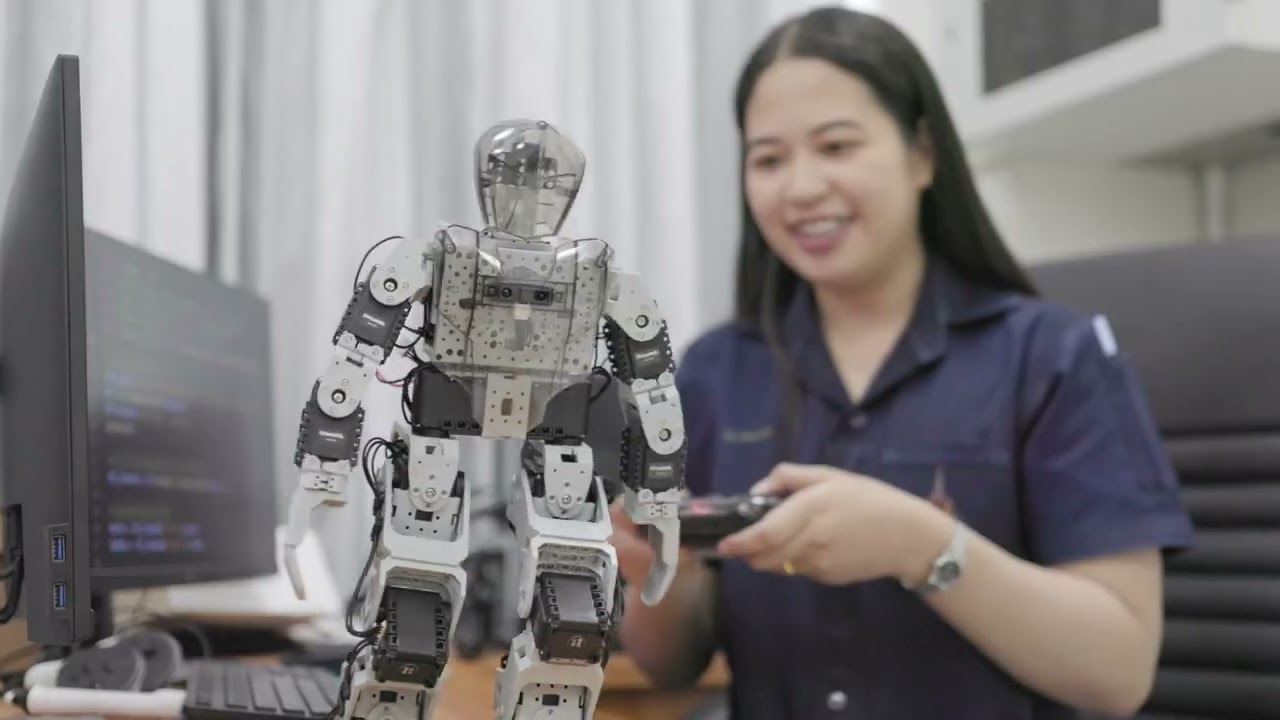
The Faculty of Engineering maintains teaching and laboratory facilities for civil, electrical, mechanical, industrial, and computer engineering. These disciplines require practical training involving equipment, technical systems, measurement, experimentation, calculations, and design. Laboratory-based education is therefore central to the university's objective of producing graduates who can apply theoretical knowledge to professional problems and industrial operations.
The Faculty of Industrial Education and Technology also has dedicated teaching and laboratory facilities. Building 71, an integrated teaching and practical training building, is one of its significant academic locations. In June 2026, the faculty conducted preparatory activities for new mechatronics engineering students in the building. These activities demonstrated the importance of strengthening students' foundational knowledge and practical readiness before the beginning of university study.
The Faculty of Architecture provides design studios, exhibition spaces, and specialist facilities associated with architecture, urban planning, visual arts, and fashion and textile design. Unlike conventional lecture-based courses, these programs require continuous experimentation, model-making, visual presentation, material studies, and creative development. Studio-based learning allows students to transform abstract ideas into tangible designs while developing technical and professional judgment.
The university's multipurpose buildings, sports grounds, and gymnasiums are also important parts of campus life. They are used for student activities, sports, meetings, exhibitions, and major university ceremonies. In 2026, the university's multipurpose building was used for graduation rehearsal activities, with Creative Home Economics students from the Faculty of Liberal Arts contributing to stage decoration and design. Their participation demonstrated how students can apply classroom skills in real institutional projects.
Academic education at Songkhla Campus is organized principally through five faculties: the Faculty of Engineering, Faculty of Business Administration, Faculty of Industrial Education and Technology, Faculty of Liberal Arts, and Faculty of Architecture. Each provides specialized professional education while contributing to the university's broader mission of developing skilled graduates. Central support units, including the Office of Academic Promotion and Registration and the Office of Academic Resources and Information Technology, facilitate teaching, student services, and academic operations.
The Faculty of Engineering is one of the university's major academic strengths. Its undergraduate fields include Civil Engineering, Survey Engineering, Mechanical Engineering, Marine Mechanical Engineering, Electrical Engineering, Electronics Engineering, Telecommunications Engineering, Industrial Engineering, Manufacturing Engineering, Computer Engineering, and Artificial Intelligence and Digital Innovation Engineering. These fields support professional activities associated with construction, transportation, industrial production, energy systems, machinery, and modern information technologies.
Marine Mechanical Engineering is a particularly relevant specialization for a university located in southern Thailand. The field concerns machinery and engineering systems used in marine environments, including vessel engines and related mechanical equipment. Technical knowledge in these areas is relevant to coastal industries, maritime transportation, and other economic activities that depend on the sea. This specialization demonstrates the close relationship between the university's technical education and the geographical characteristics of the region.
The Faculty of Business Administration offers education in Accountancy, Marketing, Management, and Digital Business Technology. Its management curriculum includes areas of specialization such as General Management, Digital Office, Human Resource Management, Industry and Environment, and Logistics and Supply Chain Management. These fields are designed to prepare students for organizational responsibilities, business operations, entrepreneurship, and the application of technology in contemporary workplaces.
The Faculty of Industrial Education and Technology specializes in the education of technical professionals and vocational teachers. Its academic offerings include Industrial Engineering Education, Electrical Engineering Education, Mechatronics Engineering Education, Mass Communication Technology, Petroleum Technology, and Telecommunication and Network Systems. The faculty's programs connect practical technical competence with professional education and respond to the demand for qualified personnel in educational institutions and industrial workplaces.
The Faculty of Liberal Arts combines language studies, tourism, hospitality, and home economics. Its areas of study include Foreign Languages for Communication, Tourism, Hotel and Service Management, Creative Home Economics, Food and Nutrition, and related professional fields. These disciplines are particularly relevant to southern Thailand, a region whose economy and identity are closely connected to tourism, hospitality services, traditional cuisine, cultural diversity, and communication across linguistic boundaries.
Creative Home Economics represents an interesting connection between vocational skills and local cultural knowledge. The field includes creative decoration, floral arrangements, textile-related work, product design, and other practical activities that can contribute to cultural events and the development of commercial products. Students gain opportunities to apply traditional and contemporary techniques while developing skills relevant to creative enterprises and community-based economic activity.
The Faculty of Architecture offers programs in Architecture, Urban Planning, Visual Arts, and Fashion and Textile Design. Architecture and urban planning are closely related to the design of buildings, communities, and public spaces, while visual arts and fashion provide pathways into creative industries. These disciplines are especially meaningful in Songkhla, where historic architecture, coastal landscapes, urban development, and local cultural identity offer valuable contexts for study and design.
Postgraduate opportunities at the Songkhla campus include advanced studies in engineering and business administration. Published faculty information identifies master's-level programs in Civil Engineering, Manufacturing Systems Engineering, and Digital Entrepreneurship. Such programs provide opportunities for graduates and working professionals to strengthen their research capabilities, address complex technical or organizational problems, and develop specialist knowledge for industrial and economic development.
Research and innovation are major elements of the university's present mission. Rajamangala University of Technology Srivijaya emphasizes the application of scientific and technological knowledge to real economic and social challenges. In 2026, the university received the Outstanding Research Organization 2026 award from Thailand's Science, Research and Innovation Promotion Commission at Thailand Talent Summit 2026. The recognition highlighted the university's research management, collaborative networks, and efforts to turn research into practical benefits.
The university also develops relationships with government agencies, businesses, and other organizations to strengthen education and professional development. Its activities include digital skills training, entrepreneurship development, work-based learning, and collaboration with industry. These initiatives provide students and staff with opportunities to engage with professional environments and help ensure that academic knowledge remains relevant to technological and economic change.
University traditions play an important role in building connections among students, lecturers, staff, and graduates. The foundation anniversary commemorates January 18, 2005, when the university was legally established. On January 19, 2026, the university organized its 21st anniversary celebration at the Chuphan Meeting Room of the Faculty of Industrial Education and Technology. The ceremony included activities recognizing institutional history, service, and achievement within the university community.
The Thai Wai Khru tradition, through which students express respect and gratitude to their teachers, is another important aspect of university culture. In July 2026, the Faculty of Industrial Education and Technology organized its Wai Khru and Bai Sri welcoming ceremony for new students. The event combined traditional expressions of respect for teachers with a formal welcome for new members of the faculty, emphasizing gratitude, responsibility, and belonging.
Rajamangala University of Technology Srivijaya also maintains relationships with religious and cultural activities in the surrounding community. In 2017, for example, the Faculty of Engineering participated in a Buddhist Lent candle offering activity at Wat Chaeng in Mueang Songkhla. Activities of this kind reflect the university's engagement with local traditions and provide opportunities for students to understand the cultural environment in which their professional and academic lives take place.
Student development also extends to sports, leadership, teamwork, community service, and creative activities. Such experiences provide opportunities for students from different faculties to work together, organize events, solve practical problems, and develop communication skills. These abilities complement professional training and are valuable in the workplace as well as in wider social life.
For visitors interested in educational tourism, Rajamangala University of Technology Srivijaya, Songkhla Campus offers opportunities to learn about applied technological education and the history of Thailand's Rajamangala university system. Public academic events, student exhibitions, design presentations, and announced cultural activities may provide suitable opportunities for outside visitors. Access to laboratories, classrooms, and other restricted facilities should be arranged with the responsible university department in advance.
The campus is also located within a city rich in historical and cultural attractions. Songkhla Old Town preserves historic buildings and stories of trade and cultural exchange, while nearby coastal destinations provide opportunities to explore the Gulf of Thailand's landscape. Visitors combining a university study visit with local sightseeing can gain a broader understanding of the links between technological education, urban development, cultural preservation, and coastal environments.
Getting There: Rajamangala University of Technology Srivijaya, Songkhla Campus is located at 1 Ratchadamnoen Nok Road, Bo Yang Subdistrict, Mueang Songkhla District, Songkhla Province. Visitors traveling from Hat Yai can follow Kanchanawanit Road toward Songkhla city and continue through the city to Ratchadamnoen Nok Road. Private vehicles and taxis are convenient options, while travelers using public transport can take a service connecting Hat Yai and Songkhla and transfer to a local vehicle. Visitors should confirm the relevant faculty or office location before traveling because the university has several buildings and administrative units.
The Office of Academic Promotion and Registration provides student admission and registration-related services at Songkhla Campus. Its published contact hours are Monday to Friday, from 08:30 to 16:30. The office can be contacted at +66 74 317 140 or through the university's main number, +66 74 317 100, extension 1171. The university's general contact number is +66 74 317 100. These are office service hours and should not be interpreted as the opening hours of all university buildings or unrestricted public access times.
Rajamangala University of Technology Srivijaya, Songkhla Campus remains an important institution in the development of technological and professional education in southern Thailand. From its roots in the former Rajamangala Institute of Technology, Southern Campus, to its establishment as a university in 2005 and its continuing expansion, the institution has maintained a strong commitment to practical education. Its combination of technical expertise, innovation, research, cultural engagement, and community relationships makes it an important center of learning and professional development for southern Thailand and the country as a whole.
| University Name | Rajamangala University of Technology Srivijaya, Songkhla Campus |
| Thai Name | มหาวิทยาลัยเทคโนโลยีราชมงคลศรีวิชัย วิทยาเขตสงขลา |
| Institution Type | Public university specializing in professional and technological education |
| Address | 1 Ratchadamnoen Nok Road, Bo Yang Subdistrict, Mueang Songkhla District, Songkhla 90000, Thailand |
| Campus Area | Approximately 262 rai |
| Historical Origin | Former Rajamangala Institute of Technology, Southern Campus |
| University Foundation Date | January 18, 2005 |
| University Age in 2026 | 21 years since receiving university status |
| President | Professor Dr. Suwat Thanyaros (as of October 2026) |
| Establishment Legislation | Rajamangala University of Technology Act, B.E. 2548 (2005) |
| University Color | Yellow |
| University Tree | Yang Na (Dipterocarpus alatus Roxb.) |
| University Emblem | Royal cypher of King Rama IX, eight-petalled lotus, numeral 9, and the Great Crown of Victory |
| Faculties at Songkhla Campus | 1. Faculty of Engineering
2. Faculty of Business Administration 3. Faculty of Industrial Education and Technology 4. Faculty of Liberal Arts 5. Faculty of Architecture |
| Other Educational Location in Songkhla Province | Rattaphum College, Rattaphum District, located separately from the main Songkhla campus |
| Academic Support Offices | Office of the President; Office of Academic Promotion and Registration; Office of Academic Resources and Information Technology |
| Important Campus Facilities | University Library, Academic Resources and IT Building, Building 71, Chuphan Meeting Room, multipurpose building, engineering laboratories, architecture studios, and sports facilities |
| Academic Strengths | Applied learning, engineering, digital technology, industrial education, business administration, liberal arts, architecture, and innovation for society |
| Research Achievement | Outstanding Research Organization 2026 award from Thailand's Science, Research and Innovation Promotion Commission |
| University Traditions and Activities | University foundation anniversary, Wai Khru ceremonies, student welcoming activities, sports, cultural events, and student development programs |
| Registration Office Open Days | Monday – Friday |
| Registration Office Opening Hours | 08:30 – 16:30 |
| Visitor Access | Public events and study visits are subject to university announcements and regulations; access to laboratories and restricted facilities requires prior arrangements |
| Getting There | Via Ratchadamnoen Nok Road in Songkhla city, connecting from Kanchanawanit Road when traveling from Hat Yai; accessible by car, taxi, and connecting local transport |
| Tourist Attractions in Songkhla City | 1. Chalatat Beach
2. Samila Beach and Golden Mermaid Statue 3. Tang Kuan Hill 4. Songkhla Old Town 5. Hub Ho Hin Red Rice Mill |
| Restaurants in Songkhla City | 1. Son Kaew Seafood, Tel. +66 81 959 4624
2. Rua Bai Restaurant Songkhla, Tel. +66 95 439 0063 3. Sujinda Seafood 4. Puangrat Steak Home 5. Phaijit Beef Noodle |
| Accommodation in Songkhla City | 1. Solis Beach Hotel @Rajamangala, Tel. +66 84 142 4428
2. The Bed Vacation Rajamangala Hotel, Tel. +66 87 674 4444 3. Montana Hotel Songkhla, Tel. +66 74 300 614 4. The Luxury Residence 5. Hotel Dahlaville |
| Main University Telephone | +66 74 317 100 |
| Admission and Registration Contact | +66 74 317 140; +66 74 317 100 ext. 1171 |
| University Email | saraban@rmutsv.ac.th |
| Official Website | https://www.rmutsv.ac.th/ |
| Current Status | Operating as an active public university campus in 2026 |
Academic Programs at Rajamangala University of Technology Srivijaya, Songkhla Campus, Academic Year 2026
| Faculty / Level | Programs and Fields of Study |
| Faculty of Engineering | Bachelor's Degree 1. Civil Engineering (Civil Engineering and Railway Civil Engineering majors) 2. Survey Engineering 3. Mechanical Engineering 4. Marine Mechanical Engineering 5. Mechanical Technology 6. Electrical Engineering 7. Electronics Engineering 8. Telecommunications Engineering 9. Industrial Engineering 10. Manufacturing Engineering 11. Industrial Technology 12. Computer Engineering 13. Artificial Intelligence and Digital Innovation Engineering Master's Degree 1. Civil Engineering 2. Manufacturing Systems Engineering |
| Faculty of Business Administration | Bachelor's Degree 1. Bachelor of Accountancy 2. Bachelor of Business Administration in Marketing 3. Bachelor of Business Administration in Digital Business Technology 4. Bachelor of Business Administration in Management (General Management, Digital Office, Human Resource Management, Industry and Environment, and Logistics and Supply Chain Management study groups) Master's Degree 1. Master of Business Administration in Digital Entrepreneurship |
| Faculty of Industrial Education and Technology | Bachelor's Degree 1. Bachelor of Science in Industrial Education: Industrial Engineering 2. Bachelor of Science in Industrial Education: Electrical Engineering 3. Bachelor of Science in Industrial Education: Mechatronics Engineering 4. Bachelor of Technology in Mass Communication Technology 5. Bachelor of Technology in Petroleum Technology 6. Bachelor of Industrial Technology in Telecommunication and Network Systems (Continuing Program) Higher Vocational Certificate 1. Petroleum Technology |
| Faculty of Liberal Arts | Bachelor's Degree 1. Bachelor of Arts in Foreign Languages for Communication (English Communication and Chinese Communication majors) 2. Bachelor of Arts in Tourism 3. Bachelor of Arts in Hotel and Service Management 4. Bachelor of Home Economics in Creative Home Economics 5. Bachelor of Home Economics in Food and Nutrition 6. Nutrition and Dietetics-related study field |
| Faculty of Architecture | Bachelor's Degree 1. Bachelor of Architecture in Architecture (Five-Year Program) 2. Bachelor of Technology in Urban Planning 3. Bachelor of Fine Arts in Visual Arts 4. Bachelor of Fine Arts in Fashion and Textile Design |
Frequently Asked Questions (FAQ)
Q: Where is Rajamangala University of Technology Srivijaya, Songkhla Campus located?
A: It is located at 1 Ratchadamnoen Nok Road, Bo Yang Subdistrict, Mueang Songkhla District, Songkhla Province 90000, Thailand.
Q: What are the opening days and hours of the university?
A: The Office of Academic Promotion and Registration operates Monday to Friday from 08:30 to 16:30. Other university buildings and facilities may have different operating schedules.
Q: When was Rajamangala University of Technology Srivijaya established?
A: The university was officially established on January 18, 2005, under the Rajamangala University of Technology Act of 2005, continuing the educational heritage of the former Rajamangala Institute of Technology.
Q: What faculties are located at Songkhla Campus?
A: The five faculties are Engineering, Business Administration, Industrial Education and Technology, Liberal Arts, and Architecture.
Q: What is Rajamangala University of Technology Srivijaya known for?
A: It is known for practical, career-oriented education in engineering, applied technology, industrial education, business, digital innovation, architecture, and creative professional fields.
Q: Is Rattaphum College the same location as Songkhla Campus?
A: No. The main Songkhla campus is in Mueang Songkhla District, while Rattaphum College is located in Rattaphum District. Both are part of the same university but operate at separate educational locations.
Q: What are the university's official color and tree?
A: The official university color is yellow, and the university tree is Yang Na, scientifically known as Dipterocarpus alatus Roxb.
Q: Can members of the public visit Rajamangala University of Technology Srivijaya, Songkhla Campus?
A: Members of the public may arrange study visits or attend public university events when permitted. Access to laboratories, classrooms, and restricted facilities must be coordinated with the responsible university department.
 Category: ●University
 Group: ●Rajamangala University of Technology
Last Update : 4 DayAgo
 Last Update : 4 DayAgo
 Click to Access the Navigation Map GPS
Rajamangala University of technology Srivijaya (Songkhla Campus) Map
Recommend

 Art, Culture and Heritage
 Historical Sites and Monuments(2)
 Landmarks and Memorials(7)
 Royal Palace(1)
 Art, Craft Centres, Tradition(4)
 Museums(4)
 Art Gallery(1)
 Educational Places
 Library(1)
 Educational Gardens, Farm(3)
 Public university(2)
 Autonomous Universities(1)
Rajamangala University of Technology(1)
 Rajabhat University(1)
 Private University(1)
 Places of Worship
 Temple(52)
 Mosque(2)
 Other Sacred Sites(11)
 Suburban Living
 Village, Community(3)
 Local Market(3)
 Floating Market(2)
 Nature and Wildlife
 National Parks and Marine Reserves(5)
 Mountain (Doi)(6)
 Dam, Reservoir, Lake(5)
 Waterfalls(12)
 Caves(4)
 River, Canal(2)
 Bays and Beaches(13)
 Islands(3)
 Other natural attractions(2)
 Entertainment and Agricultural
 Zoos and Aquariums(2)
 Animal camps and shows(1)
 Farms, Parks and Ecotourism(6)
 Waterpark(1)
 Travel Articles, Recipes
 Travel Review, Food Review(1)
 Southern Food Menu, Southern Food Recipes(2)


