
lovethailand home >South Travel Attractions >Songkhla Travel Attractions >Hat Yai >Khuan Lang > Wat Hat Yai Nai
TL;DR: Wat Hat Yai Nai is located at Ban Hat Yai Nai, Phetkasem Road, near Khlong U-Taphao Bridge, Hat Yai District, Songkhla Province, open Daily, hours 07.00 – 18.00.
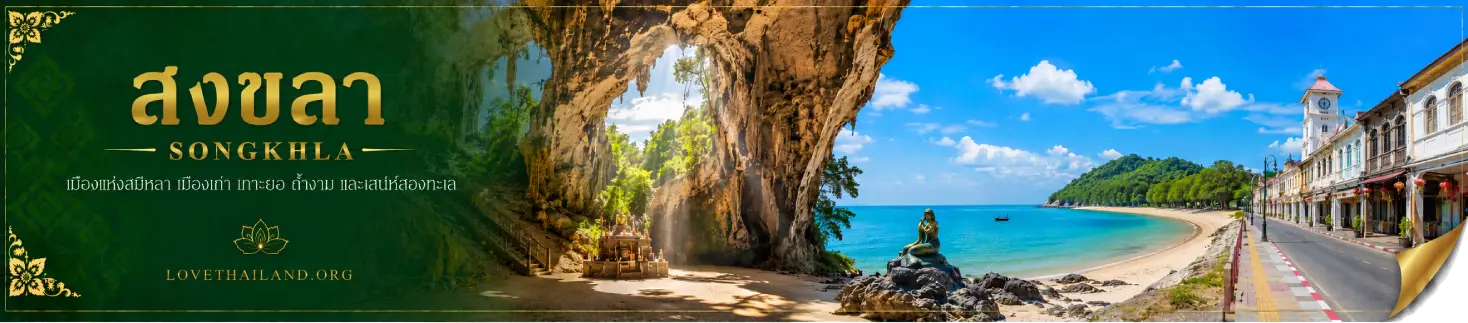
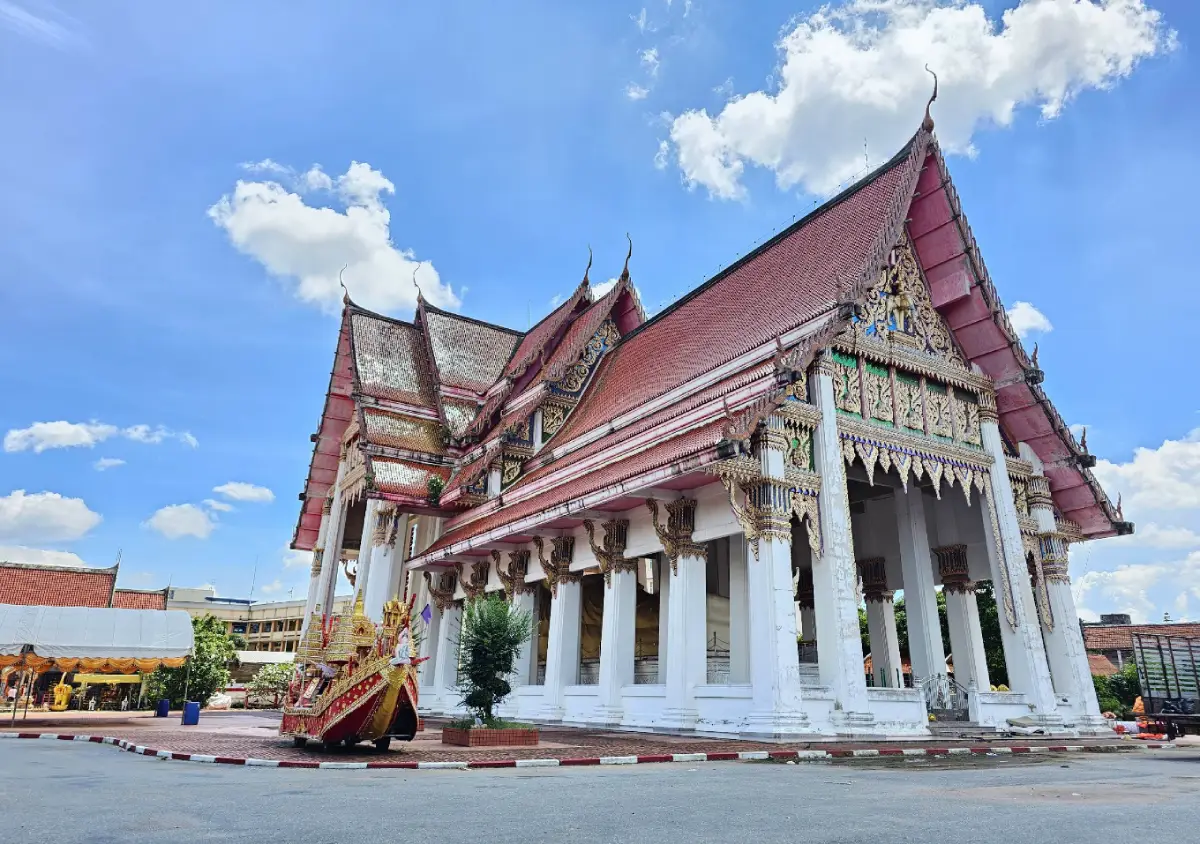
Wat Hat Yai Nai
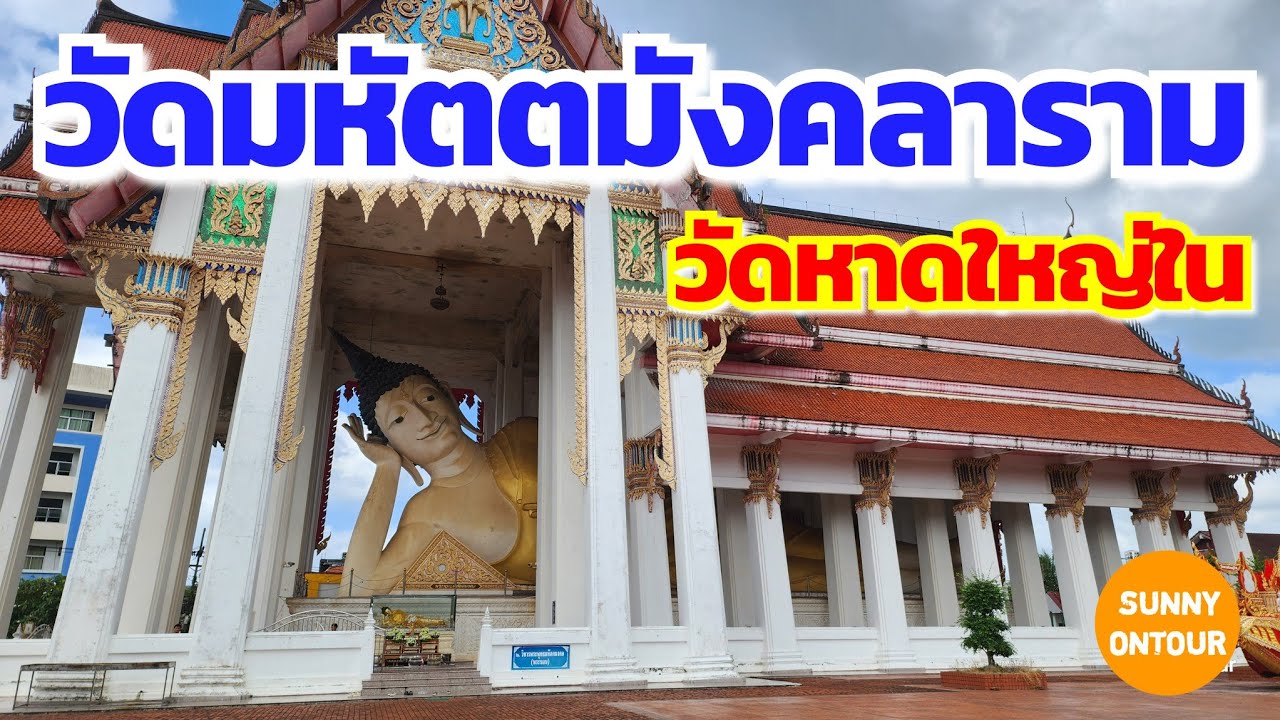
Open Days: Daily
Opening Hours: 07.00 – 18.00
Wat Hat Yai Nai, officially known as Wat Mahattamangkalaram, is one of the most important Buddhist temples in Hat Yai District, Songkhla Province. The temple is located on Phetkasem Road, near Khlong U-Taphao Bridge and the Hat Yai Nai Market area. It is best known for the large reclining Buddha image called Phra Phuttha Mahattamongkol, measuring 35 meters long, 15 meters high, and 10 meters wide. This immense reclining Buddha is the temple’s main landmark and one of the most recognizable Buddhist images in Hat Yai.
The appeal of Wat Hat Yai Nai lies in its combination of easy access, local religious importance, and a calm temple atmosphere within the city. Although the temple is located close to a busy urban and market area, the temple grounds remain peaceful and shaded. Local residents, Thai visitors, and international travelers often come here to pay respect to the reclining Buddha, make merit, offer alms, take photographs, and pause quietly during their journey through Hat Yai.
Wat Mahattamangkalaram is located at 134 Ban Hat Yai Nai, Phetkasem Road, Moo 2, Khuan Lang Subdistrict, Hat Yai District, Songkhla 90110. It is a Maha Nikaya Buddhist temple situated near Khlong U-Taphao, an important waterway associated with the development and settlement of Hat Yai. Because the temple stands close to the main road and the city center, it is suitable for both a short merit-making visit and a cultural stop in a Hat Yai travel itinerary.
Phra Phuttha Mahattamongkol is the spiritual heart of Wat Hat Yai Nai. The reclining Buddha image has a serene facial expression and a dignified posture that immediately creates a peaceful impression. With its length of 35 meters, height of 15 meters, and width of 10 meters, the image is widely recognized as one of the world’s large reclining Buddha images and is frequently mentioned as one of Hat Yai’s key landmarks. Most visitors begin their visit by paying respect at the front of the Buddha image before walking around the pavilion and the base area.
One of the features that makes this reclining Buddha especially distinctive is the presence of the “Buddha Heart” inside the image. This sacred feature is central to an annual ritual that allows devotees to apply gold leaf to the Buddha Heart during the temple’s main Songkran-period tradition. Devotees associate this act with merit, compassion, good fortune, and strength of mind. The ritual has become a powerful expression of the relationship between the temple and the people of Hat Yai.
Beneath the reclining Buddha’s base, there is a worship area where visitors can pay respect to additional Buddha images, offer alms, make merit, and worship in a more enclosed and contemplative setting. This lower area gives the visit more depth. Visitors do not only view the large Buddha image from the outside; they can also enter a quiet sacred space beneath the image and take time for prayer, reflection, or offerings.
Wat Hat Yai Nai is also associated with Buddha relics, which are highly revered in Thai Buddhist practice. Worshipping the Buddha relics gives visitors a way to reflect on the Buddha’s teachings and the spiritual purpose of the temple. During certain periods, the temple becomes the venue for important ceremonies attended by monks, government agencies, local residents, and devotees, reinforcing its role as a temple of city-level significance.
Around the reclining Buddha and the worship areas, visitors can find birth-day Buddha images, revered monk images, and other sacred points for merit-making. The temple layout allows visitors to pay respect in several ways within one visit: worshipping the large reclining Buddha, making offerings beneath the base, paying respect to the birth-day Buddha image, and participating in merit-making activities according to personal faith.
The temple atmosphere is calmer than many first-time visitors expect. Despite its location near the city and market area, the temple includes open courtyards, the reclining Buddha pavilion, shaded areas, and the nearby Khlong U-Taphao riverside setting. The contrast between the busy outside streets and the quiet temple interior makes Wat Hat Yai Nai a practical place to rest, pray, and slow down during a day in Hat Yai.
Khlong U-Taphao is an important waterway in Hat Yai, and its proximity gives the temple a riverside community character. Some visitors spend time near the canal after worshipping, while local residents use the surrounding area as part of everyday community life. Visitors should keep the space clean and behave respectfully, especially near worship areas and the riverside environment.
The temple’s history is tied to the growth of Ban Hat Yai Nai. Wat Mahattamangkalaram developed through land donations, local faith, and community support. Over time, it became an important Buddhist institution for religious ceremonies, Buddhist education, and community activities. The temple was later granted the name “Wat Mahattamangkalaram,” strengthening its formal identity while the local name “Wat Hat Yai Nai” remained widely used.
The reclining Buddha began to take shape around 1972, and the pavilion area developed together with the growth of the temple. The image gradually became a defining symbol of Hat Yai. What began as a local community temple became a destination for travelers who come to worship the city’s great reclining Buddha and photograph one of the most memorable Buddhist landmarks in southern Thailand.
From an artistic perspective, Phra Phuttha Mahattamongkol is important for its scale, calm expression, and sacred posture. The reclining posture recalls the Buddha’s final passing into Parinirvana and is also associated in Thai tradition with the Buddha image for people born on Tuesday. Many Tuesday-born visitors come here specifically to pay respect, while other devotees come to seek peace, merit, and good fortune.
The reclining Buddha pavilion is open and airy, allowing visitors to see the image from different angles. The front view emphasizes the calm face, the side view reveals the full length of the image, and the base area shows the devotional details of the site. Morning and late afternoon are generally the best times for photography because natural light gives the Buddha image a softer and more dimensional appearance.
The most important annual tradition at Wat Hat Yai Nai is the Fifth Lunar Month Merit-Making and Reclining Buddha Robe Ceremony, held during the Songkran period. The event includes worship of Phra Phuttha Mahattamongkol, the robe-offering ceremony for the reclining Buddha, gold-leaf worship of the Buddha Heart, water-pouring rites, and cultural activities connected with the Thai New Year. This tradition makes the temple a major spiritual center of Hat Yai every April.
During the ceremony, local residents, government agencies, monks, and travelers join together in a highly visible expression of faith. The robe procession for the reclining Buddha often begins in the city and moves toward the temple, followed by religious rites, the robe offering, and the gold-leaf ceremony at the Buddha Heart. Cultural performances, local processions, and merit-making activities make this event both a religious ceremony and a community festival.
The Buddha Heart ceremony is open only during the annual tradition, which is why many devotees plan their visit around Songkran. The practice is associated with merit, compassion, health, and inner strength. Visitors attending the ceremony should be patient, respectful, and prepared for crowds, as many people gather at the temple during this period.
Wat Hat Yai Nai is useful for travelers who want to understand Hat Yai beyond shopping and food. Hat Yai is one of southern Thailand’s major commercial and transport centers, but the temple shows another side of the city: local faith, Buddhist tradition, riverside community life, and cultural continuity. A visit here adds spiritual and cultural depth to a Hat Yai itinerary.
A good visit begins by paying respect to Phra Phuttha Mahattamongkol inside the reclining Buddha pavilion. Visitors can then continue to the lower worship area beneath the base, make merit, pay respect to the birth-day Buddha images, and walk around the temple grounds. Those with more time can also observe the riverside atmosphere near Khlong U-Taphao and the everyday community setting around the temple.
Photography should be done respectfully. Visitors should avoid blocking the main worship area and should not pose in ways that disrespect the Buddha image. Good angles include the front of the pavilion, the side view showing the length of the reclining Buddha, and the wider courtyard view. Quiet behavior is especially important when people are praying or making merit nearby.
Modest clothing is recommended. Visitors should avoid clothing that is too revealing, remove hats or sunglasses when entering key worship areas, keep their voices low, avoid climbing onto the Buddha base, and avoid touching sacred objects unnecessarily. Cleanliness and respectful behavior are important throughout the temple, especially around the lower worship area and the riverside.
Getting There is easy from central Hat Yai. Take Phetkasem Road toward Hat Yai Nai Market and Khlong U-Taphao Bridge. The temple is about 10 to 15 minutes by car from Kim Yong Market or Hat Yai Railway Station, depending on traffic. Visitors can travel by private car, tuk-tuk, local taxi, or ride-hailing service from the city center.
Travelers arriving from Hat Yai International Airport can first enter the city and then continue to the temple, or rent a car and combine Wat Hat Yai Nai with other Hat Yai attractions. A practical route can include Wat Hat Yai Nai, Kim Yong Market, Hat Yai Municipal Park, Phra Maha Chedi Tripob Trimongkol, and Khlong Hae Floating Market in the same day.
The best time to visit is in the morning, when the weather is cooler and the temple is quieter. Late afternoon is also pleasant for photography. During Songkran, the temple is much busier because of the annual reclining Buddha robe ceremony, so visitors should allow extra time for traffic, parking, and participation in the ceremonies.
A short visit usually takes 30 to 45 minutes, focusing on the reclining Buddha, the lower worship area, and the main temple grounds. A more detailed visit with photography, offerings, and quiet time near the canal may take at least one hour. The temple is suitable for families, elderly visitors, Buddhist devotees, cultural travelers, and anyone staying in Hat Yai who wants a meaningful stop close to the city center.
Compared with many attractions in Hat Yai, Wat Hat Yai Nai is especially convenient because it is close to the city, free to enter, easy to reach, and home to a highly distinctive reclining Buddha. It pairs well with markets, food streets, and other urban attractions, making it a practical cultural stop for visitors who want to add a Buddhist temple experience to a food-and-shopping trip.
For a temple-focused route in Hat Yai, Wat Hat Yai Nai should be placed near the top of the list. It offers the large reclining Buddha, Buddha relics, the lower worship chamber, birth-day Buddha images, and a major annual tradition. The temple gives visitors a complete experience of faith, local history, Buddhist art, and riverside community atmosphere in one accessible location.
Wat Hat Yai Nai is more than a photo stop for a large reclining Buddha. It reflects several layers of Hat Yai’s identity: a major southern commercial city, a community shaped by Khlong U-Taphao, a Songkran-period Buddhist tradition, devotion to Phra Phuttha Mahattamongkol, and a living temple that local residents continue to use for merit-making. Anyone visiting Hat Yai should consider stopping here at least once to experience one of the city’s most meaningful Buddhist landmarks.
| Name | Wat Hat Yai Nai / Wat Mahattamangkalaram |
| Location | Ban Hat Yai Nai, Phetkasem Road, near Khlong U-Taphao Bridge, Hat Yai District, Songkhla Province |
| Address | 134 Ban Hat Yai Nai, Phetkasem Road, Moo 2, Khuan Lang Subdistrict, Hat Yai District, Songkhla 90110, Thailand |
| Coordinates | Approx. 7.0037, 100.4540 |
| Highlights | Phra Phuttha Mahattamongkol reclining Buddha, 35 meters long, 15 meters high, and 10 meters wide; Buddha Heart, Buddha relics, lower worship chamber, birth-day Buddha images, and Khlong U-Taphao riverside setting |
| History | An old temple of the Hat Yai Nai community, developed through local faith and known for its large reclining Buddha image that began construction around 1972 |
| Distinctive Features | A Maha Nikaya Buddhist temple near Khlong U-Taphao and Hat Yai Nai Market, easily reached from central Hat Yai |
| Main Areas / Zones | Reclining Buddha pavilion, Phra Phuttha Mahattamongkol, Buddha Heart, lower worship chamber, alms-offering area, sacred-object area, birth-day Buddha images, Buddha relics, ordination hall, sermon hall, monks’ residences, courtyard, and Khlong U-Taphao riverside area |
| Important Tradition | Fifth Lunar Month Merit-Making and Reclining Buddha Robe Ceremony during Songkran, including robe offering, Buddha Heart gold-leaf worship, water-pouring rites, and cultural activities |
| Travel Information | From central Hat Yai, take Phetkasem Road toward Hat Yai Nai Market and Khlong U-Taphao Bridge. The temple is about 10–15 minutes by car from Kim Yong Market or Hat Yai Railway Station, depending on traffic. |
| Current Status | Open to visitors and remains an active Buddhist temple with regular religious activities and an important annual city tradition |
| Open Days | Daily |
| Opening Hours | 07.00 – 18.00 |
| Fees | No admission fee |
| Facilities | Parking area, temple courtyard, reclining Buddha pavilion, lower worship chamber, merit-making area, alms-offering area, sermon hall, ordination hall, and riverside walking area |
| Abbot / Caretaker | Phra Khru Mongkhon Thawornkit |
| Contact Number | 086-336-4691 |
| Nearby Tourist Attractions | 1. Kim Yong Market, about 2 km 2. Hat Yai Railway Station, about 2.5 km 3. Santisuk Market, about 2.5 km 4. Khlong Hae Floating Market, about 6 km 5. Hat Yai Municipal Park, about 8 km 6. Phra Maha Chedi Tripob Trimongkol, about 12 km |
| Nearby Restaurants | 1. Khob Khun Tom Yum Goong Noodles, about 1 km, Tel. 065-776-4344 2. Mr. Green Oak, about 1 km, Tel. 065-401-9080 3. Pizza 3 Noom, about 1 km, Tel. 080-406-7324 4. Maimunah Halal Juice Shop, about 1 km, Tel. 065-541-1471 5. Kan Eng Restaurant Hat Yai, about 3 km, Tel. 074-246-138, 074-232-2798 6. Chokdee Tae Tiam, about 4 km, Tel. 081-372-6181 |
| Nearby Accommodations | 1. The Canale Hatyai, about 1 km 2. Wungnoy Hotel, about 2 km, Tel. 074-236-010, 074-243-384 3. Rotfai Hat Yai Hotel, about 3 km, Tel. 074-221-133 4. Hatyai Backpackers Hostel, about 3.2 km, Tel. 080-396-4621 5. Lalita Boutique Hotel, about 3 km, Tel. 074-259-800 6. S Hadyai Hotel, about 4 km, Tel. 074-209-7612 |
Frequently Asked Questions (FAQ)
Q: Where is Wat Hat Yai Nai located?
A: Wat Hat Yai Nai, officially Wat Mahattamangkalaram, is located on Phetkasem Road in Ban Hat Yai Nai, Khuan Lang Subdistrict, Hat Yai District, Songkhla Province, near Khlong U-Taphao Bridge and Hat Yai Nai Market.
Q: What is Wat Hat Yai Nai known for?
A: The temple is known for Phra Phuttha Mahattamongkol, a large reclining Buddha measuring 35 meters long, 15 meters high, and 10 meters wide, as well as the Buddha Heart, Buddha relics, lower worship chamber, and annual reclining Buddha robe ceremony.
Q: What is the name of the reclining Buddha at Wat Hat Yai Nai?
A: The reclining Buddha is called Phra Phuttha Mahattamongkol. It is one of Hat Yai’s most important Buddhist images and a major landmark of the city.
Q: What are the opening days and hours?
A: Wat Hat Yai Nai is open daily from 07.00 to 18.00.
Q: Is there an admission fee?
A: No. There is no admission fee. Visitors may make merit, offer alms, or donate voluntarily.
Q: What is the Buddha Heart at Wat Hat Yai Nai?
A: The Buddha Heart is a distinctive sacred feature inside Phra Phuttha Mahattamongkol. Devotees can apply gold leaf to it during the annual Fifth Lunar Month Merit-Making and Reclining Buddha Robe Ceremony held around Songkran.
Q: How can visitors travel from Kim Yong Market to Wat Hat Yai Nai?
A: From Kim Yong Market, take Phetkasem Road toward Hat Yai Nai Market and Khlong U-Taphao Bridge. The trip usually takes about 10–15 minutes by car, depending on traffic.
Q: What nearby attractions can be combined with Wat Hat Yai Nai?
A: Nearby attractions include Kim Yong Market, Santisuk Market, Khlong Hae Floating Market, Hat Yai Municipal Park, and Phra Maha Chedi Tripob Trimongkol.
 Category: ●Places of Worship
 Group: ●Temple
Last Update : 2 MonthAgo
 Last Update : 2 MonthAgo
 Click to Access the Navigation Map GPS
Wat Hat Yai Nai Map
Recommend

 Art, Culture and Heritage
 Historical Sites and Monuments(2)
 Landmarks and Memorials(7)
 Royal Palace(1)
 Art, Craft Centres, Tradition(4)
 Museums(4)
 Art Gallery(1)
 Educational Places
 Library(1)
 Educational Gardens, Farm(3)
Temple(52)
 Mosque(2)
 Other Sacred Sites(11)
 Suburban Living
 Village, Community(3)
 Local Market(3)
 Floating Market(2)
 Nature and Wildlife
 National Parks and Marine Reserves(5)
 Mountain (Doi)(6)
 Dam, Reservoir, Lake(5)
 Waterfalls(12)
 Caves(4)
 River, Canal(2)
 Bays and Beaches(13)
 Islands(3)
 Other natural attractions(2)
 Entertainment and Agricultural
 Zoos and Aquariums(2)
 Animal camps and shows(1)
 Farms, Parks and Ecotourism(6)
 Waterpark(1)
 Travel Articles, Recipes
 Travel Review, Food Review(1)
 Southern Food Menu, Southern Food Recipes(2)


