
lovethailand home >South Travel Attractions >Songkhla Travel Attractions >Cha Na >Sa Gom > Birdcage-Making Villages
TL;DR: Birdcage-Making Villages is located at Ban Sakom in Sakom Subdistrict, Moo 2 Ban Na in Ban Na Subdistrict, and Ban Hua Din Nuea in Pa Ching Subdistrict, Chana District, Songkhla, open Daily, hours 09.00 – 16.00.

Birdcage-Making Villages
Open Days: Daily
Opening Hours: 09.00 – 16.00
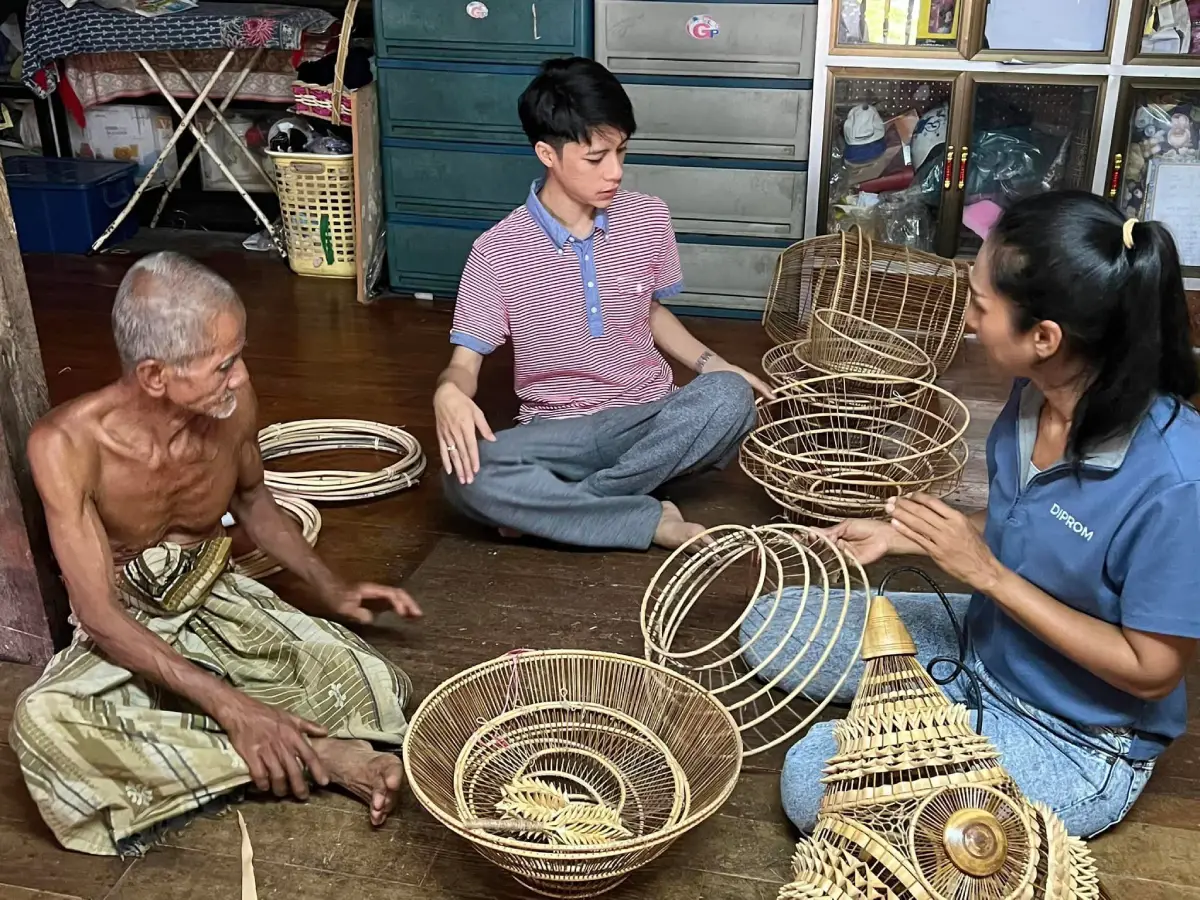
The Birdcage-Making Villages of Chana District, Songkhla are among the clearest expressions of local craftsmanship in southern Thailand. These villages are not centered on a single enclosed tourist site, but on a network of communities where birdcage-making remains part of daily life, household income, cultural identity, and the long-standing tradition of keeping zebra doves. The main areas associated with this craft include Ban Sakom in Sakom Subdistrict, Moo 2 Ban Na in Ban Na Subdistrict, and Ban Hua Din Nuea in Pa Ching Subdistrict. Together, these communities form a living craft route where visitors can learn about handmade birdcages, cage-head carving, cage covers, small birdcage lamps, and community-based product development.
The importance of the birdcage-making villages comes from the deep relationship between people and zebra doves in Chana. In southern Thailand, zebra doves are not kept only for enjoyment. They are connected with auspicious belief, the pleasant sound of birdsong, social gatherings among bird lovers, and local competitions that have become part of the cultural character of the region. As the culture of keeping doves grew, birdcage-making grew with it. A good cage must be strong, well-balanced, breathable, comfortable for the bird, and beautiful enough to reflect the taste of its owner.
Chana District has long been known for zebra dove cages. The sight of cages hanging in front of houses, on lifting poles, or in birdcage shops is familiar in many communities, especially around Hua Din Nuea, Ban Na, and Sakom. The craft involves more than one maker. It includes bamboo workers, cage assemblers, cage-head makers, hook makers, cage-cover tailors, bird accessory sellers, and local traders. Birdcage-making in Chana is therefore a connected occupational system that supports many households and gives the district a strong craft identity.
Local information records that the women’s birdcage group was founded in 1996 to solve the problem of villagers being disadvantaged by middlemen. Group formation helped local makers gain stronger bargaining power, manage product prices, improve products, and organize community income more fairly. The group later expanded into a savings group and community shop, showing that birdcage-making became more than piecework production. It became a tool for strengthening the local economy.
The women’s group in Moo 2 Ban Na played an important role in product development by creating small birdcage lamps as souvenirs for travelers and shops in Chana District. This idea transformed the birdcage from a specialized object for bird keepers into a decorative product for a wider market. The birdcage lamp is a good example of how traditional knowledge can adapt to contemporary demand while retaining the recognizable form of the southern birdcage.
Ban Hua Din Nuea in Pa Ching Subdistrict is another key center of this craft. The Occupational Promotion and Development Group for Birdcage-Making in Ban Hua Din Nuea is known as a learning source for the craft. The group has been involved in teaching birdcage-making, basic floral carving for birdcages, product design, and marketing through both direct sales and online channels. Recent support from community development agencies shows that birdcage-making remains an active local product and learning resource in Chana.
The main materials used in Chana birdcages include bamboo, rattan, wood for the frame and cage head, hooks, fabric covers, and decorative elements. Bamboo must be selected, split, and shaped into even bars. Rattan is used to bind and strengthen the structure. Wood is used for the cage head and carved decorative parts. Some groups have also explored substitute materials, such as resin for cage heads, to increase design variety and reduce limitations related to wood supply. This balance between traditional and adapted materials helps the craft continue in a changing market.
The making process requires eyesight, skilled hands, patience, and experience. It begins with preparing the frame, measuring, drilling holes, shaping bamboo bars, inserting the bars into the frame, tying them firmly with rattan or other fasteners, attaching the cage head, hook, door, perch, and smaller components, then finishing, sanding, coloring, decorating, and adding cage covers or accessories. A small error can affect the shape, spacing, strength, or usability of the cage. Skilled makers therefore do more than assemble materials. They understand proportion, balance, strength, and practical use.
Chana birdcages come in many forms, including hua to cages, steng cages, rattan cages, tied cages, jar-shaped cages, floral cages, inverted-bell cages, large zebra dove cages, young-bird cages, and red-whiskered bulbul cages. This variety shows that local makers are not producing only one repeated model. They adapt size, shape, structure, and decorative detail according to the bird, the owner’s preference, practical use, and market demand. Some cages are made for actual birdkeeping, while others are highly decorative or adapted into lamps and souvenirs.
The beauty of Chana birdcages lies in their detail. Cage heads may be carved into swans, flowers, or other motifs. Bamboo bars must follow a clean and even rhythm. The round form must be balanced. Fabric covers add color and personality. Hooks and top finials give the cage elegance when it is hung. Birdcage-making therefore combines small-scale architecture, woodworking, basketry, carving, and textile decoration in a single object.
Kru Rorhman Khreedao is one of the master craftsmen who helped make Chana birdcage-making more widely recognized. He grew up in a farming family in Chana and became familiar with zebra dove culture and birdcage-making from childhood. His work reflects traditional assembly techniques, local materials, and a strong intention to pass the craft to younger generations. Such master craftsmen are essential because a living craft cannot survive through market demand alone. It also needs teachers, learners, and people who recognize the value of local knowledge.
The birdcage-making villages also reflect the multicultural character of Chana District. Ban Na, Pa Ching, and Sakom are home to Thai Muslims, Thai Buddhists, and Thai-Chinese communities. The culture of birdkeeping, trade, woodworking, and craft production exists within this social diversity. Sakom also has its own distinctive local dialect and coastal identity. A visit to these villages therefore reveals Chana as a living cultural area rather than just a district on the Songkhla-Pattani route.
Birdcage-making supports the community economy on several levels. First, it creates household income, either as a main occupation or supplementary work. Second, it supports related occupations such as bamboo suppliers, rattan sellers, cage-head makers, cage-cover tailors, accessory sellers, and birdcage shops. Third, it strengthens the public image of Chana as a district known for zebra doves and birdcage craftsmanship. This makes the craft both an income source and a cultural identity.
Chana birdcages are not limited to local markets. They have been connected with markets in Chana, Hat Yai, the southern border provinces, Bangkok, and neighboring ASEAN countries such as Malaysia, Singapore, Indonesia, and Brunei. This shows how a small local craft can travel beyond its place of origin through shared birdkeeping culture and regional demand. Chana birdcages are therefore local products with cross-border cultural and commercial reach.
Travelers should understand that these villages are working communities, not large commercial tourist attractions with fixed ticket counters. Visitors who want to watch the production process, buy directly from makers, arrange a group visit, or study the craft in detail should contact the group in advance. Advance contact allows the craftsmen to prepare the workspace, explain the process, and welcome visitors without interrupting daily work or household life.
One of the most rewarding parts of a visit is watching the hands of the craftsmen. As they shape bamboo, drill holes, arrange cage bars, bind rattan, and attach each component, visitors can see that each cage requires time, skill, and concentration. The roundness of the frame, the smoothness of bamboo, the spacing of bars, and the firmness of each joint all reveal craftsmanship. Watching the process helps visitors understand why handmade products carry value beyond raw materials.
Products worth looking for include large birdcages for actual birdkeepers, small decorative cages, birdcage lamps, cage heads, cage covers, and souvenirs inspired by birdcage forms. Even visitors who do not keep birds can buy decorative products for homes, cafés, resorts, or display corners. This product development gives the craft a place in modern life even as consumer behavior changes.
Ban Sakom adds another dimension to the birdcage route because Sakom is also known for the sea, canals, fishing life, local dialect, weaving, and seafood. Visiting Sakom allows travelers to connect the birdcage craft with Chana’s coastal way of life. A route can combine craft learning with Sakom Beach, the Sakom canal area, and local seafood, giving visitors a broader view of Chana’s land, water, and community identity.
Ban Na functions as a central area of Chana District and is closely connected with birdkeeping and birdcage products. It includes shops, roads, local markets, and producers of birdcages and cage heads. Visiting Ban Na helps travelers see that birdcage-making is not isolated in one village. It is a wider occupational network linking the district center with surrounding communities.
Ban Hua Din Nuea in Pa Ching Subdistrict is especially important as a learning and production center. Pa Ching is a rural subdistrict with agriculture, rubber plantations, rice fields, and community occupation groups. Birdcage-making in this environment shows how craftsmanship grows alongside farming, household skills, and community cooperation. Visitors who want a deeper understanding of the craft should allow enough time for Hua Din Nuea.
Travel to the birdcage-making villages can begin from Hat Yai, Songkhla city, or Thepha. From Hat Yai, head toward Chana District and continue to Ban Na, Pa Ching, or Sakom depending on the intended stop. From Songkhla city, take the Songkhla-Chana-Thepha route and enter the local communities from Chana. A practical route for a full visit can connect Ban Na, Pa Ching, Sakom, and Sakom Beach in one loop.
Getting There is easiest by private car, rental car, or local hired vehicle because the production areas are spread across several subdistricts rather than concentrated in one single building. Travelers should set the destination according to the target community: the Ban Hua Din Nuea birdcage-making group in Pa Ching Subdistrict, the birdcage and cage-head producers in Ban Na Subdistrict, or the Sakom community. Group visits should be arranged in advance so that the visit fits the craftsmen’s working schedule and respects the residential nature of the villages.
A half-day itinerary can start in Ban Na to see shops and birdcage products, continue to Ban Hua Din Nuea to observe the craft process, and end with local food in Chana. A full-day route can add Sakom and Sakom Beach, combining craft, fishing life, coastline, food, and local landscape. This gives visitors a more complete view of Chana’s hills, forests, fields, sea, canals, and handmade craft traditions.
The best visiting period is late morning to afternoon because this is when visitors are more likely to see craftsmen at work. Visitors who want to photograph people, production steps, or unfinished products should ask permission first, especially because some pieces may be customer orders. Respect for the workspace and the privacy of residents is essential in community-based tourism.
Visitors should speak politely, avoid touching tools without permission, avoid pulling or testing cage bars too strongly, avoid bargaining in a way that devalues the craft, and ask questions respectfully. Each handmade cage reflects time, material, skill, and experience. Buying directly from the community is one of the best ways to support the makers and help keep the craft alive.
The birdcage-making villages are also suitable for students, designers, entrepreneurs, and craft enthusiasts. They offer lessons in natural materials, product design, community enterprise, middleman problem-solving, OTOP product development, online marketing, knowledge transfer, and creative economy adaptation. This makes the villages more than a place to buy souvenirs. They are a living classroom of local craftsmanship.
Nearby places that can be combined with the birdcage route include the Chana birdcage clock tower, the EGAT Chana Learning Center in Pa Ching, Ban Na market and community areas, Sakom Beach, the Sakom canal area, seafood spots in Sakom, and Bo Tao Waterfall in Na Wa Subdistrict. Combining these places makes the trip more diverse, connecting craft, food, sea, canals, and natural scenery.
Food near the birdcage-making villages includes local restaurants in Chana town, halal restaurants, cafés, made-to-order food shops, and roadside eateries. Around Ban Na, visitors will find convenient food options in the district center. Toward Sakom, seafood and beach-area food can be included in the itinerary. Choosing restaurants along the travel direction helps avoid unnecessary backtracking.
Accommodation options include stays in Chana District, homestays or resorts near Sakom, and hotels in Hat Yai for travelers who want more convenience, restaurants, and airport access. Visitors who want a coastal atmosphere can stay near Sakom. Those who prefer easy transport and more services can stay in Hat Yai and visit Chana as a day trip. Travelers focused on community learning should allow extra time because meaningful conversations with craftsmen cannot be rushed.
In summary, the birdcage-making villages of Chana are valuable because they remain connected to real community life. The craft began from the needs of birdkeepers, developed into skilled household production, created income, formed community groups, expanded into OTOP products, and adapted into decorative items for contemporary markets. Chana birdcages are therefore not merely attractive objects. They carry the story of people, materials, belief, labor, and community adaptation.
The birdcage-making villages should be included in any cultural route through Chana for travelers who want to see Songkhla beyond beaches, old towns, and major attractions. These communities show local craftsmanship, the relationship between birdkeeping and culture, collective community action, and the ability of traditional knowledge to adapt to new markets. When combined with Ban Na, Pa Ching, Sakom, and Sakom Beach, the route offers a complete view of Chana as a district of craft, food, coast, canals, agriculture, and multicultural life.
| Name | Birdcage-Making Villages of Chana District, Songkhla |
| Location | Ban Sakom in Sakom Subdistrict, Moo 2 Ban Na in Ban Na Subdistrict, and Ban Hua Din Nuea in Pa Ching Subdistrict, Chana District, Songkhla Province 90130, Thailand |
| Main Learning Site Address | Occupational Promotion and Development Group for Birdcage-Making, Ban Hua Din Nuea, No. 33/1, Moo 8, Pa Ching Subdistrict, Chana District, Songkhla 90130, Thailand |
| Highlights | A living craft network producing zebra dove cages, red-whiskered bulbul cages, cage heads, birdcage lamps, cage covers, and souvenirs based on traditional Chana craftsmanship |
| History / Group Formation | The women’s birdcage group was founded in 1996 to address unfair treatment by middlemen, later expanding into a savings group, community shop, and souvenir product development |
| Key Characteristics | A multi-community craft network involving birdcage makers, cage-head makers, cage-cover tailors, bird accessory sellers, and local product groups across Chana District |
| Main Products | 1. Zebra Dove Cages 2. Red-Whiskered Bulbul Cages 3. Birdcage Heads 4. Birdcage Lamps 5. Cage Covers 6. Birdcage-Inspired Souvenirs |
| Cage Forms | Hua To Cages, Steng Cages, Rattan Cages, Tied Cages, Jar-Shaped Cages, Floral Cages, Inverted-Bell Cages, Large Zebra Dove Cages, Young-Bird Cages, and Bulbul Cages |
| Materials and Craft | Bamboo, rattan, wood for frames and cage heads, hooks, fabric covers, and decorative materials are shaped through bamboo splitting, drilling, bar spacing, rattan binding, frame assembly, carving, sanding, coloring, and finishing |
| Master Craftsman / Key People | Kru Rorhman Khreedao, a master craftsman in zebra dove cage-making, and the craftsmen of Ban Hua Din Nuea, Ban Na, and Sakom who continue the local craft tradition |
| Community Importance | A craft connected with zebra dove culture, household economy, community enterprise, local tourism, and Chana’s identity as a major southern birdcage-making area |
| Travel Information | Travel by private car, rental car, or local hired vehicle to Ban Na, Pa Ching, and Sakom subdistricts in Chana District. Advance contact is recommended for production demonstrations or group visits |
| Current Status | Active as a production network, community product base, and learning source for birdcage-making in Chana District, especially Ban Hua Din Nuea in Pa Ching Subdistrict and producer groups in Ban Na Subdistrict |
| Open Days | Daily |
| Opening Hours | 09.00 – 16.00 for general tourism information, with some shops or product groups operating around 09.00 – 17.00. Advance contact is recommended for organized group visits |
| Facilities | Community work areas, product shops, birdcage sales points, restaurants in Chana District, cafés, accommodation in Chana and Sakom, and basic facilities within each community |
| Main Areas / Zones | 1. Ban Hua Din Nuea, Pa Ching Subdistrict, craft learning and production group 2. Moo 2 Ban Na, Ban Na Subdistrict, birdcage, cage-head, and birdcage lamp production area 3. Ban Sakom, Sakom Subdistrict, coastal community with craft and local products 4. Birdcage and bird accessory shops in Chana District 5. Travel route connecting Ban Na, Pa Ching, and Sakom |
| Caretaker / Related Agencies | Occupational Promotion and Development Group for Birdcage-Making in Ban Hua Din Nuea, Ban Na birdcage and cage-head producer groups, Chana District Community Development Office, Chana District Learning Promotion Center, and local authorities |
| Contact Numbers | Ban Hua Din Nuea Birdcage-Making Group, Tel. 065-625-1329 Birdcage Lamp / Hua Din Nuea Product Contact, Tel. 081-328-9960 Chana District Office, Tel. 0-7420-7079, 074-207081 |
| Nearby Tourist Attractions | 1. Chana Birdcage Clock Tower, about 4 km from Ban Hua Din Nuea 2. EGAT Chana Learning Center, Pa Ching Subdistrict, about 6 km, Tel. 074-536-600 3. Sakom Beach, about 15 km from Chana town 4. Sakom Canal Mouth and Coastal Community, about 16 km 5. Bo Tao Waterfall, Na Wa Subdistrict, about 18 km 6. Ban Na Market and Community Area, about 4 km 7. Zebra Dove Culture and Competition Areas in Chana District, about 4 – 8 km |
| Nearby Restaurants | 1. Khrua Farida near Chana Police Station, about 4 km, Tel. 080-868-9313 2. BUN Lotus Chana, about 4 km, Tel. 074-207-512 3. Southern Coffee Chana Hospital, about 5 km, Tel. 074-207-070 4. KEDA-Ku Cafe Chana, about 5 km, Tel. 096-240-0152 5. Bizarra Briyani Chana, about 5 km, Tel. 084-313-0677, 082-906-5933 6. Sakom Cabana Halal Seafood Kitchen, about 18 km, Tel. 063-537-1943, 095-035-6777 |
| Nearby Accommodations | 1. Farmsuk Homestay, Chana District, about 8 km 2. Taling Chan Homestay, Chana District, about 12 km 3. Suan Mak Resort Songkhla, Chana District, about 12 km 4. Coco One Beach Hotel, Sakom Beach, about 18 km, Tel. 086-150-3077 5. Sakom Cabana Resort, Sakom area, about 18 km, Tel. 063-537-1943, 095-035-6777 6. Hotels in Hat Yai for convenient same-day travel, about 35 – 45 km |
Frequently Asked Questions (FAQ)
Q: Where are the birdcage-making villages of Chana located?
A: They are spread across several areas in Chana District, Songkhla Province, including Ban Sakom in Sakom Subdistrict, Moo 2 Ban Na in Ban Na Subdistrict, and Ban Hua Din Nuea in Pa Ching Subdistrict.
Q: Why are the birdcage-making villages important?
A: They preserve the craftsmanship of zebra dove cages and connect birdkeeping culture, local belief, household income, community enterprise, and Chana’s craft identity.
Q: When was the women’s birdcage group founded?
A: The women’s birdcage group was founded in 1996 to solve problems caused by middlemen and later expanded into a savings group and community shop.
Q: What products are made in the birdcage-making villages?
A: Products include zebra dove cages, red-whiskered bulbul cages, cage heads, birdcage lamps, cage covers, and souvenirs inspired by birdcage forms.
Q: Can visitors watch the birdcage-making process?
A: Yes. Visitors can watch the process as part of community-based tourism, but group visits or detailed demonstrations should be arranged with the local group in advance.
Q: What is the best time to visit the birdcage-making villages?
A: The recommended visiting period is 09.00 to 16.00, when craftsmen and product groups are more likely to be active.
Q: What nearby places can be visited with the birdcage-making villages?
A: Nearby places include the Chana Birdcage Clock Tower, EGAT Chana Learning Center, Sakom Beach, Sakom Canal area, Ban Na market, and Bo Tao Waterfall.
Q: How should visitors behave in the birdcage-making villages?
A: Visitors should ask permission before taking photos or touching tools, speak politely, respect the craftsmen’s workspace, avoid disturbing private homes, and value the skill behind handmade products.
 Category: ●Suburban Living
 Group: ●Village, Community
Last Update : 2 MonthAgo
 Last Update : 2 MonthAgo
 Click to Access the Navigation Map GPS
Birdcage-Making Villages Map
Recommend

 Art, Culture and Heritage
 Historical Sites and Monuments(2)
 Landmarks and Memorials(7)
 Royal Palace(1)
 Art, Craft Centres, Tradition(4)
 Museums(4)
 Art Gallery(1)
 Educational Places
 Library(1)
 Educational Gardens, Farm(3)
 Places of Worship
 Temple(52)
 Mosque(2)
 Other Sacred Sites(11)
Village, Community(3)
 Local Market(3)
 Floating Market(2)
 Nature and Wildlife
 National Parks and Marine Reserves(5)
 Mountain (Doi)(6)
 Dam, Reservoir, Lake(5)
 Waterfalls(12)
 Caves(4)
 River, Canal(2)
 Bays and Beaches(13)
 Islands(3)
 Other natural attractions(2)
 Entertainment and Agricultural
 Zoos and Aquariums(2)
 Animal camps and shows(1)
 Farms, Parks and Ecotourism(6)
 Waterpark(1)
 Travel Articles, Recipes
 Travel Review, Food Review(1)
 Southern Food Menu, Southern Food Recipes(2)


