
lovethailand home >South Travel Attractions >Satun Travel Attractions >Muang Satun >Khlong Khut > Buket Bu-Nga Mosque
TL;DR: Buket Bu-Nga Mosque, Satun attractions : Places of Worship, Mosque.
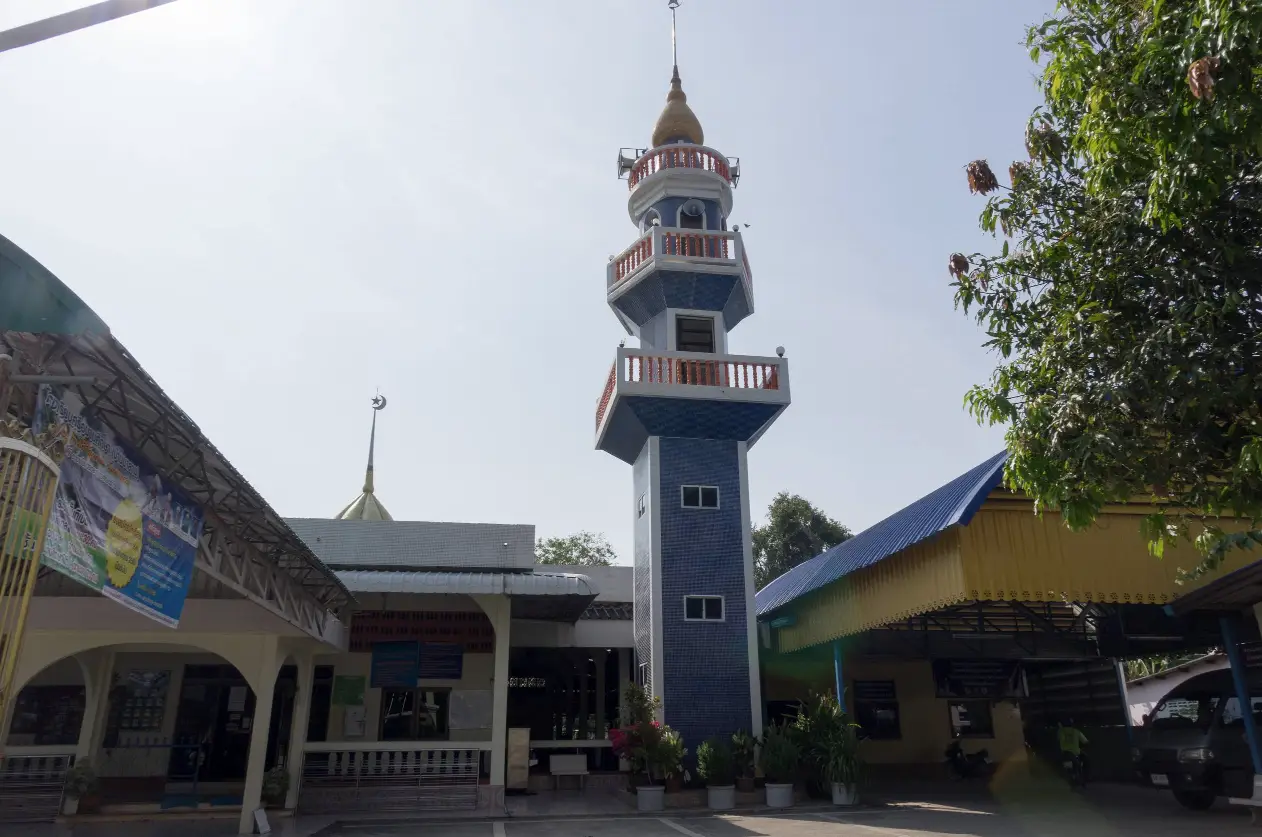
Buket Bu-Nga Mosque
Open Days: Contact The Mosque Before Entering Interior Areas
Opening Hours: Contact The Mosque Before Entering Interior Areas; Visitors Should Avoid Prayer Times
Buket Bu-Nga Mosque, also written in some sources as Buket Bu-Nga Mosque / Masjid Buket Bunga, is an important Islamic religious site in Moo 7, Ban Khlong Khut, Khlong Khut Subdistrict, Mueang Satun District, Satun Province. It is located along Yontarakarn Kamthorn Road, or Highway 406, a main route connecting Khlong Khut with Satun town and nearby communities. The mosque serves as a place of prayer, a Friday prayer venue, a place for Qur’an learning, a community gathering point, and the site of a mosque-based Islamic education center known locally as a TADIKA.
The name “Buket Bu-Nga” is closely connected with the older identity of Khlong Khut. The area was formerly known as “Buket Bunga,” a Malay-derived name meaning a beautiful flower hill. Local history explains that the name was linked with a hill near Khlong Mambang where plants and flowers bloomed beautifully in season. The mosque’s name therefore preserves more than a religious identity. It also preserves an older place name, the Malay linguistic background of the area, and the memory of the community before the present name Khlong Khut became widely used.
Khlong Khut itself has a meaningful local history. The area was once low-lying and prone to flooding, causing damage to houses and agricultural land. Local residents worked together to dig channels connecting the settlement with Khlong Mambang and Khlong Ta Yai to drain floodwater. Over time, the area came to be known as Khlong Khut, meaning a dug canal. In this context, Buket Bu-Nga Mosque is one of the cultural traces linking the older name Buket Bunga with the current community identity of Khlong Khut.
Buket Bu-Nga Mosque was registered as mosque number 77 on 1 September 1966. It is located in Moo 7, Yontarakarn Kamthorn Road, Khlong Khut Subdistrict, Mueang Satun District, Satun Province, and occupies an area of about 1 rai. Historical information states that the mosque began in 1957, when local villagers built a raised wooden building for prayer, Qur’an learning, and religious activities. This early wooden structure was the foundation of a mosque that grew directly from the needs and faith of the community.
As the number of worshippers increased, the community began constructing a new mosque building. This new structure was a single-storey half-concrete, half-wooden building on 1 rai of land donated by Haji Meed Manoon Dahwi. Once completed, villagers in Khlong Khut used it for Friday prayer and other religious activities. Haji Kasa Manoon Dahwi served as imam during this important period of the mosque’s development. This history shows that the mosque was built through local faith, donated land, and community participation.
The present mosque building is a single-storey reinforced-concrete structure with a flat roof. It was constructed between 1985 and 1992 and has continued to be used for religious activities since its completion. Historical records also note that the mosque has a large number of congregants and a 15-member mosque administrative committee. This means Buket Bu-Nga Mosque is not only a religious building, but also a structured community institution with people responsible for worship, education, building care, and community activity.
The mosque’s primary role is to serve as a place of worship for Muslims in Ban Khlong Khut. It supports prayer, Qur’an reading, Friday congregation, religious gatherings, community meetings, and Islamic occasions. In Muslim community life, a mosque is not used only during major events. It connects daily life with faith, discipline, calmness, and responsibility. Buket Bu-Nga Mosque therefore acts as both a sacred place and a social anchor for the local community.
Buket Bu-Nga Mosque is also home to the Islamic Education Center Attached To The Mosque, or TADIKA Buket Bu-Nga. The original information and local cultural data state that the center has 7 teachers and 161 students. This educational role makes the mosque highly important for the future of the community. Children and young people learn not only religious knowledge, but also manners, discipline, responsibility, respect for elders, and the values of living with others according to Islamic and community principles.
In southern Thailand, TADIKA education is a foundational institution for many Muslim communities. It connects homes, families, teachers, religious leaders, and the mosque. Children who study in a mosque-based Islamic education center absorb religion, language, culture, and ethics through a living community environment. For this reason, Buket Bu-Nga Mosque functions as both a center of faith and a center for shaping the next generation of Ban Khlong Khut.
The mosque has also been involved in community health and youth development activities. Public project information mentions a youth anti-drug activity supported by the Buket Bu-Nga Mosque committee. The project aimed to help young people understand the harms of drugs and harmful habits, develop self-control, and apply Islamic teachings in daily life. This role shows that the mosque contributes not only to religious rituals, but also to the quality of life and social resilience of the community.
Buket Bu-Nga Mosque has also been a venue for Islamic cultural activities organized in Khlong Khut, including Maulid events and group circumcision ceremonies. Such activities support Islamic tradition, reduce financial burdens for families, and allow the community to care for children according to religious practice. These activities confirm the mosque’s role as a public community space, not simply a prayer room for regular worshippers.
Another important aspect of Buket Bu-Nga Mosque is its role in Satun’s multicultural society. The mosque has been mentioned as a site for interfaith community activities involving Buddhist monks, Buddhist nuns, Muslim religious leaders, and local participants working together in health, care, peace, and social harmony programs. This shows how religious institutions in Satun can cooperate for community benefit while maintaining their own identities.
For cultural travelers, Buket Bu-Nga Mosque is valuable because it helps explain Khlong Khut through faith, language, geography, and local history. It preserves the older name Buket Bunga, functions as a long-standing mosque, supports TADIKA education, and remains part of the living religious life of the community. A visit here is therefore not only about viewing a mosque building. It is about understanding how a mosque shapes the social and cultural identity of one Satun community.
The architecture of Buket Bu-Nga Mosque reflects the character of a community mosque built for practical use. The present building is a single-storey reinforced-concrete structure with a flat roof, clearly different from the earlier raised wooden building. This transition from wood to reinforced concrete reflects the growth of the community, the increasing number of worshippers, and the need for a stronger building capable of supporting regular worship and community functions.
The beauty of Buket Bu-Nga Mosque lies not in monumental scale, but in its authenticity as a living mosque. The building, prayer area, TADIKA center, and activity spaces all remain connected with community life. Visitors who approach the mosque respectfully can understand its value as a center of Ban Khlong Khut rather than seeing it merely as a point on a map.
The mosque’s location along Yontarakarn Kamthorn Road gives it strong visibility and accessibility. This road is used by people traveling between Satun town, Khlong Khut, Ban Tha Chin, Ban Na Khae, and surrounding communities. Its roadside location makes the mosque both a place of faith and a local geographic reference point for people in the area.
One nearby place with clear local connection is Wat Mongkhon Ming Mueang, which local information describes as being opposite Buket Bu-Nga Mosque. The presence of a Buddhist temple and a mosque within the same community landscape reflects an important characteristic of Satun. Muslim and Buddhist communities have long lived within shared local spaces, and their religious institutions together help tell the story of the province’s peaceful multicultural character.
For visitors, Buket Bu-Nga Mosque is best approached as a cultural learning site rather than a place where all areas are freely open to tourism. Anyone wishing to enter interior areas should contact the mosque committee or caretakers in advance, especially for group visits, interior photography, or educational purposes related to the TADIKA and local history. Advance contact helps ensure that the visit is respectful and does not disturb worshippers or students.
Mosque etiquette is essential. Men and women should dress modestly, covering shoulders and knees. Tight or transparent clothing should be avoided. Visitors should keep quiet, avoid walking through prayer areas during worship, and should not photograph people without permission. If allowed to enter interior areas, visitors should remove shoes where required and follow the guidance of mosque caretakers.
The most suitable time for a cultural visit is outside prayer times, especially in the morning or afternoon when no major religious activity is taking place. Friday prayer periods should be avoided by general visitors, because many worshippers come to the mosque at that time. Visitors who want to learn seriously should contact the mosque before traveling rather than entering without prior notice.
Traveling to Buket Bu-Nga Mosque from Satun town is straightforward. Take Yontarakarn Kamthorn Road or Highway 406 toward Khlong Khut Subdistrict and Ban Khlong Khut. Private car, rental car, motorcycle, and local hired transport are practical options. If using local transport, visitors should clearly identify the destination as Buket Bu-Nga Mosque, Moo 7, Khlong Khut Subdistrict, or the area near Wat Mongkhon Ming Mueang.
Travelers interested in cultural routes can combine Buket Bu-Nga Mosque with places in Khlong Khut and Satun town. A route can begin with the mosque and the history of the former Buket Bunga area, continue to Wat Mongkhon Ming Mueang or local Khlong Khut community sites, then proceed to Satun Central Mosque, Wat Chanathip Chaloem, Satun National Museum at Kuden Mansion, Satun Clock Tower, and Buriwanich Road in Satun town.
Those interested in nature and community landscapes can also connect the mosque with Wang Raya Reservoir, Ban Na Khae, agricultural learning sites in Khlong Khut, and nearby canal-side communities. This kind of route is suitable for travelers who want to see real community life beyond the better-known attractions in Satun town.
From an educational perspective, Buket Bu-Nga Mosque is a useful case study of a community mosque with several functions: worship, religious education, youth development, community health, and interfaith relationship building. It can be studied through its architectural change from a raised wooden structure to a reinforced-concrete mosque, through its TADIKA role, through its mosque committee, and through its participation in wider community activities.
Overall, Buket Bu-Nga Mosque is more than a village mosque. It tells the story of Khlong Khut from the older name Buket Bunga to the present community identity. It reflects local faith, donated land, community-built religious architecture, mosque-based education, and social cooperation. A respectful visit helps travelers understand Satun more deeply through religion, language, place names, local history, education, and peaceful coexistence.
| Name | Buket Bu-Nga Mosque |
| Other Names Found In Sources | Buket Bunga Mosque, Masjid Buket Bunga, มัสยิดบูเก็ตบุหงา |
| Place Type | Mosque, Islamic Religious Site, Community Center, And Mosque-Based Islamic Education Center |
| Location | Moo 7, Ban Khlong Khut, Yontarakarn Kamthorn Road Or Highway 406, Khlong Khut Subdistrict, Mueang Satun District, Satun Province |
| Address | Moo 7, Yontarakarn Kamthorn Road, Khlong Khut Subdistrict, Mueang Satun District, Satun 91000, Thailand |
| Mosque Registration | Registration Number 77, Registered On 1 September 1966 |
| Area | About 1 Rai |
| Highlights | A long-standing community mosque connected with the former name Buket Bunga, serving prayer, Qur’an learning, religious activities, and TADIKA Buket Bu-Nga |
| History | Established in 1957 from a raised wooden prayer building; later developed into a single-storey half-concrete, half-wooden mosque; the current reinforced-concrete building was constructed between 1985 and 1992 |
| Name Origin | Buket Bunga is a Malay-derived name meaning a beautiful flower hill and is linked with the former name of Khlong Khut Subdistrict |
| Distinctive Features | A roadside community mosque that developed from a wooden raised structure into a reinforced-concrete mosque and continues to support local religious life |
| Main Areas / Zones | Prayer Area, Mosque Activity Area, TADIKA Buket Bu-Nga, Meeting Area, And Community Religious Activity Space |
| TADIKA Education Center | The Islamic Education Center Attached To Buket Bu-Nga Mosque is reported to have 7 teachers and 161 students |
| Facilities | Prayer Space, TADIKA Learning Area, Community Activity Area, Mosque Committee Contact Point, And Religious Event Space When Scheduled |
| Travel Information | From Satun town, take Yontarakarn Kamthorn Road or Highway 406 toward Khlong Khut Subdistrict and Ban Khlong Khut. Visitors can also identify the destination as the area near Wat Mongkhon Ming Mueang |
| Current Status | Still listed in online mosque and cultural databases and described as continuing to be used for religious activities |
| Open Days | Contact The Mosque Before Entering Interior Areas |
| Opening Hours | Contact The Mosque Before Entering Interior Areas; Visitors Should Avoid Prayer Times |
| Caretaker / Committee | Buket Bu-Nga Mosque Administrative Committee |
| Imam In The Mosque’s Construction History | Haji Kasa Manoon Dahwi |
| Main Contact Number | 081-542-0187 |
| Nearby Tourist Attractions | 1. Wat Mongkhon Ming Mueang, About 0.2 km 2. Lung Tueng Agricultural Learning Site, Khlong Khut, About 5 km 3. Wang Raya Reservoir, Ban Na Khae, About 7 km 4. Satun Central Mosque / Masjid Mambang, About 8 km 5. Satun National Museum, Kuden Mansion, About 8 km 6. Satun Clock Tower, About 8 km 7. Wat Chanathip Chaloem Royal Monastery, About 8 km |
| Nearby Restaurants | 1. Zareena Restaurant, About 1 km, Tel. 085-081-3140 2. Krua Nai Noi, About 1.5 km, Tel. 094-925-2534 3. Anda Shop Khlong Khut 37, About 2 km, Tel. 065-527-3638 4. Cha Rim Thang, Khlong Khut Branch Next To Toyota, About 4 km, Tel. 065-038-1044 5. Mother’s Kitchen, About 5 km, Tel. 088-791-0662, 066-109-9758, 095-706-6022 6. Arayeh Bakery, About 5 km, Tel. 064-168-6566 7. Lannaban Restaurant, About 6 km, Tel. 082-802-8312 |
| Nearby Accommodations | 1. Lomlay Resort, About 2 km, Tel. 081-738-1230 2. Phiphat Resort, About 3 km, Tel. 091-459-4738 3. Sud Yod Resort, About 4 km, Tel. 089-468-9304 4. Khanun Resort, About 5 km, Tel. 074-772-255 5. My House Resort, About 6 km, Tel. 074-721-700 |
Frequently Asked Questions (FAQ)
Q: Where is Buket Bu-Nga Mosque located?
A: Buket Bu-Nga Mosque is located in Moo 7, Ban Khlong Khut, on Yontarakarn Kamthorn Road or Highway 406, Khlong Khut Subdistrict, Mueang Satun District, Satun Province.
Q: When was Buket Bu-Nga Mosque registered?
A: The mosque was registered as mosque number 77 on 1 September 1966.
Q: What does the name Buket Bu-Nga mean?
A: Buket Bunga is a Malay-derived name meaning a beautiful flower hill. It is linked with the former name of Khlong Khut Subdistrict.
Q: What is the history of Buket Bu-Nga Mosque?
A: The mosque began in 1957 as a raised wooden building used for prayer, Qur’an learning, and religious activities. It later developed into a half-concrete, half-wooden mosque, and the current reinforced-concrete building was constructed between 1985 and 1992.
Q: What is the role of TADIKA Buket Bu-Nga?
A: TADIKA Buket Bu-Nga is the Islamic education center attached to the mosque. It provides religious knowledge, manners, discipline, and community values for children and youth in Ban Khlong Khut.
Q: Can non-Muslim visitors visit Buket Bu-Nga Mosque?
A: Non-Muslim visitors may respectfully view the exterior and learn about the mosque. Interior access should be requested from the mosque committee or caretakers, and visitors should dress modestly and avoid prayer times.
Q: How do travelers get to Buket Bu-Nga Mosque?
A: From Satun town, take Yontarakarn Kamthorn Road or Highway 406 toward Khlong Khut Subdistrict and Ban Khlong Khut. Local transport users should identify the destination as Buket Bu-Nga Mosque, Moo 7, Khlong Khut.
Q: What nearby places can visitors see after Buket Bu-Nga Mosque?
A: Nearby places include Wat Mongkhon Ming Mueang, agricultural learning sites in Khlong Khut, Wang Raya Reservoir, Satun Central Mosque, Satun National Museum at Kuden Mansion, Satun Clock Tower, and Wat Chanathip Chaloem.
 Category: ●Places of Worship
 Group: ●Mosque
Last Update : 2 MonthAgo
 Last Update : 2 MonthAgo
 Click to Access the Navigation Map GPS
Buket Bu-Nga Mosque Map
Recommend

 Art, Culture and Heritage
 Historical Sites and Monuments(1)
 Landmarks and Memorials(1)
 Art, Craft Centres, Tradition(5)
 Museums(3)
 Temple(3)
Mosque(27)
 Other Sacred Sites(1)
 Suburban Living
 Village, Community(1)
 Local Market(2)
 Nature and Wildlife
 National Parks and Marine Reserves(7)
 Mountain (Doi)(1)
 Dam, Reservoir, Lake(2)
 Waterfalls(9)
 Hot Springs(1)
 Caves(9)
 Bays and Beaches(10)
 Islands(16)
 Other natural attractions(5)
 Entertainment and Agricultural
 Zoos and Aquariums(1)
 Farms, Parks and Ecotourism(4)
 Outdoor and Adventure Activities(1)
 Travel Articles, Recipes
 Travel Review, Food Review(1)


