
lovethailand home >South Travel Attractions >Satun Travel Attractions >La Ngu >Nam Phut > Wang Sai Than Rafting
TL;DR: Wang Sai Than Rafting is located at Moo 10, Ban Wang Na Nai, Nam Phut Subdistrict, La-ngu District, Satun Province 91110, Thailand, open Available By Operator Booking And Water Conditions, hours Daytime Service Recommended; Contact Operators In Advance.
Wang Sai Than Rafting
Open Days: Available By Operator Booking And Water Conditions
Opening Hours: Daytime Service Recommended; Contact Operators In Advance
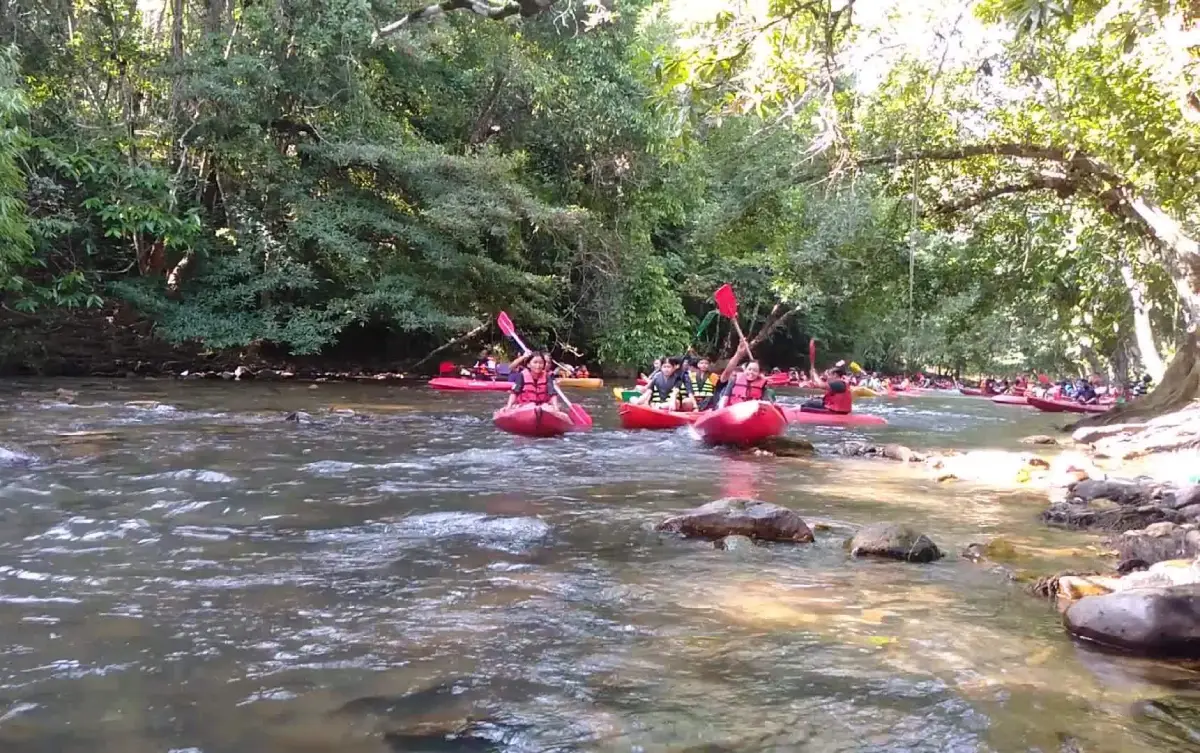
Wang Sai Than Rafting, commonly connected with the Wang Sai Thong rafting route in Satun Province, is a well-known adventure activity in Ban Wang Na Nai, Moo 10, Nam Phut Subdistrict, La-ngu District. The route follows clear streams flowing from the Wang Sai Thong waterfall area through the forested foothills of the Banthat Range. Visitors paddle through calm sections, winding channels, rocky stretches, and small rapids over a route of about 8–10 km. A typical rafting trip takes a little over two hours and is guided by local experts who assist visitors throughout the route. This makes the activity suitable for groups of friends, families, nature travelers, and visitors who want to experience Satun beyond beaches and islands.
The strongest appeal of Wang Sai Than rafting is the clarity and freshness of the stream. The water runs through a forested upstream environment where rocks, gravel, sand, and trees along both banks can be seen clearly. The experience is not only about excitement. It is also about moving through a living natural corridor where visitors hear the sound of water against rocks, the rhythm of paddles, the voices of guides, and the quiet atmosphere of the surrounding forest. The route changes constantly, from peaceful sections for scenery to livelier rapids that require balance, timing, and teamwork.
Ban Wang Na Nai is a community closely connected with the forest and waterways of the Banthat Range. The rafting route is therefore more than a recreational water activity. It links Khlong Lam Lon, Wang Sai Thong Waterfall, Chet Khot Cave, upstream forest, and local tourism operators in one community-based experience. The names Wang Sai Than and Wang Sai Thong are often connected in this travel area because both refer to the same wider nature-based water route and local tourism setting.
The key natural source of the area is Wang Sai Thong Waterfall, a limestone waterfall in the Khao Banthat Wildlife Sanctuary area of Nam Phut Subdistrict, Satun Province. The waterfall is known for layered limestone formations created by mineral-rich water. Calcium carbonate deposits form distinctive limestone surfaces, and when clear water flows across the pale golden rock under sunlight, the waterfall takes on a sparkling appearance. This natural feature gives Wang Sai Thong its name and makes the area important for nature, geology, recreation, and environmental learning.
The rafting route contains shallow water, stronger currents, gentler sections, and natural rock formations. Its fun comes from the changing rhythm of the stream rather than extreme difficulty alone. Visitors paddle around bends, move past rocks, pass through shifting currents, and enjoy cool water flowing through the forest. It is an adventure activity with enough challenge to be exciting while still being managed by local guides and rafting operators.
Rafting equipment generally includes kayaks or small rafting boats, paddles, and life jackets. Local staff guide visitors and supervise the trip. Participants should wear life jackets at all times, listen carefully to the safety briefing, and follow the signals of the guide, especially in faster sections and rocky parts of the stream. A safe rafting experience depends not only on equipment, but also on discipline, teamwork, and respect for local guidance.
The rafting distance is about 8 km according to the original local information, while some tourism sources describe route options of about 8–10 km. The route begins from the upstream area and follows the stream through forested scenery before reaching the area connected with Chet Khot Cave, an important end point of the rafting route. Because the distance is long enough to feel substantial, visitors get more than a short splash activity. They spend meaningful time on the water and see the upstream forest landscape of Satun continuously.
Chet Khot Cave adds another layer to the rafting route because the journey connects moving water with limestone terrain and cave landscapes. This part of Satun belongs to the wider context of Satun UNESCO Global Geopark, where caves, waterfalls, limestone, fossils, forests, and communities are closely related. Wang Sai Than rafting helps visitors see the connection between water, forest, rock, and community-based tourism in one activity.
Rafting in the Wang Sai Than and Wang Sai Thong area can be enjoyed for much of the year because the waterfall and stream system are relatively consistent. Water level still affects both excitement and safety. Higher water can make the trip more thrilling, while normal water conditions create a calmer experience suitable for families and first-time visitors. Travelers should contact operators before the trip to confirm service rounds, water level, weather, and route readiness.
Ban Wang Na Nai is also known for its local food and community atmosphere. Visitors who book rafting packages may experience dishes such as banana-stem chicken curry, fresh fern salad, and other local meals that reflect the resources of the surrounding forest and stream environment. These meals complete the rafting experience because visitors do not only use the area for adventure. They also learn about local hospitality, food culture, and the community economy around Wang Sai Thong.
The area is also connected with the Mani people, an Indigenous group living in parts of the Banthat forest area. Any learning activity related to Mani culture should be approached respectfully. Visitors should not treat people as attractions, should not take photos without permission, and should respect personal space. When community-led interpretation is available, it should be received with care and understanding because this is a living way of life, not a performance for tourism.
Wang Sai Than rafting works especially well for groups. The enjoyment comes from paddling together, communicating through the route, passing rapids as a team, and sharing moments on the water. Friends get excitement and laughter. Families get an outdoor memory. Study groups or organizations can use the activity to learn about community-based tourism, safety management, nature interpretation, and responsible use of natural resources.
First-time rafters can enjoy the route when they follow the guides carefully and use all safety equipment properly. Participants should inform operators if they cannot swim well, have health conditions, or have never rafted before. They should avoid bringing valuables onto the boat, use waterproof bags for phones, and wear clothes that can get wet, dry quickly, and allow easy movement.
The best time for the activity is during daylight hours because clear visibility is important for seeing rocks, currents, and route conditions. Travelers should arrive before the rafting round to change clothes, receive a briefing, put on equipment, and prepare properly before entering the water. After the activity, they should allow time to change, rest, eat, and check belongings before continuing. A relaxed schedule makes the trip safer and more enjoyable.
From Hat Yai, travelers can head toward Satun for about 80 km, then turn at Nikhom junction, where a mosque is located near the traffic-light intersection. Continue along Route 4137 toward Ban Wang Na Nai for roughly another 40 km. The road is paved and there are direction signs at intervals. Travelers using private vehicles should check their vehicle before departure, especially during the rainy season, because roads near hills and streams require more care than ordinary city roads.
From Satun town, travel toward La-ngu District and Nam Phut Subdistrict, then continue to Ban Wang Na Nai and the Wang Sai Thong rafting area. The route can be combined with Wang Sai Thong Waterfall, Phu Pha Phet Cave, Chet Khot Cave, Khao Daeng Fossil Site, La-ngu Local Museum, Pak Bara Beach, and Mu Ko Phetra National Park. With good planning, visitors can spend one or two days exploring the La-ngu and Manang side of Satun.
Choosing the right operator is important because rafting involves safety, equipment, schedules, insurance, transport, and meals. Local operators in the Wang Sai Thong area include Phu Than Resort, Satun Riverside, Phu Pha Daeng Satun Local, Phu Thara Rafting Satun, Tharn Thong Satun Tour and Resort, Kru Da Rafting and Homestay, and Wang Sai Thong Community Tourism. Travelers should book directly with operators or ask TAT Satun Office for current contacts and service information.
Some operators in the area list rafting prices at 250 baht for adults and 150 baht for children under 10, including accident insurance and staff support along the route. Packages that include accommodation, meals, and additional activities vary by operator, room type, number of guests, travel date, and included services. Travelers should confirm current prices directly before booking because promotions and packages change by season.
Useful items to bring include clothes that can get wet, secure sandals or water shoes, a waterproof phone pouch, towel, change of clothes, personal medicine, drinking water, and a bag for wet items. Loose slippers and easy-to-drop belongings are not recommended on the boat. Visitors who want photos during the trip should prioritize safety and use sealed waterproof protection.
For safety, visitors should avoid rafting during heavy rain, flash-flood risk, or unsafe weather. Operators and local guides assess route readiness. If staff advise delaying or stopping the activity, visitors should follow the instruction immediately. Good adventure travel means enjoying nature under safe conditions, not taking unnecessary risks.
The rainy season can be a rewarding time for rafting because the forest becomes greener and the stream becomes more energetic. It also requires more careful planning. Travelers should check road conditions, water levels, weather forecasts, and operator schedules. Those who want a lively atmosphere can visit during holidays, while those who prefer quieter conditions should choose weekdays and book accommodation in advance.
For families, it is best to choose operators with complete safety equipment, experienced staff, and clear support for children or beginners. Children should wear properly fitted life jackets and remain under adult supervision throughout the trip. Older visitors or people with health concerns should assess their condition carefully because the activity involves sitting in a boat for an extended period, getting wet, and passing through moving water and rocks.
Photographers will find several strong subjects along the route: colorful kayaks on clear water, forested riverbanks, rocks in the stream, groups in life jackets, and quiet resting points by the water. Morning to late afternoon light usually works best. When photographing local residents or the Mani people, permission should always be requested and personal dignity should be respected.
Wang Sai Than rafting supports the local economy because many local operators provide rafting, accommodation, meals, transport, and add-on activities such as waterfall visits, cave trips, community learning, and ATV rides in some packages. Responsible tourism means choosing reliable local services, keeping the stream clean, avoiding litter, and supporting community food and products where appropriate.
For a one-day trip, visitors can arrive in the morning, join the booked rafting round, eat local food after the activity, and visit Wang Sai Thong Waterfall or a nearby natural site before returning. Those with more time can stay overnight at a homestay or riverside resort to enjoy the morning atmosphere around the forest and stream, which is usually cooler and quieter.
A two-day trip can use the first day for rafting and riverside relaxation, then continue on the second day to Phu Pha Phet Cave, Wang Sai Thong Waterfall, Khao Daeng Fossil Site, or Pak Bara Beach. This gives travelers a fuller experience of upstream forest, caves, waterfalls, local communities, and the coastal side of Satun.
Visitors should keep the stream clean, avoid loud noise that disturbs communities, avoid collecting rocks or plants, avoid feeding wildlife, avoid alcohol before and during water activities, and never enter sections that guides do not approve. These rules help keep the stream safe, clean, and enjoyable for future visitors.
In summary, Wang Sai Than rafting is one of the activities that makes Satun more diverse as a travel destination. It combines the fun of moving water, the coolness of upstream forest, the beauty of limestone waterfall country, the local life of Ban Wang Na Nai, and the community-based service network of Wang Sai Thong. Travelers who know Satun only for the sea will discover another side of the province here. With advance booking, a suitable operator, and proper attention to safety, this rafting route can be one of the most memorable nature experiences in Satun.
Getting There to Wang Sai Than rafting from Hat Yai starts by heading toward Satun for about 80 km. At Nikhom junction, where a mosque is located near the traffic-light intersection, turn onto Route 4137 and continue toward Ban Wang Na Nai for about 40 km. From Satun town, travel to La-ngu District and Nam Phut Subdistrict, then continue to the Wang Sai Thong rafting area in Ban Wang Na Nai, Moo 10. Private cars, tourist vans, and transport arranged by operators are suitable. Travelers should contact the selected rafting operator before departure to confirm the meeting point, rafting round, water conditions, and return transport after the activity.
| Name / Activity | Wang Sai Than Rafting / Wang Sai Thong Rafting |
| Location | Moo 10, Ban Wang Na Nai, Nam Phut Subdistrict, La-ngu District, Satun Province 91110, Thailand |
| Key Natural Area | Khlong Lam Lon, Wang Sai Thong Waterfall, Chet Khot Cave, and the upstream forest of the Banthat Range |
| Rafting Distance | About 8–10 km, depending on the route and operator package |
| Approximate Duration | A Little Over 2 Hours |
| Highlights | Kayaking along a clear forest stream with small rapids, rocks, shaded riverbanks, and upstream nature of the Banthat Range |
| Activity Type | Water adventure activity supervised by local guides or staff, with basic equipment such as life jackets, boats, and paddles |
| Open Days | Available by operator booking and water conditions |
| Opening Hours | Daytime service recommended; contact operators in advance |
| Local Service Fee Found | Some operators list rafting at 250 baht for adults and 150 baht for children under 10, including accident insurance and staff support along the route |
| Suitable For | Friends, families, nature travelers, adventure travelers, and community-based tourism groups |
| Recommended Equipment | Life jacket, paddle, secure sandals or water shoes, wet-friendly clothing, waterproof phone pouch, and change of clothes after the activity |
| Safety Notes | Follow guide instructions, wear a life jacket at all times, avoid rafting during heavy rain or flash-flood risk, and do not enter water sections without guide approval |
| Caretakers / Service Providers | Wang Sai Thong rafting operator network, local operators in Ban Wang Na Nai, and relevant natural-site caretakers |
| Local Operator Contacts | Phu Than Resort Tel. 093-005-5501 Satun Riverside Rafting Tel. 089-598-1712 Phu Pha Daeng Satun Local Tel. 086-946-9229 Phu Thara Rafting Satun Tel. 086-618-1091 Tharn Thong Satun Tour And Resort Tel. 062-156-1388, 092-357-7988 Kru Da Rafting & Homestay Tel. 087-899-2316, 074-720-754 Wang Sai Thong Community Tourism / Ban Suea Pa Homestay Tel. 097-390-6670 |
| Travel Information | From Hat Yai, travel toward Satun for about 80 km, turn at Nikhom junction onto Route 4137, and continue toward Ban Wang Na Nai for about 40 km. From Satun town, travel toward La-ngu and Nam Phut. |
| Nearby Tourist Attractions | 1. Wang Sai Thong Waterfall, about 1 km 2. Chet Khot Cave, about 8 km 3. Phu Pha Phet Cave, about 20 km 4. Khao Daeng Fossil Site, about 30 km 5. Satun Inland Fisheries Research And Development Center, about 35 km 6. La-ngu Local Museum, about 38 km 7. Pak Bara Beach, about 50 km 8. Mu Ko Phetra National Park, about 50 km |
| Nearby Restaurants | 1. Phu Than Resort Restaurant And Activities, about 1 km, Tel. 093-005-5501 2. Tharn Thong Satun Tour And Resort Restaurant And Rafting, about 1 km, Tel. 062-156-1388, 092-357-7988 3. Na Wang Sai Thong Homestay And Restaurant, about 1 km 4. Phubanthad Valley Accommodation And Food, about 2 km, Tel. 085-796-2548 5. Bulan Thara Rooms And Restaurant Wang Sai Thong Satun, about 2 km, Tel. 080-036-2788 6. Krua Rim Lay Seafood Pak Bara, about 50 km, Tel. 083-195-7844, 087-794-0699 |
| Nearby Accommodations | 1. Phu Than Resort, about 1 km, Tel. 093-005-5501 2. Tharn Thong Satun Tour And Resort, about 1 km, Tel. 062-156-1388, 092-357-7988 3. Phubanthad Valley, about 2 km, Tel. 085-796-2548 4. Thap Thung Thong Rafting & Homestay, about 2 km, Tel. 084-415-2085 5. Bulan Thara Rooms And Restaurant Wang Sai Thong Satun, about 2 km, Tel. 080-036-2788 6. Phu Pha Daeng Satun Local / Phu Pha Daeng Homestay, about 5 km, Tel. 086-946-9229 7. Kru Da Rafting & Homestay, about 5 km, Tel. 087-899-2316, 074-720-754 |
Frequently Asked Questions (FAQ)
Q: Where is Wang Sai Than Rafting located?
A: Wang Sai Than Rafting is located around Ban Wang Na Nai, Moo 10, Nam Phut Subdistrict, La-ngu District, Satun Province. It is connected with the Wang Sai Thong rafting route, Khlong Lam Lon, Wang Sai Thong Waterfall, and Chet Khot Cave.
Q: How long is the rafting route?
A: The rafting route is generally about 8–10 km, depending on the operator and selected package. A typical trip takes a little over two hours.
Q: Is Wang Sai Than Rafting suitable for beginners?
A: Yes. Beginners can join when they follow guide instructions, wear safety equipment properly, and choose a suitable operator with experienced local staff.
Q: How much does rafting cost?
A: Some local operators list rafting at 250 baht for adults and 150 baht for children under 10. Packages that include accommodation, meals, or extra activities vary by operator.
Q: What is the best time to go rafting?
A: The route can be visited for much of the year, but safe weather and suitable water levels are important. The rainy season makes the forest greener and the stream more energetic, but travelers should confirm water conditions with operators first.
Q: What should visitors bring?
A: Bring wet-friendly clothing, secure sandals or water shoes, a waterproof phone pouch, towel, change of clothes, personal medicine, and follow all guide instructions. A life jacket should be worn throughout the activity.
Q: How do travelers get to Wang Sai Than Rafting?
A: From Hat Yai, head toward Satun for about 80 km, then turn at Nikhom junction onto Route 4137 and continue toward Ban Wang Na Nai for about 40 km. From Satun town, travel toward La-ngu District and Nam Phut Subdistrict.
Q: What attractions can be visited nearby?
A: Nearby attractions include Wang Sai Thong Waterfall, Chet Khot Cave, Phu Pha Phet Cave, Khao Daeng Fossil Site, La-ngu Local Museum, Pak Bara Beach, and Mu Ko Phetra National Park.
Mobile : 0850812795
 Mobile : 0850812795
 Category: ●Entertainment and Agricultural
 Group: ●Outdoor and Adventure Activities
Last Update : 2 MonthAgo
 Last Update : 2 MonthAgo
 Click to Access the Navigation Map GPS
Wang Sai Than Rafting Map
Recommend

 Art, Culture and Heritage
 Historical Sites and Monuments(1)
 Landmarks and Memorials(1)
 Art, Craft Centres, Tradition(5)
 Museums(3)
 Places of Worship
 Temple(3)
 Mosque(27)
 Other Sacred Sites(1)
 Suburban Living
 Village, Community(1)
 Local Market(2)
 Nature and Wildlife
 National Parks and Marine Reserves(7)
 Mountain (Doi)(1)
 Dam, Reservoir, Lake(2)
 Waterfalls(9)
 Hot Springs(1)
 Caves(9)
 Bays and Beaches(10)
 Islands(16)
 Other natural attractions(5)
 Zoos and Aquariums(1)
 Farms, Parks and Ecotourism(4)
Outdoor and Adventure Activities(1)
 Travel Articles, Recipes
 Travel Review, Food Review(1)


