
lovethailand home >South Travel Attractions >Satun Travel Attractions >La Ngu >La Ngu > Traditional Paddle Boat Competition
TL;DR: Traditional Paddle Boat Competition.
Traditional Paddle Boat Competition
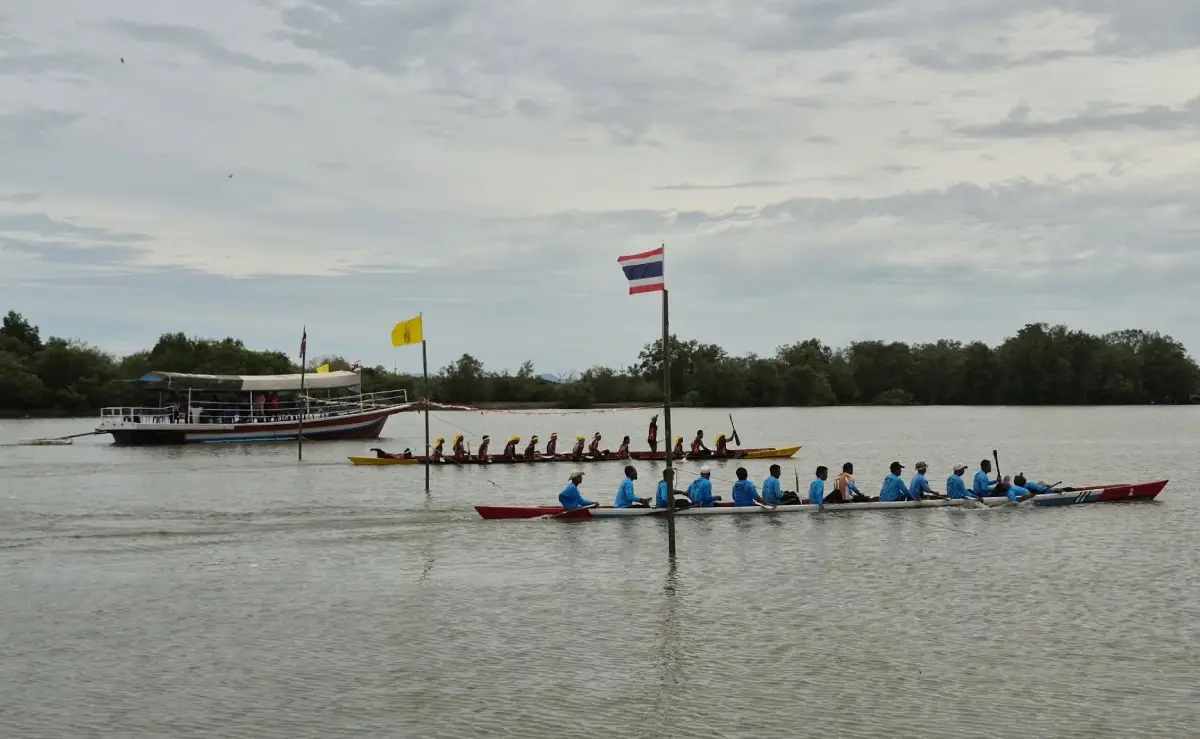
Festival Period: Formerly held during the La-Ngu tourism promotion festival and the Razor Clam and Local Culture Festival in January
Festival Venue: Nong Pan Ya Public Pond Park, Moo 2, Ban Pak La-Ngu, La-Ngu Subdistrict, La-Ngu District, Satun Province
The Traditional Paddle Boat Competition in Satun at Nong Pan Ya Public Pond Park is a local cultural activity of La-Ngu Subdistrict, La-Ngu District, Satun Province. It is closely connected with waterfront life, coastal communities, small-scale fishing culture, and local tourism festivals. The source information identifies the event area as Moo 2, La-Ngu Subdistrict, La-Ngu District, Satun Province, and refers to the 2013 traditional paddle boat competition held at Nong Pan Ya Public Pond Park. When explained in a fuller cultural context, this activity is not merely a water sport. It is a community event where public space, local water, teamwork, and festival culture come together.
Nong Pan Ya Public Pond Park is an important community space in Ban Pak La-Ngu, Moo 2, La-Ngu Subdistrict. It functions as a water area, public rest space, community activity venue, and local festival site. This type of landscape is well suited to paddle boat activities because it has water familiar to local residents, banks where spectators can gather, and enough community context to support food stalls, cultural activities, and local trade. During a boat race, the pond changes from an ordinary public park into a field of cheering, teamwork, and community pride.
The traditional paddle boat competition in La-Ngu appears within the broader framework of the La-Ngu tourism promotion festival and the Razor Clam and Local Culture Festival. These events present the local identity of an Andaman coastal district through razor clam gathering, local food, community products, cultural performances, contests, health runs, and paddle boat competitions. By gathering many activities in one festival, La-Ngu presents itself not as a temporary market but as a community with sea, water, food, sport, tradition, and social cooperation.
The importance of the traditional paddle boat competition lies in the way it transforms everyday water-based life into a public cultural performance. In coastal Satun, boats are not only vehicles. They are tools of livelihood, part of fishing-family life, routes between homes and the sea, and symbols of skill in living with water. The paddle boat competition therefore grows from real life rather than from a sport imported only for entertainment.
In the past, people in La-Ngu and nearby coastal communities used boats for travel, trade, fishing, shellfish gathering, and access to areas where roads were less convenient. Paddling skill was part of practical local knowledge. People learned to understand water direction, wind, tides, boat weight, and paddling rhythm through lived experience. When these skills enter a competition field, they become a display of teamwork, strength, and knowledge of water.
A paddle boat competition requires physical power, discipline, and team coordination. Every paddler must move in the same rhythm, follow the signal, and maintain energy until the finish. A team with strength but poor rhythm loses speed and balance. A team with good rhythm but weak endurance may fall behind near the end. Boat racing therefore shows that success does not come from one person alone; it comes from everyone in the boat working as a single unit.
The charm of the race is found along the pond bank. Spectators can watch boats cut across the water, paddlers lean forward together, splashes rise with every stroke, and cheering build along the edge of the pond. The atmosphere is more than a contest of winners and losers. It is a shared emotional experience in which the community becomes part of the race. Local people often remember the event through sound, movement, and togetherness as much as through the name of the winning team.
When the paddle boat competition is held together with the Razor Clam and Local Culture Festival, its meaning becomes even stronger. Razor clams are a local coastal resource closely tied to La-Ngu’s way of life. Gathering razor clams requires knowledge of mudflats, low tide, timing, and experience. Paddle boat racing requires knowledge of water, wind, force, and team rhythm. Both activities are forms of local wisdom created by living closely with nature.
The Razor Clam and Local Culture Festival forms an important background to the boat race because it is the event through which La-Ngu communicates its identity to visitors. The festival includes community products, local food, razor clam competitions, cultural performances, contests, and recreational activities. When the boat race is placed within this setting, visitors do not see only a sport. They experience a wider cultural system made of food, sea, community, and local play.
As a local tradition, the paddle boat competition helps strengthen relationships within villages and the subdistrict. Teams must gather paddlers, train, prepare boats, and plan their race. Spectators, relatives, neighbors, and local residents support the event by cheering, organizing, selling food, looking after the venue, and welcoming visitors. One race therefore brings together local government, community leaders, entrepreneurs, athletes, youth, and residents.
The competition is also a space for intergenerational learning. Young people learn that paddling is not only a matter of force; it requires responsibility toward the boat and fellow paddlers. Older paddlers pass down knowledge about holding the paddle, sitting in the boat, keeping rhythm, and solving balance problems. This turns the race into a water-based classroom that teaches body control, discipline, and teamwork.
In terms of location, Nong Pan Ya Public Pond Park is meaningful because it is located in Moo 2, Ban Pak La-Ngu, a community linked to La-Ngu’s tourism routes. From this area, visitors can travel onward to Bang Sila Beach, Hua Hin Beach, Ao Thung Nui, community-based tourism along Khlong La-Ngu to the sea, and the route toward Pak Bara. Holding the event at Nong Pan Ya helps visitors recognize that La-Ngu is not only a gateway to islands, but also a district with its own inland community culture.
The memorable image of the traditional paddle boat competition is the lively pond bank. Boats are prepared, teams wear their colors, the water reflects movement, spectators gather along viewing points, and the sounds of announcements, cheering, and paddles hitting water fill the area. This kind of event deserves to be recorded as a local tradition because it shows image, sound, space, and social connection clearly.
Rules in community paddle boat competitions generally focus on safety, coordination, and reaching the finish according to the set distance. Teams must follow the assigned course, avoid obstructing other boats, and use equipment accepted by the organizers. Exact rules may vary by year and organizer, but the core principles remain fairness, safety, and the preservation of an enjoyable festival atmosphere.
Boat preparation is an important part of the event. Teams need to check the hull, paddles, seating, balance, and safety equipment. A race boat must suit the number of paddlers and the water conditions. If the boat is too heavy, speed becomes difficult. If it is light but poorly controlled, balance may suffer. Teams therefore need to understand their boat and practice with it before race day.
The rhythm of the paddlers is the heart of the race. The front paddlers help set the opening pace, the middle section maintains the team’s power, and the rear section contributes to balance and direction. Everyone must follow the same signal and move together. The sight of paddlers leaning, lifting, and striking the water in one rhythm is one of the clearest expressions of teamwork in local sport.
For spectators, the excitement begins when the boats are released and continues until the finish. Some boats start quickly, some gain speed in the middle, and some overtake near the end by keeping a strong rhythm. Cheering from the banks gives emotional strength to the paddlers. Many spectators cheer not only for familiar teams, but for the effort of every team on the water.
The traditional paddle boat competition has value for cultural tourism because visitors see a living relationship between people and water. They do not receive only entertainment from the race. They also encounter local food, razor clam culture, community trade, performances, and the atmosphere of La-Ngu’s people. This full context makes the event more meaningful than a single isolated sport activity.
Economically, the race and related community festival support local vendors, restaurants, accommodations, transport providers, and community-product groups. When spectators and travelers enter the area, local food and products gain visibility. Seafood, razor clam dishes, local snacks, and community products can reach more people. The boat race therefore helps draw people into the area and supports grassroots economic movement.
The La-Ngu Subdistrict Administrative Organization plays an important role in local space management and community events. It is the local body closest to the community and is connected with education, religion, culture, sport, recreation, and local tourism development. The continued appearance of Nong Pan Ya as a public space and community activity area shows that it remains an important shared resource for La-Ngu residents.
From a conservation perspective, the traditional paddle boat competition should be seen as part of the memory of waterfront communities. Without documentation and transmission, activities that once brought local people together may fade with time. Writing about the race should therefore go beyond the year and venue. It should explain why La-Ngu uses boats, water, cheering, and festivals to express community identity.
What distinguishes this tradition from larger long-boat events in other provinces is its local scale and community character. It is not defined by national-level grandeur, but by closeness between people and place. Many spectators are local residents or visitors from nearby districts. Participants are connected with the community, and the venue is a public park familiar to local people. This simplicity is part of the tradition’s charm.
Getting There to Nong Pan Ya Public Pond Park involves traveling into La-Ngu District, Satun Province, then entering La-Ngu Subdistrict and Ban Pak La-Ngu, Moo 2. During festival periods, visitors should allow extra travel time because roads near the activity area may be busier than usual. Parking should be done only in places arranged by the community or officials.
Visitors should prepare for an outdoor waterside event. Comfortable shoes, hats, umbrellas, drinking water, and close supervision of children are recommended. Spectators should avoid standing too close to the water’s edge or entering race preparation zones without permission. They should not block the boat route or interfere with the work of race officials. Keeping the public park clean is also important because the area belongs to the community.
When the race is held together with food and culture activities, visitors should also respect La-Ngu’s local way of life. The area is culturally diverse, and much of its food culture is connected with Muslim communities and coastal seafood. Buying food from festival vendors supports the community directly and helps visitors experience La-Ngu through local flavors.
Nearby attractions that work well with a visit to Nong Pan Ya include Bang Sila Beach, Hua Hin Beach, Ao Thung Nui, Khlong La-Ngu community-based tourism routes to the sea, and Mu Ko Phetra National Park. These places help visitors understand La-Ngu as a coastal district with sea, mangroves, fishing communities, and local culture, not only as a transit point to Pak Bara Pier or Ko Lipe.
Bang Sila Beach and Hua Hin Beach reflect the coastal life of La-Ngu Subdistrict. Ao Thung Nui and the Khlong La-Ngu route show the relationship between canals, mangroves, and the sea. When combined with the paddle boat competition, these places help visitors see how boats, water, shellfish, and community life belong to the same landscape.
For those interested in southern Thai culture, the paddle boat competition at Nong Pan Ya is a useful case study because it has a clearly identified local source and venue. Although the original information refers to 2013, the activity can be understood through the broader context of La-Ngu’s tourism promotion festival and Razor Clam and Local Culture Festival. The value lies in preserving the source information while adding accurate context about the location, water culture, coastal livelihoods, community festivals, and local administration.
The key theme of the tradition is the relationship between water and the people of La-Ngu. Nong Pan Ya is not just a background. It is the place that makes the activity possible. The boat is not merely sports equipment. It represents water-based life skills. The paddlers are not only athletes. They represent teams and communities. Cheering is not only entertainment. It is social energy that gives the race its meaning.
In a broader view, the La-Ngu traditional paddle boat competition has value as cultural heritage connected with community tourism. If the area is well maintained, the event is organized safely, and information is communicated accurately, this activity can help younger generations see that local traditions are not distant or obsolete. They are practices that can be joined, learned, and valued through their own hometown.
In summary, the Traditional Paddle Boat Competition in Satun at Nong Pan Ya Public Pond Park, Moo 2, La-Ngu Subdistrict, La-Ngu District, is a cultural activity that reflects the waterfront and coastal life of La-Ngu. It is connected with La-Ngu tourism promotion activities and the Razor Clam and Local Culture Festival, which include local food, community products, cultural performances, and multiple community activities. The paddle boat race turns Nong Pan Ya into a place of teamwork, cheering, and water-based wisdom. It is a local tradition worth documenting, explaining, and passing on so that future generations can understand the cultural value of La-Ngu more fully.
| Tradition Name | Traditional Paddle Boat Competition in Satun |
| Category | Local tradition, folk competition, waterfront culture, and community tourism activity |
| Festival Area | Moo 2, Ban Pak La-Ngu, La-Ngu Subdistrict, La-Ngu District, Satun Province |
| Festival Venue | Nong Pan Ya Public Pond Park |
| Festival Period | Formerly held during the La-Ngu tourism promotion festival and the Razor Clam and Local Culture Festival in January |
| Current Status | Nong Pan Ya remains listed as a public and tourism-related area of La-Ngu Subdistrict. The paddle boat competition at this venue is documented in earlier La-Ngu festival records. |
| Year Mentioned In Source Data | 2013 at Nong Pan Ya Public Pond Park |
| Importance | Reflects La-Ngu’s waterfront and coastal life, transmits paddling skills, builds community unity, and supports cultural tourism |
| Related Activities | Razor Clam and Local Culture Festival, community product sales, local food, cultural performances, health runs, and La-Ngu tourism promotion activities |
| Main Event Zones | Boat racing area, pond-bank spectator area, committee area, food and vendor area, community activity area, and public park rest area |
| Caretaker / Related Body | La-Ngu Subdistrict Administrative Organization, La-Ngu District, Satun Province, and local community partners |
| Local Executive | Mr. Chamrat Hongsai, Chief Executive of La-Ngu Subdistrict Administrative Organization |
| Office Address | La-Ngu Subdistrict Administrative Organization Office, Moo 12, La-Ngu Subdistrict, La-Ngu District, Satun Province |
| Contact Number | La-Ngu Subdistrict Administrative Organization Tel. 0-7475-0964 |
| Official Website | La-Ngu Subdistrict Administrative Organization |
| Getting There | From Satun town, travel to La-Ngu District, enter La-Ngu Subdistrict and Ban Pak La-Ngu, Moo 2, then proceed to Nong Pan Ya Public Pond Park. During festival periods, allow extra travel time and park only in designated areas. |
| Nearby Tourist Attractions | 1. Nong Pan Ya Public Pond Park, about 0 km 2. Bang Sila Beach, about 5 km 3. Hua Hin Beach, about 6 km 4. Ao Thung Nui, about 8 km 5. Khlong La-Ngu Community-Based Tourism Route To The Sea, about 8 km 6. Mu Ko Phetra National Park, about 18 km, Tel. 074-740-272 |
| Nearby Restaurants | 1. Baan Coffee Na La-Ngu, about 4 km, Tel. 099-019-1561 2. Nong Nee Restaurant La-Ngu Branch, about 5 km, Tel. 084-069-3118 3. R. Ruea Cafe La-Ngu, about 6 km, Tel. 061-175-7873 4. Chom View Rim Khlong Boat Noodles La-Ngu Satun, about 7 km, Tel. 086-476-7556 5. Andaman Restaurant, about 16 km, Tel. 092-457-4961 6. Krua Rim Lay Seafood, about 20 km, Tel. 083-195-7844, 087-794-0699 |
| Nearby Accommodations | 1. Panya Villa Satun, about 1 km, Tel. 095-119-3572 2. Meenakorn Pool Villa Satun, about 2 km, Tel. 087-899-1300 3. Baan Pudkaew, about 7 km, Tel. 082-731-2166 4. The La-Ngu Boutique, about 8 km, Tel. 094-584-6910 5. La-Ngu Phupha Resort, about 9 km, Tel. 064-235-4759 |
Frequently Asked Questions (FAQ)
Q: Where is the Traditional Paddle Boat Competition in Satun held?
A: It is associated with Nong Pan Ya Public Pond Park, Moo 2, Ban Pak La-Ngu, La-Ngu Subdistrict, La-Ngu District, Satun Province.
Q: Which festival is the La-Ngu paddle boat competition connected with?
A: It is connected with La-Ngu tourism promotion activities and the Razor Clam and Local Culture Festival, which combine local food, community products, cultural performances, and folk activities.
Q: Why is the paddle boat competition important to La-Ngu?
A: It reflects waterfront and coastal life, passes down paddling skills, strengthens teamwork and community unity, and supports cultural tourism in La-Ngu.
Q: Is Nong Pan Ya Public Pond Park still a tourism-related area of La-Ngu?
A: Nong Pan Ya remains listed as a public and tourism-related area of La-Ngu Subdistrict, with information showing continuing local interest in improving and using the area.
Q: How should visitors prepare before watching the boat race?
A: Visitors should bring sun protection, drinking water, and comfortable shoes, supervise children closely, stay away from the water’s edge, and follow instructions from officials or event organizers.
Q: Is the event suitable for families?
A: Yes. It is suitable for families because it offers a community atmosphere, local food, and waterside competition, but children should be supervised carefully because the event area is near water.
Q: What attractions can be visited near Nong Pan Ya?
A: Nearby attractions include Bang Sila Beach, Hua Hin Beach, Ao Thung Nui, the Khlong La-Ngu community tourism route to the sea, and Mu Ko Phetra National Park.
Q: Is there an admission fee for the traditional paddle boat competition?
A: No verified admission-fee information was found for this activity. Visitors should check announcements from La-NGu Subdistrict Administrative Organization before traveling in any year when the event is organized.
 Category: ●Art, Culture and Heritage
 Group: ●Art, Craft Centres, Tradition
Last Update : 2 MonthAgo
 Last Update : 2 MonthAgo
Recommend

 Historical Sites and Monuments(1)
 Landmarks and Memorials(1)
Art, Craft Centres, Tradition(5)
 Museums(3)
 Places of Worship
 Temple(3)
 Mosque(27)
 Other Sacred Sites(1)
 Suburban Living
 Village, Community(1)
 Local Market(2)
 Nature and Wildlife
 National Parks and Marine Reserves(7)
 Mountain (Doi)(1)
 Dam, Reservoir, Lake(2)
 Waterfalls(9)
 Hot Springs(1)
 Caves(9)
 Bays and Beaches(10)
 Islands(16)
 Other natural attractions(5)
 Entertainment and Agricultural
 Zoos and Aquariums(1)
 Farms, Parks and Ecotourism(4)
 Outdoor and Adventure Activities(1)
 Travel Articles, Recipes
 Travel Review, Food Review(1)


