
lovethailand home >South Travel Attractions >Satun Travel Attractions >Muang Satun >Phi Man > Shophouses on Buriwanich Road
TL;DR: Shophouses on Buriwanich Road is located at Buriwanich Road, Phiman Subdistrict, Mueang Satun District, Satun Province, open Daily, hours 24 Hours.

Shophouses on Buriwanich Road
Open Days: Daily
Opening Hours: 24 Hours
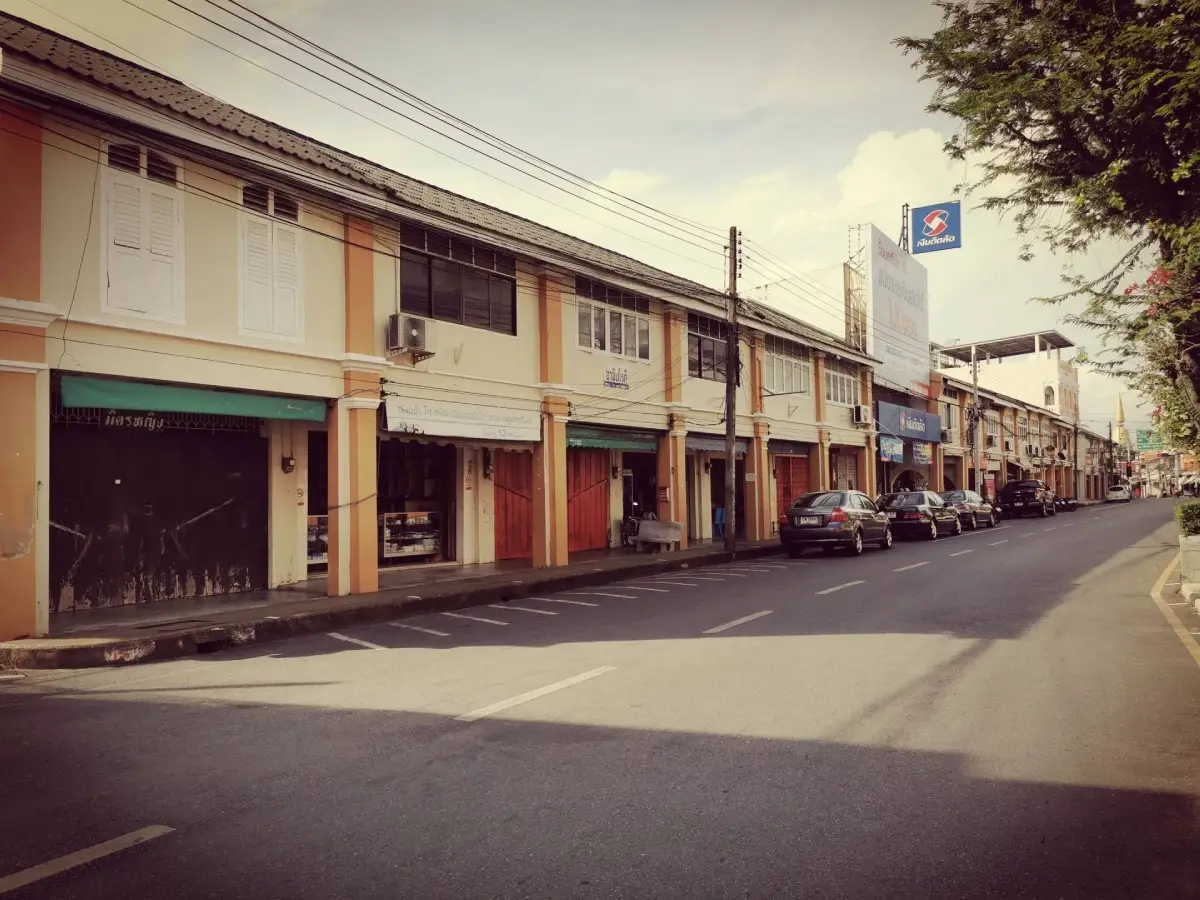
The Shophouses on Buriwanich Road in Satun Province form one of the most meaningful historic streets in Satun Old Town. Stretching for about 600 meters through the heart of Mueang Satun, this old commercial road preserves rows of two-storey brick-and-mortar shophouses, traces of early urban prosperity, and the living rhythm of a multicultural southern Thai town. The site is not a closed museum or a restored heritage block separated from everyday life. It is a working street where old architecture, local shops, cafés, restaurants, hotels, religious landmarks, and community life continue to exist together.
Buriwanich Road is located in Phiman Subdistrict, Mueang Satun District, Satun Province, within the Satun Municipality area. Travelers can walk along the street at any time because it is a public road with no admission fee. The best times to visit are in the morning, late afternoon, and early evening, when the light is softer, the weather is more comfortable, and the street atmosphere is easier to appreciate. Individual shops, restaurants, cafés, and hotels along the road have their own opening hours, so travelers planning to dine or shop should check each business separately.
The main value of the Buriwanich Road shophouses lies in their role as a living historic district. The old buildings are still part of the town’s daily commercial and residential fabric. Visitors can see shaded walkways, wooden shutters, old wall surfaces, simple column details, shopfronts, and the contrast between heritage buildings and modern urban life. For travelers interested in old towns, architecture, local photography, cultural walking routes, and the history of Satun beyond beaches and islands, Buriwanich Road is one of the best starting points in the city center.
Buriwanich Road is closely connected with the old urban identity of Satun, formerly known in the local historical context as Mambang Nakhara. Before road transport became dominant, Satun’s economy was strongly linked to maritime trade routes connecting the Andaman coast, Penang, Kedah, and nearby Malay ports. These trade relationships influenced the town’s architecture, building materials, food culture, clothing, commercial habits, and everyday language. Buriwanich Road therefore represents more than an old street. It is a physical record of Satun’s role as a trading town on the western coast of southern Thailand.
The name “Buriwanich” reflects the street’s long commercial identity. The word “wanich” relates to merchants and trade, matching the historical function of the road as a center of shops, hotels, eateries, tea houses, fabric stores, imported goods, and local services. In the past, people came here to buy and sell goods, stay overnight, conduct official business, drink tea or coffee, and meet one another. Goods from Penang, including textiles, household items, footwear, tableware, and daily necessities, helped shape the commercial character of the area. This merchant identity remains central to the story of Buriwanich Road today.
The old shophouses along Buriwanich Road are mainly two-storey commercial buildings made of brick and plaster. They were designed for both trade and residence, with the lower floor used for business or receiving customers and the upper floor used for living or storage. This type of shophouse reflects the Chinese-Malay trading culture found in many historic port towns across southern Thailand and the Malay Peninsula. The shaded frontage and covered walkway help protect pedestrians from sun and rain, making the buildings practical for a tropical town while also giving the street its distinctive visual rhythm.
Architecturally, the Buriwanich Road shophouses combine several influences. Their masonry structure and arched openings show a European colonial-era character, while the roof forms, wooden shutters, and commercial layout connect them with Chinese shophouse traditions and Malay Peninsula urban design. The result is not a direct imitation of European architecture, but a local adaptation shaped by climate, trade, materials, builders, and the needs of Satun’s merchants. This hybrid character makes the street especially valuable for travelers who want to understand the cultural layers of old towns in southern Thailand.
Historical community records connect the development of this area with Phraya Phumin Phakdi, an important figure in the modernization of Satun town. Around the 2440s Buddhist Era, the construction of important buildings such as Kuden Mansion and the shophouses along Buriwanich Road reflected the town’s growing prosperity. Some building materials were associated with Penang, which was one of the major port cities of the Malay Peninsula. This connection helps explain why the old buildings on Buriwanich Road share a visual language with shophouses in other port towns rather than with inland market towns.
The shophouses were not all built at once. They were gradually added as the commercial district expanded. This is why individual sections of the street show small differences in rooflines, column spacing, window forms, decorative details, and façade proportions. Visitors should walk slowly and look closely at each building. The most interesting details are often subtle: wooden ventilation elements, old plaster, shaded arcades, roof tiles, weathered shop signs, and the way modern businesses have adapted older structures for present-day use.
Buriwanich Road also carries memories from the Second World War. When Japanese military forces established a presence in Satun, one of the early Sino-European-style buildings along this road was used as a command location. This gives the street an additional historical layer beyond commerce and architecture. The shophouses are part of a townscape that has witnessed political change, wartime movement, economic growth, and the everyday continuity of local families and businesses across generations.
Before Buriwanich Road became known as a historic shophouse street, the area was associated with lime production using shells from Khlong Mambang. This early industrial use of local resources later gave way to urban development, commercial buildings, shops, and a main road through the town. The transformation from a production area into a commercial street allows visitors to read Satun’s urban history directly from the landscape. The street, the old buildings, the nearby canal, and the surrounding civic and religious sites together form a compact lesson in how the town evolved.
Another important memory of the street is its role as a community gathering place. In earlier times, shaded areas along the road, including the area under tamarind trees, served as social spaces where residents met, waited for local transport, exchanged news, and conducted daily routines. Roads in old towns were not only traffic corridors. They were shared public spaces where commercial, social, and cultural life overlapped. Although the modern city has changed, this memory helps explain why Buriwanich Road still feels like a meaningful civic space rather than only a historic street.
The area around Buriwanich Road clearly reflects Satun’s multicultural identity. Nearby landmarks include Masjid Mambang, Wat Chanathip Chaloem, Satun National Museum at Kuden Mansion, local markets, roti shops, tea houses, halal restaurants, cafés, hotels, and homes belonging to people from different cultural backgrounds. This diversity is not presented as a staged attraction. It appears naturally through food, architecture, daily trade, religious life, and the calm coexistence of Buddhist, Chinese-Thai, and Muslim communities. For many visitors, this living multicultural setting is the most memorable part of the walk.
For photographers, Buriwanich Road offers many useful angles. The pastel-toned two-storey shophouses, old windows, shaded corridors, street signs, shopfronts, nearby mosque, clock tower, flowering plants, and everyday movement of people and vehicles create a layered old-town scene. Morning light is suitable for quiet architectural photography, while late afternoon and evening create a warmer urban mood with more street activity. Visitors should photograph respectfully from public areas, avoid blocking shop entrances, and ask permission before photographing people or private interiors.
Buriwanich Road works well as part of a compact walking route through Satun Old Town. Travelers can start with the shophouses and street art, continue to the Satun Clock Tower Roundabout, Masjid Mambang, Satun National Museum at Kuden Mansion, and Wat Chanathip Chaloem, then finish with a short trip to Khao To Phaya Wang Public Park. This route gives a balanced view of Satun’s commerce, religion, architecture, local government, cultural memory, and public life within a small area of the city center.
Travelers who want a deeper understanding of the street should include Satun National Museum, also known as Kuden Mansion, in the same itinerary. Kuden Mansion is one of Satun’s most important historic buildings and is closely linked to the period of urban development associated with Phraya Phumin Phakdi. Inside the museum, exhibitions cover Satun’s history, local lifestyles, Muslim cultural heritage, sea people, traditional crafts, and the broader story of the province. Visiting the museum after walking along Buriwanich Road helps connect the street’s architecture with the larger history of Satun.
Food is another reason to spend time in this area. Buriwanich Road and the surrounding streets have roti shops, tea and coffee shops, halal restaurants, bakeries, cafés, and casual local eateries. Dishes and drinks such as roti, pulled tea, southern Thai food, Muslim-style breakfasts, bakery items, and cold drinks make the area suitable for a slow cultural walk with breaks along the way. Eating in the neighborhood also helps travelers experience the street’s historic role as a commercial and social district rather than viewing it only as a row of old buildings.
At certain times, Buriwanich Road is also used for town activities such as Saturday night markets, cultural events, food fairs, art programs, and creative-economy events that bring residents and visitors back into the old street. These activities help keep the heritage district active and relevant. When events are taking place, the street becomes livelier with food stalls, local products, music, craft items, and families walking through the area. Travelers who visit during these periods can see the road as both a historical landmark and a living community space.
Visitors should remember that many shophouses along Buriwanich Road are private properties or active businesses. It is appropriate to admire the buildings from outside, walk carefully along the public footpath, avoid entering buildings without permission, and respect the privacy of residents and shop owners. A good visit to an old town is not only about taking photographs. It is also about supporting local businesses, keeping the area clean, and treating the neighborhood as a real community.
Getting There is straightforward because the shophouses are located in central Satun. Travelers arriving by private car can drive into Mueang Satun and use the Satun Clock Tower Roundabout or Masjid Mambang as nearby landmarks. Those arriving from Hat Yai can take a van or public transport to Satun town, then continue by local motorcycle taxi, local transport, or on foot if staying in the city center. Many nearby hotels are within walking distance of Buriwanich Road, making the area convenient for travelers who want to explore Satun Old Town without a car.
A short visit to Buriwanich Road can take 1–2 hours if the goal is to walk, photograph, and stop for a drink or snack. A fuller cultural route that includes Satun National Museum, Masjid Mambang, Wat Chanathip Chaloem, the clock tower, and Khao To Phaya Wang Public Park should be planned as a half-day or full-day itinerary. During the day, a hat or umbrella is useful because southern Thailand can be hot and rain can change quickly. In the evening, visitors should stay on the footpath and take care when crossing roads near the traffic circle.
The Buriwanich Road shophouses are ideal for travelers who enjoy old-town walks, cultural history, architecture, local food, and slow travel. The street shows that Satun is not only a province of islands, beaches, and geopark landscapes. It is also a province with a rich urban story shaped by trade, religion, migration, and coexistence. A walk along Buriwanich Road gives travelers a grounded, human view of Satun through the buildings, street names, shops, food, and communities that continue to define the old town.
When walking here, the most rewarding details are not only the most photogenic buildings. Look for the shadow of the old arcades on the footpath, the texture of aged plaster, the rhythm of wooden shutters, the contrast between old signs and newer cafés, the smell of tea and coffee, the nearby call to prayer, and the everyday movement of people using the same road their families have known for generations. These small details make Buriwanich Road a place to experience slowly rather than a quick photo stop.
For cultural travel in Satun, the shophouses on Buriwanich Road make an excellent first stop. The location is central, easy to reach, free to visit, close to restaurants and hotels, and connected to several important attractions within short distances. Travelers who want to understand Satun’s identity should begin with this street, then continue to the museum, mosque, temple, public park, and local food spots nearby. This route brings together history, architecture, local life, and practical travel convenience in one compact old-town experience.
| Name | Shophouses on Buriwanich Road |
| Location | Buriwanich Road, Phiman Subdistrict, Mueang Satun District, Satun Province |
| Address | Buriwanich Road, Phiman Subdistrict, Mueang Satun District, Satun 91000, Thailand |
| Coordinates | 6.6133572979, 100.065073296 |
| Highlights | A historic commercial road about 600 meters long, known for two-storey old shophouses, street art, local shops, restaurants, and the living atmosphere of Satun Old Town |
| History | Closely linked with old Mambang Nakhara and Satun’s urban development from the late 19th to early 20th century, with a long role as a commercial street and old-town community |
| Name Origin | The name Buriwanich reflects the street’s identity as a merchant and trading district in old Satun |
| Distinctive Features | Two-storey brick-and-plaster shophouses with mixed European, Chinese, and Malay architectural influences, shaded walkways, wooden shutters, and a historic port-town atmosphere |
| Travel Information | Drive or take local transport into central Satun. The street is close to the Satun Clock Tower Roundabout and Masjid Mambang. Travelers staying in the city center can often walk to the area |
| Current Status | Open for public walking visits as a working old-town street with local shops, restaurants, hotels, and community activity |
| Open Days | Daily |
| Opening Hours | 24 Hours |
| Fees | No Admission Fee |
| Facilities | Footpaths, local shops, restaurants, cafés, nearby hotels, photo spots, and nearby attractions in central Satun |
| Main Areas / Zones | Old shophouse row, Buriwanich Road, street art area, old commercial shops, Saturday night market activity area, clock tower connection, and Masjid Mambang area |
| Caretaker / Local Authority | Satun Municipality |
| Main Contact Number | Satun Municipality Tel. 0-7471-1012 |
| Official Website / Official Page | Satun Municipality |
| Nearby Tourist Attractions | 1. Satun Clock Tower Roundabout, about 0.2 km 2. Masjid Mambang, about 0.2 km 3. Satun National Museum / Kuden Mansion, about 0.8 km, Tel. 0-7472-3140 4. Wat Chanathip Chaloem Royal Temple, about 0.7 km 5. Khao To Phaya Wang Public Park, about 1.6 km |
| Nearby Restaurants | 1. Azip Roti, about 0.2 km, Tel. 089-739-9644, 074-711-985 2. On's Restaurant, about 0.1 km, Tel. 074-724133, 081-097-9783 3. Keith Homemade Bakery since 2008, about 0.1 km, Tel. 074-832369 4. Fahat Coffee & Restaurant, about 0.1 km, Tel. 086-498-2642 5. Negara, about 0.4 km, Tel. 086-489-4582 6. Ban Rao Drip Café, about 0.3 km, Tel. 093-221-0415 |
| Nearby Accommodations | 1. Sinkiat Thani Hotel, about 0.1 km, Tel. 074-711-336 2. SinKiat Buri Hotel, about 0.3 km, Tel. 074-721-055 3. The Gleam Resort, about 1 km, Tel. 074-711-909 4. The One Boutique Hotel, about 1.6 km, Tel. 095-536-5622 5. V Valley Resort, about 1.7 km, Tel. 084-241-4159 |
Frequently Asked Questions (FAQ)
Q: Where are the Buriwanich Road shophouses located?
A: The shophouses are located on Buriwanich Road in Phiman Subdistrict, Mueang Satun District, Satun Province, in the heart of Satun Old Town near the Satun Clock Tower Roundabout and Masjid Mambang.
Q: When can visitors see the Buriwanich Road shophouses?
A: Visitors can walk along the street daily at any time because it is a public road. Shops, restaurants, cafés, and hotels along the road have their own business hours.
Q: Is there an admission fee for Buriwanich Road?
A: No. There is no admission fee to walk along Buriwanich Road, view the old shophouses from outside, take photographs from public areas, and visit nearby local businesses.
Q: What makes the Buriwanich Road shophouses special?
A: They are two-storey historic commercial buildings with mixed European, Chinese, and Malay architectural influences. The street also preserves the story of Satun’s old trading district and multicultural community life.
Q: What is the best time to visit Buriwanich Road?
A: Morning and late afternoon are the best times for walking and photography because the light is softer and the weather is more comfortable. Evening visits are also worthwhile when local shops or town activities are active.
Q: How long should travelers spend on Buriwanich Road?
A: A simple walk with photos and a café stop takes about 1–2 hours. A fuller cultural route with Satun National Museum, Masjid Mambang, Wat Chanathip Chaloem, and Khao To Phaya Wang Public Park should be planned as a half-day trip.
Q: Can visitors take photos of the old shophouses?
A: Yes. Visitors can take photos from public areas, but they should respect residents and shop owners, avoid entering private buildings without permission, and avoid blocking walkways or traffic.
Q: What nearby attractions can travelers visit after Buriwanich Road?
A: Nearby attractions include the Satun Clock Tower Roundabout, Masjid Mambang, Satun National Museum at Kuden Mansion, Wat Chanathip Chaloem, and Khao To Phaya Wang Public Park.
 Category: ●Suburban Living
 Group: ●Village, Community
Last Update : 2 MonthAgo
 Last Update : 2 MonthAgo

 Click to Access the Navigation Map GPS
Shophouses on Buriwanich Road Map
Recommend

 Art, Culture and Heritage
 Historical Sites and Monuments(1)
 Landmarks and Memorials(1)
 Art, Craft Centres, Tradition(5)
 Museums(3)
 Places of Worship
 Temple(3)
 Mosque(27)
 Other Sacred Sites(1)
Village, Community(1)
 Local Market(2)
 Nature and Wildlife
 National Parks and Marine Reserves(7)
 Mountain (Doi)(1)
 Dam, Reservoir, Lake(2)
 Waterfalls(9)
 Hot Springs(1)
 Caves(9)
 Bays and Beaches(10)
 Islands(16)
 Other natural attractions(5)
 Entertainment and Agricultural
 Zoos and Aquariums(1)
 Farms, Parks and Ecotourism(4)
 Outdoor and Adventure Activities(1)
 Travel Articles, Recipes
 Travel Review, Food Review(1)


