
lovethailand home >South Travel Attractions >Ranong Travel Attractions >Kra Buri >Nam Chuet > Wat Chantharam Cultural Center
TL;DR: Wat Chantharam Cultural Center is located at Moo 2, Nam Chuet Subdistrict, Kra Buri District, Ranong Province, open Daily, hours 08.00 AM - 05.00 PM.
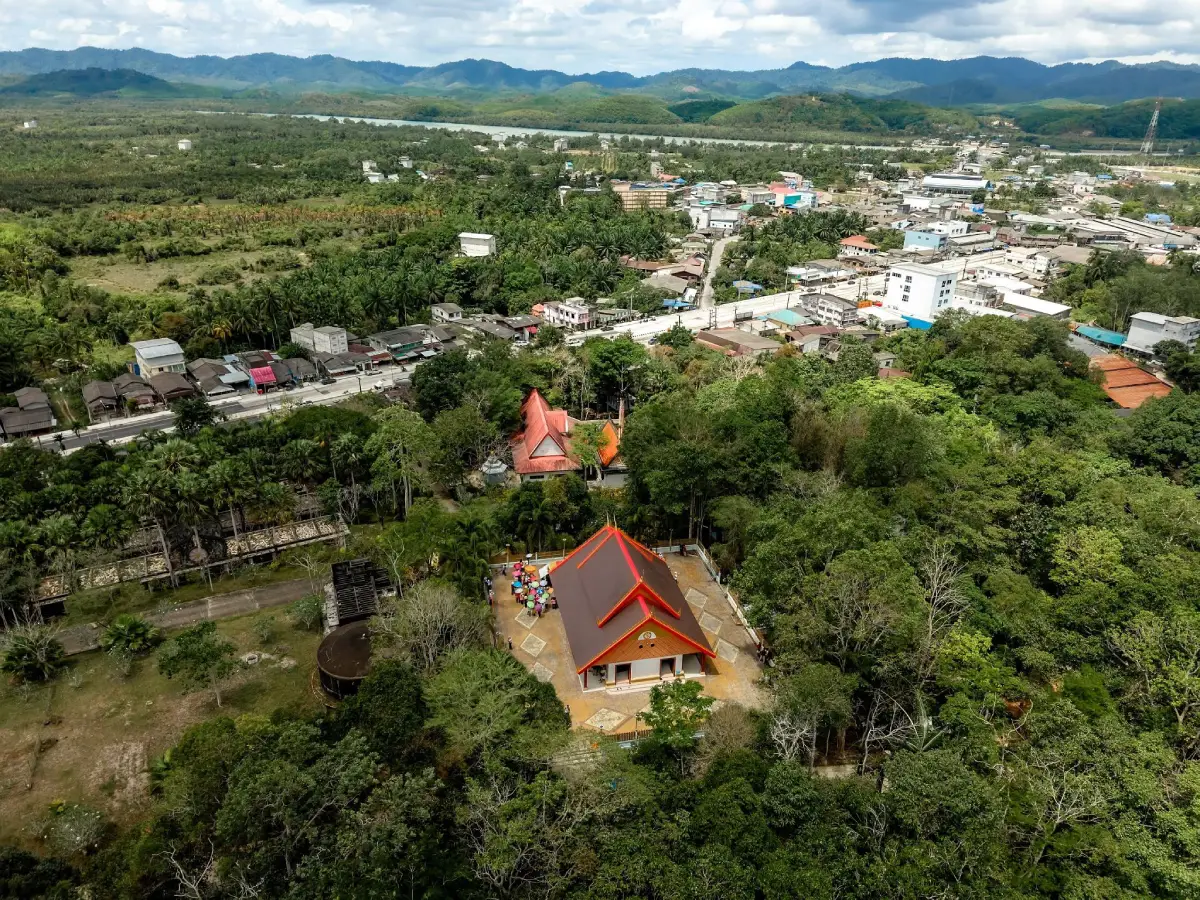
Wat Chantharam Cultural Center
Open Days: Daily
Opening Hours: 08.00 AM - 05.00 PM
Wat Chantharam Cultural Center, located within Wat Chantharam in Moo 2, Nam Chuet Subdistrict, Kra Buri District, Ranong Province, is a community-based cultural and religious learning site connected with Thai arts, Buddhist heritage, local history, and the social life of Nam Chuet. Wat Chantharam was established in 1890 and was formerly known as Wat Prathum Thara Thep Nimit. Its history is closely associated with Luang Pho Chan, a respected monk whose name later became the temple’s current name. The temple is important not only as a Buddhist place of worship but also as a local cultural space, a community gathering place, and a historical reference point for Kra Buri. It is best visited as part of a wider northern Ranong route that includes Phra Khayang Cave, the Kra Isthmus, King Chulalongkorn Royal Initials Stone Inscription, Chum Saeng Waterfall, Pak Chan Archaeological Site, and Khao Fa Chi Viewpoint.
Wat Chantharam Cultural Center should be understood together with Wat Chantharam itself. The available tourism listing identifies the place as a Thai arts, culture, and heritage site in Moo 2, Nam Chuet Subdistrict, Kra Buri District, Ranong Province. At the same time, local historical sources describe Wat Chantharam as a temple of major historical and social significance in a border area near Myanmar. For this reason, the site is best presented as a temple-based cultural learning space rather than as a large formal museum with a fixed exhibition system.
Wat Chantharam is a Buddhist temple in Nam Chuet Subdistrict, Kra Buri District, Ranong Province. It is listed as a Mahā Nikāya temple and is located in Moo 2. The temple serves as a spiritual center for the local community, a place for Buddhist ceremonies, a cultural learning space, and a venue for community activities. It has also been used for meetings, training activities, and public programs organized in the local area. This makes the temple more than a religious compound; it is a living community institution.
The history of Wat Chantharam began in 1890. Its former name was Wat Prathum Thara Thep Nimit. Local accounts connect its origin with Phra Atsadongkhot Thitraksa, also known as Kho Sim Bee Na Ranong, who moved the site of Mueang Kra from Pak Chan to Nam Chuet in 1885. He later invited Luang Pho Chan from the opposite side of the border area to live in Nam Chuet and built a small monastic residence near the foot of a hill by Khlong Nam Chuet, about one kilometer from the town site. The first structure was a simple hut made from local wood and thatch, suitable for only one monk.
The name “Wat Chantharam” comes from Luang Pho Chan, a monk deeply respected by the local community. He was remembered as a monk devoted to meditation practice, strict in monastic discipline, modest, contented, and compassionate. After a wooden ordination hall was built behind the hill for monastic ceremonies, he ordained local men and helped establish the temple’s religious role. After his death in 1912, his disciples and local devotees named the temple Wat Chantharam in his memory.
The importance of Wat Chantharam lies not only in its age but also in its social function. The temple stands in a border area near Myanmar and reflects the relationship between Buddhism, community life, travel routes, and the history of Kra Buri. Local cultural sources describe it as an important temple in Ranong, a place used by officials and residents for meetings and training, a resting place for long-distance travelers, and a temple with activities that support the continuation of Buddhism in the area.
The cultural center aspect of Wat Chantharam is therefore best viewed as place-based learning. Visitors do not come only to see objects or buildings. They come to understand how the temple, Nam Chuet community, Kra Buri history, and border landscape are connected. Cultural learning appears through the temple compound, ceremonies, community activities, Buddhist practice, local stories, and the continued memory of Luang Pho Chan.
Wat Chantharam also has a role in Buddhist education. Historical accounts state that in 1937, during the period when Phra Palat Ben served as abbot, the temple supported the study of Buddhist scriptures. In 1938, it was granted permission to operate as a Dhamma examination center in Kra Buri District. This made the temple an important educational place for Buddhist learning in the district, not merely a local place of worship.
During World War II, Wat Chantharam also belonged to the wider historical landscape of Kra Buri. Japanese forces moved through the Pak Chan area and built a railway route from Chumphon through Kra Buri toward the La-un River mouth as part of their supply route to Burma. Historical temple material states that Japanese military stations and worker camps extended into the area of Wat Chantharam. This links the temple with the wider wartime history of northern Ranong, including Khao Fa Chi, the old railway remains, Japanese shelter tunnels, and Pak Chan.
For cultural travel, Wat Chantharam is suitable for visitors who want to understand Kra Buri more deeply. Kra Buri is not only the district of the Kra Isthmus and the Kraburi River. It also contains old communities, temples, religious spaces, historical routes, and border landscapes. Wat Chantharam adds the religious and community dimension to a Kra Buri itinerary.
For travelers interested in Thai culture, the temple reflects the cultural life of an upper-southern rural community. Culture here is not limited to performances or museum displays. It appears in Buddhist holy days, merit-making, ordination, sermons, elderly activities, moral training, and the use of the temple as a gathering place for the community. Visiting Wat Chantharam therefore requires quiet observation and respect for the temple’s living role.
In terms of cultural heritage, Wat Chantharam is categorized in southern cultural resources under religious architecture. Its value lies in its role as a Buddhist institution, a religious compound, and a cultural site for the Nam Chuet community. Available sources do not provide full architectural details for every building, so the strongest verified way to present the site is through its historical background, religious function, community use, and cultural significance.
A meaningful visit should begin with paying respect inside the temple area, then walking quietly through the compound. Visitors should observe the atmosphere of a rural border temple, its simplicity, community setting, and religious role. If visiting during a local merit-making event or community program, the temple’s living cultural function becomes even clearer.
Getting There is most convenient by private car or rental car. From Ranong town, take Highway 4, or Phet Kasem Road, north toward Kra Buri District and Chumphon. Continue into Nam Chuet Subdistrict and head to Moo 2, where Wat Chantharam is located. A private vehicle is recommended because visitors can combine the temple with nearby cultural and natural attractions along the same route.
From Kra Buri town, travelers can continue into Nam Chuet using local roads. The temple is known in the community and is not difficult to reach. Visitors unfamiliar with the area should use navigation together with local directions. Roads around Kra Buri connect villages, temples, natural attractions, and border areas, so careful driving is recommended.
Visitors should dress respectfully because the site is a Buddhist temple and cultural space. Avoid inappropriate clothing, loud behavior, touching temple objects without permission, and disturbing monks or local people during religious activities. Photography should be done politely, especially if ceremonies or local residents are present.
The best time to visit is in the morning or afternoon, when the weather is more comfortable for walking around the temple compound. Travelers who want to experience cultural activities should check with the temple or Nam Chuet Municipality before traveling, because events such as merit-making activities, community training, elderly programs, or Buddhist ceremonies are not held every day.
Phra Khayang Cave is one of the best nearby places to combine with Wat Chantharam. It is an old cave associated with local legends of Kra Buri and includes a Buddhist image area and natural surroundings. Visiting the cave together with the temple helps travelers understand the connection between religion, landscape, and local stories in Kra Buri.
The Kra Isthmus is another important nearby stop. It is one of the symbolic places of Ranong and has strong geographical and historical significance. Combining Wat Chantharam with the Kra Isthmus gives visitors both the community-religious dimension and the strategic geographical identity of Kra Buri.
King Chulalongkorn Royal Initials Stone Inscription is also suitable for the same route. It is located along the Ranong-Chumphon route and is connected with King Rama V’s journey across the peninsula. When visited together with Wat Chantharam, it helps explain how Kra Buri has long been a significant passage between regions.
Chum Saeng Waterfall, also known as Sai Rung Waterfall, adds a natural element to the trip. It is a good choice for travelers who want to balance temple and cultural learning with forest and waterfall scenery. Pak Chan Archaeological Site is also valuable for those interested in older settlement patterns, cross-peninsula routes, and the long history of the Kra Buri area.
Food and accommodation options around Kra Buri are less concentrated than in Ranong town, but travelers can find local restaurants and small resorts along the route. Staying in Nam Chuet, Mamu, Lamliang, or Kra Buri town is suitable for a slower northern Ranong itinerary. Travelers who prefer more facilities can return to Ranong town for the night.
Overall, Wat Chantharam Cultural Center is a valuable cultural subject for travelers who want to understand Nam Chuet and Kra Buri through local Buddhist heritage. The site shows that a community temple can be a religious center, a cultural space, a historical memory site, a place of education, and a meeting ground for local life. Visitors should approach it respectfully and see it as part of the living heritage of northern Ranong.
| Name | Wat Chantharam Cultural Center |
| Related Names | Wat Chantharam, Wat Nam Chuet, Wat Prathum Thara Thep Nimit |
| Thai Name | ศูนย์วัฒนธรรมวัดจันทาราม / วัดจันทาราม |
| Category | Temple, Thai Cultural Learning Site, Buddhist Heritage Site, Community Heritage Space |
| Location | Moo 2, Nam Chuet Subdistrict, Kra Buri District, Ranong Province |
| Address | 10 Moo 2, Nam Chuet, Kra Buri District, Ranong 85110, Thailand |
| Buddhist Sect | Mahā Nikāya |
| Verified Abbot Found | Phra Khru Kanchana Sikkhasat |
| Established | 1890 |
| Important Historical Figures | Phra Atsadongkhot Thitraksa / Kho Sim Bee Na Ranong And Luang Pho Chan |
| Significance | An important historical and social temple in Kra Buri, serving as a Buddhist center, community cultural space, and local learning site in Nam Chuet |
| Current Status | Open as a Buddhist temple and community cultural learning site in Nam Chuet Subdistrict |
| Open Days | Daily |
| Opening Hours | 08.00 AM - 05.00 PM |
| Admission Fee | No ticketed admission information found |
| Temple Contact Number | 077-891-220 |
| Local Authority | Nam Chuet Municipality, Kra Buri District, Ranong Province |
| Local Authority Contact | 0-7789-1026 |
| Main Areas / Zones | Temple Area, Religious Ceremony Area, Community Activity Area, Cultural Learning Space, Local Training And Meeting Area |
| Travel Information | From Ranong town, take Highway 4 north toward Kra Buri District and Chumphon, then continue into Nam Chuet Subdistrict and Moo 2. Private car or rental car is the most convenient option. |
| Nearby Tourist Attractions | 1. Phra Khayang Cave, about 5 km 2. Kra Isthmus, about 15 km 3. King Chulalongkorn Royal Initials Stone Inscription, about 25 km 4. Chum Saeng Waterfall / Sai Rung Waterfall, about 25 km 5. Pak Chan Archaeological Site, about 28 km 6. Khao Fa Chi Viewpoint, about 50 km |
| Nearby Restaurants | 1. Tha Ruea Restaurant, about 7 km, Tel. 077-891-060 2. Han Yok Yuan Tublee Steamed Bun, about 15 km, Tel. 081-891-1900 3. Nong Kae Boat Noodles, about 18 km, Tel. 087-087-3183 4. Khao Man Kai Tublee, about 15 km 5. Rim Khlong Kra Buri Restaurant, about 8 km |
| Nearby Accommodations | 1. Mulberry Resort, about 4 km, Tel. +66 88 753 9842 2. S&T Resort, about 5 km, Tel. +66 82 808 3668 3. Pure House Resort, about 12 km, Tel. +66 99 053 6965 4. Khung Nam Resort, about 15 km, Tel. +66 83 692 6938 5. AM Resort, about 18 km, Tel. 077-880-396 |
Frequently Asked Questions (FAQ)
Q: Where is Wat Chantharam Cultural Center located?
A: It is located within Wat Chantharam in Moo 2, Nam Chuet Subdistrict, Kra Buri District, Ranong Province.
Q: What is the history of Wat Chantharam?
A: Wat Chantharam was established in 1890 and was formerly known as Wat Prathum Thara Thep Nimit. It was later named Wat Chantharam in memory of Luang Pho Chan, a respected monk of the local community.
Q: What kind of visit is suitable for this place?
A: It is suitable for cultural travel, Buddhist heritage learning, local history study, and understanding the role of a community temple in Kra Buri District.
Q: What are the opening hours?
A: The tourism listing indicates daily opening from 08.00 AM to 05.00 PM. Visitors interested in specific community or temple activities should contact the temple or local authority before traveling.
Q: Is there an admission fee?
A: No ticketed admission information was found. Visitors can enter the temple area respectfully and follow normal temple etiquette.
Q: Who is the abbot of Wat Chantharam?
A: The temple list found identifies Phra Khru Kanchana Sikkhasat as the abbot of Wat Chantharam in Nam Chuet, Kra Buri District, Ranong Province.
Q: How do travelers get there?
A: From Ranong town, take Highway 4 north toward Kra Buri District and Chumphon, then continue into Nam Chuet Subdistrict and Moo 2. A private car or rental car is the most convenient option.
Q: What nearby places can be combined with this visit?
A: Nearby places include Phra Khayang Cave, the Kra Isthmus, King Chulalongkorn Royal Initials Stone Inscription, Chum Saeng Waterfall, Pak Chan Archaeological Site, and Khao Fa Chi Viewpoint.
 Category: ●Art, Culture and Heritage
 Group: ●Art, Craft Centres, Tradition
Last Update : 2 MonthAgo
 Last Update : 2 MonthAgo
 Click to Access the Navigation Map GPS
Wat Chantharam Cultural Center Map
Recommend

 Historical Sites and Monuments(4)
 Landmarks and Memorials(1)
 Royal Palace(1)
Art, Craft Centres, Tradition(4)
 Educational Places
 Educational Gardens, Farm(1)
 Places of Worship
 Temple(12)
 Other Sacred Sites(2)
 Suburban Living
 Village, Community(2)
 Nature and Wildlife
 National Parks and Marine Reserves(6)
 Mountain (Doi)(4)
 Waterfalls(15)
 Hot Springs(3)
 Caves(4)
 River, Canal(2)
 Bays and Beaches(10)
 Islands(8)
 Other natural attractions(3)
 Travel Articles, Recipes
 Travel Review, Food Review(1)


