
lovethailand home >South Travel Attractions >Ranong Travel Attractions >Suk Samran >Kam Phuan > Hat Thale Nok
TL;DR: Hat Thale Nok is located at Moo 1, Ban Thale Nok, Kamphuan Subdistrict, Suk Samran District, Ranong Province 85120, Thailand, open Daily, hours 08.00 AM – 05.00 PM.
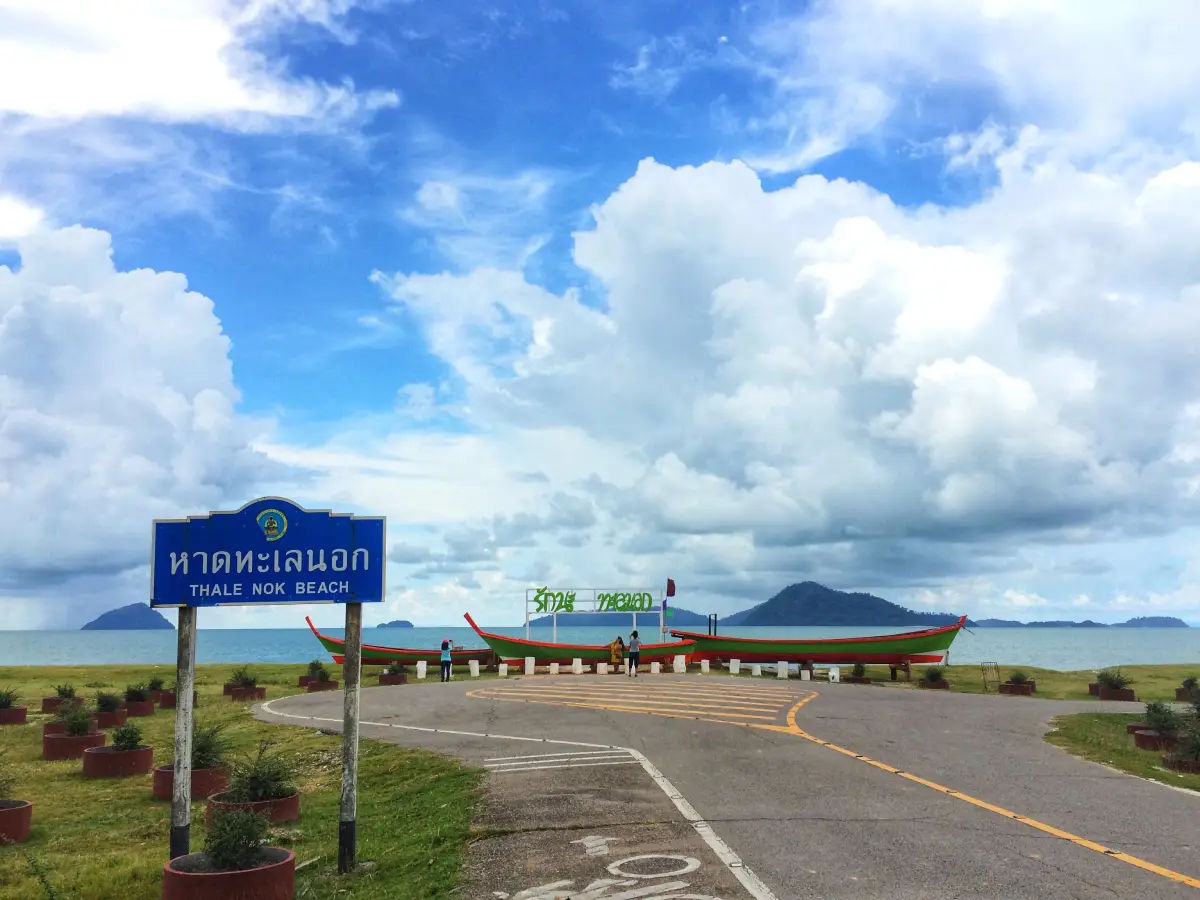
Hat Thale Nok
Open Days: Daily
Opening Hours: 08.00 AM – 05.00 PM
Hat Thale Nok, also known through the community name Ban Thale Nok, is located in Moo 1, Kamphuan Subdistrict, Suk Samran District, Ranong Province. It is a quiet Andaman coastal beach and a community-based ecotourism destination known for its homestays, mangrove environment, small fishing-community life, local boat activities, shore-based traditions, and access to sea routes such as the Ko Kam area. The beach is about 5 kilometers from Phetkasem Road, or Highway 4, making it accessible by private vehicle or local transfer while still preserving a calm and natural coastal atmosphere.
The character of Hat Thale Nok is not built around luxury resorts or crowded beach entertainment. Its value comes from a living coastal village, a peaceful beach, mangrove ecology, local fishing, community-run homestays, and hands-on experiences led by local residents. Visitors can walk along the beach, watch the evening light, stay with local families, eat home-cooked seafood, take small boats for fishing or island routes, and learn how a coastal community in Ranong uses and protects the sea at the same time.
Ban Thale Nok is a small community on the Andaman coast. The front of the community faces the beach, while the wider area includes mangroves, forested hills, small streams, agricultural land, and fishing grounds. This geography makes Hat Thale Nok more than a scenic beach. It is a place where beach, mangrove, sea, forest, food, livelihood, and community identity are closely connected. For local residents, the sea is not only a view; it is a source of food, work, travel, and memory.
The name Ban Thale Nok reflects the location of the village. The community sits on the outer side of the coastal area, separated from other communities by hill and forest terrain, with the Andaman Sea to the west. Reaching the village from the main road gives travelers the feeling of gradually entering a quieter coastal world. The road leaves the main highway, passes into the local landscape, and reaches a village where houses, fishing life, mangroves, and the sea form one continuous setting.
The beach in front of Ban Thale Nok is quiet and suitable for slow travel rather than high-speed activities. Morning is good for walking, observing the sand, and experiencing the calm rhythm of the village. Late afternoon is one of the best times to enjoy the coast because the light becomes softer, the sea breeze is more comfortable, and some community activities can take place near the beach according to season, tide, and local arrangements.
Hat Thale Nok is best understood as a learning destination. Community tourism here can include homestays, local guides, boat trips through mangroves, nature walks in the nearby rainforest hills, beach-net pulling, fishing activities, batik learning, herbal soap making, and local product experiences. These activities are not separate from everyday life. They grew from the community’s relationship with the sea, mangroves, fishing, household work, and recovery after a major natural disaster.
Ban Thale Nok Homestay is one of the most important parts of the experience. Staying with local residents allows visitors to see daily life, eat local meals, and learn the etiquette of a Muslim coastal community. The accommodation is simple, clean, and community-oriented rather than luxurious. Travelers choosing a homestay should be ready for a local way of living, respect household routines, dress appropriately in community areas, keep noise low, and follow the advice of hosts and local coordinators.
Because Ban Thale Nok is largely a Muslim community, cultural respect is essential. Visitors should dress modestly while walking in the village, avoid inappropriate behavior in residential areas, ask before photographing people, and respect religious and private spaces. The strength of this destination is that local residents open their homes and community to outsiders. Polite and careful behavior is therefore part of the travel experience itself.
A mangrove boat trip is one of the key experiences. Local guides can explain mangrove trees, aquatic life, tides, and the role of mangroves as nursery areas for young marine animals. Mangroves are not only scenic forest; they help protect the coast, support fisheries, trap sediment, and maintain the balance between land and sea. Understanding this system helps visitors see why community-based conservation is central to Hat Thale Nok.
Beach-net pulling is another meaningful activity when conditions and local arrangements allow it. In the late afternoon, visitors may join residents in pulling a net from the shallow sea toward the beach. This activity shows the labor, cooperation, timing, and sea knowledge behind one local meal. Fish of suitable size may be used for food, while smaller marine life should be returned to the sea. The activity turns seafood from a menu item into a lesson about community work and responsible resource use.
Small-boat fishing and island routes connect Hat Thale Nok with the wider Ranong sea. Visitors can contact community operators for fishing trips or routes toward islands such as Ko Kam when season and weather conditions are appropriate. Any boat activity should be planned with safety first. Travelers should check weather, use boats with proper safety equipment, wear life jackets, and follow boat operators’ instructions closely because Andaman Sea conditions can change quickly, especially during the monsoon period.
Ko Kam is often associated with the sea routes from this part of Ranong. The wider Mu Ko Kam area is connected with Laem Son National Park and includes scenic islands such as Ko Kam Tok, Ao Khao Khwai, Ko Kam Yai, and nearby island groups. These places are known for clear water, white sand, pine-fringed beaches, and quieter Andaman scenery. Boat routes should be checked in advance because national park island areas and sea travel are subject to seasonal opening, closure, and safety announcements.
Hat Thale Nok also carries an important post-tsunami story. The 2004 Indian Ocean tsunami caused major damage to Ban Thale Nok, affecting homes, fishing equipment, community buildings, school facilities, livelihoods, and lives. After the disaster, villagers, government agencies, foundations, and supporting networks worked together to rebuild the community, restore livelihoods, and strengthen conservation-based tourism. This history gives the beach a deeper meaning. A visit here is not only a beach visit, but also a chance to understand community resilience.
Ban Thale Nok received recognition as an outstanding ecotourism destination in the Thailand Tourism Awards in 2008. This recognition reflects the community’s ability to manage tourism through nature, local knowledge, environmental care, homestays, crafts, and fishing-community experiences. The tourism model does not replace local life; it supports income, preserves knowledge, encourages conservation, and gives visitors a more complete understanding of the Andaman coast.
Local crafts such as batik and herbal soap making add another layer to the destination. Visitors can learn how designs are made, try simple craft activities, or buy community products as souvenirs. Supporting local products helps distribute tourism income to households and community groups. It also makes the visit more meaningful because travelers take home something connected with the people and place rather than only a photograph.
Food is an important part of the homestay experience. Meals are usually connected with local seafood, fish, shrimp, crab, shellfish, southern Thai flavors, and household cooking. Visitors who take part in fishing or beach-net activities will better understand the connection between the sea and the meal. Food at Hat Thale Nok is valuable because it is rooted in place: the sea, the village, and local household knowledge all appear on the table.
The best season for Hat Thale Nok is after the monsoon when the sea is calmer and conditions are more suitable for beach walks, boat trips, fishing, and island routes. Morning is suitable for beach and village walks. Late afternoon is best for sunset atmosphere and community activities near the water. During the rainy season, travel may still be possible at certain times, but visitors should check weather carefully, especially if planning boat activities.
Getting There from Ranong town is best by private car, rental car, or arranged local transport. Take Highway 4, also known as Phetkasem Road, south toward Suk Samran District and Kamphuan Subdistrict, then turn into Ban Thale Nok for about 5 kilometers from the main road. Travelers using public transport can take a route passing Ranong, Kapoe, and Suk Samran, then arrange a local transfer into the village. For multi-stop trips, private transport is more practical because attractions in Suk Samran are spread along the coast and highway.
Hat Thale Nok can be planned in several ways. A half-day visit is suitable for the beach, community area, and simple photography. A full-day visit can include a mangrove boat trip, craft activity, local meal, or nearby Hat Praphat. A two-day, one-night plan is the best way to experience the community because homestay guests can see morning life, evening activities, home-cooked meals, and the slower rhythm that day visitors usually miss.
Hat Praphat, also known as Hat Hin Thung, is a relevant nearby beach in Kamphuan Subdistrict. It is a large Andaman beach with pine trees and a quieter national-park coastal setting. Combining Hat Thale Nok with Hat Praphat helps travelers compare a community-based beach with a larger beach landscape connected with Laem Son National Park.
The Phu Khao Thong archaeological site adds a historical dimension to a trip in Kamphuan. It represents the older human geography of the Andaman coast and helps travelers understand that this area has long been connected with settlement, movement, and maritime contact. When combined with Hat Thale Nok, the route moves from present-day coastal community life to older traces of Andaman history.
Wat Sathit Thammaram is another place that can be included in the Kamphuan route. While Ban Thale Nok is a Muslim coastal community, Kamphuan Subdistrict as a whole contains cultural and religious diversity. A route that includes a temple, fishing community, beach, mangroves, and archaeology gives travelers a wider view of Suk Samran District than a beach-only itinerary.
Khlong Naka Wildlife Sanctuary and nearby rainforest areas are suitable for travelers who want to extend the trip from sea to forest. Ranong is distinctive because mountains, rainforest, mangroves, and the Andaman Sea are close to one another. Hat Thale Nok can therefore be a starting point for understanding Ranong’s natural systems across beach, mangrove, sea, and inland forest.
The main safety concern is weather and sea condition. Visitors planning to take a boat, fish at sea, or join coastal activities should check the forecast, contact community coordinators in advance, and follow local guides’ instructions. Avoid boat travel during heavy rain, strong wind, high waves, or poor visibility. Do not enter unfamiliar water without local advice.
Useful items include modest and quick-dry clothing, sandals or shoes suitable for sand, a hat, sunscreen, drinking water, insect repellent, a waterproof phone bag, cash, personal medicine, and a small bag for personal waste. Homestay guests should ask in advance about meals, activity schedules, boat arrangements, house rules, and community etiquette.
Responsible travel is essential at Hat Thale Nok. Visitors should not litter, damage mangroves, remove marine life or shells, make loud noise in the village, photograph residents without permission, disturb religious spaces, or bargain unfairly with community service providers. Spending money on homestays, boat services, local meals, and crafts directly supports the community and helps maintain this conservation-based tourism model.
Hat Thale Nok is suitable for travelers who want more than a beach. It is good for families interested in nature learning, photographers who enjoy community stories, visitors interested in mangroves and traditional fishing, travelers who want a homestay experience, and anyone looking for a quieter Ranong route. It is not designed for nightlife or large-resort convenience. Its strength is sea, community, ecology, and meaningful local contact.
Overall, Hat Thale Nok is a coastal destination where the beach, mangroves, homestays, fishing life, crafts, food, tsunami recovery story, and community conservation work come together. Travelers who spend enough time here will see Ranong’s Andaman coast in multiple layers: sand, forest, islands, boats, households, local meals, and the ongoing work of protecting natural resources. For those seeking a quieter and deeper travel experience in Ranong, Hat Thale Nok deserves a clear place in the itinerary.
| Name | Hat Thale Nok / Ban Thale Nok |
| Place Type | Beach, Community-Based Ecotourism Village, Homestay Area, And Traditional Fishing-Lifestyle Learning Site |
| Location | Moo 1, Ban Thale Nok, Kamphuan Subdistrict, Suk Samran District, Ranong Province 85120, Thailand |
| Address | Hat Thale Nok Beach And Ban Thale Nok Community Area, Moo 1, Kamphuan Subdistrict, Suk Samran District, Ranong Province, about 5 km from Phetkasem Road |
| Reference Coordinates For Travel | 9.464264, 98.441818 |
| Highlights | Community beach, mangroves, homestays, mangrove boat trips, island fishing, beach-net pulling, batik making, herbal soap making, local seafood, and seasonal Ko Kam sea routes |
| Distinctive Features | A quiet Andaman coastal community connected with traditional fishing, mangrove ecology, Muslim village life, and community-managed conservation tourism |
| Importance | An important ecotourism community in Suk Samran District and a strong example of post-2004 tsunami recovery through conservation, local livelihoods, and community tourism |
| Award / Recognition | Recognized as an outstanding ecotourism destination in the Thailand Tourism Awards 2008 |
| Travel Information | From Ranong town, take Highway 4 / Phetkasem Road south toward Suk Samran District and Kamphuan Subdistrict, then turn into Ban Thale Nok for about 5 km. Private car, rental car, or arranged local transport is recommended |
| Current Status | Open as a beach, community-based ecotourism village, homestay area, and learning site for fishing life and mangrove ecology. Boat trips and homestay activities should be arranged in advance |
| Open Days | Daily |
| Opening Hours | 08.00 AM – 05.00 PM For General Visits And Day Activities |
| Best Time To Visit | Post-monsoon and calm-sea periods for beach walks, boat trips, fishing, and island routes; morning for village walks; late afternoon for sunset and beach activities |
| Main Activities | Homestay, mangrove boat trip, rainforest nature walk, beach-net pulling, island fishing, batik making, herbal soap making, observing traditional fishing life, and eating local seafood |
| Facilities | Community homestays, local boats for seasonal activities, local guides, home-cooked meals, craft activities, beach area, and restaurants or shops in Kamphuan / Suk Samran |
| Main Areas / Zones | 1. Hat Thale Nok Beach 2. Ban Thale Nok Community Area 3. Community Homestay Zone 4. Mangrove And Rhizophora Forest Area 5. Community Boat Activity Point 6. Beach-Net Pulling Area 7. Batik And Herbal Soap Activity Groups 8. Route Connection To Phetkasem Road |
| Local Caretaker | Kamphuan Subdistrict Municipality, Suk Samran District, Ranong Province, together with Ban Thale Nok community tourism and homestay groups |
| Main Contact Number | Kamphuan Subdistrict Municipality, Tel. 077-810-628 Ban Thale Nok Homestay, Tel. 090-559-8433 |
| Official Website / Official Page | Ban Thale Nok community information by the Princess Maha Chakri Sirindhorn Anthropology Centre / Tourism Authority of Thailand Ban Thale Nok information / Ban Thale Nok Homestay page |
| Nearby Tourist Attractions | 1. Hat Thale Nok Beach And Community Area, about 0 km 2. Ban Thale Nok Mangrove Area, about 1 km 3. Hat Praphat / Hat Hin Thung, about 10 km 4. Phu Khao Thong Archaeological Site, about 12 km 5. Wat Sathit Thammaram, about 12 km 6. Khlong Naka Wildlife Sanctuary, about 16 km 7. Khura Buri Pier, about 18 km 8. Ko Kam / Ko Kam Tok, accessible by community or tour boat according to season |
| Nearby Restaurants | 1. Ban Thale Nok Homestay Meals, about 0 km, Tel. 090-559-8433 2. Areerah Muslim Food, about 5 km, Tel. 083-390-7470 3. JP Coffee, about 6 km, Tel. 098-691-3553 4. Krua Suk Samran, about 6 km, Tel. 077-893-186 5. Alhamdulillah Food & Drinks, about 9 km, Tel. 061-548-6077 6. Baan Rai I Arun, about 28 km, Tel. 096-938-2981 |
| Nearby Accommodations | 1. Ban Thale Nok Homestay, about 0 km, Tel. 090-559-8433 2. I-In Resort, about 5 km 3. Suk Samran View Resort, about 6 km 4. Baan Natacha, about 6 km 5. Ranong PK Guest House And Studio, about 12 km, Tel. 094-331-6969 6. Vannamei Resort, about 19 km, Tel. 096-650-8335 7. Baan Rai I Arun, about 28 km, Tel. 096-938-2981 |
Frequently Asked Questions (FAQ)
Q: Where is Hat Thale Nok located?
A: Hat Thale Nok is located at Ban Thale Nok, Moo 1, Kamphuan Subdistrict, Suk Samran District, Ranong Province. It is about 5 km from Phetkasem Road, or Highway 4.
Q: What is special about Hat Thale Nok?
A: The destination is known for its quiet community beach, homestays, mangroves, traditional fishing life, boat trips, island fishing, beach-net pulling, batik making, herbal soap making, and local Andaman seafood.
Q: What are the opening hours of Hat Thale Nok?
A: Hat Thale Nok is open daily from 08.00 AM to 05.00 PM for general visits and day activities. Homestays, boat trips, and community activities should be arranged in advance.
Q: Is there homestay accommodation at Hat Thale Nok?
A: Yes. Ban Thale Nok has community homestays suitable for travelers who want to stay with local residents, learn about fishing life, eat home-cooked meals, and join ecotourism activities.
Q: Which islands can visitors reach from Hat Thale Nok?
A: Visitors can arrange community boat services for fishing or seasonal island routes such as Ko Kam and nearby islands, depending on weather, sea conditions, and local availability.
Q: Is Hat Thale Nok suitable for families?
A: Yes. It is suitable for families interested in nature, mangroves, fishing life, and community learning. Children should be supervised closely around the beach, boats, and water activities.
Q: When is the best time to visit Hat Thale Nok?
A: The post-monsoon and calm-sea period is best for beach visits, boat trips, fishing, and island routes. Morning is suitable for village walks, while late afternoon is good for sunset and beach activities.
Q: What should visitors be careful about at Hat Thale Nok?
A: Visitors should check weather before boat trips, avoid rough-sea travel, respect Muslim community etiquette, keep the beach and mangroves clean, and follow instructions from homestay hosts or local guides.
 Category: ●Nature and Wildlife
 Group: ●Bays and Beaches
Last Update : 2 MonthAgo
 Last Update : 2 MonthAgo

 Click to Access the Navigation Map GPS
Hat Thale Nok Map
Recommend

 Art, Culture and Heritage
 Historical Sites and Monuments(4)
 Landmarks and Memorials(1)
 Royal Palace(1)
 Art, Craft Centres, Tradition(4)
 Educational Places
 Educational Gardens, Farm(1)
 Places of Worship
 Temple(12)
 Other Sacred Sites(2)
 Suburban Living
 Village, Community(2)
 National Parks and Marine Reserves(6)
 Mountain (Doi)(4)
 Waterfalls(15)
 Hot Springs(3)
 Caves(4)
 River, Canal(2)
Bays and Beaches(10)
 Islands(8)
 Other natural attractions(3)
 Travel Articles, Recipes
 Travel Review, Food Review(1)


