
lovethailand home >South Travel Attractions >Ranong Travel Attractions >La Un >Nai Wong Nuea > Prakai Phet Cave
TL;DR: Prakai Phet Cave is located at Moo 2, Ban Khok Chang, Nai Wong Nuea Subdistrict, La-un District, Ranong Province, open Open Daily, hours 08:00 – 17:00.
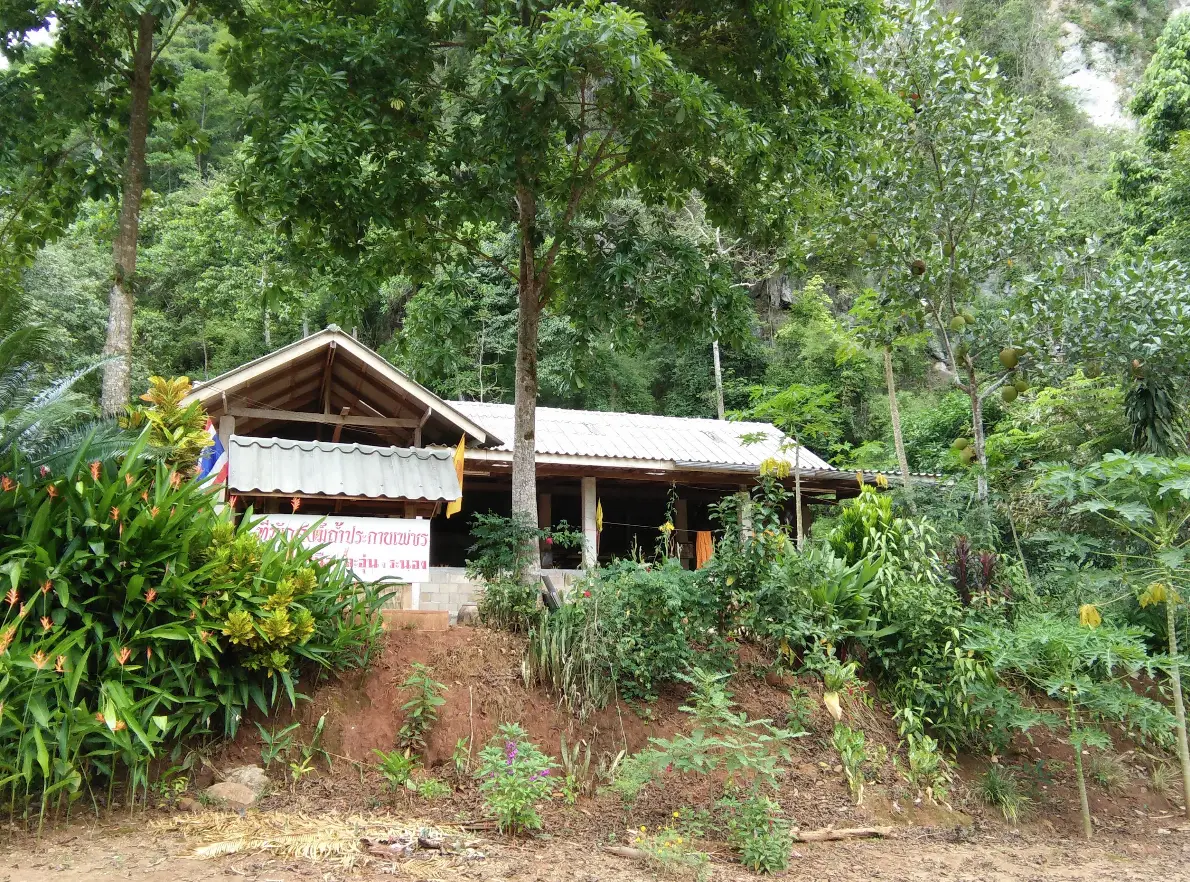
Prakai Phet Cave
Open Days: Open Daily
Opening Hours: 08:00 – 17:00
Last Updated: 2 September 2026
Prakai Phet Cave is an important natural cave and archaeological site in Moo 2, Ban Khok Chang, Nai Wong Nuea Subdistrict, La-un District, Ranong Province. Its significance goes far beyond cave scenery. Archaeological evidence found in and around the cave shows that the La-un area of Ranong was inhabited by prehistoric people approximately 2,000 to 4,000 years ago. Finds associated with the site include pottery fragments, cord-marked ceramic remains, bone fragments, and other traces of early human activity. This makes Prakai Phet Cave one of the key places for understanding Ranong’s prehistoric landscape, especially within the limestone hills of La-un.
The cave is large, with long and complex passages and several areas where natural stalactites and stalagmites can be seen. The name Prakai Phet, meaning “diamond sparkle,” reflects the visual impression of mineral surfaces inside the cave when light falls on them. Some cave formations appear to shimmer under a flashlight because of moisture and mineral deposits on limestone surfaces. The atmosphere is quiet, dark, humid, and strongly connected with deep time, giving the cave both natural beauty and historical weight.
Nai Wong Nuea and Nai Wong Tai form one of the most distinctive inland landscapes of La-un District. The area lies east of the district center and is surrounded by hills, creating the enclosed terrain that gave the place its name, Nai Wong, or “inside the ring.” The landscape includes limestone hills, isolated karst towers, rock shelters, caves, forested slopes, streams, and agricultural communities. Ban Khok Chang, where Prakai Phet Cave is located, sits within this karst landscape and therefore has both natural and archaeological importance.
The wider cave group around Nai Wong Nuea is highly important for archaeology. The Fine Arts Department has recorded several archaeological cave sites in this area, including Tham Khlum Mo Lam, Tham Suea, Tham Nang Non-Khao Mai Kaeo, Tham Nat Dai, and Prakai Phet Cave. Together, these sites help explain the distribution of prehistoric human activity in Ranong and on the Andaman side of southern Thailand. Caves and rock shelters were suitable places for early communities because they provided protection from weather, access to nearby resources, and usable space within a landscape of hills, water, forest, and wildlife.
The archaeological finds at Prakai Phet Cave are especially important. The pottery fragments include examples decorated with cord-marked impressions, while community learning sources also describe painted and burnished surfaces and round-bottomed vessel forms with shoulders. These characteristics are connected with ceramic traditions of prehistoric communities, especially those associated with the Neolithic cultural context. Bone fragments and other remains add further evidence that the cave was used by people in the past, not merely formed as a natural hollow in limestone.
Cord-marked pottery is one of the most informative types of evidence from prehistoric sites. The decoration was made by pressing or rolling cord-like material onto the surface of clay vessels before firing. This created repeated patterns on the ceramic surface. Such marks are useful for archaeologists because they can reveal production techniques, local materials, craft knowledge, and cultural relationships. A small pottery fragment can therefore contain information about technology, daily life, and human movement thousands of years ago.
The geography of Nai Wong Nuea helps explain why Prakai Phet Cave was suitable for early human use. Prehistoric communities often selected areas near water, food sources, raw materials, forest products, and natural shelter. Caves and rock shelters in limestone hills provided protection and could be used for temporary habitation, activity areas, storage, or ritual purposes. The archaeological evidence found in this cave is consistent with a landscape that offered both shelter and resources.
Prakai Phet Cave is part of Ranong’s recognized cultural heritage. In 2018, the Fine Arts Department announced a list of archaeological monuments in Ranong Province, including five important sites in La-un District: Prakai Phet Cave, Tham Nang Non-Khao Mai Kaeo, Tham Khlum Mo Lam, Tham Suea, and Tham Nam Lot. This status means that visitors should not treat the cave as an ordinary tourist cave. It is a heritage place where natural formations and archaeological remains require careful protection.
The geology of the Nai Wong area is also important. The limestone and dolomitic limestone landscape is associated with karst terrain, a landform created when water gradually dissolves and erodes limestone over long periods. This process produces cavities, tunnels, chambers, stalactites, stalagmites, and irregular cave passages. Prakai Phet Cave is therefore both a geological formation and a cultural landscape shaped by human use over thousands of years.
Inside the cave, visitors should expect darkness, humidity, uneven surfaces, and complex passages. A flashlight or headlamp is essential, and shoes with good grip are strongly recommended. Cave floors can be wet or slippery, with loose stones, slopes, or low sections in some areas. Visitors should not enter deep sections alone, should not leave the known route, and should follow local guidance. During heavy rain, cave visits should be avoided because moisture and runoff can increase risk inside and around the cave.
Respect for archaeological remains is the most important rule at Prakai Phet Cave. Visitors must not collect pottery fragments, stones, bones, shells, or any objects from the cave. Even small fragments can be valuable archaeological evidence. If anything that looks like an ancient object is found, it should be left exactly where it is. Moving or removing it destroys its context and reduces its research value. The correct action is to notify a local guide, the community, or relevant authorities.
Stalactites and stalagmites must also be protected. These formations grow extremely slowly through mineral deposition over long periods. Touching, climbing, breaking, marking, or writing on them causes lasting damage. Visitors should view formations with the eyes, use light carefully, avoid disturbing cave animals, and never apply paint, chalk, or markings to cave walls. Preserving the natural structure of the cave is essential for both tourism and conservation.
Prakai Phet Cave is best suited for travelers interested in nature, archaeology, geology, and learning-based travel. The main value of the site is not adventure for its own sake. It lies in understanding how a cave can preserve traces of people who lived thousands of years ago. Pottery fragments, animal bones, cave floors, limestone shelters, and passage layouts all help build a broader picture of prehistoric life in Ranong.
Ban Khok Chang and the wider Ban Nai Wong area also have a strong agricultural identity. Fruit orchards, including durian, mangosteen, langsat, and coffee, are part of local life. During the fruit season, the area becomes lively with harvest activity and local trade. A visit to Prakai Phet Cave can therefore be combined with community and agricultural experiences, giving travelers a fuller view of Nai Wong as both an ancient landscape and a living village area.
Ban Nai Wong is known as a mountain-surrounded community with a very different atmosphere from Ranong town. The route into the area is winding and follows the terrain of La-un’s hills. During the rainy season, mist and lush greenery are common. During the fruit season, orchards and produce transport become part of the local scenery. Including Prakai Phet Cave in a Ban Nai Wong route creates a trip that combines archaeology, karst landscape, village life, agriculture, and nature.
The best time to visit the cave is from morning to afternoon. This allows enough daylight for the road journey, route confirmation, cave entry, and a safe return. Late-evening cave visits are not recommended because the interior is already dark and local roads can be more difficult after sunset. Visitors should plan to enter and leave within the stated visiting hours, especially when traveling with family members or people unfamiliar with the Nai Wong route.
Recommended items include a flashlight or headlamp, non-slip shoes, drinking water, a small towel, a waterproof pouch for a phone, personal medication, and a rubbish bag. Flip-flops or loose sandals are not suitable. Heavy bags should be avoided because some cave areas require balance and careful movement. Food should not be eaten inside the cave because scraps can attract animals and create hygiene problems.
Photography should be done carefully. Visitors should use only the necessary amount of light, avoid climbing on formations for photo angles, avoid touching archaeological objects or cave surfaces, and avoid blocking the route for other visitors. When photographing stalactites and stalagmites, stand on stable ground and use angled light to show texture. Strong continuous light or flash should be avoided near areas where cave animals may live.
Caves are sensitive ecosystems. Animals such as bats, insects, and other cave-adapted life may live inside. Visitors should keep noise low, avoid shouting, avoid playing music, and avoid shining strong light directly at animals for long periods. Maintaining silence and low impact helps protect cave ecology and also makes the visit safer and more respectful.
Travel from Ranong town is best done by private car, rental car, or hired local vehicle. Take Phetkasem Road toward La-un District, then continue into the Ban Nai Wong and Ban Khok Chang area in Nai Wong Nuea Subdistrict. The Nai Wong area is about 20 km east of La-un District Office, and the access route from Phetkasem Road passes through hilly terrain. Travelers should start in the morning, use navigation together with local directions, and prepare basic supplies before entering the inland route.
Travelers coming from Chumphon can also connect through upland routes toward La-un and Ban Nai Wong. This route is suitable for those combining Chumphon and Ranong in one itinerary, but road conditions should be checked carefully, especially during rainy weather. The mountain route can be wet, misty, or slippery in some periods, so a well-maintained vehicle and a driver comfortable with hilly roads are important.
Prakai Phet Cave can be combined with other archaeological caves in Nai Wong Nuea and Nai Wong Tai, including Tham Suea, Tham Nang Non-Khao Mai Kaeo, Tham Khlum Mo Lam, Tham Nat Dai, and Tham Nam Lot. Visitors should not try to enter too many caves in one day without local guidance. Each cave has different access, floor conditions, and levels of complexity. A slower, better-informed visit is safer and more meaningful.
Tham Suea and Tham Nang Non-Khao Mai Kaeo are also located in the Ban Khok Chang area, making them part of the same archaeological cave landscape as Prakai Phet Cave. Tham Khlum Mo Lam is associated with Ban Mo Lam in Moo 3, while Tham Nam Lot is in Nai Wong Tai. Together, these places show that La-un has a cluster of archaeological caves rather than a single isolated cave site.
Beyond caves, Ban Nai Wong is connected with agricultural tourism and community life. Nai Wong durian and Nai Wong mangosteen are recognized local products, and the area has an agricultural market and seasonal fruit activity. Combining Prakai Phet Cave with orchard landscapes and local food stops gives visitors a broader understanding of the area: prehistoric traces, limestone hills, orchards, mountain villages, and present-day livelihoods.
Visitors who want to stay overnight can choose community-based accommodation in Ban Nai Wong for a closer local experience, or stay in Ranong town for easier access to restaurants, markets, transport, and other attractions. A stay in Ban Nai Wong is better for travelers who want mountain atmosphere, fruit orchards, and early-morning mist. A stay in town is better for combining the cave with Raksawarin Hot Springs, Rueang Rat Road, Rattana Rangsan Palace, and other urban Ranong attractions.
Families with children should assess conditions before entering the cave. Young children should stay close to adults, should not run, should not touch formations, and should not pick up objects from the cave floor. Elderly visitors or those uncomfortable on slippery ground should remain in accessible areas only. Anyone with respiratory sensitivity should be aware of humidity and enclosed cave air, and should step outside if discomfort occurs.
Strictly avoid writing on cave walls, lighting candles inside the cave, collecting archaeological objects, breaking cave formations, leaving rubbish, making loud noise, or entering deep passages without someone who knows the route. Prakai Phet Cave is a non-renewable heritage site. Once damaged, archaeological context and natural formations cannot be quickly restored.
Getting There from Ranong town is by Phetkasem Road toward La-un District, then onward to Ban Nai Wong and Ban Khok Chang in Nai Wong Nuea Subdistrict. Use Ban Khok Chang, Ban Nai Wong, and Nai Wong Nuea as key local reference points. Travel in the morning, use a private car, rental car, or hired vehicle familiar with the area, and contact the local community or relevant office before entering the cave area for the latest route and visitor guidance.
In summary, Prakai Phet Cave is one of La-un District’s most valuable natural and archaeological sites. It is located in Moo 2, Ban Khok Chang, Nai Wong Nuea Subdistrict, Ranong Province. Its strengths include a large cave system, long and complex passages, stalactites and stalagmites, and prehistoric evidence dating back about 2,000 to 4,000 years, including pottery fragments, cord-marked ceramics, bone remains, and traces of ancient human use. A visit should be made with knowledge, caution, and respect: do not remove objects, do not touch or damage formations, and do not enter deep sections without guidance. When combined with Ban Nai Wong, nearby archaeological caves, orchards, and local communities, Prakai Phet Cave becomes a complete learning route that connects nature, history, geology, and village life in inland Ranong.
| Name | Prakai Phet Cave |
| Place Type | Archaeological Site, Natural Cave, And Learning-Based Attraction |
| Location | Moo 2, Ban Khok Chang, Nai Wong Nuea Subdistrict, La-un District, Ranong Province |
| Address | Ban Khok Chang, Moo 2, Nai Wong Nuea Subdistrict, La-un District, Ranong Province 85130 |
| Coordinates | 10.02581, 98.85305 |
| Highlights | Large cave with long and complex passages, stalactites and stalagmites, and archaeological evidence of prehistoric human activity in La-un District |
| Archaeological Significance | Pottery fragments, cord-marked ceramics, bone remains, and evidence of prehistoric habitation dating to about 2,000 – 4,000 years ago |
| Area Context | Located in the limestone hill landscape of Nai Wong Nuea and Nai Wong Tai, with caves, rock shelters, humid forest, streams, and agricultural communities nearby |
| Travel Information | From Ranong town, take Phetkasem Road toward La-un District, then continue to Ban Nai Wong and Ban Khok Chang in Nai Wong Nuea Subdistrict. Private car, rental car, or hired local vehicle is recommended |
| Current Status | Archaeological and natural tourism site in La-un District. Visitors should enter carefully and preserve all evidence and formations in the cave |
| Open Days | Open daily |
| Opening Hours | 08:00 – 17:00 |
| Facilities | Natural cave area near the community. Visitors should bring a flashlight, non-slip shoes, drinking water, personal medication, and a rubbish bag |
| Main Areas / Zones | 1. Access Route To Ban Khok Chang 2. Cave Entrance And Rock Shelter Area 3. Main Cave Passage 4. Cave Chamber And Interior Walkway 5. Stalactite And Stalagmite Area 6. Archaeological Evidence Area 7. Surrounding Ban Khok Chang And Ban Nai Wong Community Area |
| Caretaker | The Fine Arts Department And The 12th Regional Office Of Fine Arts, Nakhon Si Thammarat For Heritage Matters, With La-un Nuea Subdistrict Administrative Organization And Ban Khok Chang Community For Local Area Coordination |
| Main Contact Number | La-un Nuea Subdistrict Administrative Organization, Tel. 077-820-330 The 12th Regional Office Of Fine Arts, Nakhon Si Thammarat, Tel. 075-356-458, 075-324-479 |
| Nearby Tourist Attractions | 1. Ban Nai Wong And Ban Khok Chang Community, About 2 km 2. Tham Suea, Ban Khok Chang, About 3 km 3. Tham Nang Non-Khao Mai Kaeo, About 3 km 4. Tham Nat Dai, About 5 km 5. Tham Khlum Mo Lam, Ban Mo Lam, About 6 km 6. Ban Nai Wong Agricultural Market, About 8 km 7. Tham Nam Lot, Ban Noen Thong, About 15 km 8. La-un Canal And Km.30 Viewpoint, About 35 km |
| Nearby Restaurants | 1. Krua Ban Nai Wong, About 2 km, Tel. 092-665-5163 2. Ban Nai Wong Community Food / Ban Nai Wong Homestay, About 2 km, Tel. 080-147-2150 3. Ban Rim Khlong @ La-un Ranong, About 35 km, Tel. 088-591-2304 4. Je Na Km.30, About 35 km, Tel. 090-245-6926 5. Khun Lin Restaurant Ranong, About 55 km, Tel. 077-822-863, 081-892-3455 6. Farmhouse Restaurant Ranong, About 56 km, Tel. 087-278-4224 |
| Nearby Accommodations | 1. Ban Nai Wong Homestay, About 2 km, Tel. 080-147-2150 2. The Boat House Ranong, About 55 km, Tel. 077-880-666 3. The Hidden Resort And Restaurant, About 55 km, Tel. 077-821-900 4. Sook Hotel Ranong, About 56 km, Tel. 093-581-2500 5. FarmHouse Hotel Ranong, About 56 km, Tel. 087-278-4224 6. Tinidee Hotel Ranong, About 57 km, Tel. 077-880-600 |
Frequently Asked Questions (FAQ)
Q: Where Is Prakai Phet Cave Located?
A: Prakai Phet Cave is located in Moo 2, Ban Khok Chang, Nai Wong Nuea Subdistrict, La-un District, Ranong Province. It is an important archaeological and natural cave site in the Ban Nai Wong area.
Q: Why Is Prakai Phet Cave Important?
A: The cave is important because it contains evidence of prehistoric human activity, including pottery fragments, cord-marked ceramics, and bone remains dating to about 2,000 – 4,000 years ago.
Q: What Are The Opening Hours Of Prakai Phet Cave?
A: Prakai Phet Cave is open daily from 08:00 to 17:00. Morning to afternoon visits are recommended for safer travel and cave entry.
Q: What Can Visitors See Inside Prakai Phet Cave?
A: Visitors can see a large cave system, long and complex passages, stalactites and stalagmites, and areas associated with prehistoric archaeological evidence.
Q: How Do Travelers Get To Prakai Phet Cave?
A: From Ranong town, take Phetkasem Road toward La-un District, then continue to Ban Nai Wong and Ban Khok Chang in Nai Wong Nuea Subdistrict. A private car, rental car, or hired local vehicle is recommended.
Q: What Should Visitors Bring To Prakai Phet Cave?
A: Bring a flashlight or headlamp, non-slip shoes, drinking water, personal medication, a waterproof phone pouch, and a bag for carrying rubbish back out.
Q: What Should Visitors Be Careful About Inside The Cave?
A: Visitors should watch for slippery floors, uneven ground, darkness, and narrow passages. They must not touch or remove archaeological objects, write on cave walls, or damage cave formations.
Q: What Nearby Places Can Be Combined With Prakai Phet Cave?
A: Nearby places include Ban Nai Wong, Tham Suea, Tham Nang Non-Khao Mai Kaeo, Tham Nat Dai, Tham Khlum Mo Lam, Tham Nam Lot, Ban Nai Wong Agricultural Market, and La-un Canal.
 Category: ●Nature and Wildlife
 Group: ●Caves
Last Update : 2 MonthAgo
 Last Update : 2 MonthAgo
 Click to Access the Navigation Map GPS

 Art, Culture and Heritage
 Historical Sites and Monuments(4)
 Landmarks and Memorials(1)
 Royal Palace(1)
 Art, Craft Centres, Tradition(4)
 Educational Places
 Educational Gardens, Farm(1)
 Places of Worship
 Temple(12)
 Other Sacred Sites(2)
 Suburban Living
 Village, Community(2)
 National Parks and Marine Reserves(6)
 Mountain (Doi)(4)
 Waterfalls(15)
 Hot Springs(3)
Caves(4)
 River, Canal(2)
 Bays and Beaches(10)
 Islands(8)
 Other natural attractions(3)
 Travel Articles, Recipes
 Travel Review, Food Review(1)


