
lovethailand home >South Travel Attractions >Ranong Travel Attractions >Muang Ranong >Khao Niwet > Ranong Governor is Residence Wall
TL;DR: Ranong Governor is Residence Wall is located at Kitchaphadung Road, Khao Niwet Subdistrict, Mueang Ranong District, Ranong Province, open Daily, hours 08.00 AM – 05.00 PM.

Ranong Governor is Residence Wall
Open Days: Daily
Opening Hours: 08.00 AM – 05.00 PM
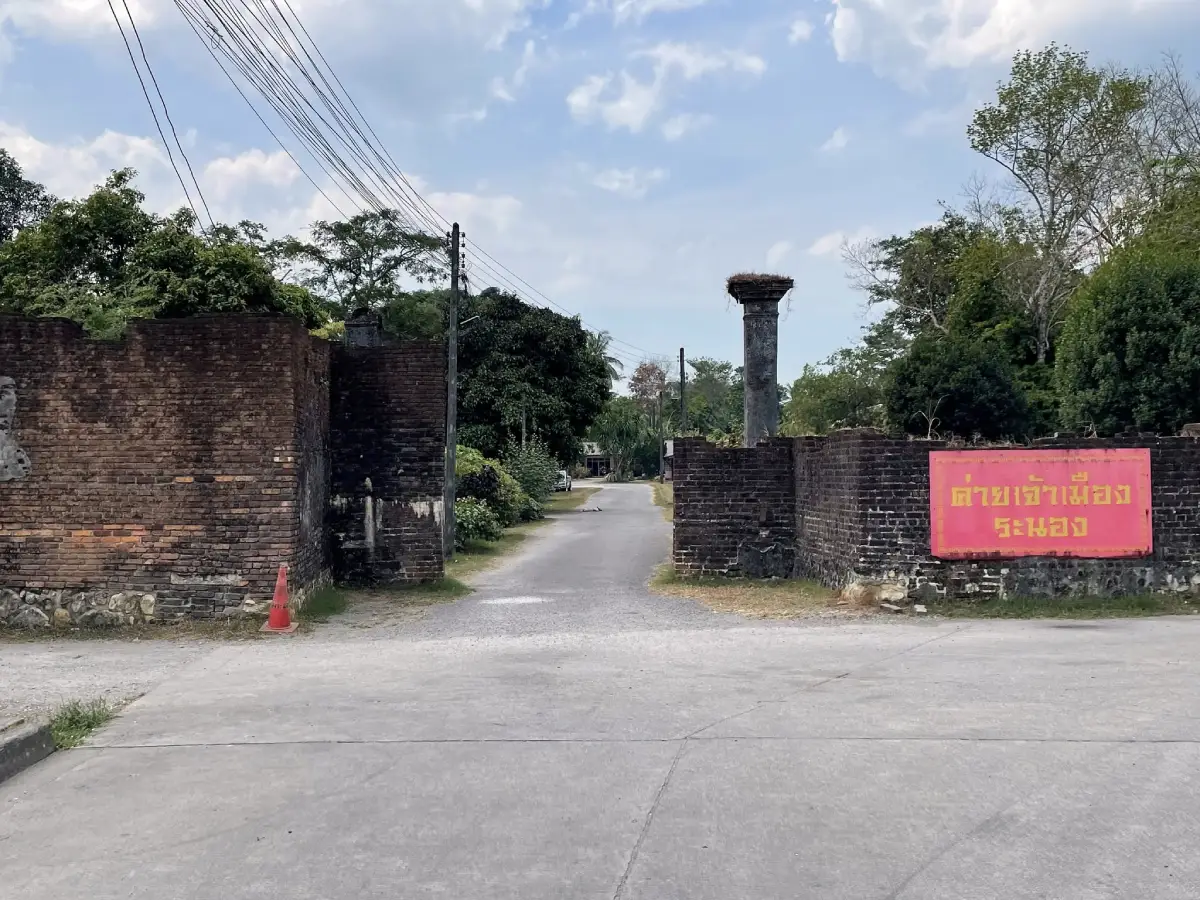
Ranong Governor’s Residence Wall, also known as the Ranong Governor’s Compound Wall, is an important historical site in Khao Niwet Subdistrict, Mueang Ranong District, Ranong Province. It is part of the former Ranong Governor’s Residence, locally known as Baan Khai Chao Mueang Ranong or Nai Khai. The compound began construction around 1877 during the period when the Na Ranong family played a major role in the administration, tin-mining economy, and development of Ranong. The old brick-and-mortar wall, defensive gun openings, remaining building ruins, ancestral shrine, and compound layout make this site one of the clearest places to understand Ranong’s early urban and administrative history.
Ranong Governor’s Residence Wall is more than an old brick wall in the center of town. It is a visible remnant of the administrative heart of old Ranong, where the governor’s residence, family quarters, reception hall, warehouse, ancestral shrine, wells, and defensive wall once formed a large compound. The site helps visitors understand Ranong beyond its better-known hot springs, islands, mountains, and coastal scenery. It reveals the town’s historical identity as a tin-mining center, a trading settlement on the Andaman coast, and a provincial town shaped strongly by the Na Ranong family.
The compound was traditionally called Baan Khai Chao Mueang Ranong or Nai Khai. These names are important because they show that the governor’s residence was not only a private home. It was built like a fortified compound, with thick walls, gun openings, multiple access points, and different working areas inside. The wall therefore served both practical and symbolic purposes. It protected the compound, marked the boundary of the governor’s household, and expressed the authority of Ranong’s ruling family during a period when the town was growing in economic and political importance.
The residence compound began construction around 1877. It was built by Phraya Damrong Sucharit Mahisorn Phakdi, or Kho Sim Kong Na Ranong, the second son of Chao Phraya Damrong Sucharit Mahisorn Phakdi, better known as Khaw Soo Cheang, the first governor of Ranong and founder of the Na Ranong family line. The construction was connected with the need to move the governor’s residence from an older low-lying area affected by flooding to a more suitable location in town. The new compound became a place for residence, administration, reception, storage, ritual, and family memory.
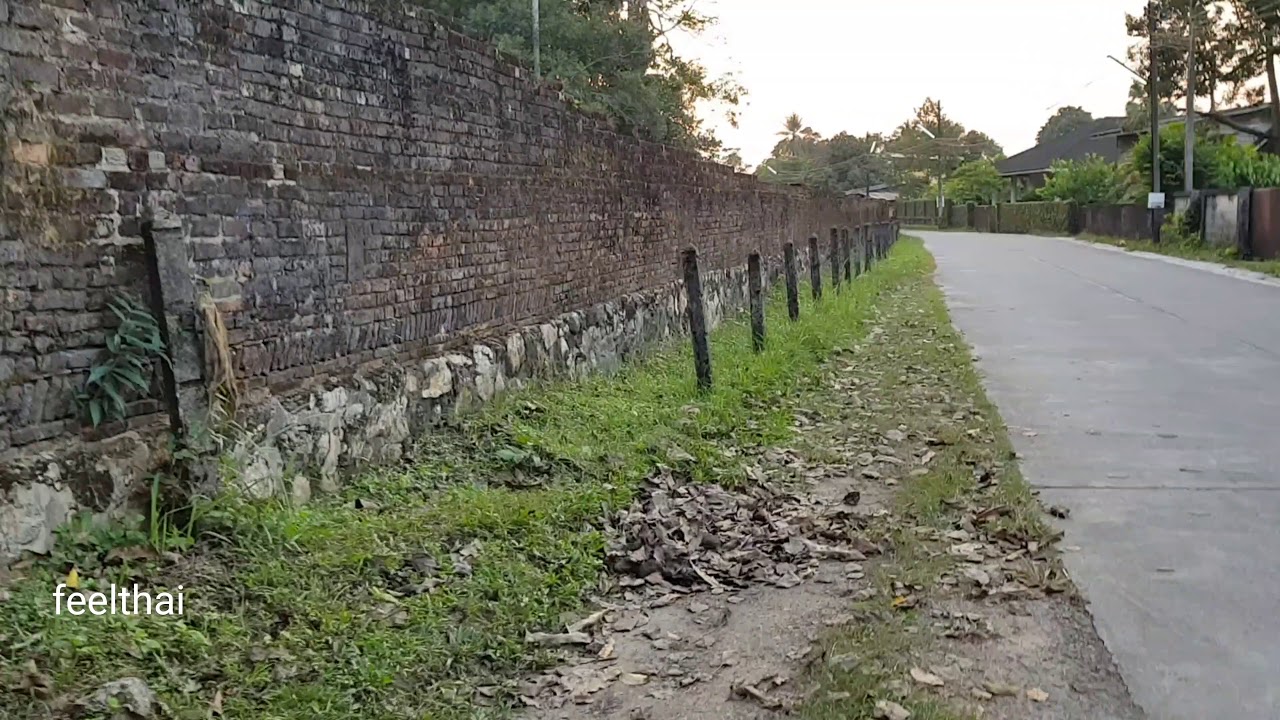
Architecturally, the compound reflected Chinese building traditions adapted to southern Thailand. The old residence used Chinese-style brick and mortar construction, timber upper structures, and tiled roofing. The compound covered about 33 rai and was surrounded by a substantial defensive wall. The wall extended for about 954 meters around the compound, stood about 3.5 meters high, and was around 50 centimeters thick. Gun openings along the wall distinguish it from an ordinary domestic boundary wall and show that security was an important concern when the compound was designed.
When walking along the wall, visitors can still read the character of the old compound through its brickwork, weathered surfaces, openings, and remaining ruins. The wall has aged, and some parts have deteriorated, but this is part of its historical value. The remaining structure shows how a provincial leader’s residence could also function as a protected administrative space in a frontier coastal town. The site should be understood both as architecture and as evidence of the social conditions of old Ranong.
The compound includes several important areas: the ancestral shrine of the Na Ranong family, remains of the old governor’s residence, reception spaces, warehouse areas, wells, a hot-water storage pond, family residential areas, and the surrounding wall. Although many original buildings have declined over time and now survive only as columns, walls, foundations, or ruins, the site still communicates the structure of elite family life and local administration in nineteenth-century Ranong.
The ancestral shrine is one of the most important areas within the compound. It preserves family memory and historical objects connected with the Na Ranong lineage. The Hokkien Chinese inscription at the front of the shrine is read as “Kao-Yang,” meaning “the high sun.” The phrase also expresses the idea of a house rich in officials and wealth. This symbolic language reflects the prestige, prosperity, and official status associated with the family that helped shape Ranong’s history.
Important objects associated with the residence include silver-and-gold-plated ceremonial wreaths granted by Prince Damrong Rajanubhab and a stone inscription authorized by King Chulalongkorn, King Rama V, in honor of the family. These objects show that the residence was not only a local family home. It was connected with the royal court, provincial administration, and the wider political structure of Siam during the Rattanakosin period.
The wall and residence compound are registered as an archaeological site by the Fine Arts Department. This status confirms the historical and cultural importance of the place. The site is valuable as evidence of architecture, defensive planning, elite residence, family history, and the development of Ranong as an Andaman provincial town. For visitors, the value lies in seeing original materials and structures that still stand in the urban landscape.
The wall is meaningful because it combines security, identity, and authority. Its gun openings show that the compound was designed with defense in mind. Its long enclosure separated the inner world of the governor’s family from the outside world of markets, roads, trading activity, and town life. The wall therefore marks a physical and symbolic boundary between public authority and private residence, between old Ranong’s administrative center and the urban settlement around it.
The names Khaw Soo Cheang and Kho Sim Kong are central to understanding the site. Khaw Soo Cheang was Ranong’s first governor and the founder of the Na Ranong family. Kho Sim Kong, his second son, played an important role in building the residence compound. Their story reflects the rise of an overseas Chinese family within the Siamese administrative system, the growth of the tin economy, and the formation of leadership networks across southern Thailand’s Andaman region.
The site is also linked with King Rama V’s visit to Ranong in 1890 during his journey through the Malay Peninsula. Royal writings from that journey described Ranong’s townscape, roads, markets, houses, canals, and the need to relocate the governor’s residence to a more suitable site. This connection places the residence within national history, not only local history. It shows Ranong as a town that mattered within the larger story of Siam’s southern administration.
Ranong is often associated with natural attractions such as hot springs, Koh Phayam, Grass Hill, waterfalls, and coastal scenery. The Governor’s Residence Wall offers a different kind of experience. It opens the historical dimension of the province: Chinese migration, mining, trade, local leadership, state administration, and cultural blending between Hokkien Chinese traditions and southern Thai society. This makes the site especially valuable for visitors who want to understand the depth of Ranong rather than only its scenery.
The atmosphere around the wall is quiet and old-town in character. It is not a heavily commercialized attraction. Visitors will see old brickwork, building remains, trees, open areas, and traces of the past within a living town. This simplicity is one of the site’s strengths. It allows the place to remain authentic and grounded, rather than becoming a staged tourist setting.
A good way to visit is to begin outside the wall and observe its height, thickness, gun openings, brickwork, and weathering. Then move into the inner areas to understand the ancestral shrine, building ruins, and remaining compound structure. This sequence helps visitors understand how the wall worked as the outer protective layer while the interior held residence, administration, reception, storage, and family ritual spaces.
For architecture enthusiasts, the wall is an important example of brick-and-mortar construction and Chinese-influenced compound planning in southern Thailand. Its appeal does not come from polished perfection, but from age, material texture, openings, and practical design. The wall was built for strength and function rather than decoration, making it different from temple, palace, or shop-house architecture.
For visitors interested in family and community history, the residence compound connects several generations of the Na Ranong family. It reflects how overseas Chinese migrants and their descendants entered the Siamese administrative system, built wealth through trade and mining, and became leading figures in the economic and political development of the Andaman region. The wall is therefore a physical reminder of both personal family history and provincial history.
Photographers will find strong visual material in the old brick wall, gun openings, tree shadows, and building ruins. The site offers a very different image of Ranong from beaches or mountain viewpoints. The best photographs emphasize texture, shadow, age, and the quiet atmosphere of the historical compound. Visitors should photograph respectfully, avoid climbing on the wall, and avoid touching or moving any historical materials.
A visit can take 30 minutes to one hour. A short stop is enough to see the wall and take a few photographs, but visitors who want to read the historical information, observe the ancestral shrine, study the ruins, and understand the role of the site in Ranong’s history should allow more time. A slower visit makes the place far more meaningful.
Getting There is easy because the site is located in Ranong town. From central Ranong, head toward Rueang Rat Road and continue into the Kitchaphadung Road area in Khao Niwet Subdistrict. The site is near the morning market area, locally associated with Talat Saphan Yung. Visitors can travel by private car, rental car, motorcycle, or local hired transport. Because the area is part of the old town street network, it is best to drive slowly and watch for the entrance and signs.
The wall can be combined with several nearby places in one heritage route. Visitors can include Rattanarangsan Palace, Ranong City Pillar Shrine, Rueang Rat Road, Tian Sue 100-Year House, Raksawarin Hot Springs, and Ranong Governor’s Grave. This route gives a balanced picture of Ranong through old-town heritage, Chinese-Hokkien history, provincial administration, and wellness tourism.
The best time to visit is morning or late afternoon. The site is outdoors, so natural light is important for seeing the brickwork, gun openings, building remains, and overall landscape. Morning is cooler and more comfortable for walking, while late afternoon light gives the wall stronger texture and shadow. Heavy rain should be avoided because the ground and old surfaces may become slippery.
Visitors should dress respectfully and move carefully. The compound is both a registered historical site and a place connected with an important Ranong family. Do not climb the wall, sit on the wall, write on bricks, remove fragments, or do anything that may damage the old structure. Responsible behavior helps preserve the site for future visitors and local residents.
Useful items to bring include comfortable walking shoes, a hat or umbrella, drinking water, a camera, and enough time to read the information on site. Visitors who want to access inner areas or hear explanations from people connected with the residence should contact the site in advance, because some parts are related to family residence and ancestral shrine use.
Another advantage of the location is its proximity to Ranong’s old-town food scene. After visiting the wall, travelers can continue to local restaurants, breakfast shops, southern Thai eateries, Hokkien-influenced dishes, and seafood restaurants. Pairing a historical walk with local food is one of the best ways to experience Ranong as both a heritage town and a living community.
As an educational place, the wall is suitable for students, families, cultural travelers, and anyone interested in old towns. It explains how a town is built not only through government offices, but also through residences, markets, trading routes, defensive systems, natural resources, and relationships between different communities. The wall helps visitors see how Ranong developed and why the Na Ranong family remains central to the province’s historical memory.
From a conservation perspective, Ranong Governor’s Residence Wall is a good example of a historical site still embedded in a living town. Roads, houses, shops, hotels, and community life continue around it, while the old wall and ruins preserve the memory of another period. This balance between living city and historical remains is part of the site’s value. Visitors should use the space lightly, respect its limits, and help keep it clean.
Overall, Ranong Governor’s Residence Wall is a highly valuable historical attraction in the center of Ranong. Its old brick wall, gun openings, long compound layout, building ruins, ancestral shrine, and connection with the Na Ranong family make it one of the most important places for understanding the province’s past. For travelers who want to go deeper than hot springs and natural scenery, this site provides a clear and memorable view of Ranong as a historical town, a tin-mining center, a trading settlement, and an Andaman community shaped by Thai and Chinese cultural influences.
| Name | Ranong Governor’s Residence Wall |
| Alternative Names | Ranong Governor’s Residence, Baan Khai Chao Mueang Ranong, Nai Khai |
| Thai Name | กำแพงจวนเจ้าเมืองระนอง |
| Location | Kitchaphadung Road, Khao Niwet Subdistrict, Mueang Ranong District, Ranong Province |
| Address | Khao Niwet Subdistrict, Mueang Ranong District, Ranong 85000, Thailand |
| Coordinates | 9.9710635537, 98.6401079797 |
| Highlights | Old brick defensive wall with gun openings, remains of the governor’s compound, ancestral shrine, building ruins, and the historical story of the Na Ranong family |
| History / Period | Construction began around 1877 by Phraya Damrong Sucharit Mahisorn Phakdi, or Kho Sim Kong Na Ranong, the second son of Khaw Soo Cheang, the first governor of Ranong |
| Historical Site Status | Registered as an archaeological site by the Fine Arts Department |
| Wall Features | Brick-and-mortar wall with gun openings; approximately 954 meters in perimeter length, about 3.5 meters high, and about 50 centimeters thick |
| Significance | Evidence of Ranong’s former administrative center, the fortified residence system of the governor, and the Na Ranong family’s role in Andaman provincial history |
| Travel Information | From central Ranong, travel to Rueang Rat Road and enter the Kitchaphadung Road area near the morning market or Talat Saphan Yung. Access is convenient by private car, rental car, motorcycle, or local hired transport. |
| Current Status | Open as a historical attraction and learning site in Ranong old town |
| Open Days | Daily |
| Opening Hours | 08.00 AM – 05.00 PM |
| Admission Fee | Free Admission |
| Facilities | Historical walking area, information signs, ancestral shrine, wall-viewing area, roadside parking space, and nearby restaurants in Ranong town |
| Main Areas / Zones | Brick Wall, Gun Openings, Former Entrance Gates, Ancestral Shrine, Old Residence Ruins, Reception Hall Area, Warehouse Area, Well, Hot-Water Storage Pond, Na Ranong Family Residence Area |
| Related Caretakers | Na Ranong Family And Local Authorities In Ranong Municipality |
| Residence Contact Number | 065-393-6839 |
| Ranong Municipality Contact | 0-7781-1422 |
| Nearby Tourist Attractions | 1. Rattanarangsan Palace, about 1 km 2. Ranong City Pillar Shrine, about 1 km 3. Rueang Rat Road, about 1 km 4. Raksawarin Hot Springs, about 3 km 5. Ranong Governor’s Grave, about 3 km |
| Nearby Restaurants | 1. FarmHouse Restaurant, about 1 km, Tel. 087-278-4224 2. Ranong O Cha, about 2 km, Tel. 088-167-4164 3. Khun Lin Ranong, about 4 km, Tel. 077-822-863, 081-892-3455 4. Chill Chill, about 2 km, Tel. 080-559-3945, 089-733-5312 5. KeingLay Ranong, about 9 km, Tel. 086-304-2628, 063-620-6090, 063-287-8924 |
| Nearby Accommodations | 1. The B Ranong Trend Hotel, about 1 km, Tel. 077-823-111 2. FarmHouse Hotel Ranong, about 1 km, Tel. 087-278-4224 3. Sook Hotel Ranong, about 1 km, Tel. 093-581-2500 4. Numsai Khaosuay Resort, about 2 km, Tel. 077-989-855 5. Baan Yamoo Ranong, about 4 km, Tel. 095-020-9111 |
Frequently Asked Questions (FAQ)
Q: Where is Ranong Governor’s Residence Wall located?
A: Ranong Governor’s Residence Wall is located on Kitchaphadung Road in Khao Niwet Subdistrict, Mueang Ranong District, Ranong Province. It is part of the former Ranong Governor’s Residence compound in Ranong old town.
Q: When was Ranong Governor’s Residence built?
A: The compound began construction around 1877 by Phraya Damrong Sucharit Mahisorn Phakdi, or Kho Sim Kong Na Ranong, as part of the governor’s residence and fortified compound.
Q: What is special about the wall?
A: The wall is an old brick-and-mortar defensive wall with gun openings. It once surrounded the governor’s compound and shows how the residence functioned partly as a fortified administrative site.
Q: Is there an admission fee?
A: No. The site has free admission and is suitable for walking, photography, and learning about Ranong’s old-town history.
Q: What are the opening hours?
A: The site is open daily from 08.00 AM to 05.00 PM. Morning and late afternoon are the best times to visit because the site is outdoors.
Q: How do travelers get there?
A: From central Ranong, travel to Rueang Rat Road and enter the Kitchaphadung Road area near the morning market or Talat Saphan Yung. Visitors can arrive by private car, rental car, motorcycle, or local hired transport.
Q: What nearby places can be combined with the visit?
A: Nearby places include Rattanarangsan Palace, Ranong City Pillar Shrine, Rueang Rat Road, Raksawarin Hot Springs, and Ranong Governor’s Grave, making the site easy to include in a Ranong heritage route.
Q: What should visitors be careful about?
A: Visitors should dress respectfully, walk carefully, avoid climbing on the wall, avoid writing on bricks, avoid removing old materials, and help keep the historical site clean.
 Category: ●Art, Culture and Heritage
 Group: ●Historical Sites and Monuments
Last Update : 2 MonthAgo
 Last Update : 2 MonthAgo
 Click to Access the Navigation Map GPS
Ranong Governor is Residence Wall Map
Recommend
 Historical Sites and Monuments(4)
 Landmarks and Memorials(1)
 Royal Palace(1)
 Art, Craft Centres, Tradition(4)
 Educational Places
 Educational Gardens, Farm(1)
 Places of Worship
 Temple(12)
 Other Sacred Sites(2)
 Suburban Living
 Village, Community(2)
 Nature and Wildlife
 National Parks and Marine Reserves(6)
 Mountain (Doi)(4)
 Waterfalls(15)
 Hot Springs(3)
 Caves(4)
 River, Canal(2)
 Bays and Beaches(10)
 Islands(8)
 Other natural attractions(3)
 Travel Articles, Recipes
 Travel Review, Food Review(1)


