
lovethailand home >South Travel Attractions >Ranong Travel Attractions >Muang Ranong >Khao Niwet > Wat Suwan Khiri Wihan (Wat Na Mueang)
TL;DR: Wat Suwan Khiri Wihan (Wat Na Mueang) is located at Chaloem Chalat Road, Opposite Chat Chaloem School, Khao Niwet Subdistrict, Mueang Ranong District, Ranong Province, open Daily, hours 08.30 AM - 04.30 PM.
Wat Suwan Khiri Wihan (Wat Na Mueang)
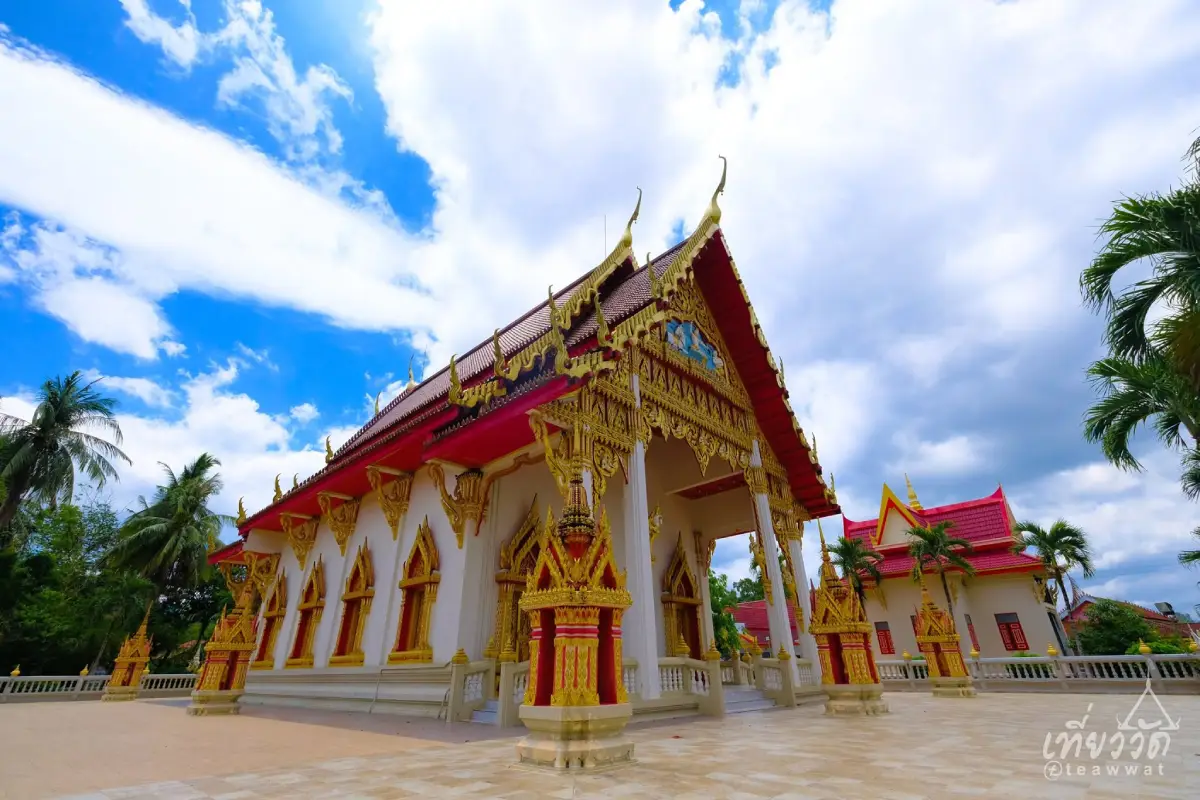
Open Days: Daily
Opening Hours: 08.30 AM - 04.30 PM
Wat Suwan Khiri Wihan, commonly known as Wat Na Mueang, is located at 8 Chaloem Chalat Road, Khao Niwet Subdistrict, Mueang Ranong District, Ranong Province. It is a third-class royal temple of the common type under the Mahā Nikāya order and one of the most historically important Buddhist temples in Ranong town. The present temple was rebuilt in 1890 under the royal initiative of King Chulalongkorn, Rama V, after the former Wat Suwan Khiri Tharam near Hat Som Paen canal was damaged by flooding, sediment, and mining-related runoff. Key features include the Burmese-style Phra Chedi Dathu, the ordination hall, a richly ornamented standing Buddha image with dok phikun motifs, five marble Buddha images, a royal pulpit presented by King Rama V, an old preaching hall with patterned floor tiles, the shrine of Luang Pho Tio Suwanno, and a peaceful temple atmosphere in the heart of Ranong town.
Wat Suwan Khiri Wihan, or Wat Na Mueang, is one of the most meaningful temples in Ranong because it connects Buddhist faith, royal history, local urban development, Burmese artistic influence, and the social memory of the province in one compact site. The temple stands on Chaloem Chalat Road opposite Chat Chaloem School, within the Ranong municipal area. Its location makes it easy to combine with other central attractions such as Rattanarangsan Palace, Ranong City Pillar Shrine, Khaw Soo Cheang Monument, Ranong Governor’s Residence, Raksawarin Hot Springs, and Ranong Governor’s Grave.
The temple’s origin is linked with the former Wat Suwan Khiri Tharam, which once stood near Khlong Hat Som Paen in Bang Rin Subdistrict. Old Ranong was shaped by heavy rainfall, hills, streams, and tin-mining activity. The former temple area suffered from flooding, sand deposits, muddy water, and sediment from nearby mining areas, making it difficult for monks and novices to remain there. As the old temple deteriorated, the need for a new and more stable Buddhist center became clear.
During King Rama V’s royal visit to Ranong in 1890, he learned of the condition of the old temple and ordered Phraya Rattanasetthi, also known as Kho Sim Kong Na Ranong, the governor of Ranong, to arrange land and build a new temple at the present site. This act was not merely a physical relocation of a temple. It restored the town’s Buddhist center and placed it within a more suitable urban setting on Chaloem Chalat Road.
After the new temple was built, monks from the former Wat Suwan Khiri Tharam were invited to perform the formal ritual transfer and boundary ceremony. King Rama V granted the new temple the name “Wat Suwan Khiri Wihan,” recorded in a royal proclamation in 1894. This royal connection gives the temple strong historical importance and explains why it remains one of Ranong’s most respected religious sites.
Today, Wat Suwan Khiri Wihan remains an active royal temple. It serves as a place for merit-making, worship, Buddhist ceremonies, Dhamma study, meditation, and community activities. It is especially respected by Buddhist communities in Ranong, including Thai and Myanmar residents whose faith is strongly connected with the temple’s Burmese-style pagoda and sacred spaces.
The most visually distinctive feature of the temple is Phra Chedi Dathu, a Burmese-style pagoda standing on an octagonal base. The pagoda has a circumambulatory platform and a surrounding wall. The base and wall are painted white, while the body and upper section of the pagoda are golden. The finial is made of brass and decorated with colored stones in Burmese artistic style. Its form makes the pagoda the central visual landmark of the temple and one of the best examples of Burmese Buddhist influence in Ranong.
Phra Chedi Dathu is important not only for its architecture but also for the story of its builder. It was built by Nang Phua Sai Khai, the wife of U Aung Me, a Burmese man associated with the royal court who later migrated to Ranong. Her personal devotion to Buddhism led her to use her own resources to build the pagoda as an offering. The pagoda therefore preserves the memory of Burmese Buddhist faith in Ranong and continues to be cared for by descendants and Myanmar Buddhist devotees in the province.
Architecturally, the pagoda is worth observing in detail. Its elements include the raised base, octagonal platform, tiered lotus bases, small niches in the four directions, miniature Buddha niches at the corners, the bell-shaped body, decorative bands, stacked rings, spire, and brass umbrella finial. These features differ from many central Thai pagodas and make Wat Suwan Khiri Wihan a key site for understanding Burmese artistic influence on Ranong’s Buddhist landscape.
The ordination hall is another important part of the temple. Inside is a beautifully ornamented standing Buddha image with dok phikun floral motifs from the early Rattanakosin period. This image adds a Thai artistic dimension to the temple, balancing the Burmese character of the pagoda with refined Buddhist sculpture from the Thai tradition.
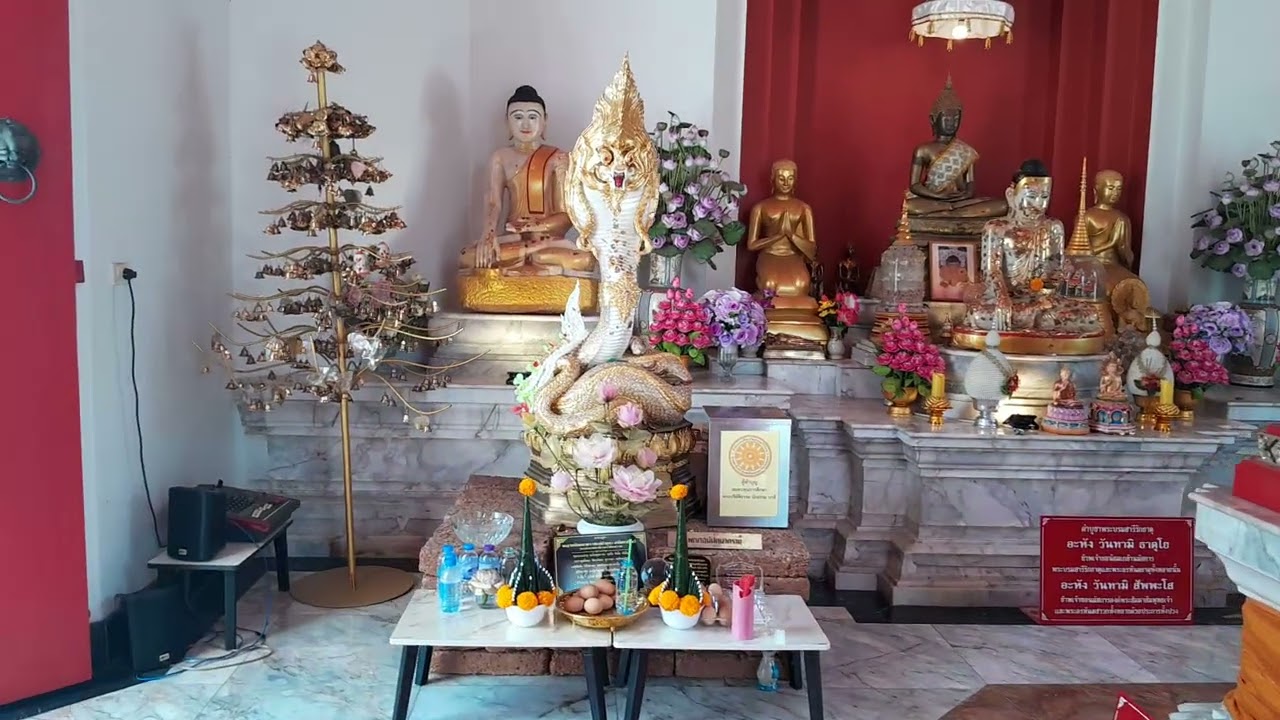
Inside the ordination hall, visitors can also pay respect to the main Buddha image and five marble Buddha images. The space is suitable for quiet worship and contemplation. Visitors should remove their shoes before entering, avoid touching sacred images, move calmly, and keep the interior atmosphere respectful.
One of the temple’s historically significant items is the pulpit presented by King Rama V. It is more than a ceremonial object used for preaching. It is a symbolic link between the temple and the royal visit to Ranong, reflecting the king’s support for Buddhism in provincial towns and the role of the temple as a religious and civic institution.
The old preaching hall also deserves attention. It is an open hall with a rectangular plan, a projecting front porch, low railings, square columns, timber roof structure, tiled hip roof, and patterned old floor tiles. These details show how the hall functioned as a space for sermons, gatherings, religious events, and community use.
The patterned tile floor of the preaching hall is a small but valuable detail. It reflects the care invested in religious architecture and gives the interior a sense of craftsmanship. The hall is therefore not just a supporting structure; it is part of the temple’s living architectural history.
The temple compound also includes the shrine of Luang Pho Tio Suwanno, a revered monk of Ranong. This shrine adds a contemporary devotional dimension to the temple. Wat Suwan Khiri Wihan is not only an old temple with registered heritage buildings; it is also a living place of worship where people continue to pay respect to monks, teachers, and sacred images.
One of the temple’s strongest qualities is its cultural blend. Burmese art is most visible in Phra Chedi Dathu, Thai Buddhist tradition appears in the ordination hall and Buddha images, and Chinese influence is present in parts of Ranong’s broader cultural context. This mixture reflects Ranong’s identity as an Andaman border town shaped by Thai, Chinese, and Myanmar communities.
Although the temple is located in the municipal area, it retains a calm atmosphere. The grounds are peaceful and suitable for sitting quietly, making merit, or resting under the shade of the Bodhi tree. This contrast between the urban street outside and the quiet temple interior gives Wat Suwan Khiri Wihan a strong sense of place as a religious refuge in the town center.
The temple also has an educational role. It has supported Buddhist scripture study since 1937 and includes a public library, meditation-related training, and local community moral education programs. These functions show that the temple is not only a tourist attraction or a place of worship, but also a community learning center.
A good visit should begin at Phra Chedi Dathu, the temple’s most distinctive landmark. Visitors can then continue to the ordination hall, the standing Buddha image, the marble Buddha images, the royal pulpit, the old preaching hall, the shrine of Luang Pho Tio Suwanno, and the quieter shaded areas of the temple. This route allows visitors to understand the temple through architecture, faith, royal history, and local devotion.
Getting There is easy from central Ranong. The temple is located at 8 Chaloem Chalat Road in Khao Niwet Subdistrict. From Phet Kasem Road, continue onto Chaloem Chalat Road for about 600 meters, or use Highway 4004 on the Ranong-Pak Nam route. The temple is opposite Chat Chaloem School and can be reached by private car, rental car, motorcycle, or local hired transport.
The best time to visit is in the morning or late afternoon, when the weather is more comfortable and the light is good for photographing the pagoda. Visitors who want to enter the ordination hall and major temple areas should come during the visitor hours of 08.30 AM to 04.30 PM. For major Buddhist events such as Visakha Bucha, Makha Bucha, Asalha Bucha, Buddhist Lent, and the annual worship of Phra Chedi Dathu, visitors should check the temple schedule in advance.
Temple etiquette is important. Visitors should dress modestly, remove shoes before entering sacred buildings, avoid loud behavior, avoid touching Buddha images or historic objects, and keep the grounds clean. Photography should be done respectfully, especially inside the ordination hall or near people who are praying or meditating.
For photography, Phra Chedi Dathu is the main highlight. The white base and surrounding wall contrast beautifully with the golden pagoda body. Morning and late-afternoon light work especially well. Front angles show the full composition, while side angles emphasize the octagonal base, circumambulatory platform, and finial. Visitors should keep a respectful distance and avoid disturbing worshippers.
Wat Suwan Khiri Wihan can be combined easily with other attractions in Ranong town. A practical half-day route can include the temple, Rattanarangsan Palace, Ranong City Pillar Shrine, Khaw Soo Cheang Monument, Ranong Governor’s Residence, and Raksawarin Hot Springs. This route gives travelers a clear view of Ranong through Buddhism, royal history, local leadership, old-town architecture, and wellness culture.
With more time, travelers can continue to Ranong Governor’s Grave and Hat Chan Damri to connect the town temple with the history of the Na Ranong family and the coastal landscape. Ranong’s identity comes from mining, trade, Thai-Chinese communities, Myanmar cultural links, Buddhism, and Andaman geography. Wat Suwan Khiri Wihan is an excellent starting point for reading those layers of history.
For families and students, the temple is a useful learning site. It shows how one temple can explain geography, flooding, tin mining, royal patronage, local governance, Buddhist faith, Burmese art, and community life. A visit therefore turns Ranong history into something visible and understandable through real architecture and sacred space.
Overall, Wat Suwan Khiri Wihan, or Wat Na Mueang, is one of the most important temples to visit in Ranong town. Its value does not come from size alone, but from the density of history within the site: the old temple near Hat Som Paen, the relocation under King Rama V, the royal naming, Phra Chedi Dathu, the ordination hall, the standing Buddha image, the royal pulpit, the old preaching hall, the shrine of Luang Pho Tio, and its continuing role as a spiritual center for Ranong people. Travelers who want to understand Ranong deeply should begin with this temple.
| Name | Wat Suwan Khiri Wihan |
| Alternative Names | Wat Na Mueang, Wat Suwan Khiri, Former Wat Suwan Khiri Tharam |
| Thai Name | วัดสุวรรณคีรีวิหาร / วัดหน้าเมือง |
| Category | Royal Temple, Buddhist Temple, Registered Historic Site, Cultural Attraction |
| Temple Status | Third-Class Royal Temple Of The Common Type, Mahā Nikāya Order |
| Location | Chaloem Chalat Road, Opposite Chat Chaloem School, Khao Niwet Subdistrict, Mueang Ranong District, Ranong Province |
| Address | 8 Chaloem Chalat Road, Khao Niwet, Mueang Ranong District, Ranong 85000, Thailand |
| Coordinates | 9.979293, 98.637482 |
| Rebuilt | 1890 |
| Royal Boundary Granted | 22 October 1894 |
| Historic Site Registration | Registered And Demarcated As A Historic Site By The Fine Arts Department On 9 April 2001 |
| Significance | A major temple of Ranong connected with King Rama V’s royal initiative, Burmese-Thai-Chinese cultural interaction, and the Buddhist history of the Andaman border town |
| Key Features | Phra Chedi Dathu, Ordination Hall, Ornamented Standing Buddha Image, Five Marble Buddha Images, Royal Pulpit Presented By King Rama V, Old Preaching Hall, Shrine Of Luang Pho Tio Suwanno |
| Phra Chedi Dathu Highlights | Burmese-Style Pagoda On An Octagonal Base, About 13 Meters From Base To Finial, With A White Base And Wall, Golden Body, Brass Umbrella Finial, And Colored Stone Decoration |
| Builder Of Phra Chedi Dathu | Nang Phua Sai Khai, Wife Of U Aung Me, A Burmese Migrant Who Settled In Ranong |
| Current Status | Open As An Active Buddhist Temple, Worship Site, Meditation And Learning Space, And Cultural Attraction In Ranong Town |
| Open Days | Daily |
| Opening Hours | 08.30 AM - 04.30 PM |
| Admission Fee | Free Admission |
| Abbot | Phra Ratcha Ranang Wachiramuni (Khachon Chotivaro, Pali Grade 4) |
| Temple Contact Number | 077-823-915 |
| Local Caretakers | Wat Suwan Khiri Wihan And The National Office Of Buddhism |
| Facilities | Worship Areas, Ordination Hall, Preaching Hall, Luang Pho Tio Shrine, Shaded Sitting Area Under The Bodhi Tree, Public Library, Community Moral-Education Unit, And Parking Areas Around The Temple |
| Main Areas / Zones | Phra Chedi Dathu, Circumambulatory Platform, Ordination Hall, Old Preaching Hall, Luang Pho Tio Suwanno Shrine, Bodhi Tree Area, Public Library, Buddhist Ceremony Area |
| Travel Information | From Phet Kasem Road, enter Chaloem Chalat Road for about 600 meters, or follow Highway 4004 on the Ranong-Pak Nam route. The temple is opposite Chat Chaloem School in Ranong town. |
| Nearby Tourist Attractions | 1. Rattanarangsan Palace, about 2 km 2. Ranong City Pillar Shrine, about 2 km 3. Khaw Soo Cheang Monument, about 2 km 4. Ranong Governor’s Grave, about 3 km 5. Raksawarin Hot Springs, about 3 km 6. Ranong Governor’s Residence, about 3 km |
| Nearby Restaurants | 1. Ranong O Cha, about 2 km, Tel. 088-167-4164, 077-822-101 2. FarmHouse Restaurant, about 2 km, Tel. 087-278-4224 3. Chill Chill, about 2 km, Tel. 077-983-350 4. Khun Lin Ranong, about 3 km, Tel. 077-822-863, 081-892-3455 5. KeingLay Ranong, about 8 km, Tel. 077-873-969 |
| Nearby Accommodations | 1. The B Ranong Trend Hotel, about 1 km, Tel. 077-823-111 2. FarmHouse Hotel Ranong, about 2 km, Tel. 087-278-4224 3. Sook Hotel Ranong, about 2 km, Tel. 093-581-2500 4. Numsai Khaosuay Resort, about 2 km, Tel. 087-222-8886 5. Baan Yamoo Ranong, about 5 km, Tel. 095-020-9111 |
Frequently Asked Questions (FAQ)
Q: Where is Wat Suwan Khiri Wihan located?
A: Wat Suwan Khiri Wihan is located at 8 Chaloem Chalat Road, Khao Niwet Subdistrict, Mueang Ranong District, Ranong Province, opposite Chat Chaloem School in the Ranong municipal area.
Q: Why is Wat Suwan Khiri Wihan important?
A: It is a third-class royal temple and one of Ranong’s most important Buddhist sites. The present temple was rebuilt in 1890 under the royal initiative of King Rama V after the former temple near Hat Som Paen was damaged by flooding and sediment.
Q: What can visitors see inside the temple?
A: Visitors can see Phra Chedi Dathu, the ordination hall, an ornamented standing Buddha image with dok phikun motifs, five marble Buddha images, a royal pulpit presented by King Rama V, the old preaching hall, and the shrine of Luang Pho Tio Suwanno.
Q: What is special about Phra Chedi Dathu?
A: Phra Chedi Dathu is a Burmese-style pagoda standing on an octagonal base, rising about 13 meters from base to finial. It has a white base and wall, a golden body, a brass umbrella finial, and colored-stone decoration.
Q: When is the temple open?
A: The temple is open daily from 08.30 AM to 04.30 PM. Morning and late afternoon are the most suitable times for worship, walking around the temple, and photographing the pagoda.
Q: Is there an admission fee?
A: No. There is no admission fee. Visitors can enter respectfully for worship, merit-making, and cultural sightseeing.
Q: Who is the abbot of Wat Suwan Khiri Wihan?
A: The abbot is Phra Ratcha Ranang Wachiramuni, also known as Khachon Chotivaro, Pali Grade 4.
Q: What nearby places can be combined with this visit?
A: Nearby places include Rattanarangsan Palace, Ranong City Pillar Shrine, Khaw Soo Cheang Monument, Ranong Governor’s Grave, Raksawarin Hot Springs, and Ranong Governor’s Residence.
 Category: ●Places of Worship
 Group: ●Temple
Last Update : 2 MonthAgo
 Last Update : 2 MonthAgo
 Click to Access the Navigation Map GPS
Wat Suwan Khiri Wihan (Wat Na Mueang) Map
Recommend

 Art, Culture and Heritage
 Historical Sites and Monuments(4)
 Landmarks and Memorials(1)
 Royal Palace(1)
 Art, Craft Centres, Tradition(4)
 Educational Places
 Educational Gardens, Farm(1)
Temple(12)
 Other Sacred Sites(2)
 Suburban Living
 Village, Community(2)
 Nature and Wildlife
 National Parks and Marine Reserves(6)
 Mountain (Doi)(4)
 Waterfalls(15)
 Hot Springs(3)
 Caves(4)
 River, Canal(2)
 Bays and Beaches(10)
 Islands(8)
 Other natural attractions(3)
 Travel Articles, Recipes
 Travel Review, Food Review(1)


