
lovethailand home >South Travel Attractions >Phatthalung Travel Attractions >Muang Phatthalung >Tha Miram > Shadow Puppet Gallery
TL;DR: Shadow Puppet Gallery is located at Phet Kasem Road, Tha Miram Subdistrict, Mueang Phatthalung District, Phatthalung Province, open Daily, hours Open Throughout The Day.
Shadow Puppet Gallery
Open Days: Daily
Opening Hours: Open Throughout The Day
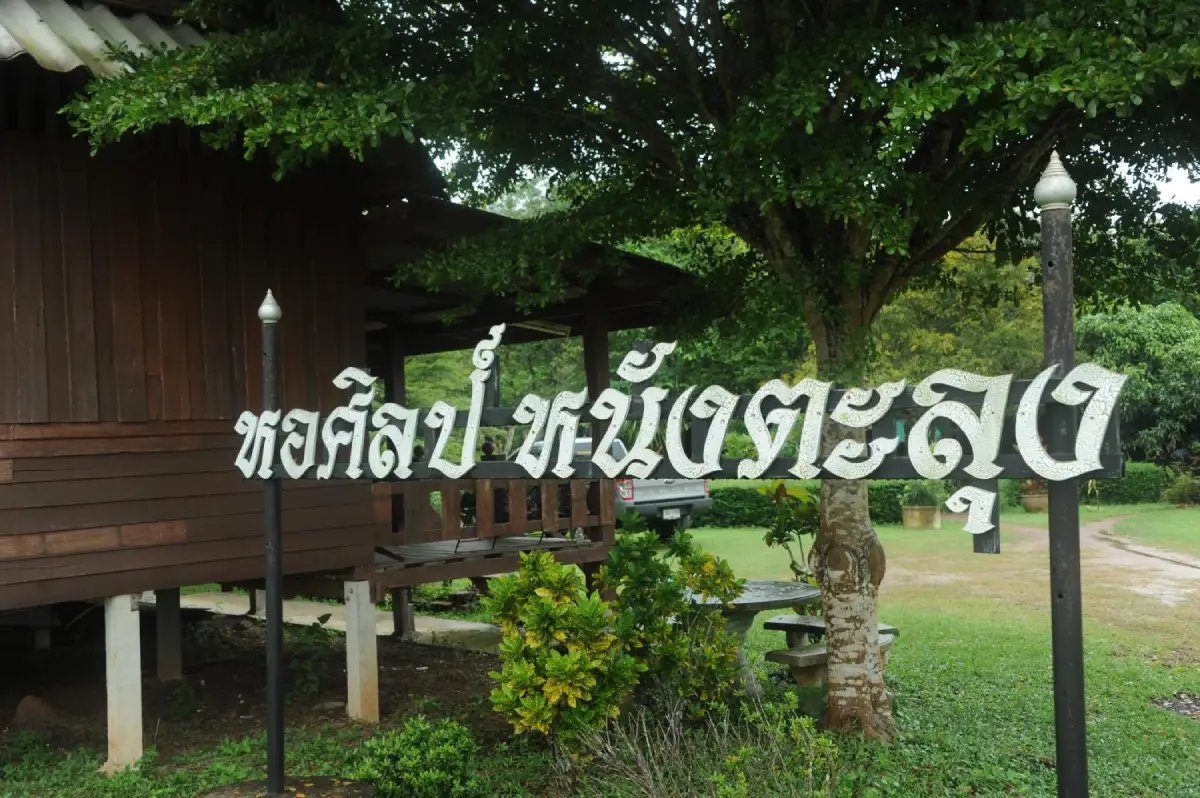
The Shadow Puppet Gallery in Phatthalung Province is an important cultural learning center dedicated to preserving Nang Talung, the traditional shadow puppet theatre of southern Thailand. Located at 122 Moo 4, Phet Kasem Road, Tha Miram Subdistrict, Mueang Phatthalung District, the gallery stands close to the Phatthalung City Pillar Shrine and the Tha Miram area, making it easy to include in a cultural route around Phatthalung city. This is not only a place to view shadow puppets; it is a living space where craftsmanship, performance, local memory, music, belief, and southern Thai storytelling are brought together.
The Shadow Puppet Gallery is ideal for travelers who want to understand Phatthalung through one of its most representative local arts. Nang Talung is more than entertainment. It is a cultural medium that combines literature, local language, music, humor, social commentary, craftsmanship, and spiritual respect for teachers. A single performance brings together light, shadow, voice, rhythm, puppet movement, music, and the quick wit of the puppeteer. For this reason, Nang Talung remains one of the clearest expressions of southern Thai cultural identity.
The gallery plays an important role in preserving Nang Talung from past to present. It supports the transmission of Thai cultural heritage through cooperation between local leather-carving groups in Phatthalung and public-sector partners. The aim is to promote Nang Talung in Thailand and abroad while keeping the craft connected to its local roots. Inside the gallery, visitors can learn about shadow puppet figures, how the puppets are made, the history of Nang Talung, the biographies of craftsmen, musical instruments, and performance equipment.
The Shadow Puppet Gallery also functions as a working craft and learning space. It provides information about Nang Talung, demonstrates leather carving, teaches puppet-making skills, sells carved shadow puppet artworks, accepts custom carving work, offers framing services, and presents Nang Talung and Nora performances on suitable occasions. In one visit, travelers can experience the place as a museum, gallery, workshop, performance space, craft studio, and local cultural classroom.
The gallery was pioneered by Chang Lek, a fourth-generation shadow puppet leather carver, and Nang Phonfa Darathong, a local shadow puppet master. They developed the site so that children, students, travelers, and cultural learners could study Nang Talung directly from practitioners. The gallery began operating as a learning center in 2004 and has gradually become one of Phatthalung’s meaningful cultural stops for people who want to see how local knowledge is passed from one generation to the next.
One of the strongest features of the gallery is its hands-on learning approach. Visitors do not only look at puppets hanging on display. They can observe the relationship between the puppet, the leather carver, the puppeteer, the musicians, and the performance screen. A Nang Talung puppet begins with the selection of material, followed by drawing, carving, detailing, coloring, attaching control rods, and preparing the puppet for use behind the screen. Every step requires skill, patience, precise eyes, and deep understanding of each character’s personality.
The first major area visitors usually encounter is the open shadow puppet theatre. It has a large screen, sound equipment, and exhibition panels on both sides. One side explains shadow puppet characters and their brief histories, while the other introduces shadow performance traditions in Asia and the development of Nang Talung in southern Thailand. This theatre area helps visitors understand how the displayed puppets become alive when combined with light, sound, voice, and movement.
Another meaningful area is the Masters’ Pavilion, built to honor teachers and senior figures who shaped the Nang Talung tradition in Phatthalung. The pavilion reflects the deep respect for teachers that is central to this art form. Nang Talung knowledge is not transmitted only through written texts. It is learned by watching, listening, practicing, repeating, receiving correction, and spending time with skilled teachers. The Masters’ Pavilion therefore helps visitors understand why Nang Talung contains both joyful performance and sacred respect.
Beyond the pavilion, visitors will find display boards of old shadow puppets collected from several places. Chang Lek has gathered puppets carved by craftsmen from Phatthalung, Nakhon Si Thammarat, Songkhla, the southern border provinces, and other areas. This collection allows visitors to compare different carving styles, proportions, facial forms, body shapes, decorative patterns, and regional craft identities. Even when two puppets represent the same type of character, the details may differ according to the craft lineage and performance method.
The demonstration pavilion is the area that makes the Shadow Puppet Gallery especially valuable. Visitors can learn how to make shadow puppets, try basic carving activities, and practice simple puppet movement under guidance. This hands-on experience changes the way people look at Nang Talung. A finished puppet may look beautiful and light, but making one requires concentration, hand control, and long training. For students and families, this area is one of the most memorable parts of the visit.
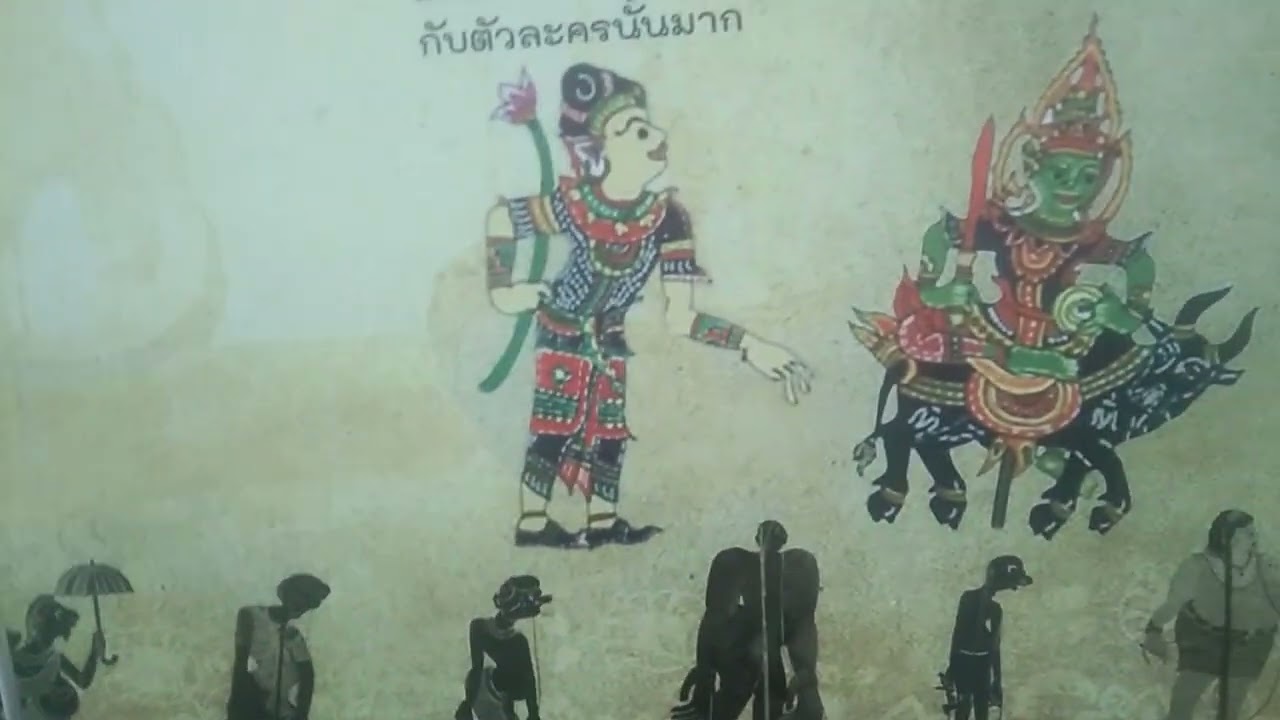
The puppets displayed and sold at the gallery include many character types, such as hermits, Phra Isuan, rulers, male and female leads, giants, comic characters, and decorative leather artworks. Each type has a specific role in performance. Teacher figures are connected with ritual and opening sequences. Heroes and heroines carry the main story. Giants add conflict and drama. Comic characters connect the performance to the audience through humor, local speech, and social observation.
Comic characters are among the most memorable figures in Nang Talung. Characters such as Ta Theng, Ta Nui, Nai Sa Mo, and Nai Yod Thong are loved because they do more than make people laugh. They represent ordinary people, local voices, and the ability of the performance to speak about everyday life. Through these characters, Nang Talung can comment on current events, community problems, food, customs, relationships, and social behavior with wit and humor.
Southern Nang Talung is distinctive because it adapts literature, folktales, and invented stories through local language and contemporary humor. It is not a fixed form of storytelling. A skilled puppeteer can insert current events, moral lessons, jokes, and social criticism while keeping the structure of the story alive. The puppeteer must be able to sing, narrate, voice different characters, move puppets with rhythm, control timing, and work with musicians throughout the performance.
Musical instruments are another important part of the Nang Talung experience. Traditional performances used local and Thai instruments such as thap drums, larger drums, cymbals, gong-like instruments, and reed instruments. In more recent times, some troupes have added modern instruments to match changing audiences. Music does not merely decorate the performance. It shapes mood, pace, tension, comedy, dramatic movement, and the emotional rhythm of the characters on screen.
The gallery is suitable for children, students, families, cultural travelers, craft enthusiasts, and visitors who want to learn from real practitioners. It presents Nang Talung as a complete system, from puppet carving and old collections to performance demonstration, teacher remembrance, musical explanation, and handcrafted souvenirs. For people who have only heard of Nang Talung before, the gallery provides a clear and accessible introduction.
In terms of cultural preservation, the Shadow Puppet Gallery is more than a place that keeps old objects. True preservation requires knowledge to remain in use. This gallery allows younger generations to learn by doing, to talk with skilled teachers, to see the difficulty of leather carving, and to understand why Nang Talung is still meaningful. The art is not treated as something frozen in the past. It is presented as living knowledge that can still speak to the present.
The atmosphere of the gallery is simple, local, and direct. It is not a large air-conditioned museum, but it is rich in stories and practical knowledge. Every corner reflects actual use: teaching, demonstration, collecting, repairing, carving, explaining, and performing. Visitors who take time to speak with the caretakers will gain more than they would from reading display panels alone, because many details of Nang Talung are best understood through real examples.
For travelers looking for meaningful souvenirs from Phatthalung, the gallery is a strong choice. Carved shadow puppet artworks are both decorative and cultural. They reflect the identity of Mueang Lung, the old name associated with Phatthalung, and the skill of local craftsmen. Visitors can choose small pieces for gifts, larger decorative works, or custom designs. Buying directly from a learning center also supports the people who continue to preserve and transmit this craft.
As a travel stop, the Shadow Puppet Gallery connects easily with other attractions in Phatthalung city. Nearby places include the Phatthalung City Pillar Shrine, the Phraya Thukkharat (Chuai) Monument, Wat Intharawat or Wat Tha Miram, Wat Khuha Sawan, Khuha Sawan Cave, and Khao Ok Thalu. A well-planned city route can combine shadow puppet learning, local history, sacred places, and mountain viewpoints in one trip.
Getting There is convenient by private car, rental car, or local transport. From Phatthalung city, follow Phet Kasem Road toward Tha Miram Subdistrict. The gallery is near the Phatthalung City Pillar Shrine and about 4 km from the Phatthalung Provincial Hall area. Travelers arriving by train can get off at Phatthalung Railway Station and continue by local vehicle to Tha Miram. The distance is short enough to include the gallery in a half-day city itinerary.
The most suitable visiting time is from morning to afternoon, especially for visitors who want to see the displays, speak with caretakers, and watch demonstrations. Groups, schools, and visitors who want a more complete workshop experience should contact the gallery in advance. Advance contact helps ensure that demonstrations, explanations, or hands-on activities can be arranged properly.
Visitors should respect the display areas, avoid touching old puppets or artworks without permission, and follow instructions when using carving tools. Some tools are sharp and require proper handling. Photography is generally suitable, but visitors should avoid disturbing demonstrations or activities. A respectful visit helps protect the artworks and supports the gallery’s role as a cultural learning space.
The Shadow Puppet Gallery is one of Phatthalung’s most valuable cultural attractions. It shows why the province is strongly associated with Nang Talung and Nora, and it allows visitors to understand the beauty of puppet carving, the depth of performance knowledge, the importance of teachers, and the effort required to keep local heritage alive. This gallery is not simply a place where shadow puppets are stored. It is a living cultural space where Nang Talung continues to breathe in modern Phatthalung.
| Name | Shadow Puppet Gallery |
| Location | Phet Kasem Road, Tha Miram Subdistrict, Mueang Phatthalung District, Phatthalung Province |
| Address | 122 Moo 4, Phet Kasem Road, Tha Miram Subdistrict, Mueang Phatthalung District, Phatthalung 93000, Thailand |
| Highlights | Nang Talung learning center, shadow puppet museum, leather-carving demonstrations, performance space, hands-on learning area, and carved leather artworks |
| History | Opened as a learning center in 2004 to preserve and transmit the shadow puppet art of Phatthalung |
| Distinctive Features | A living cultural learning center with a performance theatre, exhibitions, old puppet displays, Masters’ Pavilion, and leather-carving demonstration area |
| Travel Information | Accessible by private car, rental car, taxi, or local transport. From Phatthalung city, follow Phet Kasem Road toward Tha Miram Subdistrict. The gallery is near the Phatthalung City Pillar Shrine and about 4 km from the Provincial Hall area |
| Current Status | Operating as a cultural learning center, tourist attraction, and local shadow puppet craft space in Phatthalung |
| Open Days | Daily |
| Opening Hours | Open throughout the day |
| Facilities | Shadow puppet theatre, exhibition area, demonstration pavilion, Masters’ Pavilion, product area, and visitor information service |
| Main Areas / Zones | Shadow puppet theatre, Nang Talung history exhibition, puppet display boards, Masters’ Pavilion, leather-carving demonstration area, puppet-handling area, and carved leather product zone |
| Founder / Cultural Practitioners | Chang Lek, a fourth-generation shadow puppet leather carver, and Nang Phonfa Darathong |
| Main Contact Number | 089-462-9314 |
| Official Website / Official Page | Shadow Puppet Gallery Learning Center |
| Nearby Tourist Attractions | 1. Phatthalung City Pillar Shrine, about 0.2 km 2. Phraya Thukkharat (Chuai) Monument, about 2 km 3. Wat Intharawat or Wat Tha Miram, about 2 km 4. Wat Khuha Sawan, about 3 km 5. Khuha Sawan Cave, about 3 km 6. Khao Ok Thalu, about 4 km 7. Wang Chao Mueang Phatthalung, about 7 km |
| Nearby Restaurants | 1. Kalamae Phatthalung, about 2 km, Tel. 095-414-1562 2. Baebthai Restaurant, about 3 km, Tel. 074-610-986 3. Tha Mi Ram Khanom Pang, about 3 km, Tel. 084-266-1157 4. Villa 4285, about 3 km, Tel. 095-439-8144 5. Thiwthat Highway Restaurant, about 5 km, Tel. 074-673-808 |
| Nearby Accommodations | 1. Siva Royal Hotel, about 2 km, Tel. 074-673-999 2. Dusit Princess Phatthalung, about 3 km, Tel. 074-880-777 3. The Centris Hotel Phatthalung, about 4 km, Tel. 074-616-555 4. Merdelong Hotel, about 4 km, Tel. 074-615-888 5. Ho Fah Hotel, about 4 km, Tel. 074-611-645 |
Frequently Asked Questions (FAQ)
Q: Where is the Shadow Puppet Gallery located?
A: The Shadow Puppet Gallery is located at 122 Moo 4, Phet Kasem Road, Tha Miram Subdistrict, Mueang Phatthalung District, Phatthalung Province, near the Phatthalung City Pillar Shrine.
Q: What can visitors see at the Shadow Puppet Gallery?
A: Visitors can see shadow puppet displays, exhibitions on Nang Talung history, the Masters’ Pavilion, the performance theatre, leather-carving demonstrations, puppet-handling activities, and carved leather artworks.
Q: Who founded the Shadow Puppet Gallery?
A: The gallery was pioneered by Chang Lek, a fourth-generation shadow puppet leather carver, together with Nang Phonfa Darathong, a local shadow puppet master.
Q: Who should visit the Shadow Puppet Gallery?
A: It is suitable for cultural travelers, families, students, craft lovers, visitors looking for meaningful souvenirs, and anyone interested in southern Thai performing arts.
Q: Can visitors watch leather-carving demonstrations?
A: Yes. Visitors can learn about the carving process, and groups or visitors who want a fuller demonstration should contact the gallery in advance.
Q: What is the main contact number?
A: The main contact number for the Shadow Puppet Gallery is 089-462-9314.
Q: What nearby attractions can be visited on the same trip?
A: Nearby attractions include the Phatthalung City Pillar Shrine, Phraya Thukkharat (Chuai) Monument, Wat Khuha Sawan, Khuha Sawan Cave, Khao Ok Thalu, and Wang Chao Mueang Phatthalung.
Q: How should visitors behave inside the gallery?
A: Visitors should avoid touching old puppets or artworks without permission, follow caretaker instructions when using tools, keep the area clean, and respect the learning space.
 Category: ●Art, Culture and Heritage
 Group: ●Art, Craft Centres, Tradition
Last Update : 2 MonthAgo
 Last Update : 2 MonthAgo
 Click to Access the Navigation Map GPS
Shadow Puppet Gallery Map
Recommend

 Historical Sites and Monuments(1)
 Landmarks and Memorials(1)
Art, Craft Centres, Tradition(6)
 Historic Homes and Cities(1)
 Educational Places
 Educational Gardens, Farm(1)
 Places of Worship
 Temple(25)
 Other Sacred Sites(4)
 Research and Development
 Royal Project(2)
 Suburban Living
 Village, Community(3)
 Nature and Wildlife
 National Parks and Marine Reserves(3)
 Mountain (Doi)(4)
 Dam, Reservoir, Lake(7)
 Waterfalls(16)
 Hot Springs(2)
 Caves(12)
 River, Canal(5)
 Bays and Beaches(6)
 Islands(2)
 Other natural attractions(4)
 Entertainment and Agricultural
 Farms, Parks and Ecotourism(4)
 Travel Articles, Recipes
 Travel Review, Food Review(1)


