
lovethailand home >South Travel Attractions >Phatthalung Travel Attractions >Muang Phatthalung >Chai Buri > Ching Pret Tradition
TL;DR: Ching Pret Tradition, open The 1st Waning Day And The 15th Waning Day Of The 10th Lunar Month, hours Merit-Making And Temple Ritual Hours Follow Each Local Temple’s Annual Schedule.
Ching Pret Tradition
Open Days: The 1st Waning Day And The 15th Waning Day Of The 10th Lunar Month
Opening Hours: Merit-Making And Temple Ritual Hours Follow Each Local Temple’s Annual Schedule
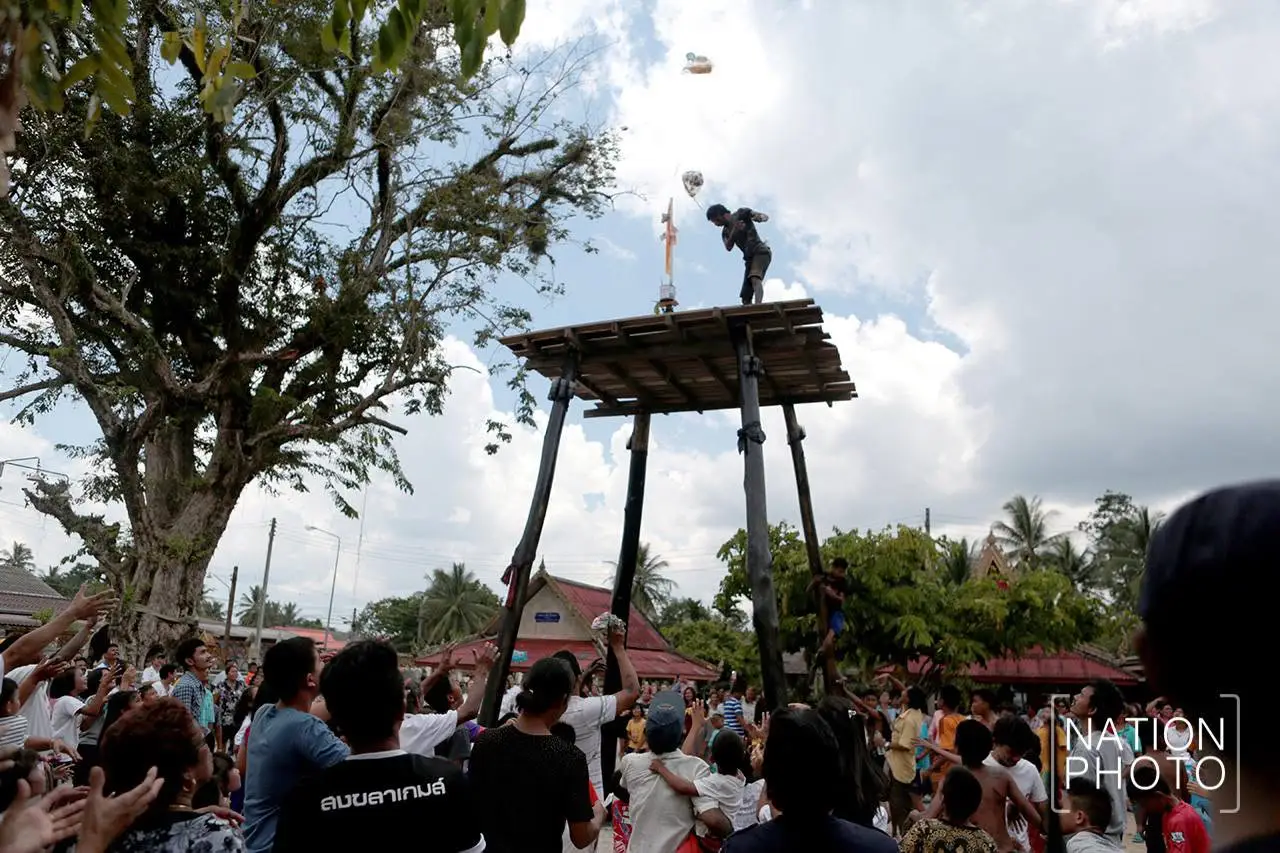
The Ching Pret Tradition in Phatthalung Province is an important southern Thai Buddhist tradition associated with the Sat Duean Sip festival, or the tenth lunar month merit-making period. The tradition is held to dedicate merit to deceased ancestors, especially those believed to be in the realm of pret or hungry spirits. It takes place on the 1st waning day of the 10th lunar month, known as the day to welcome ancestors, and again on the 15th waning day of the 10th lunar month, known as the day to send ancestors back. Families prepare food, symbolic sweets, dry goods, and necessary items in a ceremonial basket called a mhrap, take it to the temple, offer food to monks, dedicate merit, place food for the spirits on a raised platform called a la pret, and then join the lively ritual of receiving or scrambling for the food after the ceremony.
The essence of Ching Pret is not the act of scrambling for food alone. Its deeper meaning lies in gratitude, family bonds, remembrance of the deceased, and the annual homecoming of southern Thai families. People from Phatthalung who live or work elsewhere often return home during the tenth lunar month to make merit with their relatives. They prepare offerings, visit the temple, listen to Buddhist chanting, dedicate merit, and spend time with family. For this reason, Ching Pret is at once a Buddhist rite, an ancestral remembrance ceremony, a family gathering, and a living community tradition.
In Phatthalung, the Sat Duean Sip and Ching Pret traditions continue to be observed at temples and communities throughout the province. The temple is the center of the ritual because it is where families bring their mhrap offerings, offer food to monks, participate in chanting, pour water to dedicate merit, and place food on the la pret. Some communities also organize processions, beautifully decorated mhrap contests, traditional games, youth activities, and local cultural events. These activities help make the tradition visible to younger generations and keep it active in community life.
The name Ching Pret can sound unusual to people who are unfamiliar with southern Thai culture, but the practice is not considered inauspicious. In local belief, the food and sweets placed on the la pret have already been dedicated through ritual. Receiving or scrambling for them is regarded as sharing in the merit and receiving auspiciousness. Elders explain that when descendants obtain the ritual food, the pret or deceased ancestor associated with that family receives the merit as well. The meaning of Ching Pret therefore lies not in greed or rough competition, but in merit-sharing, communal joy, and cultural transmission.
The tradition is observed during the tenth lunar month, a spiritually important period for southern Thai Buddhists. According to local belief, the 1st waning day of the 10th lunar month is the day when the realm of suffering is opened and ancestral spirits are allowed to visit their descendants. Families make merit to welcome them. The 15th waning day of the same month is the day when the spirits return, and families make merit again to send them back. This cycle reflects the belief that the relationship between the living and the dead continues through memory, merit, and filial duty.
The ceremony begins with the preparation of the mhrap, a ritual basket or tray containing food, sweets, dry goods, and useful items. In the past, families used local baskets, trays, or woven containers. Today, many communities decorate the mhrap more elaborately, sometimes shaping it like a pointed stupa or another creative form. The lower layers usually contain dry goods and practical ingredients such as rice, chili, salt, garlic, shallots, shrimp paste, sugar, fish sauce, sugarcane, coconut, and household items. The upper layer displays the symbolic sweets of Sat Duean Sip, which are the heart of the offering.
The symbolic sweets of the tenth lunar month carry specific meanings. Khanom la represents clothing or garments because of its thin, net-like form. Khanom phong represents a raft or vessel for crossing the sea of karma. Khanom ba represents a traditional play object. Khanom dee sam, also known as khanom be sam, represents old coins or money. Khanom kong or khanom khai pla represents jewelry. In some communities, khanom thian is also included and interpreted as a pillow. These sweets are not simply food; they are symbolic offerings prepared with care for the deceased according to local belief.
Other goods placed in the mhrap show the care and generosity of the descendants. Bananas, sugarcane, coconuts, rice, garlic, chili, salt, shrimp paste, shallots, sugar, fish sauce, thread, needles, incense, candles, and other useful items may be included. Some items are food, some are seasonings, and some are everyday tools. The variety of the mhrap shows how southern Thai families imagine care for the deceased in a detailed and affectionate way. It is an offering of food, memory, usefulness, and merit.
On the day of the ceremony, families bring the mhrap to the temple in the morning. Some families go together with relatives, while some communities organize colorful mhrap processions. At the temple, the offerings are placed in the designated area before families offer food to monks, listen to chanting, and pour water to dedicate merit to the departed. The atmosphere is one of faith, family reunion, and community cooperation. The temple becomes a shared space where memory, ritual, and social life meet.
The setting of food for the spirits is the distinctive step that leads to Ching Pret. A portion of food, sweets, fruits, and dry goods is placed on the la pret or spirit platform. In earlier times, this could be a raised wooden structure in the temple grounds. Today, many temples use a pavilion or a designated area for the same purpose. Some communities arrange sacred thread around the area and connect it to the monks during the ritual. This creates a symbolic link between Buddhist chanting, merit dedication, the food offering, and the spirits of the deceased.
The word la pret reflects southern Thai speech. La means a pavilion or raised place, while pret refers to the spirit beings or the deceased ancestors who are being remembered. A la pret is therefore the place where food is set for the spirits to receive the merit. Its form varies from one temple to another. Some are simple wooden platforms, some are permanent pavilions, and some are temporary areas prepared for the festival. Its importance lies not in its physical shape but in its ritual role as a bridge between Buddhist merit-making, ancestral belief, and community participation.
After the monks chant and the families pour water to dedicate merit, the ritual reaches the Ching Pret moment. Children, young people, adults, and elders move toward the la pret to receive or scramble for the food and sweets. The scene is lively, joyful, and full of excitement. Although it looks playful, it is grounded in the belief that the ritual food brings merit and good fortune. For many people, this is the most memorable part of the festival because it combines faith, laughter, and shared community energy.
Some communities also believe that the sweets obtained from Ching Pret are connected with agricultural abundance. Pieces of ritual sweets may be taken to fields, gardens, or fruit trees as a symbolic blessing for growth and productivity. This belief shows how the tradition connects religion, ancestor worship, and farming life. The tenth lunar month is a season associated with food, crops, and abundance, so the act of merit-making is also linked with hopes for prosperity in the living world.
Another activity found in some communities is merit scattering, in which charitable participants toss coins or small items for people to collect. This adds color to the temple event and makes the festival memorable for children. However, the joyful atmosphere should always be balanced with safety. Participants should avoid pushing, pulling, or rushing in ways that could harm children, older people, or other visitors. Respect and safety allow the tradition to remain both lively and dignified.
The continued strength of Ching Pret in Phatthalung comes from its ability to connect family and temple. Descendants do not return home only to attend a ritual. They come back to meet relatives, prepare food, arrange the mhrap, listen to stories about ancestors, and renew family relationships. After the temple ceremony, many families return home to eat together. This makes Sat Duean Sip one of the most important annual family reunion periods in southern Thailand.
At the community level, Ching Pret turns the temple into a living cultural center. Local people help prepare the place, cook food, clean the temple, arrange the offerings, and support the ceremony. Elders explain the meanings of the sweets and rituals to younger generations, while children learn by observing and joining the event. This is cultural education through real experience, not through textbooks alone. The tradition survives because it is practiced, seen, tasted, heard, and remembered.
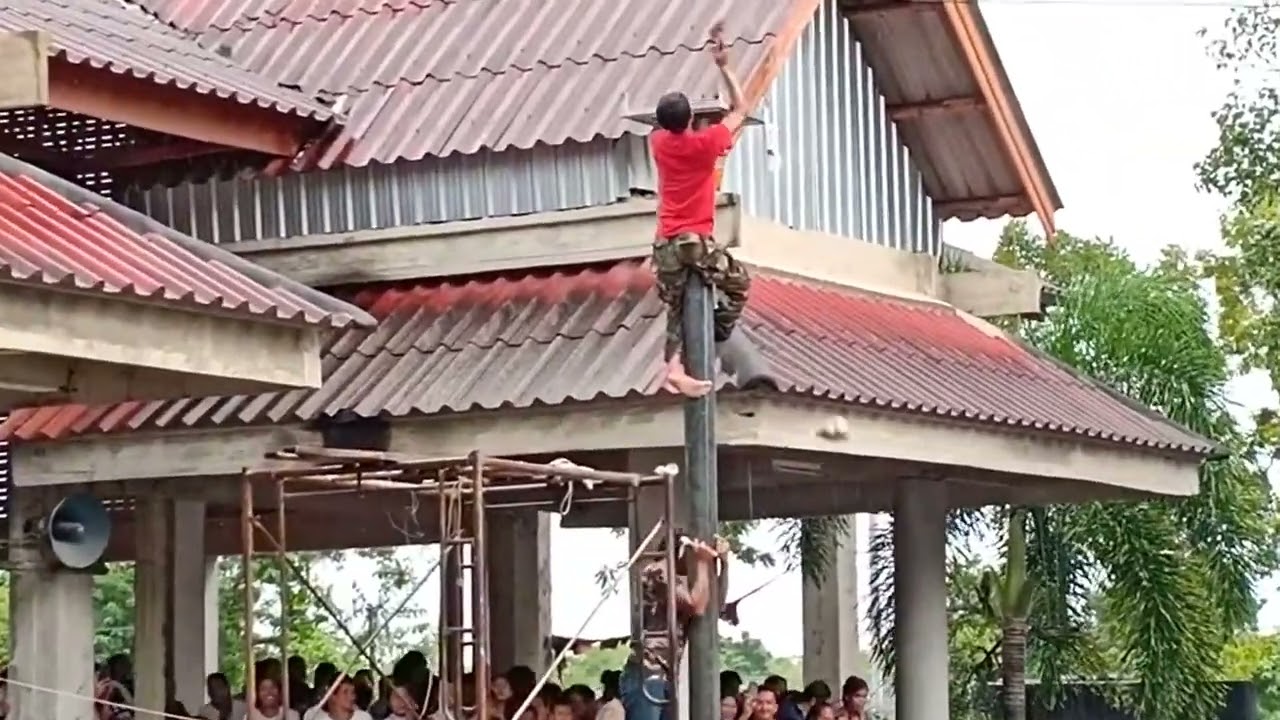
In Phatthalung, Sat Duean Sip events are held in many communities. One clearly documented community event is held at Wat Ban Suan in Khuan Maprao Subdistrict, Mueang Phatthalung District, where the annual tradition includes a mhrap procession, decorated offering contests, creative offering displays, local games, climbing activities, Sat Tom competitions, and other community events. This shows that Ching Pret in Phatthalung is not only a temple ceremony but also a cultural event that strengthens community identity and local tourism.
At the same time, Ching Pret is not limited to one temple. It is practiced in temples and communities throughout southern Thailand and across Phatthalung Province. Visitors should check which temple or community is holding an event in the relevant year and travel directly to that location. Those who want an accessible urban experience can choose an event in Mueang Phatthalung District. Those who want a stronger village atmosphere can visit a community temple where the mhrap, la pret, and local family participation are carried out in a more traditional way.
Historically and conceptually, Ching Pret resembles a merit-giving ritual for the deceased and for spirits without descendants, but it differs in detail from the Chinese practice of distributing offerings to wandering spirits. The southern Thai practice is directed not only toward spirits without relatives but also toward one’s own ancestors and deceased family members. This gives Ching Pret both a family dimension and a compassionate dimension, extending merit to ancestors and to those who have no one to make merit for them.
The beauty of Ching Pret lies in how it transforms death into gratitude rather than sorrow alone. Descendants prepare food, sweets, useful items, and merit for the departed. At the same time, they meet relatives, learn cultural meanings, and join a joyful communal activity. The lively moment of Ching Pret does not contradict the sacredness of the ceremony. Instead, it keeps the tradition accessible, memorable, and alive for people of all ages.
To understand the tradition deeply, visitors should look at the mhrap as a symbol of love and preparation. The dry goods at the bottom represent care for sustenance. The sweets on top represent symbolic necessities for the departed. The act of carrying the mhrap to the temple represents bringing family memory into a Buddhist communal space. In this way, the offering becomes a bridge between home, temple, ancestors, and the living community.
Decorated mhrap contests in some communities also show local creativity. A carefully arranged mhrap reflects the devotion of the family, group, or organization that made it. Stupa-like forms, colorful fruit, neatly arranged sweets, and detailed decorations turn the offering into temporary ritual art. The beauty of the mhrap is not only its appearance but also the collective effort and intention behind it.
For children, the Ching Pret moment may be the most exciting part of the festival. For adults, it is a way to pass the tradition forward. Children who help prepare offerings, listen to elders explain the sweets, go to the temple, observe the ceremony, and join the Ching Pret activity remember the festival through all their senses. When they grow up, they understand that Sat Duean Sip is not merely an annual event. It is part of family identity and homeland memory.
The sweets of Sat Duean Sip also preserve culinary knowledge. Khanom la, khanom phong, khanom ba, khanom dee sam, and khanom kong each require specific techniques. Some use rice flour, some use glutinous rice, some must be fried until expanded, and some must be made into delicate threads. Making these sweets allows older family members to teach younger people recipes, techniques, and cultural meaning. The kitchen becomes another place where tradition is transmitted.
For travelers, Ching Pret is a valuable way to experience southern Thai culture in a living setting. Rather than simply visiting a landmark, visitors can see how people arrange offerings, how temples become community centers, how local speech and food shape the atmosphere, and how faith, humor, memory, and family life coexist in one tradition. It is a cultural experience best approached with respect and curiosity.
Getting There depends on the temple or community selected for that year’s event. For events in Mueang Phatthalung District, travelers can reach Phatthalung by private car, bus, or train. From Phatthalung Railway Station, local transport can be used to reach the temple or festival area. For Wat Ban Suan in Khuan Maprao Subdistrict, travelers can continue from the city area toward the Ban Suan-Khuan Kud route or local roads in Khuan Maprao by private car or hired vehicle.
Visitors should dress modestly because the main activities take place at temples and involve Buddhist rituals. It is best to arrive before the ceremony begins in order to observe the offering, chanting, merit dedication, and setting of food on the la pret. Photographs should be taken respectfully without disturbing monks, families, or ritual participants. Visitors should not touch sweets or ritual items before the Ching Pret moment and should follow the instructions of the host temple or community.
Safety and cleanliness are important during Ching Pret. The moment of receiving or scrambling for food can become crowded. Children should stay close to guardians, older people should stand in safe areas, and participants should avoid pushing or pulling. Food that falls on the ground should be treated carefully. When the activity is carried out with order and respect, Ching Pret remains joyful, meaningful, and safe.
The Ching Pret Tradition of Phatthalung deserves preservation because it brings together ancestor remembrance, Buddhist ritual, local food knowledge, family reunion, community cooperation, and southern Thai identity. It teaches that merit for the deceased is not distant from daily life. It is part of how families remain connected, how temples continue to serve communities, and how cultural memory is carried across generations. The sight of carefully arranged mhrap offerings, elders pouring water in dedication, children laughing around the la pret, and families returning home together makes Sat Duean Sip one of Phatthalung’s most meaningful living traditions.
| Name | Ching Pret Tradition, Phatthalung Province |
| Type | Sat Duean Sip / Tenth Lunar Month Ancestor Merit-Making Tradition |
| Main Areas | Temples and communities across Phatthalung Province, including documented community events at Wat Ban Suan, Khuan Maprao Subdistrict, Mueang Phatthalung District |
| Period | The 1st waning day and the 15th waning day of the 10th lunar month |
| Important Dates In 2026 | Ancestor welcoming day falls on 27 September 2026, and ancestor sending day falls on 11 October 2026 |
| Visiting Hours | Temple merit-making hours follow each local temple’s schedule |
| Admission Fee | No admission fee for joining temple merit-making activities |
| Importance | A merit-making tradition for deceased ancestors, family reunion, gratitude, and preservation of southern Thai Sat Duean Sip culture |
| Main Rituals | Preparing mhrap offerings, bringing them to the temple, offering food to monks, Buddhist chanting, water dedication, setting food on the la pret, and Ching Pret after the ritual |
| Important Sweets | Khanom La, Khanom Phong, Khanom Ba, Khanom Dee Sam or Khanom Be Sam, Khanom Kong or Khanom Khai Pla, and Khanom Thian in some communities |
| Main Zones / Temple Areas | Temple pavilion, food-offering area, mhrap gathering point, la pret or spirit platform, community activity ground, and decorated mhrap contest area where organized |
| Related Agencies | Local temples, local administrative organizations, Phatthalung Provincial Cultural Office, and Phatthalung Provincial Public Relations Office |
| Cultural Office Contact | Phatthalung Provincial Cultural Office, Tel. 074-617-958 |
| Provincial News Contact | Phatthalung Provincial Public Relations Office, Tel. 074-612-404 |
| Travel Information | Travel to Phatthalung city by car, bus, or train, then continue by local transport or private vehicle to the temple announced for that year’s event |
| Nearby Tourist Attractions | 1. Wat Khuha Sawan, about 2 km 2. Khuha Sawan Cave, about 2 km 3. Khao Ok Thalu, about 4 km 4. Phraya Thukkharat (Chuai) Monument, about 4 km 5. Phra Phuttha Nirorantarai Chaiwat Chaturathit, about 5 km 6. Wang Chao Mueang Phatthalung, about 7 km 7. Shadow Puppet Gallery, about 7 km |
| Nearby Restaurants | 1. Rot Thip Original Don Yo, about 1 km, Tel. 096-891-2287 2. Pad Thai Tawanda Kung Sod Khuan Maprao Branch, about 1 km, Tel. 080-282-6456 3. Chako Kai Khuan Maprao Branch, about 1 km, Tel. 083-225-2497 4. Coffee and Me, about 2 km, Tel. 091-516-5858 5. Farm Vintage Organic, about 3 km, Tel. 095-325-9900 |
| Nearby Accommodations | 1. City Park Hotel Phatthalung, about 4 km, Tel. 074-613-516 2. Siva Royal Hotel, about 5 km, Tel. 074-673-999 3. The Centris Hotel Phatthalung, about 5 km, Tel. 074-616-555 4. Merdelong Hotel, about 5 km, Tel. 074-615-888 5. Dusit Princess Phatthalung, about 6 km, Tel. 074-880-777 |
Frequently Asked Questions (FAQ)
Q: What is the Ching Pret tradition?
A: Ching Pret is a southern Thai Sat Duean Sip tradition in which families make merit for deceased ancestors, prepare mhrap offerings, place food on the la pret, and receive or scramble for ritual food after the ceremony.
Q: When is Ching Pret held?
A: It is held on the 1st waning day of the 10th lunar month, known as the ancestor welcoming day, and on the 15th waning day of the 10th lunar month, known as the ancestor sending day.
Q: Why do people scramble for food on the la pret?
A: The food has already been dedicated through the ritual. Receiving it is believed to bring merit and auspiciousness, while also symbolically passing merit to deceased ancestors or pret spirits.
Q: What sweets are important in the tradition?
A: Important sweets include khanom la, khanom phong, khanom ba, khanom dee sam or khanom be sam, khanom kong or khanom khai pla, and khanom thian in some communities.
Q: Where is Ching Pret held in Phatthalung?
A: It is held at temples and communities throughout Phatthalung Province. One documented community event is held at Wat Ban Suan in Khuan Maprao Subdistrict, Mueang Phatthalung District.
Q: Can travelers join the Ching Pret tradition?
A: Yes. Travelers may join respectfully by dressing modestly, observing temple etiquette, avoiding interference with rituals, and following the instructions of the host temple or community.
Q: Is Ching Pret considered inauspicious?
A: No. In southern Thai belief, Ching Pret is considered part of merit-making and a way to receive auspiciousness from food and sweets that have already passed through the ritual.
Q: How should visitors prepare before attending?
A: Visitors should check the annual temple schedule, dress respectfully, arrive before the main ritual, supervise children during the Ching Pret moment, and keep the temple area clean.
 Category: ●Art, Culture and Heritage
 Group: ●Art, Craft Centres, Tradition
Last Update : 2 MonthAgo
 Last Update : 2 MonthAgo

 Historical Sites and Monuments(1)
 Landmarks and Memorials(1)
Art, Craft Centres, Tradition(6)
 Historic Homes and Cities(1)
 Educational Places
 Educational Gardens, Farm(1)
 Places of Worship
 Temple(25)
 Other Sacred Sites(4)
 Research and Development
 Royal Project(2)
 Suburban Living
 Village, Community(3)
 Nature and Wildlife
 National Parks and Marine Reserves(3)
 Mountain (Doi)(4)
 Dam, Reservoir, Lake(7)
 Waterfalls(16)
 Hot Springs(2)
 Caves(12)
 River, Canal(5)
 Bays and Beaches(6)
 Islands(2)
 Other natural attractions(4)
 Entertainment and Agricultural
 Farms, Parks and Ecotourism(4)
 Travel Articles, Recipes
 Travel Review, Food Review(1)


