
lovethailand home >South Travel Attractions >Phatthalung Travel Attractions >Ta Mot >Ta Mot > Ban Tamot Cultural Center
TL;DR: Ban Tamot Cultural Center is located at Inside Prachabamrung School, Tamot Subdistrict, Tamot District, Phatthalung Province, open Monday - Friday, Or By Advance Arrangement With Prachabamrung School For Group, hours During School Operating Hours.
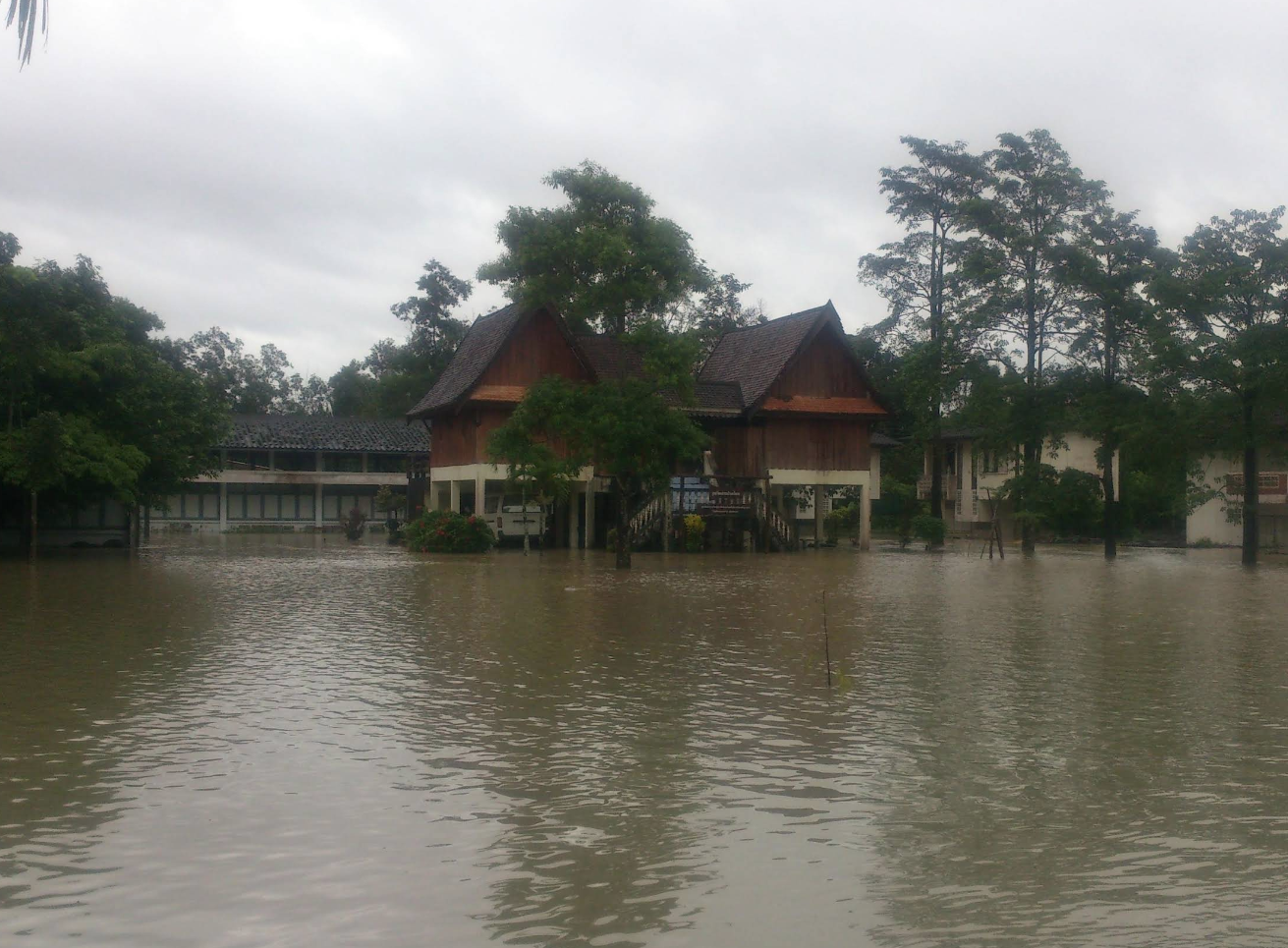
Ban Tamot Cultural Center
Open Days: Monday - Friday, Or By Advance Arrangement With Prachabamrung School For Group Visits
Opening Hours: During School Operating Hours
Ban Tamot Cultural Center in Phatthalung Province is a local cultural learning center located within Prachabamrung School in Tamot Subdistrict, Tamot District. The center was created to collect and preserve the local culture, folk lifestyle, community knowledge, and historical memory of Ban Tamot. It is not simply a display space for old objects. It is a place where visitors can begin to understand how the Tamot community developed through history, nature, religion, livelihood, local wisdom, and the relationships of people across generations.
Ban Tamot is one of Phatthalung’s old communities with a distinctive identity as a two-faith community where Thai Buddhists and Thai Muslims have lived together harmoniously for a long time. This coexistence gives Tamot a strong cultural character. The community is shaped by local customs, belief systems, food culture, agricultural life, household knowledge, and shared social relationships among homes, temples, mosques, schools, and local organizations. Ban Tamot Cultural Center therefore serves as a meaningful gateway to this local identity.
The main value of Ban Tamot Cultural Center lies in its role as a place where local Thai culture and folk ways of life are collected and passed on. Visitors can learn about the community through objects, tools, everyday items, stories, and cultural contexts that reflect how Tamot people lived in the past and how they continue to live today. These materials are valuable because they show that a community is not built only from geography. It is built from shared experience, inherited knowledge, memory, cooperation, and the effort of many generations.
Because the center is located inside Prachabamrung School, it has a direct educational function. A school setting makes cultural learning accessible to children and young people. It connects classroom learning with the real life of the community. Students can learn local history through things and stories that belong to their own hometown, while teachers and local knowledge keepers can use the center to explain community history, traditions, traditional occupations, folk tools, and the value of living together in a multicultural society.
The Tamot community is closely connected with the Banthat Mountain Range. The area is rich in forests, streams, and waterways that support agriculture and daily life. Local people have long depended on nature for food, farming, movement, and cultural meaning. Tamot is therefore a community of forests, mountains, water, and cultivated land. This environment has shaped farming practices, local food, agricultural processing, and knowledge of how to use natural resources responsibly.
The historical depth of Tamot appears through local legends and community memory. One important story refers to old trade routes that connected the Andaman coast with the Gulf of Thailand across the Banthat Mountain Range. This places Tamot within a wider history of movement, trade, and cultural exchange. The community was not isolated. It was part of a route where people, goods, language, and beliefs moved across landscapes and were gradually absorbed into local life.
The name Tamot is associated in local explanation with the word To Mud, reflecting memories of diverse settlement and the presence of different groups of people in the area. This makes the name more than a geographic label. It carries traces of people, language, memory, and coexistence. This background fits well with the identity of Ban Tamot as a two-faith community known for harmony and mutual respect.
Ban Tamot Cultural Center should therefore be understood as an introduction to the community rather than only as a room of exhibits. After visiting the center, travelers can better understand nearby places such as Wat Tamot, local waterways, natural attractions, viewpoints, waterfalls, and community learning bases. The center provides context before visitors go out into the real landscape. This makes a visit to Tamot deeper and more meaningful because the scenery is connected with the people who have lived with it for generations.
The learning content associated with the center includes community history, folk lifestyle, household tools, local food knowledge, community products, stories of Buddhist-Muslim coexistence, and the relationship between Tamot people and the natural resources around the Banthat Mountain Range. The details of the exhibits may change according to the care of the school and community, but the center’s core mission remains the same: to keep local knowledge visible and understandable for younger generations.
The center has several roles. As an educational space, it gives students an opportunity to understand their hometown beyond textbooks. As a cultural space, it gathers local knowledge that might otherwise remain scattered among households and elders. As a tourism starting point, it helps visitors understand Tamot’s identity before exploring the wider district. As a social space, it reminds the community that local strength begins with knowing and valuing one’s own roots.
Its location in a school also helps connect elders, local experts, teachers, and students. Elders hold stories and memories. Teachers help organize knowledge. Students become the next generation of cultural bearers. The school provides a shared space where this knowledge can be kept and transmitted. When these parts work together, the cultural center becomes more than a static display. It becomes part of the living process of cultural preservation.
Ban Tamot is also known for food and community products, including natural honey, fried durian, crispy roti, and processed products from local ingredients. These products show that local wisdom is not found only in ceremonies or old stories. It is also present in households, kitchens, agriculture, processing techniques, income generation, and the creative use of local resources. This dimension makes Tamot an appealing destination for visitors interested in both culture and community-based tourism.
In terms of tradition and belief, Tamot is connected with Wat Tamot as a Buddhist community center, while Muslim residents are also part of the same social landscape. The coexistence of 2 faiths is one of the community’s defining characteristics. Visitors can see how religious difference does not divide the community but becomes part of a shared social system based on respect, cooperation, and everyday coexistence.
Ban Tamot Cultural Center is suitable for many types of learning activities, including local history lessons, folk lifestyle studies, school-based activities, group study visits, community tourism orientation, and cultural routes linked with natural sites. Visitors who arrange their visit in advance with the school or local organizations can gain a fuller experience because local explanation helps connect the center’s information with real places around the community.
For cultural tourism, the center is valuable because it expands Tamot beyond waterfalls and viewpoints. Travelers interested in community life can understand the people before exploring the landscape. After learning at the center, visits to Lan Mom Chui Waterfall, Khuan Ta Khom Viewpoint, Khao Hua Chang Reservoir, or community tourism bases become more meaningful. These places are not only natural attractions. They are part of the resource base and daily life of Tamot people.
Getting There is straightforward by traveling to Tamot District in Phatthalung Province and continuing to Prachabamrung School in Tamot Subdistrict. The center is located about 1 km from Wat Tamot. Travelers from Phatthalung city can use a private car, rental car, or local transport to reach Tamot District. Groups should contact the school or local authorities in advance to coordinate the visit, especially because the center is located within a school area.
The best time to visit is during school operating days, when coordination and supervision are easier. Visitors should remember that the center is inside an educational institution. Modest dress, polite behavior, and respect for school rules are important. Visitors should not disturb classes, enter buildings without permission, touch or move displayed items, or photograph sensitive areas without approval from teachers or caretakers.
A one-day route in Tamot can begin at Ban Tamot Cultural Center to understand the community, continue to Wat Tamot to learn about the spiritual center of the area, visit Lan Mom Chui Waterfall to experience the natural environment, and end at Khuan Ta Khom Viewpoint for a wider view of the district. This route combines history, local lifestyle, religion, nature, and community learning in a single day.
Visitors should treat the cultural center with respect because the objects and stories inside are part of the community’s memory. Taking photos should be done appropriately, noise should be kept low inside the school area, and waste should not be left behind. Those who need deeper information should ask teachers, caretakers, or local knowledge keepers, because many local stories are best understood through direct explanation.
Ban Tamot Cultural Center is modest in size but highly valuable in cultural meaning. Its importance does not depend on the number of exhibits. It lies in its ability to preserve community roots in a place that younger generations can access. For travelers, it offers a deeper understanding of Tamot as a living community with history, coexistence, folk knowledge, and natural resources. A visit here is a good starting point for understanding Tamot through the memories of its people and the cultural knowledge they continue to pass on.
| Name | Ban Tamot Cultural Center |
| Location | Inside Prachabamrung School, Tamot Subdistrict, Tamot District, Phatthalung Province |
| Address | Prachabamrung School, Road 4122, Tamot Subdistrict, Tamot District, Phatthalung 93160, Thailand |
| Coordinates | Approximately 7.29614, 100.04206 |
| Highlights | A local learning center for Tamot community culture, folk lifestyle, local wisdom, and community history |
| Distinctive Features | A cultural center located within a school, suitable for learning about local history, folk knowledge, community identity, and cultural study visits |
| Importance | Preserves and transmits the story of the Tamot community by connecting school education, local knowledge keepers, community memory, and cultural tourism |
| Open Days | Monday - Friday, or by advance arrangement with Prachabamrung School for group visits |
| Opening Hours | During school operating hours |
| Current Status | A local cultural learning center located within Prachabamrung School. Visitors should coordinate in advance because it is inside a school area |
| Main Zones / Learning Content | Ban Tamot community history, folk lifestyle, local household tools, food and community product knowledge, Buddhist-Muslim coexistence, and nature-culture learning bases |
| Responsible Area / Caretakers | Prachabamrung School and Ban Tamot community networks |
| School Contact Number | Prachabamrung School, Tel. 074-610-274 |
| Local Authority Contact | Tamot Subdistrict Municipality, Tel. 074-610-292 |
| Travel Information | Travel to Tamot District and continue to Prachabamrung School. The center is about 1 km from Wat Tamot. Access is convenient by private car, rental car, or local transport |
| Nearby Tourist Attractions | 1. Wat Tamot, about 1 km 2. Tamot Community Tourism Homestay Enterprise, about 4 km, Tel. 087-298-8588 3. Lan Mom Chui Waterfall or Tamot Waterfall, about 7 km 4. Khao Hua Chang Reservoir, about 8 km 5. Khuan Ta Khom Viewpoint, about 10 km 6. Lat Toei Waterfall, about 12 km |
| Nearby Restaurants | 1. Khrua Aree Khao Tom And Made-To-Order Food, about 10 km 2. Pang Pang Bakery & Cafe, about 10 km 3. Baan Dream, about 13 km, Tel. 088-956-5292 4. Si Yaek Yum Zaab, about 13 km, Tel. 085-473-3107 5. Guay Tiew Chon Daeng, about 13 km, Tel. 089-816-5542 6. Guay Tiew Hang Moo Branch 3 Mae Khari, about 18 km, Tel. 085-670-0286 |
| Nearby Accommodations | 1. Tamot Community Tourism Homestay Enterprise, about 4 km, Tel. 087-298-8588 2. Mae Khari Apartment, about 13 km, Tel. 086-948-6723 3. HP Resort, about 13 km 4. Rabiangnam Resort Phatthalung, about 25 km, Tel. 095-029-4848 5. Siva Royal Hotel, about 43 km, Tel. 074-673-999 6. The Centris Hotel Phatthalung, about 45 km, Tel. 074-616-555 |
Frequently Asked Questions (FAQ)
Q: Where is Ban Tamot Cultural Center located?
A: Ban Tamot Cultural Center is located inside Prachabamrung School in Tamot Subdistrict, Tamot District, Phatthalung Province.
Q: Why is Ban Tamot Cultural Center important?
A: It preserves and presents local culture, folk lifestyle, local wisdom, and the history of Ban Tamot so that younger generations and visitors can understand the community’s roots.
Q: Who should visit Ban Tamot Cultural Center?
A: It is suitable for students, families, cultural travelers, study groups, and visitors who want to understand Tamot’s two-faith community and local knowledge.
Q: Should visitors contact the school before visiting?
A: Yes. Since the center is inside a school area, advance coordination with Prachabamrung School or local authorities is recommended for a proper and respectful visit.
Q: How far is the center from Wat Tamot?
A: The center is about 1 km from Wat Tamot.
Q: What makes Ban Tamot distinctive?
A: Ban Tamot is known as a two-faith community where Thai Buddhists and Thai Muslims live together harmoniously. It is also connected with the Banthat Mountain Range, streams, agriculture, local food, and community traditions.
Q: What nearby places can be visited on the same trip?
A: Nearby places include Wat Tamot, Lan Mom Chui Waterfall, Khao Hua Chang Reservoir, Khuan Ta Khom Viewpoint, Lat Toei Waterfall, and community learning bases in Tamot.
Q: How should visitors behave at the cultural center?
A: Visitors should dress modestly, respect the school area, avoid disturbing classes, not touch or move exhibits without permission, and follow instructions from teachers or caretakers.
 Category: ●Art, Culture and Heritage
 Group: ●Art, Craft Centres, Tradition
Last Update : 2 MonthAgo
 Last Update : 2 MonthAgo
 Click to Access the Navigation Map GPS
Ban Tamot Cultural Center Map
Recommend

 Historical Sites and Monuments(1)
 Landmarks and Memorials(1)
Art, Craft Centres, Tradition(6)
 Historic Homes and Cities(1)
 Educational Places
 Educational Gardens, Farm(1)
 Places of Worship
 Temple(25)
 Other Sacred Sites(4)
 Research and Development
 Royal Project(2)
 Suburban Living
 Village, Community(3)
 Nature and Wildlife
 National Parks and Marine Reserves(3)
 Mountain (Doi)(4)
 Dam, Reservoir, Lake(7)
 Waterfalls(16)
 Hot Springs(2)
 Caves(12)
 River, Canal(5)
 Bays and Beaches(6)
 Islands(2)
 Other natural attractions(4)
 Entertainment and Agricultural
 Farms, Parks and Ecotourism(4)
 Travel Articles, Recipes
 Travel Review, Food Review(1)


