
lovethailand home >South Travel Attractions >Phatthalung Travel Attractions >Pa Bon >Thung Na Ri > Sakai Forest Community
TL;DR: Sakai Forest Community is located at Ban Lo Han, Moo 7, Thung Nari Subdistrict, Pa Bon District, Phatthalung Province, open Daily, hours 08.00 – 17.00.

Sakai Forest Community
Open Days: Daily
Opening Hours: 08.00 – 17.00
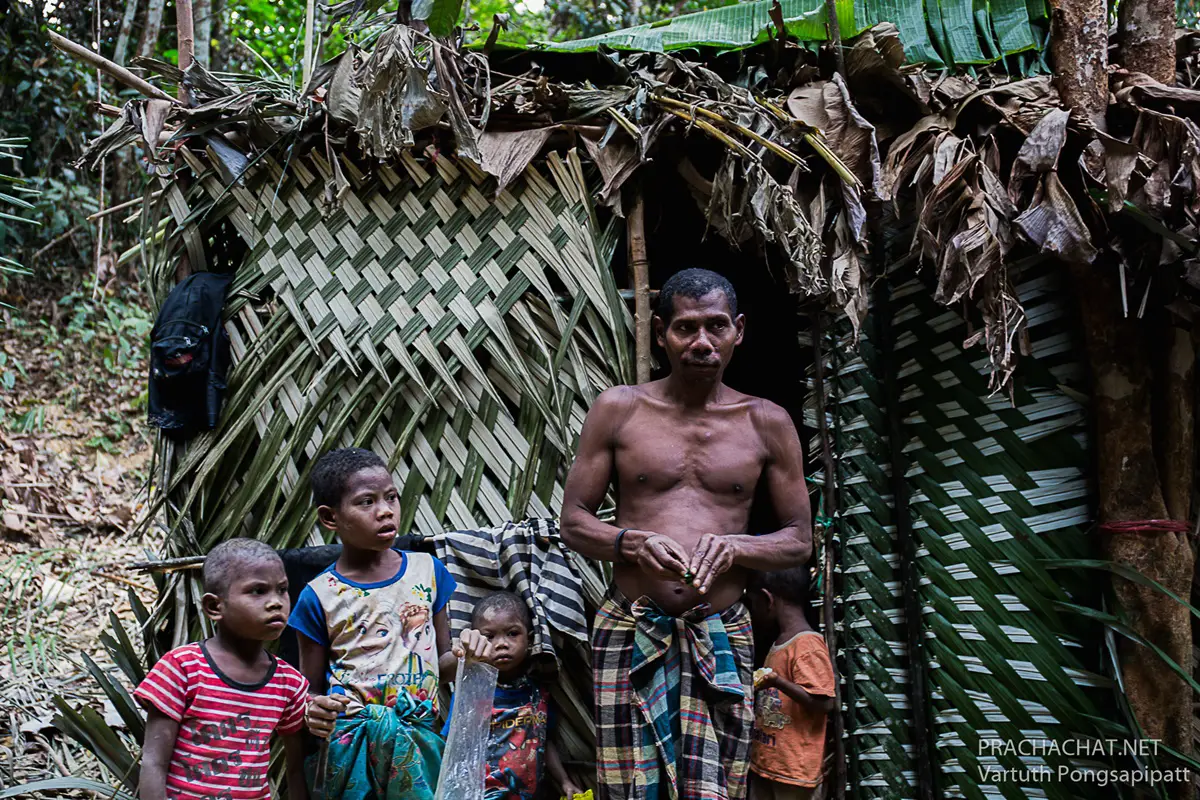
The Mani community of Ban Lo Han in Phatthalung Province is often listed in older travel sources under the name “Sakai” or “Ngoh Pa Sakai,” but the respectful name to use is Mani. The community is associated with Ban Lo Han, Moo 7, Thung Nari Subdistrict, Pa Bon District, Phatthalung Province, near Khlong Pa Bon Reservoir and the forested foothills of the Banthat mountain range. This area offers a rare opportunity to learn about an Indigenous group whose knowledge, movement, food gathering, herbal use, and forest-based livelihood are closely connected with southern Thailand’s tropical rainforest.
Ban Lo Han is a rural and ethnic community in Thung Nari Subdistrict. The area is known for its valley landscape, streams, waterfalls, forest headwaters, and Khlong Pa Bon Reservoir, a royal-initiative water project. Important natural features around the community include local streams, Khlong Pa Bon, Khuan Pring Waterfall, Mae Taeng Waterfall, and forest areas along the Banthat range. The village is therefore not only a gateway to learning about the Mani, but also a place where visitors can understand how communities, water, forest, agriculture, and Indigenous knowledge are connected.
The name Lo Han reflects the geography of the village. Local explanations describe “lo” as a broad lowland area and “han” as a water source or pond. Together, the name refers to a large lowland area with water. The village has a local history of settlement, abandonment, and later resettlement, before becoming Moo 7 of Thung Nari Subdistrict in Pa Bon District. Its landscape of lowland, streams, hills, and forest helps explain why this area has long been connected with both settled communities and forest-based ways of life.
Visitors should approach the Mani community with care and respect. The Mani are not an attraction to be viewed as an object of curiosity. They are an Indigenous people with their own dignity, language, kinship, knowledge, and decision-making. For this reason, the appropriate approach is not to “go and look at people,” but to learn respectfully through local coordination, community consent, and guidance from people who are authorized to arrange a visit. Visitors should not walk into Mani living areas or temporary shelters by themselves.
The Mani group connected with Ban Lo Han is closely linked with the forest of the Banthat range. Their traditional way of life depends on knowledge of forest plants, wild food, herbal medicine, water sources, and seasonal movement. Some Mani groups still move their shelters according to food availability, using simple materials from nature such as leaves and small branches. This means that their concept of home is not limited to a fixed house, but includes forest, water, trails, seasonal food, and the social relationships that allow the group to survive together.
The Mani way of life reflects deep ecological knowledge. Seasonal foods include tubers, wild fruits, honey, medicinal plants, and forest resources. Such knowledge is not learned from written textbooks, but through observation, oral teaching, and living practice across generations. The Mani are therefore important for understanding the relationship between people and the rainforest of southern Thailand, especially in the Banthat mountain range, which is one of Phatthalung’s important forest and watershed landscapes.
Language is another important part of Mani identity. Public ethnic-community records note that the Mani in the Ban Lo Han area use both Mani language and Southern Thai dialect, while Mani language does not have a standard writing system like the official Thai language. Knowledge is therefore passed on through speech, memory, observation, and practice. Visitors should listen respectfully and avoid judging Mani life through urban standards alone.
In recent years, the life of the Mani in the Ban Lo Han area has changed because of increased interaction with outsiders, including government agencies, welfare organizations, visitors, and technology. These changes create both support and pressure. Some forms of tourism can bring income or attention, but they can also affect privacy, cultural dignity, and self-determination. Ethical travel should therefore respect the Mani’s right to choose whether to meet visitors, how they want to be represented, and how they want to live.
Khlong Pa Bon Reservoir is the most accessible landmark in the area. Located at Ban Lo Han, Moo 7, Thung Nari Subdistrict, Pa Bon District, it is surrounded by mountains and forest. The reservoir provides scenic views, supports local agriculture, and helps visitors understand the watershed landscape behind the Mani community. For most travelers, the reservoir and Ban Lo Han village should be the first points of learning before any discussion of visiting Mani living areas.
Older travel information describes routes that continue on foot from the reservoir into the forest. Today, such access should be treated carefully. Visitors should not use old route descriptions as permission to enter. Forest conditions change by season, and Mani shelter locations may change according to food sources and weather. Any visit near Mani living areas should be arranged only through local coordinators and only when the community gives consent.
Responsible travel is essential here. Visitors should contact Thung Nari Subdistrict Administrative Organization, Ban Lo Han community representatives, or a trusted local coordinator before traveling. They should ask whether a visit is appropriate, whether a guide is available, and whether the Mani community has agreed to meet visitors. If coordination is not possible, visitors should limit the trip to Khlong Pa Bon Reservoir, Ban Lo Han, waterfalls, and nearby nature sites instead of entering forest living areas.
Visitors should never photograph people without permission, give items directly to children, approach shelters without a coordinator, use disrespectful ethnic labels, leave rubbish in the forest, or publish detailed temporary shelter locations. Mani living areas are not photo sets; they are private living spaces. Respecting boundaries is the most important condition for visiting this area.
The value of Ban Lo Han lies in the relationship between settled village life and forest life. The area includes farming communities, rubber plantations, fruit gardens, water sources, forest edges, and headwater landscapes. At the same time, the Mani maintain knowledge connected with forest movement, food gathering, and seasonal resources. This makes the area important for understanding different ways of living with nature in Phatthalung.
For nature-oriented visitors, Khlong Pa Bon Reservoir is worth spending time at. The reservoir offers views of water, mountains, and forest, and is suitable for quiet photography, resting, and learning about the royal-initiative water project. Nearby natural places such as Mae Taeng Waterfall and Khuan Pring Waterfall can be added to the route when conditions are suitable.
Getting There is easiest by private car or rental car. From Phatthalung town, travel to Pa Bon District, continue to Thung Nari Subdistrict, and head toward Ban Lo Han and Khlong Pa Bon Reservoir. The reservoir is the practical public access point. Any movement beyond the reservoir into forest areas must be arranged with local coordination and community consent.
Travelers coming from Hat Yai or Songkhla can also reach Pa Bon District by main roads and continue to Thung Nari Subdistrict. A private vehicle is recommended because public transport to Ban Lo Han and the reservoir is limited. Nearby attractions are spread across village roads, forest edges, and local natural areas.
The best time to visit is from morning to afternoon, when there is enough daylight for reservoir views and local travel. During the rainy season, visitors should check weather conditions carefully because the Banthat range receives heavy rain, and some forest or local roads may become slippery or unsafe. Visitors who hope to learn directly from the Mani should coordinate several days in advance and accept that some times may not be suitable for a visit.
Clothing should be respectful and practical. Visitors should wear breathable clothing, walking shoes, and bring drinking water, mosquito protection, and a bag for carrying rubbish back out. Loud music, intrusive behavior, excessive gifts, and uncoordinated entry into forest areas should be avoided.
For families or student groups, the best focus is Ban Lo Han, Khlong Pa Bon Reservoir, and nearby nature sites. This route can teach about ecology, watershed forests, ethnic diversity, respectful travel, and the importance of naming communities correctly. It is not suitable as an uncontrolled adventure trip or a visit designed only for taking close-up photos of people.
A responsible one-day route can begin from Phatthalung town or Hat Yai in the morning, travel to Pa Bon District, visit Khlong Pa Bon Reservoir, learn about Ban Lo Han and the local landscape, and continue to Mae Taeng Waterfall, Khuan Pring Waterfall, or local food stops in Pa Bon. This approach gives visitors a meaningful understanding of the area without putting pressure on the Mani community.
When writing or speaking about this community, the most respectful wording is “Mani,” “the Mani people,” or “the Mani community of Ban Lo Han.” Older labels such as “Ngoh Pa” or “Sakai” should be avoided in normal usage because they can reduce dignity and carry negative meanings. Language matters because it shapes how readers understand the people being described.
The value of the Mani community of Ban Lo Han is that it reveals a deeper side of Phatthalung. The province is not only temples, waterfalls, mountains, and reservoirs. It is also home to Indigenous knowledge, forest-based ways of life, and long relationships between people and the Banthat rainforest. A respectful visit can help travelers understand that the forest is not merely scenery; for some communities, it is home, food, medicine, route, memory, and culture.
Visitors should therefore approach Ban Lo Han with responsibility. Travelers gain knowledge from the landscape and the culture, but that knowledge must not come at the cost of Mani privacy, safety, or self-determination. When approached with respect, the area becomes an important lesson in how people, forest, water, and culture remain connected in Phatthalung.
| Name | Mani Community of Ban Lo Han / Formerly Listed As Sakai Community |
| Respectful Name | Mani or Mani people |
| Location | Ban Lo Han, Moo 7, Thung Nari Subdistrict, Pa Bon District, Phatthalung Province |
| Main Community Address | Ban Lo Han, Thung Nari Subdistrict, Pa Bon District, Phatthalung Province 93170, Thailand |
| Ban Lo Han Coordinates | 7.1746686253473, 100.100512504578 |
| Highlights | Mani ethnic community, Ban Lo Han, Khlong Pa Bon Reservoir, Banthat forest, forest food knowledge, herbal knowledge, and ethical cultural learning. |
| Distinctive Features | A learning area for understanding the relationship between the Mani people, tropical rainforest, water sources, wild foods, herbal plants, and seasonal movement. |
| Travel Information | Travel by private car or rental car to Ban Lo Han and Khlong Pa Bon Reservoir. Any visit near Mani living areas requires local coordination and community consent. |
| Current Status | Ban Lo Han is a rural and ethnic community with current ethnic and public-health monitoring records. Direct visits to Mani living areas should be arranged in advance. |
| Open Days | Daily for Ban Lo Han community and Khlong Pa Bon Reservoir visitor areas. |
| Opening Hours | 08.00 – 17.00, based on public travel information. |
| Main Areas / Zones | Ban Lo Han, Khlong Pa Bon Reservoir, forest behind Ban Lo Han, Banthat mountain range, Khuan Pring Waterfall, Mae Taeng Waterfall, and local nature-learning areas. |
| Coordinator / Local Authority | Thung Nari Subdistrict Administrative Organization and Ban Lo Han community |
| Local Contact Number | Thung Nari SAO, Tel. 0-7482-0359 |
| Visitor Etiquette | Use the name “Mani,” ask before taking photos, do not enter shelters without a coordinator, do not disturb daily life, do not give items directly to children, do not publish temporary shelter locations, and take rubbish back out. |
| Nearby Tourist Attractions | 1. Khlong Pa Bon Reservoir, about 1 km 2. Ban Lo Han And Thung Nari Community Route, about 1 km 3. Mae Taeng Waterfall, about 7 km 4. Khuan Pring Waterfall, about 10 km 5. Ban Lo Han Pracharat Water Park, about 2 km |
| Nearby Restaurants | 1. Friendship Coffee & Bar Pa Bon, about 16 km, Tel. 062-037-1451, 099-235-0299 2. Phak Phing Ing Thang Coffee, about 17 km, Tel. 074-841-638, 083-020-0703 3. Krua Phuean Photchana Pa Bon, about 16 km, Tel. 098-952-6920 4. Bang Meen Kai Ob Ong Pa Bon Branch, about 17 km, Tel. 089-291-2851 5. Ko'made Cafe & Restaurant, about 18 km, Tel. 082-889-7898 |
| Nearby Accommodations | 1. Grace Room Resort, about 12 km, Tel. 093-574-4958 2. Baan Jae Wae Homestay, about 17 km, Tel. 088-832-5352 3. Dahla Resort, about 18 km, Tel. 061-990-0676 4. Suwan Palm Resort, about 20 km 5. Hotels In Phatthalung Town, about 45 km |
Frequently Asked Questions (FAQ)
Q: Where is the Mani community of Ban Lo Han located?
A: It is associated with Ban Lo Han, Moo 7, Thung Nari Subdistrict, Pa Bon District, Phatthalung Province. The easiest public access areas are Ban Lo Han and Khlong Pa Bon Reservoir.
Q: What name should visitors use for this community?
A: Visitors should use “Mani” or “Mani people,” because this is the respectful self-name. Older labels such as “Ngoh Pa” and “Sakai” should be avoided in normal use.
Q: Can visitors go directly to meet the Mani by themselves?
A: No. Visitors should not enter Mani living areas by themselves. Any visit should be arranged through Thung Nari SAO, Ban Lo Han community representatives, or a trusted local coordinator, and only with community consent.
Q: What are the opening days and hours?
A: Ban Lo Han and Khlong Pa Bon Reservoir visitor areas are open daily from 08.00 to 17.00. Direct cultural visits require separate coordination and may not be available at all times.
Q: What is special about the Mani community of Ban Lo Han?
A: Its importance lies in forest-based knowledge, seasonal movement, wild food gathering, herbal knowledge, Mani language, and the close relationship between the community and the Banthat rainforest.
Q: What should visitors be careful about?
A: Visitors should respect privacy, avoid photographing people without permission, avoid entering shelters, avoid giving items directly to children, avoid disrespectful names, and avoid leaving rubbish in the forest or village area.
Q: What nearby places can visitors combine with this area?
A: Nearby places include Khlong Pa Bon Reservoir, Mae Taeng Waterfall, Khuan Pring Waterfall, Ban Lo Han community route, and local restaurants or cafés in Pa Bon District.
 Category: ●Suburban Living
 Group: ●Village, Community
Last Update : 2 MonthAgo
 Last Update : 2 MonthAgo

 Click to Access the Navigation Map GPS
Sakai Forest Community Map
Recommend

 Art, Culture and Heritage
 Historical Sites and Monuments(1)
 Landmarks and Memorials(1)
 Art, Craft Centres, Tradition(6)
 Historic Homes and Cities(1)
 Educational Places
 Educational Gardens, Farm(1)
 Places of Worship
 Temple(25)
 Other Sacred Sites(4)
 Research and Development
 Royal Project(2)
Village, Community(3)
 Nature and Wildlife
 National Parks and Marine Reserves(3)
 Mountain (Doi)(4)
 Dam, Reservoir, Lake(7)
 Waterfalls(16)
 Hot Springs(2)
 Caves(12)
 River, Canal(5)
 Bays and Beaches(6)
 Islands(2)
 Other natural attractions(4)
 Entertainment and Agricultural
 Farms, Parks and Ecotourism(4)
 Travel Articles, Recipes
 Travel Review, Food Review(1)


