
lovethailand home >South Travel Attractions >Phatthalung Travel Attractions >Pa Bon >Nong Thong > Suan Sala Lung Than
TL;DR: Suan Sala Lung Than is located at 6 Moo 5, Nong Thong Subdistrict, Pa Bon District, Phatthalung Province, open Daily, hours 08.00 – 17.00.

Suan Sala Lung Than
Open Days: Daily
Opening Hours: 08.00 – 17.00
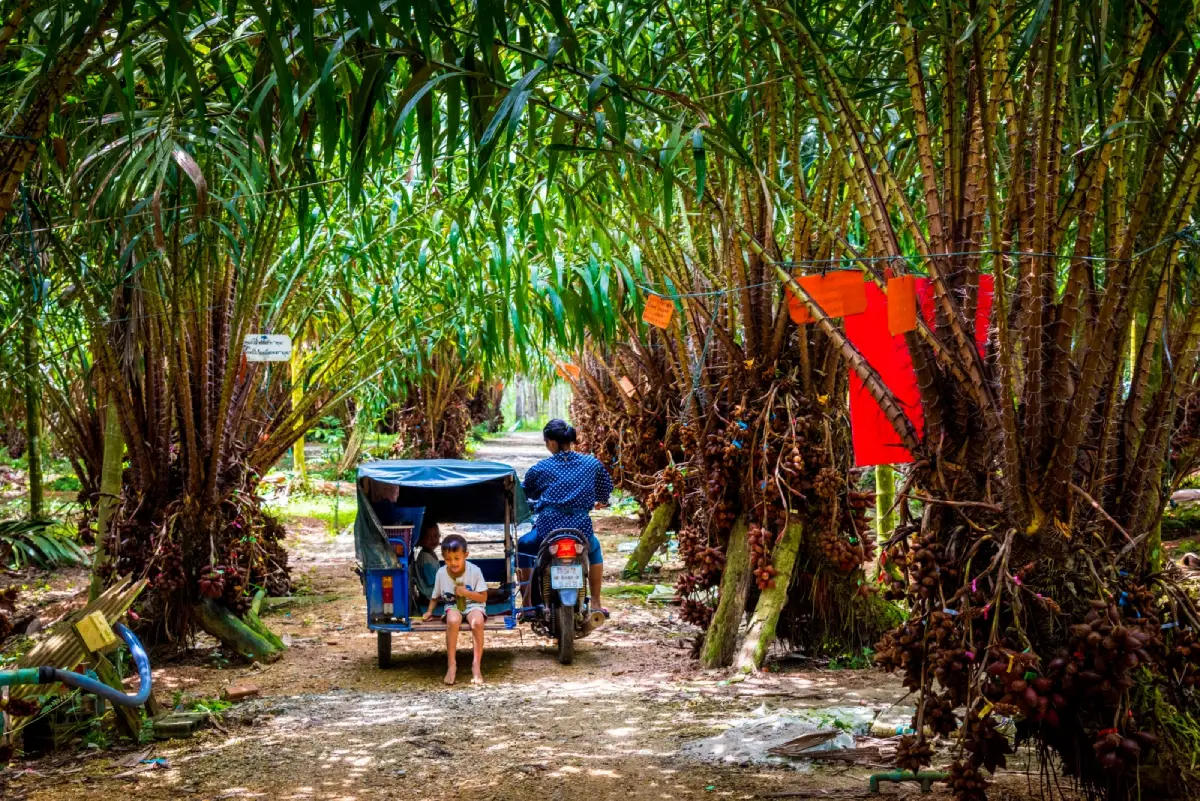
Suan Sala Lung Than, also written as Suan Sala Lung Than or Uncle Than’s Salak Garden, is located at 6 Moo 5, Nong Thong Subdistrict, Pa Bon District, Phatthalung Province. It is one of Phatthalung’s notable agritourism attractions, created from the long effort of Mr. Than Damruang, who transformed former rubber and mixed fruit land into a high-quality salak orchard. Today, the garden is not only a fruit-producing farm, but also a living agricultural classroom where visitors can learn about salak cultivation, hand pollination, mixed planting, fruit tasting, and community-based farming knowledge.
The charm of Suan Sala Lung Than lies in its ability to turn a working orchard into an educational travel experience. Visitors walk through a clean and well-arranged salak garden where rows of salak palms grow under a shaded environment. The orchard is known for its tidy layout, easy walking paths, and clear demonstrations. This makes it suitable for families, students, farmers, study groups, and travelers who want to understand how a successful southern Thai fruit garden is managed in real conditions.
The garden covers about 20 rai of salak cultivation and contains more than 1,000 salak palms. The area is divided into smaller plots for better management and learning. This layout helps visitors see how salak trees grow, how fruit appears near the base of the plant, and how the orchard organizes production quality. It also shows that successful fruit farming requires planning, observation, and constant improvement, not simply planting trees and waiting for harvest.
Salak is a distinctive fruit crop because male and female flowers are separated. Good production therefore depends on careful pollination. Suan Sala Lung Than uses this biological feature as the core of its learning activity. Visitors can observe how salak flowers are pollinated, learn the difference between male and female flowers, and understand why recording the date of pollination is important for predicting harvest time. This activity turns plant science into a practical experience that is easy to understand.
One of the garden’s signature activities allows visitors to participate in pollination themselves. After learning the process, visitors may help pollinate salak flowers and write their names and the date of pollination on a label. When the fruit grows and reaches the right stage later, visitors can return to see or harvest the fruit according to the garden’s arrangement. This creates a personal connection between the visitor and the fruit, making the experience more memorable than a simple orchard walk.
Areca palms play an important role in the orchard system. They help create shade and a suitable microclimate for salak plants. This mixed planting approach shows how the garden uses natural relationships rather than relying on a single-crop mindset. Visitors can learn how shade, humidity, plant spacing, and companion planting affect fruit quality. For those interested in integrated agriculture, the orchard provides a clear example of how different plants can support one another.
Beekeeping is another element connected with the garden’s natural system. The presence of bees helps visitors see that a healthy orchard is more than a collection of fruit trees. It is a living environment that includes insects, flowers, humidity, shade, and ecological balance. This makes the garden useful for learning about agriculture that works with nature rather than only extracting produce from the land.
Peeling salak is one of the most enjoyable parts of the visit. Salak has a rough, scaly skin, and peeling it quickly while preserving the flesh requires technique. The garden turns this everyday fruit-eating action into a fun learning activity. Visitors can learn how to hold the fruit, open the skin, and eat it neatly. The activity is also connected with the garden’s well-known eating competition under the slogan “peel well, eat fast, and leave the seed clean.”
The salak eating competition is not only a game. It reflects the garden’s warm and lively style of welcoming visitors. Participants must peel the fruit properly, eat quickly, and leave as little flesh on the seed as possible. The activity creates laughter, interaction, and a memorable community atmosphere while still keeping the focus on salak as the orchard’s central product.
Fresh salak tasting is a major part of the experience. Eating salak directly in the orchard helps visitors understand the quality of the fruit, its firm texture, aroma, sweetness, and sour balance. The taste of freshly served fruit in the place where it is grown is different from buying fruit after long transport. It helps visitors connect flavor with cultivation, harvest timing, and orchard care.
The garden also develops processed salak products such as salak in syrup, salak jam, salak drinks, and other value-added products. Processing helps farmers reduce market risk, extend product life, and create more income channels from one crop. For visitors, these products make good local souvenirs and represent the garden’s ability to turn agricultural knowledge into community-based economic value.
The story of Mr. Than Damruang is central to the garden. His success came from effort, experimentation, and adaptation. Moving from rubber and other fruit crops to salak required learning from other provinces, testing growing methods, adjusting plant spacing, finding suitable companion plants, and solving production problems. The garden is therefore a story of persistence as much as a story of fruit farming.
Mr. Wichai Damruang, Uncle Than’s son, has helped continue and develop the garden. After completing an engineering education, he returned to the family land and became involved in orchard management and visitor education. His role adds a new-generation perspective to the garden while preserving the agricultural knowledge developed by his father. This makes Suan Sala Lung Than a strong example of family farming passed from one generation to the next.
As a community learning site, the garden serves many types of visitors. Farmers can learn about salak management, hand pollination, spacing, and product development. Students can learn about plant reproduction, local agriculture, and integrated farming. Families can introduce children to southern Thai fruit cultivation. General travelers can enjoy a shaded orchard, fruit tasting, local products, and a deeper understanding of Pa Bon’s agricultural identity.
Nong Thong Subdistrict has strong community-based tourism potential because it includes fruit gardens, waterfalls, viewpoints, and natural landscapes linked with the Banthat Mountain Range. Suan Sala Lung Than can be combined with Nong Thong Sea of Mist, Ton Sato Waterfall, Pa Bon Reservoir, Nan Fa Waterfall, Manora Waterfall, and other nearby natural attractions. This makes it suitable for a half-day visit or a full-day Pa Bon itinerary.
Visitors should not rush the experience. A good visit should allow at least one to two hours for walking through the orchard, listening to explanations, watching pollination, tasting fruit, and joining activities. Groups should contact the garden in advance, especially if they want demonstrations, local food, product tasting, or a guided learning session. Advance coordination helps the garden prepare staff, fruit, and activities properly.
The best time to visit is in the morning or afternoon when the weather is more comfortable. Although the garden is shaded, it is still an outdoor agricultural site. Comfortable shoes, drinking water, a hat, mosquito repellent, and light clothing are recommended. Visitors who want to photograph the orchard will usually get better light in the morning or late afternoon.
Visitors should respect the orchard. Do not pick fruit without permission, do not handle fruit clusters roughly, do not leave the designated walking area, do not disturb bees or animals, and do not litter. A fruit garden is a working agricultural area as well as a tourism site, so careful behavior protects both the crops and the visitor experience.
Getting There is easiest by private car. Travel to Nong Thong Subdistrict, Pa Bon District, Phatthalung Province, then continue to Moo 5 and search for Suan Sala Lung Than on an online map. From Phatthalung city, head toward Pa Bon District and continue into Nong Thong Subdistrict. Visitors traveling in groups should contact the garden before arrival to confirm the route, parking, and available activities.
Travelers without a private car should first reach Pa Bon town and then arrange local transport to Nong Thong Subdistrict. A private car or rental vehicle is more convenient if visitors plan to continue to waterfalls, viewpoints, or other community attractions in the same day.
Suan Sala Lung Than is a good starting point for a Pa Bon agritourism route. Visitors can begin with the orchard in the morning, enjoy fruit tasting or local food, and then continue to Ton Sato Waterfall, Nong Thong Sea of Mist, or Pa Bon Reservoir. Families may prefer a slower route that combines the orchard with nearby cafés or restaurants.
In summary, Suan Sala Lung Than is one of Phatthalung’s meaningful agricultural attractions. It combines a high-quality salak orchard, the life story of a determined farmer, hand pollination activities, fresh fruit tasting, processed salak products, beekeeping, mixed planting, and community-based learning. Visitors leave not only with salak or souvenirs, but with a clearer understanding of how knowledge, persistence, family, and nature can shape a successful rural tourism destination.
| Name | Suan Sala Lung Than / Uncle Than’s Salak Garden |
| Location | 6 Moo 5, Nong Thong Subdistrict, Pa Bon District, Phatthalung Province |
| Address | 6 Moo 5, Nong Thong Subdistrict, Pa Bon District, Phatthalung Province 93170, Thailand |
| Map Search | Search for “Suan Sala Lung Than” or “สวนสละลุงถัน” on online maps. |
| Highlights | A salak agritourism garden of about 20 rai with salak pollination demonstrations, fresh salak tasting, salak juice, mixed planting with areca palms, beekeeping, and the salak eating activity known for the slogan “peel well, eat fast, and leave the seed clean.” |
| History / Concept | Founded by Mr. Than Damruang, who transformed former rubber and mixed fruit land into a high-quality salak garden through experimentation, spacing management, mixed planting, and orchard learning. |
| Distinctive Features | A clean and shaded salak orchard where visitors can learn about salak cultivation, hand pollination, fruit timing, areca companion planting, and processed salak products. |
| Travel Information | Travel by private car to Nong Thong Subdistrict, Pa Bon District, Phatthalung Province. From Phatthalung city, drive toward Pa Bon District and continue to Moo 5, Nong Thong Subdistrict. Use online navigation together with local directions. |
| Current Status | Listed in current Phatthalung agritourism and Nong Thong community tourism information. |
| Open Days | Daily |
| Opening Hours | 08.00 – 17.00 |
| Facilities | Orchard walking area, salak pollination learning area, fresh salak and salak juice tasting area, group activity space, local food by advance arrangement, and processed salak products |
| Main Areas / Zones | Salak plots, areca companion planting zone, salak pollination zone, fresh fruit tasting zone, processed product zone, and salak eating competition area |
| Caretaker / Owner | Damruang family, founded by Mr. Than Damruang and continued by Mr. Wichai Damruang as a salak garden educator and manager |
| Main Contact Numbers | 084-859-3571, 089-977-9091 |
| Local Authority | Nong Thong Subdistrict Administrative Organization, Tel. 074-685-786 |
| Nearby Tourist Attractions | 1. Wat Lak Sip, Nong Thong Subdistrict, about 3 km 2. Nong Thong Sea of Mist / Pha Mai Kaen Viewpoint, about 12 km 3. Ton Sato Waterfall, about 13 km 4. Pa Bon Reservoir, about 15 km 5. Nan Fa Waterfall, about 18 km 6. Manora Waterfall, about 25 km 7. Sumano Cave, about 35 km |
| Nearby Restaurants | 1. Nong Thong Station, Nong Thong Subdistrict, about 8 km, Tel. 084-774-5494 2. Ko'made Cafe&Restaurant, Pa Bon, about 12 km, Tel. 082-889-7898 3. Friendship Coffee & Bar, Pa Bon, about 14 km, Tel. 062-037-1451, 099-235-0299 4. Phak Phing Ing Thang Coffee, Pa Bon, about 15 km, Tel. 074-841-638, 083-020-0703 5. Bang Meen Kai Ob Ong, Pa Bon branch, about 15 km, Tel. 089-291-2851 |
| Nearby Accommodations | 1. Suan Sala Lung Than Homestay / community stay by advance arrangement 2. Baan Baan Homestay Phatthalung, Nong Thong Subdistrict, about 8 km 3. Nong Thong community orchard stay, about 1 km 4. Dahla Resort, Pa Bon, about 14 km, Tel. 061-990-0676 5. Sanfhan Resort, Khao Chaison, about 38 km, Tel. 085-914-5662 6. Ozone Resort & Pool Villa, Khao Chaison, about 42 km, Tel. 074-611-777 |
Frequently Asked Questions (FAQ)
Q: Where is Suan Sala Lung Than located?
A: Suan Sala Lung Than is located at 6 Moo 5, Nong Thong Subdistrict, Pa Bon District, Phatthalung Province.
Q: What is special about Suan Sala Lung Than?
A: The garden is known for its 20-rai salak orchard, hand pollination demonstrations, fresh salak tasting, salak juice, areca companion planting, beekeeping, and salak eating activity.
Q: What are the opening hours?
A: The garden is open daily from 08.00 to 17.00.
Q: What is the salak pollination activity?
A: Visitors learn how male and female salak flowers are separated and how hand pollination helps the fruit develop. Visitors may also try pollination and label the date for future harvest tracking.
Q: Who is Suan Sala Lung Than suitable for?
A: It is suitable for families, students, farmers, study groups, and travelers interested in southern Thai fruit farming, integrated agriculture, and Nong Thong community tourism.
Q: Should visitors contact the garden before visiting?
A: Yes. Advance contact is recommended, especially for groups that want demonstrations, fruit tasting, local food, or guided explanations from the garden team.
Q: How do visitors get to Suan Sala Lung Than?
A: Travel by private car to Nong Thong Subdistrict, Pa Bon District, Phatthalung Province. Search for Suan Sala Lung Than on online maps and confirm the final route locally if needed.
Q: What nearby places can be visited after Suan Sala Lung Than?
A: Nearby places include Wat Lak Sip, Nong Thong Sea of Mist, Ton Sato Waterfall, Pa Bon Reservoir, Nan Fa Waterfall, Manora Waterfall, and Sumano Cave.
 Category: ●Entertainment and Agricultural
 Group: ●Farms, Parks and Ecotourism
Last Update : 2 MonthAgo
 Last Update : 2 MonthAgo
 Click to Access the Navigation Map GPS
Suan Sala Lung Than Map
Recommend

 Art, Culture and Heritage
 Historical Sites and Monuments(1)
 Landmarks and Memorials(1)
 Art, Craft Centres, Tradition(6)
 Historic Homes and Cities(1)
 Educational Places
 Educational Gardens, Farm(1)
 Places of Worship
 Temple(25)
 Other Sacred Sites(4)
 Research and Development
 Royal Project(2)
 Suburban Living
 Village, Community(3)
 Nature and Wildlife
 National Parks and Marine Reserves(3)
 Mountain (Doi)(4)
 Dam, Reservoir, Lake(7)
 Waterfalls(16)
 Hot Springs(2)
 Caves(12)
 River, Canal(5)
 Bays and Beaches(6)
 Islands(2)
 Other natural attractions(4)
Farms, Parks and Ecotourism(4)
 Travel Articles, Recipes
 Travel Review, Food Review(1)


