
lovethailand home >South Travel Attractions >Phang Nga Travel Attractions >Takua Pa >Takua Pa > Wat Pathum Thara (Wat Na Mueang)
TL;DR: Wat Pathum Thara (Wat Na Mueang) is located at Udom Thara Road, Takua Pa Subdistrict, Takua Pa District, Phang Nga Province 82110, Thailand, open Daily, hours 08.00 – 17.00.

Wat Pathum Thara (Wat Na Mueang)
Open Days: Daily
Opening Hours: 08.00 – 17.00
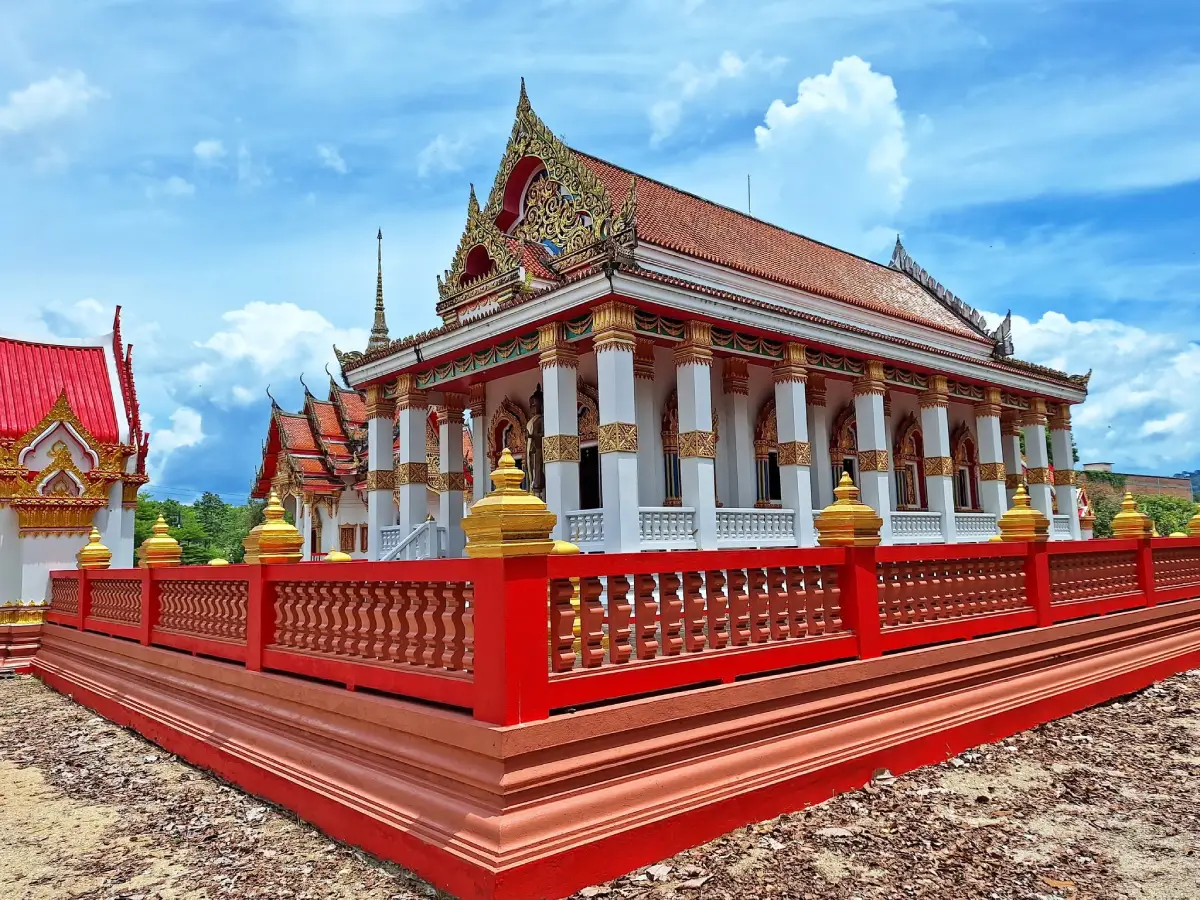
Wat Na Mueang, also known as Wat Pathum Thara, is a historic Buddhist temple on Udom Thara Road in Takua Pa Subdistrict, Takua Pa District, Phang Nga Province. It is one of the most meaningful cultural sites in old Takua Pa because it connects Buddhist faith, southern Thai temple architecture, old-town history, and the commercial heritage of a former river port and tin-mining town. The temple is especially important for its old ordination hall, its archaeological and architectural value, and the steam boiler from a river steamboat that reflects Takua Pa’s former prosperity as a trading and mining center on the Andaman coast.
Wat Na Mueang stands within the historic area of Takua Pa Old Town, close to Udom Thara Road, old canals, traditional houses, shrines, and cultural streets. This location is central to understanding the temple. It was not built in isolation, but as part of a living old-town landscape shaped by waterways, trade, Buddhism, Chinese settlement, tin mining, and local administration. For foreign travelers who want to see Phang Nga beyond beaches and islands, the temple offers a clear entry point into the deeper history of Takua Pa.
Historical temple records identify Wat Na Mueang as being located at No. 11, Udom Thara Road, Takua Pa Subdistrict, Takua Pa District, Phang Nga Province. The temple belongs to the Mahanikaya Buddhist order and occupies approximately 17 rai, 1 ngan, and 75 square wah of land. The site lies in a lowland environment surrounded by ponds, canals, and former waterways. This landscape matches the wider history of Takua Pa, where rivers and canals once served as important transport routes for goods, minerals, and people.
The name Wat Na Mueang means “the temple in front of the town.” The name comes from its location in front of the old city wall of Takua Pa. This makes the temple name historically significant because it describes the relationship between the temple, the old town wall, and the urban layout of early Takua Pa. Records state that the temple was founded on 18 March 1777 by a daughter of Phraya Takua Pa named Muang or U, who was commonly known as Than Thao.
Wat Na Mueang is important because it represents more than local Buddhist worship. Takua Pa was once a major port and trading community on the Andaman coast. In later centuries, the tin-mining industry brought Chinese workers, merchants, and entrepreneurs into the area. This created a multicultural old town with Thai, Chinese, and Malay Peninsula influences. The temple stands within this layered environment, where religion, trade, mining, and settlement history are closely connected.
The main highlight of the temple is its old ubosot, or ordination hall. The ubosot is recognized as a valuable archaeological and architectural structure. It is associated with southern Thai artistic style and was registered as a historic monument by the Fine Arts Department in 1935. The ordination hall is important not only because it is old, but because it shows how the Buddhist community was established alongside the development of the town. It also marks a sacred space for Buddhist monastic ceremonies.
The ubosot should be viewed slowly and respectfully. Its form, construction, and sacred function help visitors understand the role of Buddhist temples in old southern towns. In many historical communities, the temple was not only a place of worship, but also a center of settlement, learning, ceremony, and social identity. Wat Na Mueang demonstrates this role clearly because its history is tied to the founding and organization of Takua Pa town.
Inside the temple are important Buddhist objects, including the principal Buddha image in the ubosot, other Buddha images, a marble Buddha image, and a chedi. These sacred elements show that Wat Na Mueang remains meaningful as a place of faith. Visitors should not treat the site only as an old building or a photo location. It is still a Buddhist temple, and respectful behavior is essential when entering sacred areas or viewing religious objects.
Another major feature of Wat Na Mueang is the steam boiler from an old steamboat. This object is one of the most distinctive historical traces in the temple area. It is linked to the era when Takua Pa was a prosperous trading and mining town. Historical accounts connect the steamboat with Phraya Senanuchit, also known as Nuch Na Nakhon, and Phraya Wichit Songkhram, who jointly purchased a steamboat in 1867. The boat was used for anti-piracy purposes and for transporting goods. After it deteriorated, parts of it sank in the Takua Pa waterway, and the steam boiler became a physical reminder of that period.
The steam boiler is not merely an old industrial object. It is evidence of Takua Pa’s commercial strength and its connection with water transport, mineral extraction, and wider regional trade. Its presence within a temple area creates an unusual and valuable connection between religious heritage and economic history. This is one reason Wat Na Mueang is especially interesting for cultural travelers and history-focused visitors.
Udom Thara Road and the old Takua Pa area were once active commercial zones. Local memory links the area with old landing places, goods, and river trade. Boats from different places brought goods into the town, while tin and other products moved through the waterways. This movement of goods and people helped create the cultural diversity of Takua Pa, including Chinese-influenced food, architecture, shrines, and festivals.
When visitors continue from the temple into Takua Pa Old Town, the historical connection becomes clearer. Streets such as Sri Takua Pa Road, Udom Thara Road, Klan Kaew Road, Montri Road, and Na Mueang Road contain old buildings and community landmarks. Many buildings show Sino-Portuguese or Chinese-influenced architectural styles. These streets developed during periods of trade, mining, and migration. Wat Na Mueang therefore works best as part of a walking or driving route through the old town rather than as a single isolated stop.
The temple also reflects the rebuilding and growth of Takua Pa as a settlement. In old southern towns, temples often formed part of the earliest foundations of community life. They stood near town walls, official residences, trading areas, waterways, and residential quarters. Wat Na Mueang’s location in front of the old city wall makes it an important marker of this historical urban pattern.
The founding story of the temple also adds social value. The temple is associated with Than Thao, the daughter of Phraya Takua Pa, who founded the temple in 1777. This makes the temple part of the history of local leadership and community formation. It also shows that women in elite local families could play a meaningful role in supporting religion and shaping civic space.
Wat Na Mueang is suitable for several types of travelers. Buddhist visitors can come to pay respect and make merit. Cultural travelers can study the old ubosot, the steam boiler, and the temple’s relationship with the old town. Architecture lovers can compare temple forms with the old shophouses nearby. Slow travelers can use the temple as the starting point for a wider Takua Pa Old Town walk, combining faith, history, food, and local streets.
The atmosphere of Wat Na Mueang is modest and grounded. It is not a commercial attraction and should not be approached as an entertainment site. Its value lies in authenticity: a historic temple, a registered old ordination hall, traces of river trade, and a location inside one of Phang Nga’s most interesting old towns. Visitors who take time to observe the site carefully will understand more about Takua Pa than they would from a brief photo stop.
Visitors should dress respectfully when entering the temple. Shoulders and knees should be covered, shoes should be removed where required, and quiet behavior is expected near sacred areas. Do not climb on old structures, touch historic details unnecessarily, or place belongings on archaeological objects. Wat Na Mueang is both a temple and a cultural heritage site, so respect for the place is part of the travel experience.
The best time to visit is in the morning or late afternoon, when the weather is more comfortable for walking and photography. Travelers who visit on a Sunday during the tourism season can combine the temple with the Takua Pa Cultural Street, which usually offers a livelier evening atmosphere with local food, old buildings, desserts, and community activity.
Getting There is convenient by private car, rental car, or public transport to Takua Pa town. From the town center, continue to Udom Thara Road in the old-town area. Travelers arriving by public bus should get off in Takua Pa town and then take local transport or hire a vehicle to the temple. Drivers can access Takua Pa via Phet Kasem Road or Highway 4, then enter the old-town area.
A good cultural route begins at Wat Na Mueang, then continues to the Old Governor’s Residence, the old city wall area, Takua Pa Cultural Street, Boon Soong Iron Bridge, and Khlong Sang-Ne, also known as Little Amazon Takuapa. This route connects religious history, old-town architecture, mining heritage, river transport, and natural scenery in one compact itinerary.
Wat Na Mueang is also useful as a learning site. The temple connects many subjects: the foundation of a Buddhist temple in 1777, the name meaning “in front of the town,” the old city wall, the registered ubosot, the steamboat boiler, river trade, tin mining, Chinese settlement, and Takua Pa’s old-town culture. Students, cultural travelers, and history enthusiasts can use this temple as a starting point to understand the inland cultural side of Phang Nga.
Compared with Phang Nga’s beaches and coastal attractions, Wat Na Mueang offers a completely different experience. It reveals the human history of the province: old trade routes, Buddhist communities, Chinese-influenced neighborhoods, temple architecture, and industrial traces from the mining era. This makes the temple a valuable stop for travelers who want to see more than the natural scenery of southern Thailand.
The reason Wat Na Mueang deserves a place in a Takua Pa itinerary is that it brings several historical layers together in one location. The name connects to the old city wall. The founding story connects to the family of the local ruler. The ubosot connects to Buddhist and architectural heritage. The steam boiler connects to commerce, river transport, and tin mining. The surrounding streets connect to the old town and local life. Few small temple sites can explain a town so clearly.
In summary, Wat Na Mueang is one of the most important cultural sites in Takua Pa District. Its old ubosot, steam boiler, former town-wall location, and connection with Udom Thara Road make it a compact but rich destination. For travelers who want to understand Phang Nga beyond Khao Lak and the sea, this temple provides a meaningful view of Takua Pa’s faith, architecture, trade, and historical identity.
| Name | Wat Na Mueang |
| Also Known As | Wat Pathum Thara |
| Location | Udom Thara Road, Takua Pa Subdistrict, Takua Pa District, Phang Nga Province 82110, Thailand |
| Address | No. 11, Udom Thara Road, Takua Pa Subdistrict, Takua Pa District, Phang Nga Province |
| Highlights | Old ubosot, southern Thai architectural style, steamboat steam boiler, and location inside Takua Pa Old Town |
| History / Period | Founded on 18 March 1777 by a daughter of Phraya Takua Pa named Muang or U, commonly known as Than Thao |
| Name Origin | The name means “temple in front of the town,” referring to its location in front of the old city wall of Takua Pa. |
| Distinctive Features | Historic lowland temple surrounded by canals and ponds, with a brick-and-mortar ubosot and evidence of Takua Pa’s river trade and tin-mining economy |
| Important Sacred Objects | Ubosot, principal Buddha image, additional Buddha images, marble Buddha image, chedi, and steamboat steam boiler |
| Heritage Status | The ubosot was registered as a historic monument by the Fine Arts Department in 1935. |
| Current Status | Cultural attraction in Takua Pa Old Town and open to visitors during listed visiting hours |
| Open Days | Daily |
| Opening Hours | 08.00 – 17.00 |
| Main Areas / Zones | Ubosot area, Buddha worship area, chedi, steam boiler area, and temple courtyard |
| Travel Information | Accessible by private car, rental car, or public transport to Takua Pa town, followed by local transport to Udom Thara Road in the old-town area |
| Nearby Tourist Attractions | 1. Takua Pa Cultural Street / Takua Pa Old Town, 1 km 2. Old Governor’s Residence, Takua Pa, 1 km 3. Old Governor’s Residence Wall, 1 km 4. Boon Soong Iron Bridge, 5 km 5. Khlong Sang-Ne / Little Amazon Takuapa, 7 km |
| Nearby Restaurants | 1. Chin Keng Restaurant, 1 km, Tel. 076-421-450 2. KOPI KUAPA, 1 km, Tel. 099-459-5355 3. Mali Cafe Takuapa, 2 km, Tel. 093-584-2852 4. Krisanawaree Specialty Coffee, 5 km, Tel. 086-303-9242 5. Krua Bai Toey, 8 km, Tel. 081-719-3689, 093-727-1027 |
| Nearby Accommodations | 1. Theppahrak Home, 2 km, Tel. 086-541-7198 2. Bangmara Hill, 4 km, Tel. 080-282-8264 3. Takua Pa Station Hotel, 5 km, Tel. 098-461-9999 4. Good Morning Hotel at Takua Pa, 8 km, Tel. 091-664-4151 5. Kuapa Resort, 15 km, Tel. 076-410-483 |
Frequently Asked Questions (FAQ)
Q: Where is Wat Na Mueang located?
A: Wat Na Mueang is located on Udom Thara Road in Takua Pa Subdistrict, Takua Pa District, Phang Nga Province 82110, inside the old-town area of Takua Pa.
Q: Does Wat Na Mueang have another name?
A: Yes. Wat Na Mueang is also known as Wat Pathum Thara.
Q: What is Wat Na Mueang known for?
A: It is known for its old ubosot, archaeological and architectural value, steamboat steam boiler, and connection with the history of Takua Pa Old Town.
Q: What are the opening days and hours of Wat Na Mueang?
A: The temple is open daily from 08.00 to 17.00.
Q: Why is it called Wat Na Mueang?
A: The name means “temple in front of the town” because the temple stood in front of the old city wall of Takua Pa.
Q: Why is the steam boiler at Wat Na Mueang important?
A: The steam boiler is part of an old steamboat connected with trade, mineral transport, and river travel in historic Takua Pa. It reflects the town’s former commercial prosperity.
Q: What nearby places should travelers visit with Wat Na Mueang?
A: Recommended nearby places include Takua Pa Cultural Street, the Old Governor’s Residence, the Old Governor’s Residence Wall, Boon Soong Iron Bridge, and Khlong Sang-Ne / Little Amazon Takuapa.
Q: How can travelers get to Wat Na Mueang?
A: Travelers can drive or rent a car to Takua Pa town and continue to Udom Thara Road. Those using public transport should get off in Takua Pa town and continue by local transport or hired vehicle.
 Category: ●Places of Worship
 Group: ●Temple
Last Update : 2 MonthAgo
 Last Update : 2 MonthAgo
 Click to Access the Navigation Map GPS
Wat Pathum Thara (Wat Na Mueang) Map
Recommend

 Art, Culture and Heritage
 Historical Sites and Monuments(2)
 Landmarks and Memorials(6)
 Art, Craft Centres, Tradition(3)
Temple(18)
Art, Craft Centres, Tradition(3)
Temple(18)
 Other Sacred Sites(8)
 Suburban Living
 Village, Community(3)
 Nature and Wildlife
 National Parks and Marine Reserves(12)
 Mountain (Doi)(8)
 Waterfalls(21)
 Hot Springs(2)
 Caves(12)
 River, Canal(4)
 Bays and Beaches(28)
 Islands(11)
 Other natural attractions(7)
 Entertainment and Agricultural
 Animal camps and shows(2)
 Farms, Parks and Ecotourism(2)
 Waterpark(3)
 Outdoor and Adventure Activities(3)
 Travel Articles, Recipes
 Travel Review, Food Review(1)
 Southern Food Menu, Southern Food Recipes(1)


