
lovethailand home >South Travel Attractions >Phang Nga Travel Attractions >Khura Buri >Koh Phra Thong > Ko Phra Thong Savanna
TL;DR: Ko Phra Thong Savanna is located at Central Ko Phra Thong, Ko Phra Thong Subdistrict, Khura Buri District, Phang Nga Province, open Daily, hours Daytime travel is recommended, roughly 06:00 – 18:00. Visitors should.
Ko Phra Thong Savanna
Open Days: Daily
Opening Hours: Daytime travel is recommended, roughly 06:00 – 18:00. Visitors should coordinate boat transfer, accommodation, or local guidance before traveling into the island interior.
Ko Phra Thong Savanna in Phang Nga Province is one of Thailand’s most unusual island landscapes. Located in Ko Phra Thong Subdistrict, Khura Buri District, this large Andaman island is known not only for beaches and quiet sea views, but also for a wide golden grassland in the middle of the island. The landscape combines open savanna-like grassland, white-barked Melaleuca trees, peat swamp, mangroves, beach forest, coastal habitats, wildlife, and traditional island communities. This rare combination has made Ko Phra Thong one of Phang Nga’s most distinctive nature destinations.
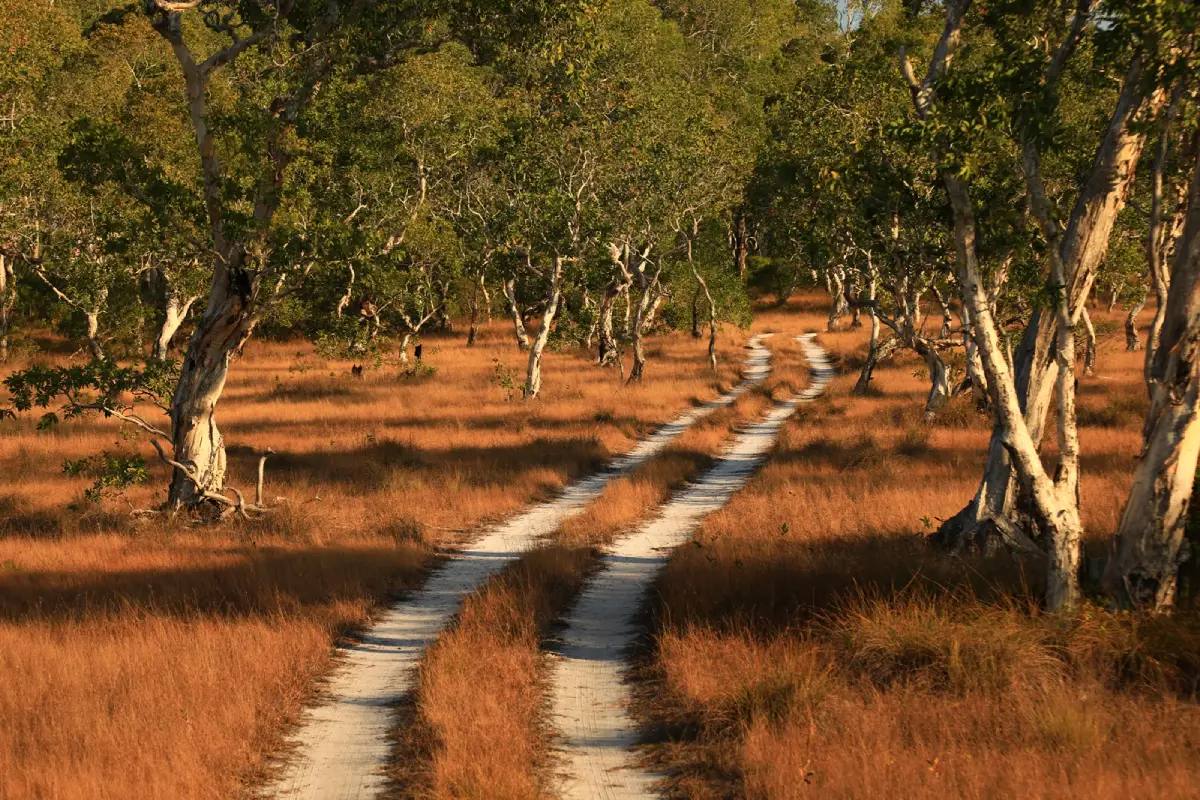
The savanna on Ko Phra Thong is not a landscaped field or a planted tourist attraction. It is a natural grassland mixed with Melaleuca woodland on the island’s flat sandy terrain. The grassland lies inland from the western beach forest and covers a large part of the island’s central zone. Much of the area is covered with grass about 0.5–1 meter high, with sedges, Melaleuca, and other native plants mixed through the open field. During the rainy season, parts of the grassland turn into wetland, so the scenery changes significantly through the year.
The most memorable image of Ko Phra Thong Savanna is the golden grassland stretching across the island, dotted with white Melaleuca trees. In the dry season, the grass turns yellow and gold, while the pale tree trunks rise above the field under a wide open sky. At sunrise and late afternoon, the light touches the grass and creates a soft golden glow. This is why the area is often compared to an African savanna, although it is actually a unique island ecosystem on Thailand’s Andaman coast.
What makes the savanna especially valuable is its connection with several other ecosystems. The eastern side of Ko Phra Thong has mangrove forest and narrow sea channels facing the mainland. Further inland are peat swamp and moist forest. The central area is open grassland and Melaleuca woodland. The western side becomes beach forest and then long open beaches facing the Andaman Sea. This ecological sequence supports land animals, marine life, resident birds, migratory birds, coastal species, plants, and local livelihoods.
Wildlife is one of the strongest reasons to visit the savanna carefully and quietly. The area is known for deer, wild boar, hornbills, raptors, and many bird species. The island is also important for the lesser adjutant, a rare large waterbird in Thailand. Seeing wildlife is never guaranteed, because these are wild animals moving naturally through grassland, forest, and wetland habitats. The best approach is to observe quietly from a safe distance, especially in the early morning and late afternoon.
Birdwatching is a major attraction on Ko Phra Thong. The island has resident and migratory birds, raptors, hornbills, waders, and birds that use the grassland, forest edge, mangrove, and wetland habitats. For serious birdwatchers, the island is best experienced over at least two nights so that morning and evening observation times are available. Binoculars, muted clothing, and a local guide help improve the experience while reducing disturbance to birds and wildlife.
Suitable activities include photography, birdwatching, wildlife observation, cycling, guided nature walks, slow scenic drives, and ecological learning. Camping should only be done in areas approved by accommodation, local communities, or responsible site managers. Visitors should not camp independently in open grassland or fragile areas because dry grass, wildlife disturbance, and fire risk are serious concerns.
The savanna does not look the same all year. From around December to March, the dry-season grass often turns golden and creates the classic savanna scenery. During the rainy season from around April to November, the landscape becomes greener and wetter, and some areas can become temporary wetland. Both seasons are interesting, but travel conditions, road access, and boat transfer should be checked before the trip.
Getting There begins with travel to Khura Buri District in Phang Nga Province. From Bangkok or other provinces, travelers can use Highway 4, also known as Phet Kasem Road, toward Khura Buri. From there, visitors continue by boat to Ko Phra Thong. Possible departure points include Nang Yon Pier near the Surin Islands visitor-service area, Khura Buri Pier or Hua Thanon Pier, and local piers arranged by accommodation or boat operators.
Boat travel to Ko Phra Thong varies by pier, landing point, accommodation, tide, and weather. Some crossings take around 45 minutes, while other routes can take around 1 hour and 10 minutes or more. Visitors should arrange accommodation, boat transfer, and island transport before departure, because Ko Phra Thong is not a high-frequency ferry island. Advance coordination helps confirm the landing point, vehicle transfer, route to the savanna, and safe timing.
Once on Ko Phra Thong, reaching the savanna should be done by accommodation vehicle, local transport, bicycle, or a route recommended by local people. The island interior includes sandy and natural tracks, and some areas are sensitive. Visitors should not drive into the grassland without local knowledge. Cycling is best in the early morning or late afternoon, when heat is lower and wildlife disturbance can be minimized.
The best times of day are sunrise and late afternoon. Morning light moves gently across the grass and Melaleuca trees, while evening light makes the golden color more dramatic. Photographers should bring a wide-angle lens for landscape scenes and a telephoto lens for birds or wildlife, allowing them to photograph from a respectful distance.
Useful items include a hat, sunglasses, lightweight long-sleeved clothing, proper shoes for sand or dirt tracks, drinking water, insect repellent, binoculars, a small trash bag, and a flashlight if traveling before sunrise or after sunset. Birdwatchers should bring binoculars, a field notebook, a long lens if needed, and muted clothing.
Important rules include no fire, no cigarette butts, no grass burning, no chasing wildlife, no feeding animals, no collecting orchids or wild plants, and no leaving designated routes. Fire prevention is especially important in the dry season because grassland and Melaleuca areas can burn quickly. Visitors must treat the savanna as a fragile natural habitat, not as an open recreational field.
Ko Phra Thong also has nearby beaches, mangroves, seagrass areas, fishing communities, Ko Pling Yai, Ko Pling Noi, and Ko Ra. Combining the savanna with these places gives a more complete understanding of the island: open grassland, western beach, eastern mangroves, coastal communities, and marine ecosystems all belong to the same island landscape.
A one-day visit is possible but rushed. A better plan is 2 days and 1 night: arrive from Khura Buri, check in, visit the beach or community in the evening, then explore the savanna at sunrise the next morning. A 3-day, 2-night plan is best for serious nature travelers, allowing time for birdwatching, cycling, beach walks, mangroves, and quiet observation without pressure.
Accommodation on Ko Phra Thong is usually quiet and nature-oriented. Many properties operate their own restaurants and help arrange boat transfers, island transport, and savanna visits. Advance booking is strongly recommended, especially from December to March, because accommodation is limited and some services operate seasonally.
The wider value of Ko Phra Thong Savanna lies in its role within the Ko Ra–Ko Phra Thong wetland landscape. The area links mangroves, seagrass beds, peat swamp, grassland, beach forest, beaches, and marine habitats. These ecosystems support wildlife, migratory birds, sea turtles, dugongs, fisheries, and local communities. A visit to the savanna should therefore be approached as an ecological experience, not only as a photo opportunity.
Overall, Ko Phra Thong Savanna is one of the most distinctive natural landscapes in Phang Nga and Thailand. It combines the feeling of a golden open plain with the reality of a quiet Andaman island. With good planning, advance boat arrangements, responsible local guidance, and respect for wildlife and fire safety, the savanna becomes a rare and memorable experience that reveals a side of Thai island nature few travelers expect to find.
| Name | Ko Phra Thong Savanna |
| Location | Central Ko Phra Thong, Ko Phra Thong Subdistrict, Khura Buri District, Phang Nga Province |
| Address | Ko Phra Thong Subdistrict, Khura Buri District, Phang Nga 82150, Thailand |
| Coordinates | Approx. Latitude 9.0982, Longitude 98.2909 for the wider Ko Phra Thong area |
| Highlights | Golden savanna grassland, white-barked Melaleuca trees, peat swamp, wildlife, lesser adjutant habitat, hornbills, sunrise and sunset light, and a rare savanna-like landscape on an Andaman island |
| History / Significance | A large grassland and Melaleuca woodland ecosystem on Ko Phra Thong, the largest island in Phang Nga and one of Thailand’s largest islands. The area is ecologically important within the Ko Ra–Ko Phra Thong wetland landscape. |
| Distinctive Features | A central island grassland mixed with Melaleuca woodland on flat sandy terrain. The grass turns golden in the dry season and some areas become wetland in the rainy season. |
| Travel Information | Travel by road on Highway 4 to Khura Buri District, then take a boat from Nang Yon Pier, Khura Buri Pier or Hua Thanon Pier, or a pier arranged by accommodation. On the island, use accommodation transport, local vehicles, bicycles, or locally recommended routes to reach the savanna. |
| Current Status | Open as a nature-tourism area of Ko Phra Thong, subject to weather, boat schedules, season, accommodation services, and local guidance |
| Open Days | Daily |
| Opening Hours | Recommended 06:00 – 18:00, especially morning and late afternoon for better light, birdwatching, and cooler weather |
| Fees | No general gated-grassland entrance fee. Main costs are boat transfer, island transport, accommodation, meals, and activities arranged by accommodation or local community operators. |
| Facilities | Beach accommodation, selected homestay or community stay options, accommodation restaurants, island transfers, boat transfers from Khura Buri, nature routes, savanna viewpoints, and local-guided activities |
| Main Areas / Zones | Central golden grassland, Melaleuca woodland, peat swamp, birdwatching routes, cycling routes, sunrise viewpoints, wildlife observation areas, Ban Thung Dap, Ban Tha Pae Yoi, Ban Pak Jok, and western beach zone |
| Caretaker / Responsible Offices | Ko Phra Thong Subdistrict Administrative Organization, Khura Buri District, local communities, accommodation providers, boat operators, and natural-resource agencies related to the Ko Ra–Ko Phra Thong wetland area |
| Main Contact Number | Ko Phra Thong Subdistrict Administrative Organization Tel. 081-797-6566 / Chief Executive of Ko Phra Thong SAO Tel. 086-416-4708 |
| Important Safety Notes | Do not light fires, do not discard cigarette butts, do not chase or feed wildlife, do not collect orchids or wild plants, stay on recommended routes, and check weather and boat schedules before travel |
| Nearby Tourist Attractions | 1. Long Beach / Western Beach of Ko Phra Thong, about 5 km 2. Ban Thung Dap, Ko Phra Thong, about 4 km 3. Ban Tha Pae Yoi, Ko Phra Thong, about 6 km 4. Ban Pak Jok, Ko Phra Thong, about 8 km 5. Ko Pling Yai and Ko Pling Noi, about 5 km by boat from Ko Phra Thong coast 6. Ko Ra, about 12 km by boat 7. Mu Ko Surin National Park, about 50 km by boat from Khura Buri on marine tour routes |
| Nearby Restaurants | 1. BABA Ecolodge Restaurant, Ko Phra Thong, about 5 km, Tel. 081-892-2208 2. The Moken Eco Village Restaurant, Ko Phra Thong, about 6 km, Tel. 081-895-6186 3. Horizon Eco Resort Restaurant, Ko Phra Thong, about 6 km, Tel. 081-894-7195 4. Tawan Bar, Ko Phra Thong, about 7 km 5. Mr. Chuoi Bar and Hut Restaurant, Ko Phra Thong, about 7 km, Tel. 087-898-4636 6. Kuraburi Resort Restaurant, mainland Khura Buri, about 25 km by boat and road, Tel. 081-719-4775, 062-449-5362 |
| Nearby Accommodations | 1. BABA Ecolodge, Ko Phra Thong, about 5 km, Tel. 081-892-2208 2. The Moken Eco Village, Ko Phra Thong, about 6 km, Tel. 081-895-6186 3. Horizon Eco Resort, Ko Phra Thong, about 6 km, Tel. 081-894-7195 4. Mr. Chuoi Bar and Hut, Ko Phra Thong, about 7 km, Tel. 087-898-4636 5. Phra Thong Nature Resort, Ko Phra Thong, about 7 km, Tel. 088-751-9775 6. Kuraburi Resort, mainland Khura Buri, about 25 km by boat and road, Tel. 081-719-4775, 062-449-5362 |
Frequently Asked Questions (FAQ)
Q: Where is Ko Phra Thong Savanna located?
A: Ko Phra Thong Savanna is located in the central part of Ko Phra Thong, Ko Phra Thong Subdistrict, Khura Buri District, Phang Nga Province. It is a natural grassland and Melaleuca woodland ecosystem on an Andaman Sea island.
Q: What makes Ko Phra Thong Savanna special?
A: It is known for wide golden grassland, white-barked Melaleuca trees, peat swamp, wildlife, rare birds, and a savanna-like landscape found unusually on a Thai island.
Q: How do travelers get to Ko Phra Thong Savanna?
A: Travelers first go to Khura Buri District in Phang Nga, then take a boat from Nang Yon Pier, Khura Buri Pier or Hua Thanon Pier, or a pier arranged by accommodation. On the island, they continue by accommodation vehicle, local transport, bicycle, or recommended local route.
Q: When is the best time to see the golden grassland?
A: The dry season from around December to March is generally best for golden grassland scenery. During the rainy season, the area becomes greener and some parts may turn into wetland.
Q: What activities are suitable at Ko Phra Thong Savanna?
A: Suitable activities include photography, birdwatching, wildlife observation, cycling, guided nature walks, and ecological learning. Camping should be done only in approved areas.
Q: What wildlife can be found around the savanna?
A: The area is known for deer, wild boar, hornbills, raptors, oriental pied hornbills, white-bellied sea eagles, and the lesser adjutant. Wildlife sightings depend on season, time, and quiet conditions.
Q: Is there an entrance fee?
A: There is no general gated-grassland entrance fee. Main costs are boat transfer, island transport, accommodation, meals, and activities arranged by accommodation or local community operators.
Q: What should visitors be careful about?
A: Visitors should avoid fire, cigarette butts, wildlife disturbance, plant collecting, and leaving recommended routes. They should also check weather, boat schedules, and local guidance before traveling.
 Category: ●Nature and Wildlife
 Group: ●Other natural attractions
Last Update : 2 MonthAgo
 Last Update : 2 MonthAgo
 Click to Access the Navigation Map GPS
Ko Phra Thong Savanna Map
Recommend

 Art, Culture and Heritage
 Historical Sites and Monuments(2)
 Landmarks and Memorials(6)
 Art, Craft Centres, Tradition(3)
 Places of Worship
 Temple(18)
 Other Sacred Sites(8)
 Suburban Living
 Village, Community(3)
 National Parks and Marine Reserves(12)
 Mountain (Doi)(8)
 Waterfalls(21)
 Hot Springs(2)
 Caves(12)
 River, Canal(4)
 Bays and Beaches(28)
 Islands(11)
Other natural attractions(7)
 Entertainment and Agricultural
 Animal camps and shows(2)
 Farms, Parks and Ecotourism(2)
 Waterpark(3)
 Outdoor and Adventure Activities(3)
 Travel Articles, Recipes
 Travel Review, Food Review(1)
 Southern Food Menu, Southern Food Recipes(1)


