
lovethailand home >South Travel Attractions >Nakhon Si Thammarat Travel Attractions >Si Chon >Sao Phao > Khao Kha Archaeological Site
TL;DR: Khao Kha Archaeological Site is located at Ban Khao Kha, Moo 11, Sao Phao Subdistrict, Sichon District, Nakhon Si Thammarat Province, open Daily, hours 08.30 – 16.30.
Khao Kha Archaeological Site
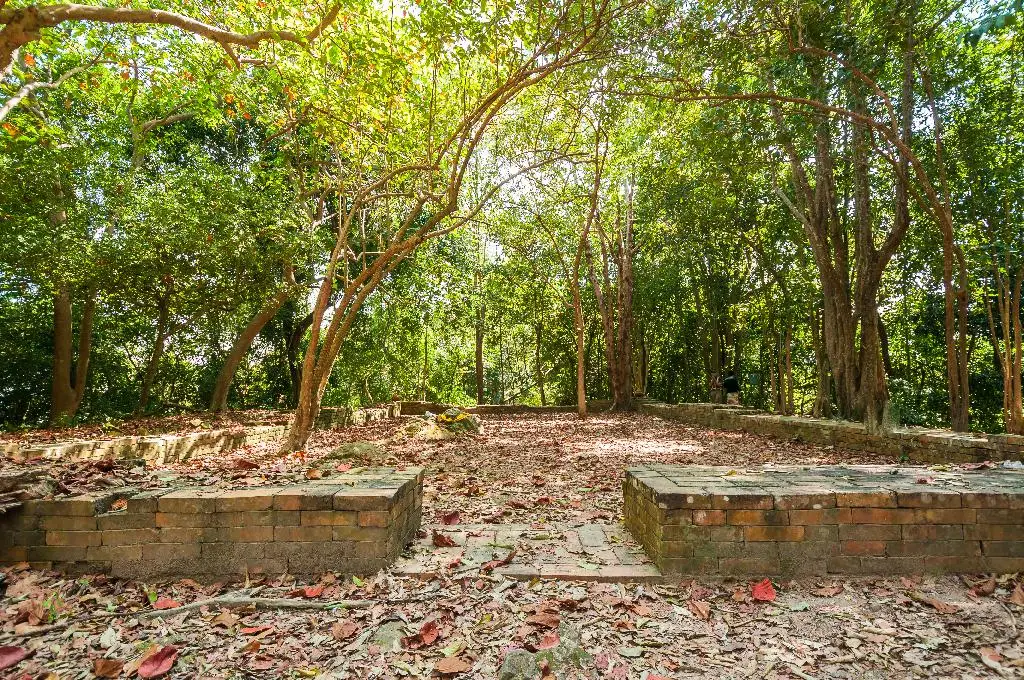
Open Days: Daily
Opening Hours: 08.30 – 16.30
Khao Kha Archaeological Site in Nakhon Si Thammarat Province is an important ancient monument in Sao Phao Subdistrict, Sichon District. It preserves the remains of a Hindu Shaivite sanctuary dating back more than 1,500 years. The hill of Khao Kha functioned as the sacred center of the site, symbolically comparable to Mount Meru or Mount Kailasa, with smaller ancient structures arranged around it. Key archaeological evidence includes yoni bases, Shiva lingas, somasutra water channels, shrine remains, ancient ponds, brick structures, stone features, and an exhibition building. The site is one of the most valuable places in southern Thailand for understanding early Hindu influence, ritual landscapes, and ancient communities on the eastern coast of the peninsula.
Khao Kha Archaeological Site, also known as Khao Kha Ancient Monument, is located at Ban Khao Kha, Moo 11, Sao Phao Subdistrict, Sichon District, Nakhon Si Thammarat Province. The site is not simply a small hill with scattered ruins. It is an ancient sacred landscape where geography, religious belief, architecture, water management, and community settlement came together more than a millennium ago. For travelers interested in Thai history, southern culture, archaeology, and ancient religions, Khao Kha offers a deeper way to understand Nakhon Si Thammarat beyond its beaches, temples, and modern pilgrimage sites.
The site is especially important because it represents a Hindu Shaivite sanctuary. Shaivism is a tradition that worships Shiva, or Isuan in Thai usage, as the supreme deity. In this belief system, mountains are sacred because they symbolize the cosmic center and the dwelling place of divine power. Khao Kha was therefore chosen not by chance, but because its isolated hill form gave it strong ritual meaning. The hill became the spiritual axis of the ancient community, while smaller structures and ponds around it formed part of a larger sacred arrangement.
Khao Kha is more than 1,500 years old and is associated with the spread of Indian religious and cultural influence into the southern Thai peninsula. During this period, coastal communities in what is now Nakhon Si Thammarat were connected with maritime trade routes, ritual exchange, and the movement of religious ideas across the Gulf of Thailand and the wider Indian Ocean world. The yoni bases, Shiva lingas, and somasutra channels found at the site show that formal Shaivite rituals were performed here, supported by architectural planning and sacred water systems.
The hill itself is a distinctive natural feature. Khao Kha is a small isolated hill surrounded by flat land. It stretches roughly north to south, measuring about 850 meters long and 300 meters wide, with a summit around 72 meters above mean sea level. The hill has two main peaks, and ancient structures are arranged along its ridge. This combination of an elevated sacred center and surrounding flat land made the area suitable for both religious use and ancient settlement.
On the northern side of the hill, there is an important ancient structure made or adapted from natural stone. On the southern side, there are four brick ancient structures and three ancient ponds. These features show that the site was not a single isolated shrine, but a planned religious complex with multiple ritual areas. The relationship between the hilltop, brick structures, stone features, ponds, and ritual objects reflects a sophisticated understanding of sacred space.
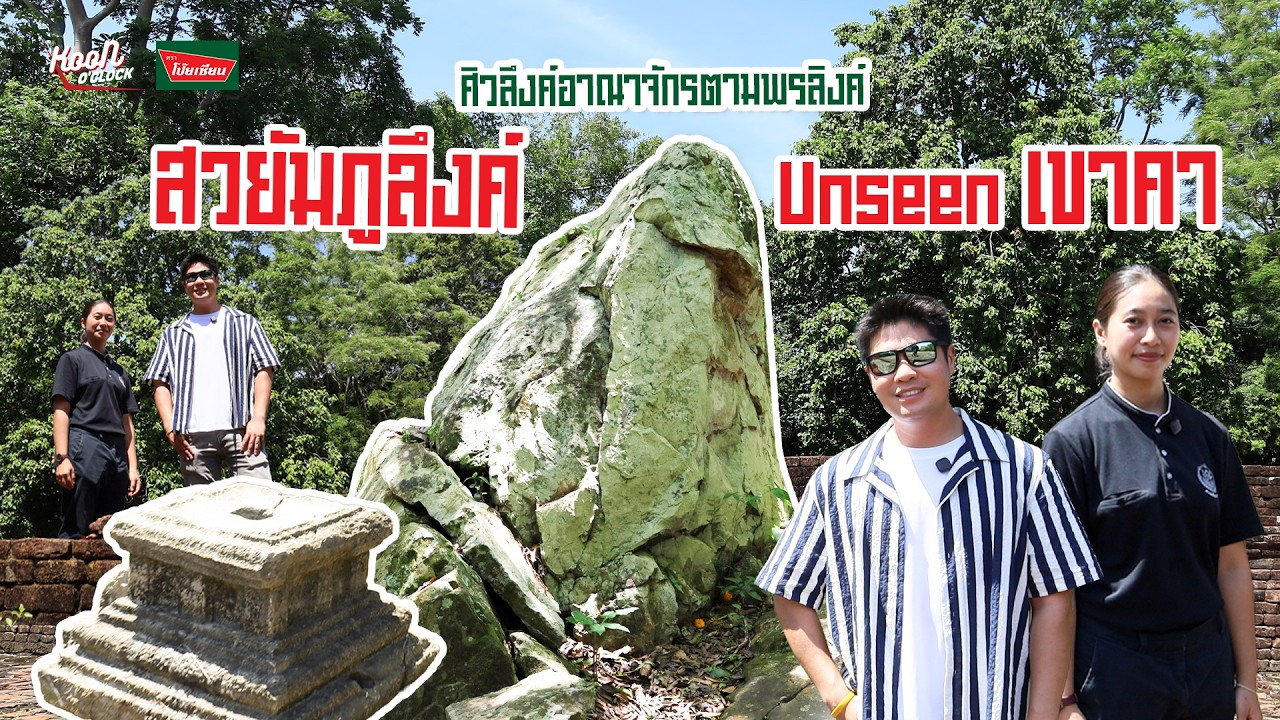
The most significant archaeological objects associated with Khao Kha are the Shiva linga and yoni base. The linga represents Shiva, while the yoni forms the ritual base connected with generative power, fertility, and cosmic completeness. Their presence at Khao Kha confirms the importance of Shaivite worship in the area. For visitors, these objects are essential for understanding the religious meaning of the site. They explain why the hill was treated as a sacred center and why the surrounding structures were arranged with ritual intention.
The somasutra, or sacred water channel, is another key feature. In Shaivite ritual practice, water used in worship could flow through a designed channel from the sacred object to a receiving area. This was not ordinary drainage. It was part of a ritual system in which water became sacred through its association with the deity and the act of worship. The discovery of somasutra elements at Khao Kha shows that the sanctuary had a carefully designed ritual function and that water played a central role in religious activity.
The ancient ponds at Khao Kha further reinforce the importance of water. In many sacred landscapes, ponds and water sources are not only practical features, but also symbolic components connected with purification, fertility, and cosmic order. At Khao Kha, the ponds help visitors understand how the ancient community linked natural resources with ritual needs. The ponds, hill, and shrines should therefore be seen as parts of one integrated religious landscape.
The Fine Arts Department completed restoration work at Khao Kha in 1997. This restoration helped preserve the surviving ancient structures and made the site more accessible for public learning. Important artifacts were gathered and interpreted, while the remaining architectural forms were conserved as much as possible. Today, visitors can walk through the ancient site and also learn from the exhibition building, which presents information about the archaeological objects and structures discovered in and around Khao Kha.
One of the most rewarding ways to visit Khao Kha is to read the landscape as a whole. The hill represents the sacred axis. The ridge structures mark ritual zones. The ponds indicate the role of water in both practical and religious life. The yoni, linga, and somasutra reveal the ritual system of Shaivism. The surrounding flat land suggests where ancient communities may have lived and worked. Together, these elements make Khao Kha a rare site where visitors can understand ancient religion through both objects and geography.
The main hill and ridge area should be the first focus of a visit. Standing on or near the ancient ridge, visitors can sense why the site was chosen as a sacred place. The elevation creates a clear separation between ritual space and everyday space. This separation is important in many religious traditions, and at Khao Kha it is expressed directly through the natural form of the hill. The ancient builders used the landscape itself as part of the shrine.
The exhibition building is also important. It helps visitors connect the outdoor remains with the objects and ritual concepts behind them. Without context, a stone base or brick fragment may appear simple. With explanation, it becomes part of a larger system of worship, architecture, and community life. Travelers who want a meaningful visit should spend time with the exhibition before or after walking through the archaeological areas.
Khao Kha is particularly suitable for students, families, cultural travelers, and anyone interested in the early history of southern Thailand. The site introduces important terms such as Shaivism, Shiva linga, yoni base, somasutra, Mount Meru, Mount Kailasa, Hindu sanctuary, ancient pond, and sacred landscape. Seeing these concepts in an actual archaeological setting makes the history easier to understand than reading about it from a book alone.
In the broader history of Nakhon Si Thammarat, Khao Kha helps explain the cultural layers that existed before the region became strongly associated with Buddhism. Later Nakhon Si Thammarat became one of the great Buddhist centers of southern Thailand, but before that, parts of the coastal region had already received Brahmanical and Hindu influences. Khao Kha is one of the clearest sites showing that earlier religious layer. It helps connect the story of ancient coastal communities, maritime exchange, and the transformation of religious life in the south.
The surrounding area of Sichon and Tha Sala also contains evidence of long-term settlement and cultural development. Ancient communities in this coastal zone were supported by fertile land, waterways, and access to the sea. They were able to receive ideas from outside while adapting them to local geography and local belief. Khao Kha is therefore not an isolated ruin. It belongs to a wider network of ancient communities in Nakhon Si Thammarat.
The atmosphere of Khao Kha is quiet and educational. It is not a commercial entertainment attraction, but a cultural site that rewards slow observation. Visitors should wear comfortable shoes, dress politely, bring drinking water, and walk carefully because parts of the site are outdoors and may include uneven ground. The best time to visit is in the morning or late afternoon, when the weather is more comfortable and the light makes the ancient stone and brick features easier to see.
Photography is possible, but visitors should take photos respectfully. The most meaningful images are not only close-up shots of ancient objects, but also wider views showing the relationship between the hill, the ponds, the ridge, and the surrounding landscape. Visitors should not climb on ancient remains, move stones, touch fragile fragments unnecessarily, or write on any surface. The site has survived for more than a thousand years, and careful visitor behavior helps preserve it for future generations.
Getting There is most convenient by private car, rental car, or hired vehicle. From Nakhon Si Thammarat, take Highway 401 on the Nakhon Si Thammarat–Sichon route. From the Chom Phibun intersection area, continue to around kilometer marker 99, then turn left onto Chinda Pracha Sawan Road or the local Pak Dan–Khao Kha route for about 4–7 kilometers to reach the archaeological site. Travelers coming from Khanom can also include Khao Kha in a route with Wat Chedi, Sichon Beach, Hin Ngam Beach, and the Sichon–Khanom coastal road.
Public transport is less convenient for reaching the site directly. Travelers without a private vehicle should first reach Sichon or Tha Sala, then continue by local hired transport. It is better to arrange the return journey in advance. For visitors planning to see several places in one day, a private car or hired vehicle is the most practical choice because the surrounding attractions, beaches, restaurants, and accommodations are spread across different parts of Sichon and nearby districts.
A typical visit to Khao Kha takes about 1–2 hours. Visitors who want to read the exhibition, walk slowly through the outdoor remains, and take photographs should allow more time. After visiting Khao Kha, travelers can continue to Wat Chedi, Sichon Beach, Hin Ngam Beach, Plai Thon Beach, Khao Phlai Dam, or the scenic coastal road between Sichon and Khanom. This makes Khao Kha a strong starting point for a cultural and coastal itinerary in Sichon District.
Families visiting with children should explain that Khao Kha is a protected ancient site. Children should not run across archaeological remains, pick up stones, remove fragments, or scratch surfaces. Visiting an archaeological site can be an excellent learning experience when everyone understands that the remains are shared heritage. Respectful behavior keeps the site meaningful and safe for future visitors.
For travelers staying in Sichon or Tha Sala, Khao Kha can be combined easily with a seaside stay. A good itinerary is to visit the archaeological site in the morning, have lunch at a local restaurant, and spend the afternoon by the sea. This route gives visitors a balanced experience of Nakhon Si Thammarat: ancient religion, local history, seafood, coastal scenery, and quiet beach accommodation.
Khao Kha may not be a large tourist attraction with many commercial facilities, but it offers exceptional historical depth. Visitors can see how a small hill became a sacred center, how Shiva worship shaped the ritual landscape, how water channels and ponds supported religious practice, and how the Fine Arts Department preserved the site for public education. For anyone who wants to understand southern Thailand in a deeper way, Khao Kha Archaeological Site is one of the most meaningful places in Sichon District.
In conclusion, Khao Kha Archaeological Site is a key cultural destination in Nakhon Si Thammarat. It combines archaeology, sacred geography, ancient Hindu belief, local settlement history, and educational value in one accessible place. The site helps explain the long cultural history of the southern peninsula and shows that Nakhon Si Thammarat’s heritage extends far beyond its later Buddhist fame. A visit to Khao Kha is therefore both a journey into the past and a way to appreciate the cultural foundations of southern Thailand.
| Name | Khao Kha Archaeological Site / Khao Kha Ancient Monument |
| Location | Ban Khao Kha, Moo 11, Sao Phao Subdistrict, Sichon District, Nakhon Si Thammarat Province |
| Address | Sao Phao Subdistrict, Sichon District, Nakhon Si Thammarat 80340, Thailand |
| Highlights | A Hindu Shaivite archaeological site more than 1,500 years old, with Khao Kha hill as the sacred center symbolically linked to Mount Meru or Mount Kailasa |
| History | Believed to have flourished around the 12th–14th Buddhist centuries as a Hindu Shaivite sanctuary; the Fine Arts Department completed restoration in 1997 |
| Key Evidence | Yoni bases, Shiva lingas, somasutra water channels, shrine remains, ancient ponds, brick structures, natural stone features, and ritual-related archaeological objects |
| Name Origin | Named after Khao Kha, the isolated hill used as the sacred center of the ancient sanctuary and surrounding community |
| Distinctive Features | The hill stretches north–south for about 850 meters, is about 300 meters wide, rises about 72 meters above mean sea level, has two peaks, and contains ancient structures along its ridge |
| Travel Information | Take Highway 401 from the Chom Phibun intersection area to kilometer marker 99, then turn left onto Chinda Pracha Sawan Road or the Pak Dan–Khao Kha local route for about 4–7 km |
| Current Status | Open to the public as an archaeological site and historical learning destination in Sichon District |
| Open Days | Daily |
| Opening Hours | 08.30 – 16.30 |
| Fees | No admission fee |
| Facilities | Exhibition building, archaeological grounds, walking areas, parking area, electricity, water supply from groundwater and natural sources, waste separation system, and basic visitor facilities |
| Main Areas / Zones | Hilltop and ridge ancient structures Northern natural stone ancient structure Four southern brick ancient structures Three ancient ponds Area associated with yoni bases, Shiva lingas, and somasutra channels Exhibition building for archaeological objects and site interpretation |
| Caretaker / Related Office | The 12th Regional Office of the Fine Arts Department, Nakhon Si Thammarat, Tel. 0-7535-6458 |
| Nearby Tourist Attractions | 1. Wat Chedi Ai Khai, about 10 km 2. Sichon Beach / Hin Ngam Beach, about 18 km 3. Prince of Chumphon Monument, Sichon, about 19 km 4. Plai Thon Beach, about 27 km 5. Khao Phlai Dam and the Sichon–Khanom coastal road, about 30 km 6. Thong Yee Beach, about 34 km |
| Nearby Restaurants | 1. Sichon Beef, about 6 km, Tel. 083-033-6243 2. Yok Le Seafood Sichon near Wat Chedi Ai Khai, about 13 km, Tel. 086-991-4138 3. Krua Sichon, about 17 km, Tel. 084-441-5709 4. Sichon Seafood, about 19 km, Tel. 086-369-4192 5. LaeLay Sichon, about 19 km, Tel. 086-606-0288 6. BLUE SURF CAFE by Sichon Cabana, about 22 km, Tel. 063-525-7177 |
| Nearby Accommodations | 1. Pava Place Tha Sala, about 18 km, Tel. 084-849-9944 2. Wannachart Boutique Resort, about 19 km, Tel. 086-947-8880 3. Sichon Cabana Beach Resort, about 22 km, Tel. 063-525-7177, 075-536-055 4. Issara Beach Resort Sichon, about 22 km, Tel. 075-536-399, 086-266-6009 5. Prasarnsook Villa Beach Resort, about 23 km, Tel. 075-534-299, 075-536-278, 075-335-560-1 |
Frequently Asked Questions (FAQ)
Q: Where is Khao Kha Archaeological Site located?
A: It is located at Ban Khao Kha, Moo 11, Sao Phao Subdistrict, Sichon District, Nakhon Si Thammarat Province.
Q: What are the opening days and hours of Khao Kha Archaeological Site?
A: The site is open daily from 08.30 to 16.30.
Q: Is there an admission fee for Khao Kha Archaeological Site?
A: There is no admission fee for visiting the archaeological site.
Q: Why is Khao Kha Archaeological Site important?
A: It is a Hindu Shaivite sanctuary more than 1,500 years old, with Khao Kha hill serving as the sacred center symbolically linked to Mount Meru or Mount Kailasa.
Q: What can visitors see at Khao Kha Archaeological Site?
A: Visitors can see ancient ridge structures, brick ruins, ancient ponds, yoni bases, Shiva lingas, somasutra channels, and an exhibition building about the site’s archaeology.
Q: How can travelers get to Khao Kha Archaeological Site?
A: Take Highway 401 to around kilometer marker 99, then turn left onto Chinda Pracha Sawan Road or the Pak Dan–Khao Kha route for about 4–7 km.
Q: How long should visitors spend at Khao Kha Archaeological Site?
A: Most visitors should allow about 1–2 hours, or longer if they want to read the exhibition, walk slowly, and take detailed photographs.
Q: What nearby places can be visited after Khao Kha Archaeological Site?
A: Nearby places include Wat Chedi Ai Khai, Sichon Beach, Hin Ngam Beach, Plai Thon Beach, Khao Phlai Dam, and the scenic Sichon–Khanom coastal road.
 Category: ●Art, Culture and Heritage
 Group: ●Historical Sites and Monuments
Last Update : 2 MonthAgo
 Last Update : 2 MonthAgo
 Click to Access the Navigation Map GPS
Khao Kha Archaeological Site Map
Recommend
 Historical Sites and Monuments(9)
 Landmarks and Memorials(9)
 Royal Palace(1)
 Art, Craft Centres, Tradition(12)
 Museums(5)
 Educational Places
 Educational Gardens, Farm(2)
 Places of Worship
 Temple(44)
 Mosque(2)
 Other Sacred Sites(17)
 Research and Development
 Royal Project(2)
 Suburban Living
 Village, Community(8)
 Local Market(1)
 Floating Market(1)
 Nature and Wildlife
 National Parks and Marine Reserves(6)
 Mountain (Doi)(11)
 Dam, Reservoir, Lake(10)
 Waterfalls(43)
 Hot Springs(1)
 Caves(13)
 River, Canal(3)
 Bays and Beaches(29)
 Islands(2)
 Other natural attractions(3)
 Entertainment and Agricultural
 Farms, Parks and Ecotourism(3)
 Outdoor and Adventure Activities(4)
 Travel Articles, Recipes
 Travel Review, Food Review(5)
 Southern Food Menu, Southern Food Recipes(18)


