
lovethailand home >South Travel Attractions >Nakhon Si Thammarat Travel Attractions >Mueang NaKhon Si Thammarat >Nai Muang > Ho Phra Narai Nakhon Si Thammarat
TL;DR: Ho Phra Narai Nakhon Si Thammarat is located at Ratchadamnoen Road, Opposite Ho Phra Isuan, Nai Mueang Subdistrict, Mueang Nakhon Si Thammarat District, Nakhon Si Thammarat Province, open Daily, hours 08.30 – 16.00.
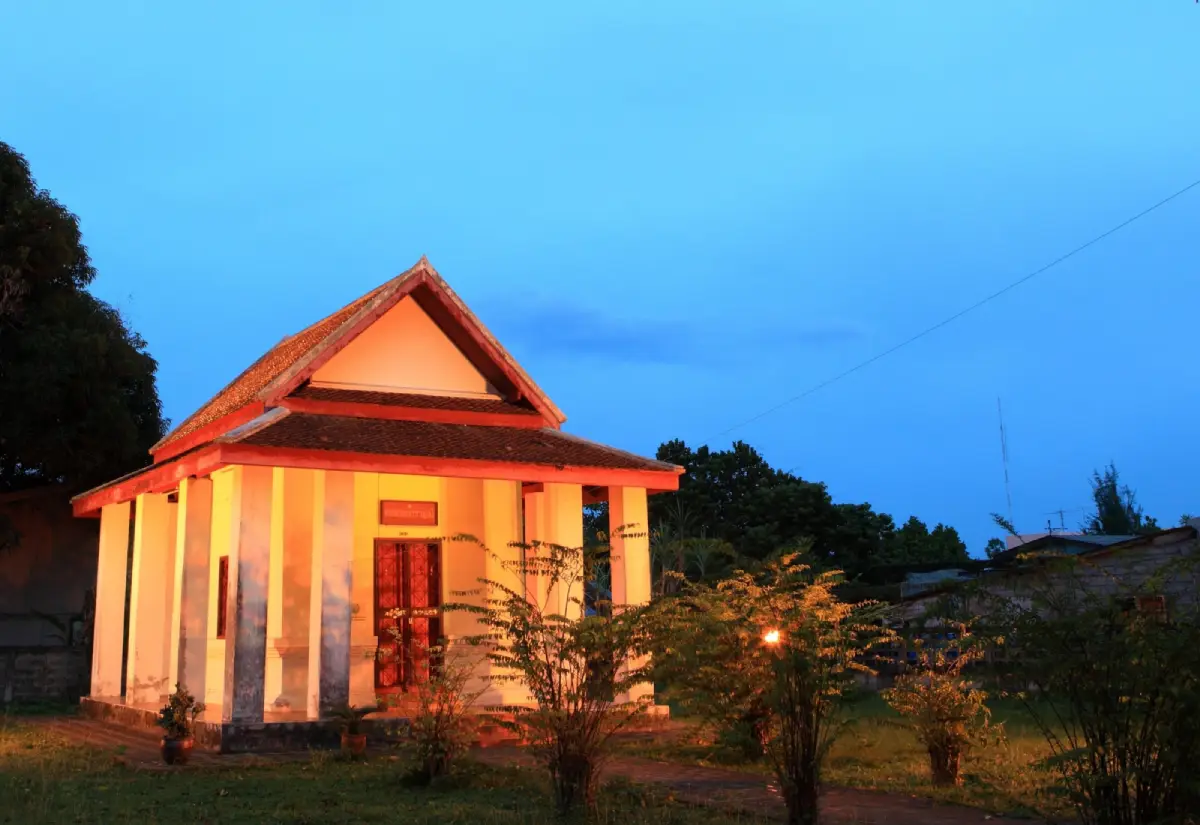
Ho Phra Narai Nakhon Si Thammarat
Open Days: Daily
Opening Hours: 08.30 – 16.00
Ho Phra Narai Nakhon Si Thammarat, or Vishnu Shrine, is located on Ratchadamnoen Road in Nai Mueang Subdistrict, Mueang Nakhon Si Thammarat District, directly opposite Ho Phra Isuan. It is an important Hindu-Brahmanical monument associated with Vaishnavism, the tradition that venerates Vishnu or Narai as a principal deity. Although the shrine is modest in size, it is one of the most meaningful historical sites in the old city of Nakhon Si Thammarat because it reflects the deep influence of Indian civilization, early maritime connections, Hindu ritual culture, and the long cultural development of the southern Thai peninsula.
The most important historical evidence associated with Ho Phra Narai is a four-armed sandstone Vishnu image dating to around the 5th–6th Buddhist centuries by Thai chronological classification, commonly described in Thai sources as the 10th–11th Buddhist centuries. This ancient image once stood inside the shrine and demonstrates the influence of Indian religious and artistic traditions in Nakhon Si Thammarat. The original sculpture is now preserved and displayed at Nakhon Si Thammarat National Museum for conservation and study. The Vishnu image currently enshrined inside Ho Phra Narai is a replica created by the Fine Arts Department based on old photographic evidence and has characteristics associated with Ayutthaya art.
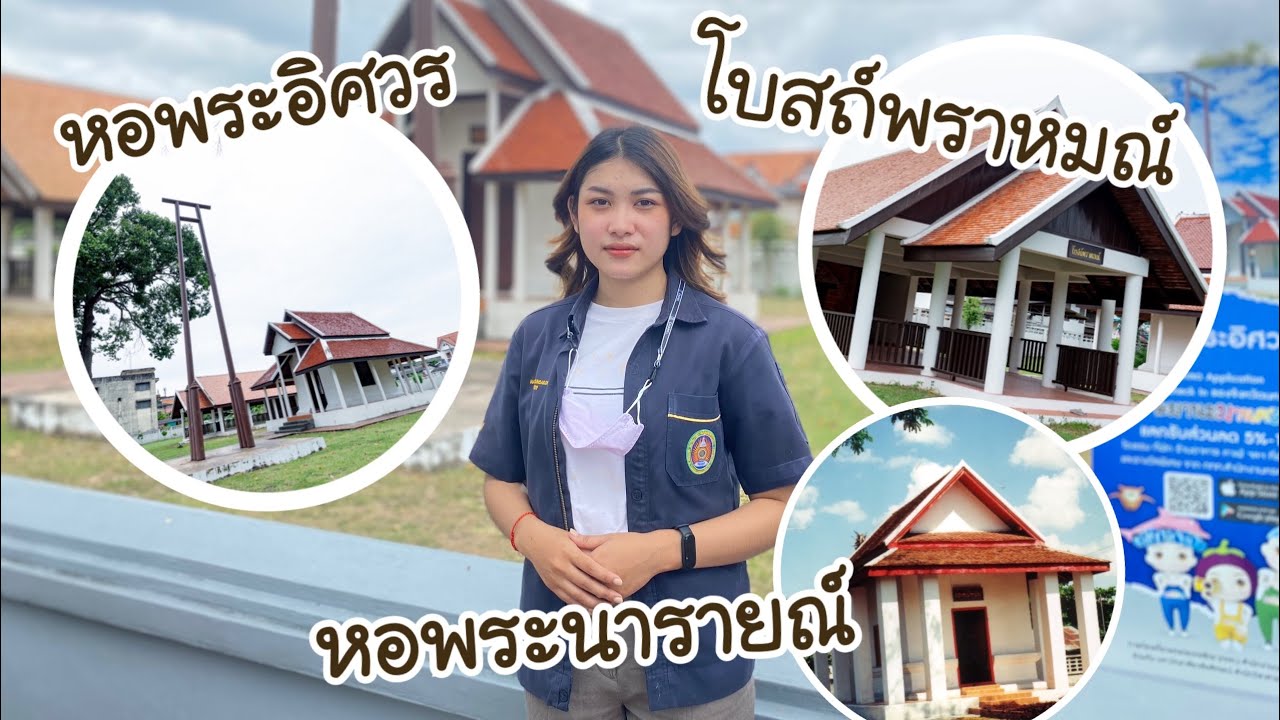
Ho Phra Narai stands within the historic core of Nakhon Si Thammarat, on Ratchadamnoen Road, one of the city’s most important cultural routes. Nearby sites include Ho Phra Isuan, the Giant Swing, the Brahmin Chapel, the Old City Wall, Sanam Na Mueang, the City Pillar Shrine, and Wat Phra Mahathat Woramahawihan. This location makes the shrine an ideal stop for visitors who want to understand the non-Buddhist religious layers of Nakhon Si Thammarat’s past. The shrine helps complete the picture of the old city by showing that Hindu-Brahmanical traditions were once deeply embedded in its ritual and cultural landscape.
The original form of the old Ho Phra Narai building cannot be fully reconstructed today. However, Fine Arts Department information records that Ho Phra Narai was built in the Ayutthaya period and restored several times. An important restoration took place during the time of Phraya Ratsadanupradit Mahison Phakdi, who served as governor of Nakhon Si Thammarat Province between 1919 and 1932. The present building is a rectangular brick-and-lime structure with a plain gable roof, timber roof structure, and unglazed terracotta tiles. It faces west and retains a simple, quiet, and dignified character appropriate for an old sacred site.
Archaeological excavation in 2015 revealed that the current building was constructed on top of an older building dating from the Ayutthaya period, and that the present building is smaller than the earlier structure. This finding is important because it confirms that the site has a deeper historical layer beneath the visible shrine. Ho Phra Narai is therefore not only a small shrine on a modern street, but a layered archaeological site that preserves traces of religious use over time.
Ho Phra Narai was officially registered as a national monument in the Royal Gazette on 27 September 1936. Its protected monument area was later announced in the Royal Gazette on 19 May 2023, covering 2 ngan and 36.25 square wah. This legal status confirms its importance as a protected heritage site. Visitors should therefore treat the shrine not simply as a place for worship or photography, but as a public cultural monument under national conservation responsibility.
In religious terms, Ho Phra Narai belongs to the Vaishnavite tradition of Hinduism, in which Vishnu is revered as a protector and preserver of cosmic order. This belief entered the southern Thai peninsula through maritime trade, cultural exchange, and contact with Indian civilization. The presence of Ho Phra Narai in Nakhon Si Thammarat shows that the old city was never defined by only one religious tradition. It was a cultural crossroads where Buddhism, Brahmanical-Hindu traditions, royal ritual, and local belief existed in complex relationship.
The original Vishnu sculpture associated with Ho Phra Narai is especially significant in art-historical terms. It was carved from grey sandstone, with a tapering cylindrical headdress and a conch held in the right hand. These features connect it with early Vaishnavite imagery and the wider spread of Indian religious art in Southeast Asia. The sculpture is often described as one of the earliest Vishnu images known in the region, making Ho Phra Narai highly important for students of art history, archaeology, religion, and southern Thai cultural heritage.
The relocation of the original image to Nakhon Si Thammarat National Museum is an important conservation measure. It protects the original sculpture from environmental damage and allows it to be studied in a controlled museum setting. At the same time, the shrine remains meaningful because it preserves the original sacred context. Visitors who want the fullest experience should visit both places: Ho Phra Narai to understand the original ritual setting, and the National Museum to view the original ancient image.
The atmosphere around Ho Phra Narai is quiet and simple. The shrine stands within a grassy compound enclosed by a low wall, close to Ratchadamnoen Road. Visitors can observe the brick-and-lime structure, gable roof, doorway, and the spatial relationship between the shrine and Ho Phra Isuan across the road. The site is not large, but its historical meaning is substantial because it forms part of a wider Brahmanical sacred zone in the old city.
A visit to Ho Phra Narai becomes more meaningful when combined with Ho Phra Isuan. Ho Phra Isuan is associated with Shaivism and the worship of Shiva, while Ho Phra Narai is associated with Vaishnavism and the worship of Vishnu. Their location opposite each other on Ratchadamnoen Road shows the presence of multiple Hindu traditions in the city’s religious landscape. Seeing both shrines together helps visitors understand the diversity of Indian religious influence in historic Nakhon Si Thammarat.
The Brahmin Chapel and the Giant Swing should also be understood as part of the same cultural landscape. The Brahmin Chapel was used for important Brahmanical rituals, including ceremonies connected with Triyampawai and Tripawai traditions. The Giant Swing, meanwhile, reflects the ceremonial life of Brahmanical communities in the city. Together with Ho Phra Narai and Ho Phra Isuan, these sites reveal that Brahmanical religion once had an organized ritual presence in Nakhon Si Thammarat.
For travelers interested in the old city, Ho Phra Narai fits naturally into a cultural route that includes the City Pillar Shrine, the Old City Wall, Ho Phra Buddha Sihing, Wat Phra Mahathat Woramahawihan, Nakhon Si Thammarat National Museum, and Suchart Subsin Shadow Puppet Museum. Such a route gives a broad picture of Nakhon Si Thammarat through Hindu-Brahmanical heritage, Buddhism, city history, sacred art, archaeology, and southern Thai folk culture.
As an educational site, Ho Phra Narai is valuable because it condenses many layers of history into a small area. It is a Brahmanical shrine, a site associated with an ancient Vishnu image, an Ayutthaya-period monument, a place restored in the early 20th century, an archaeological site excavated in 2015, and a protected national monument. This makes it a compact but highly informative place for students, researchers, and culturally minded travelers.
A normal visit may take around 20 to 40 minutes for worship, photography, and a basic look at the building. Visitors who plan to walk to Ho Phra Isuan, the Giant Swing, and the Brahmin Chapel should allow at least one hour. A slower visit is recommended because these sites are best understood as a connected group rather than isolated landmarks.
Getting There is straightforward. Ho Phra Narai is located on Ratchadamnoen Road in central Nakhon Si Thammarat, directly opposite Ho Phra Isuan. Visitors traveling by private car can follow Ratchadamnoen Road toward Wat Phra Mahathat Woramahawihan. Local visitors can also take the Stadium–Hua Thanon songthaew route, which passes through the old city area and along Ratchadamnoen Road. Once at the shrine, visitors can easily continue on foot to nearby Brahmanical and historical sites.
From Sanam Na Mueang or the City Pillar Shrine, travel south along Ratchadamnoen Road for a short distance to reach Ho Phra Narai. From Wat Phra Mahathat Woramahawihan, travel north along the same road toward the city center. This area is suitable for a walking heritage route because several significant monuments are clustered close together.
The current public opening schedule announced by the Fine Arts Department for Ho Phra Narai and related monuments in Mueang Nakhon Si Thammarat is daily opening, including public holidays, from 08.30 to 16.00. Visitors who wish to see the interior should plan within these hours. The exterior can be viewed from the surrounding area where appropriate.
Visitors should treat Ho Phra Narai as both a sacred site and a protected monument. Modest dress and respectful behavior are recommended. Visitors should not climb on walls or building elements, should not touch the statue or sacred objects without permission, and should avoid placing objects on any part of the monument. Photography should be done carefully without disturbing others or damaging the site.
Ho Phra Narai is ideal for travelers who want a fuller understanding of Nakhon Si Thammarat. The city is often remembered for its great Buddhist heritage, especially Wat Phra Mahathat, but its older cultural history also includes Brahmanical-Hindu traditions of great importance. Ho Phra Narai helps reveal Nakhon Si Thammarat as a historic maritime city shaped by Indian influence, religious diversity, and long-distance cultural exchange.
In summary, Ho Phra Narai Nakhon Si Thammarat is a small monument with large historical meaning. It brings together Vaishnavite belief, an ancient sandstone Vishnu image, Indian cultural influence, Ayutthaya-period architecture, archaeological excavation, national monument registration, and modern heritage conservation. Visitors to the old city should include it with Ho Phra Isuan and the Brahmanical monuments along Ratchadamnoen Road to understand Nakhon Si Thammarat as one of southern Thailand’s deepest cultural landscapes.
| Name | Ho Phra Narai Nakhon Si Thammarat / Vishnu Shrine |
| Location | Ratchadamnoen Road, Opposite Ho Phra Isuan, Nai Mueang Subdistrict, Mueang Nakhon Si Thammarat District, Nakhon Si Thammarat Province |
| Address | Ratchadamnoen Road, Nai Mueang Subdistrict, Mueang Nakhon Si Thammarat District, Nakhon Si Thammarat 80000, Thailand |
| Coordinates | 8.4228533359, 99.9663640667 |
| Highlights | Hindu-Brahmanical monument of the Vaishnavite tradition, opposite Ho Phra Isuan, associated with an ancient sandstone Vishnu image dating to around the 10th–11th Buddhist centuries |
| History | Built in the Ayutthaya period and restored several times. Archaeological excavation in 2015 showed that the present building was constructed on top of an older Ayutthaya-period building. |
| National Monument Status | Registered as a national monument on 27 September 1936, with the protected monument area announced on 19 May 2023 |
| Monument Area | 2 Ngan 36.25 Square Wah |
| Architectural Features | Rectangular brick-and-lime building, gable roof, wooden roof structure, unglazed terracotta roof tiles, and west-facing orientation |
| Important Ancient Object | Four-armed sandstone Vishnu image dating to around the 10th–11th Buddhist centuries, now preserved and displayed at Nakhon Si Thammarat National Museum |
| Current Enshrined Object | Replica Vishnu image made by the Fine Arts Department based on old photographic evidence |
| Main Areas / Zones | Ho Phra Narai building, inner hall with replica Vishnu image, worship base, surrounding lawn, enclosing wall, and nearby Brahmanical monument group including Ho Phra Isuan, Giant Swing, and Brahmin Chapel |
| Responsible Agency | Fine Arts Office 12 Nakhon Si Thammarat, Fine Arts Department |
| Travel Information | Use Ratchadamnoen Road in central Nakhon Si Thammarat. The shrine is directly opposite Ho Phra Isuan and can be reached by private car, local taxi, or the Stadium–Hua Thanon songthaew route. |
| Current Status | Open for visitation and worship as an important national monument of Nakhon Si Thammarat |
| Open Days | Daily |
| Opening Hours | 08.30 – 16.00 |
| Admission Fee | Free Admission |
| Contact Number | Fine Arts Office 12 Nakhon Si Thammarat, Tel. 075-356-458 |
| Facilities | Walking area, surrounding lawn, enclosing wall, and roadside or nearby parking depending on old-town traffic conditions |
| Nearby Tourist Attractions | 1. Ho Phra Isuan And Giant Swing, about 0.1 km 2. Old City Wall Of Nakhon Si Thammarat, about 0.4 km 3. Sanam Na Mueang, about 0.5 km 4. Sala Pradu Hok, about 0.6 km 5. Sa Lang Dap Sri Prat, about 0.7 km 6. Phra Wihan Sung, about 0.8 km 7. Suchart Subsin Shadow Puppet Museum, about 1.2 km |
| Nearby Restaurants | 1. Kopi Khang Sala Klang, about 0.8 km 2. Khanom Chin Mueang Khon Sen Sot, about 2 km, Tel. 086-475-7641, 088-764-8430, 084-293-2456 3. Roti Pa Nom Branch 9, about 2 km, Tel. 081-970-1573 4. Kopi QueQuton, about 3 km, Tel. 089-701-7777 5. Ko Bua Restaurant, about 7 km, Tel. 098-867-4911 6. Khanom Chin Mueang Khon Rim Khlong, about 9 km, Tel. 097-348-5995 |
| Nearby Accommodations | 1. Navakitel Design Hotel, about 2 km, Tel. 080-393-9339 2. B2 Nakhon Si Thammarat Premier Hotel, about 2 km, Tel. 075-804-288 3. Bunprasop Garden Hotel, about 3 km, Tel. 075-805-252 4. Grand Fortune Hotel Nakhon Si Thammarat, about 4 km, Tel. 075-841-888 5. HOP INN Nakhon Si Thammarat, about 4 km, Tel. 075-314-888 6. The Twin Lotus Hotel Nakhon Si Thammarat, about 4 km, Tel. 075-323-777 |
Frequently Asked Questions (FAQ)
Q: Where is Ho Phra Narai Nakhon Si Thammarat located?
A: Ho Phra Narai is located on Ratchadamnoen Road in Nai Mueang Subdistrict, Mueang Nakhon Si Thammarat District, directly opposite Ho Phra Isuan.
Q: What are the opening hours of Ho Phra Narai?
A: It is open daily from 08.30 to 16.00.
Q: Is there an admission fee?
A: No. Admission is free.
Q: What is the main highlight of Ho Phra Narai?
A: The main highlight is its association with an ancient sandstone Vishnu image dating to around the 10th–11th Buddhist centuries, an important piece of evidence for Indian religious influence in Nakhon Si Thammarat.
Q: Where is the original Vishnu image now?
A: The original Vishnu image is preserved and displayed at Nakhon Si Thammarat National Museum. The image inside Ho Phra Narai today is a replica.
Q: How is Ho Phra Narai related to Ho Phra Isuan?
A: Ho Phra Narai stands opposite Ho Phra Isuan. Ho Phra Narai is associated with Vishnu and Vaishnavism, while Ho Phra Isuan is associated with Shiva and Shaivism.
Q: How can travelers get to Ho Phra Narai?
A: Travelers can use Ratchadamnoen Road in central Nakhon Si Thammarat. The shrine can be reached by private car, local taxi, or the Stadium–Hua Thanon songthaew route.
Q: What nearby places can be visited with Ho Phra Narai?
A: Nearby places include Ho Phra Isuan, the Giant Swing, the Old City Wall, Sanam Na Mueang, Phra Wihan Sung, Suchart Subsin Shadow Puppet Museum, and Nakhon Si Thammarat National Museum.
 Category: ●Places of Worship
 Group: ●Other Sacred Sites
Last Update : 3 MonthAgo
 Last Update : 3 MonthAgo
 Click to Access the Navigation Map GPS
Ho Phra Narai Nakhon Si Thammarat Map
Recommend

 Art, Culture and Heritage
 Historical Sites and Monuments(9)
 Landmarks and Memorials(9)
 Royal Palace(1)
 Art, Craft Centres, Tradition(12)
 Museums(5)
 Educational Places
 Educational Gardens, Farm(2)
 Temple(44)
 Mosque(2)
Other Sacred Sites(17)
 Research and Development
 Royal Project(2)
 Suburban Living
 Village, Community(8)
 Local Market(1)
 Floating Market(1)
 Nature and Wildlife
 National Parks and Marine Reserves(6)
 Mountain (Doi)(11)
 Dam, Reservoir, Lake(10)
 Waterfalls(43)
 Hot Springs(1)
 Caves(13)
 River, Canal(3)
 Bays and Beaches(29)
 Islands(2)
 Other natural attractions(3)
 Entertainment and Agricultural
 Farms, Parks and Ecotourism(3)
 Outdoor and Adventure Activities(4)
 Travel Articles, Recipes
 Travel Review, Food Review(5)
 Southern Food Menu, Southern Food Recipes(18)


