
lovethailand home >South Travel Attractions >Nakhon Si Thammarat Travel Attractions >Mueang NaKhon Si Thammarat >Nai Muang > Wat Chai Na Meditation Centre
TL;DR: Wat Chai Na Meditation Centre is located at Phatthanakan Thung Prang Road, Behind Wat Thao Khot, Nai Mueang Subdistrict, Mueang Nakhon Si Thammarat District, Nakhon Si Thammarat, open Daily, hours 08.00 – 16.30.
Wat Chai Na Meditation Centre
Open Days: Daily
Opening Hours: 08.00 – 16.30
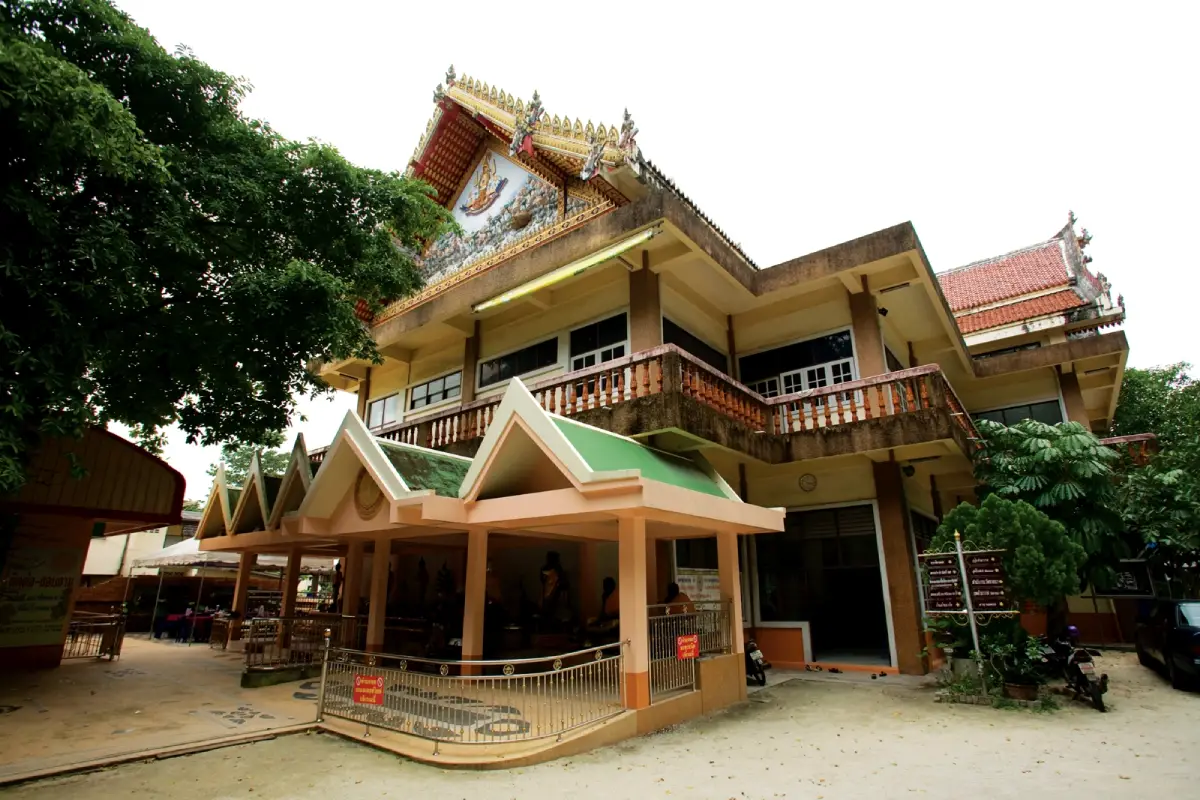
Wat Chai Na Meditation Centre, also known as Wat Chai Na Suan Phutthatham, is located on Phatthanakan Thung Prang Road behind Wat Thao Khot in Mueang Nakhon Si Thammarat District. It is one of the city’s most meaningful Buddhist meditation sites, known for teaching vipassana meditation to both Thai and international practitioners. Unlike a temple visited mainly for sightseeing, Wat Chai Na is valued as a quiet place for mindfulness practice, meditation training, Buddhist learning, and simple living in the spirit of Suan Mokkh.
Wat Chai Na is an old temple in central Nakhon Si Thammarat with a history connected to Ban Pa Kluai and Phatthanakan Thung Prang Road. The temple contains important old religious structures, especially the Maha-Ud ordination hall, a rare historic feature traditionally built with only one entrance and no windows. This gives Wat Chai Na a dual identity: it is both a historic temple worth studying and an active meditation centre for those seeking inner peace.
The significance of Wat Chai Na grew when Buddhadasa Bhikkhu initiated its development as a branch associated with Suan Mokkh in Surat Thani Province. The purpose was to create a place for spreading Buddhist teachings and offering meditation practice in Nakhon Si Thammarat city. The spirit of the place therefore emphasizes simplicity, silence, restraint, mindfulness, and practical Dhamma rather than grand architectural display.
Wat Chai Na was revived from an old temple site and developed into “Suan Phutthatham Chai Na Vipassana Meditation Centre.” Its role is therefore more than that of a local community temple. It brings the practical Dhamma spirit of Suan Mokkh into the city, offering shaded paths, practice halls, simple residences, and a calm natural atmosphere that supports serious meditation practice.
The meditation approach associated with Wat Chai Na focuses on the Four Foundations of Mindfulness. Practitioners learn to observe the body, feelings, mind, and mental phenomena. Practice may include mindfulness in standing, walking meditation, sitting, lying down, hand movements, and awareness of ordinary daily movement. This makes meditation something that extends beyond formal sitting and into everyday life.
The atmosphere inside the centre is especially peaceful for a location close to the city. Large trees, simple walkways, meditation halls, residences, and shaded corners create a setting that helps reduce distraction. Visitors can gradually return to breathing, bodily movement, and present-moment awareness. This calm environment is one of the strongest reasons people continue to visit Wat Chai Na for spiritual practice.
The temple occupies about 12 rai and 55 square wah. Its structures include an ordination hall, monks’ residences, a multipurpose hall, a funeral pavilion, residences for female practitioners, a bell tower, drum tower, kitchen, abbot’s residence, and meditation hall. These spaces support both ordinary temple functions and the needs of practitioners who come for quiet training and retreat.
Important sacred objects at the temple include the principal Buddha image in the ordination hall, a Buddha image in the first-sermon posture, and a laterite Buddha image in the subduing-Mara posture. These objects add historical and devotional depth to the meditation centre. Visitors who are not joining a retreat can still pay respect, walk quietly, and learn about the temple’s sacred and historical value.
The Maha-Ud ordination hall is one of the most important features to see. Its single entrance and lack of windows reflect an old temple-building tradition associated with seclusion and inward concentration. This makes it especially fitting in a meditation temple. The building reminds visitors that Wat Chai Na is not only a modern practice centre, but also a place with deeper historical layers.
Another meaningful aspect of Wat Chai Na is its connection with the Thai Mae Chi Institute, which supports Buddhist learning and practice for female renunciants. This gives the temple a wider educational and spiritual role, providing space not only for monks and lay visitors but also for women dedicated to Dhamma study and practice.
Those who wish to practice meditation at Wat Chai Na should come with an attitude of respect and readiness. Modest clothing, quiet behavior, reduced phone use, and observance of temple rules are essential. Anyone wishing to join a retreat or stay overnight for practice should contact the temple in advance because schedules and capacity may vary.
General visitors can also benefit from the temple. A short visit may include paying respect to the Buddha images, walking around the old temple area, viewing the Maha-Ud ordination hall, and experiencing the calm environment. A 30-minute to one-hour visit is enough for a basic overview, while visitors interested in history and meditation should allow more time.
Wat Chai Na is different from many major attractions in Nakhon Si Thammarat. Wat Phra Mahathat Woramahawihan represents the grand spiritual center of the city, while Wat Chai Na offers quietness, restraint, and inward practice. The temple is therefore ideal for visitors who want to experience the contemplative side of Nakhon Si Thammarat rather than only its monumental heritage.
For travelers interested in Buddhadasa Bhikkhu and the Suan Mokkh tradition, Wat Chai Na is especially meaningful. It shows how the Suan Mokkh spirit of practical Dhamma, simplicity, and mindful living extended into Nakhon Si Thammarat. The temple gives local people and visitors a place to encounter that teaching without traveling all the way to Surat Thani.
Visitors should observe proper etiquette. Dress modestly, speak quietly, avoid photographing practitioners without permission, and do not enter monks’ residences or private practice areas unless invited. Photography of historic structures should be done respectfully and without disturbing meditation activities.
Getting There is convenient by private car or local transport. From central Nakhon Si Thammarat, take Ratchadamnoen Road. At Pratu Chaiyasit Intersection, turn onto Phatthanakan Thung Prang Road and continue for about 1–2 km. Wat Chai Na is on the right-hand side behind Wat Thao Khot. Local travelers can take the Stadium–Hua Thanon blue songthaew route, get off near Pratu Chaiyasit Intersection, and continue by local motorcycle taxi or other transport.
A cultural route around Wat Chai Na can include Wat Thao Khot, Wat Suan Luang, Nakhon Si Thammarat National Museum, Wat Phra Mahathat Woramahawihan, Ho Phra Buddha Sihing, and Suchart Subsin Shadow Puppet Museum. This route gives visitors a balanced view of old temples, sacred art, Buddhist history, and meditation practice in the historic city.
The best time to visit is in the morning or late afternoon before closing. These periods are cooler and more suitable for walking quietly through the shaded grounds. Visitors seeking deeper practice should contact the temple before traveling so they can prepare properly for schedule, clothing, and practice rules.
Wat Chai Na Meditation Centre is therefore an important destination for anyone interested in Buddhism, mindfulness, temple history, and quiet spiritual travel in Nakhon Si Thammarat. Its value lies in the combination of an old temple, Maha-Ud ordination hall, Suan Mokkh-inspired practice, Thai Mae Chi Institute, meditation halls, shaded grounds, and the continuing presence of people who come to train the mind in a calm urban setting.
| Name | Wat Chai Na Meditation Centre / Wat Chai Na Suan Phutthatham |
| Location | Phatthanakan Thung Prang Road, Behind Wat Thao Khot, Nai Mueang Subdistrict, Mueang Nakhon Si Thammarat District, Nakhon Si Thammarat Province |
| Address | 193 Ban Pa Kluai, Phatthanakan Thung Prang Road, Nai Mueang Subdistrict, Mueang Nakhon Si Thammarat District, Nakhon Si Thammarat 80000, Thailand |
| Reference Coordinates | Plus Code: CX38+MGV, Nai Mueang, Mueang Nakhon Si Thammarat |
| Highlights | Urban vipassana meditation centre, shaded grounds, Suan Mokkh-inspired practice, Maha-Ud ordination hall, meditation halls, and Thai Mae Chi Institute |
| History | An old temple site later revived as Suan Phutthatham Chai Na Vipassana Meditation Centre and officially restored as a temple with resident monks in 1996 |
| Temple Area | About 12 rai and 55 square wah |
| Important Figures | Buddhadasa Bhikkhu, who initiated its role as a Suan Mokkh branch, and Phra Khru Phawana Chanthakhun (Chaeng Chanthawanno), a former abbot associated with the temple’s meditation tradition |
| Abbot / Caretaker | Phra Khru Palat Uthairat Uthayano |
| Resident Monks | 19 Monks |
| Distinctive Features | Simple and peaceful practice temple emphasizing mindfulness, quiet living, and a shaded Dhamma garden atmosphere in the city |
| Meditation Approach | Vipassana meditation based on the Four Foundations of Mindfulness, including awareness of standing, walking meditation, sitting, lying down, hand movement, and everyday bodily movement |
| Sacred Objects | Principal Buddha image in the ordination hall, Buddha image in the first-sermon posture, laterite Buddha image in the subduing-Mara posture, and the Maha-Ud ordination hall |
| Main Areas / Zones | Ordination hall, Maha-Ud ordination hall, meditation hall, multipurpose hall, monks’ residences, female practitioner residences, bell tower, drum tower, kitchen, abbot’s residence, and Dhamma garden area |
| Travel Information | From central Nakhon Si Thammarat, use Ratchadamnoen Road and turn at Pratu Chaiyasit Intersection into Phatthanakan Thung Prang Road. Continue about 1–2 km. The temple is on the right behind Wat Thao Khot. The Stadium–Hua Thanon songthaew route can be used to reach the nearby intersection. |
| Current Status | Open for worship, visitation, and meditation practice |
| Open Days | Daily |
| Opening Hours | 08.00 – 16.30 |
| Admission Fee | Free Admission |
| Contact Number | 075-347-480 |
| Facilities | Parking area, meditation hall, residences for practitioners, Dhamma garden, walking meditation paths, kitchen, and resting areas inside the temple |
| Nearby Tourist Attractions | 1. Wat Thao Khot, about 0.3 km 2. Wat Suan Luang, about 0.7 km 3. Nakhon Si Thammarat National Museum, about 1 km 4. Wat Phra Mahathat Woramahawihan, about 1.5 km 5. Ho Phra Buddha Sihing, about 2 km 6. Suchart Subsin Shadow Puppet Museum, about 2 km |
| Nearby Restaurants | 1. Khanom Chin Mueang Khon Sen Sot, about 2 km, Tel. 086-475-7641, 088-764-8430, 084-293-2456 2. Roti Pa Nom Branch 9, about 2.5 km, Tel. 081-970-1573 3. Kopi QueQuton, about 3 km, Tel. 089-701-7777 4. Cha Noi Ahan Tam Sang, about 3.5 km, Tel. 084-240-7903 5. Chao Ruea Restaurant, about 4 km, Tel. 075-346-222, 065-036-6600 6. Ko Bua Restaurant, about 7 km, Tel. 098-867-4911 |
| Nearby Accommodations | 1. The Tide Resort Nakhon Si Thammarat, about 1 km, Tel. 075-355-755 2. Bunprasop Garden Hotel, about 1.5 km, Tel. 075-805-252 3. Navakitel Design Hotel, about 3 km, Tel. 080-393-9339 4. B2 Nakhon Si Thammarat Premier Hotel, about 4 km, Tel. 075-804-288 5. Grand Fortune Hotel Nakhon Si Thammarat, about 5 km, Tel. 075-841-888 6. The Twin Lotus Hotel Nakhon Si Thammarat, about 5 km, Tel. 075-323-777 |
Frequently Asked Questions (FAQ)
Q: Where is Wat Chai Na Meditation Centre located?
A: It is located on Phatthanakan Thung Prang Road behind Wat Thao Khot in Nai Mueang Subdistrict, Mueang Nakhon Si Thammarat District.
Q: What are the opening hours of Wat Chai Na?
A: Wat Chai Na is open daily from 08.00 to 16.30.
Q: Is there an admission fee?
A: No. Admission is free.
Q: What is Wat Chai Na known for?
A: It is known as a peaceful urban vipassana meditation centre inspired by the Suan Mokkh tradition, with shaded grounds, meditation halls, practitioner residences, a Maha-Ud ordination hall, and a Thai Mae Chi Institute.
Q: How is Wat Chai Na connected with Buddhadasa Bhikkhu?
A: Buddhadasa Bhikkhu initiated its development as a Suan Mokkh-related branch for spreading practical Dhamma and mindfulness practice in Nakhon Si Thammarat city.
Q: What main areas can visitors see inside Wat Chai Na?
A: Visitors can see the ordination hall, Maha-Ud ordination hall, meditation hall, multipurpose hall, monks’ residences, female practitioner residences, kitchen, bell tower, drum tower, and shaded Dhamma garden.
Q: What should meditation practitioners prepare before visiting?
A: Practitioners should dress modestly, keep quiet, reduce phone use, follow temple rules, and contact the temple in advance if they wish to join a retreat or stay overnight.
Q: What nearby places can be visited with Wat Chai Na?
A: Nearby places include Wat Thao Khot, Wat Suan Luang, Nakhon Si Thammarat National Museum, Wat Phra Mahathat Woramahawihan, Ho Phra Buddha Sihing, and Suchart Subsin Shadow Puppet Museum.
 Category: ●Places of Worship
 Group: ●Other Sacred Sites
Last Update : 2 MonthAgo
 Last Update : 2 MonthAgo
 Click to Access the Navigation Map GPS
Wat Chai Na Meditation Centre Map
Recommend

 Art, Culture and Heritage
 Historical Sites and Monuments(9)
 Landmarks and Memorials(9)
 Royal Palace(1)
 Art, Craft Centres, Tradition(12)
 Museums(5)
 Educational Places
 Educational Gardens, Farm(2)
 Temple(44)
 Mosque(2)
Other Sacred Sites(17)
 Research and Development
 Royal Project(2)
 Suburban Living
 Village, Community(8)
 Local Market(1)
 Floating Market(1)
 Nature and Wildlife
 National Parks and Marine Reserves(6)
 Mountain (Doi)(11)
 Dam, Reservoir, Lake(10)
 Waterfalls(43)
 Hot Springs(1)
 Caves(13)
 River, Canal(3)
 Bays and Beaches(29)
 Islands(2)
 Other natural attractions(3)
 Entertainment and Agricultural
 Farms, Parks and Ecotourism(3)
 Outdoor and Adventure Activities(4)
 Travel Articles, Recipes
 Travel Review, Food Review(5)
 Southern Food Menu, Southern Food Recipes(18)


