
lovethailand home >South Travel Attractions >Nakhon Si Thammarat Travel Attractions >Mueang NaKhon Si Thammarat >Nai Muang > Phra Buddha Sihing
TL;DR: Phra Buddha Sihing is located at Between Nakhon Si Thammarat Provincial Hall and Nakhon Si Thammarat Provincial Court, Mueang Nakhon Si Thammarat District, Nakhon Si, open Monday – Friday, hours 08.30 – 16.30.
Phra Buddha Sihing
Open Days: Monday – Friday
Opening Hours: 08.30 – 16.30
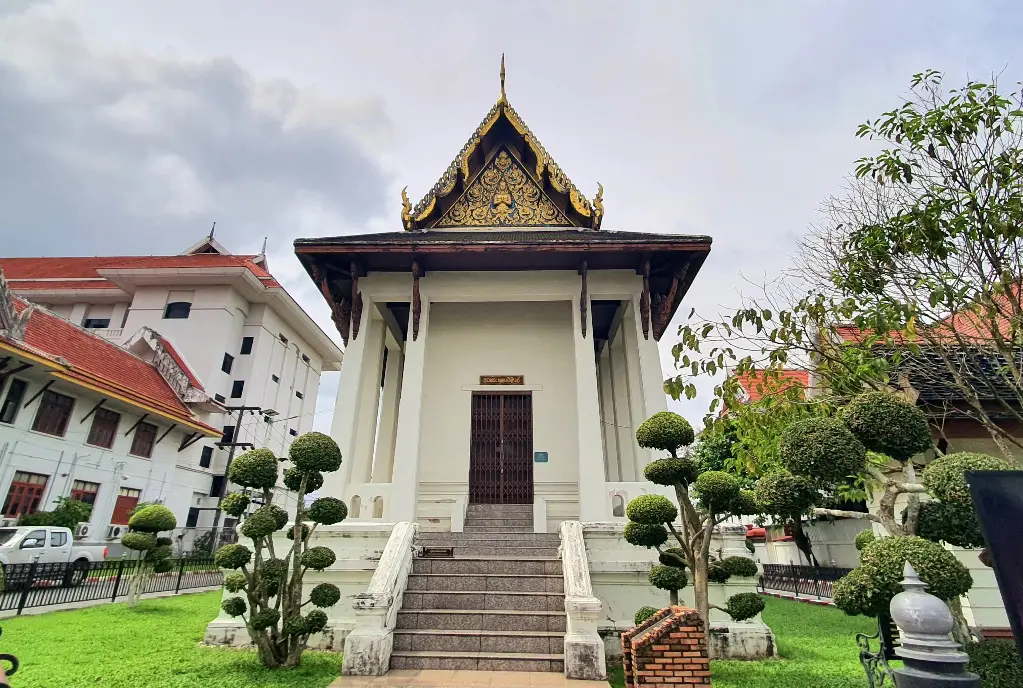
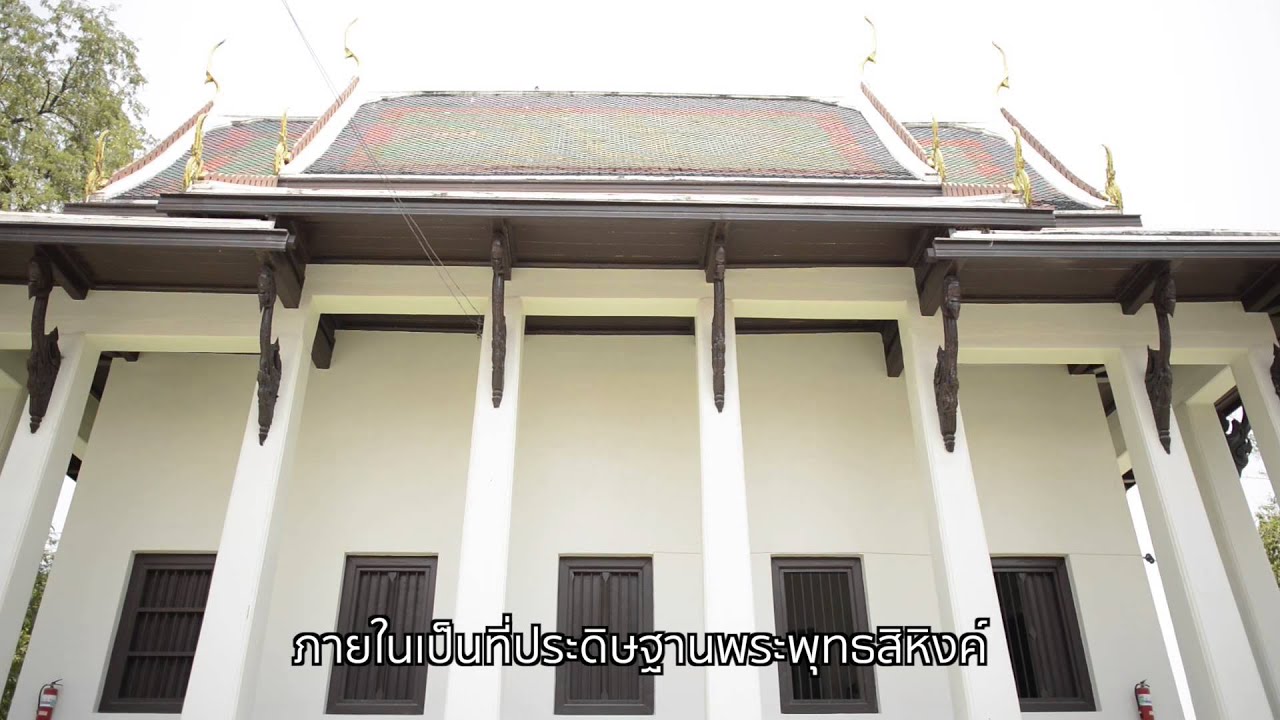
Phra Buddha Sihing of Nakhon Si Thammarat is enshrined inside Ho Phra Buddha Sihing, located between Nakhon Si Thammarat Provincial Hall and the Provincial Court. It is one of the most important sacred sites in the city and is deeply respected as a guardian Buddha image of Nakhon Si Thammarat. Although the shrine is modest in size, its historical and spiritual importance is substantial because it connects Buddhist devotion, the former ruling house of Nakhon Si Thammarat, local identity, and the annual Songkran tradition.
The Buddha image is in the attitude of subduing Mara, seated in a diamond posture. Locally, its compact and rounded form is often described as the “khanom tom” style. The image has a round face, a gentle smile, and a full chest. It is cast in bronze, gilded, and measures about 14 inches across the lap and about 16.8 inches in height. Despite its small scale, the image holds a major place in the spiritual life of Nakhon Si Thammarat because it has long been revered as one of the city’s most sacred Buddha images.
Ho Phra Buddha Sihing was originally the palace shrine of Chao Phraya Nakhon (Noi), one of the important former rulers of Nakhon Si Thammarat. Its location near the provincial administrative and judicial center gives the site a strong symbolic meaning. It is not simply a devotional space, but also a reminder of how Buddhism, local governance, and city identity were historically connected in Nakhon Si Thammarat.
The interior of the shrine is divided into two main sections. The front section enshrines Phra Buddha Sihing together with Phra Lak Ngoen and Phra Lak Thong, two other important Buddha images connected with local devotion. The rear section contains the ashes of the Na Nakhon family, the lineage associated with the former ruling house of Nakhon Si Thammarat. This arrangement makes the shrine a place where sacred objects, family memory, and the political history of the city meet in one compact space.
Phra Buddha Sihing is an important name in Thai Buddhist art and religious history. In Thailand, three principal Phra Buddha Sihing images are widely recognized in cultural tradition: one at the Phutthaisawan Throne Hall in the National Museum Bangkok, one at Wat Phra Singh in Chiang Mai, and one at Ho Phra Buddha Sihing in Nakhon Si Thammarat. This belief places the Nakhon Si Thammarat image within a national frame of Buddhist devotion, not only a provincial context.
The artistic character of the Nakhon Si Thammarat Phra Buddha Sihing is especially notable. The image is serene, compact, and dignified. Its rounded face and soft smile create a calm expression, while the diamond posture and subduing-Mara gesture emphasize spiritual victory and inner firmness. The local description of the image as “khanom tom” style gives it a distinctive identity that combines formal Buddhist art with the language of local people.
The image plays an important role during Songkran. Every year, Phra Buddha Sihing is ceremonially brought out for public worship and ritual bathing. This allows residents and visitors to pay respect, pour water over the image, and receive blessings for the Thai New Year. The ceremony is one of the clearest expressions of the relationship between the city’s guardian Buddha image and the people of Nakhon Si Thammarat.
The Songkran bathing ceremony is not only a religious ritual. It is also a cultural moment that renews the bond between the people and the city. Through the act of bathing Phra Buddha Sihing, devotees express reverence, gratitude, and hope for peace and auspiciousness in the new year. For cultural travelers, this tradition shows how a sacred image can continue to function as a living center of community identity.
For visitors interested in the history of Nakhon Si Thammarat, Ho Phra Buddha Sihing should be included in the same route as the Provincial Hall area, the City Pillar Shrine, the Old City Wall, Wat Phra Mahathat Woramahawihan, and Nakhon Si Thammarat National Museum. These sites together explain the city through religion, administration, urban history, sacred art, and local identity. Ho Phra Buddha Sihing is small but historically dense, connecting the former palace shrine with a Buddha image still revered today.
Visitors should observe the atmosphere of the shrine carefully. Because it is located within an official area near the provincial court and provincial hall, the site feels more formal than many tourist attractions. Modest dress and quiet behavior are recommended. The visit should focus on paying respect, observing the shrine’s historical setting, and understanding its connection with Nakhon Si Thammarat’s civic and religious history.
Phra Lak Ngoen and Phra Lak Thong are also important features of the shrine. Although many people come primarily to pay respect to Phra Buddha Sihing, these two images show that the shrine is a broader sacred space containing several important objects of local devotion. They help visitors understand that Ho Phra Buddha Sihing preserves more than one layer of religious meaning.
The rear section containing the ashes of the Na Nakhon family gives the shrine another historical dimension. The Na Nakhon lineage is associated with former rulers and political leadership in Nakhon Si Thammarat. The presence of the family ashes within the same shrine creates a strong link between Buddhist sacred space, local aristocratic memory, and the historical administration of the city.
As a travel destination, Ho Phra Buddha Sihing is suitable for visitors who want a meaningful stop in central Nakhon Si Thammarat. A visit may take around 30 minutes, making it easy to combine with other nearby landmarks. Because the shrine is centrally located, it is accessible by private car, local transport, or a local songthaew route.
Getting There is convenient by local songthaew on the Hua Thanon–Stadium route or by private car to the Provincial Hall area. The shrine is located between Nakhon Si Thammarat Provincial Hall and the Provincial Court. Visitors traveling through the city can use Ratchadamnoen Road as the main approach and search for “Ho Phra Buddha Sihing Nakhon Si Thammarat” on a map application.
Since Ho Phra Buddha Sihing is open Monday to Friday from 08.30 to 16.30, visitors should plan their trip during official opening days. During Songkran, the city may organize special ceremonies for the public worship and bathing of Phra Buddha Sihing, and the surrounding area may be busier than usual. Visitors planning to attend during this period should allow extra time.
Proper etiquette is important. Visitors should dress modestly, speak quietly, avoid touching the Buddha images or sacred objects without permission, and follow any instructions from staff or caretakers. Photography should be done respectfully, especially inside the shrine.
A good cultural route can begin at Ho Phra Buddha Sihing, continue to the City Pillar Shrine and the Old City Wall, then proceed to Wat Phra Mahathat Woramahawihan, Nakhon Si Thammarat National Museum, or Suchart Subsin Shadow Puppet Museum. This route helps visitors understand Nakhon Si Thammarat through Buddhism, city history, sacred art, and southern Thai folk culture.
Ho Phra Buddha Sihing is therefore a highly meaningful stop in Nakhon Si Thammarat. Its value lies not in grand scale, but in the density of its history: a guardian Buddha image, a former palace shrine, Phra Lak Ngoen, Phra Lak Thong, the Na Nakhon family ashes, and the annual Songkran bathing tradition. For anyone interested in the cultural heart of Nakhon Si Thammarat, this shrine deserves careful attention.
| Name | Ho Phra Buddha Sihing, Nakhon Si Thammarat |
| Location | Between Nakhon Si Thammarat Provincial Hall and Nakhon Si Thammarat Provincial Court, Mueang Nakhon Si Thammarat District, Nakhon Si Thammarat Province |
| Highlights | Phra Buddha Sihing, guardian Buddha image of Nakhon Si Thammarat; former palace shrine of Chao Phraya Nakhon; Phra Lak Ngoen; Phra Lak Thong; and ashes of the Na Nakhon family |
| History | Originally the palace shrine of Chao Phraya Nakhon (Noi), later becoming an important shrine associated with the city’s guardian Buddha image and local historical memory |
| Important Buddha Image | Phra Buddha Sihing in the subduing-Mara attitude, seated in diamond posture, locally described as khanom tom style, cast in bronze and gilded, about 14 inches across the lap and about 16.8 inches high |
| Sacred Objects | Phra Buddha Sihing, Phra Lak Ngoen, Phra Lak Thong, and sacred objects connected with the devotional life of Nakhon Si Thammarat |
| Main Areas / Zones | Front section enshrining Phra Buddha Sihing, Phra Lak Ngoen, and Phra Lak Thong; rear section containing the ashes of the Na Nakhon family |
| Important Tradition | Annual Songkran ceremony in which Phra Buddha Sihing is brought out for public worship and ritual bathing |
| Travel Information | Accessible by the Hua Thanon–Stadium songthaew route or by private car to the Provincial Hall area. The shrine is located between the Provincial Hall and the Provincial Court. |
| Current Status | Open for worship and visitation during official opening days and hours |
| Open Days | Monday – Friday |
| Opening Hours | 08.30 – 16.30 |
| Facilities | Worship area inside the shrine, walkway around the official compound, and parking areas around the government complex where permitted |
| Nearby Tourist Attractions | 1. Nakhon Si Thammarat City Pillar Shrine, about 1 km 2. Old City Wall of Nakhon Si Thammarat, about 1 km 3. Wat Phra Mahathat Woramahawihan, about 2 km 4. Nakhon Si Thammarat National Museum, about 3 km 5. Suchart Subsin Shadow Puppet Museum, about 4 km 6. Somdet Phra Srinagarindra 84 Park, about 5 km |
| Nearby Restaurants | 1. Kopi Nakhon Si Thammarat, about 1 km 2. Roti Pa Nom, about 1 km 3. Khanom Chin Mueang Khon, about 2 km 4. Chao Ruea Restaurant, about 3 km 5. Nam Cha Bang Bao, about 3 km 6. Ko Bua Restaurant, about 5 km |
| Nearby Accommodations | 1. B2 Nakhon Si Thammarat Premier Hotel, about 2 km, Tel. 075-804-288 2. Navakitel Design Hotel, about 2 km, Tel. 080-393-9339 3. Bunprasop Garden Hotel, about 3 km, Tel. 075-805-252 4. Grand Fortune Hotel Nakhon Si Thammarat, about 3 km, Tel. 075-841-888 5. The Twin Lotus Hotel Nakhon Si Thammarat, about 4 km, Tel. 075-323-777 6. HOP INN Nakhon Si Thammarat, about 4 km, Tel. 075-314-888 |
Frequently Asked Questions (FAQ)
Q: Where is Phra Buddha Sihing of Nakhon Si Thammarat enshrined?
A: It is enshrined inside Ho Phra Buddha Sihing, located between Nakhon Si Thammarat Provincial Hall and the Provincial Court.
Q: What are the opening days and hours of Ho Phra Buddha Sihing?
A: The shrine is open Monday to Friday from 08.30 to 16.30.
Q: What does Phra Buddha Sihing of Nakhon Si Thammarat look like?
A: It is a gilded bronze Buddha image in the subduing-Mara attitude, seated in diamond posture, with a round face, gentle smile, and compact form locally described as khanom tom style.
Q: What is inside Ho Phra Buddha Sihing?
A: The front section enshrines Phra Buddha Sihing, Phra Lak Ngoen, and Phra Lak Thong, while the rear section contains the ashes of the Na Nakhon family.
Q: How is Phra Buddha Sihing connected with Songkran?
A: Every Songkran, the image is ceremonially brought out for public worship and ritual bathing for auspiciousness.
Q: How can travelers get to Ho Phra Buddha Sihing?
A: Travelers can take the Hua Thanon–Stadium songthaew route or drive to the Provincial Hall area. The shrine is located between the Provincial Hall and the Provincial Court.
Q: What type of visit is Ho Phra Buddha Sihing suitable for?
A: It is suitable for Buddhist worship, cultural learning, city-history exploration, and a short heritage stop in central Nakhon Si Thammarat.
Q: What nearby places can be visited with Ho Phra Buddha Sihing?
A: Nearby places include Nakhon Si Thammarat City Pillar Shrine, the Old City Wall, Wat Phra Mahathat Woramahawihan, Nakhon Si Thammarat National Museum, and Suchart Subsin Shadow Puppet Museum.
 Category: ●Places of Worship
 Group: ●Other Sacred Sites
Last Update : 2 MonthAgo
 Last Update : 2 MonthAgo
 Click to Access the Navigation Map GPS
Phra Buddha Sihing Map
Recommend

 Art, Culture and Heritage
 Historical Sites and Monuments(9)
 Landmarks and Memorials(9)
 Royal Palace(1)
 Art, Craft Centres, Tradition(12)
 Museums(5)
 Educational Places
 Educational Gardens, Farm(2)
 Temple(44)
 Mosque(2)
Other Sacred Sites(17)
 Research and Development
 Royal Project(2)
 Suburban Living
 Village, Community(8)
 Local Market(1)
 Floating Market(1)
 Nature and Wildlife
 National Parks and Marine Reserves(6)
 Mountain (Doi)(11)
 Dam, Reservoir, Lake(10)
 Waterfalls(43)
 Hot Springs(1)
 Caves(13)
 River, Canal(3)
 Bays and Beaches(29)
 Islands(2)
 Other natural attractions(3)
 Entertainment and Agricultural
 Farms, Parks and Ecotourism(3)
 Outdoor and Adventure Activities(4)
 Travel Articles, Recipes
 Travel Review, Food Review(5)
 Southern Food Menu, Southern Food Recipes(18)


