
lovethailand home >South Travel Attractions >Nakhon Si Thammarat Travel Attractions >Pak Phanang >Pak Phanang Fang Tawan Tok > Ban Rang Nok
TL;DR: Ban Rang Nok is located at Pak Phanang Town Area, Pak Phanang District, Nakhon Si Thammarat Province, open The Pak Phanang town area is publicly accessible daily. Bird nest houses are, hours Daytime and late-afternoon exterior viewing is recommended.

Ban Rang Nok
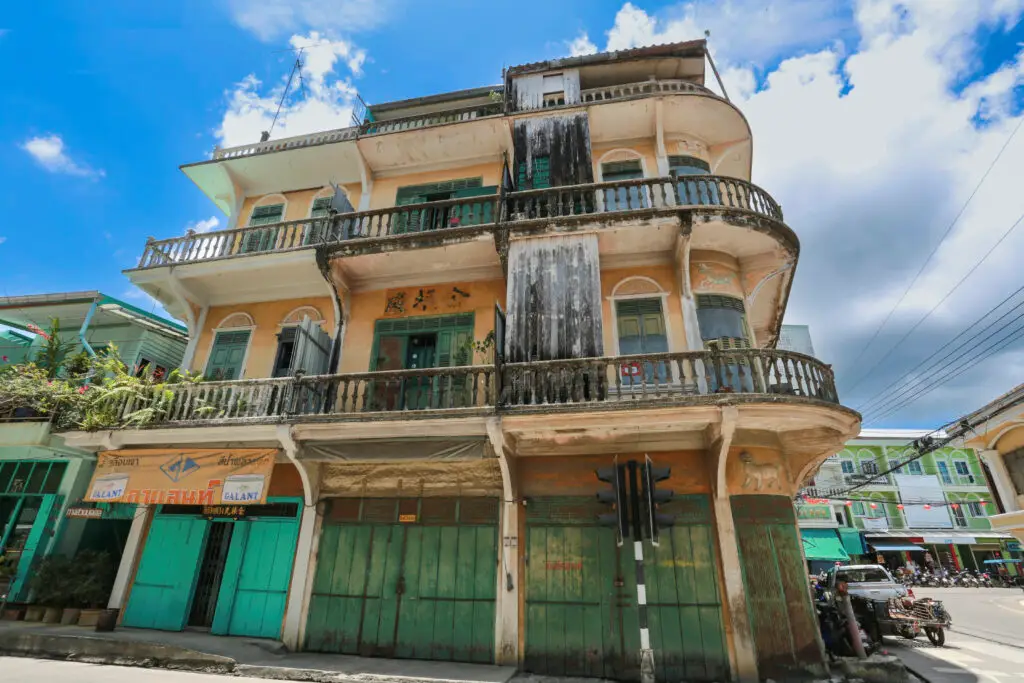
Open Days: The Pak Phanang town area is publicly accessible daily. Bird nest houses are private properties and are generally not open for interior visits.
Opening Hours: Daytime and late-afternoon exterior viewing is recommended.
Ban Rang Nok, or the bird nest houses of Pak Phanang in Nakhon Si Thammarat, refers to an urban phenomenon in which edible-nest swiftlets live and build nests inside houses, shophouses, and purpose-built buildings throughout Pak Phanang town. The first known building associated with swiftlet settlement in the town dates back to 1937 at the three-storey Sino-Portuguese “Uen Chin Kuang” building on Chai Nam Road near Bang Wa intersection. Today, Pak Phanang’s bird nest houses are best understood as an exterior-viewing urban heritage route linking swiftlet ecology, old-town architecture, the Pak Phanang Basin, and the local bird’s nest economy.
Ban Rang Nok in Nakhon Si Thammarat is one of the most distinctive urban features of Pak Phanang District. It is not a conventional tourist attraction with a ticket counter, exhibition hall, or public interior route. Instead, it is a living urban phenomenon where edible-nest swiftlets occupy houses, shophouses, and multi-storey buildings in the town. Many buildings have been adapted into bird nest houses, with small entrance holes for birds, dark interiors, and environmental conditions adjusted for nesting. This makes Pak Phanang a rare place where wildlife behavior, town architecture, local economy, and community life intersect visibly in the urban landscape.
Pak Phanang is a coastal town on the Gulf of Thailand side of Nakhon Si Thammarat. Its lowland geography, mangrove areas, river system, and fertile basin create abundant insect food sources for swiftlets. These conditions make the area attractive for edible-nest swiftlets. As some birds shifted from natural cave habitats into urban buildings, the town gradually developed a distinctive bird nest house landscape. The phenomenon shows how a coastal river town can be reshaped by both nature and economic adaptation.
The most important historical starting point is the three-storey building known as “Uen Chin Kuang,” located at 543/1 Chai Nam Road near Bang Wa intersection. This Sino-Portuguese building is widely described as the first building in Pak Phanang where edible-nest swiftlets settled, beginning in 1937. Initially, birds occupied the upper floors while the owner still used parts of the building for living and trade. As the number of birds increased, the building’s role gradually changed, and it became an important reference point in the history of Pak Phanang’s bird nest houses.
Bird nest houses in Pak Phanang look different from ordinary residential buildings. Many are enclosed, with few windows or no typical residential openings. Instead, small holes are created for birds to fly in and out. Inside, wood panels or structures are installed for nesting. The interior environment is designed to resemble cave-like conditions, with controlled light, temperature, humidity, and sound. These buildings are therefore practical urban structures shaped by the behavior of swiftlets.
The value of Ban Rang Nok lies in its connection to the wider history of Pak Phanang town. Pak Phanang has long been a riverine and coastal trading community with old markets, shophouses, Chinese-Thai heritage, Muslim communities, Buddhist communities, fishing livelihoods, and riverside commerce. As the bird nest economy expanded, some old buildings were converted into bird houses, while new purpose-built structures appeared. This created a unique streetscape where old shophouses, timber houses, riverside markets, Sino-Portuguese architecture, and multi-storey bird nest buildings coexist.
Visitors should understand that most bird nest houses are private properties. They are not normally open for interior visits. The proper way to experience Ban Rang Nok is to walk through public areas, observe buildings from outside, look for the small bird entrances on building walls, and understand the story of how swiftlets became part of the urban identity of Pak Phanang. Visitors should not enter private buildings, photograph restricted interiors, fly drones close to buildings, or disturb the birds.
Late afternoon is a good time to observe the phenomenon because many swiftlets return to their buildings after feeding during the day. The sight of birds circling above old town buildings, flying through small entrance holes, and calling from within enclosed structures gives visitors a clear sense of how deeply the birds are integrated into the townscape. Daytime, however, is better for walking through the market area, seeing old buildings, and combining the visit with nearby sites.
The bird nest economy is a major reason the phenomenon grew. Edible swiftlet nests are highly valued, and Pak Phanang’s bird nest houses have long been associated with the phrase “white gold.” Some buildings involve significant investment in structure, moisture control, temperature, sound systems, and nesting conditions. At the same time, bird nest houses exist within a real town where people live and work, so the topic should be understood through multiple dimensions: income, architecture, environment, hygiene, urban heritage, and coexistence between people and wildlife.
Edible-nest swiftlets build their nests from saliva, unlike many birds that build nests from twigs, grass, or mud. This makes the nests commercially valuable for food and related products. In Pak Phanang, the shift from cave-based nesting to urban building-based nesting created the concept of “bird condominiums” or “bird nest houses.” The result is an unusual example of urban adaptation, where buildings are designed not for human residence but for birds.
A visit to Ban Rang Nok should be combined with other places in Pak Phanang to understand the town more fully. Nearby stops include the 100-Year Pak Phanang Market, Pak Phanang Market, Nang Tharam Temple, Pak Phanang River Bridge, the Royal Development Project Museum of the Pak Phanang Basin, the royal residence site, the Pak Phanang wind farm, and Laem Talumphuk. Together, these places show Pak Phanang as a river town, fishing town, old trading town, royal development area, and bird nest house town.
Getting There from Nakhon Si Thammarat city is straightforward by road. Travel to Pak Phanang District, about 35–40 kilometers by practical road distance. Once in town, head toward Pak Phanang Market, Chai Nam Road, Pak Phanang West Bank, or the area near Pak Phanang River Bridge. These areas provide the best context for seeing bird nest houses, old shophouses, riverside activity, and the town’s wider cultural landscape.
Photography should be done respectfully. Wide urban views, exterior building shots, bird entrance holes, riverside streets, the bridge, and the market atmosphere are appropriate subjects. Visitors should avoid pointing cameras into private interiors, standing too close to doors or operational areas, or disturbing building owners. Ban Rang Nok is a real working urban environment, not a staged tourist display.
Before visiting, it is useful to remember that Ban Rang Nok is not a single building with a fixed entrance. It is a townscape experience. There is no admission counter, no formal exhibition route inside the houses, and no general public access to private bird nest buildings. Its value lies in observing the relationship between birds, buildings, river ecology, market history, and local economy.
Ban Rang Nok of Pak Phanang is therefore a meaningful topic for travelers interested in old towns, local economies, wildlife in urban spaces, adaptive architecture, and the Pak Phanang Basin. It reveals how a town can change when edible-nest swiftlets choose human buildings as their habitat. For visitors who want to understand Pak Phanang beyond food and markets, the bird nest houses offer one of the most distinctive stories in Nakhon Si Thammarat.
| Name | Ban Rang Nok / Bird Nest Houses / Pak Phanang Swiftlet Buildings |
| Location | Pak Phanang Town Area, Pak Phanang District, Nakhon Si Thammarat Province |
| Address / Main Viewing Area | Pak Phanang Market Area, Chai Nam Road, Pak Phanang West Bank, And The Area Near Pak Phanang River Bridge, Pak Phanang District, Nakhon Si Thammarat 80140, Thailand |
| Reference Coordinates For Pak Phanang Market Area | 8.3492376463, 100.200121261 |
| Important Historic Building | The “Uen Chin Kuang” Building At 543/1 Chai Nam Road Near Bang Wa Intersection, A Three-Storey Building Associated With Swiftlet Settlement Since 1937 |
| Local Contact | Pak Phanang Town Municipality, Tel. 075-517-266, 075-517-630 |
| Highlights | Urban Bird Nest Buildings, Small Swiftlet Entrance Holes, Old-Town Shophouse Landscape, And The Coexistence Of Edible-Nest Swiftlets With Pak Phanang Community Life |
| Significance | A Distinctive Feature Of Pak Phanang Linking Mangrove Ecology, The Pak Phanang Basin, Edible-Nest Swiftlets, Old-Town Buildings, And The Bird’s Nest Economy |
| Building Characteristics | Enclosed Buildings With Limited Light, Small Bird Entrance Holes, Cave-Like Interiors, And Controlled Temperature, Humidity, Light, And Sound For Swiftlet Nesting |
| Visiting Style | Exterior Viewing From Public Areas. Most Bird Nest Buildings Are Private Properties And Are Not Open For General Interior Visits. |
| Best Time To Visit | Late Afternoon Is Good For Observing Swiftlets Returning To Buildings. Daytime Is Suitable For Walking Around The Old Market And Riverside Areas. |
| Travel Information | From Nakhon Si Thammarat City, Travel To Pak Phanang District, About 35–40 km By Road. In Town, Head To Pak Phanang Market, Chai Nam Road, Pak Phanang West Bank, Or The Area Near Pak Phanang River Bridge. |
| Current Status | An Active Urban Area With Many Bird Nest Houses, Suitable For Exterior Viewing And Learning About Pak Phanang’s Townscape |
| Open Days | The Pak Phanang town area is publicly accessible daily. Bird nest houses are private properties and are generally not open for interior visits. |
| Opening Hours | Daytime and late-afternoon exterior viewing is recommended. |
| Admission Fee | Free For Exterior Viewing From Public Areas |
| Safety And Etiquette | Do Not Enter Private Buildings, Disturb Birds, Fly Drones Close To Buildings, Photograph Private Interiors, Or Make Loud Noise Near Bird Nest Houses. |
| Nearby Tourist Attractions | 1. 100-Year Pak Phanang Market, About 0.6 km 2. Wat Nantharam, About 1 km 3. Pak Phanang River Bridge, About 1 km 4. Royal Development Project Museum Of The Pak Phanang Basin, About 3 km 5. Royal Residence Site, About 3 km 6. Pak Phanang Wind Farm, About 5 km 7. Laem Talumphuk, About 25 km |
| Nearby Restaurants | 1. Khrua O Ong Pak Phanang, About 2 km, Tel. 094-536-9626 2. Kai Yang Lung Wai Pak Phanang West Bank, About 2 km, Tel. 098-014-8327 3. Som Tam Pa Tham Pak Phanang, About 2 km, Tel. 089-875-8604 4. Khrua Mueang Nang Seafood, About 1 km 5. Food Stalls Around 100-Year Pak Phanang Market, About 0.6 km 6. Riverside Restaurants Around Pak Phanang Old Market, About 1 km |
| Nearby Accommodations | 1. Ban Ton Mak Na Pak Phanang Resort, About 1.6 km, Tel. 081-482-6622 2. Ban Wong Bia Sat, About 1.7 km 3. Chai Thung Resort And Homestay, About 1.8 km 4. ChaoLay Homestay @ Pak Phanang, About 2 km, Tel. 075-518-789 5. Pakphanang Village, About 2–3 km 6. Chai Thale Resort Pak Phanang, About 10–15 km |
Frequently Asked Questions (FAQ)
Q: Where are the bird nest houses of Pak Phanang located?
A: They are found throughout Pak Phanang town, especially around Pak Phanang Market, Chai Nam Road, Pak Phanang West Bank, and the area near Pak Phanang River Bridge.
Q: Can visitors enter the bird nest houses?
A: Most bird nest houses are private properties and are not open for general interior visits. Visitors should observe them from public areas outside the buildings.
Q: What makes Ban Rang Nok in Pak Phanang special?
A: It is special because many urban buildings have been adapted as nesting spaces for edible-nest swiftlets, creating a unique connection between birds, old-town architecture, river ecology, and local economy.
Q: What is the first known bird nest building in Pak Phanang?
A: The “Uen Chin Kuang” building at 543/1 Chai Nam Road near Bang Wa intersection is widely described as the first known building associated with swiftlet settlement in Pak Phanang, dating back to 1937.
Q: When is the best time to observe swiftlets?
A: Late afternoon is a good time to observe swiftlets returning to the buildings. Daytime is better for walking around the old market and riverside areas.
Q: Is there an admission fee?
A: There is no admission fee for exterior viewing from public areas, but private bird nest buildings should not be entered without permission.
Q: How can visitors get there from Nakhon Si Thammarat city?
A: Travel by road to Pak Phanang District, about 35–40 km from Nakhon Si Thammarat city, then head to Pak Phanang Market, Chai Nam Road, or Pak Phanang West Bank.
Q: What nearby places can be visited together with Ban Rang Nok?
A: Nearby places include the 100-Year Pak Phanang Market, Wat Nantharam, Pak Phanang River Bridge, the Royal Development Project Museum of the Pak Phanang Basin, the royal residence site, Pak Phanang Wind Farm, and Laem Talumphuk.
 Category: ●Suburban Living
 Group: ●Village, Community
Last Update : 2 MonthAgo
 Last Update : 2 MonthAgo
 Click to Access the Navigation Map GPS
Ban Rang Nok Map
Recommend

 Art, Culture and Heritage
 Historical Sites and Monuments(9)
 Landmarks and Memorials(9)
 Royal Palace(1)
 Art, Craft Centres, Tradition(12)
 Museums(5)
 Educational Places
 Educational Gardens, Farm(2)
 Places of Worship
 Temple(44)
 Mosque(2)
 Other Sacred Sites(17)
 Research and Development
 Royal Project(2)
Village, Community(8)
 Local Market(1)
 Floating Market(1)
 Nature and Wildlife
 National Parks and Marine Reserves(6)
 Mountain (Doi)(11)
 Dam, Reservoir, Lake(10)
 Waterfalls(43)
 Hot Springs(1)
 Caves(13)
 River, Canal(3)
 Bays and Beaches(29)
 Islands(2)
 Other natural attractions(3)
 Entertainment and Agricultural
 Farms, Parks and Ecotourism(3)
 Outdoor and Adventure Activities(4)
 Travel Articles, Recipes
 Travel Review, Food Review(5)
 Southern Food Menu, Southern Food Recipes(18)


