
lovethailand home >South Travel Attractions >Krabi Travel Attractions >Muang >Sai Thai > Susan Hoi (Fossils Shell Beach)
TL;DR: Susan Hoi (Fossils Shell Beach), Krabi attractions : Nature and Wildlife, Other natural attractions.

Susan Hoi (Fossils Shell Beach)
Open Days: Daily, According To Hat Noppharat Thara-Mu Ko Phi Phi National Park Announcements And Services
Opening Hours: 08.00 – 16.30
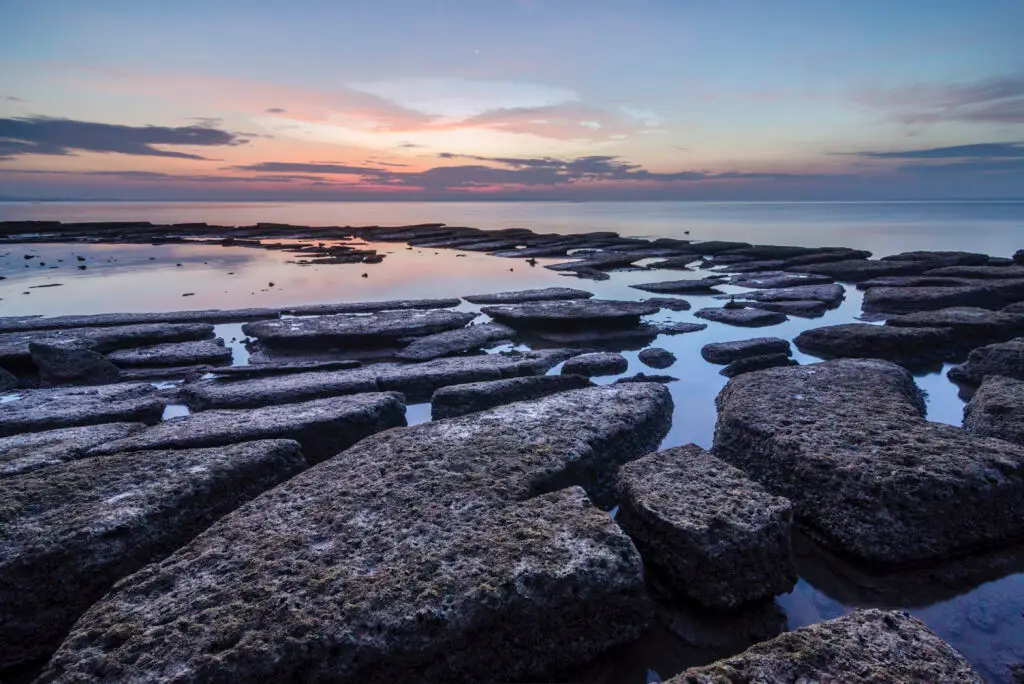
Susan Hoi, Krabi, also known as the 75-Million-Year Shell Cemetery or Laem Pho Shell Cemetery, is one of Krabi’s most important geological attractions. It is located along the coast of Ban Laem Pho in Sai Thai Subdistrict, Mueang Krabi District, within Hat Noppharat Thara-Mu Ko Phi Phi National Park. The site is famous for large fossilized shell-limestone platforms along the sea, formed from countless freshwater snail shells that accumulated, hardened, and later became exposed as broad stone slabs on the shoreline.
The name “75-Million-Year Shell Cemetery” remains the well-known local and tourism name, but current geological information places the age of the fossil shell beds at around 40 to 20 million years. The old name remains important for recognition, while the updated scientific age gives a more accurate explanation of the site. Understanding both helps visitors appreciate why the attraction is still commonly called “75 million years old” even though modern geological study gives a different time range.
The area was once a large freshwater swamp filled with freshwater snails, especially small species similar to modern river snails, about 2 centimeters long. Over time, large numbers of shells accumulated in thick layers. Later, seawater entered the area, and calcium-rich water cemented the shells together into solid limestone. Geological uplift and coastal change then exposed the fossil beds as the broad rock platform seen today.
The key feature of Susan Hoi is the shell limestone layer, where millions of shells were cemented together by natural calcium solution. This fossil layer is about 40 centimeters thick and is associated with shale and lignite layers. Unlike many fossil sites where fossils are scattered in soil or sandstone, Susan Hoi preserves shells as a continuous platform, making it visually unusual and scientifically valuable.
Most of the fossils are freshwater gastropods, especially river-snail-type shells. This is important because the fossil site is now on the coast, yet the fossils themselves show that the area was once a freshwater environment. The presence of freshwater shell fossils beside the sea is therefore not a contradiction. It is evidence of major environmental change in the Krabi Basin over tens of millions of years.
Susan Hoi is widely presented as one of only three important shell fossil platform sites of this type in the world, along with examples in the United States and Japan. The Thai site is especially distinctive because it lies directly on the coast, allowing visitors to see the fossil slabs meeting the sea. This gives the place both scientific importance and scenic coastal character.
The main viewing areas are commonly identified as Laem Pho 1, Laem Pho 2, and Laem Pho 3. Laem Pho 1 lies west of the visitor service area. Laem Pho 2 is in front of the visitor center and is the clearest area for viewing fossil accumulation. Laem Pho 3 lies about 1 kilometer east of the visitor center. These zones show that the shell cemetery is not just a single rock platform but a coastal fossil area with several viewing points.
Some parts of the fossil platform have been worn smooth by waves and seawater, making shell details harder to see. Other areas closer to the shore may show shell traces more clearly. Visitors should therefore observe several points instead of judging the site from one section only. The most visible fossils are often found where erosion has been less severe.
The best time to view the fossil platform is during low tide, when more of the rock surface is exposed. Visitors should wear shoes with good grip because parts of the rock can be slippery from seawater, algae, or wet sand. Walking should be limited to safe and permitted areas. Fossils, rock fragments, and shells must not be removed from the site.
Susan Hoi is an outdoor classroom for geology and natural history. Visitors can learn about fossil formation, sediment accumulation, calcium cementation, lignite layers, shale layers, geological uplift, and coastal erosion in one real location. It is suitable for families, students, teachers, and travelers who want to understand Krabi beyond beaches and islands.
The site has a visitor service area with geological information, fossil examples, interpretive signs, a viewpoint pavilion, souvenir shops, restrooms, and parking. The upper area is suitable for resting and viewing the sea before walking down to the fossil platform. Families with children and elderly visitors should plan enough time because walking on the coastal rock requires care.
Travel from Krabi Town is straightforward. The site is about 15 to 17 kilometers from the city center. The route follows the direction toward Hat Noppharat Thara, then turns through the Sai Thai and Ban Laem Pho area using Route 4204, with signs leading to the shell cemetery. It can be visited together with Ao Nam Mao, Ao Nang, Noppharat Thara Beach, Railay, or other coastal attractions in Mueang Krabi District.
Getting There from Krabi Town involves traveling toward Sai Thai and Ban Laem Pho, then following signs to Susan Hoi. From Ao Nang or Noppharat Thara, visitors can drive back through the Ao Nam Mao and Laem Pho area. A private car, rental car, taxi, or local transfer is the most convenient option. Travelers staying around Ao Nam Mao or Ao Nang can easily combine the visit with a half-day coastal route.
A good visit usually takes at least 1 to 2 hours. This allows time for the visitor center, interpretive signs, fossil platform, viewpoint, and souvenir area. Visitors who enjoy photography or geological detail should allow more time, especially at low tide when the fossil platform is more widely exposed.
The site is protected as an important fossil locality. Visitors must not break fossils, take rock fragments, scratch the stone surface, climb risky edges, or leave waste along the coast. Each fossil shell is part of a natural record that took millions of years to form. Even small damage can permanently reduce the value of the site.
Susan Hoi is easy to combine with Ao Nam Mao because the two areas are close. Visitors can view the fossil site in the morning, continue to Ao Nam Mao for a quiet coastal stop, and then travel onward to Ao Nang, Noppharat Thara, or Railay. This gives a balanced route covering geology, coastline, and Krabi’s better-known beach areas.
For geology-minded travelers, Susan Hoi reveals a deeper side of Krabi. The province is not only about limestone islands, beaches, and clear water. It also contains the Krabi Basin, Tertiary rock layers, lignite deposits, and fossil evidence of ancient life. Seeing small shells embedded in solid rock helps visitors understand how long-term environmental change shaped the landscape.
The site is also suitable for children because the evidence is visible and easy to understand. A small shell can become part of a large rock platform after long-term accumulation and mineral cementation. Parents should explain that fossils must be observed in place and not collected. Children should stay within safe walking areas at all times.
The coastal scenery at Ban Laem Pho adds to the experience. Visitors can look out over the sea from the pavilion, walk near the fossil slabs, rest in the upper visitor area, and continue to nearby attractions. This combination of learning and leisure makes Susan Hoi different from an ordinary beach stop.
For the clearest viewing, choose a dry day, check the tide, and visit when the rock platform is exposed. Close-up photography can show shell textures, while wide-angle shots can capture the fossil slabs extending toward the sea. Visitors should not move into unsafe positions for photos because some rock sections are cracked or slippery.
In summary, Susan Hoi, Krabi is a rare and valuable geological attraction. Its tourism name remains the 75-Million-Year Shell Cemetery, while current geological data places the fossil beds at around 40 to 20 million years old. The site’s greatest feature is the shell-limestone platform formed from dense accumulations of freshwater shells, now exposed along the coast of Ban Laem Pho. It is a place where visitors can see natural history, geology, coastal scenery, and conservation value in one compact and accessible location.
| Name | Susan Hoi, Krabi / Laem Pho Shell Cemetery |
| Alternative Names | 75-Million-Year Shell Cemetery, Fossil Shell Beach, Laem Pho Fossil Shell Site |
| Location | Ban Laem Pho, Sai Thai Subdistrict, Mueang Krabi District, Krabi 81000, within Hat Noppharat Thara-Mu Ko Phi Phi National Park |
| Coordinates | 8.02149, 98.88283 |
| Geological Age | Around 40 – 20 Million Years Old According To Current Geological Information, Although The Well-Known Tourism Name Still Uses “75 Million Years” |
| Distinctive Features | A coastal fossil shell limestone platform formed from dense accumulations of freshwater shells cemented into solid rock |
| Key Fossils | Freshwater gastropod shells, mainly river-snail-type shells around 2 centimeters long, packed densely in the limestone layer |
| Key Rock Layers | Shell limestone layer about 40 centimeters thick, associated with shale and lignite layers |
| Main Areas / Zones | Laem Pho 1, West Of The Visitor Service Area Laem Pho 2, In Front Of The Visitor Center Laem Pho 3, About 1 Kilometer East Of The Visitor Center Visitor Center And Interpretation Area Sea View Pavilion And Souvenir Area |
| Main Activities | Viewing Fossil Shell Platforms, Learning Geology, Coastal Photography, Sea View Resting, Souvenir Shopping, And Combining The Trip With Ao Nam Mao, Ao Nang, And Noppharat Thara Beach |
| Open Days | Daily, According To Hat Noppharat Thara-Mu Ko Phi Phi National Park Announcements And Services |
| Opening Hours | 08.00 – 16.30 |
| Entrance Fees | Hat Noppharat Thara-Mu Ko Phi Phi National Park Group Rate: Thai Children 20 Baht, Thai Adults 40 Baht / Foreign Children 100 Baht, Foreign Adults 200 Baht |
| Facilities | Visitor Center, Interpretation Signs, Viewpoint Pavilion, Souvenir Shops, Restrooms, And Parking Area |
| Caretaker | Hat Noppharat Thara-Mu Ko Phi Phi National Park, Department Of National Parks, Wildlife And Plant Conservation |
| Latest Park Chief Found In 2026 News | Mr. Saengsuree Songthong |
| Main Contact Numbers | Hat Noppharat Thara-Mu Ko Phi Phi National Park Tel. 075-656-150, 075-637-200, 075-661-145 |
| Travel Information | From Krabi Town, travel toward Sai Thai and Ban Laem Pho, about 15 – 17 kilometers away. Follow the route toward Hat Noppharat Thara, then use Route 4204 from the Sai Thai area and follow signs to Susan Hoi. |
| Best Viewing Time | Low Tide And Dry Weather, When The Fossil Platform Is More Exposed And Safer To View |
| Nearby Tourist Attractions | 1. Ao Nam Mao, About 4 km 2. Ao Nam Mao Pier, About 4 km 3. Ao Nang Beach, About 8 km 4. Noppharat Thara Beach, About 12 km 5. Railay Beach, About 6 km By Boat From Ao Nam Mao 6. Phra Nang Cave Beach, About 7 km By Boat From Ao Nam Mao 7. Dragon Crest Mountain, About 28 km |
| Nearby Restaurants | 1. Fin Bar by The ShellSea Krabi, About 1 km, Tel. 075-819-519 2. Ao Nam Mao Seafood, About 5 km, Tel. 063-602-5579 3. NangAn Seafood Restaurant, About 11 km, Tel. 075-818-774 4. Krua Thara Noppharat Thara Beach, About 13 km, Tel. 091-825-9252, 075-637-361 5. Lae Lay Grill, About 12 km, Tel. 075-661-588 6. Krua Ao Nang Cuisine, About 10 km, Tel. 075-695-260 |
| Nearby Accommodations | 1. The ShellSea Krabi, About 1 km, Tel. 075-819-519 2. Krabi Tropical Beach, About 4 km, Tel. 075-662-161 3. Blue Orchid Beach Krabi, About 5 km, Tel. 094-579-5168 4. Arawan Beach Resort Krabi, About 5 km 5. Krabi Resort Ao Nang, About 11 km, Tel. 075-637-030-3 6. Centara Ao Nang Beach Resort & Spa Krabi, About 11 km, Tel. 075-815-999 |
Frequently Asked Questions (FAQ)
Q: Where is Susan Hoi in Krabi?
A: Susan Hoi is located at Ban Laem Pho, Sai Thai Subdistrict, Mueang Krabi District, Krabi Province, within Hat Noppharat Thara-Mu Ko Phi Phi National Park.
Q: Is Susan Hoi really 75 million years old?
A: The “75 million years” name is the long-used tourism name. Current geological information places the fossil shell beds at around 40 to 20 million years old.
Q: How was Susan Hoi formed?
A: It formed from large accumulations of freshwater shells in an ancient swamp. Calcium-rich water later cemented the shells into limestone, and geological uplift exposed the fossil layer along the coast.
Q: When is the best time to visit Susan Hoi?
A: Low tide and dry weather are best because more of the fossil platform is exposed and the rock surface is safer to view.
Q: How much is the entrance fee?
A: The Hat Noppharat Thara-Mu Ko Phi Phi National Park group rate is 20 Baht for Thai children, 40 Baht for Thai adults, 100 Baht for foreign children, and 200 Baht for foreign adults.
Q: How do visitors get to Susan Hoi?
A: From Krabi Town, travel toward Sai Thai and Ban Laem Pho, about 15 to 17 kilometers away, then follow Route 4204 and the signs to the shell cemetery.
Q: Who is Susan Hoi suitable for?
A: It is suitable for families, students, geology learners, nature lovers, and travelers who want an educational stop near Ao Nam Mao, Ao Nang, and Noppharat Thara Beach.
Q: What should visitors be careful about?
A: Visitors should wear non-slip shoes, stay in safe areas, avoid breaking or collecting fossils, avoid scratching the rock surface, and be careful around slippery rocks and waves.
 Category: ●Nature and Wildlife
 Group: ●Other natural attractions
Last Update : 2 MonthAgo
 Last Update : 2 MonthAgo

 Click to Access the Navigation Map GPS
Susan Hoi (Fossils Shell Beach) Map
Recommend

 Art, Culture and Heritage
 Historical Sites and Monuments(1)
 Landmarks and Memorials(7)
 Art, Craft Centres, Tradition(2)
 Museums(2)
 Educational Places
 Educational Gardens, Farm(1)
 Places of Worship
 Temple(3)
 Mosque(2)
 Other Sacred Sites(2)
 Research and Development
 Royal Project(1)
 Suburban Living
 Village, Community(6)
 National Parks and Marine Reserves(5)
 Mountain (Doi)(2)
 Dam, Reservoir, Lake(3)
 Waterfalls(12)
 Hot Springs(3)
 Caves(20)
 River, Canal(2)
 Bays and Beaches(36)
 Islands(23)
Other natural attractions(7)
 Entertainment and Agricultural
 Farms, Parks and Ecotourism(1)
 Outdoor and Adventure Activities(1)
 Travel Articles, Recipes
 Travel Review, Food Review(2)
 Southern Food Menu, Southern Food Recipes(1)


