
lovethailand home >Eastern Travel Attractions >Trat Travel Attractions >Muang Trat >Wang Krachae > Wat Buppharam
TL;DR: Wat Buppharam is located at Moo 3, Ban Plai Khlong, Phatthana Kan Plai Khlong Road, Wang Krachae Subdistrict, Mueang Trat District, Trat Province, open Daily, hours 08.00 – 17.00.
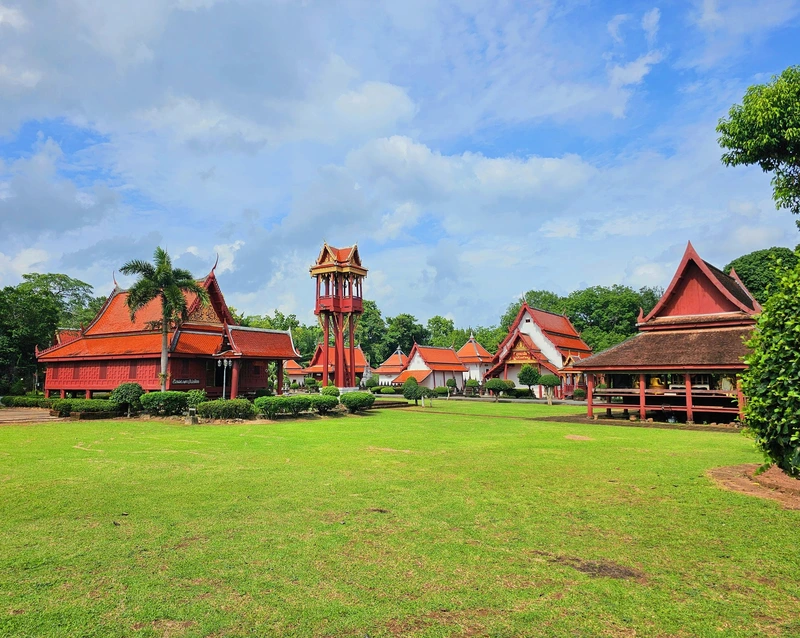
Wat Buppharam
Open Days: Daily
Opening Hours: 08.00 – 17.00
Wat Buppharam in Trat Province, also known locally as Wat Plai Khlong, is one of the oldest and most culturally significant temples in Trat. Located at Moo 3, Ban Plai Khlong, Phatthana Kan Plai Khlong Road, Wang Krachae Subdistrict, Mueang Trat District, the temple dates back to the Ayutthaya period, around the reign of King Prasat Thong in 1648. It is not only a place of worship, but also a living cultural archive that preserves Buddhist relics, ancient objects, murals, architecture, and historical evidence of Trat as an old coastal trading town.
Wat Buppharam is especially valuable because it brings together several layers of Trat’s identity in one place. Visitors can learn about Buddhism, Ayutthaya-period heritage, Rattanakosin-period murals, Chinese artistic influence, maritime trade, local craftsmanship, monastic life, and the role of the temple in the community. For travelers who want to understand Trat beyond islands, beaches, and seafood, this temple is one of the most meaningful cultural stops in the province.
The local name Wat Plai Khlong reflects the temple’s location in Ban Plai Khlong, an old community area of Mueang Trat. The official name Wat Buppharam carries a more auspicious meaning. The word buppha means flowers, while aram refers to a monastery or peaceful temple ground. Together, the name suggests a graceful and serene Buddhist sanctuary. Both names are important: one is rooted in local memory, while the other expresses the temple’s sacred and beautiful character.
Historically, Wat Buppharam shows that Trat had an established Buddhist community and a vibrant coastal culture since the Ayutthaya period. Trat’s position on the eastern seaboard made it part of maritime routes and commercial exchanges. Merchants, sailors, Chinese settlers, and people from different ports moved through the region. The temple’s art and objects therefore reflect not only local Buddhist devotion, but also the wider cultural connections of a coastal trading town.
One of the most important figures in the temple’s modern history was Phra Khru Khunsan Phisut, also known as Luang Pho Ho, a former abbot during the reign of King Rama V. He played a major role in restoring religious buildings and permanent structures inside the temple. His work helped preserve the temple as a functioning Buddhist monastery. In later years, Phra Khru Suwan San Wibun, together with local villagers and devotees, helped establish the museum and maintain the temple landscape so that Wat Buppharam could continue serving as a center of religious practice and cultural learning.
The museum at Wat Buppharam is one of the temple’s most important areas. It houses many valuable ancient objects, especially relics of the Buddha, which are regarded as the most sacred objects in the Buddhist tradition. The museum also displays silver-covered and gilded Buddha images, Buddha images in various postures, Chinese ceramics, European ceramics, and bronze drums. These objects help visitors understand that the temple is not only a local place of worship, but also a cultural space connected to maritime exchange across Southeast Asia and beyond.
The relics of the Buddha are the spiritual heart of the museum. Many worshippers come to pay respect and receive blessings. These sacred relics make Wat Buppharam an important religious site for local people and visitors. Their presence gives the temple a deeper sense of sanctity and connects the local community with the wider Buddhist world.
The silver-covered and gilded Buddha images, along with Buddha images in different postures, show the depth of Buddhist devotion across generations. Each image reflects the faith of donors, artistic preferences of different periods, and the role of the temple as a place where religious merit and artistic expression meet. When viewed carefully, the Buddha images are not only sacred objects, but also records of local artistic and devotional history.
The Chinese and European ceramics displayed in the museum are especially important for understanding Trat’s coastal history. As an eastern seaboard town, Trat was connected to maritime trade routes. Imported ceramics were not merely household objects; they were signs of exchange, contact, and cultural movement. Their presence in the temple suggests that local communities had links with merchants and ports beyond Thailand.
The bronze drum is another remarkable object. Such drums are associated with ancient cultures in Southeast Asia and are often connected with ritual, status, and cross-cultural exchange. Seeing this type of object within the temple adds an archaeological and historical dimension to the visit. It allows visitors to think about how objects, people, beliefs, and trade routes moved through the region over time.
The murals inside the ordination hall and the Reclining Buddha Hall are among the temple’s most beautiful features. Painted during the Rattanakosin period by local artists, these murals combine Thai Buddhist themes with Chinese artistic elements and Chinese literary influence. This blend reflects the cultural environment of Trat, where Chinese merchants and settlers played an important role in coastal trade and temple patronage.
The Chinese influence in the murals is an important clue to the social history of Trat. Chinese migrants and merchants arrived in Trat and other eastern coastal towns from many places, including Ayutthaya, Bangkok, Vietnam, Malaysia, and Singapore. Their presence helped shape local commerce, religious patronage, artistic taste, and community life. Wat Buppharam therefore offers visual evidence of how Thai Buddhism and Chinese culture interacted in an old port town.
The Reclining Buddha Hall is another significant spiritual and artistic space. A reclining Buddha image represents the Buddha’s passing into final nirvana and carries a deep sense of calm. The murals around the hall enrich the religious atmosphere and provide visitors with an opportunity to appreciate both Buddhist teaching and local craftsmanship. This area should be visited quietly and respectfully.
The group of small Thai-style monks’ dwellings is one of the temple’s rare and distinctive features. These small kuti were built according to monastic discipline, sized for one monk only. They reflect a simple form of monastic life and show how Buddhist practice values modesty and restraint. Local tradition says that when families sent sons to ordain at the temple, they would build a small kuti and carry it in a procession to the temple on the ordination day. This custom shows the deep connection between family, community, ordination, and temple life.
The chanting hall is an elegant raised wooden building with a single-tier glazed-tile roof, bird-wing eaves, gilded carved wooden pediment, wooden wall panels, and octagonal wooden posts. These details reveal the beauty of traditional Thai wooden architecture. The hall is not only a ritual space, but also an important example of old craftsmanship that deserves careful observation.
The pagoda at Wat Buppharam has a twelve-indented-corner form and is built from laterite covered with plaster. Its square base and construction technique reflect older architectural traditions. Laterite is commonly found in historic Thai architecture, and its use here gives the pagoda both strength and historical character. The pagoda is one of the temple’s important architectural landmarks.
The wooden-board vihara is another important structure. Built from brick and plaster with a junk-shaped base similar to the base of old ordination halls and viharas, it is associated with the late Ayutthaya period. The single-tier roof and wooden walls add to its historic character. The junk-shaped form is especially meaningful in a coastal province like Trat, where maritime trade and boat culture formed part of local identity.
Other important areas include the scripture hall, the Buddha Footprint hall, and old religious structures within the temple grounds. The scripture hall reflects the importance of preserving Buddhist texts, while the Buddha Footprint hall is connected with devotion to the Buddha’s presence and spiritual path. Together, these areas make Wat Buppharam a complete religious and cultural landscape.
Wat Buppharam continues to function as a center of religious life for the Wang Krachae community and the people of Trat. Local residents come here to make merit, listen to sermons, join Buddhist ceremonies, and preserve community traditions. The temple is not an abandoned monument. It remains a living monastery that connects the past with the present.
For cultural travelers, Wat Buppharam is highly rewarding because many subjects can be studied in one place: Ayutthaya-period history, Trat’s coastal identity, Chinese influence, local murals, ancient ceramics, bronze drums, wooden architecture, monastic dwellings, and community religious life. Visitors should move slowly through the temple grounds because many important details are found in smaller elements, such as carved wood, wall panels, old forms, display cases, and painted surfaces.
Visitors should behave respectfully while exploring the museum and sacred areas. Dress politely, keep your voice low, avoid touching display objects, do not use flash photography where it is not allowed, and avoid disturbing monks or worshippers. Groups of students or researchers should contact the temple in advance if they require detailed explanations or organized visits.
Getting There from Trat town is easy. Take Highway 3, Sukhumvit Road. Opposite Trat Hospital, turn left onto Phatthana Kan Plai Khlong Road and continue for about 2 km. The temple is located at Moo 3, Ban Plai Khlong, Wang Krachae Subdistrict. It is convenient to reach by private car, rental car, motorcycle, or local hired vehicle.
Wat Buppharam can be included in a cultural route around Trat town. Visitors may combine it with Trat City Pillar Shrine, Wat Yothanimit, Trat City Museum, Wat Phai Lom, Trat Market, or nearby community attractions such as Ban Nam Chiao. For travelers interested in history and culture, Wat Buppharam should be one of the main stops because it explains Trat as an old town connected with maritime trade and cultural exchange.
Visitors should allow at least 1 – 2 hours for the temple. More time is recommended for those who want to study the museum, murals, and old architecture in detail. Morning is a good time to visit because the weather is more comfortable and the temple atmosphere is calm. Afternoon visits can be combined conveniently with restaurants and other attractions in Trat town.
Wat Buppharam is worth preserving and visiting because it contains a rare combination of history, religion, art, architecture, and community memory. It shows that old temples are not only places of ritual. They are cultural archives, community landmarks, and bridges between Thai, Chinese, and international influences in one sacred space.
A visit to Wat Buppharam offers both spiritual calm and cultural understanding. Visitors can pay respect to the relics of the Buddha, explore the museum, study ancient objects, see murals, admire wooden architecture and old pagodas, and experience the atmosphere of the oldest temple in Trat Province. This makes Wat Buppharam one of the most important cultural attractions for anyone who wants to understand the true character of Trat.
| Name | Wat Buppharam / Wat Plai Khlong |
| Location | Moo 3, Ban Plai Khlong, Phatthana Kan Plai Khlong Road, Wang Krachae Subdistrict, Mueang Trat District, Trat Province |
| Highlights | The oldest temple in Trat Province, Wat Buppharam Museum, relics of the Buddha, murals, ancient objects, Chinese ceramics, European ceramics, bronze drum, small Thai-style monks’ dwellings, chanting hall, pagoda, and wooden-board vihara |
| History | Established during the Ayutthaya period, around the reign of King Prasat Thong in 1648. The temple reflects the history of Trat as an old coastal trading town |
| Name Origin | The local name Wat Plai Khlong refers to its location in Ban Plai Khlong. The name Wat Buppharam carries an auspicious meaning of a graceful and peaceful temple |
| Distinctive Features | A historic temple combining late Ayutthaya heritage, Rattanakosin-period murals, Chinese artistic influence, local craftsmanship, and evidence of maritime cultural exchange |
| Main Areas / Zones | Wat Buppharam Museum, ordination hall, Reclining Buddha Hall, small Thai-style monks’ dwellings, chanting hall, twelve-indented-corner pagoda, wooden-board vihara, scripture hall, Buddha Footprint hall, and community religious areas |
| Sacred Objects / Ancient Objects | Relics of the Buddha, silver-covered and gilded Buddha images, Buddha images in various postures, Chinese ceramics, European ceramics, bronze drum, and ancient objects displayed in the museum |
| Abbot / Caretaker | Phra Khru Suwan San Wibun (Sanan Suwanno), abbot of Wat Buppharam |
| Current Status | Open as a historic Buddhist temple, sacred site, museum, and cultural attraction in Trat Province |
| Open Days | Daily |
| Opening Hours | 08.00 – 17.00 |
| Fees | No admission fee |
| Main Contact Number | 0 3952 5491 |
| Facilities | Worship areas, museum, cultural learning areas, temple courtyard, pavilion, parking area, and spaces for educational visits |
| Travel Information | From Trat town, take Highway 3 or Sukhumvit Road. Opposite Trat Hospital, turn left onto Phatthana Kan Plai Khlong Road and continue for about 2 km. The temple is convenient by private car, rental car, motorcycle, or local hired vehicle |
| Nearby Tourist Attractions | 1. Trat City Pillar Shrine, about 2 km 2. Wat Yothanimit Royal Temple, about 2 km 3. Trat City Museum, about 3 km 4. Wat Phai Lom, about 3 km 5. Trat Market, about 3 km 6. Ban Nam Chiao Community, about 12 km |
| Nearby Restaurants | 1. Kaikon Seafood Trat, about 4 km, Tel. 064-574-9075 2. Pook Yen Ta Fo Noodle, about 3 km 3. Let’s Meat, about 3 km 4. Orchid Restaurant & Guesthouse, about 3 km 5. Tewtara, about 12 km, Tel. 080-575-3598, 039-593-669, 063-047-1204 |
| Nearby Accommodations | 1. Trat Center Hotel, about 3 km, Tel. 039-531-234, 086-749-8899 2. Trat City Hotel, about 4 km, Tel. 039-510-711 3. BaanRimNam Resort Trat, about 3 km, Tel. 091-232-8848, 098-534-2833 4. Avada Hotel Trat, about 6 km, Tel. 039-510-345, 082-006-1308 5. Rimklong Boutique Hotel Trat, about 3 km |
Frequently Asked Questions (FAQ)
Q: Where is Wat Buppharam located?
A: Wat Buppharam, also known as Wat Plai Khlong, is located at Moo 3, Ban Plai Khlong, Phatthana Kan Plai Khlong Road, Wang Krachae Subdistrict, Mueang Trat District, Trat Province.
Q: Why is Wat Buppharam important?
A: It is the oldest temple in Trat Province, dating back to the Ayutthaya period around the reign of King Prasat Thong, and preserves ancient objects, murals, religious heritage, and the history of Trat as a coastal trading town.
Q: What can visitors see inside Wat Buppharam Museum?
A: Visitors can see relics of the Buddha, silver-covered and gilded Buddha images, Buddha images in various postures, Chinese ceramics, European ceramics, a bronze drum, and other important ancient objects.
Q: What is special about the murals at Wat Buppharam?
A: The murals in the ordination hall and Reclining Buddha Hall were painted by local artists during the Rattanakosin period and combine Thai Buddhist themes with Chinese artistic and literary influences.
Q: What are the opening hours of Wat Buppharam?
A: The temple is open daily from 08.00 to 17.00.
Q: Is there an admission fee?
A: No. There is no admission fee, but visitors should dress politely and behave respectfully when entering the temple, museum, and sacred areas.
Q: How can visitors travel from Trat town to Wat Buppharam?
A: From Trat town, take Highway 3 or Sukhumvit Road. Opposite Trat Hospital, turn left onto Phatthana Kan Plai Khlong Road and continue for about 2 km.
Q: What nearby attractions can be visited after Wat Buppharam?
A: Nearby attractions include Trat City Pillar Shrine, Wat Yothanimit, Trat City Museum, Wat Phai Lom, Trat Market, and Ban Nam Chiao Community.
Tel : 039512636
 Tel : 039512636
 Category: ●Places of Worship
 Group: ●Temple
Last Update : 5 MonthAgo
 Last Update : 5 MonthAgo
 Click to Access the Navigation Map GPS

 Art, Culture and Heritage
 Historical Sites and Monuments(1)
 Landmarks and Memorials(1)
 Art, Craft Centres, Tradition(3)
 Museums(2)
 Educational Places
 Museum for Study(1)
 Educational Gardens, Farm(2)
Temple(11)
 Mosque(2)
 Other Sacred Sites(2)
 Suburban Living
 Village, Community(6)
 Local Market(2)
 Nature and Wildlife
 National Parks and Marine Reserves(2)
 Mountain (Doi)(1)
 Dam, Reservoir, Lake(3)
 Waterfalls(15)
 River, Canal(1)
 Bays and Beaches(21)
 Islands(19)
 Other natural attractions(12)
 Entertainment and Agricultural
 Outdoor and Adventure Activities(1)
 Shopping
 Shopping and Night Market(1)
 Travel Articles, Recipes
 Travel Review, Food Review(1)


