
lovethailand home >Eastern Travel Attractions >Rayong Travel Attractions >Muang Rayong >Tha Pradu > King Taksin the Great Shrine
TL;DR: King Taksin the Great Shrine is located at Taksin Maharaj Road, Tha Pradu Subdistrict, Mueang Rayong District, Rayong Province, open Every day, hours 06:00–18:00.
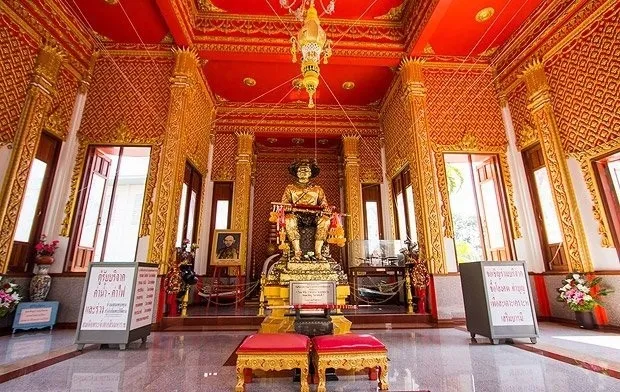
King Taksin the Great Shrine
Open Days: Every day
Opening Hours: 06:00–18:00
King Taksin the Great Shrine (Wat Lum Mahachai Chumphon) is a sacred place deeply revered by the people of Rayong. Located within Wat Lum Mahachai Chumphon on Taksin Maharaj Road, Tha Pradu Subdistrict, Mueang Rayong District, it serves as both a spiritual landmark and a living memory of King Taksin the Great’s campaign to restore Thai independence. Local legend tells that when the King passed through Rayong to gather troops, he tied his elephant under a large Krathin (Saturee) tree in front of this shrine — a tree that still stands today as a symbol of faith and history.
As visitors enter the shrine area, they are greeted by a tranquil, shaded atmosphere. Inside stands a life-sized bronze statue of King Taksin the Great in a standing posture, dressed in royal regalia. The intricate craftsmanship captures his determined gaze and warrior spirit, evoking admiration and reverence. Offerings of incense, candles, garlands, and small flags can be seen continuously presented by worshippers seeking blessings and expressing gratitude.
The shrine’s importance extends beyond religious devotion. It reflects Rayong’s historical role as a strategic gathering point for King Taksin’s forces after the fall of Ayutthaya. Situated along the eastern coast, Rayong served as a key stopover on the march toward Chanthaburi to rebuild strength before launching the liberation of Siam. The tale of “tying the elephant under the Krathin tree” thus marks Rayong as part of the nation’s path to freedom.
The ancient Krathin tree in front of the shrine draws much attention. Its massive trunk and broad canopy provide deep shade. Locals believe it is over 300 years old, standing as a silent witness to the city’s history. Colorful cloths tied around its base represent offerings of respect and hope. To the community, the tree is more than sacred flora—it is a living monument to collective memory.
The shrine itself is simple yet solid in design. Its open structure allows natural light to illuminate the interior, while incense smoke drifts gently through the air. The floors are tiled neatly, and offerings are arranged with care on brass trays and tables. Visitors can also find posted guidance on proper etiquette, reminding them to behave respectfully within the sacred space.
Not far from the shrine stands the old ordination hall of Wat Lum Mahachai Chumphon, a remarkable example of Thai-Chinese architecture. The stucco decorations and colorful ceramic tiles feature motifs of flowers and mythical animals, reflecting the influence of early Chinese artisans who settled in Rayong. A visit to the shrine, therefore, also offers a glimpse into the region’s cultural artistry.
During the Chinese New Year festival, the shrine becomes especially lively. Locals of Thai and Chinese heritage come together to pray for good fortune. The area is adorned with red lanterns, lion dances, and rhythmic drumming, while incense fills the air with fragrance. Some years, charity events and community blessings are held in collaboration with the temple.
Outside festival times, the shrine remains peaceful. Mornings and late afternoons are the best times to visit to avoid the heat. Offerings usually include incense sticks, candles, and flower garlands. Visitors who wish to make vows or fulfill them are encouraged to consult temple volunteers for guidance. Waste bins and ash containers are provided to keep the grounds clean.
Photographers often capture the iconic view of the shrine with the ancient tree in front. The soft morning light adds serenity, while the golden hues of sunset highlight the shrine’s contours beautifully. For interior shots, use a moderate wide lens and avoid flash to respect worshippers.
The shrine also functions as a community gathering place. It hosts memorial events, discussions among elders, and religious ceremonies, turning the site into a “living courtyard of memory.” Here, faith and fellowship continue to strengthen the bonds between generations.
Maintenance and preservation efforts are community-driven. The temple regularly trims the Krathin tree and inspects its condition, while minor restorations are performed using materials consistent with the original structure to preserve its authenticity. Signs remind visitors not to climb or hang objects on the tree.
Visitors can easily include the shrine in a city sightseeing route. A typical itinerary might begin at Wat Lum Mahachai Chumphon, continue to the Yomjinda Old Town for its heritage houses, relax at Si Mueang Park, and finish at Chedi Klang Nam to enjoy mangrove and river views at sunset. Together, these sites reveal Rayong’s harmony of faith, art, and nature.
Local tales reinforce the shrine’s significance. Many residents tell of merchants who prayed here before starting new ventures or students seeking blessings before exams. After success, they return with garlands or flags in thanks. Such customs show how the shrine remains woven into daily life — a living bridge between aspiration and gratitude.
Ultimately, the shrine honors King Taksin’s perseverance. His story of courage and resilience continues to inspire visitors. The site serves not just as a monument but as a place for reflection and renewal of determination.
Visitors are asked to dress modestly, keep noise to a minimum, dispose of waste properly, and follow temple guidance. Pets should be kept outside the shrine area, and caution should be taken with incense or candles, especially during crowded events.
Reaching the shrine is easy. Located in the heart of Rayong City, it sits along Sukhumvit Road (Highway 3). From the city’s clock tower, turn right onto Taksin Maharaj Road and continue a short distance to Wat Lum Mahachai Chumphon. Parking is available inside the temple. Public transport users can get off near Taksin Intersection and walk a few minutes to the site.
Getting There From downtown Rayong, take Sukhumvit Road (Route 3) toward the clock tower. Turn right at Taksin Intersection onto Taksin Maharaj Road. The shrine is located at the front of Wat Lum Mahachai Chumphon. Parking is available, and city buses stop nearby.
| Name | King Taksin the Great Shrine (Wat Lum Mahachai Chumphon) |
| Location | Taksin Maharaj Road, Tha Pradu Subdistrict, Mueang Rayong District, Rayong Province |
| Characteristics | Shrine housing a standing bronze statue of King Taksin the Great. A large 300-year-old Krathin tree stands in front, believed to mark the place where the King tied his elephant. |
| Period | Thonburi Period (after the fall of Ayutthaya, late 18th century) |
| Key Evidence | Ancient Krathin tree, local legends of the King’s passage, and historical temple art within Wat Lum Mahachai Chumphon. |
| Name Origin | Named in honor of King Taksin the Great, the monarch who liberated the nation, as a place of worship and remembrance. |
| Travel | From Sukhumvit Road (Route 3), turn onto Taksin Maharaj Road at Taksin Intersection. The shrine is located at the entrance of Wat Lum Mahachai Chumphon. |
| Current Status | Open daily, 06:00–18:00. Calm atmosphere with offering services available on-site. |
| Nearby Attractions | Old ordination hall of Wat Lum Mahachai Chumphon (0.1 km), Yomjinda Old Town (1.5 km), Rayong Clock Tower (0.3 km), Si Mueang Park (2.0 km), Chedi Klang Nam (5.5 km) |
Frequently Asked Questions
Q: Where exactly is King Taksin the Great Shrine located?
A: It is located at the front area of Wat Lum Mahachai Chumphon on Taksin Maharaj Road, easily accessible from Taksin Intersection in downtown Rayong.
Q: What is the best time to visit?
A: Early morning (07:00–09:00) for a calm visit, or late afternoon before 16:00 for warm, beautiful lighting for photography.
Q: What should visitors do when entering the shrine?
A: Dress modestly, keep voices low, avoid flash photography, and dispose of incense ashes properly. Follow temple staff instructions.
Q: Are there any festivals related to the shrine?
A: Yes. During Chinese New Year, the shrine is decorated with red lanterns and holds community worship and cultural performances like lion dances.
Q: Can visitors take photos?
A: Yes, photography is allowed in permitted areas. Please avoid flash inside the shrine and respect worshippers.
Q: Is public transport available to reach the shrine?
A: Yes. City buses stop near Taksin Intersection. The shrine is only a short walk from the bus stop.
Q: Is parking available?
A: Yes, parking is available inside Wat Lum Mahachai Chumphon in designated areas.
Q: How can visitors make merit or support the temple’s preservation?
A: You can contact temple staff or volunteers at Wat Lum Mahachai Chumphon for official donation and restoration channels.
 Category: ●Places of Worship
 Group: ●Other Sacred Sites
Last Update : 1 YearAgo
 Last Update : 1 YearAgo
 Click to Access the Navigation Map GPS
King Taksin the Great Shrine Map
Recommend

 Art, Culture and Heritage
 Landmarks and Memorials(3)
 Art, Craft Centres, Tradition(2)
 Museums(3)
 Educational Places
 Educational Gardens, Farm(2)
 Temple(34)
Other Sacred Sites(8)
 Research and Development
 Royal Project(1)
 Suburban Living
 Village, Community(2)
 Local Market(3)
 Nature and Wildlife
 National Parks and Marine Reserves(2)
 Mountain (Doi)(2)
 Dam, Reservoir, Lake(5)
 Waterfalls(4)
 River, Canal(1)
 Bays and Beaches(27)
 Islands(8)
 Other natural attractions(4)
 Entertainment and Agricultural
 Zoos and Aquariums(1)
 Farms, Parks and Ecotourism(16)
 Outdoor and Adventure Activities(2)
 Shopping
 Shopping and Night Market(1)
 Travel Articles, Recipes
 Travel Review, Food Review(1)


