
lovethailand home >North Travel Attractions >Nan Travel Attractions >Bo Kluai >Bo Kluea Nuea > Mountain Salt Wells
TL;DR: Mountain Salt Wells is located at Ban Bo Yuak, Village No. 3, Bo Kluea Nuea Subdistrict, Bo Kluea District, Nan Province, hours 08.00 - 17.00. Highlights include Traditional salt boiling, mountain salt production, local wisdom, and highland village atmosphere.
Mountain Salt Wells
Opening days: Daily
Opening hours: 08.00 - 17.00
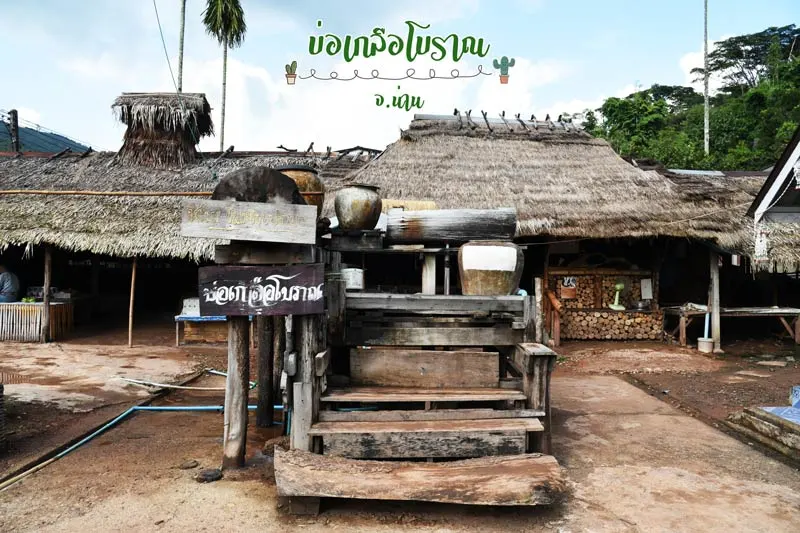
Mountain Salt Wells at Ban Bo Yuak, Village No. 3, Bo Kluea Nuea Subdistrict, Bo Kluea District, Nan Province, are a distinctive cultural and natural attraction where naturally salty mountain water can be boiled into salt crystals. This rare inland salt source shows how local communities in Nan have used natural resources, traditional knowledge, and highland geography to create a livelihood far from the sea.
Bo Kluea District is one of the most meaningful places in Nan Province for travelers interested in local wisdom and slow cultural travel. The district’s name is directly connected with salt wells, and the mountain salt wells at Ban Bo Yuak represent this identity clearly. Although Nan is a mountainous northern province with no coastline, the area contains natural saline water sources that local people have long used to produce salt. This makes the destination unusual, educational, and deeply tied to the everyday life of the local community.
The most important feature of the site is the salty water well itself. The water has a naturally salty taste and can be collected and boiled until it evaporates, leaving behind salt crystals. This process is simple in appearance but requires skill and experience. Local villagers use large pans and heat the brine over fire, carefully controlling the boiling process until the salt begins to form. The result is mountain salt, a product strongly associated with Bo Kluea and the highland culture of Nan Province.
In the past, salt was one of the most valuable necessities for mountain communities. It was used for cooking, preserving food, and exchanging with other communities. In remote highland areas, access to salt was important because people lived far from coastal salt sources. The salt wells of Bo Kluea therefore became more than a natural feature; they were part of local trade, food culture, and community survival. Visiting the mountain salt wells helps travelers understand why salt was once considered a vital resource in northern Thailand.
Ban Bo Yuak is surrounded by mountain scenery, forested slopes, and the calm atmosphere of Bo Kluea Nuea Subdistrict. The landscape gives the destination a quiet and grounded feeling. Visitors do not come here for large-scale entertainment; they come to see a living form of local knowledge, to observe the salt-making process, and to experience a highland community where nature and livelihood remain closely connected.
The traditional boiling of salt is one of the most interesting experiences for visitors. When the brine is heated, steam rises from the pan and the water gradually reduces. As the liquid evaporates, salt crystals appear and are gathered by the salt makers. This process reflects patience, rhythm, and familiarity with the material. For many travelers, seeing salt produced from a mountain well is memorable because it challenges the common idea that salt must come only from the sea.
The salt produced in Bo Kluea is also connected with local products and souvenirs. Travelers often buy mountain salt, cooking salt, spa salt, or processed salt products made by community members. These products help support local income and encourage the continuation of traditional knowledge. For visitors who prefer meaningful souvenirs, salt from Bo Kluea carries a clear story of place, culture, and craftsmanship.
The atmosphere of Bo Kluea District adds another layer to the experience. The district is known for cool weather, mountain roads, peaceful villages, and scenery that changes with the seasons. During the late rainy season, the mountains and forests become green and fresh. During the cool season, morning mist and crisp air create a memorable travel atmosphere. This makes the salt wells suitable for travelers who enjoy nature, local culture, photography, and quiet destinations.
Traveling to Bo Kluea is part of the appeal. From Nan city, visitors usually drive through Pua District and Doi Phu Kha National Park before reaching Bo Kluea. The route follows mountain roads with many curves, viewpoints, and forested sections. The journey requires careful driving, especially in rainy weather, but the scenery along the way is one of the reasons many travelers consider Bo Kluea a rewarding destination.
Getting There is most convenient by private car or rental car. From Nan city, take the route toward Pua District and continue through the mountain road toward Bo Kluea District. The distance is about 80–90 km, depending on the starting point and route. Travelers should allow enough time for the drive because the road has many curves and scenic sections. Those who are not familiar with mountain roads should drive slowly and avoid traveling after dark.
The best time to visit the mountain salt wells is during the cool season and the late rainy season. The cool season offers pleasant weather, misty mornings, and a relaxed atmosphere, while the late rainy season brings lush green mountain scenery. Morning is a good time to visit because the weather is comfortable and the village atmosphere is calm. Travelers who want to experience Bo Kluea more fully should consider staying overnight in the district or nearby Sapan village.
Nearby attractions can be combined with the salt wells to create a complete Bo Kluea itinerary. Popular nearby places include the ancient salt wells in Bo Kluea, Doi Phu Kha National Park, scenic viewpoints on Highway 1081, the Bo Kluea market area, and natural attractions around Sapan. This makes the destination suitable for a cultural and nature-focused trip rather than a quick stop only.
For foreign travelers, the mountain salt wells are especially useful for understanding Nan beyond temples and viewpoints. The site introduces visitors to local production, highland resource use, and community-based knowledge. It is a small place, but its meaning is broad because it connects geology, food culture, trade history, and village life in one experience.
Visitors should travel respectfully. The salt wells and surrounding areas are connected to local livelihoods, so travelers should avoid disturbing work areas, keep the site clean, ask before photographing people at work, and support community products when possible. These small actions help preserve the value of the place and keep tourism beneficial for local residents.
Mountain Salt Wells at Ban Bo Yuak are therefore not only a natural curiosity but also a living cultural site. The salty water, the boiling process, the mountain setting, and the local products all show how people in Bo Kluea have adapted to their environment over generations. For travelers seeking a deeper and more authentic experience in Nan Province, this destination offers a clear and memorable story of nature, culture, and local wisdom.
| Name | Mountain Salt Wells, Ban Bo Yuak |
| Location | Ban Bo Yuak, Village No. 3, Bo Kluea Nuea Subdistrict, Bo Kluea District, Nan Province |
| Distinctive Features | Natural salty mountain water that can be boiled into salt crystals |
| Highlights | Traditional salt boiling, mountain salt production, local wisdom, and highland village atmosphere |
| Importance | A cultural and natural salt source that reflects the livelihood of highland communities in Nan Province |
| Travel Information | Travel from Nan city through Pua District and Doi Phu Kha National Park toward Bo Kluea District; distance about 80–90 km |
| Current Status | A local cultural learning site and community attraction of Ban Bo Yuak |
| Area Caretaker | Ban Bo Yuak community and Bo Kluea Nuea Subdistrict Administrative Organization |
| Main Contact Number | Bo Kluea Nuea Subdistrict Administrative Organization, Tel. 054-778104 |
| Nearby Tourist Attractions | 1. Ancient Salt Wells of Bo Kluea, about 7 km 2. Doi Phu Kha National Park, about 20 km 3. Highway 1081 Scenic Viewpoint, about 18 km 4. Bo Kluea Town Market, about 6 km 5. Sapan Village, about 15 km |
| Nearby Restaurants | 1. View Phu Kluea Restaurant, about 6 km, Tel. 093-2451965 2. Krua Bo Kluea, about 6 km, Tel. 081-7249558 3. Yood Wela Café Bo Kluea, about 7 km 4. Huen Him Than, about 6 km 5. Khao Soi Bo Kluea, about 7 km |
| Nearby Accommodations | 1. Sapan See View, about 15 km, Tel. 095-6853565 2. Boklua View Resort, about 7 km, Tel. 081-9606169 3. Na Khao Homestay Bo Kluea, about 8 km, Tel. 086-4209421 4. Phu Fa Bo Kluea Resort, about 9 km, Tel. 081-3669062 5. Sapan Klang Na, about 16 km, Tel. 098-6651456 |
Frequently Asked Questions (FAQ)
Q: What are the Mountain Salt Wells at Ban Bo Yuak?
A: They are natural mountain salt wells where salty water can be boiled until it becomes salt crystals.
Q: Where are the Mountain Salt Wells located?
A: They are located at Ban Bo Yuak, Village No. 3, Bo Kluea Nuea Subdistrict, Bo Kluea District, Nan Province.
Q: Why are the salt wells in Bo Kluea special?
A: They are inland mountain salt sources located far from the sea and are connected with traditional salt-making knowledge.
Q: Can visitors see traditional salt boiling?
A: Visitors can learn about the traditional salt-boiling process, though active production may depend on local schedules and conditions.
Q: What is the best season to visit Bo Kluea?
A: The cool season and late rainy season are ideal because the weather is pleasant and the mountain scenery is beautiful.
Q: What can travelers buy as souvenirs?
A: Travelers can buy local mountain salt, cooking salt, spa salt, and other salt-based community products.
Q: Is the road to Bo Kluea difficult?
A: The road is scenic but mountainous with many curves, so travelers should drive carefully, especially during rain or fog.
 Category: ●Nature and Wildlife
 Group: ●Other natural attractions
Last Update : 6 MonthAgo
 Last Update : 6 MonthAgo
 Click to Access the Navigation Map GPS
Mountain Salt Wells Map
Recommend

 Art, Culture and Heritage
 Landmarks and Memorials(6)
 Art, Craft Centres, Tradition(6)
 Museums(4)
 Historic Homes and Cities(1)
 Art Gallery(1)
 Educational Places
 Educational Gardens, Farm(1)
 Places of Worship
 Temple(68)
 Church(1)
 Other Sacred Sites(19)
 Research and Development
 Royal Project(2)
 Suburban Living
 Village, Community(13)
 Local Market(1)
 National Parks and Marine Reserves(9)
 Mountain (Doi)(6)
 Dam, Reservoir, Lake(16)
 Waterfalls(28)
 Hot Springs(1)
 Caves(11)
 River, Canal(5)
Other natural attractions(10)
River, Canal(5)
Other natural attractions(10)
 Entertainment and Agricultural
 Farms, Parks and Ecotourism(4)
 Outdoor and Adventure Activities(2)
 Travel Articles, Recipes
 Travel Review, Food Review(1)


