
lovethailand home >North Travel Attractions >Nan Travel Attractions >Phu Pieng >Muang Tuet > Wat Sri Bun Rueang
TL;DR: Wat Sri Bun Rueang is located at Muang Tuet Subdistrict, Phu Phiang District, Nan Province, Thailand, open Open Daily, hours Visitors can enter and pay respects throughout the day.
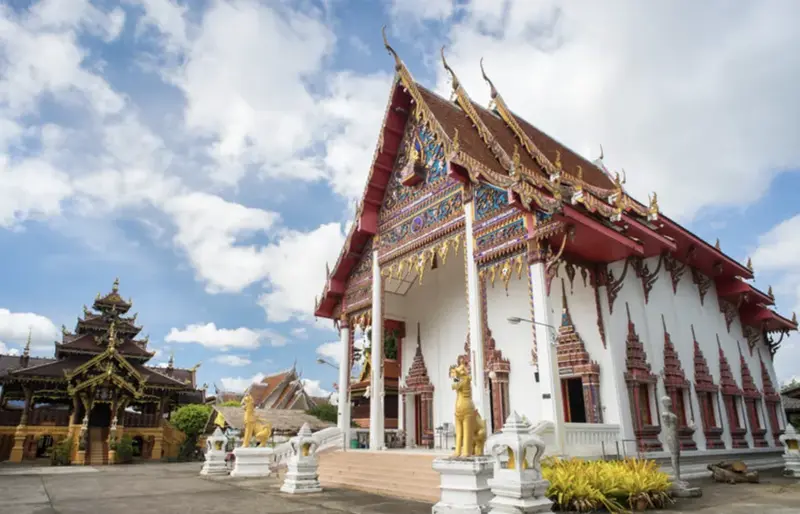
Wat Sri Bun Rueang
Open Days: Open Daily
Opening Hours: Visitors can enter and pay respects throughout the day
Wat Sri Bun Rueang (Muang Tuet) is located in Muang Tuet Subdistrict, Phu Phiang District, Nan Province, Thailand. The temple is one of the old community temples of Nan with deep historical, religious, and cultural significance connected to the development of local Buddhist communities in northern Thailand. Although there is no clear evidence identifying the exact period of its construction, records found in the Nan Chronicle preserved by the Vajirayana Library provide important historical references indicating that the temple already existed before the year 1560 CE (B.E. 2103), making it one of the ancient temples of the region with a history of more than 452 years.
The Nan Chronicle records that in Chula Sakarat 922, corresponding to B.E. 2103 or approximately 1560 CE, Phaya No Kham Satian Songkhram, the ruler of Nan, together with Maha Sami Chao Kalyano of Wat Sri Bun Rueang, participated in the restoration of Wat Phra That Chae Haeng, the most revered stupa of Nan Province. This important historical connection demonstrates that Wat Sri Bun Rueang already held religious significance during that period and was associated with major Buddhist activities in the ancient Nan Kingdom.
The historical relationship between Wat Sri Bun Rueang and Wat Phra That Chae Haeng highlights the temple’s importance within the religious network of Nan Province. Wat Phra That Chae Haeng has long been regarded as the principal sacred stupa of Nan and remains one of the province’s most important pilgrimage sites today. The fact that Maha Sami Chao Kalyano from Wat Sri Bun Rueang played a role in the restoration of the sacred stupa indicates that the temple once housed respected Buddhist monks with influence in religious affairs during the Lanna period.
In traditional Lanna Buddhist culture, the title “Maha Sami” was generally reserved for senior monks or highly respected religious scholars. The mention of Maha Sami Chao Kalyano therefore suggests that Wat Sri Bun Rueang served not only as a local village temple but also as an important center of Buddhist learning and religious activity in Nan’s historical society.
The name “Sri Bun Rueang” itself carries highly auspicious meaning in Thai and Lanna Buddhist culture. The word “Sri” represents prosperity, honor, and sacred blessings, while “Bun Rueang” refers to flourishing merit and spiritual abundance. Combined together, the name symbolizes a place of prosperous merit and spiritual well-being, reflecting the temple’s role as a center of faith and merit-making for local residents.
Wat Sri Bun Rueang remains closely connected to the local community of Ban Sri Bun Rueang, Muang Tuet Subdistrict, and nearby villages. Like many traditional temples in northern Thailand, it functions not only as a place for worship but also as a center for ceremonies, social gatherings, and community traditions. The temple continues to serve local Buddhists during important religious festivals and annual merit-making events.
The surrounding area of Phu Phiang District is historically important because of its close connection to the Nan River and the development of ancient settlements in Nan Province. Many temples in the district were established near waterways or old transportation routes used by communities for centuries. Wat Sri Bun Rueang forms part of this broader cultural landscape that reflects the relationship between religion, settlement patterns, and local geography in northern Thailand.
One of the most important architectural features inside the temple is the Mondop of Phra Khru Phutthamon Chotikoon, which was built after the passing of Phra Khru Phutthamon Chotikoon, a highly respected monk revered by local residents. The mondop combines both traditional and contemporary architectural elements and serves as the repository for the monk’s ashes. Inside, visitors can also see a life-sized wax figure created in his likeness, which is open daily for Buddhist devotees and visitors to pay respects.
The construction of the mondop reflects the deep connection between respected monks and local communities in northern Thai Buddhist culture. Influential monks often play roles far beyond religious ceremonies. They act as teachers, advisors, moral examples, and spiritual leaders within village society. The continued reverence toward Phra Khru Phutthamon Chotikoon demonstrates the enduring spiritual influence he had on local residents.
The mondop has become one of the temple’s most distinctive landmarks because it combines historical memory, religious devotion, and artistic representation. Many visitors and devotees come specifically to pay respects at the mondop, making it both a spiritual center and a symbol of gratitude toward a respected religious figure.
Within the temple grounds, visitors will also find traditional temple structures including the viharn, sermon hall, monks’ residences, and ceremonial spaces used for Buddhist activities. These structures maintain the atmosphere of a traditional northern Thai community temple where religious practice remains part of everyday life rather than existing solely as a historical attraction.
The viharn serves as the main ceremonial hall for worship, merit-making, and important Buddhist rituals. The sermon hall is commonly used for community gatherings, Buddhist teachings, and festival activities. Together, these buildings continue to support the spiritual and social functions of the temple within the local community.
Wat Sri Bun Rueang becomes especially lively during important Buddhist holy days such as Makha Bucha Day, Visakha Bucha Day, Asalha Bucha Day, Buddhist Lent, End of Buddhist Lent ceremonies, and the Songkran Festival. During these periods, local villagers gather at the temple to make merit, offer food to monks, listen to sermons, and participate in traditional ceremonies. These activities preserve the close relationship between the temple and the surrounding community.
Unlike heavily commercialized tourist attractions, Wat Sri Bun Rueang maintains a peaceful and authentic village atmosphere. The temple grounds remain relatively quiet and simple, making the site suitable for travelers interested in cultural tourism, local history, and spiritual experiences. Visitors who appreciate slower travel and meaningful cultural exploration may find the temple particularly rewarding.
Travelers interested in the historical heritage of Nan Province can conveniently combine a visit to Wat Sri Bun Rueang with nearby attractions such as Wat Phra That Chae Haeng, Wat Phumin, the Nan National Museum, Wat Ming Mueang, and Nan Walking Street. These destinations together provide insight into both the royal and community-level aspects of Nan’s cultural and religious history.
Wat Phra That Chae Haeng is especially important in relation to Wat Sri Bun Rueang because of the historical restoration connection mentioned in the Nan Chronicle. Visiting both temples in the same journey allows travelers to follow the historical relationship between local Buddhist institutions and sacred landmarks in Nan’s past.
Travelers continuing into Nan city can further explore Wat Phumin, famous for its iconic murals and Lanna architecture, as well as the Nan National Museum, which presents the historical development of Nan Province from ancient times to the modern era. Together, these sites help visitors understand the broader cultural context surrounding temples like Wat Sri Bun Rueang.
Travel Information to Wat Sri Bun Rueang is convenient from Nan city. Visitors can travel toward Phu Phiang District and continue into Muang Tuet Subdistrict by private car or motorcycle. The roads leading to the temple are relatively easy to access and suitable for cultural travel routes around Nan Province.
The best time to visit the temple is during the morning or late morning when the weather is cooler and the atmosphere remains calm. Travelers who wish to observe local traditions and community activities may prefer visiting during major Buddhist festivals or local merit-making events.
Visitors should dress respectfully when entering the temple grounds since Wat Sri Bun Rueang remains an active religious site used regularly by local Buddhists. Quiet behavior and appropriate respect toward religious ceremonies and worship areas are appreciated by both monks and villagers.
Wat Sri Bun Rueang represents more than just an ancient temple. It serves as a living reminder of Nan’s religious history, the influence of respected monks, and the enduring connection between Buddhist institutions and local communities. Through its historical links to Wat Phra That Chae Haeng, its ancient origins, and the continued devotion of local residents, the temple remains an important cultural landmark within Phu Phiang District and Nan Province.
| Name | Wat Sri Bun Rueang (Muang Tuet) |
| Type | Community Buddhist Temple under the Maha Nikaya sect |
| Location | Muang Tuet Subdistrict, Phu Phiang District, Nan Province, Thailand |
| Address | Ban Sri Bun Rueang, Moo 5, Muang Tuet Subdistrict, Phu Phiang District, Nan Province 55000 |
| Highlights | Ancient temple historically connected to the restoration of Wat Phra That Chae Haeng in 1560 CE and home to the Mondop of Phra Khru Phutthamon Chotikoon |
| Historical Period | Believed to have been established before 1560 CE based on historical records in the Nan Chronicle |
| Name Origin | The temple name symbolizes auspiciousness, prosperity, and flourishing merit |
| Distinctive Features | Historic village temple featuring the mondop and life-sized wax figure of Phra Khru Phutthamon Chotikoon |
| Main Structures | Viharn, sermon hall, monks’ residences, and Mondop of Phra Khru Phutthamon Chotikoon |
| Travel Information | Accessible from Nan city via Phu Phiang District and Muang Tuet Subdistrict |
| Current Status | Active Buddhist temple and community religious center |
| Open Days | Open Daily |
| Opening Hours | Accessible throughout the day |
| Facilities | Parking area, pavilion, ceremonial spaces, shaded temple grounds |
| Caretaker | Wat Sri Bun Rueang under the Maha Nikaya Buddhist sect |
| Nearby Tourist Attractions | 1. Wat Phra That Chae Haeng – approximately 6 km 2. Wat Phumin – approximately 10 km 3. Nan National Museum – approximately 10 km 4. Wat Ming Mueang – approximately 10 km 5. Nan Walking Street – approximately 10 km |
| Nearby Restaurants | 1. Larb Na Wat Muang Tuet Restaurant – approximately 1 km 2. Huen Hom Restaurant – approximately 8 km. Tel. 054-710-222 3. Khao Soi Ton Nam Nan – approximately 9 km 4. Huen Phu Kha Restaurant – approximately 10 km. Tel. 054-775-532 5. Kin Sen Restaurant Nan – approximately 10 km |
| Nearby Accommodations | 1. Nan Seasons Boutique Resort – approximately 7 km. Tel. 054-719-500 2. Casa Foresta Nan – approximately 8 km. Tel. 061-273-7779 3. Namthong Nan Hotel – approximately 10 km. Tel. 054-775-777 4. PX122 DBEST HOTEL – approximately 10 km. Tel. 095-925-4365 5. Dhevaraj Hotel Nan – approximately 10 km. Tel. 054-710-212 |
Frequently Asked Questions (FAQ)
Q: Where is Wat Sri Bun Rueang located?
A: The temple is located in Muang Tuet Subdistrict, Phu Phiang District, Nan Province, Thailand.
Q: How old is Wat Sri Bun Rueang?
A: Historical evidence suggests the temple existed before 1560 CE, making it more than 452 years old.
Q: What historical significance does the temple have?
A: The Nan Chronicle records that Maha Sami Chao Kalyano of Wat Sri Bun Rueang participated in restoring Wat Phra That Chae Haeng in 1560 CE.
Q: What is the main highlight inside the temple?
A: One of the main highlights is the Mondop of Phra Khru Phutthamon Chotikoon, which houses his ashes and a life-sized wax figure.
Q: Can visitors pay respects at the mondop every day?
A: Yes. The mondop is open daily for devotees and visitors.
Q: Is Wat Sri Bun Rueang suitable for cultural tourism?
A: Yes. The temple is ideal for travelers interested in Nan history, Lanna Buddhism, and authentic community temples.
Q: What nearby attractions can be visited together with the temple?
A: Nearby attractions include Wat Phra That Chae Haeng, Wat Phumin, Nan National Museum, and Nan Walking Street.
Q: Is transportation to the temple convenient?
A: Yes. Visitors can easily travel from Nan city to the temple by private car or motorcycle.
 Category: ●Places of Worship
 Group: ●Temple
Last Update : 6 MonthAgo
 Last Update : 6 MonthAgo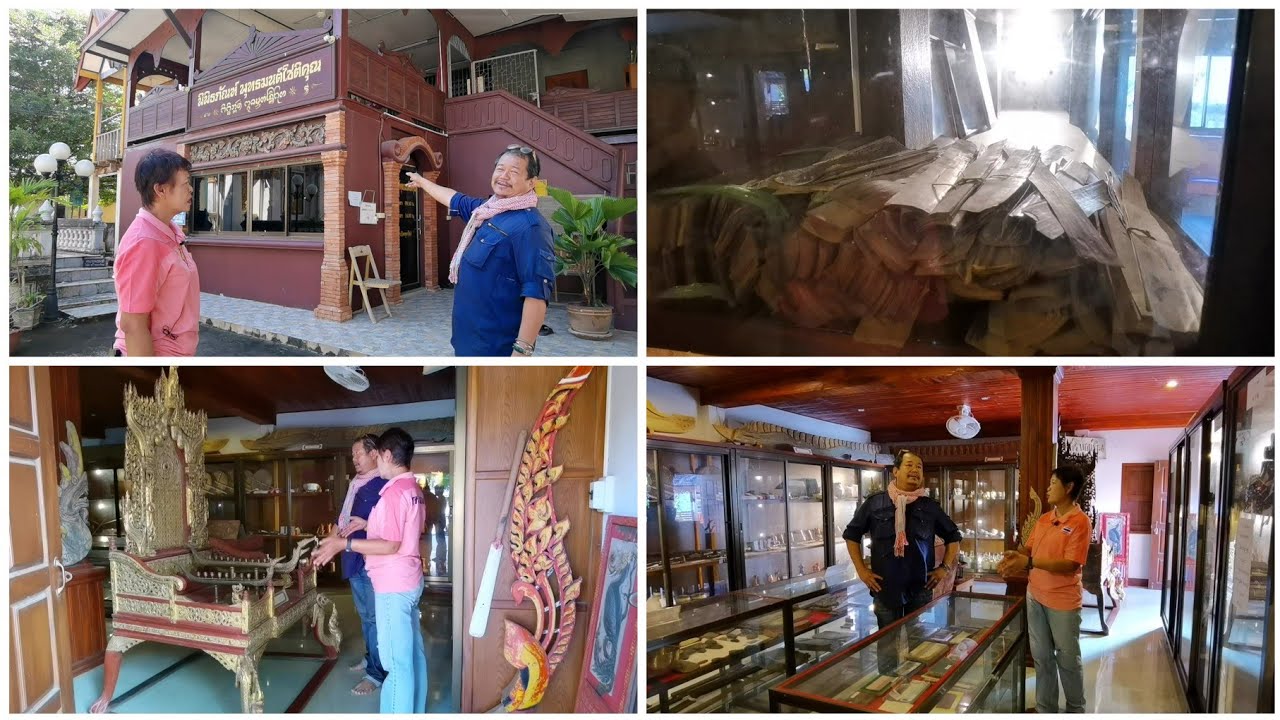
 Click to Access the Navigation Map GPS
Wat Sri Bun Rueang Map
Recommend

 Art, Culture and Heritage
 Landmarks and Memorials(6)
 Art, Craft Centres, Tradition(6)
 Museums(4)
 Historic Homes and Cities(1)
 Art Gallery(1)
 Educational Places
 Educational Gardens, Farm(1)
Temple(68)
Educational Gardens, Farm(1)
Temple(68)
 Church(1)
 Other Sacred Sites(19)
 Research and Development
 Royal Project(2)
 Suburban Living
 Village, Community(13)
 Local Market(1)
 Nature and Wildlife
 National Parks and Marine Reserves(9)
 Mountain (Doi)(6)
 Dam, Reservoir, Lake(16)
 Waterfalls(28)
 Hot Springs(1)
 Caves(11)
 River, Canal(5)
 Other natural attractions(10)
 Entertainment and Agricultural
 Farms, Parks and Ecotourism(4)
 Outdoor and Adventure Activities(2)
 Travel Articles, Recipes
 Travel Review, Food Review(1)


