
lovethailand home >Northeastern Travel Attractions >Yasothon Travel Attractions >Loeng Nok Tha >Bung Kha > Wat Phu Sung
TL;DR: Wat Phu Sung is located at Ban Nong Khaen Noi, Moo 7, Bungkha Subdistrict, Loeng Nok Tha District, Yasothon Province, open Daily, hours 08.00 – 17.00.
Wat Phu Sung
Open Days: Daily
Opening Hours: 08.00 – 17.00
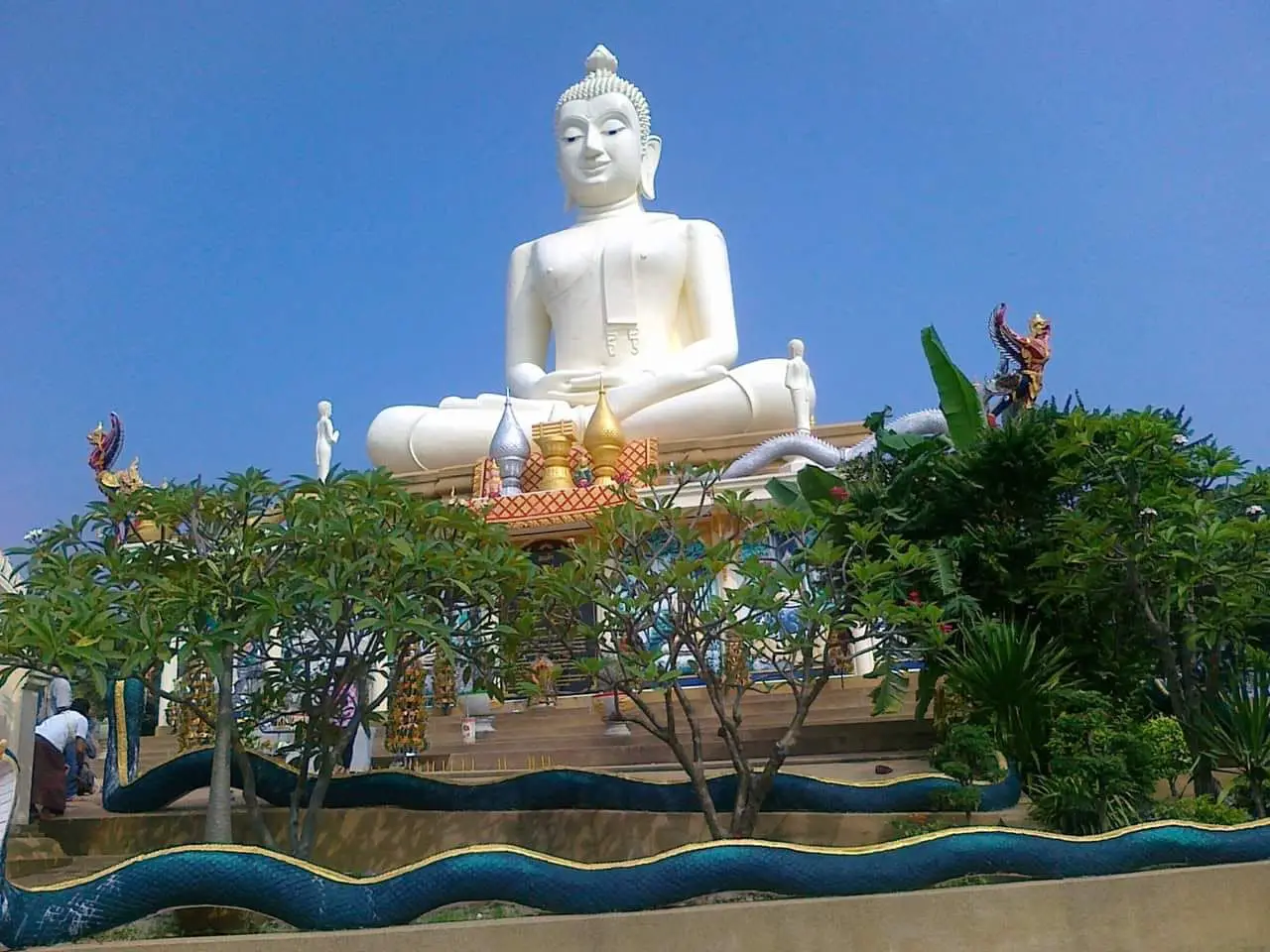
Wat Phu Sung, also known as Phu Sung Buddhist Park, is one of the most meaningful Buddhist and scenic destinations in Yasothon Province. It is located at Ban Nong Khaen Noi, Moo 7, Bungkha Subdistrict, Loeng Nok Tha District, Yasothon. The temple is known for its large white Buddha image, mountain setting, wide viewpoints, sandstone rock terraces, natural rock pools, and peaceful Buddhist park atmosphere. It is also a branch of Wat Pa Wang Nam Thip and is closely associated with the phrase “Phu Sung, land of Dhamma, pay respect to the great Buddha.” For Thai visitors and foreign travelers, this temple offers a rare combination of Buddhist faith, meditation, mountain scenery, local history, and rural Isan identity.
Wat Phu Sung is different from many temples located on flat land because it stands on a mountain known locally as Phu Sung. The name of the temple comes directly from this location. The word “Phu” refers to a hill or mountain, while “Sung” means high. Together, the name reflects the physical character of the place: a temple set on elevated ground with open views across the surrounding landscape. This location gives the temple a distinctive atmosphere. Visitors do not only come to worship; they also come to feel the quietness of the mountain, observe the natural rock formations, and enjoy the wide view over Loeng Nok Tha District.
The main highlight of Wat Phu Sung is the large white Buddha image known as Phra Chao Yai Trailokkanat. The image stands prominently within the temple grounds and creates a powerful impression from the moment visitors arrive. Its soft white tone contrasts beautifully with the sky, rocks, and natural surroundings. The base of the Buddha image is decorated with scenes from the life of the Lord Buddha, allowing visitors to learn about Buddhist stories while paying respect. This makes the visit more meaningful than simply viewing a large statue. It becomes an experience that combines visual beauty, Buddhist learning, and personal reflection.
The area around the Buddha image includes sandstone rock terraces and distinctive rock surfaces. These geological features help give Wat Phu Sung a strong natural identity. The rocks are not merely background scenery; they form part of the visitor experience. Walking through the temple area, visitors can feel how the temple has been shaped by the mountain itself. The ground, the wind, the open sky, the rock formations, and the Buddha image all work together to create a calm and memorable atmosphere. This makes the temple appealing to travelers interested in both Buddhist culture and natural landscapes.
Wat Phu Sung has been developed as a Buddhist park intended for meditation training and Dhamma practice. The area can accommodate around 300 visitors for practice activities. This gives the temple a purpose beyond tourism. A Buddhist park is a place where visitors can step away from daily distractions, slow down, and spend time with mindfulness. People come here to make merit, meditate, walk quietly, listen to the natural surroundings, and reflect on Buddhist teachings. For those seeking a peaceful place in Yasothon, Wat Phu Sung is a strong destination.
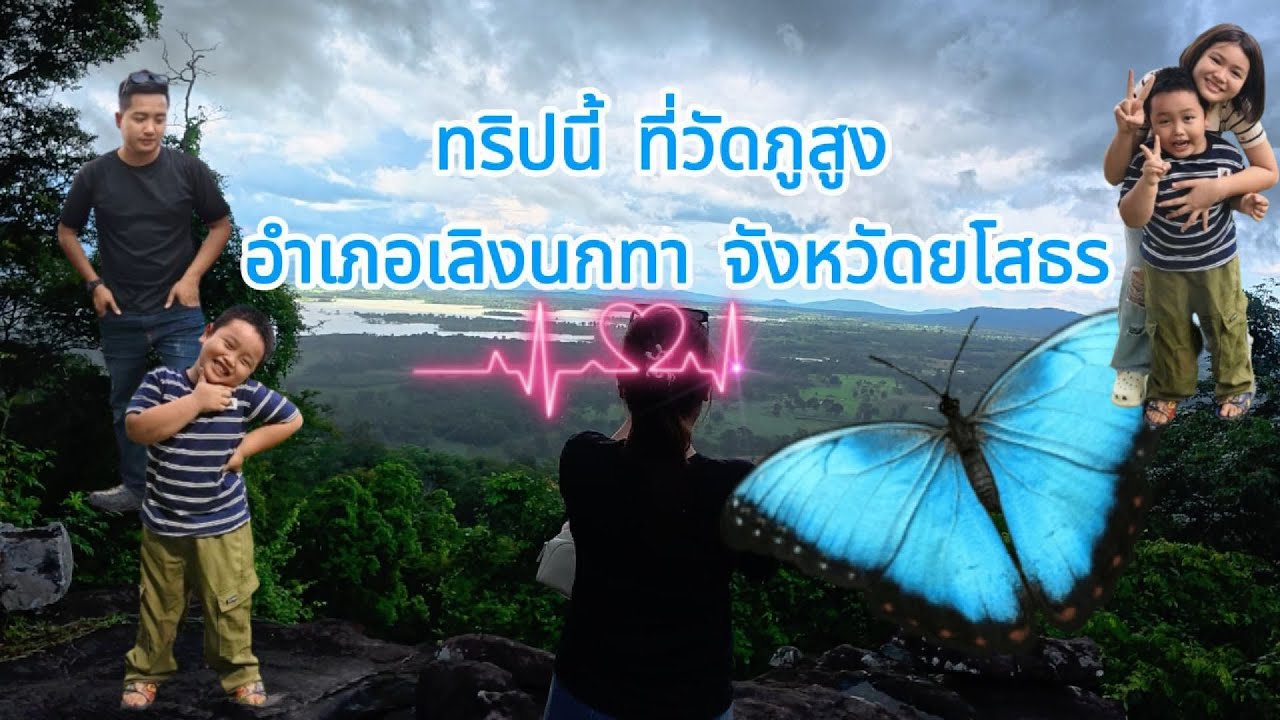
One of the most popular spots within the area is the viewpoint known as Pha Sop Nok, also called Pak Nok. From this viewpoint, visitors can see a broad panorama of Loeng Nok Tha District. The view includes forested areas, farmland, village landscapes, and the natural contours of the district. Morning and late afternoon are especially good times to visit because the light is softer and the weather is more comfortable. Travelers who enjoy photography can capture wide scenic views, while those who prefer a quiet experience can simply stand and take in the landscape without rushing.
Another remarkable feature of the Phu Sung area is the presence of around 300 natural rock pools on the mountain. Some of these pools are about 5 meters deep. These pools add a sense of wonder to the landscape and make the site interesting from both natural and local storytelling perspectives. Visitors should observe them carefully and avoid walking too close to deep edges, especially after rain. The rock surfaces may become slippery, and the mountain terrain requires attention. Responsible travel is important here because Wat Phu Sung is both a religious site and a natural landscape.
The area also contains old shelter pits associated with the communist period. These traces add a historical dimension to the site. Today, Wat Phu Sung is a Buddhist park and a place of peace, but the landscape still carries signs of earlier periods in local history. This combination of a large Buddha image, meditation area, viewpoint, rock terraces, natural pools, and historical traces makes the temple more layered than a typical sightseeing destination. Visitors can understand the site as a temple, a mountain viewpoint, a natural learning area, and a place connected with local memory.
The best way to experience Wat Phu Sung is to move slowly. Visitors should begin by paying respect to Phra Chao Yai Trailokkanat, then take time to observe the scenes from the Buddha’s life at the base of the image. After that, they can walk carefully through the temple grounds, visit the viewpoint, and observe the rock formations and natural surroundings. The temple is not designed for a rushed visit. Its value comes from stillness, space, and the quiet relationship between Buddhist faith and mountain nature.
For foreign travelers, Wat Phu Sung is a good place to understand a different side of Thai Buddhist culture. It is not a famous city temple or a heavily commercial tourist attraction. It is a rural mountain temple connected with local people, meditation practice, and natural scenery. Visitors can see how a mountain landscape becomes a sacred place through the building of a Buddha image, the creation of a Buddhist park, and the use of the area for Dhamma practice. This gives the temple a strong sense of place that is closely tied to Isan culture.
The temple is suitable for families, groups of friends, elderly visitors, meditation practitioners, and travelers interested in culture and nature. However, because the temple is located on a mountain, visitors should prepare properly. Comfortable footwear is important, especially when walking on rock surfaces. A hat, drinking water, and sun protection are useful during the day. Visitors traveling with children or elderly family members should choose a cooler time of day and walk carefully. The morning and late afternoon are the most comfortable periods for a visit.
Respectful behavior is essential when visiting Wat Phu Sung. Visitors should dress modestly, keep their voices low, avoid climbing on sacred structures, and avoid touching or damaging sculptures and religious elements. Photography is allowed in suitable areas, but it should not disturb people who are praying or meditating. Waste should be taken back or placed only in proper bins. Because the temple is both a sacred place and a natural attraction, respectful behavior helps preserve the peaceful atmosphere for future visitors.
Getting There is easiest by private car. From Loeng Nok Tha District, take Highway 212 on the Loeng Nok Tha–Amnat Charoen route. Continue to Ban Huai Sabaek, then turn left toward the route from Ban Huai Sabaek to Ban Nong Khaen. After reaching the Ban Nong Khaen area, turn right toward Wat Phu Sung. The distance from Loeng Nok Tha District is about 42 km. Because the temple is located in a rural mountain area, driving during daylight hours is recommended. Visitors should use navigation together with local landmarks such as Highway 212, Ban Huai Sabaek, Ban Nong Khaen, and Bungkha Subdistrict.
Travelers coming from Yasothon city can first head toward Loeng Nok Tha District and continue to Bungkha Subdistrict. Travelers coming from Amnat Charoen can also connect to Highway 212 and approach the area through Ban Huai Sabaek. A private vehicle or rental car is the most practical option because public transportation to the mountain area is limited. Visitors should check fuel, vehicle condition, and weather before traveling, especially during the rainy season when roads and rock surfaces may be slippery.
Wat Phu Sung can be planned as the main destination for a one-day trip in Loeng Nok Tha District. Visitors can start with worship at the large Buddha image, walk around the Buddhist park, enjoy the viewpoint, and then continue to nearby places such as Wat Phu Tham Phra Phuttha Nimit, Huai Sabaek Reservoir, or Huai Hin Lat. After visiting the mountain area, travelers can return to Loeng Nok Tha town for restaurants, cafes, and accommodation. Because distances between places are fairly long, the route is best enjoyed without rushing.
The temple is also meaningful for travelers interested in local history. The old shelter pits from the communist period show that the mountain landscape once had functions beyond worship and tourism. Today the area has become a peaceful Buddhist park, but the historical traces remain part of the site’s identity. This gives visitors a broader understanding of the land and its changing role over time. Wat Phu Sung is therefore valuable not only for religious travel, but also for cultural and historical awareness.
For those who want to combine Dhamma practice with nature, Wat Phu Sung is especially suitable. The mountain setting, large Buddha image, quiet atmosphere, and open viewpoints make the temple a place where visitors can pause and reflect. Meditation here can be simple: walking mindfully, sitting quietly, observing the breath, or looking at the landscape with a calm mind. This is why Wat Phu Sung is more than a viewpoint. It is a place where scenery and spiritual practice support each other.
What makes Wat Phu Sung stand out is the completeness of its features. It has a large white Buddha image as the spiritual center, a viewpoint overlooking Loeng Nok Tha, sandstone terraces and rock formations, many natural rock pools, historical shelter pits, and a Buddhist park designed for meditation. These elements make the temple one of the most distinctive destinations in Yasothon Province for travelers who want faith, nature, and local culture in one place.
In summary, Wat Phu Sung or Phu Sung Buddhist Park is an important religious and scenic destination in Bungkha Subdistrict, Loeng Nok Tha District, Yasothon Province. It is open daily from 08.00 to 17.00. Visitors come here to worship Phra Chao Yai Trailokkanat, see the large white Buddha image, enjoy panoramic mountain views, explore the natural rock landscape, and experience a peaceful Buddhist park atmosphere. For travelers who want to see a deeper and quieter side of Yasothon, Wat Phu Sung is a meaningful place to visit.
| Name | Wat Phu Sung / Phu Sung Buddhist Park |
| Location | Ban Nong Khaen Noi, Moo 7, Bungkha Subdistrict, Loeng Nok Tha District, Yasothon Province |
| Highlights | Phra Chao Yai Trailokkanat, large white Buddha image, Pha Sop Nok viewpoint, sandstone terraces, rock formations, mountain rock pools, and meditation-friendly Buddhist park grounds |
| History / Importance | A branch of Wat Pa Wang Nam Thip, developed as a Buddhist park and Dhamma practice area that can accommodate around 300 visitors for meditation activities |
| Name Origin | The temple is named after the local mountain known as Phu Sung because the temple is located on elevated ground in Bungkha Subdistrict |
| Distinctive Features | A mountain temple with a large white Buddha image, Buddha life scenes at the base, panoramic views of Loeng Nok Tha District, sandstone terraces, and natural rock formations |
| Travel Information | From Loeng Nok Tha District, take Highway 212 on the Loeng Nok Tha–Amnat Charoen route to Ban Huai Sabaek. Turn left toward Ban Nong Khaen, then turn right toward Wat Phu Sung. The temple is about 42 km from Loeng Nok Tha District |
| Current Status | Open as a temple, Buddhist park, meditation site, and tourist attraction in Bungkha Subdistrict, Loeng Nok Tha District, Yasothon Province |
| Open Days | Daily |
| Opening Hours | 08.00 – 17.00 |
| Facilities | Worship area, meditation area, viewpoint, rock terraces, parking area, and resting areas within the Buddhist park |
| Main Areas / Zones | Phra Chao Yai Trailokkanat, Buddha base with life-of-the-Buddha scenes, Pha Sop Nok viewpoint, sandstone terraces, rock formations, mountain rock pools, old shelter pits from the communist period, and meditation area |
| Official Website / Official Page | Bungkha Subdistrict Municipality website, Loeng Nok Tha District, Yasothon Province |
| Nearby Tourist Attractions | 1. Pha Sop Nok Viewpoint inside Phu Sung Buddhist Park, about 1 km 2. Wat Phu Tham Phra Phuttha Nimit, about 3 km 3. Huai Sabaek Reservoir, about 8 km 4. Huai Hin Lat or Kaeng Saphue 2, about 28 km 5. Wat Phrom Wihan, Loeng Nok Tha District, about 42 km 6. Wat Si Bun Rueang, Loeng Nok Tha District, about 43 km |
| Nearby Restaurants | 1. Aep Saep Restaurant, Loeng Nok Tha, about 42 km, Tel. 080-468-8662 2. Shabu Nai Phon, Loeng Nok Tha, about 42 km, Tel. 086-441-1581 3. Tor Nuea Yang, Loeng Nok Tha, about 42 km, Tel. 088-336-2460, 089-613-7456 4. Southern Food & Khanom Chin Loeng Kao Restaurant, about 43 km, Tel. 081-977-7009 5. Rueang Lao Restaurant, Loeng Nok Tha, about 43 km, Tel. 088-118-5145 6. Boonsri Korean Barbecue, about 43 km, Tel. 094-415-9528 |
| Nearby Accommodations | 1. Ban Rai Khun Nai Resort, about 40 km, Tel. 045-782-055 2. Thararuethai Resort Loeng Nok Tha, about 43 km, Tel. 088-593-6442 3. Phai Si Thong Resort, about 44 km, Tel. 083-369-5005 4. Kiang Pha Resort Loeng Nok Tha, about 45 km, Tel. 086-496-3944 5. Khwanjira Resort, about 46 km, Tel. 098-625-3298 6. Google House Loeng Nok Tha, about 44 km, Tel. 088-563-3439 |
Frequently Asked Questions (FAQ)
Q: Where is Wat Phu Sung located?
A: Wat Phu Sung, also known as Phu Sung Buddhist Park, is located at Ban Nong Khaen Noi, Moo 7, Bungkha Subdistrict, Loeng Nok Tha District, Yasothon Province.
Q: What are the opening days and hours of Wat Phu Sung?
A: Wat Phu Sung is open daily from 08.00 to 17.00.
Q: What is the main highlight of Wat Phu Sung?
A: The main highlight is Phra Chao Yai Trailokkanat, a large white Buddha image. The temple also has Pha Sop Nok viewpoint, sandstone terraces, rock formations, mountain rock pools, and meditation areas.
Q: Is Wat Phu Sung suitable for meditation?
A: Yes. Wat Phu Sung is suitable for meditation, merit-making, quiet reflection, and Dhamma practice. The Buddhist park can accommodate around 300 visitors for practice activities.
Q: Why is the temple called Wat Phu Sung?
A: The name comes from the local mountain known as Phu Sung because the temple is located on elevated ground in Bungkha Subdistrict.
Q: How can travelers get to Wat Phu Sung?
A: From Loeng Nok Tha District, take Highway 212 toward Amnat Charoen, continue to Ban Huai Sabaek, turn left toward Ban Nong Khaen, then turn right toward Wat Phu Sung. The temple is about 42 km from Loeng Nok Tha District.
Q: What nearby attractions can be visited with Wat Phu Sung?
A: Nearby places include Pha Sop Nok Viewpoint, Wat Phu Tham Phra Phuttha Nimit, Huai Sabaek Reservoir, Huai Hin Lat or Kaeng Saphue 2, Wat Phrom Wihan, and Wat Si Bun Rueang.
Q: What should visitors prepare before visiting Wat Phu Sung?
A: Visitors should wear modest clothing, use stable walking shoes, bring drinking water, travel during daylight hours, use a private car, and walk carefully on rock surfaces and viewpoint areas.
 Category: ●Places of Worship
 Group: ●Temple
Last Update : 3 MonthAgo
 Last Update : 3 MonthAgo
 Click to Access the Navigation Map GPS

 Art, Culture and Heritage
 Historical Sites and Monuments(6)
 Landmarks and Memorials(1)
 Art, Craft Centres, Tradition(4)
 Museums(1)
 Historic Homes and Cities(1)
Temple(22)
 Church(1)
 Other Sacred Sites(10)
 Research and Development
 Royal Project(2)
 Suburban Living
 Village, Community(3)
 Local Market(1)
 Nature and Wildlife
 National Parks and Marine Reserves(2)
 Mountain (Doi)(2)
 Dam, Reservoir, Lake(7)
 River, Canal(2)
 Bays and Beaches(1)
 Other natural attractions(2)
 Entertainment and Agricultural
 Farms, Parks and Ecotourism(1)
 Travel Articles, Recipes
 Travel Review, Food Review(2)


