
lovethailand home >Northeastern Travel Attractions >Yasothon Travel Attractions >Loeng Nok Tha >Bung Kha > Huai Sabaek Reservoir
TL;DR: Huai Sabaek Reservoir is located at Bung Kha Subdistrict, Loeng Nok Tha District, Yasothon Province, open Daily, hours 08.00 – 17.00.
Huai Sabaek Reservoir
Open Days: Daily
Opening Hours: 08.00 – 17.00
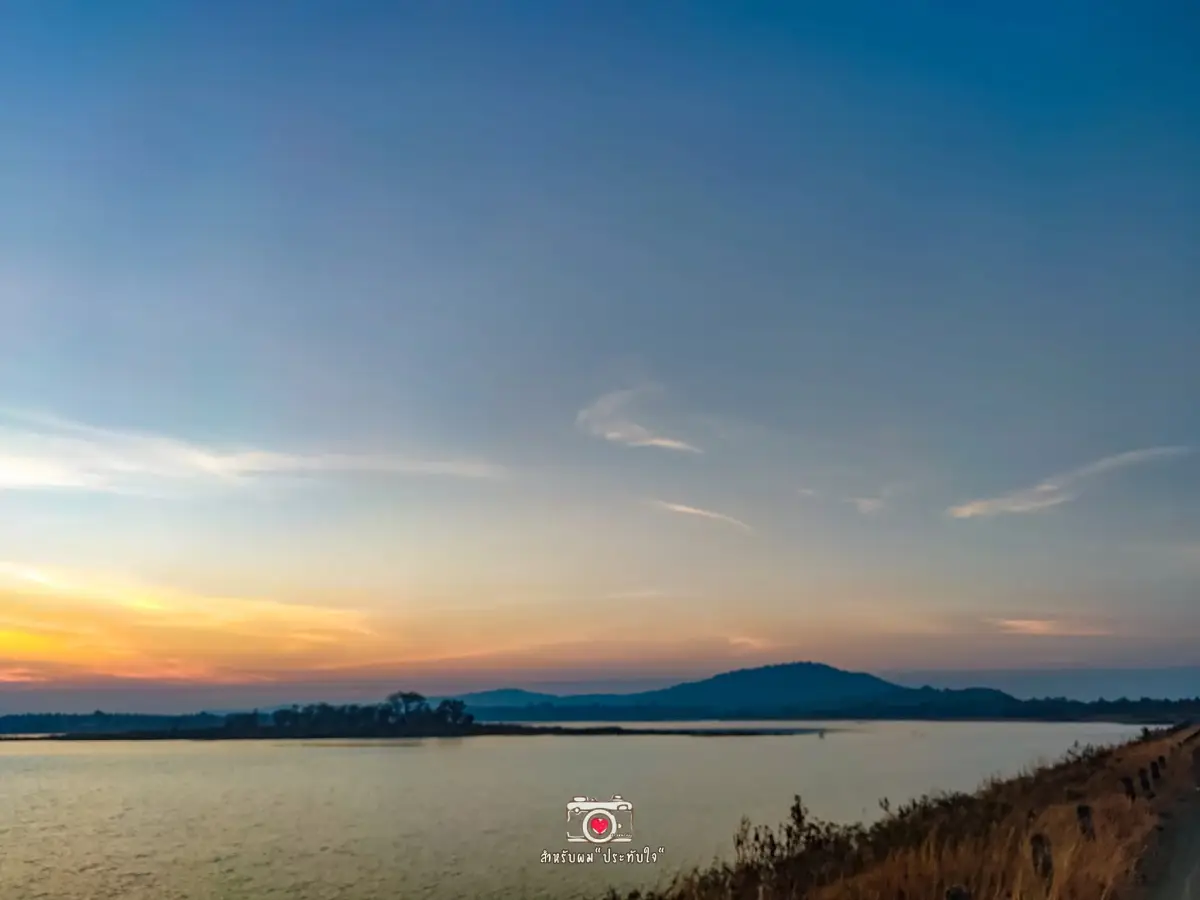
Huai Sabaek Reservoir in Yasothon Province is a medium-sized irrigation reservoir located in Bung Kha Subdistrict, Loeng Nok Tha District. It is an earthfill-dam reservoir with an approximate storage capacity of 26.80 million cubic meters. The reservoir is known for its wide water surface, mountain backdrop, long dam ridge, and peaceful natural scenery. It is suitable for camping, fishing, seasonal water play, outdoor meals, and slow relaxation by the water. For travelers who want to experience a quieter side of Yasothon, Huai Sabaek Reservoir offers a spacious rural landscape that combines water, hills, local recreation, and community water management in one place.
The charm of Huai Sabaek Reservoir comes from the broad view of water stretching toward the mountains and the long earth dam that frames the landscape. From the dam ridge, visitors can see the reservoir, the surrounding green areas, and the open sky in one panoramic view. The scenery is simple but impressive because it reflects a real irrigation landscape rather than a highly commercial tourist site. Travelers who prefer natural places, quiet viewpoints, and rural outdoor experiences will find the reservoir rewarding, especially during cooler hours of the day.
Huai Sabaek Reservoir is especially popular during the Songkran Festival period, which is regarded as its main tourism season. During this time, the area becomes more active with community recreation, sports activities, fishing, and waterside relaxation. Local residents and visitors come to enjoy the reservoir as a place to cool down, gather with family and friends, and spend time near the water. Outside the festival period, the atmosphere becomes calmer, making it suitable for visitors who want a peaceful stop rather than a busy seasonal event.
On ordinary days, the reservoir is best enjoyed slowly. Visitors can sit by the water, take in the view, watch the light on the surface of the reservoir, enjoy a simple picnic, or take photos of the dam ridge and surrounding hills. The site is not designed around dense tourist facilities, but that simplicity is part of its appeal. It gives travelers a chance to experience the local character of Loeng Nok Tha District without crowds, large buildings, or a formal resort atmosphere.
Huai Sabaek Reservoir is more than a recreational attraction. It is an important irrigation reservoir for Bung Kha Subdistrict and surrounding agricultural areas. Reservoirs of this type help store water during the rainy season, support water management during drier months, and provide benefits to farming communities. For this reason, the beauty of the landscape is closely connected with the practical role of water in local life. A visit to the reservoir allows travelers to see how water infrastructure can also become a place for recreation and community tourism.
Yasothon is widely known for culture, the Rocket Festival, and agricultural communities. Huai Sabaek Reservoir adds another dimension to that identity by showing the natural and irrigation landscape of northern Yasothon. Loeng Nok Tha District has a different atmosphere from Yasothon town because it is closer to forested hills, rural roads, and the border routes toward Amnat Charoen and Mukdahan. Travelers who include this reservoir in their route will see a broader and more diverse image of Yasothon Province.
The earth dam is one of the most distinctive features of the site. It provides a long viewing line where visitors can look over the reservoir and the surrounding scenery. Early morning and late afternoon are the best times to walk or stop along the viewing area because the light is softer and the weather is more comfortable. On clear days, the reflection of sunlight and clouds on the water gives the reservoir a calm and expansive appearance.
For camping, Huai Sabaek Reservoir provides a suitable natural atmosphere, but visitors should prepare their own equipment carefully. Public utilities in the area are not as convenient as at fully developed tourist sites. Travelers should bring drinking water, food, cooking equipment used safely, personal lighting, power banks, basic medicine, sun and rain protection, trash bags, and other essential supplies. Proper preparation makes a camping or picnic trip more comfortable and reduces pressure on the local area.
Fishing is another activity often associated with the reservoir. Because it is a large community water body, fishing should be done responsibly and with respect for local rules. Visitors should avoid leaving fishing lines, hooks, food waste, or plastic trash near the water. During organized events or busy festival periods, it is best to follow the guidance of local officials or community caretakers so that the activity remains safe and orderly for everyone.
Water play at Huai Sabaek Reservoir should be limited to safe areas and suitable conditions. A reservoir is not the same as a swimming pool or a supervised beach. Water depth, shoreline conditions, and currents may vary. Children must be supervised closely, and visitors who are not strong swimmers should avoid deep water. During heavy rain or periods of water management activity, visitors should avoid entering the water and follow local safety instructions.
The reservoir area has a relatively wide parking space, making it suitable for private-car travel. This is useful for families, groups of friends, and visitors bringing picnic or camping equipment. Drivers should park only in safe and appropriate areas, avoid blocking access routes, and avoid driving too close to the water’s edge or onto soft ground. Responsible use of the area helps protect the reservoir landscape and keeps the site pleasant for future visitors.
The best time of day to visit is in the morning or late afternoon, when the temperature is lower and the light is better for viewing and photography. Visitors who want a lively atmosphere can visit during Songkran, while those who prefer quiet scenery should choose weekdays or non-festival periods. During the rainy season, travelers should check weather and water conditions before going. During the dry season, visitors should prepare enough drinking water and sun protection because the area can be hot and exposed.
For photography, Huai Sabaek Reservoir offers several strong compositions: the wide reservoir surface, the dam ridge, the mountain backdrop, picnic scenes, camping areas, and sunset views on suitable days. Morning and evening light give the best results because the color of the water, hills, and sky becomes softer. Visitors taking photos with family or friends should choose safe spots and avoid the water’s edge or steep areas.
The reservoir is closely linked with Wat Phu Tham Phra Phutthanimit, a nearby nature-and-religious attraction in Bung Kha Subdistrict. The temple area is connected with rock formations, a cave, a wide stone terrace, and many Buddha images. It is located near the reservoir’s tailwater area, making it easy to combine both places in one trip. A route that includes the reservoir and Wat Phu Tham Phra offers both water scenery and a sacred natural landscape.
Wat Phu Tham Phra Phutthanimit is also associated with local traditions. The temple holds a Buddha image bathing tradition on the full moon day of the sixth lunar month, which corresponds to Visakha Bucha, and local Rocket Festival activities are also held in the area. Combining Huai Sabaek Reservoir with the temple gives visitors a route that includes water, stone landscapes, Buddhist devotion, and local Isan culture.
Travelers can also connect the reservoir with Loeng Nok Tha town, which serves as the main service center of the district. The town has restaurants, accommodations, shops, fuel stations, and basic travel services. After spending time at the reservoir, visitors can return to town for meals or overnight stays. The route along Highway 212 between Loeng Nok Tha and Amnat Charoen is the main access route, making the reservoir suitable for private-car travelers planning a multi-stop itinerary.
Getting to Huai Sabaek Reservoir is most convenient by private car or rental car. From Loeng Nok Tha District, take Highway 212 on the Loeng Nok Tha–Amnat Charoen route. When reaching Ban Huai Sabaek, turn left and continue along the local road from Ban Huai Sabaek toward Ban Nong Khaen Noi. Continue until reaching the irrigation project entrance gate, then turn left to the reservoir area. The distance from Loeng Nok Tha to Huai Sabaek Reservoir is about 40 km.
Getting There during festival periods requires extra planning because the access route passes through community roads and irrigation-project areas. Drivers should use a low speed, watch for motorcycles, farm vehicles, pedestrians, and animals, and avoid entering or leaving the reservoir area too late in the evening. Some parts of the local route may have limited lighting, so checking the vehicle and route before departure is important.
The reservoir is connected with Yasothon Irrigation Project and Bung Kha Municipality. It is an irrigation reservoir important to water management in Bung Kha Subdistrict, while Bung Kha Municipality publishes tourism information and supports seasonal community activities. Visitors who need route guidance or general local information can contact Bung Kha Municipality before traveling.
Visitors should prepare personal supplies before traveling to Huai Sabaek Reservoir. Recommended items include drinking water, food, picnic equipment, camping equipment, fishing gear if needed, trash bags, towels, spare clothes, sun protection, rain protection, insect repellent, and portable lighting. Since utilities in the area are limited, bringing essentials helps make the trip smoother and more comfortable.
Responsible behavior is important because Huai Sabaek Reservoir is both a tourism site and a water resource. Visitors should take all trash back with them, avoid throwing food waste into the water, avoid damaging plants, avoid disturbing aquatic life, avoid loud music that affects other visitors, and avoid lighting fires in unsuitable areas. Campers should choose safe locations away from the water’s edge and must not block access routes used by local people.
Families can enjoy the reservoir, but children should be supervised closely at all times, especially near the water and on sloping areas. Elderly visitors should choose resting spots that are easy to access and should avoid unstable ground. Anyone planning to play in the water should assess the water condition first and avoid entering during heavy rain or when there is water-release activity. Safety is essential at any natural water destination.
For food and accommodation, Loeng Nok Tha town is the most practical base. Restaurants with public contact information include Steak Chogun Loeng Nok Tha, Aep Zaep Loeng Nok Tha, Lucky Shabu, and Southern Thai Food and Khanom Chin Loeng Kao. Accommodation options in the district include Ban Rai Khun Nai Resort, Pikun Kaew Resort, Kiang Pha Resort, and other daily-stay options around Sam Yaek and Loeng Nok Tha town.
For international travelers, Huai Sabaek Reservoir provides a good example of local nature tourism in northeastern Thailand. It is different from Thailand’s famous beaches, major cities, and landmark temples. Here, travelers see an irrigation reservoir, a rural landscape, a mountain backdrop, and the way local communities use water areas for recreation. Those traveling by car with local guidance will gain a more authentic view of Isan life.
The best way to experience the reservoir is to slow down. Instead of treating it as a quick photo stop, visitors should spend time looking at the water, feeling the breeze, observing the surrounding hills, and understanding that this large water body serves both recreation and community water management. The value of Huai Sabaek Reservoir lies in its simplicity, space, and connection to local life.
A good one-day route can begin in Loeng Nok Tha town, where travelers can prepare food and supplies. From there, drive to Huai Sabaek Reservoir for scenery, relaxation, seasonal water play, fishing, or camping-style outdoor time. In the afternoon, continue to Wat Phu Tham Phra Phutthanimit to see the rock terrace, cave area, and Buddha images before returning to Loeng Nok Tha town for dinner or accommodation. This route combines water, nature, religion, and local culture in one district.
During Songkran, Huai Sabaek Reservoir becomes especially suitable for cooling off and community recreation. Visitors should prepare more carefully during this period because the area may be busier than usual. Parking, food, drinking water, water-play safety, and trash management should all be considered. Respecting local rules and using the space properly allows everyone to enjoy the festival without harming the natural setting.
Overall, Huai Sabaek Reservoir is one of Loeng Nok Tha’s meaningful natural attractions. It is a medium-sized irrigation reservoir, a waterside rest area, a camping and fishing location, a seasonal water-play spot, and a route connected with Wat Phu Tham Phra Phutthanimit. Its highlights are the wide water surface, the mountain view, the earth dam, the quiet atmosphere, and the reservoir’s role in supporting the Bung Kha community. Travelers who want to understand Yasothon through nature and local life should include Huai Sabaek Reservoir in their Loeng Nok Tha itinerary.
| Name | Huai Sabaek Reservoir |
| Location | Bung Kha Subdistrict, Loeng Nok Tha District, Yasothon Province |
| Address | Ban Huai Sabaek–Ban Nong Khaen Noi Area, Bung Kha Subdistrict, Loeng Nok Tha District, Yasothon 35120, Thailand |
| Highlights | A medium-sized earthfill-dam reservoir with a mountain backdrop, wide water surface, and scenic natural views suitable for camping, fishing, water play, and outdoor relaxation |
| Distinctive Features | Wide reservoir landscape, earth dam ridge, mountain view, peaceful atmosphere, and spacious parking area |
| History / Importance | A medium-sized irrigation reservoir with an approximate capacity of 26.80 million cubic meters, important for water management, agriculture, and tourism in Bung Kha Subdistrict |
| Name Origin | Named after Huai Sabaek watercourse and Ban Huai Sabaek community on the access route to the reservoir |
| Travel Information | Drive from Loeng Nok Tha District on Highway 212 toward Amnat Charoen. At Ban Huai Sabaek, turn left onto the local road toward Ban Nong Khaen Noi. Continue to the irrigation project entrance gate, then turn left to the reservoir. The distance from Loeng Nok Tha is about 40 km. |
| Current Status | Open as an irrigation reservoir and natural attraction in Bung Kha Subdistrict |
| Open Days | Daily |
| Opening Hours | 08.00 – 17.00 |
| Facilities | Spacious parking area, camping area, fishing area, waterside relaxation space, and dam-ridge viewpoint. Utilities are limited, so visitors should bring personal supplies. |
| Main Areas / Zones | 1. Reservoir water area 2. Earth dam ridge and viewpoint 3. Parking area 4. Camping area 5. Fishing area 6. Seasonal water-play area 7. Picnic and outdoor meal area 8. Route connection to Wat Phu Tham Phra Phutthanimit |
| Caretaker | Yasothon Irrigation Project and Bung Kha Municipality |
| Main Contact Number | Bung Kha Municipality, Tel. 045-970229 |
| Official Website / Official Page | Bung Kha Municipality: www.bungkha.go.th |
| Nearby Tourist Attractions | 1. Wat Phu Tham Phra Phutthanimit, about 2 km 2. Phu Tham Phra Sandstone Area, about 2 km 3. Ban Nong Khaen Noi, about 4 km 4. Ban Huai Sabaek, about 6 km 5. Loeng Nok Tha Town, about 40 km 6. Old Loeng Nok Tha Airfield, about 43 km |
| Nearby Restaurants | 1. Steak Chogun Loeng Nok Tha, about 40 km, Tel. 085-4995922, 091-1314155, 086-2563171, 081-5931351 2. Aep Zaep Loeng Nok Tha, about 40 km, Tel. 080-4688662 3. Lucky Shabu, about 40 km, Tel. 080-4062499 4. Southern Thai Food & Khanom Chin Loeng Kao, about 41 km, Tel. 081-9777009 5. Restaurants In Loeng Nok Tha Town, about 40 km |
| Nearby Accommodations | 1. Ban Rai Khun Nai Resort, about 40 km, Tel. 045-782055, 080-5873022 2. Pikun Kaew Resort, about 40 km, Tel. 094-5153264 3. Kiang Pha Resort Loeng Nok Tha, about 43 km 4. Accommodations In Loeng Nok Tha Town, about 40 km 5. Daily Stays Around Sam Yaek Area, about 43 km |
Frequently Asked Questions (FAQ)
Q: Where is Huai Sabaek Reservoir located?
A: Huai Sabaek Reservoir is located in Bung Kha Subdistrict, Loeng Nok Tha District, Yasothon Province. The access route runs from Highway 212 through Ban Huai Sabaek and Ban Nong Khaen Noi.
Q: When is Huai Sabaek Reservoir open?
A: It is open daily from 08.00 to 17.00.
Q: What is special about Huai Sabaek Reservoir?
A: The reservoir has a wide water surface, an earth dam ridge, mountain scenery, and a peaceful natural atmosphere. It is suitable for camping, fishing, seasonal water play, picnics, and scenic relaxation.
Q: What is the best time to visit Huai Sabaek Reservoir?
A: The Songkran Festival period is the main tourism season. Morning and late afternoon are also good times for viewing, photography, and relaxing because the weather is more comfortable.
Q: Is Huai Sabaek Reservoir suitable for camping?
A: Yes. It is suitable for camping and outdoor relaxation, but visitors should bring their own supplies because public utilities in the area are limited.
Q: How do travelers get to Huai Sabaek Reservoir?
A: From Loeng Nok Tha District, take Highway 212 toward Amnat Charoen. At Ban Huai Sabaek, turn left toward Ban Nong Khaen Noi, continue to the irrigation project entrance gate, then turn left to the reservoir. The distance is about 40 km.
Q: What nearby places can be visited with Huai Sabaek Reservoir?
A: Visitors can continue to Wat Phu Tham Phra Phutthanimit, Phu Tham Phra sandstone area, Loeng Nok Tha town, the old Loeng Nok Tha airfield, and attractions along the Loeng Nok Tha–Amnat Charoen route.
Q: Who can visitors contact for information about Huai Sabaek Reservoir?
A: Visitors can contact Bung Kha Municipality at 045-970229.
 Category: ●Nature and Wildlife
 Group: ●Dam, Reservoir, Lake
Last Update : 3 MonthAgo
 Last Update : 3 MonthAgo
 Click to Access the Navigation Map GPS
Huai Sabaek Reservoir Map

 Art, Culture and Heritage
 Historical Sites and Monuments(6)
 Landmarks and Memorials(1)
 Art, Craft Centres, Tradition(4)
 Museums(1)
 Historic Homes and Cities(1)
 Places of Worship
 Temple(22)
 Church(1)
 Other Sacred Sites(10)
 Research and Development
 Royal Project(2)
 Suburban Living
 Village, Community(3)
 Local Market(1)
 National Parks and Marine Reserves(2)
 Mountain (Doi)(2)
Dam, Reservoir, Lake(7)
Mountain (Doi)(2)
Dam, Reservoir, Lake(7)
 River, Canal(2)
 Bays and Beaches(1)
 Other natural attractions(2)
 Entertainment and Agricultural
 Farms, Parks and Ecotourism(1)
 Travel Articles, Recipes
 Travel Review, Food Review(2)


