
lovethailand home >Northeastern Travel Attractions >Yasothon Travel Attractions >Kham Khuan Kaeo >Phon Than > Phra That Phon Than
TL;DR: Phra That Phon Than is located at Phon Than Subdistrict, Kham Khuean Kaeo District, Yasothon Province, open Daily, hours 06.00 – 18.00. Highlights include An old sacred stupa long worshipped by people in Phon Than Subdistrict and nearby communities.
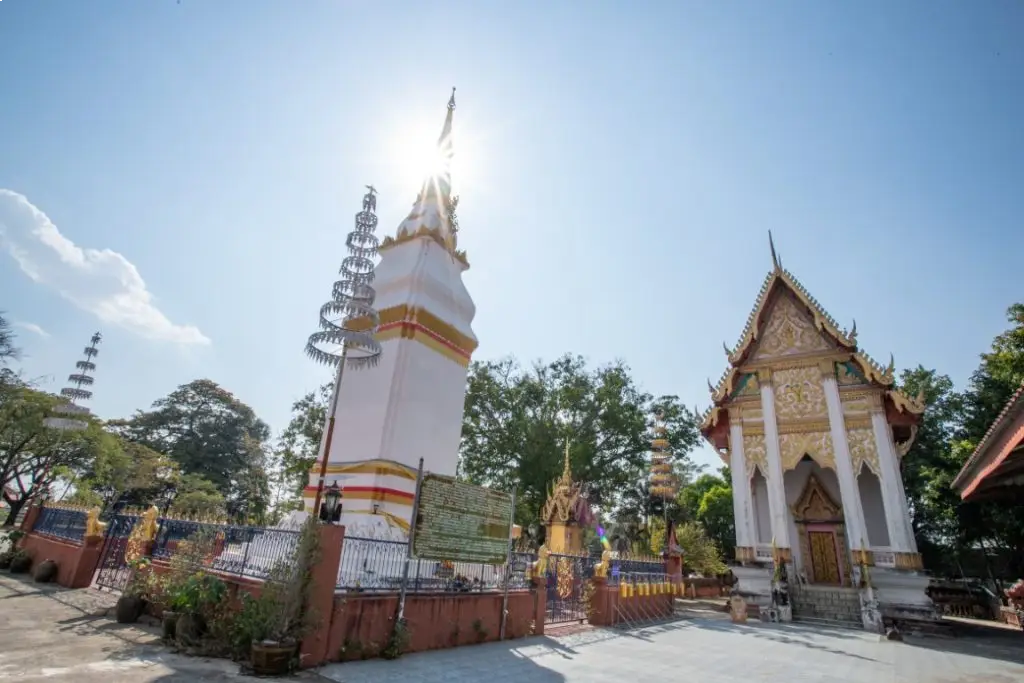
Phra That Phon Than
Open Days: Daily
Opening Hours: 06.00 – 18.00
Phra That Phon Than in Yasothon Province is an old sacred stupa and a long-respected spiritual landmark of Phon Than Subdistrict in Kham Khuean Kaeo District. For generations, local people from Phon Than and nearby communities have worshipped this stupa as a sacred place connected with Buddhist faith, local identity, and community memory. It is a modest but meaningful destination for travelers who want to explore old temples, rural Buddhist heritage, and lesser-known cultural sites in northeastern Thailand.
Phra That Phon Than is not a large commercial attraction. Its value lies in its role as a local sacred site where faith is still actively preserved by the community. The stupa is associated with local beliefs about relics or sacred earth from Buddhist holy places being enshrined within the structure. It is also linked in local tradition to the era associated with Phra That Phanom, one of the most important Buddhist stupas in the Mekong region. These beliefs give Phra That Phon Than a deep spiritual meaning for the people of Phon Than.
The site is located in Phon Than Subdistrict, Kham Khuean Kaeo District, Yasothon Province. It is suitable for visitors who enjoy quiet temple visits, local history, and authentic cultural experiences away from crowded tourist routes. A visit to Phra That Phon Than offers a chance to see how a rural Thai community preserves its sacred heritage through worship, storytelling, and religious practice.
For local people, Phra That Phon Than is a spiritual center rather than merely an old structure. It serves as a place for merit-making, worship, and community gatherings. The stupa represents continuity between past and present. Older generations pass down stories about the stupa, while younger generations continue to recognize it as an important landmark of their home community. This ongoing relationship makes the site a living part of local culture.
The belief that relics or sacred earth from Buddhist holy places were enshrined in the stupa gives Phra That Phon Than a special religious dimension. In Buddhist tradition, places connected to the life of the Buddha carry deep symbolic value. When sacred earth from such places is believed to be enshrined in a local stupa, the stupa becomes more than an architectural object. It becomes a spiritual link between the local community and the wider Buddhist world.
Local tradition also connects Phra That Phon Than with the period associated with Phra That Phanom. Phra That Phanom has long been a central object of devotion in northeastern Thailand and the Mekong region. By linking Phra That Phon Than with this sacred tradition, the community gives its own stupa a place within a broader Buddhist landscape. This connection helps visitors understand why a relatively small local stupa can carry strong emotional and religious significance.
The atmosphere at Phra That Phon Than is calm and rooted in local life. Visitors will find a sacred site that reflects the simplicity of a community temple rather than the scale of a major tourist monument. This quietness is part of its charm. Travelers who appreciate local temples, rural landscapes, and genuine places of worship will find the visit meaningful, especially when approached with respect and patience.
A visit to Phra That Phon Than should begin with respectful worship. Visitors may pay homage to the stupa, make merit, offer prayers, and quietly observe the temple surroundings. Since this is a sacred place used by the local community, modest clothing and respectful behavior are essential. Visitors should avoid loud conversation, disruptive photography, or touching sacred objects unnecessarily.
Phra That Phon Than is particularly suitable for cultural travelers who want to understand the role of Buddhist stupas in Isan communities. In northeastern Thailand, local stupas often function as spiritual anchors for villages and subdistricts. They are places where belief, memory, merit-making, and community identity come together. Phra That Phon Than is a clear example of this tradition.
The stupa also reflects the way local communities preserve history through oral tradition. While large historical monuments often have formal records and extensive interpretation, smaller local stupas are frequently remembered through stories passed down among villagers. These stories are important because they reveal how people understand their own sacred landscape. Phra That Phon Than is valuable not only for what it looks like, but for what it means to the people who continue to worship it.
For Thai visitors, Phra That Phon Than offers a meaningful temple stop in Yasothon beyond the better-known attractions of the province. It helps broaden the image of Yasothon from the famous Rocket Festival to a province with old stupas, community temples, and sacred local traditions. For foreign travelers, it provides an opportunity to experience a rural Buddhist site that is still closely connected to local devotion.
The best time to visit is in the morning or late afternoon. Morning visits are comfortable, quiet, and suitable for worship. Late afternoon offers softer light and a peaceful atmosphere. Midday can be hot, especially during the dry season, so visitors should prepare drinking water, a hat, or an umbrella if planning to explore nearby sites on the same day.
Getting There is most convenient by private car. Travelers can start from Yasothon city, drive toward Kham Khuean Kaeo District, and continue to Phon Than Subdistrict. A private vehicle allows visitors to combine Phra That Phon Than with nearby cultural sites such as Phra That Ku Chan, Ban Song Pueai archaeological site, Dong Mueang Toei archaeological site, Wat Phra Phutthabat Yasothon, Phra That Kong Khao Noi, and Phaya Thaen Public Park.
Public transportation is less flexible for this type of route. Travelers using public transport should first reach Kham Khuean Kaeo District center, then continue by local vehicle or private hire to Phon Than Subdistrict. Hiring a local vehicle is useful for visitors who want to see several attractions in one day without repeatedly returning to the main road.
Phra That Phon Than can be included in a cultural route through Kham Khuean Kaeo District. A practical itinerary may begin with worship at Phra That Phon Than, continue to Phra That Ku Chan, and then visit Ban Song Pueai or Dong Mueang Toei for archaeological context. This route helps travelers understand Yasothon as a province with deep local heritage, not only as the home of seasonal festivals.
The site is suitable for elderly visitors, families, Buddhist travelers, and people interested in local history. A short visit may take less than an hour, but travelers who want to understand the cultural context should spend more time observing the surroundings and reflecting on the role of the stupa in the community. Parents can use the visit to explain Buddhist stupas, sacred relic beliefs, and temple etiquette to children.
During local religious activities, visitors should be especially mindful of community space. If monks, elders, or villagers are taking part in ceremonies, visitors should keep a respectful distance and avoid interrupting. Photography should be done discreetly. Respectful behavior helps preserve the dignity of the site and creates a better experience for both visitors and the local community.
The main appeal of Phra That Phon Than is its authenticity. It is not designed as a performance for tourists. It remains a sacred place that local people genuinely respect. This makes the visit different from sightseeing at a major landmark. Travelers who approach the site with cultural curiosity will gain a deeper understanding of Isan religious life.
For photography, wide shots of the stupa and temple area are usually more appropriate than close, intrusive images. Visitors should avoid standing on sacred platforms, touching religious objects, or blocking worshippers. The best photographs are those that capture the calm character of the place while preserving its dignity.
Foreign visitors should understand that Phra That Phon Than is a local sacred stupa rather than simply an ancient pagoda. The word “Phra That” refers to a stupa associated with sacred Buddhist relics or relic-related devotion. This distinction is important because it explains why local people treat the site with strong reverence. The stupa is not only a historical object; it is part of living religious practice.
A visit to Phra That Phon Than also supports community-based travel in Yasothon. Travelers can stop at local restaurants, cafes, and small accommodations in Kham Khuean Kaeo District, helping distribute tourism benefits beyond the provincial center. This kind of travel is especially suitable for visitors who want to explore quieter, more meaningful destinations.
In summary, Phra That Phon Than is a worthwhile sacred heritage site for travelers visiting Kham Khuean Kaeo District in Yasothon Province. It combines local Buddhist devotion, oral tradition, community identity, and a connection to the wider sacred geography of Isan. For those seeking a peaceful temple visit with cultural depth, Phra That Phon Than is a meaningful stop that reveals the quieter spiritual side of Yasothon.
| Name | Phra That Phon Than |
| Location | Phon Than Subdistrict, Kham Khuean Kaeo District, Yasothon Province |
| Address | Wat Phra That Phon Than, Phon Than Subdistrict, Kham Khuean Kaeo District, Yasothon 35110, Thailand |
| Highlights | An old sacred stupa long worshipped by people in Phon Than Subdistrict and nearby communities |
| History | Local tradition speaks of relics or sacred earth from Buddhist holy places being enshrined in the stupa, with the site also linked to the era associated with Phra That Phanom. |
| Distinctive Features | A community stupa with strong religious and cultural significance for Phon Than Subdistrict |
| Importance | A spiritual center for local worship, merit-making, and Buddhist activities in the community |
| Travel Information | Travel from Yasothon city toward Kham Khuean Kaeo District, then continue to Phon Than Subdistrict. A private car is the most convenient option for visiting multiple nearby sites in one day. |
| Current Status | Open for worship and visits during temple hours |
| Open Days | Daily |
| Opening Hours | 06.00 – 18.00 |
| Fees | No admission fee |
| Facilities | Temple courtyard, worship area, parking area, and religious activity space |
| Main Areas / Zones | Phra That Phon Than stupa Stupa worship courtyard Temple religious activity area Community area around the temple |
| Caretaker | Wat Phra That Phon Than and Phon Than community |
| Nearby Tourist Attractions | 1. Phra That Ku Chan, about 18 km 2. Ban Song Pueai Archaeological Site, about 23 km 3. Dong Mueang Toei Archaeological Site, about 28 km 4. Wat Phra Phutthabat Yasothon, about 36 km 5. Phra That Kong Khao Noi, about 39 km 6. Phaya Thaen Public Park, about 42 km |
| Nearby Restaurants | 1. Local restaurants in Phon Than Subdistrict, about 1 km 2. Kai Yang Pa Win Restaurant, about 17 km 3. Kalam Ice Cream Cafe Kham Khuean Kaeo, about 21 km 4. Krua Kan Eng Kham Khuean Kaeo, about 21 km 5. KAO NA COFFEE Yasothon, about 22 km 6. Kuay Tiao Ruea Khun Pluem, about 22 km |
| Nearby Accommodations | 1. Local accommodations in Kham Khuean Kaeo District, about 20 km 2. Ruen Lamool Hotel Kham Khuean Kaeo, about 21 km 3. Chamchuri Resort Kham Khuean Kaeo, about 21 km 4. Namthip Resort, about 21 km 5. Sukhon Nakhon Hotel, about 21 km 6. Huai Chan Resort, about 22 km |
Frequently Asked Questions (FAQ)
Q: Where is Phra That Phon Than located?
A: Phra That Phon Than is located in Phon Than Subdistrict, Kham Khuean Kaeo District, Yasothon Province.
Q: Why is Phra That Phon Than important?
A: It is an old sacred stupa and a spiritual landmark of Phon Than community, long respected by local people and nearby villages.
Q: How is Phra That Phon Than connected with Phra That Phanom?
A: Local tradition links Phra That Phon Than with the era associated with the construction of Phra That Phanom, giving the site strong religious meaning in the Isan Buddhist context.
Q: What are the opening hours of Phra That Phon Than?
A: The site is open daily from 06.00 to 18.00.
Q: Is there an admission fee?
A: No. Visitors can enter, worship, and explore the site without an admission fee.
Q: What is the best way to get to Phra That Phon Than?
A: The most convenient way is by private car from Yasothon city toward Kham Khuean Kaeo District, then continuing to Phon Than Subdistrict.
Q: What nearby attractions can be visited on the same trip?
A: Nearby attractions include Phra That Ku Chan, Ban Song Pueai Archaeological Site, Dong Mueang Toei Archaeological Site, Wat Phra Phutthabat Yasothon, Phra That Kong Khao Noi, and Phaya Thaen Public Park.
Q: How should visitors behave at Phra That Phon Than?
A: Visitors should dress modestly, keep a respectful manner, avoid loud behavior, and respect local worshippers and temple activities.
 Category: ●Places of Worship
 Group: ●Other Sacred Sites
Last Update : 3 MonthAgo
 Last Update : 3 MonthAgo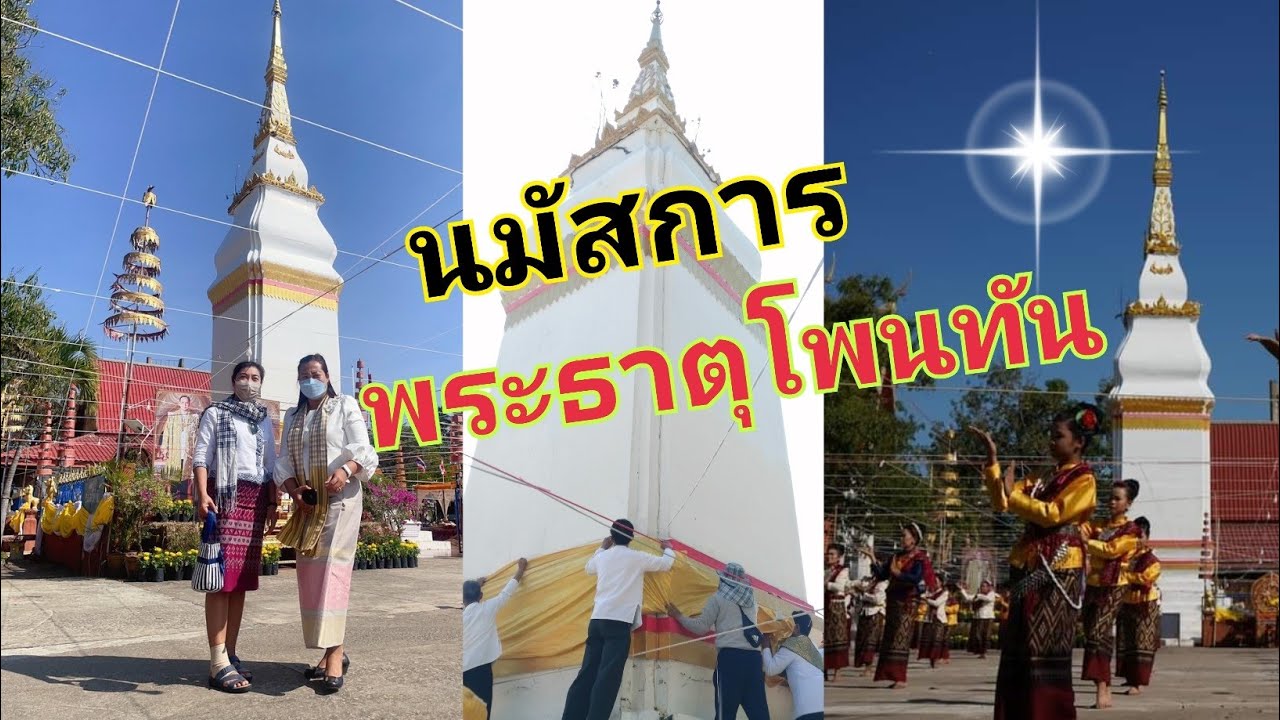
 Click to Access the Navigation Map GPS
Phra That Phon Than Map

 Art, Culture and Heritage
 Historical Sites and Monuments(6)
 Landmarks and Memorials(1)
 Art, Craft Centres, Tradition(4)
 Museums(1)
 Historic Homes and Cities(1)
 Temple(22)
 Church(1)
Other Sacred Sites(10)
Church(1)
Other Sacred Sites(10)
 Research and Development
 Royal Project(2)
 Suburban Living
 Village, Community(3)
 Local Market(1)
 Nature and Wildlife
 National Parks and Marine Reserves(2)
 Mountain (Doi)(2)
 Dam, Reservoir, Lake(7)
 River, Canal(2)
 Bays and Beaches(1)
 Other natural attractions(2)
 Entertainment and Agricultural
 Farms, Parks and Ecotourism(1)
 Travel Articles, Recipes
 Travel Review, Food Review(2)


