
lovethailand home >Northeastern Travel Attractions >Yasothon Travel Attractions >Kut Chum >Kut Chum > Phu Hin Pun
TL;DR: Phu Hin Pun is located at Ban Na Mon, Moo 16, Kut Chum Subdistrict, Kut Chum District, Yasothon Province, open Daily, hours 06.00 – 18.00.
Phu Hin Pun
Open Days: Daily
Opening Hours: 06.00 – 18.00
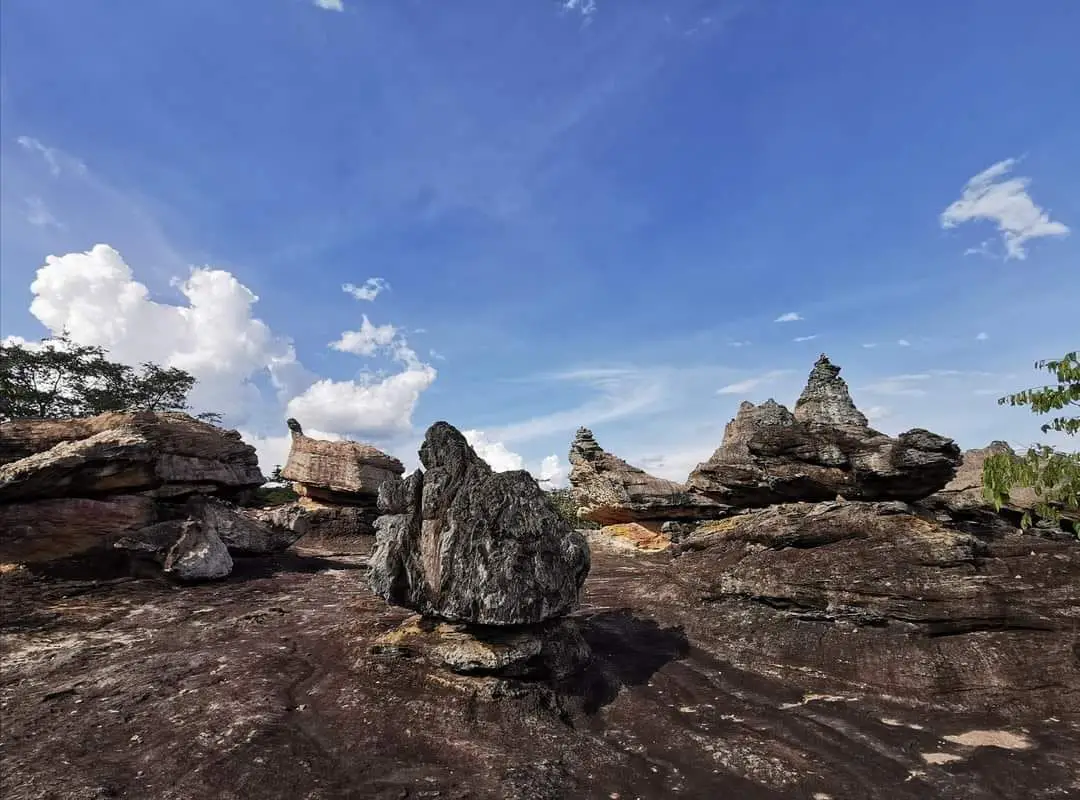
Phu Hin Pun in Yasothon, also known as Wat Pa Phutthasathan Phu Hin Pun, is a natural and religious site located at Ban Na Mon, Moo 16, Kut Chum Subdistrict, Kut Chum District, Yasothon Province. The area lies along a mountain landscape extending from the Loeng Nok Tha direction into Kut Chum District. Its main highlight is a wide sandstone rock field filled with natural rock sculptures in unusual shapes. These formations rise across a broad stone terrace and create one of the most distinctive local ecological and geological learning sites in Yasothon.
Although the name “Phu Hin Pun” may suggest limestone, geological information identifies the rock field as sandstone, conglomeratic sandstone, and conglomerate. The rocks are mainly white, grayish white, and pale yellow, with medium to coarse sediment grains. Some layers contain quartz, chert, volcanic rock fragments, and quartzite. These rocks belong to the Phu Phan Formation of the Khorat Group, dating to the Early Cretaceous period, about 145 to 100 million years ago. This makes Phu Hin Pun valuable not only as a scenic site, but also as a place where visitors can understand the geological history of northeastern Thailand through visible rock formations.
Phu Hin Pun is located in the Ban Na Mon area of Kut Chum Subdistrict and is also related to the northwestern landscape of Ban Nong Mueang Klang in geological descriptions. The rock field stands at about 270 meters above sea level. From Kut Chum District center, travelers can follow Highway 2169 on the Kut Chum-Loeng Nok Tha route to Ban Erawan, then continue along rural road YS 4011 toward Wat Phu Hin Pun. The distance from Kut Chum District center is about 20 km to the northwest.
The landscape is the first attraction of Phu Hin Pun. The area consists of upland terrain, open rock surfaces, scattered trees, and natural stone formations. Some rocks rise like pillars. Some resemble mushrooms. Some appear like animals or imaginary creatures depending on the angle of view. These shapes were not carved by humans. They were created slowly by rainwater, wind, sunlight, weathering, and erosion acting on rock layers of different hardness over a very long period of time.
The rock field provides a clear example of geomorphological processes. Rainwater enters cracks, joints, and weak layers in the sandstone. Softer material erodes faster, while more resistant parts remain standing. Over time, this creates strange shapes, overhangs, pillars, and mushroom-like rocks. For visitors, the site offers a direct and understandable view of how natural forces can create sculptural forms without human design.
Phu Hin Pun is suitable for travelers interested in nature, geology, and local ecology. The rock field shows how stone, soil, plants, and moisture interact. Open areas exposed to sunlight support small plants, shrubs, and seasonal grasses. Shaded cracks and shallow soil pockets allow more moisture to remain, supporting different types of vegetation. This creates several small habitats in one area: dry rock surfaces, shaded stone gaps, shallow soil areas, and tree-covered edges.
From an ecological perspective, the rock field is not an empty stone surface. Plants growing in cracks help hold soil and moisture. Insects and small animals use the vegetation and stones as shelter. Birds may rest on trees or rock edges while searching for food. Visitors who look closely will see that the area contains many small natural relationships. The beauty of Phu Hin Pun lies not only in large rock shapes, but also in the living details around them.
Wat Pa Phutthasathan Phu Hin Pun stands within this natural setting. The temple area has a calm forest-mountain atmosphere suitable for worship, meditation, and quiet reflection. Its setting among rocks, trees, and open air gives the site a peaceful character different from temples in town centers. Visitors can pay respect to the Buddha, spend time in a quiet temple atmosphere, and walk through the natural rock landscape on the same trip.
The temple’s mountain setting gives Phu Hin Pun a strong sense of place. As visitors move toward the upper area, the landscape gradually changes from village surroundings into a quieter natural environment. The rock field opens onto views of the rural landscape around Kut Chum District. Morning and late afternoon light make the rock shapes more expressive, while the open sky and stone surfaces give the place a spacious feeling.
A visit to Phu Hin Pun should be slow and attentive. Visitors should not treat the site only as a quick photo stop. The rock surfaces, colors, erosion patterns, cracks, layers, and small plants all reveal the story of the landscape. Walking slowly also improves safety because some areas of the rock field are uneven, sloped, or slippery after rain. This is a natural site, and careful movement is important.
The most memorable features are the unusual stone formations. Some rocks have broad bases and narrow tops. Some look like mushroom columns. Some resemble animals or mythical figures. Each person may imagine a different shape. This makes the rock field enjoyable for families, photographers, and nature learners. The formations are special because their beauty comes from natural imperfection and long-term change rather than decoration.
The temple area also plays an important role for the local community. Local people use the temple for merit-making, worship, meditation, and religious activities. Because it is located in a natural mountain setting, the temple blends with the surrounding landscape rather than standing apart from it. Phu Hin Pun therefore combines natural learning and Buddhist practice in one place.
For travelers interested in local history, Phu Hin Pun reflects the relationship between communities and upland landscapes in Kut Chum District. Many mountain areas in Kut Chum and nearby Loeng Nok Tha are associated with temples, forest monasteries, rock fields, caves, and community stories. Phu Hin Pun is part of this broader cultural and natural landscape. It is not only a place of strange rocks, but also part of a network of faith, nature, and local memory.
Several nearby places can be connected with Phu Hin Pun in one route, including Phu Mak Phrik, Lub Nong No Reservoir, Phu Tham Phra, Phu Thang Kwian, and Kut Chum District center. These places help visitors understand the wider natural landscape of Kut Chum, including rock fields, hills, reservoirs, caves, forest temples, and rural communities. Phu Hin Pun can be the main stop of a half-day trip or part of a full-day nature route.
Lub Nong No Reservoir is a nearby geological and natural site. The area contains a broad rock field with clear cross-bedding and sedimentary features that help explain ancient water flow directions. Visiting the reservoir together with Phu Hin Pun gives travelers a wider view of the sandstone landscapes in Kut Chum. It shows that these rock formations are part of a broader geological system, not isolated formations.
Phu Tham Phra is another nearby destination connected with the same upland landscape. The area is known for caves and Buddha images, while Phu Hin Pun is known for open rock formations and natural stone sculptures. Visiting both places helps travelers experience two sides of Kut Chum’s mountain landscape: Buddhist cave heritage and sandstone rock-field scenery.
Phu Thang Kwian also adds local meaning to the route. The name is associated with rock grooves that resemble cart tracks and is part of the local identity of Kut Chum District. A route that includes Phu Hin Pun, Phu Tham Phra, and Phu Thang Kwian allows visitors to experience mountains, rock legends, forest temples, and geological landscapes together.
The best time to visit Phu Hin Pun is from morning to afternoon, between 06.00 and 18.00. Morning is suitable for peaceful temple visits, cooler weather, and soft light for photography. Afternoon light creates stronger shadows on the rock formations and makes their shapes easier to see. Evening visits are not recommended for general travelers because the rock surfaces are uneven and visibility becomes limited.
The best season depends on the purpose of the visit. The late rainy season and early cool season bring fresher vegetation and a pleasant atmosphere. The cool season is comfortable for walking and photography. The dry season makes rock surfaces and structures easier to observe, but visitors should be careful with strong sun and heat reflected from the stone. During the rainy season, the rock may become slippery, so visitors should walk only in safe areas.
Getting There is most convenient by private car. From Kut Chum District, take Highway 2169 on the Kut Chum-Loeng Nok Tha route toward Ban Erawan, then continue on rural road YS 4011 to Wat Phu Hin Pun. The site is about 20 km northwest of Kut Chum District center. Some parts of the route pass rural and community areas, so travelers should check road conditions, prepare drinking water, and plan to return before dark.
From Yasothon city, travelers can first drive to Kut Chum District and continue to Phu Hin Pun. The trip is suitable for a day route. A practical plan is to leave Yasothon in the morning, visit Phu Hin Pun for worship and rock-field walking, then continue to Lub Nong No Reservoir, Phu Tham Phra, or Phu Thang Kwian before returning to Kut Chum or Yasothon in the evening.
There is no admission fee for general temple visits and nature observation in the main accessible areas. Visitors should respect the temple setting and the natural environment. They should dress politely, avoid loud behavior, avoid climbing risky rocks, avoid writing on stone surfaces, avoid moving rocks or plants, avoid littering, and avoid entering monks’ residential areas without permission.
Photography should be done with safety and respect. The rock formations are attractive in morning and afternoon light, but visitors should not climb onto cracked, slippery, or dangerous rocks for photographs. Drone use and disruptive equipment should not be used without permission because the site is both a natural area and a Buddhist temple.
For families, Phu Hin Pun is a good outdoor learning site. Children can learn how natural forces shape rock, how plants grow in rock cracks, and how a temple can exist within a natural landscape. Parents should keep children close because some rock surfaces are uneven and may be slippery after rain.
For geology learners, Phu Hin Pun provides a clear field example of the Khorat Group and Phu Phan Formation. Visitors can observe rock color, grain size, gravel content, sedimentary layers, joints, cracks, weathering, and erosion forms. Seeing these features in the field helps explain that landscapes are shaped by deep time and natural processes.
For visitors interested in meditation or quiet travel, Phu Hin Pun offers a peaceful forest-temple atmosphere. The sound of wind, birds, and the stillness of the rock field make it suitable for a calm visit. It is not a crowded commercial attraction, and that quietness is one of its main values.
For international travelers, Phu Hin Pun shows another side of Yasothon. The province is often known for the Rocket Festival, temples, and Isan cultural traditions, but this site reveals its natural and geological character. The unusual sandstone formations, forest temple setting, rural views, and local routes around Kut Chum help visitors understand the province beyond its better-known city attractions.
Phu Hin Pun is best suited to travelers who appreciate simple and authentic places. Its value does not come from large facilities or commercial development. It comes from natural rock formations, a peaceful temple atmosphere, upland scenery, and the local landscape of Kut Chum. Visitors should prepare suitable shoes, drinking water, sun protection, and enough time to walk slowly and respectfully.
Facilities are basic and reflect the setting of a temple and rural natural site. Visitors may find temple halls, open areas, parking spaces, and walking areas around the rock field. Main restaurants and accommodations are better found in Kut Chum District center or Yasothon city. Travelers planning to visit several natural sites in the area should prepare food, water, and accommodation plans in advance.
Overall, Phu Hin Pun is a valuable destination combining nature, Buddhism, geology, and local ecology. Its strength is not size or luxury, but the chance to see natural sandstone sculptures, visit a peaceful forest temple, observe the geological character of Kut Chum, and experience a quiet mountain landscape in Yasothon.
In summary, Phu Hin Pun in Yasothon is suitable for travelers who want a meaningful nature trip. Visitors can walk among natural sandstone sculptures, pay respect at a forest temple, learn about rock-field geomorphology, study local ecology, and connect the trip with nearby sites such as Phu Tham Phra, Phu Thang Kwian, Lub Nong No Reservoir, and Phu Mak Phrik. For those who want to see Yasothon through mountains, sandstone, forest temples, and quiet nature, Phu Hin Pun is a highly worthwhile destination.
| Name | Phu Hin Pun / Wat Pa Phutthasathan Phu Hin Pun |
| Type | Natural Attraction, Buddhist Forest Temple, Geological Learning Site, And Local Ecology Area |
| Location | Ban Na Mon, Moo 16, Kut Chum Subdistrict, Kut Chum District, Yasothon Province |
| Address | Wat Pa Phutthasathan Phu Hin Pun, Ban Na Mon, Moo 16, Kut Chum Subdistrict, Kut Chum District, Yasothon 35140, Thailand |
| Coordinates | 16.135890, 104.283464 |
| Approximate Elevation | About 270 meters above sea level |
| Highlights | Natural sandstone sculptures, broad rock field, unusual rock formations, mushroom-shaped rock pillars, animal-like rocks, forest temple, viewpoint, and local ecological learning area |
| Geological Features | Conglomeratic sandstone, sandstone, and conglomerate in white, grayish white, and pale yellow tones. The site belongs to the Phu Phan Formation of the Khorat Group, dating to the Early Cretaceous period, about 145-100 million years ago. |
| Landscape Characteristics | Upland terrain, rock field, natural stone outcrops, forest temple area, community routes, medium-sized trees, shrubs, ground plants, and natural rock cracks |
| Religious Significance | The site is home to Wat Pa Phutthasathan Phu Hin Pun, a peaceful forest temple suitable for worship, meditation, quiet reflection, and learning about the relationship between Buddhism and nature. |
| Suitable Activities | Worship, walking around the rock field, photographing natural rock formations, geological learning, local ecology observation, viewpoint visit, quiet forest-temple experience, and connecting with nearby nature sites in Kut Chum District |
| Travel Information | From Kut Chum District center, take Highway 2169 on the Kut Chum-Loeng Nok Tha route to Ban Erawan, then continue along rural road YS 4011 to Wat Phu Hin Pun. The distance is about 20 km northwest of Kut Chum District center. |
| Current Status | Open as a Buddhist forest temple and natural attraction for worship, rock-field walking, ecology learning, and viewing natural sandstone sculptures |
| Open Days | Daily |
| Opening Hours / Recommended Visiting Hours | 06.00 – 18.00 |
| Fees | No admission fee for general worship and nature visits in accessible areas |
| Facilities | Temple hall, forest-temple area, rock field, nature walking points, parking area at designated spots, community access routes, and restaurants in Kut Chum District center |
| Main Areas / Zones | Wat Pa Phutthasathan Phu Hin Pun Zone Worship Hall And Temple Area Zone Broad Rock Field Zone Unusual Rock Formation Zone Mushroom-Shaped Rock Pillar Zone Viewpoint And Upland Nature Zone Rock-Crack Vegetation Zone Ban Na Mon Community Route Zone |
| Caretaker / Related Agencies | Monastic Community Of Wat Pa Phutthasathan Phu Hin Pun, Kut Chum Subdistrict Administrative Organization, Kut Chum Pattana Subdistrict Municipality, Yasothon Provincial Office Of Buddhism, and Ban Na Mon community |
| Contact Numbers | Kut Chum Subdistrict Administrative Organization, Fax. 045-979707 Kut Chum Pattana Subdistrict Municipality, Tel. 045-789158 |
| Nearby Tourist Attractions | 1. Phu Mak Phrik, about 3 km 2. Lub Nong No Reservoir, about 5 km 3. Phu Tham Phra / Wat Phu Tham Phra, about 6 km 4. Phu Thang Kwian, about 10 km 5. Kut Chum District Center, about 20 km 6. Wat Mahathat Yasothon, about 60 km 7. Ban Sing Tha Old Quarter, about 61 km 8. Phaya Thaen Public Park, about 62 km |
| Nearby Restaurants | 1. Local Restaurants In Ban Na Mon And Kut Chum Subdistrict, about 1-5 km 2. Shabu Nai Phon Cha Nom Kae Dam Kut Chum, about 20 km, Tel. 085-4920665 3. Ta Nai Khai Luk Chin Kut Chum, about 20 km, Tel. 098-6408742 4. Cozyroom Cafe Slowbar Coffee & Cozy Life Kut Chum, about 20 km, Tel. 091-1794613 5. Lab Ped Yasothon Kut Chum, about 21 km, Tel. 064-7450659 6. Larb Yaso Kut Chum Kai Yang Saep, about 21 km, Tel. 087-8263981 |
| Nearby Accommodations | 1. Sot Chaeng Resort Kut Chum, about 18 km, Tel. 061-4977465 2. Phiang Din Resort Kut Chum, about 20 km, Tel. 088-4805802 3. Sabai Sabai Resort Kut Chum, about 20 km, Tel. 093-3944224 4. Yostawee Resort Kut Chum, about 21 km, Tel. 085-7485932 5. Red Roof Farmstay Yasothon, Kut Chum District, about 22 km, Tel. 096-2493351 6. Ban Suan Resort Kut Chum, about 22 km, Tel. 093-2241577 |
Frequently Asked Questions (FAQ)
Q: Where is Phu Hin Pun located?
A: Phu Hin Pun is located at Ban Na Mon, Moo 16, Kut Chum Subdistrict, Kut Chum District, Yasothon Province. It is home to Wat Pa Phutthasathan Phu Hin Pun and a natural sandstone rock field.
Q: What is Phu Hin Pun known for?
A: It is known for natural sandstone sculptures, a broad rock field, mushroom-shaped rock pillars, animal-like rocks, a forest temple, viewpoints, and local ecological learning opportunities.
Q: What are the opening hours?
A: Phu Hin Pun is open daily from 06.00 to 18.00. Morning to afternoon is the best time for walking, worship, and nature photography.
Q: Is there an admission fee?
A: There is no admission fee for general worship and nature visits in the accessible areas.
Q: Is Phu Hin Pun actually limestone?
A: The place name is Phu Hin Pun, but the rock field is geologically described as conglomeratic sandstone, sandstone, and conglomerate belonging to the Phu Phan Formation of the Khorat Group.
Q: How can travelers get to Phu Hin Pun?
A: From Kut Chum District center, take Highway 2169 toward Loeng Nok Tha, continue to Ban Erawan, then follow rural road YS 4011 to Wat Phu Hin Pun. The site is about 20 km northwest of Kut Chum.
Q: Who is Phu Hin Pun suitable for?
A: It is suitable for travelers interested in nature, geology, Buddhist forest temples, viewpoints, rock-field photography, meditation, and quiet learning trips in Kut Chum District.
Q: What nearby attractions can be visited on the same trip?
A: Nearby attractions include Phu Mak Phrik, Lub Nong No Reservoir, Phu Tham Phra, Phu Thang Kwian, Kut Chum District center, and other natural routes around Kut Chum.
Tel : 045789213
 Tel : 045789213
 Category: ●Nature and Wildlife
 Group: ●Mountain (Doi)
Last Update : 3 MonthAgo
 Last Update : 3 MonthAgo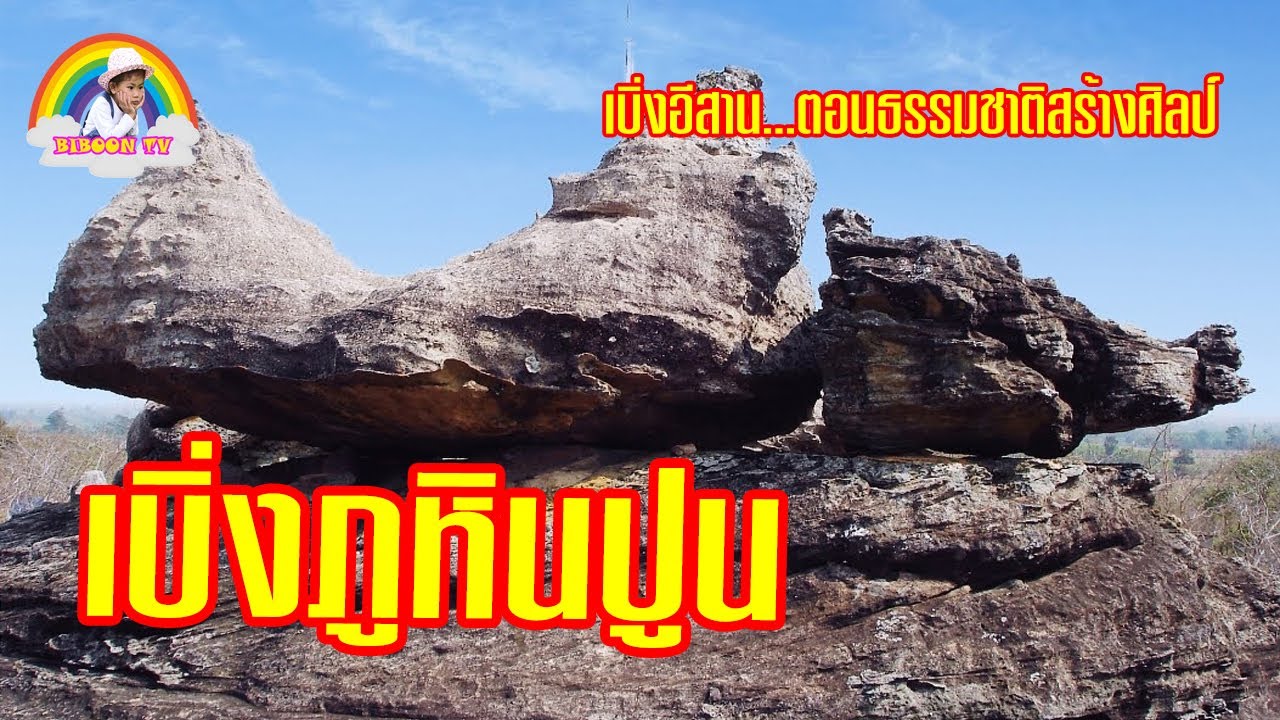
 Click to Access the Navigation Map GPS
 Art, Culture and Heritage
 Historical Sites and Monuments(6)
 Landmarks and Memorials(1)
 Art, Craft Centres, Tradition(4)
 Museums(1)
 Historic Homes and Cities(1)
 Places of Worship
 Temple(22)
 Church(1)
 Other Sacred Sites(10)
 Research and Development
 Royal Project(2)
 Suburban Living
 Village, Community(3)
 Local Market(1)
 National Parks and Marine Reserves(2)
Mountain (Doi)(2)
National Parks and Marine Reserves(2)
Mountain (Doi)(2)
 Dam, Reservoir, Lake(7)
 River, Canal(2)
 Bays and Beaches(1)
 Other natural attractions(2)
 Entertainment and Agricultural
 Farms, Parks and Ecotourism(1)
 Travel Articles, Recipes
 Travel Review, Food Review(2)


