
lovethailand home >Northeastern Travel Attractions >Ubon Ratchathani Travel Attractions >Muang Ubon Ratchathani >Nai Muang > Ubon Ratchathani Rajabhat University
TL;DR: Ubon Ratchathani Rajabhat University is located at Nai Mueang Subdistrict, Mueang Ubon Ratchathani District, Ubon Ratchathani Province, Thailand, open Monday – Friday for administrative office services.
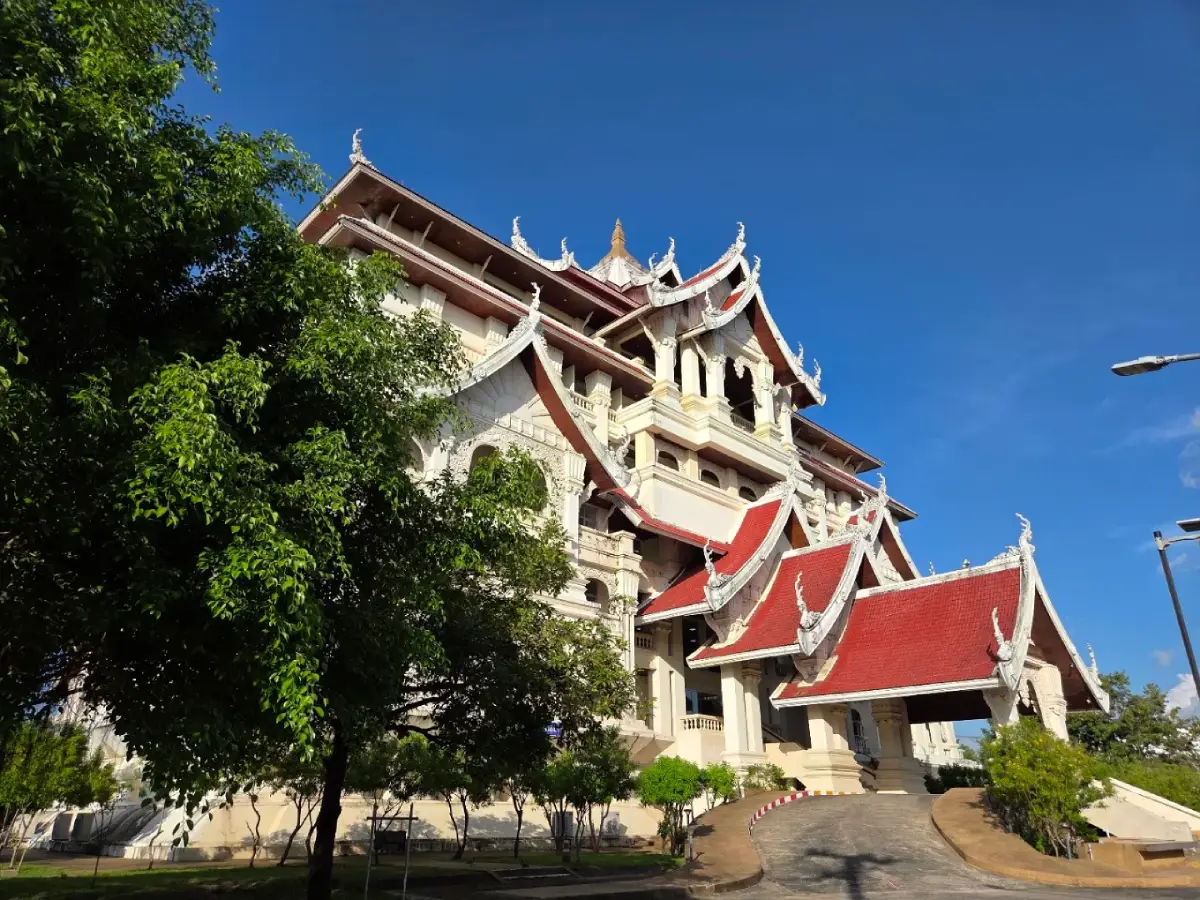
Ubon Ratchathani Rajabhat University
Open Days: Monday – Friday for administrative office services
Office Hours: 08:30 – 16:30 for administrative enquiries
Ubon Ratchathani Rajabhat University (UBRU), known in Thai as มหาวิทยาลัยราชภัฏอุบลราชธานี, is a public university located at 2 Ratchathani Road, Nai Mueang Subdistrict, Mueang Ubon Ratchathani District, Ubon Ratchathani Province, northeastern Thailand. Its institutional origins date to 26 May 1915, when a teacher-training division was established at Benchama Maharat School. Over the following decades, the institution evolved through several forms, including a teacher-training school, Ubon Ratchathani Teachers College, Ubon Ratchathani Rajabhat Institute, and finally Ubon Ratchathani Rajabhat University in 2004. In 2026, the institution marked 111 years since its original foundation. Its academic structure comprised 10 faculties covering education, science, agriculture, industrial technology, humanities, social sciences, business, law, nursing, Thai traditional medicine, and public health. The university's central mission is to provide higher education, conduct research, deliver academic services, and preserve cultural heritage in support of sustainable local development.
Ubon Ratchathani Rajabhat University should not be confused with Ubon Ratchathani University. Although both institutions are located in the same province, their histories, campuses, and founding missions are different. Ubon Ratchathani Rajabhat University developed from teacher-training education established in 1915 and occupies a campus in central Ubon Ratchathani. Ubon Ratchathani University, by contrast, originated in 1987 and is located in Warin Chamrap District. Understanding this distinction is important for prospective students, parents, visitors, and anyone arranging travel or appointments at either institution.
The main UBRU campus is situated along Ratchathani Road, within the urban area of Ubon Ratchathani. It is surrounded by residential communities, businesses, educational institutions, and transportation routes. The university grounds contain academic buildings, laboratories, conference halls, a library, cultural facilities, sports venues, administrative offices, and student activity areas. Its city-center location allows students to connect their academic experience with community life, professional opportunities, and educational activities beyond the campus.
The history of Ubon Ratchathani Rajabhat University begins during an important period in the expansion of modern Thai education. Under King Vajiravudh, or Rama VI, the government sought to develop schools beyond Bangkok and strengthen the supply of qualified teachers in provincial areas. Teacher-training divisions were therefore established at selected model schools in regional administrative centers, including Ubon Ratchathani, which was an important provincial center for government, trade, and education.
On 26 May 1915, a lower-level teacher-training division was established under official document No. 7/1144 at Benchama Maharat School, the model school of Ubon Ratchathani Circle. The school was then located near what is now the former provincial hall area. Its first group consisted of 25 students, including 15 scholarship students and 10 privately funded students. Ratchaburut Un served as head teacher, assisted by Ratchaburut Ya. This event is recognized as the beginning of the educational institution that eventually became Ubon Ratchathani Rajabhat University.
Teacher training was especially important to communities during this period because teachers performed roles extending beyond classroom instruction. They helped spread literacy, public knowledge, moral education, and practical skills, while also contributing to the development of rural society. Establishing a local teacher-training institution created opportunities for students to gain professional qualifications and return to serve schools and communities in their home region.
In 1916, the Ministry of Education authorized the establishment of an elementary teacher-training school to expand professional teacher preparation. Supported students received a monthly allowance of 5 baht, while those who completed the prescribed course could enter government service with a monthly salary of 30 baht. These arrangements reflected the government's determination to encourage qualified individuals to become teachers and support the expansion of provincial education.
In 1923, the Ubon Ratchathani Agricultural Teacher Training School was established at Ban Kut Peng in Warin Chamrap District, occupying more than 300 rai of land. Am Bunthai became its first head teacher. The school focused on preparing teachers with agricultural knowledge suited to communities where farming formed a central part of everyday life. Agricultural instruction demonstrated an early commitment to combining education with practical skills that could benefit local livelihoods.
A year later, in 1924, a handicraft teacher-training school specializing in basket weaving was established on the ground floor of the school at Wat Si Thong, now known as Wat Si Ubon Rattanaram. The program emphasized craftsmanship and the transfer of practical knowledge to schools and communities. The development of general teacher training alongside agriculture and handicrafts shows that the institution's earliest educational foundations were already closely associated with local culture and vocational learning.
In 1936, the Ministry of Education authorized the establishment of the Ubon Ratchathani Women's Teacher Training School. The institution occupied a two-story school building within the grounds of Narinukun School, with Orapin Chaiyakan serving as its first head teacher. This development reflected expanding opportunities for women to receive professional education and enter teaching, an occupation that was becoming increasingly important in Thailand's modern education system.
Following the Second World War, teacher education in Ubon Ratchathani underwent further reorganization. On 1 June 1946, the Ubon Ratchathani Men's Teacher Training School was established through the transformation of an existing preparatory educational institution. Prasit Suntharothok became its first head. The separate male and female teacher-training institutions subsequently developed toward a coeducational model, reflecting wider changes in the structure of Thai education.
In 1952, Thepphromphum School was established as a local primary school. In 1964, the Department of Teacher Training assumed responsibility for the school and renamed it the Ubon Ratchathani Teachers College Demonstration School. The demonstration school became an important link between teacher-training theory and classroom practice, providing a learning environment associated with the development of teaching methods and professional teacher experience.
Another important milestone occurred in 1956, when the institution became involved in the Thailand UNESCO Rural Teachers Education Project, known as TURTEP. Developed through cooperation with UNESCO, the project focused on preparing teachers for rural educational environments. It demonstrated the importance of understanding community conditions, developing appropriate teaching approaches, and ensuring that professional teacher preparation responded to the needs of learners outside major urban centers.
In 1958, the teacher-training school was upgraded to Ubon Ratchathani Teachers College. The institution expanded its educational responsibilities and introduced the Higher Certificate in Education, a significant qualification in Thailand's teacher-training system. This transition strengthened its position as a professional educational institution and improved opportunities for teachers and prospective teachers to pursue more advanced qualifications.
The Teachers College Act of 1975 marked another major stage of development. Ubon Ratchathani Teachers College gained the ability to produce bachelor's degree graduates in education, while its administrative leadership adopted the position of rector. Chin Rattanasin became the first rector under the new structure. Degree-level teacher education allowed the college to provide more advanced academic study and professional training than had been possible under the earlier certificate system.
In 1984, changes to the legal framework governing teachers' colleges opened the way for education in disciplines beyond the teaching profession. Ubon Ratchathani Teachers College expanded its diploma and bachelor's degree offerings to meet regional demands for professionally qualified graduates. This change laid the foundation for the multidisciplinary academic structure that characterizes the university today.
On 14 February 1992, King Bhumibol Adulyadej graciously bestowed the name Rajabhat Institute upon Thailand's teachers' colleges. The word Rajabhat conveys the idea of serving the King and the nation and became associated with an educational philosophy focused on public service and local development. This royal naming marked a significant moment in the collective history of the Rajabhat institutions throughout Thailand.
Under the Rajabhat Institute Act of 1995, Ubon Ratchathani Teachers College became Ubon Ratchathani Rajabhat Institute. Its responsibilities expanded to include a wider range of higher education programs, research, academic services, and cultural preservation. On 6 March 1995, Rajabhat institutions also received royal permission to adopt the personal royal seal associated with King Rama IX as their institutional emblem.
One of the most significant academic developments of this period occurred in 1997, when Ubon Ratchathani Rajabhat Institute pioneered master's degree education within the Rajabhat system. Its early graduate programs included Educational Administration and professional teacher qualifications. As the first Rajabhat institution to offer master's degree studies, it expanded opportunities for practicing teachers, school administrators, and other professionals to pursue advanced education within the region.
In June 2004, Ubon Ratchathani Rajabhat Institute was upgraded to Ubon Ratchathani Rajabhat University under the Rajabhat University Act of 2004. This transition completed another important phase in the development of an institution whose teacher-training history already extended across nearly nine decades. University status supported further expansion of undergraduate and postgraduate programs, academic research, professional cooperation, and community development activities.
Four periods are particularly important in understanding the institution's history: the beginning of teacher training in 1915, the establishment of the teachers college in 1958, the transition to Rajabhat Institute status in 1995, and the establishment of the Rajabhat university in 2004. These milestones illustrate the gradual transformation from a small teacher-training division into a multidisciplinary public university serving a large regional population.
In 2026, Ubon Ratchathani Rajabhat University marked 111 years since its original foundation on 26 May 1915 and more than 22 years under its university designation. Its longevity reflects generations of work in education, teacher preparation, professional training, research, and cultural preservation. The university's history is therefore also part of the wider history of social and educational development in northeastern Thailand.
In 2026, Associate Professor Thammarak La-ongnual served as President of Ubon Ratchathani Rajabhat University. The institution's activities are administered through the Office of the President, its academic faculties, the Office of Academic Promotion and Registration, the Office of Academic Resources and Information Technology, the Office of Arts and Culture, the Office of Community Academic Services, the Research and Development Institute, and other supporting divisions.
The university's distinctive institutional colors are gray and pink. Gray represents thought, wisdom, and intellectual development, while pink conveys responsibility, sound judgment, and wellbeing. Together, these colors symbolize the values associated with the university community. Students, staff, and alumni often refer to themselves collectively through the identity of the gray-and-pink community, reflecting their continuing connection with the institution.
The university emblem features two concentric oval forms surrounding the royal seal associated with King Rama IX. The university name appears in Thai and English around the central design. The emblem includes five symbolic colors: blue for the monarchy, green for the natural environment, gold for intellectual prosperity, orange for local arts and culture, and white for purity of scholarly thought. These elements express the educational and cultural values shared by Thailand's Rajabhat institutions.
The university's symbolic tree and flower are the Phayom, a tree known for its fragrant, pale cream-white blossoms. The name Phayom appears in important campus landmarks, particularly the Phrai Phayom 2535 Auditorium, which hosts academic ceremonies, university gatherings, and student activities. The tree represents an important part of the university's visual identity and its sense of continuity across generations.
The university's traditional motto emphasizes studying well, participating in activities, maintaining good health, and demonstrating generosity. Its educational identity also stresses applying technology to develop practical life skills and serve local communities. These principles encourage students to develop academic knowledge alongside ethical judgment, physical wellbeing, community awareness, and lifelong learning abilities.
During the 2026 academic year, Ubon Ratchathani Rajabhat University had 10 academic faculties: the Faculty of Agriculture, Faculty of Education, Faculty of Industrial Technology, Faculty of Law, Faculty of Business Administration and Management, Faculty of Nursing, Faculty of Humanities and Social Sciences, Faculty of Science, Faculty of Thai Traditional and Alternative Medicine, and Faculty of Public Health. Together, these faculties provide a broad academic foundation for professional education and the development of regional human resources.
The Faculty of Education continues the university's oldest institutional mission. Its programs include Primary Education, Early Childhood Education, Special Education, Mathematics Education, Computer Education, Digital Technology for Education, English Education, General Science Education, Social Studies Education, and Physical Education. Teacher preparation combines educational theory, psychology, curriculum development, teaching strategies, and practical experience. Graduate programs additionally support advanced research and professional development in Educational Administration, Curriculum and Instruction Development, and Research Methodology.
The Faculty of Science provides education in Mathematics, Chemistry, Microbiology, Biology, Environmental Science, and Sports Science and Exercise, along with teacher education in Chemistry, Biology, and Physics. Scientific studies support analytical thinking and provide foundations for professional work in environmental management, health-related fields, research, education, and technology. The faculty's programs also help students understand how scientific methods can contribute to solving practical community and industrial problems.
The Faculty of Agriculture offers academic programs in Agriculture, Animal Science, Food Technology, Food Business and Nutrition, and Agricultural Production Technology and Product Management. These fields are highly relevant to Ubon Ratchathani and lower northeastern Thailand, where agriculture forms an important part of the regional economy. Students learn about agricultural production systems, food quality, processing technologies, resource management, and opportunities for creating additional value from agricultural products.
The Faculty of Industrial Technology provides a diverse range of programs in Electrical Technology, Civil and Architectural Technology, Electronics and Automation Technology, Computer Technology, Logistics and Supply Chain Management, Game Technology, Software Engineering, Applied Artificial Intelligence, Multimedia and Animation, and Graphic Design. Its development reflects the growing importance of digital technology, automated systems, and modern industrial skills. Students gain knowledge that can support technical industries, creative services, digital businesses, and technological innovation.
The Faculty of Humanities and Social Sciences plays an important role in language education, cultural studies, the arts, tourism, community development, and public administration. Academic programs include Thai, English, Business English, Chinese, Music, Visual Arts, Dance and Drama, Tourism and Hospitality Management, Hotel and Accommodation Business, Politics and Government, Local Government, Public Administration, and Community Development. These subjects connect education with regional culture, public life, communication, and creative industries.
The Faculty of Business Administration and Management focuses on professional education in business, marketing, accounting, management, and communication. Its programs include Digital Business Management, General Management, International Business Management, Trade Management and Entrepreneurship, Sports and Entertainment Management, Accounting, Marketing, and Communication Arts. Students develop skills relevant to organizational operations, entrepreneurship, financial management, digital commerce, and the contemporary service economy.
The Faculty of Law offers the Bachelor of Laws degree, preparing graduates to understand legal principles, individual rights, public responsibilities, and the administration of justice. Legal education supports careers in public and private organizations and provides knowledge that can contribute to public understanding of rights and obligations. Within a university focused on local development, legal education also strengthens opportunities for communities to access professional knowledge relevant to governance and social issues.
The Faculty of Nursing offers the Bachelor of Nursing Science program, preparing students for professional roles in patient care, health promotion, disease prevention, and nursing services in hospitals and communities. Nursing education is particularly important for a region facing increasing demands for healthcare personnel, community-based services, and support for older adults.
The Faculty of Thai Traditional and Alternative Medicine provides education in Thai Traditional Medicine, Cosmetic Science and Spa, Health Business Management for Tourism, and Rehabilitation and Anti-Aging Innovation. These fields combine health-related knowledge with traditional Thai medical practices and contemporary professional services. Their programs are relevant to healthcare, wellness businesses, tourism services, and the development of professional expertise in alternative health-related fields.
The Faculty of Public Health offers programs in Community Public Health and Occupational Health and Safety, together with graduate education in Public Health and Health Sciences. Its academic responsibilities relate to disease prevention, community health promotion, environmental and workplace risks, and the protection of public wellbeing. These subjects support the development of healthcare knowledge and professional skills for communities, industries, and public institutions.
Postgraduate education is an important element of the university's academic work. Graduate programs are offered in fields including Educational Administration, Curriculum and Instruction Development, Research Methodology, Information Technology for Education, Social Sciences for Development, Thai Language, Management, Marketing, Finance and Accounting, Public Health, and Health Sciences. Graduate study supports advanced professional qualifications, specialist research, and the development of expertise needed by educational institutions, government organizations, businesses, and communities.
The university's contribution extends beyond the classroom through research and academic services. Its Research and Development Institute, Office of Community Academic Services, and academic faculties support work involving professional training, local product improvement, technology applications, and community capability development. These activities seek to connect academic knowledge with the practical needs of residents, local enterprises, public agencies, and community organizations.
One approach closely associated with the Rajabhat universities is the Social Engineer model, which encourages students to investigate community challenges systematically, gather and interpret information, cooperate with local residents, and develop practical solutions. This approach promotes teamwork, communication, critical thinking, and social responsibility while encouraging students to apply their academic knowledge beyond university classrooms.
The Ban Yang Noi Learning Center in Khueang Nai District is another example of the university's involvement in practical education and community services. The site includes facilities for academic services and learning activities, along with areas historically associated with agricultural projects and sufficiency economy education. Because it is situated outside the main urban campus, visitors should make separate transportation arrangements and coordinate with the relevant university unit when planning activities there.
The university also encourages the application of innovation and modern technology. In September 2026, the Faculty of Industrial Technology organized an exhibition of industrial technology projects and E-San Energy Expo 2026 activities. These programs provided opportunities to present technological work, promote learning about energy and innovation, and strengthen links between academic education, professional organizations, and the wider public.
Cultural preservation is another important element of the university's mission. Ubon Ratchathani is widely known for its Candle Festival, a major Buddhist Lent tradition combining religious devotion, elaborate candle craftsmanship, visual arts, traditional dance, and community participation. The university supports the transmission of these traditions through academic programs, student involvement, and cooperation with local artisans and communities.
In July 2026, students from the Faculty of Industrial Technology participated in the province's Candle Festival by working alongside traditional candle artisans and local temple communities. Their activities included helping create molded decorative candle structures, a traditional craft requiring precision, artistic skills, and an understanding of established techniques. The project allowed students to learn directly from local craftspeople while contributing to the preservation of Ubon Ratchathani's cultural heritage.
The university's language and communication expertise also contributed to the Candle Festival in 2026. Lecturers from its Business English program participated as Thai- and English-language presenters during the provincial celebrations. Their involvement demonstrated how academic knowledge can be applied to cultural tourism, international communication, and the interpretation of local traditions for visitors from different backgrounds.
The Wai Khru ceremony holds particular significance at an institution whose history began with teacher preparation. On 16 July 2026, Ubon Ratchathani Rajabhat University held its annual Wai Khru ceremony under the theme of paying respect to teachers with gratitude and devotion. The event took place at the Phrai Phayom 2535 Auditorium, with President Associate Professor Thammarak La-ongnual presiding. The ceremony provided students with an opportunity to express appreciation for their teachers and recognize the importance of education and academic guidance.
The Bai Sri Su Khwan welcome ceremony for new students reflects the cultural traditions of northeastern Thailand. The ritual emphasizes hospitality, blessings, encouragement, and a sense of community. In the 2026 academic year, the university scheduled a university-wide welcoming ceremony at the Phrai Phayom 2535 Auditorium. Incorporating traditional welcoming practices into student life helps newcomers establish connections with the university and appreciate the cultural heritage of the region.
The university promotes traditional performing arts as well as contemporary artistic expression, including folk music, Mor Lam, dance, and theatrical performance. In 2026, its Mor Lam Bua Ubon performing group won a national-level traditional music and performance competition. Such achievements demonstrate the talents of students and staff and the university's efforts to preserve regional cultural traditions while encouraging innovative interpretation and artistic development.
Among the university's most important campus landmarks is the Phrai Phayom 2535 Auditorium, which serves as a venue for the Wai Khru ceremony, student welcoming activities, academic gatherings, and institutional events. The auditorium's name is associated with the Phayom tree, the university's symbolic plant. It therefore reflects an important connection between institutional identity, student traditions, and the campus environment.
The Golden Jubilee Arts and Culture Center is a significant venue for cultural learning, artistic activities, and academic events. Its facilities include meeting spaces, exhibition areas, and a theater on the third floor used for music, dance, cultural performances, and ceremonies recognizing individuals and organizations that contribute to local cultural preservation. The center reflects the university's commitment to arts and culture as an essential part of higher education.
The Office of Arts and Culture plays an important role in preserving regional historical knowledge, community wisdom, and traditional practices. In 2025, it cooperated with the university's academic resources services to select and organize more than 1,000 culturally valuable books formerly associated with the Ubon Nithat Cultural Hall collection. These materials support research and public understanding of the history and cultural heritage of Ubon Ratchathani.
The Office of Academic Resources and Information Technology provides essential learning services for students, lecturers, and staff. Its facilities and services include library resources, academic databases, digital information systems, and spaces for independent study. Access to both printed and electronic learning materials encourages lifelong learning and helps students develop the research skills required for modern academic and professional work.
The Ubon Ratchathani Rajabhat University Demonstration School continues an important aspect of the institution's teacher-training heritage. It provides educational services for children and young people while supporting learning-method development and professional educational activities. Its presence reinforces the practical relationship between university-level teacher education and the learning environments of schools.
The campus also includes UBRU Indoor Stadium and other sports facilities used for teaching, student activities, and recreation. Part of the site's history is associated with an area formerly known as the Nine Houses Village, where old residential buildings stood during the mid-twentieth century before the area was gradually developed for university purposes. The transformation of such spaces illustrates the institution's changing physical landscape across successive generations.
For educational tourism, Ubon Ratchathani Rajabhat University offers several areas of interest, including its history of teacher preparation, cultural activities, traditional performances, arts-related facilities, technological exhibitions, and community development programs. Visitors attending public events or organized educational activities can gain insight into the university's relationship with the province. Group study visits to laboratories, specialist facilities, and cultural learning spaces should be arranged with the relevant departments in advance.
For prospective students and families, the university offers the advantage of a city-center location together with a broad range of degree programs. Academic fields include education, science, agriculture, digital technology, industrial technology, business, law, nursing, Thai traditional medicine, public health, languages, and the arts. Choosing an appropriate course should involve consideration of academic interests, admission requirements, professional objectives, tuition arrangements, and individual program schedules.
The university operates an online admissions system covering undergraduate and postgraduate study. During the 2026 academic year, admissions took place across several rounds, including programs in education, science, agriculture, industrial technology, nursing, public health, management, and graduate-level research. Applicants should distinguish between academic programs offered by the institution and those accepting new students in a particular admissions round, as schedules and eligibility requirements can differ between faculties and levels of study.
Getting There is convenient from central Ubon Ratchathani via Ratchathani Road. Travelers using private cars can search for Ubon Ratchathani Rajabhat University in a digital navigation service and select the appropriate faculty, office, or building as their destination. Because the campus is located within an established urban area, visitors should follow university directions for entrances and designated parking areas.
Travelers arriving from outside the province can fly to Ubon Ratchathani International Airport and continue to the university by taxi or other local transport. Those traveling by train can arrive at Ubon Ratchathani Railway Station in Warin Chamrap District before continuing into Ubon Ratchathani city. Interprovincial bus travelers can also arrange local transportation from the provincial bus terminal to the university on Ratchathani Road.
Visitors attending graduation ceremonies, university conferences, the Wai Khru ceremony, or other large events should check advance announcements for venue information, entrances, and parking arrangements. Traffic and access procedures may be adjusted when major activities bring large numbers of visitors to the university grounds.
The surrounding city contains several attractions that complement an educational visit to the university. Thung Si Mueang Park, Ubon Ratchathani National Museum, Wat Thung Si Mueang, Wat Maha Wanaram, and Wat Phra That Nong Bua offer opportunities to explore local history, Buddhist architecture, artistic traditions, and the civic life of Ubon Ratchathani. These destinations provide a broader cultural context for understanding the province in which the university has developed over more than a century.
Over 111 years, Ubon Ratchathani Rajabhat University has grown from a small teacher-training division with an inaugural class of 25 students into a multidisciplinary institution. Its history reflects important changes in Thailand's education system, the professionalization of teaching, the development of provincial higher education, and the increasing role of academic institutions in community development.
Today, Ubon Ratchathani Rajabhat University represents an important combination of educational heritage and contemporary academic opportunity. It preserves the memory of early teacher education while providing research, professional training, and community services across a broad range of disciplines. Its distinctive role lies in connecting knowledge with society, supporting cultural preservation, and helping develop the people and communities of northeastern Thailand.
| University Name | Ubon Ratchathani Rajabhat University (UBRU) |
| Thai Name | มหาวิทยาลัยราชภัฏอุบลราชธานี |
| Institution Type | Public University, Rajabhat University System |
| Location | Nai Mueang Subdistrict, Mueang Ubon Ratchathani District, Ubon Ratchathani Province, Thailand |
| Full Address | 2 Ratchathani Road, Nai Mueang, Mueang Ubon Ratchathani, Ubon Ratchathani 34000, Thailand |
| Original Foundation Date | 26 May 1915, establishment of a teacher-training division at Benchama Maharat School |
| Teachers College Status | 1958 |
| Rajabhat Institute Status | 1995 |
| University Status | 2004, under the Rajabhat University Act |
| Institutional Age in 2026 | 111 years since its foundation in 1915 |
| Important Historical Figures | 1. Ratchaburut Un, early Head Teacher 2. Ratchaburut Ya, early Assistant Teacher 3. Am Bunthai, first Head Teacher of the Agricultural Teacher Training School 4. Orapin Chaiyakan, first Head Teacher of the Women's Teacher Training School 5. Prasit Suntharothok, early Head of the Men's Teacher Training School 6. Chin Rattanasin, first Rector under the 1975 Teachers College framework 7. Khun Worawat Phisut (Suk Phanpheng), donor of land for educational purposes in 1943 |
| University President in 2026 | Associate Professor Thammarak La-ongnual |
| Official University Colors | Gray and Pink |
| University Tree and Flower | Phayom Tree and Phayom Flower |
| University Emblem | Royal Seal associated with King Rama IX within an oval design, including five symbolic colors: Blue, Green, Gold, Orange, and White |
| Traditional University Motto | Study Well, Participate in Activities, Maintain Good Health, and Show Generosity |
| Academic Faculties | 1. Faculty of Agriculture 2. Faculty of Education 3. Faculty of Industrial Technology 4. Faculty of Law 5. Faculty of Business Administration and Management 6. Faculty of Nursing 7. Faculty of Humanities and Social Sciences 8. Faculty of Science 9. Faculty of Thai Traditional and Alternative Medicine 10. Faculty of Public Health |
| Academic Levels | Bachelor's Degrees, Graduate Diplomas, Master's Degrees, and Doctoral Degrees, according to academic programs |
| Academic Strengths | Teacher Education, Science, Digital Technology, Agriculture, Industrial Technology, Nursing, Thai Traditional Medicine, Public Health, Business, Law, Cultural Studies, and Local Development |
| Important Campus Facilities | 1. Phrai Phayom 2535 Auditorium 2. Golden Jubilee Arts and Culture Center 3. Golden Jubilee Arts and Culture Center Theater 4. Office of Academic Resources and Information Technology 5. UBRU Demonstration School 6. UBRU Indoor Stadium 7. Office of the President 8. Academic and Practical Training Buildings 9. Health Sciences Building |
| Additional Learning Center | Ban Yang Noi Learning Center, Ko-e Subdistrict, Khueang Nai District, Ubon Ratchathani Province |
| Traditions and Important Events | 1. Rajabhat Day, 14 February 2. Institutional Foundation Anniversary, 26 May 3. Wai Khru Ceremony 4. Bai Sri Su Khwan Welcome Ceremony 5. Participation in the Ubon Ratchathani Candle Festival 6. Traditional Music and Mor Lam Performances 7. Student Development and Community Academic Service Activities |
| Administrative Office Hours | Monday – Friday, 08:30 – 16:30 |
| Educational Visits | Arrange visits with the relevant university department, especially for cultural facilities, libraries, laboratories, and specialist learning centers |
| Facilities | Academic Buildings, Meeting Rooms, Laboratories, Library, Theater, Cultural Center, Sports Facilities, Student Activity Areas, and Academic Administration Services |
| Getting There | Located on Ratchathani Road in central Ubon Ratchathani; accessible by local transport from Ubon Ratchathani International Airport, Ubon Ratchathani Railway Station, and the provincial bus terminal |
| Attractions and Learning Destinations in Ubon Ratchathani City | 1. Thung Si Mueang Park 2. Ubon Ratchathani National Museum 3. Wat Thung Si Mueang 4. Wat Maha Wanaram Royal Temple 5. Wat Phra That Nong Bua |
| Restaurants and Cafés in Ubon Ratchathani City | 1. Mok Restaurant, Tel. +66 95 292 4622 2. TETSU, Tel. +66 61 662 8914 3. Agave Vietnamese Cuisine & Cafe, Tel. +66 65 414 6453 4. ROOF Coffee, Tel. +66 97 163 6262 5. Secondary Coffee Roaster, Tel. +66 63 313 3108 |
| Accommodation in Ubon Ratchathani City | 1. Unya Hotel Ubon, Tel. +66 80 669 6997 2. Rcheewa Hotel, Tel. +66 45 250 111 3. Sunee Grand Hotel, Tel. +66 81 265 3388 4. Nartsiri Hotel, Tel. +66 45 243 051 5. Phadaeng Hotel, Tel. +66 45 254 600 |
| University Telephone | +66 45 352 000 |
| Admissions and Registration Telephone | +66 45 352 000 ext. 2143, 2144, 2147 |
| University Email | saraban@ubru.ac.th |
| Official Website | www.ubru.ac.th |
| Admissions Website | admission.ubru.ac.th |
| Current Status | Active Public University providing higher education, research, academic services, and cultural preservation activities in the 2026 academic year |
Academic Programs and Fields of Study at Ubon Ratchathani Rajabhat University, Academic Year 2026 (B.E. 2569)
| Faculty / Academic Unit | Academic Programs and Fields of Study |
| Faculty of Agriculture | Bachelor's Degrees 1. Bachelor of Science in Food Technology 2. Bachelor of Science in Food Business and Nutrition 3. Bachelor of Science in Animal Science 4. Bachelor of Science in Agriculture 5. Bachelor of Science in Agricultural Production Technology and Product Management |
| Faculty of Education | Bachelor's Degrees 1. Bachelor of Education in Primary Education 2. Bachelor of Education in Early Childhood Education 3. Bachelor of Education in Special Education 4. Bachelor of Education in Mathematics Education 5. Bachelor of Education in Computer Education 6. Bachelor of Education in Digital Technology for Education 7. Bachelor of Education in English Education 8. Bachelor of Education in General Science Education 9. Bachelor of Education in Social Studies Education 10. Bachelor of Education in Physical Education 1. Graduate Diploma in Teaching Profession 1. Master of Education in Educational Administration 2. Master of Education in Curriculum and Instruction Development 3. Master of Education in Research Methodology 4. Master of Science in Computer and Information Technology for Education 5. Master of Science in Science Education 1. Doctor of Philosophy in Educational Administration 2. Doctor of Philosophy in Curriculum and Instruction Development 3. Doctor of Philosophy in Research Methodology |
| Faculty of Industrial Technology | Bachelor's Degrees 1. Bachelor of Science in Logistics and Supply Chain Management 2. Bachelor of Science in New Energy Management Technology 3. Bachelor of Science in Electrical Technology 4. Bachelor of Science in Multimedia and Animation Technology 5. Bachelor of Science in Civil and Architectural Technology 6. Bachelor of Science in Electronics and Automation Technology 7. Bachelor of Science in Computer Technology 8. Bachelor of Science in Industrial Management and Innovation (CWIE) 9. Bachelor of Science in Computer Technology (Continuing Program) 10. Bachelor of Science in Information Technology 11. Bachelor of Science in Computer Science 12. Bachelor of Science in Applied Artificial Intelligence 13. Bachelor of Science in Software Engineering 14. Bachelor of Science in Game Technology 15. Bachelor of Engineering in Computer and Network Engineering 16. Bachelor of Science in Design and Graphics 1. Master of Science in Engineering Technology |
| Faculty of Law | Bachelor's Degree 1. Bachelor of Laws |
| Faculty of Business Administration and Management | Bachelor's Degrees 1. Bachelor of Business Administration in Digital Business Management 2. Bachelor of Business Administration in General Management 3. Bachelor of Business Administration in International Business Management 4. Bachelor of Business Administration in Trade Management and Entrepreneurship 5. Bachelor of Business Administration in Sports and Entertainment Management 6. Bachelor of Business Administration in Accounting 7. Bachelor of Accountancy 8. Bachelor of Business Administration in Accounting (Continuing Program) 9. Bachelor of Business Administration in Marketing 10. Bachelor of Arts in Communication Arts 1. Master of Business Administration in Management 2. Master of Business Administration in Finance and Accounting 3. Master of Business Administration in Marketing 1. Doctor of Philosophy in Management |
| Faculty of Nursing | Bachelor's Degree 1. Bachelor of Nursing Science |
| Faculty of Humanities and Social Sciences | Bachelor's Degrees 1. Bachelor of Arts in Tourism and Hospitality Management 2. Bachelor of Arts in Hotel and Accommodation Business 3. Bachelor of Education in English and Library Education 4. Bachelor of Education in Thai Language 5. Bachelor of Education in Music Education 6. Bachelor of Fine and Applied Arts in Music 7. Bachelor of Fine and Applied Arts in Visual Arts 8. Bachelor of Fine and Applied Arts in Dance and Drama 9. Bachelor of Public Administration in Local Government 10. Bachelor of Political Science in Politics and Government 11. Bachelor of Arts in Chinese 12. Bachelor of Arts in Thai 13. Bachelor of Arts in English 14. Bachelor of Arts in Business English 15. Bachelor of Public Administration in Public Administration 16. Bachelor of Arts in Community Development 1. Master of Arts in Social Sciences for Development 2. Master of Arts in Thai Language 1. Doctor of Philosophy in Sustainable Development Strategies |
| Faculty of Science | Bachelor's Degrees 1. Bachelor of Science in Sports Science and Exercise 2. Bachelor of Science in Mathematics 3. Bachelor of Science in Chemistry 4. Bachelor of Science in Microbiology 5. Bachelor of Science in Biology 6. Bachelor of Science in Environmental Science 7. Bachelor of Education in Chemistry 8. Bachelor of Education in Biology 9. Bachelor of Education in Physics |
| Faculty of Thai Traditional and Alternative Medicine | Bachelor's Degrees 1. Bachelor of Science in Health Business Management for Tourism 2. Bachelor of Thai Traditional Medicine 3. Bachelor of Science in Cosmetic Science and Spa 4. Bachelor of Science in Rehabilitation and Anti-Aging Innovation |
| Faculty of Public Health | Bachelor's Degrees 1. Bachelor of Public Health in Community Public Health 2. Bachelor of Science in Occupational Health and Safety 1. Master of Public Health in Public Health 1. Doctor of Philosophy in Health Sciences |
Frequently Asked Questions (FAQ)
Q: Where is Ubon Ratchathani Rajabhat University located?
A: It is located at 2 Ratchathani Road, Nai Mueang Subdistrict, Mueang Ubon Ratchathani District, Ubon Ratchathani Province 34000, Thailand.
Q: When was Ubon Ratchathani Rajabhat University founded?
A: Its institutional origins date to 26 May 1915, when a teacher-training division was established at Benchama Maharat School. It became a Rajabhat university in 2004.
Q: How old is Ubon Ratchathani Rajabhat University in 2026?
A: The institution has 111 years of history dating back to its original establishment in 1915.
Q: How many faculties does Ubon Ratchathani Rajabhat University have?
A: It has 10 faculties covering education, agriculture, science, industrial technology, humanities and social sciences, business, law, nursing, Thai traditional medicine, and public health.
Q: Who was the university president in 2026?
A: Associate Professor Thammarak La-ongnual served as President of Ubon Ratchathani Rajabhat University in 2026.
Q: What is Ubon Ratchathani Rajabhat University known for?
A: It has a distinguished history of teacher preparation and provides multidisciplinary education, research, local development programs, and activities preserving the cultural heritage of Ubon Ratchathani.
Q: What are the university colors and symbolic tree?
A: Its colors are gray and pink, and its symbolic tree is the Phayom, known for its fragrant pale flowers.
Q: Does the university participate in the Ubon Ratchathani Candle Festival?
A: Yes. Students and staff participate in cultural activities related to the festival, including traditional candle craftsmanship and the presentation of local cultural heritage.
Q: Does Ubon Ratchathani Rajabhat University offer master's and doctoral degrees?
A: Yes. Graduate fields include Educational Administration, Curriculum and Instruction Development, Research Methodology, Management, Social Sciences for Development, Public Health, and Health Sciences.
Q: How can visitors get to Ubon Ratchathani Rajabhat University?
A: Visitors can travel to Ratchathani Road in central Ubon Ratchathani by private car or local transport. Travelers arriving by air, train, or interprovincial bus can continue from their arrival point by taxi or another local service.
 Category: ●University
 Group: ●Rajabhat University
Last Update : 5 DayAgo
 Last Update : 5 DayAgo
 Click to Access the Navigation Map GPS
Ubon Ratchathani Rajabhat University Map
Recommend

 Art, Culture and Heritage
 Historical Sites and Monuments(5)
 Landmarks and Memorials(2)
 Royal Palace(1)
 Art, Craft Centres, Tradition(7)
 Museums(3)
 Public university(1)
 Autonomous Universities(1)
Rajabhat University(1)
 Private University(2)
 Places of Worship
 Temple(37)
 Other Sacred Sites(4)
 Research and Development
 Royal Project(2)
 Suburban Living
 Village, Community(2)
 Local Market(4)
 Nature and Wildlife
 National Parks and Marine Reserves(5)
 Mountain (Doi)(6)
 Dam, Reservoir, Lake(8)
 Waterfalls(12)
 Hot Springs(1)
 Caves(2)
 River, Canal(11)
 Bays and Beaches(8)
 Islands(2)
 Other natural attractions(6)
 Entertainment and Agricultural
 Zoos and Aquariums(2)
 Animal camps and shows(1)
 Farms, Parks and Ecotourism(1)
 Waterpark(1)
 Travel Articles, Recipes
 Travel Review, Food Review(1)


