
lovethailand home >Northeastern Travel Attractions >Ubon Ratchathani Travel Attractions >Warin Chamrap >Muang Si Khai > Ubon Ratchathani University
TL;DR: Ubon Ratchathani University is located at Mueang Si Khai Subdistrict, Warin Chamrap District, Ubon Ratchathani Province, Thailand, open Monday – Friday for administrative office services.
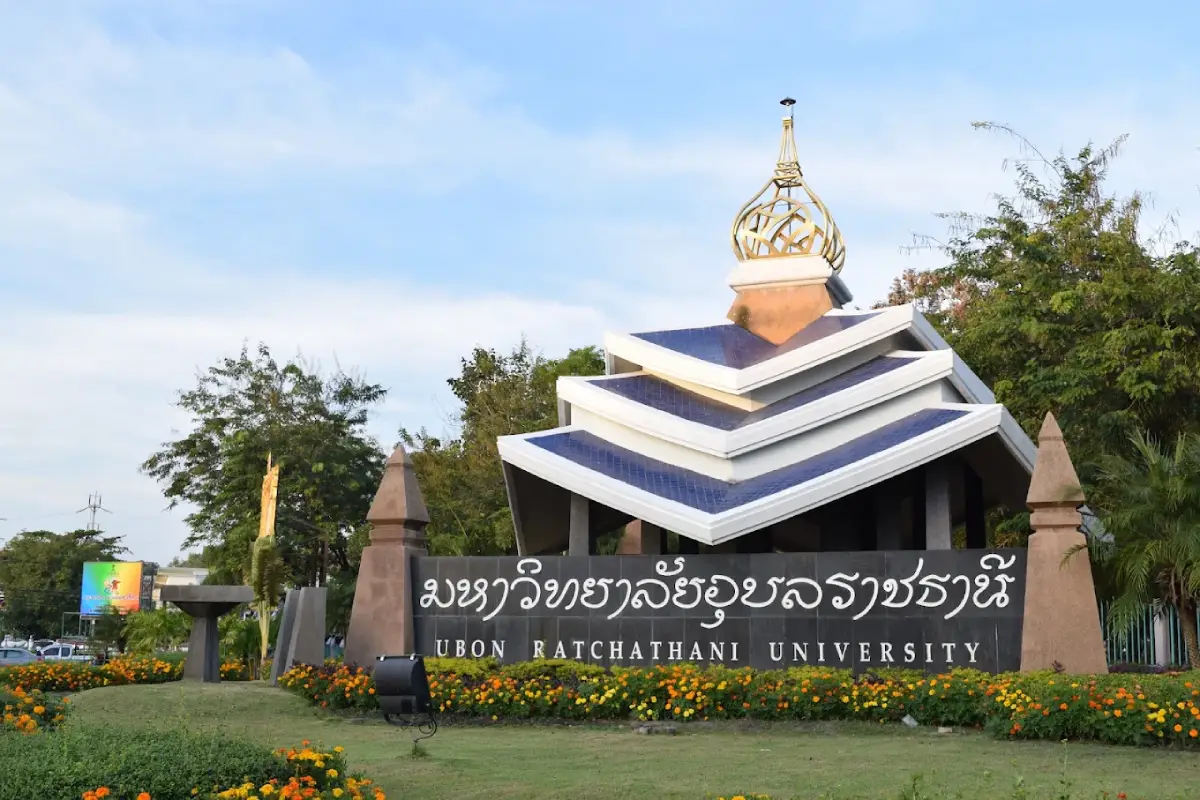
Ubon Ratchathani University
Open Days: Monday – Friday for administrative office services
Office Hours: 08:30 – 16:30 for administrative enquiries
Ubon Ratchathani University (UBU), known in Thai as มหาวิทยาลัยอุบลราชธานี, is a public autonomous university located at 85 Sathonlamak Road, Mueang Si Khai Subdistrict, Warin Chamrap District, Ubon Ratchathani Province, northeastern Thailand. Its origins date back to 14 September 1987, when Ubon Ratchathani College was established under Khon Kaen University. The college admitted its first students in the 1988 academic year and was subsequently elevated to university status under the Ubon Ratchathani University Act of 1990. The university officially commemorates its foundation on 30 July each year and celebrated its 36th university anniversary in 2026. It comprises 12 faculties and colleges, offering education in science, agriculture, engineering, medicine, pharmacy, nursing, liberal arts, business administration, law, political science, education, architecture, and design. UBU is an important center for higher education, scientific research, technological innovation, professional development, and cultural preservation in lower northeastern Thailand and the Greater Mekong Subregion.
Ubon Ratchathani University occupies a significant place in the history of Thailand's regional higher education. Its establishment reflected a national effort to expand university-level learning beyond major cities and provide educational opportunities for students in Ubon Ratchathani, Si Sa Ket, Amnat Charoen, Yasothon, and surrounding provinces. The university was also developed in response to the growing demand for graduates in science, engineering, agriculture, and technology during a period when Thailand was moving toward a more industrialized and diversified economy.
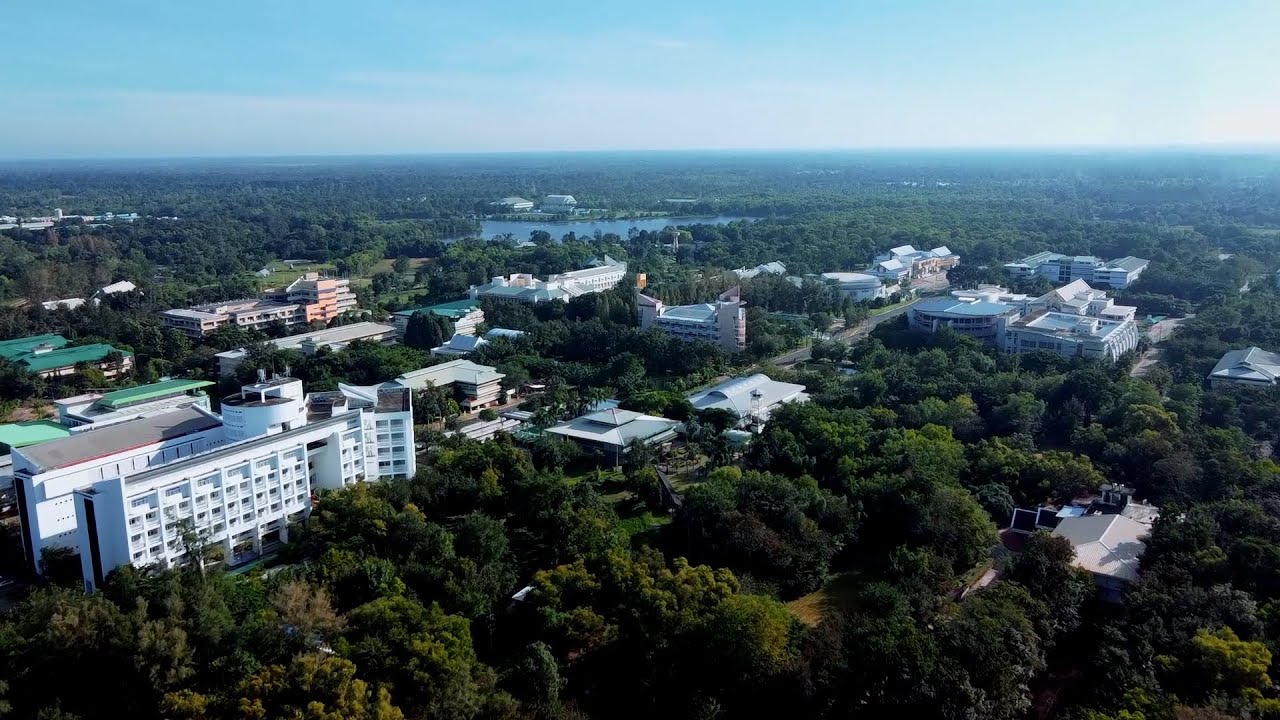
The university is situated in Mueang Si Khai, Warin Chamrap District, along the road connecting Warin Chamrap with Det Udom. Its official address is on Sathonlamak Road. The campus occupies approximately 5,228 rai, with an academic area of around 450 rai. Its landscape combines modern academic buildings, laboratories, agricultural learning areas, internal roads, green spaces, reservoirs, and recreational facilities. This spacious environment provides a distinctive university experience compared with institutions situated in densely developed city centers.
Before Ubon Ratchathani University was established, Khon Kaen University was the leading institution for science and technology education in northeastern Thailand. Students from the southern part of the region often faced considerable distances when seeking university-level education in specialized professional fields. The demand for an additional institution in lower northeastern Thailand consequently encouraged the development of a new higher education center in Ubon Ratchathani, intended to support regional economic growth, professional training, and academic services for local communities.
On 14 September 1987, Ubon Ratchathani College was formally established as an academic unit of Khon Kaen University with a status comparable to a faculty. On 1 October 1987, the Ministry of University Affairs announced its initial administrative structure, consisting of a Secretariat, Department of Basic Sciences, Department of Agriculture, and Department of Engineering. These early academic divisions reflected the institution's original commitment to scientific knowledge, agricultural production, and technological development.
Associate Professor Somchit Yodseranee was an important figure in the college's establishment and early administration. Appointed as the college's director during its formative period, he later became the first President of Ubon Ratchathani University. His contributions included institutional planning, administrative development, academic organization, and the establishment of essential facilities for the growing university.
In the 1988 academic year, Ubon Ratchathani College welcomed its first 67 students. The inaugural group consisted of 38 students studying agriculture and 29 studying mechanical engineering. Because the new campus was still being developed, these students initially attended classes at Khon Kaen University. This arrangement allowed academic instruction to begin while the new institution's buildings, infrastructure, and facilities were under construction.
The development of the new campus proceeded alongside the construction of classrooms, technical facilities, roads, and public utilities near kilometers 10–11 of the Warin Chamrap–Det Udom Road. Land that had previously consisted largely of rural and agricultural areas was gradually transformed into an educational complex capable of supporting university teaching, research, practical training, and student life.
During the government of Prime Minister General Chatichai Choonhavan, plans were advanced to separate Ubon Ratchathani College from Khon Kaen University and establish it as an independent public university. The Ubon Ratchathani University Act B.E. 2533 (1990) was published in the Royal Gazette on 29 July 1990 and became effective the following day, 30 July 1990. The university consequently adopted 30 July as its official foundation anniversary.
Ubon Ratchathani University became Thailand's 19th public university and represented an important expansion of higher education in northeastern Thailand. Its establishment created a separate university structure with its own institutional administration, academic responsibilities, and long-term development plans. It also strengthened opportunities for students in the lower northeastern provinces to pursue degrees in fields that had previously been more difficult to access locally.
In the 1990 academic year, the inaugural student cohort, then entering its third year, moved from Khon Kaen University to the newly established campus in Mueang Si Khai. This transition marked the beginning of academic life at the university's permanent location. The first generations of students and staff played a direct role in shaping its institutional culture during a period when facilities and services were continuing to develop.
Over subsequent decades, Ubon Ratchathani University expanded beyond its original agricultural and engineering disciplines. New academic faculties and professional programs were developed in science, liberal arts, business administration, health sciences, architecture, law, political science, and education. This diversification enabled the university to respond to changing demands in the regional economy, healthcare systems, public administration, and community development.
The university has been led by several presidents since its establishment. Associate Professor Somchit Yodseranee served from 1990 to 1999, followed by Professor Phaitun Ingsuwan from 1999 to 2002, Professor Prakob Wirojanakud from 2002 to 2010, and Associate Professor Nongnit Teerawatsanakul from 2010 to 2018. Associate Professor Dr. Chutinun Prasitphuripreecha assumed the presidency in 2018 and continued to serve as President in 2026. These leaders contributed to the university's development during different stages of its academic and organizational growth.
A major change in the university's legal status occurred through the Ubon Ratchathani University Act B.E. 2568 (2025). Published in the Royal Gazette on 23 July 2025, the legislation provided for the university's transformation into an autonomous public university, effective after the statutory 90-day period. The change was intended to provide greater administrative flexibility while preserving the institution's status as a public university. Ubon Ratchathani University therefore remains a state institution, not a private university, although its management structure operates under the autonomous public university framework.
On 30 July 2026, Ubon Ratchathani University marked its 36th anniversary as a university. Commemorative activities included Buddhist chanting and merit-making ceremonies with 37 monks at the Royal Seventh Cycle Birthday Anniversary Building. The university also held alumni gatherings and recognition ceremonies honoring distinguished graduates from 2024 to 2026. These events reflected the enduring relationship between the university and successive generations of students, graduates, academic staff, and administrators.
The university's name is directly connected with Ubon Ratchathani Province. The Thai word Ubon refers to a lotus, a flower closely associated with the province's name and cultural identity. The lotus also forms the central element of the university emblem, linking the institution visually and symbolically with the region in which it was established.
The official university emblem features a Lan Xang-style stupa representing the cultural heritage of northeastern Thailand. Inside the emblem is a lotus resting upon three supporting lines symbolizing the Mekong, Chi, and Mun rivers, three major waterways associated with the region. The two lower lotus petals represent morality and wisdom, while the three unopened petals symbolize the Triple Gem of Buddhism. The blue outline represents strength and stability, and the bright yellow background reflects the university's official color. The emblem was designed by Santi Busathip.
The university's official color is bright yellow, which appears prominently in its emblem and visual identity. Its symbolic tree is the Kan Krao, also known as Man Pla or Tembusu, with the botanical name Fagraea fragrans. The tree produces fragrant yellow flowers and is known for its strong, durable wood and ability to grow under challenging environmental conditions. These characteristics symbolize resilience, determination, unity, and the cooperative spirit of the university community.
The Kan Krao tree also provides a distinctive symbol of student identity. Incoming students and student generations are commonly associated with the name Kan Krao. In the 2026 academic year, new students were welcomed as Kan Krao Class 39, emphasizing continuity between the university's present student community and those who studied during its earlier decades.
The university's educational philosophy emphasizes the development of mindfulness and wisdom for society on the foundations of sufficiency. Its student identity also promotes creativity, unity, and social responsibility. These principles reflect the institution's aim to develop graduates with professional knowledge, ethical judgment, intellectual capabilities, and a commitment to serving communities and society.
Ubon Ratchathani University comprises 12 faculties and colleges: the Faculty of Science, Faculty of Agriculture, Faculty of Engineering, Faculty of Liberal Arts, Faculty of Pharmaceutical Sciences, Faculty of Management Science, Faculty of Nursing, College of Medicine and Public Health, Faculty of Applied Arts and Architecture, Faculty of Law, Faculty of Political Science, and Faculty of Education. Its academic provision includes bachelor's degrees, graduate diplomas, master's degrees, and doctoral programs, depending on the field of study. Selected academic programs are delivered in English.
The Faculty of Science supports education and research in fundamental and applied scientific disciplines. Its programs include Biology, Microbiology, Chemistry, Mathematics, Biomedical Physics, Data Science and Software Innovation, Information and Communication Technology, Environmental Science, Rubber and Polymer Technology, Innovative Materials Technology, and Occupational Health and Safety. These fields provide essential knowledge for modern industry, healthcare, environmental management, and digital technology development.
The Faculty of Agriculture is one of the university's oldest academic units, tracing its origins to the agricultural department of Ubon Ratchathani College. Its undergraduate programs include Agriculture, Food Technology, and Smart Engineering Agriculture. Students learn how scientific principles can be applied to agricultural production, food processing, and the use of modern technologies to improve farming practices and production efficiency.
Agricultural research and education are particularly relevant in lower northeastern Thailand, where agriculture remains an important part of the regional economy. Soil and water management, crop improvement, cost-effective production, food quality, and agricultural product development are directly connected with community livelihoods. The university's agricultural expertise therefore supports both professional education and the broader needs of farming communities.
The Faculty of Engineering is another foundational academic unit whose history reaches back to the institution's earliest teaching activities. Its programs cover Mechanical Engineering, Industrial Engineering, Chemical Engineering, Civil Engineering, Electrical Engineering, Environmental Engineering, Mechatronics and Automation Engineering, and Artificial Intelligence and Prompt Engineering. These disciplines prepare students to design, analyze, develop, and manage technical systems used in modern industries and services.
The Faculty of Liberal Arts provides education in languages, communication, social development, history, tourism, and related humanities subjects. Its programs include English and Communication, Chinese and Communication, Thai and Communication, Japanese and Communication, Tourism and Hospitality Management, Social Development Innovation, History, and Communication Arts. Such disciplines are especially relevant to Ubon Ratchathani's role in tourism, regional trade, cross-border cooperation, and cultural exchange within the Greater Mekong Subregion.
The Faculty of Pharmaceutical Sciences offers the Doctor of Pharmacy degree, connecting scientific education with pharmaceutical knowledge, responsible medicine use, patient care, and professional pharmacy practice. Through academic study and practical training, the faculty contributes to the development of qualified pharmaceutical professionals and supports the wider healthcare system.
The Faculty of Nursing offers the Bachelor of Nursing Science program, preparing graduates for professional roles in healthcare and community health services. Nursing education involves knowledge of patient care, health promotion, clinical practice, and professional ethics. The training of nurses is particularly important in a region facing growing healthcare demands and the increasing needs of an aging population.
The College of Medicine and Public Health offers programs in Medicine, Environmental Health, and Public Health. Ubon Ratchathani University Hospital forms an important part of the university's health service and clinical learning environment. Medical and public health education at the university encompasses patient treatment, disease prevention, community health promotion, and the management of environmental factors affecting human health.
The Faculty of Management Science provides education in Business Management, Marketing, Finance and Investment, International Business Management, Logistics and Supply Chain Management, Accountancy, and Hotel and Service Innovation Management. Its programs support the development of business knowledge, financial planning, entrepreneurship, organizational management, and skills for an increasingly interconnected regional and international economy.
The Faculty of Applied Arts and Architecture combines creative design, architectural knowledge, and technology with an appreciation of local wisdom. Its programs include Architecture and Digital Art and Design. The faculty supports the development of contemporary design skills, environmental design, and creative approaches that can contribute to communities, businesses, and the built environment.
The Faculty of Law focuses on legal education, including knowledge of the legal system, justice, individual rights, professional responsibilities, and the use of law to address social issues. The Faculty of Political Science offers programs in Government and Public Administration, preparing students to understand governance, public policy, administrative institutions, and political processes. These academic disciplines contribute to the development of effective public institutions and informed civic participation.
The Faculty of Education provides undergraduate teacher education, a Graduate Diploma in Teaching Profession, and postgraduate study in Educational Administration. Modern teacher preparation involves academic knowledge, educational psychology, teaching methods, digital learning technologies, and the ability to support learners with different backgrounds and needs. The faculty therefore contributes to professional teacher development and the wider improvement of regional education.
Research and innovation are central responsibilities of Ubon Ratchathani University. Its specialized facilities include Ubon Ratchathani University Science Park, the Scientific Instrument Center, UBU Pilot Plant, analytical and product-testing services, energy and environmental research facilities, and research organizations focusing on society and the Greater Mekong Subregion. These units create opportunities to connect laboratory knowledge and university research with industry, entrepreneurs, and community organizations.
The university's research activities address subjects connected with both regional and national development, including food security, energy efficiency, natural resource management, product safety, agriculture, healthcare, and the improvement of local economic opportunities. By combining scientific expertise with cooperation from local communities, research findings can be transformed into practical improvements in production systems, public services, and everyday livelihoods.
Ubon Ratchathani University's geographical position also supports academic cooperation with neighboring countries, particularly Laos and other members of the Association of Southeast Asian Nations. International partnerships, language studies, student exchanges, and collaborative academic projects strengthen the university's role as a regional center connecting local development with the wider Mekong region.
Cultural traditions are an important element of university life. One of the most meaningful is Bai Sri Su Khwan, a traditional welcoming and blessing ceremony widely practiced in northeastern Thailand. The ceremony includes a decorated Bai Sri arrangement, blessings, and the tying of cotton threads around participants' wrists to express goodwill, encouragement, and wishes for a successful beginning.
On 7 June 2026, Ubon Ratchathani University held its Bai Sri Su Khwan welcoming ceremony for Kan Krao Class 39 under the theme Supharuek Thewa Naramit Prasit Phonchai. The event took place at the university's central sports ground and brought together university administrators, lecturers, representatives of local organizations, senior students, and more than 5,000 participants. The ceremony demonstrated the importance of community relationships and cultural continuity in welcoming students to university life.
The Wai Khru ceremony is another significant university tradition. In the 2026 academic year, Ubon Ratchathani University organized a ceremony under the title Khururatcha Sattha Thira Panya Wantha Khru. The event provided students with an opportunity to express respect and gratitude toward their teachers while emphasizing the relationship between those who share knowledge and those who receive it. Wai Khru remains an important expression of respect for education within Thai academic culture.
The university's connection with the Ubon Ratchathani Candle Festival is particularly distinctive. Ubon Ratchathani Province is internationally recognized for its Buddhist Lent candle processions, which combine religious devotion with elaborate wax carving, traditional dance, craftsmanship, and community participation. In 2026, the university joined the provincial celebration by presenting a traditional candle structure and a cultural dance procession under the theme Hom Thian Hoi Tham during the festivities held on 29–30 July at Thung Si Mueang.
Participation in the Candle Festival reflects the university's responsibility to preserve arts and culture. Creating traditional candle displays and performances requires cooperation among students, academic staff, artists, and local communities. The activities provide practical opportunities to study local artistic traditions while contributing to one of Ubon Ratchathani's most important cultural tourism events.
The Faculty of Agriculture also organizes activities associated with traditional agricultural life. On 4 July 2026, more than 300 students participated in a rice-transplanting activity under the project Mue Riao Ro Kiao Ruang at the university's agricultural and food training fields. Participants practiced transplanting rice and joined friendly competitions designed to strengthen relationships between new and senior students while preserving knowledge of traditional collective farming practices.
The significance of this activity lies in connecting modern agricultural education with the experiences and knowledge of farming communities. By learning rice cultivation through direct participation, students gain an appreciation of the effort, cooperation, and specialized skills involved in growing rice, a staple food and fundamental component of Thailand's agricultural economy.
Several important buildings and facilities contribute to the university's academic and institutional identity. These include the Office of the President, Royal Seventh Cycle Birthday Anniversary Building, Somchit Yodseranee Information Building, and the university's central library. Such places support administration, conferences, research, and learning. The naming of the information building in honor of Somchit Yodseranee also preserves the memory of a major figure in the university's establishment and early development.
Nong E Jam Park is one of the university's notable green spaces. It includes a reservoir and paths suitable for walking, running, and cycling, with an exercise circuit extending approximately 3 kilometers. The park provides a pleasant environment for recreation and physical activity and demonstrates how natural areas can form part of a university's approach to health, wellbeing, and campus quality of life.
Ubon Ratchathani University Hospital and the College of Medicine and Public Health illustrate the university's expanding responsibilities in healthcare and professional medical education. Their facilities support patient care, clinical experience, and health-related academic activities. As functioning healthcare and training environments, these facilities have access arrangements different from ordinary public recreational areas.
Another distinctive campus facility is U-Place, the university's hotel and tourism training center, located within the Theppharat Siriprapha Building. Established to support educational activities, professional training, conferences, and accommodation services, U-Place provides facilities for university visitors and members of the public. It includes guest rooms, meeting spaces, Taratai Dining, and U-Place Café, making it particularly useful for families visiting students, conference participants, and guests attending academic events.
Student services across the campus include accommodation, food centers, shops, sports facilities, library resources, collaborative working spaces, digital information systems, and an internal electric shuttle service according to university arrangements. These facilities support student life across a relatively extensive campus where academic buildings and administrative services are distributed over a wide area.
For educational tourism, Ubon Ratchathani University offers opportunities to learn about agriculture, science, engineering, health, technology, and research. Public academic exhibitions, training activities, research demonstrations, and cultural programs enable visitors to explore the university's work. Visits to laboratories, research facilities, and specialist centers should be arranged in advance with the relevant departments to ensure appropriate access and safety.
Prospective students can choose from a wide range of academic programs according to their interests and professional goals. Disciplines include science, engineering, agriculture, health professions, languages, culture, business, architecture, law, governance, and education. Application requirements and admissions schedules vary by program, so applicants should consult official university announcements for entry qualifications, selection procedures, tuition fees, and the relevant academic intake.
The university admits students at undergraduate and postgraduate levels through various application procedures. Bachelor's degree admissions follow specific selection rounds, while graduate programs focus on advanced professional knowledge and research. Applicants should distinguish between programs listed in the university's academic curriculum inventory and those accepting new students in a particular academic year or semester.
Getting There is possible by private car from Ubon Ratchathani city through Warin Chamrap District, continuing toward Det Udom along the Warin Chamrap–Det Udom Road before entering the campus in Mueang Si Khai. Visitors should use the official name Ubon Ratchathani University when searching digital navigation services and identify the appropriate entrance or building in advance because the university grounds are extensive.
Travelers arriving from other provinces can fly to Ubon Ratchathani International Airport and continue by taxi or other local transport. Rail passengers can travel to Ubon Ratchathani Railway Station in Warin Chamrap District before arranging transportation to the university. Visitors arriving by interprovincial bus can similarly continue from Ubon Ratchathani Bus Terminal. Travel arrangements should be planned around the specific university entrance, faculty, or office required.
Visitors attending graduation ceremonies, student orientation, examinations, or large conferences should check university announcements for designated entrances, parking arrangements, and venue locations. Access and traffic procedures may differ from normal academic operations during major events involving large numbers of participants.
A visit to the university can also be combined with educational and cultural sightseeing in Warin Chamrap and Ubon Ratchathani city. The surrounding region offers respected forest monasteries, traditional silk-weaving heritage sites, riverside attractions, and cultural venues connected with the Candle Festival. These destinations provide opportunities to explore the religious traditions, craftsmanship, local communities, and natural environment of Ubon Ratchathani Province.
From the establishment of Ubon Ratchathani College in 1987 to its development as an autonomous public university in 2026, the institution has undergone a significant transformation. Beginning with 67 students studying agriculture and engineering, it has evolved into a multidisciplinary university with 12 faculties and colleges, reflecting the expansion of Thailand's higher education system and the growing demand for professional expertise.
Today, Ubon Ratchathani University continues to play an important role in higher education, applied research, technological innovation, community development, and cultural preservation. Its distinctive strength lies in connecting academic expertise across disciplines with the needs of society, while extending its cooperation throughout ASEAN and the Greater Mekong Subregion. For students, researchers, and visitors, the university represents an important chapter in the educational development of northeastern Thailand.
| University Name | Ubon Ratchathani University (UBU) |
| Thai Name | มหาวิทยาลัยอุบลราชธานี |
| Institution Type | Autonomous Public University |
| Location | Mueang Si Khai Subdistrict, Warin Chamrap District, Ubon Ratchathani Province, Thailand |
| Full Address | 85 Sathonlamak Road, Mueang Si Khai, Warin Chamrap, Ubon Ratchathani 34190, Thailand |
| Campus Area | Approximately 5,228 rai, including an academic area of approximately 450 rai |
| Original Institution Established | 14 September 1987 as Ubon Ratchathani College under Khon Kaen University |
| First Academic Year | 1988, with an inaugural cohort of 67 students initially studying at Khon Kaen University |
| University Establishment Date | 30 July 1990 |
| Foundation Anniversary | 30 July every year |
| University Age in 2026 | 36 years since the university's establishment in 1990 |
| Recent Legal Status Change | Ubon Ratchathani University Act B.E. 2568 (2025), establishing its autonomous public university status |
| Important Historical Figures | The government of General Chatichai Choonhavan during the university's establishment and Associate Professor Somchit Yodseranee, the college's early director and the university's first President |
| University President in 2026 | Associate Professor Dr. Chutinun Prasitphuripreecha |
| Official University Color | Bright Yellow |
| University Tree | Kan Krao or Tembusu (Fagraea fragrans) |
| University Emblem | Lan Xang-style stupa with a lotus and three supporting lines representing the Mekong, Chi, and Mun rivers; designed by Santi Busathip |
| Faculties and Colleges | 1. Faculty of Science 2. Faculty of Agriculture 3. Faculty of Engineering 4. Faculty of Liberal Arts 5. Faculty of Pharmaceutical Sciences 6. Faculty of Management Science 7. Faculty of Nursing 8. College of Medicine and Public Health 9. Faculty of Applied Arts and Architecture 10. Faculty of Law 11. Faculty of Political Science 12. Faculty of Education |
| Academic Levels | Bachelor's Degrees, Graduate Diplomas, Master's Degrees, and Doctoral Degrees, according to the programs offered |
| Academic Strengths | Science and Technology, Agriculture, Engineering, Health Sciences, Languages and Culture, Business Administration, and Research for Social Development |
| Important Campus Facilities | 1. Office of the President 2. Royal Seventh Cycle Birthday Anniversary Building 3. Somchit Yodseranee Information Building 4. Office of Digital Technology and Learning Resources 5. Nong E Jam Park 6. University Central Sports Ground 7. Ubon Ratchathani University Hospital 8. Ubon Ratchathani University Science Park 9. Scientific Instrument Center 10. U-Place Hotel and Tourism Training Center |
| Important Traditions and Activities | 1. University Foundation Anniversary on 30 July 2. Bai Sri Su Khwan Welcoming Ceremony 3. Wai Khru Ceremony 4. Participation in the Ubon Ratchathani Candle Festival 5. Traditional Rice-Transplanting Activities 6. Alumni Gatherings and Distinguished Alumni Awards |
| Administrative Office Hours | Monday – Friday, 08:30 – 16:30 |
| Educational Visits | Contact the relevant department in advance for visits to laboratories, research facilities, specialist centers, and organized study tours |
| Facilities | Academic Buildings, Laboratories, Library, Co-Working Spaces, Student Accommodation, Food Centers, Sports Facilities, Parkland, Campus Electric Shuttle Services, Hospital, and U-Place Hotel |
| Getting There | Accessible from Warin Chamrap via the Warin Chamrap–Det Udom Road, with local transport connections from Ubon Ratchathani International Airport, Ubon Ratchathani Railway Station, and the provincial bus terminal |
| Attractions and Learning Destinations in Warin Chamrap District | 1. Nong E Jam Park, on campus 2. Wat Nong Pa Phong 3. Ajahn Chah Museum, within Wat Nong Pa Phong 4. Wat Pah Nanachat 5. Khampun Museum |
| Restaurants and Cafés on Campus and Nearby | 1. Taratai Dining at U-Place, on campus, Tel. +66 45 353 084 2. Wanyen Milk Zone, Tel. +66 83 283 1955 3. Aroi Klai Chan, Gate 3, Tel. +66 63 642 6651 4. Som Tam Na Boss, Tel. +66 61 937 5559 5. Blue Cabin Cafe & Restaurant, Tel. +66 97 335 5135 6. Phai Khiew Restaurant, Tel. +66 81 430 9734 |
| Accommodation on Campus and in Warin Chamrap District | 1. U-Place Hotel, on campus, Tel. +66 45 353 084 2. U Duay Gan Garden Home, Tel. +66 91 835 9784 3. Home Residence, Tel. +66 90 246 5569 4. VELAWARIN Hotel, Tel. +66 80 369 7639 5. U-FIN Resort, Tel. +66 62 642 2916 |
| University Telephone | +66 45 353 000 |
| Admissions Telephone | +66 45 353 120, +66 45 353 122, +66 45 353 223, +66 45 353 224 |
| saraban@ubu.ac.th | |
| Official Website | www.ubu.ac.th |
| Admissions Website | admission.ubu.ac.th |
| Current Status | Active Autonomous Public University providing education, research, academic services, and cultural preservation activities during the 2026 academic year |
Academic Programs and Fields of Study at Ubon Ratchathani University, Academic Year 2026 (B.E. 2569)
| Faculty / College | Academic Programs and Fields of Study |
| Faculty of Science | Bachelor's Degrees 1. Bachelor of Science in Biomedical Physics 2. Bachelor of Science in Biology 3. Bachelor of Science in Microbiology 4. Bachelor of Science in Chemistry 5. Bachelor of Science in Data Science and Software Innovation 6. Bachelor of Science in Information and Communication Technology 7. Bachelor of Science in Mathematics 8. Bachelor of Science in Occupational Health and Safety 9. Bachelor of Science in Environmental Science 10. Bachelor of Science in Rubber and Polymer Technology 11. Bachelor of Science in Innovative Materials Technology 1. Master of Science in Information Technology and Digital Innovation 2. Master of Science in Chemistry 3. Doctor of Philosophy in Chemistry |
| Faculty of Agriculture | Bachelor's Degrees 1. Bachelor of Science in Agriculture 2. Bachelor of Science in Food Technology 3. Bachelor of Science in Smart Engineering Agriculture |
| Faculty of Engineering | Bachelor's Degrees 1. Bachelor of Engineering in Mechanical Engineering 2. Bachelor of Engineering in Industrial Engineering 3. Bachelor of Engineering in Chemical Engineering 4. Bachelor of Engineering in Civil Engineering 5. Bachelor of Engineering in Electrical Engineering 6. Bachelor of Engineering in Environmental Engineering 7. Bachelor of Engineering in Mechatronics and Automation Engineering 8. Bachelor of Engineering in Artificial Intelligence and Prompt Engineering 1. Master of Engineering in Automation Technology and Smart Logistics 2. Master of Engineering in Civil Engineering 3. Doctor of Philosophy in Chemical Engineering 4. Doctor of Philosophy in Civil Engineering |
| Faculty of Liberal Arts | Bachelor's Degrees 1. Bachelor of Arts in English and Communication 2. Bachelor of Arts in Tourism and Hospitality Management 3. Bachelor of Arts in Social Development Innovation 4. Bachelor of Arts in Chinese and Communication 5. Bachelor of Arts in Thai and Communication 6. Bachelor of Arts in Japanese and Communication 7. Bachelor of Communication Arts in Communication Arts 8. Bachelor of Arts in English for Digital Age Business (English Program) 9. Bachelor of Arts in History |
| Faculty of Pharmaceutical Sciences | Professional Degree 1. Doctor of Pharmacy |
| Faculty of Management Science | Bachelor's Degrees 1. Bachelor of Business Administration in Business Management 2. Bachelor of Business Administration in Marketing 3. Bachelor of Business Administration in Finance and Investment 4. Bachelor of Business Administration in Hotel and Service Innovation Management 5. Bachelor of Business Administration in International Business Management (English Program) 6. Bachelor of Accountancy 7. Bachelor of Business Administration in Logistics and Supply Chain Management |
| Faculty of Nursing | Bachelor's Degree 1. Bachelor of Nursing Science 1. Practical Nurse Certificate Program |
| College of Medicine and Public Health | Undergraduate and Professional Degrees 1. Doctor of Medicine 2. Bachelor of Science in Environmental Health 3. Bachelor of Public Health in Public Health 1. Master of Public Health in Public Health |
| Faculty of Applied Arts and Architecture | Bachelor's Degrees 1. Bachelor of Architecture in Architecture 2. Bachelor of Fine and Applied Arts in Digital Art and Design |
| Faculty of Law | Bachelor's Degree 1. Bachelor of Laws |
| Faculty of Political Science | Bachelor's Degrees 1. Bachelor of Political Science in Government 2. Bachelor of Public Administration in Public Administration 1. Master of Public Administration in Public Administration |
| Faculty of Education | Bachelor's Degree 1. Bachelor of Education 1. Graduate Diploma in Teaching Profession 1. Master of Education in Educational Administration |
Frequently Asked Questions (FAQ)
Q: Where is Ubon Ratchathani University located?
A: The university is located at 85 Sathonlamak Road, Mueang Si Khai Subdistrict, Warin Chamrap District, Ubon Ratchathani Province 34190, Thailand.
Q: When was Ubon Ratchathani University founded?
A: Its origins date to 14 September 1987, when Ubon Ratchathani College was established under Khon Kaen University. The university was formally established on 30 July 1990.
Q: How old is Ubon Ratchathani University in 2026?
A: It celebrated its 36th university anniversary on 30 July 2026.
Q: Who was the first President of Ubon Ratchathani University?
A: Associate Professor Somchit Yodseranee was the first President, serving from 1990 to 1999.
Q: How many faculties and colleges does Ubon Ratchathani University have?
A: The university has 12 faculties and colleges covering science, agriculture, engineering, liberal arts, health professions, business, law, political science, education, architecture, and design.
Q: Is Ubon Ratchathani University an autonomous public university?
A: Yes. Under the Ubon Ratchathani University Act B.E. 2568 (2025), the institution became an autonomous public university. It remains a state university rather than a private institution.
Q: What are the university's official color and symbolic tree?
A: The official university color is bright yellow, and its symbolic tree is the fragrant yellow-flowering Kan Krao, also known as Tembusu.
Q: What important traditions does Ubon Ratchathani University celebrate?
A: Important traditions include the Bai Sri Su Khwan welcoming ceremony for new students, the Wai Khru ceremony, the university foundation anniversary, and participation in the Ubon Ratchathani Candle Festival.
Q: Can members of the public visit Ubon Ratchathani University?
A: Visitors can attend public university activities and use facilities designated for public access. Visits to laboratories, research centers, or restricted academic facilities should be arranged with the relevant departments in advance.
Q: How can travelers get to Ubon Ratchathani University?
A: Travelers can drive from Ubon Ratchathani city through Warin Chamrap toward Det Udom, or arrive by air, train, or interprovincial bus and continue by local transport to the campus in Mueang Si Khai.
 Category: ●University
 Group: ●Public university
Last Update : 5 DayAgo
 Last Update : 5 DayAgo
 Click to Access the Navigation Map GPS
Ubon Ratchathani University Map
Recommend

 Art, Culture and Heritage
 Historical Sites and Monuments(5)
 Landmarks and Memorials(2)
 Royal Palace(1)
 Art, Craft Centres, Tradition(7)
 Museums(3)
Public university(1)
 Autonomous Universities(1)
 Rajabhat University(1)
 Private University(2)
 Places of Worship
 Temple(37)
 Other Sacred Sites(4)
 Research and Development
 Royal Project(2)
 Suburban Living
 Village, Community(2)
 Local Market(4)
 Nature and Wildlife
 National Parks and Marine Reserves(5)
 Mountain (Doi)(6)
 Dam, Reservoir, Lake(8)
 Waterfalls(12)
 Hot Springs(1)
 Caves(2)
 River, Canal(11)
 Bays and Beaches(8)
 Islands(2)
 Other natural attractions(6)
 Entertainment and Agricultural
 Zoos and Aquariums(2)
 Animal camps and shows(1)
 Farms, Parks and Ecotourism(1)
 Waterpark(1)
 Travel Articles, Recipes
 Travel Review, Food Review(1)


