
lovethailand home >Northeastern Travel Attractions >Ubon Ratchathani Travel Attractions >Muang Ubon Ratchathani >Nai Muang > Ubon Ratchathani City Pillar Shrine
TL;DR: Ubon Ratchathani City Pillar Shrine is located at South Of Thung Si Mueang, Si Narong Road, Nai Mueang Subdistrict, Mueang Ubon Ratchathani District, Ubon Ratchathani Province, open Daily, hours 08.00 – 17.00.
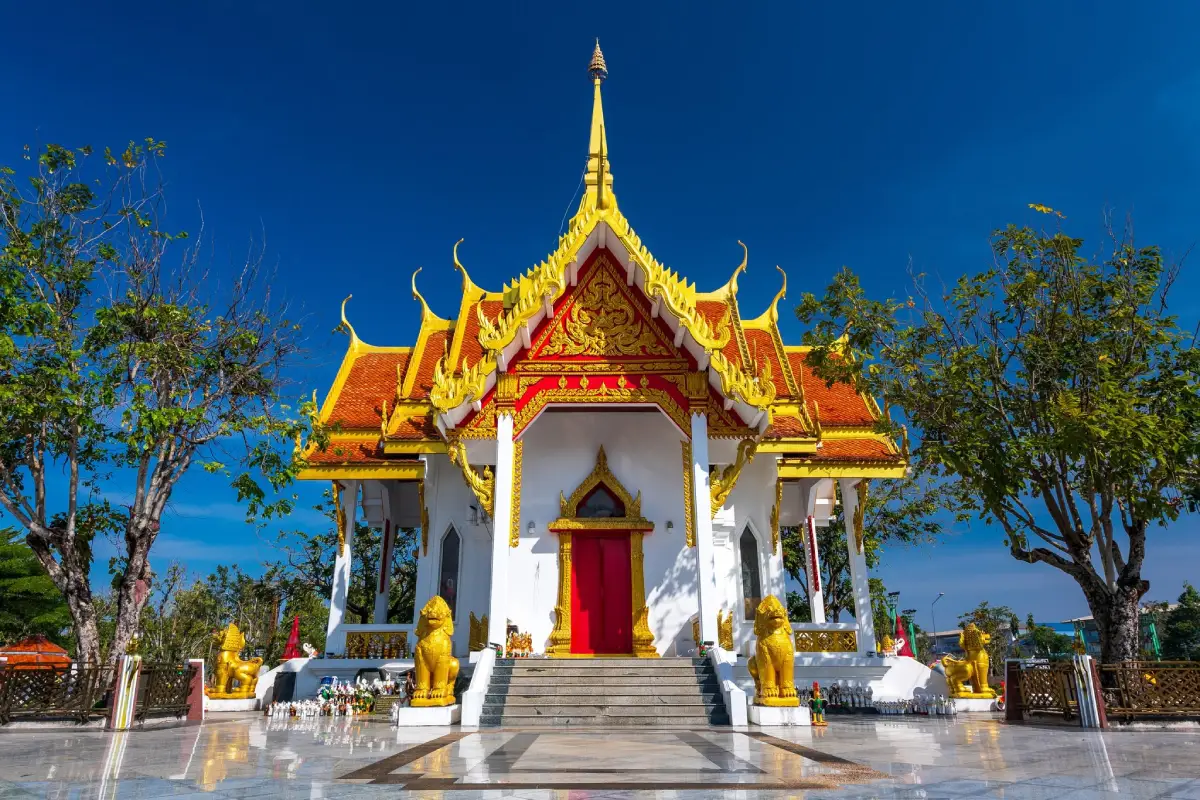
Ubon Ratchathani City Pillar Shrine
Open Days: Daily
Opening Hours: 08.00 – 17.00
Ubon Ratchathani City Pillar Shrine is one of the most important sacred landmarks in the heart of Ubon Ratchathani city. Located on Si Narong Road, just south of Thung Si Mueang and north of the Ubon Ratchathani National Museum, the shrine is a central place of worship for local residents and visitors. It enshrines the city pillar, which was designed by Thailand’s Fine Arts Department in the form of a lotus-bud finial and made from golden shower wood, known in Thai as ratchaphruek. For Thai people, the city pillar represents the spiritual foundation and protective center of the province. For international travelers, it is an excellent place to understand the concept of Lak Mueang, a Thai city pillar shrine that symbolizes stability, protection, civic identity, and the relationship between people, place, and sacred power.
The shrine is more than a small religious monument. It stands within one of the most meaningful urban areas of Ubon Ratchathani. Around it are Thung Si Mueang, the old provincial administrative area, the Ubon Ratchathani National Museum, Wat Si Ubon Rattanaram, Wat Thung Si Mueang, and several old temples that form the cultural core of the city. A visit to the shrine therefore introduces travelers to the historic heart of Ubon Ratchathani. It is a place where worship, local memory, public space, royal history, and annual civic ritual meet in one compact area.
The history of Ubon Ratchathani City Pillar Shrine began in 1972, during the administration of Police Major General Wichian Srimantra, then Governor of Ubon Ratchathani Province. The idea was to establish a sacred place that would serve as the spiritual center of the province and a symbolic foundation of the city. The chosen location was highly significant: the southern side of Thung Si Mueang and the northern side of the old provincial hall, which is now the Ubon Ratchathani National Museum. This location placed the shrine at the heart of civic life, between public space and administrative memory.
The foundation-stone ceremony took place on 27 August 1972. Somdet Phra Maha Wirawong from Wat Si Mahathat, Bang Khen, Bangkok, presided over the ceremony. His role gave the founding of the shrine strong religious significance from the beginning. The city pillar itself was designed by the Fine Arts Department as a lotus-bud-topped pillar and made from ratchaphruek wood. The material and form were both meaningful. Ratchaphruek is associated with auspiciousness and Thai identity, while the lotus-bud form expresses purity, growth, and sacred aspiration.
After construction was completed, Governor Dechchat Wongkomonchet respectfully invited His Majesty King Rama IX, Her Majesty Queen Sirikit, and the Crown Prince to preside over the official opening ceremony. The royal opening ceremony took place on 16 January 1976. This event became a major historical moment for the province and firmly established the shrine as a place of high civic and spiritual importance. For local residents, the shrine is not only a landmark; it is part of the province’s shared memory.
The present shrine building follows a central Thai-style cruciform pavilion form, known in Thai as jatumuk. The structure has a multi-tiered roof, ornate decorative elements, and a tall spire that gives the building visual dignity. The white walls, red roof, gold decoration, guardian figures, and raised stairway make the shrine visually striking while still preserving a solemn atmosphere. The pavilion form also allows the shrine to feel open from several directions, appropriate for a city pillar that represents a central point of civic protection and reverence.
Inside the shrine, the city pillar is treated as a sacred object. Its lotus-bud top gives it elegance and symbolic force. In Thai belief, the city pillar is connected with the founding and protection of a city. People come to pay respect for good fortune, safety, successful beginnings, stable work, safe travel, and general well-being. The shrine therefore plays a continuing role in personal devotion, public ceremony, and the emotional life of the city.
Local worshippers commonly bring flowers, orchids, marigolds, incense, candles, garlands, gold leaf, and colored cloths such as 3-color, 5-color, or 7-color cloth. Each offering carries a devotional meaning. Marigolds suggest prosperity and brightness, garlands express respect, incense and candles mark sacred intention, and colored cloths represent faith and auspicious protection. Visitors who are unfamiliar with Thai worship practices can observe respectfully and follow local etiquette with quiet attention.
The shrine is closely connected with an important annual ceremony held on the 1st waxing-moon day of the 7th lunar month. In the Isan seasonal tradition known as Heet Sip Song, the 7th lunar month is associated with Bun Samha, a ritual period related to cleansing, protection, and civic auspiciousness. Every year, Ubon Ratchathani Municipality, provincial authorities, public agencies, private organizations, and local residents join the annual city pillar worship ceremony. This tradition continues to give the shrine an active role in the spiritual life of the province.
The annual ceremony includes Buddhist rites, chanting, ceremonial offerings, and acts of respect toward important figures of Ubon Ratchathani. It is not only a ritual for the shrine itself. It is a civic act of renewal, gratitude, and protection for the city. Through this ceremony, the people of Ubon Ratchathani express respect for the city’s sacred foundation and reaffirm their connection with local tradition. For travelers who encounter the ceremony, it provides a clear view of how public religion and civic identity work together in northeastern Thailand.
Within the shrine area are also places for paying respect to important religious figures associated with Ubon Ratchathani, including Somdet Phra Maha Wirawong and Phra Ubali Khunupamacharn Sirichan Chan. These figures are important in the religious and cultural history of the province. Their presence in the same area expands the meaning of the shrine from a city-pillar site into a compact memorial space for civic and Buddhist heritage.
Thung Si Mueang is essential to the shrine’s atmosphere. The shrine stands at the southern edge of this major public park and ceremonial ground. Thung Si Mueang is used for exercise, public gatherings, provincial ceremonies, and major cultural events such as the Ubon Ratchathani Candle Festival. The proximity of the city pillar to this public space makes the shrine part of everyday urban life. Residents may pass it during walks, ceremonies, festivals, or daily routines, while visitors can easily combine worship with a walk through the park.
The Ubon Ratchathani National Museum, located just south of the shrine, adds another historical layer to the area. The museum occupies the former provincial hall and presents archaeological objects, art, local history, and cultural heritage of the province. Visiting the city pillar shrine together with the museum creates a meaningful route: first, the spiritual foundation of the city; then, the historical evidence and cultural memory of the province. This combination is especially valuable for travelers seeking a deeper understanding of Ubon Ratchathani.
Wat Si Ubon Rattanaram is another important nearby temple. It stands across from Thung Si Mueang and close to the shrine. The temple has long held religious and historical importance in the city. Other nearby temples, including Wat Thung Si Mueang, Wat Mahawanaram, and Wat Supattanaram Worawihan, make the city-center area rich in Buddhist heritage. A visitor can spend a half day walking or taking short rides among these places and gain a strong overview of Ubon Ratchathani’s religious and cultural core.
Wat Thung Si Mueang is particularly suitable to combine with the city pillar shrine. It is known for its old scripture library standing above water, a remarkable example of local wisdom used to protect palm-leaf manuscripts from insects and damage. By visiting both the city pillar shrine and Wat Thung Si Mueang, travelers can see two different expressions of local belief: one focused on civic protection, and another focused on Buddhist learning and preservation.
For international visitors, the shrine offers a concise introduction to Thai civic spirituality. Many visitors know Thailand through temples, Buddha images, and festivals, but the city pillar shrine represents another important layer. It shows how Thai communities understand a city as something with a sacred center. The pillar is not worshipped as an ordinary object. It is respected as a symbolic anchor of the province, a point of protection and stability where citizens can express faith and seek blessings.
The best time to visit is in the morning or late afternoon. Morning visits are quiet, the light is gentle, and the area around Thung Si Mueang is less busy. Late afternoon gives a livelier view of the city as residents come to walk, exercise, and relax in the park. During annual ceremonies or major public events, the area becomes much busier, and visitors should allow more time for walking, parking, and respectful participation.
Visitors should dress respectfully. Although the shrine is in a public city-center area, it is a sacred place. Shoulders and knees should be covered, voices should be kept low, and visitors should avoid obstructing people who are praying. Photography outside the shrine is generally suitable, especially of the pavilion, entrance, and surrounding public space, but it should be done respectfully. The central pillar and the worship area should be treated with dignity.
Worship at the shrine can be simple. Visitors may prepare flowers, incense, candles, garlands, gold leaf, or colored cloth according to personal faith. The most important element is respectful intention. Those unfamiliar with Thai ritual can observe local worshippers and follow the flow calmly. The shrine is welcoming to both Thai and foreign visitors, but it should never be treated as a casual entertainment site.
There is no admission fee for general worship. Donations or offerings are voluntary and depend on personal faith. This open access allows residents, students, workers, travelers, families, and foreign visitors to pay respect easily. The shrine remains part of daily public life rather than a commercial tourist attraction.
Getting There is straightforward because the shrine stands in the city center of Ubon Ratchathani. From Ubon Ratchathani Airport, the distance is about 4 km by car or local transport. From hotels around Thung Si Mueang or Uparat Road, visitors can often walk or take a short ride. Search for “Ubon Ratchathani City Pillar Shrine” or “ศาลหลักเมืองอุบลราชธานี” in a navigation app. The shrine is near Thung Si Mueang and Ubon Ratchathani National Museum, making it easy to identify.
Visitors arriving by private car should park only in suitable public parking areas and avoid blocking traffic around the shrine, the park, or nearby government and cultural sites. During annual ceremonies, the Candle Festival period, or other major events at Thung Si Mueang, the area can become crowded. Early arrival is the best approach when attending a ceremony or visiting during a festival period.
A short itinerary can begin with paying respect at the city pillar shrine, followed by a walk around Thung Si Mueang and a visit to Wat Si Ubon Rattanaram or Wat Thung Si Mueang. A half-day itinerary can add Ubon Ratchathani National Museum, Wat Mahawanaram, and Wat Supattanaram Worawihan. A full-day city route can continue to Wat Phra That Nong Bua, local restaurants, cafés, and city markets. This makes the shrine an ideal starting point for understanding Ubon Ratchathani.
Food options around the shrine are convenient because it stands in the city center. Visitors can find local breakfast, Ubon-style Vietnamese noodle soup, cafés, quick meals, Korean barbecue, and hotel restaurants within a short distance. A good plan is to visit the shrine in the morning, walk through the cultural area, and then stop for local food near Thung Si Mueang or the old city streets.
Accommodation is also easy to find nearby. Hotels around Thung Si Mueang and the old city area are suitable for travelers who want to walk to the shrine, museum, and nearby temples. Hotels near the airport and main roads are convenient for travelers with early flights or private vehicles. Staying near the shrine allows visitors to experience the city center in the morning and evening, when the area feels most local and alive.
In summary, Ubon Ratchathani City Pillar Shrine is an essential destination for anyone who wants to understand the city beyond ordinary sightseeing. It combines the sacred city pillar, royal opening history, Fine Arts Department design, annual civic worship on the 1st waxing-moon day of the 7th lunar month, and a prime location beside Thung Si Mueang and the National Museum. A visit here is not only a moment of prayer. It is a direct encounter with the spiritual and civic heart of Ubon Ratchathani.
| Name | Ubon Ratchathani City Pillar Shrine |
| Thai Name | ศาลหลักเมือง อุบลราชธานี |
| Location | South Of Thung Si Mueang, Si Narong Road, Nai Mueang Subdistrict, Mueang Ubon Ratchathani District, Ubon Ratchathani Province |
| Address | Si Narong Road, Nai Mueang Subdistrict, Mueang Ubon Ratchathani District, Ubon Ratchathani 34000, Thailand |
| Coordinates | 15.228341, 104.857725 |
| Place Type | City Pillar Shrine, Provincial Sacred Site, Historical And Cultural Landmark In The City Center |
| Highlights | Ratchaphruek Wood City Pillar With Lotus-Bud Top, Cruciform Shrine Pavilion, Thung Si Mueang Location, Annual Worship Ceremony On The 1st Waxing-Moon Day Of The 7th Lunar Month, And A Strong Starting Point For Old-City Exploration |
| History | Construction began in 1972 during the administration of Governor Police Major General Wichian Srimantra. The foundation-stone ceremony was held on 27 August 1972, and the official opening ceremony took place on 16 January 1976 |
| City Pillar Design | Designed By The Fine Arts Department As A Lotus-Bud-Topped Pillar Made From Ratchaphruek Wood |
| Distinctive Features | A Jatumuk-Style City Pillar Pavilion, Sacred Lotus-Bud Pillar, Central City Worship Site, And Annual Ritual Connected With Heet Sip Song And Bun Samha Tradition |
| Common Offerings | Flowers, Orchids, Marigolds, Incense, Candles, Garlands, Gold Leaf, 3-Color Cloth, 5-Color Cloth, And 7-Color Cloth |
| Main Tradition | Annual Worship Ceremony Of The City Pillar, Held Every Year On The 1st Waxing-Moon Day Of The 7th Lunar Month For Civic Auspiciousness |
| Travel Information | Located In The City Center Beside Thung Si Mueang And Near Ubon Ratchathani National Museum. Accessible By Private Car, Local Taxi, Motorcycle, Or On Foot From Nearby Hotels |
| Current Status | Open To Visitors And Remains A Major Spiritual And Civic Landmark Of Ubon Ratchathani Province |
| Open Days | Daily |
| Opening Hours | 08.00 – 17.00 |
| Fees | No Admission Fee |
| Main Areas / Zones | City Pillar Shrine And Sacred Pillar Worship Courtyard And Offering Area Memorial Points For Important Provincial Religious Figures South Side Of Thung Si Mueang Connection Area To Ubon Ratchathani National Museum Surrounding Walkways And Public Activity Space |
| Caretaker / Related Authorities | Ubon Ratchathani Province, Ubon Ratchathani Municipality, And Related Local Authorities |
| Main Contact Number | 045-246-060 |
| Nearby Tourist Attractions | 1. Thung Si Mueang, about 0.1 km 2. Ubon Ratchathani National Museum, about 0.1 km 3. Wat Si Ubon Rattanaram, about 0.3 km 4. Wat Thung Si Mueang, about 0.6 km 5. Wat Mahawanaram, about 1.2 km 6. Wat Supattanaram Worawihan, about 1.4 km 7. Wat Phra That Nong Bua, about 5.3 km |
| Nearby Restaurants | 1. Miso Panda BBQ, about 0.1 km, Tel. 099-181-3208 2. Kuai Chap Dap Phloeng, about 0.2 km, Tel. 088-580-2275 3. Daily Dish Thung Si Mueang, about 0.3 km, Tel. 082-623-6942 4. CafeInn Ubon, about 0.3 km, Tel. 063-665-2281 5. Jungle Cafe Thung Si Mueang Ubon Ratchathani, about 0.4 km, Tel. 091-852-0095 6. Tohsang Restaurant, about 1.1 km, Tel. 045-245-531-5 |
| Nearby Accommodations | 1. YUU HOTEL Ubon Ratchathani, about 0.5 km, Tel. 085-614-1111 2. Ubon Hotel, about 0.7 km, Tel. 045-241-045 3. Tohsang Heritage Ubon Ratchathani, about 1.1 km, Tel. 045-245-531-5, 094-396-9626 4. B2 Ubon Airport Premier Hotel, about 1.3 km, Tel. 045-950-881 5. Sunee Grand Hotel, about 3.2 km, Tel. 081-265-3388, 081-955-2992 |
Frequently Asked Questions (FAQ)
Q: Where is Ubon Ratchathani City Pillar Shrine located?
A: Ubon Ratchathani City Pillar Shrine is located south of Thung Si Mueang on Si Narong Road, Nai Mueang Subdistrict, Mueang Ubon Ratchathani District, Ubon Ratchathani Province.
Q: What are the opening hours of Ubon Ratchathani City Pillar Shrine?
A: The shrine is open daily from 08.00 to 17.00.
Q: Is there an admission fee at Ubon Ratchathani City Pillar Shrine?
A: There is no admission fee. Visitors can enter and pay respect during opening hours.
Q: When was Ubon Ratchathani City Pillar Shrine built?
A: Construction began in 1972, the foundation-stone ceremony was held on 27 August 1972, and the official opening ceremony took place on 16 January 1976.
Q: What is distinctive about the city pillar?
A: The city pillar was designed by the Fine Arts Department as a lotus-bud-topped pillar made from ratchaphruek wood, symbolizing stability, auspiciousness, and civic prosperity.
Q: When is the annual city pillar worship ceremony held?
A: The annual worship ceremony is held every year on the 1st waxing-moon day of the 7th lunar month, connected with the Isan Bun Samha tradition.
Q: What offerings are commonly used at the shrine?
A: Common offerings include flowers, orchids, marigolds, incense, candles, garlands, gold leaf, and 3-color, 5-color, or 7-color cloth.
Q: What nearby places can be visited with Ubon Ratchathani City Pillar Shrine?
A: Nearby places include Thung Si Mueang, Ubon Ratchathani National Museum, Wat Si Ubon Rattanaram, Wat Thung Si Mueang, Wat Mahawanaram, Wat Supattanaram Worawihan, and Wat Phra That Nong Bua.
 Category: ●Places of Worship
 Group: ●Other Sacred Sites
Last Update : 3 MonthAgo
 Last Update : 3 MonthAgo
 Click to Access the Navigation Map GPS
Ubon Ratchathani City Pillar Shrine Map
Recommend

 Art, Culture and Heritage
 Historical Sites and Monuments(5)
 Landmarks and Memorials(2)
 Royal Palace(1)
 Art, Craft Centres, Tradition(7)
 Museums(3)
 Temple(37)
Other Sacred Sites(4)
Temple(37)
Other Sacred Sites(4)
 Research and Development
 Royal Project(2)
 Suburban Living
 Village, Community(2)
 Local Market(4)
 Nature and Wildlife
 National Parks and Marine Reserves(5)
 Mountain (Doi)(6)
 Dam, Reservoir, Lake(8)
 Waterfalls(12)
 Hot Springs(1)
 Caves(2)
 River, Canal(11)
 Bays and Beaches(8)
 Islands(2)
 Other natural attractions(6)
 Entertainment and Agricultural
 Zoos and Aquariums(2)
 Animal camps and shows(1)
 Farms, Parks and Ecotourism(1)
 Waterpark(1)
 Travel Articles, Recipes
 Travel Review, Food Review(1)


