
lovethailand home >Northeastern Travel Attractions >Ubon Ratchathani Travel Attractions >Khemarat >Khamerat > Wat Pho
TL;DR: Wat Pho is located at Kong Phaniang Road, Khemmarat Subdistrict, Khemmarat District, Ubon Ratchathani Province, open Daily, hours 08.00 – 17.00.
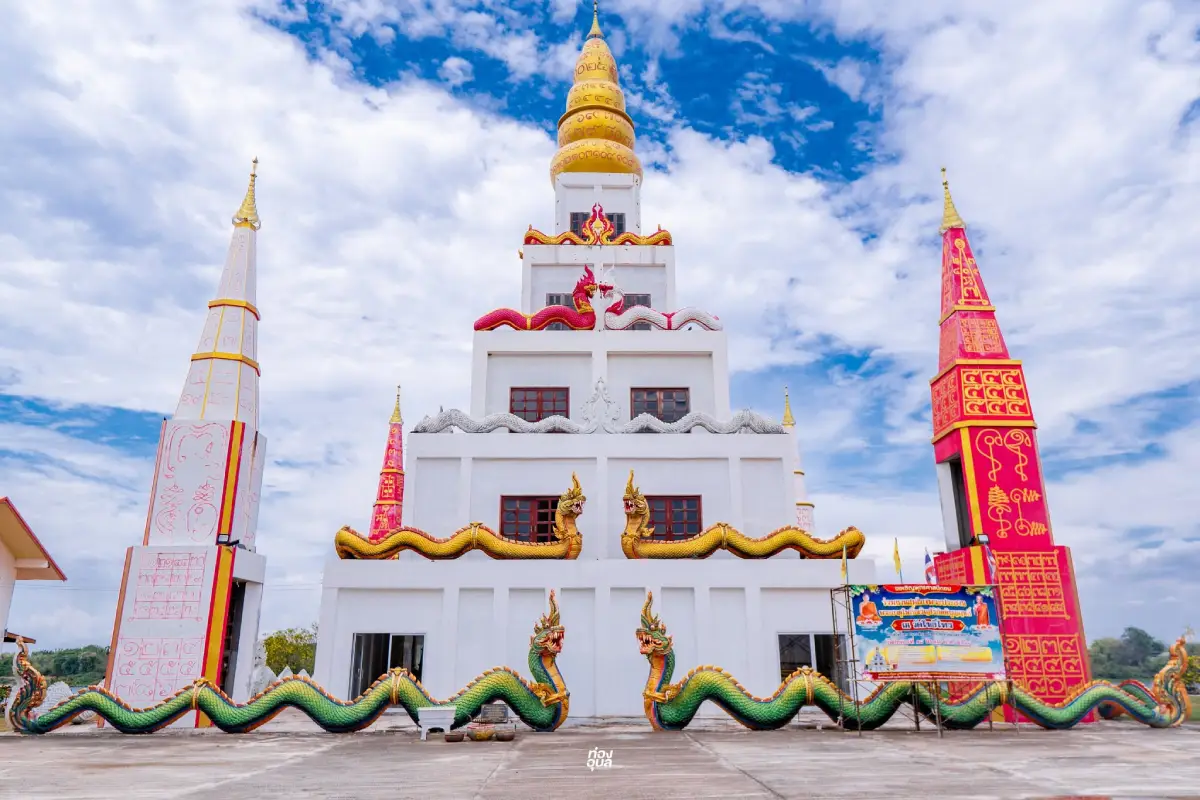
Wat Pho
Open Days: Daily
Opening Hours: 08.00 – 17.00
Wat Pho in Khemmarat District, Ubon Ratchathani, is one of the most important old temples in the historic riverside town of Khemmarat. Located at No. 109, Kong Phaniang Road, Khemmarat Subdistrict, the temple belongs to the Mahanikaya order and stands close to the Mekong River, Khemmarat Walking Street, and the riverside viewpoint of the old town. Its most revered sacred image is Phra Chao Yai Ong Saen, an ancient Buddha image in the Mara Vichai posture that has long been respected as a spiritual guardian of Khemmarat. For foreign travelers, Wat Pho is one of the clearest gateways to understanding Khemmarat as a Mekong town shaped by migration, Buddhism, local memory, and Thai-Lao cultural heritage.
The appeal of Wat Pho lies in the way it brings together sacred faith, local history, riverside scenery, and the atmosphere of an old community. This is not only a place to make merit or take photographs. It is a living temple where local people continue to worship, where visitors can pay respect to an ancient Buddha image, and where the story of Khemmarat can be read through religious objects, old settlement memory, and the landscape of the Mekong. From the temple, travelers can easily continue on foot to the riverside viewpoint and Khemmarat Walking Street, making Wat Pho an ideal starting point for exploring the town.
According to local history, Wat Pho was founded in 1788 by a Buddhist nun, also remembered locally as Mae Khao. She led a group of people, relatives, and followers who escaped wartime hardship and migrated from Vientiane down the Mekong River. They settled in this area during the Thonburi period under King Taksin the Great and established both a village and a temple. This origin gives Wat Pho strong historical meaning. It connects Khemmarat with the wider movement of people along the Mekong and with the Thai-Lao cultural world that still shapes the identity of the town today.
The temple was originally located in another area, associated with what later became the customs office and public health station. Later, villagers found a Buddha image in a forested area where a large bodhi tree stood. The temple was moved to the present location and named Wat Pho after the bodhi tree. This story gives the temple its local identity and explains why the name is closely tied to both a sacred image and a sacred tree. Wat Pho later received its consecrated boundary in 1973, with a consecrated area measuring 20 meters wide and 40 meters long.
The most important sacred object at Wat Pho is Phra Chao Yai Ong Saen. This Buddha image is in the Mara Vichai posture and measures 1.09 meters across the lap and 1.59 meters in total height. It was made from ancient bricks and traditionally bonded with a mixture of flower pollen water and tree-bark liquid, reflecting the local wisdom of an earlier period before modern cement was widely used. The image has been respected by the people of Khemmarat for generations and is regarded as one of the oldest important Buddha images in Ubon Ratchathani.
The power of Phra Chao Yai Ong Saen lies not in size alone but in its continuity of faith. The Mara Vichai posture represents the Buddha’s victory over Mara through inner strength and spiritual perfection. For local people, the image is a spiritual anchor of the town. For visitors, paying respect to this image offers a direct connection with the history and identity of Khemmarat. Many travelers consider a visit to Wat Pho and Phra Chao Yai Ong Saen an essential part of arriving in Khemmarat.
Wat Pho also houses Phra Phuttha Khemarat Woramongkhon, a large Buddha image inspired by several well-known sacred images, including Phra Chao Yai Ong Saen, Phra Chao Yai Ong Tue, Phra Phuttha Sothon, and Phra Phuttha Sihing. The image is made with a reinforced concrete structure, measuring 5 meters across the lap and 7 meters in height. Its pedestal construction began on 5 March 2004 as an act of royal merit dedicated to Her Majesty Queen Sirikit, Queen Mother of Thailand. This image adds a modern layer to the temple’s long religious history.
Another important structure is the Buddha Jayanti 2600-Year Enlightenment Mondop, which enshrines Buddha relics. The mondop was created so that local Buddhists and visitors could pay respect to the relics and reflect on the Buddha’s enlightenment. For visitors, the route inside the temple can begin with Phra Chao Yai Ong Saen and continue to the mondop. This gives the visit both a local and universal Buddhist dimension: one centered on the sacred image of Khemmarat and the other centered on the relics of the Buddha.
The Ashoka pillar at Wat Pho is another meaningful feature. It was bestowed as a symbol of recognition to Phra Khru Worakit Kowit, a former abbot of Wat Pho, for his contribution to Buddhism, especially in the field of Buddhist propagation abroad. The pillar shows that Wat Pho has not only served the local community but has also been connected with wider Buddhist activities. This gives the temple another layer of importance beyond its role as a community monastery.
The temple also preserves a jade Buddha image known as the Emerald Jade Buddha of Wat Pho. It was brought from the People’s Republic of China, from the Siberian region near the Russian border. The image is made from dark underwater jade and measures 15 inches across the lap and 20 inches in height. Its presence gives Wat Pho a cross-border spiritual dimension, complementing the older local image of Phra Chao Yai Ong Saen. Together, these sacred objects show how Khemmarat’s Buddhist identity is both deeply local and connected to wider cultural movement.
Wat Pho is important within the town because of its location. The temple is very close to the Mekong riverside viewpoint and Khemmarat Walking Street. Visitors can park near the temple, pay respect to Phra Chao Yai Ong Saen, and then walk to the riverside to enjoy the view of the Mekong. In the cool season, especially from December to February, the riverside atmosphere becomes especially pleasant, with cooler air, soft light, and a quiet old-town mood. This makes Wat Pho one of the most convenient and meaningful starting points for a Khemmarat itinerary.
Khemmarat Walking Street is closely connected with the temple route. Held on Saturday evenings, it is a cultural street where visitors can see old wooden houses, local food, handmade products, textiles, souvenirs, and community performances. Visiting Wat Pho before walking through the old street allows travelers to experience both the sacred and everyday sides of Khemmarat. The temple represents faith and history, while the walking street represents local life, food culture, crafts, and the living identity of the town.
The Khun Phuri Prasat House Museum is another nearby site that pairs well with Wat Pho. Located within the walking street area, this old wooden house was once associated with a former local ruler and now functions as a community museum. Inside, visitors can see old objects, household items, and stories that help explain the prosperity and character of Khemmarat in earlier times. Combining Wat Pho with this museum gives travelers a fuller understanding of the town’s religious and civic history.
Wat Pho is also surrounded by riverside restaurants, cafes, homestays, and small local accommodations. This makes the temple an easy part of a slow-travel route. Travelers can worship in the morning, walk along the Mekong, visit the museum, rest at a cafe, and return in the evening for the walking street. Khemmarat is not a fast-paced destination. Its charm lies in walking slowly, noticing old houses, greeting local people, and spending time by the Mekong without rushing.
Getting There is straightforward by private car or hired vehicle. From Ubon Ratchathani city, travel north toward Khemmarat District. The distance is about 105–110 kilometers, and the drive usually takes around 1 hour 45 minutes to 2 hours depending on traffic and route conditions. Once in Khemmarat town, continue to Kong Phaniang Road in the old town area. Wat Pho is located close to the riverside viewpoint and walking street, so it can be used as a central point for walking around historic Khemmarat.
Travelers without a private vehicle can travel from Ubon Ratchathani city to Khemmarat by local bus or van, then continue to Wat Pho by local transport. For visitors who plan to include attractions outside the town center, such as Kaeng Chang Mop, Wat Phra That Phu Khao Ngoen, Phu Ang, or the community museum at Wat Phu Tham Phra Sila Thong, hiring a vehicle with a driver is more convenient because these attractions are spread across different parts of the district.
Wat Pho is open daily from 08.00 to 17.00 and has no admission fee. Visitors can enter the temple, worship Phra Chao Yai Ong Saen, see Phra Phuttha Khemarat Woramongkhon, pay respect to the Buddha relics in the mondop, and walk around the temple grounds without buying a ticket. Since this is an active Buddhist temple, visitors should dress modestly, keep voices low, avoid disturbing monks or local devotees, and keep the temple and riverside areas clean.
The best time to visit is in the morning or late afternoon. Morning is suitable for worship and quiet photography, while late afternoon is ideal for continuing to the Mekong viewpoint and walking street. Saturday is the best day for travelers who want to combine the temple with Khemmarat Walking Street. The cool season is especially attractive because the riverside air is comfortable and the old-town atmosphere is at its best.
Wat Pho is suitable for many types of travelers. Buddhist visitors can pay respect to Phra Chao Yai Ong Saen and the Buddha relics. Cultural travelers can learn about the migration history of Khemmarat and the Thai-Lao world of the Mekong. Photographers can capture the temple, old houses, riverside views, and walking street. Slow travelers can spend a full day around the temple, museum, cafe, homestay, and Mekong viewpoint without needing to move far.
For foreign travelers, Wat Pho is one of the most useful places for understanding Khemmarat. The temple combines the story of migration from Vientiane, an ancient brick Buddha image, local Buddhist devotion, riverside settlement, and the modern cultural life of a Mekong old town. Visiting Wat Pho is therefore not just a temple visit. It is a way to understand how faith, memory, architecture, river culture, and community identity remain connected in northeastern Thailand.
Wat Pho deserves a central place in any Khemmarat itinerary. Its strongest features are Phra Chao Yai Ong Saen, the founding story from 1788, Phra Phuttha Khemarat Woramongkhon, the Buddha Jayanti mondop, the Ashoka pillar, the jade Buddha image, and its convenient connection to the Mekong viewpoint and Khemmarat Walking Street. Visitors who come here will find more than a sacred image; they will find the living spiritual and cultural heart of Khemmarat.
| Name | Wat Pho / Wat Pho Phra Chao Yai Ong Saen |
| Location | Kong Phaniang Road, Khemmarat Subdistrict, Khemmarat District, Ubon Ratchathani Province |
| Address | No. 109, Kong Phaniang Road, Moo 7, Khemmarat Subdistrict, Khemmarat District, Ubon Ratchathani 34170, Thailand |
| Coordinates | 16.042967, 105.223055470 |
| Highlights | Phra Chao Yai Ong Saen, an ancient Buddha image of Khemmarat; Phra Phuttha Khemarat Woramongkhon; Buddha Jayanti 2600-Year Enlightenment Mondop; Buddha relics; Ashoka pillar; jade Buddha image; and easy access to the Mekong viewpoint and Khemmarat Walking Street |
| History | Founded in 1788 by a Buddhist nun or Mae Khao who led people migrating from Vientiane down the Mekong during the Thonburi period under King Taksin the Great. The temple received its consecrated boundary in 1973. |
| Name Origin / Local Story | Villagers found a Buddha image in a forested area with a large bodhi tree, moved the temple to the present site, and named it Wat Pho after the sacred tree. |
| Distinctive Features | An old temple in the heart of Khemmarat combining a revered town Buddha image, Mekong migration history, sacred Buddhist structures, and direct walking access to the old town and riverside viewpoint |
| Travel Information | From Ubon Ratchathani city, travel north to Khemmarat District. The distance is about 105–110 km and the drive takes around 1 hour 45 minutes to 2 hours. The temple is located on Kong Phaniang Road near the old town, walking street, and Mekong viewpoint. |
| Current Status | Open for worship, visits to Phra Chao Yai Ong Saen, and walking access to the Mekong viewpoint and Khemmarat old town |
| Open Days | Daily |
| Opening Hours | 08.00 – 17.00 |
| Fees | No admission fee |
| Facilities | Worship areas, mondop, temple courtyard, nearby parking, riverside walking access, nearby restaurants, cafes, homestays, and accommodations in Khemmarat old town |
| Main Areas / Zones | 1. Phra Chao Yai Ong Saen worship area 2. Phra Phuttha Khemarat Woramongkhon 3. Buddha Jayanti 2600-Year Enlightenment Mondop 4. Buddha relics area 5. Ashoka pillar 6. Jade Buddha image of Wat Pho 7. Temple courtyard and Mekong viewpoint connection 8. Walking route to Khemmarat Walking Street |
| Abbot / Caretaker | Phra Khru Worakit Koson |
| Temple Contact Number | 045-491-008 |
| Local Information Contact | Khemmarat Subdistrict Municipality, Tel. 045-491-184 |
| Nearby Tourist Attractions | 1. Khemmarat Mekong Viewpoint, about 0.1 km 2. Khemmarat Walking Street, about 0.3 km 3. Khun Phuri Prasat House Museum, about 0.4 km 4. Chao Pho Lak Mueang Khemmarat Shrine, about 0.8 km 5. Khemkhong Cafe, about 2.5 km 6. Wat Bung Khi Lek / Lan Phra Khao, about 4 km 7. Wat Phra That Phu Khao Ngoen, about 7 km 8. Kaeng Chang Mop, about 15 km 9. Wat Phu Tham Phra Sila Thong Community Museum, about 18 km |
| Nearby Restaurants | 1. Ban Pu Ka Ya Restaurant, about 0.8 km, Tel. 086-012-5759 2. Lae Khong Restaurant Khemmarat, about 2.5 km, Tel. 045-491-501, 087-111-2836 3. Khemkhong Cafe Khemmarat, about 2.5 km, Tel. 094-825-5258 4. Khemmarat Kung Sot, about 3 km, Tel. 089-425-0457, 088-580-8539 5. Shabu Indy Khemmarat, about 3 km, Tel. 080-468-5164 6. Por Khao Man Kai Khemmarat, about 3 km |
| Nearby Accommodations | 1. Ban Chuan Phit, about 0.4 km, Tel. 064-732-1792 2. Ban Kong Phaniang, about 0.5 km, Tel. 083-732-5272 3. Lae Khong River Resort, about 2.5 km, Tel. 045-491-501, 087-111-2836 4. Rim Khong Thale Lom, about 3 km, Tel. 089-693-1074, 089-689-4168 5. Khiang Khong Homestay, about 3 km, Tel. 087-965-4114 6. Khemmarat Baandin Resort, about 5 km, Tel. 084-602-5795 7. Saen Suk Homestay, about 5 km, Tel. 095-613-5614 |
Frequently Asked Questions (FAQ)
Q: Where is Wat Pho Khemmarat located?
A: Wat Pho is located at No. 109, Kong Phaniang Road, Moo 7, Khemmarat Subdistrict, Khemmarat District, Ubon Ratchathani Province, near Khemmarat Walking Street and the Mekong viewpoint.
Q: What are the opening hours of Wat Pho Khemmarat?
A: Wat Pho is open daily from 08.00 to 17.00.
Q: Is there an admission fee for Wat Pho Khemmarat?
A: No. Visitors can enter the temple, worship Phra Chao Yai Ong Saen, and walk around the temple grounds without an admission fee.
Q: Why is Phra Chao Yai Ong Saen important?
A: Phra Chao Yai Ong Saen is an ancient Buddha image in the Mara Vichai posture, made from old bricks and traditional natural binding materials. It is revered as a sacred Buddha image of Khemmarat.
Q: What is the history of Wat Pho Khemmarat?
A: Wat Pho was founded in 1788 by a Buddhist nun or Mae Khao who led people migrating from Vientiane down the Mekong River and established a village and temple in Khemmarat during the Thonburi period.
Q: Who is the abbot of Wat Pho Khemmarat?
A: The latest abbot information found in the 2025 Kathin record lists Phra Khru Worakit Koson.
Q: How long should travelers spend at Wat Pho Khemmarat?
A: Most visitors should allow 1–2 hours to worship Phra Chao Yai Ong Saen, see the Buddha Jayanti mondop, pay respect to the Buddha relics, and walk to the nearby Mekong viewpoint.
Q: What nearby attractions can be visited with Wat Pho Khemmarat?
A: Nearby attractions include the Khemmarat Mekong Viewpoint, Khemmarat Walking Street, Khun Phuri Prasat House Museum, Chao Pho Lak Mueang Khemmarat Shrine, Wat Bung Khi Lek, Wat Phra That Phu Khao Ngoen, and Kaeng Chang Mop.
 Category: ●Places of Worship
 Group: ●Temple
Last Update : 3 MonthAgo
 Last Update : 3 MonthAgo
 Click to Access the Navigation Map GPS

 Art, Culture and Heritage
 Historical Sites and Monuments(5)
 Landmarks and Memorials(2)
 Royal Palace(1)
 Art, Craft Centres, Tradition(7)
 Museums(3)
Temple(37)
 Other Sacred Sites(4)
 Research and Development
 Royal Project(2)
 Suburban Living
 Village, Community(2)
 Local Market(4)
 Nature and Wildlife
 National Parks and Marine Reserves(5)
 Mountain (Doi)(6)
 Dam, Reservoir, Lake(8)
 Waterfalls(12)
 Hot Springs(1)
 Caves(2)
 River, Canal(11)
 Bays and Beaches(8)
 Islands(2)
 Other natural attractions(6)
 Entertainment and Agricultural
 Zoos and Aquariums(2)
 Animal camps and shows(1)
 Farms, Parks and Ecotourism(1)
 Waterpark(1)
 Travel Articles, Recipes
 Travel Review, Food Review(1)


