
lovethailand home >Northeastern Travel Attractions >Ubon Ratchathani Travel Attractions >Muang Ubon Ratchathani >Nai Muang > Wat Tai Phra Chao Yai Ong Tue
TL;DR: Wat Tai Phra Chao Yai Ong Tue is located at No. 2 Phrommarat-Sunthon Wimon Road, Nai Mueang Subdistrict, Mueang Ubon Ratchathani District, Ubon Ratchathani Province, near the eastern, open Daily, hours 08.00 – 16.00.
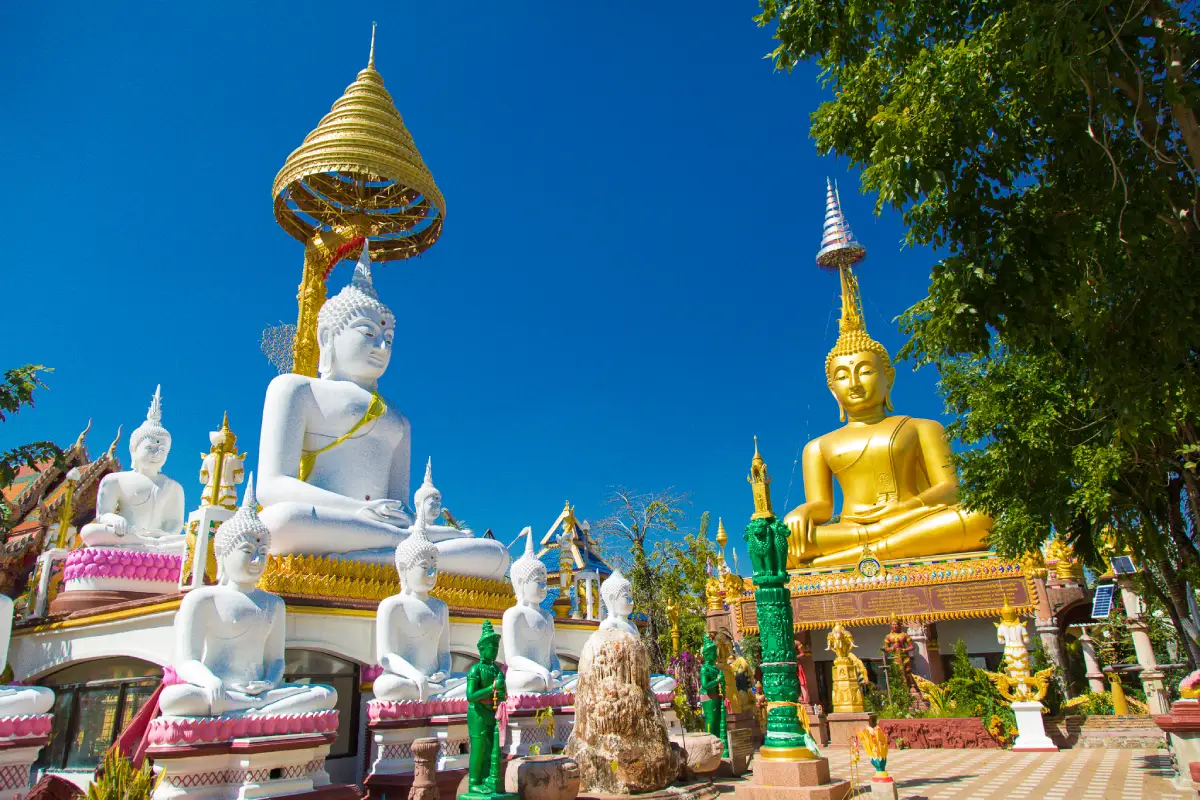
Wat Tai Phra Chao Yai Ong Tue
Open Days: Daily
Opening Hours: 08.00 – 16.00
Wat Tai Phra Chao Yai Ong Tue in Ubon Ratchathani, also known locally as Wat Tai, Wat Tai Thoeng, or Wat Tai Theung, is one of the most meaningful old Buddhist temples in the historic city area of Ubon Ratchathani. The temple is located at No. 2, Phrommarat-Sunthon Wimon Road, Nai Mueang Subdistrict, Mueang Ubon Ratchathani District, close to the eastern side of the Mun River. It stands near other important old-city religious sites such as Wat Liap, Wat Luang, Wat Supattanaram Worawihan, Wat Si Ubon Rattanaram, and the riverside area once remembered as Hat Wat Tai. The temple is especially revered because it enshrines Phra Chao Yai Ong Tue, a sacred bronze Buddha image in the subduing Mara posture, deeply respected by people in Ubon Ratchathani and by Buddhist devotees from across northeastern Thailand.
The importance of Wat Tai Phra Chao Yai Ong Tue is not limited to a single sacred image. The temple brings together old river geography, local Isan language, Buddhist devotion, meditation history, inscriptions, and distinctive religious architecture. Its older name, Wat Tai Thoeng, preserves the memory of two older temple areas: Wat Tai Tha, located near the river landing, and Wat Tai Thoeng, located higher above the river. In the Isan language, thoeng means high, above, or on the upper level. Wat Tai Thoeng therefore refers to the temple located higher up from Wat Tai Tha, which stood near the landing point on the Mun River. The present name combines this old geographical memory with the sacred name of the principal Buddha image.
The temple was officially registered on 9 August 1779 and received its consecrated boundary on 29 November 1898. This status made the temple a proper site for monastic acts such as ordination and other Sangha ceremonies. The temple’s position near the Mun River reflects the historical importance of waterways in Ubon Ratchathani. In earlier periods, the Mun River was a major route for movement, trade, settlement, and religious life. Temples near river landings were not only places of worship; they were also part of the daily geography of the community. Wat Tai therefore preserves an old pattern of religious life shaped by both faith and river-based movement.
Local history connects the origin of the temple with the meditation practice of Phra Maha Ratchakhru, also known as Chao Ho Kaew. During the period of Phra Phrom Ratchawongsa, or Thao Thit Phrom, the ruler of Ubon Ratchathani, the monk regularly practised meditation in the quiet area above the Mun River. The city ruler and local residents then built a monastic retreat for him. The lower area near the river was known as Wat Tai Tha, while the upper area was called Wat Tai Thoeng. This story gives the temple a strong contemplative identity. Wat Tai was born not only from settlement and community faith, but also from the search for a calm place suitable for Buddhist practice.
Wat Tai Phra Chao Yai Ong Tue is also connected with the history of the Thai forest meditation tradition. The temple was once associated with the Vipassana practice of Phra Ajahn Sao Kantasilo and Phra Ajahn Mun Bhuridatto, two of the most important meditation masters in modern Thai Buddhism. This connection gives the temple particular value for visitors interested in Thai Buddhist practice. Ubon Ratchathani was an important spiritual landscape for meditation teachers, and Wat Tai forms part of that old network of city temples, river temples, and practice places. A visit here helps travelers see that the Thai forest tradition was shaped not only in remote forests, but also through older urban and riverside temples.
The spiritual heart of the temple is Phra Chao Yai Ong Tue, a large bronze Buddha image in the subduing Mara posture. The image measures 51 inches across the lap and 85 inches high including the base. It is revered as one of the important Ong Tue Buddha images associated with Thailand and the wider Lao-Mekong Buddhist world. Local tradition connects the image with the period of King Setthathirath of Vientiane, a time when Lan Xang Buddhism and Buddhist art had strong influence in the Mekong region and northeastern Thailand. The image is admired for its dignified form, calm presence, and deep sacred reputation.
The word Tue refers to a very large unit in old counting systems used in northern and northeastern cultural contexts. In relation to a Buddha image, it suggests immense value, weight, and devotion. The name Phra Chao Yai Ong Tue therefore does not describe size alone. It expresses the idea of a sacred Buddha image created from abundant offerings of precious metals and deep collective faith. Local memory describes the image as being made of valuable bronze alloy and protected through difficult periods in history. This gives the image a meaning far beyond material value. It is a symbol of faith preserved through uncertainty, conflict, neglect, rediscovery, and renewed devotion.
One of the most important stories about the image says that it was once covered with protective layers made from bark, resin, powdered brick, lacquer, and other materials to conceal the precious metal beneath. This was done to protect the sacred image from enemies during periods of danger. The image was then left in an abandoned temple area for a long time. Later, when the old ordination hall deteriorated, Phra Chao Yai Ong Tue stood exposed to sun and rain. The surface developed cracks and flakes, but the sacred presence of the image remained powerful in the memory of the community. This story explains why local people see the image as both a sacred object and a survivor of history.
During the 1960s, Phra Sawat Dassaniyo, later known as Phra Ratchathamkoson and now Phra Thep Wachirobon, led monks, novices, lay supporters, and the local community in building a new ordination hall for the sacred image. The building process began around 1964 to 1965 and was completed in 1976. Once the new altar was completed, Phra Chao Yai Ong Tue was enshrined properly inside the new hall, where it remains today. This period was a major renewal in the history of the temple. It transformed the sacred image from an exposed and vulnerable object into the properly enshrined principal Buddha image of a living temple.
The ordination hall is known as Phra Ubosot Mondop Phet Chet Saeng Phra Chao Yai Ong Tue. It is the most important architectural structure in the temple. The building measures about 9 metres wide and 11 metres long, with two doors and five windows. Its style combines several artistic traditions. The roof follows an adapted Thai form. Some finial and roof details show Khmer-Vietnamese influence through Thai-Vietnamese craftsmanship. The base reflects northeastern Thai Buddhist architecture. This mixture gives the building a distinctive character and makes it one of the memorable temple structures in the old city area of Ubon Ratchathani.
The exterior of the ordination hall is decorated with gold around the door and window frames, while the main walls remain relatively simple. This contrast allows the sacred entrances to stand out without making the building visually heavy. Inside, the walls are painted with murals telling episodes from the life of the Buddha and the Ten Jataka stories. Behind Phra Chao Yai Ong Tue is an image of the Bodhi tree, giving the impression of the Buddha seated beneath the great tree of enlightenment. The interior therefore surrounds the principal image with a visual field of Buddhist teaching and sacred memory.
Near the side of the ordination hall is a worship pavilion where visitors light incense and candles. Inside this area is Phra Upakhut, and the surrounding space includes guardian figures and decorative sculptures. The temple arranges this area so that incense offerings are made outside the ordination hall, while the interior remains a quiet space for worship. This arrangement protects the interior atmosphere and keeps the principal hall suitable for prayer, chanting, and respectful homage. It also helps visitors understand the temple’s devotional order: offerings are made outside, while direct worship takes place inside before the sacred Buddha image.
Another important feature of the temple is the pair of sandstone inscription stones placed near the ordination hall. One inscription is associated with Wat Tai Thoeng and is written in the Isan Dhamma script. It has the form of a boundary-marker-like stone and records information from the early nineteenth century. The second inscription is a red sandstone inscription with Isan Dhamma script and also belongs to the historical record of the temple. These inscriptions are important because they preserve the written religious culture of Ubon Ratchathani. They show that Wat Tai is not only a place of oral legend and devotion, but also a site with documentary and epigraphic value.
The temple also contains Wihan Chalerm Phrakiat 200 Years, a large ceremonial hall located to the side of the main ordination hall. Inside is Phra Phuttha Mongkhon Rattana Siri Thanya Sathit, the principal Buddha image of the hall. The building is decorated with a pair of elephant tusk-like structures at the front and contains murals related to the life of the Buddha. This hall expands the visitor experience beyond the principal shrine. It gives the temple another major worship space and reinforces the sense that Wat Tai is a layered religious compound rather than a single-building temple.
Behind the ordination hall is the Chedi of the Buddha Relics, which preserves sacred relics and important objects such as Buddha relics, old Buddha images, and crystal Buddha images associated with gem-like sacred forms. The chedi deepens the spiritual character of the temple because it connects the site not only with one important Buddha image, but also with relic worship and the wider Buddhist tradition of preserving sacred objects. For devotees, this area provides another place for reflection and reverence after paying respect to Phra Chao Yai Ong Tue.
Other sacred objects in the temple include standing Buddha images in the calming-the-ocean posture and a dark Buddha image known locally as Phra Phuttha Chet Mun Phloeng Ong Tue. These objects contribute to the devotional atmosphere of the temple grounds. Visitors often move through the compound in stages: the main ordination hall, the worship pavilion, the inscriptions, the commemorative hall, the relic chedi, and other Buddha images. This movement allows the temple to be experienced as a sequence of sacred places rather than as a single stop for quick photographs.
Wat Tai is also connected with the old riverside landscape of Hat Wat Tai. In the past, this area of the Mun River had a long clean sandbank that served as a leisure and scenic place for local people. Although the river landscape has changed over time, the memory of Hat Wat Tai remains part of the cultural geography of old Ubon Ratchathani. The temple therefore preserves a link between religious life and riverside community life. Its name, history, and location all point back to a period when the Mun River shaped movement, settlement, recreation, and faith.
The current abbot is Phra Thep Wachirobon, formerly known by the ecclesiastical title Phra Ratchathamkoson, with the monastic name Sawat Dassaniyo. He is an important Dhammayut monk in Ubon Ratchathani and has played major roles in education, monastic administration, temple development, construction, restoration, and Buddhist propagation. His leadership continues the living role of Wat Tai as an active temple. The temple is not only a historical attraction; it remains a working Buddhist monastery where monks reside, devotees make merit, and people continue to pay homage to the sacred Buddha image.
Wat Tai Phra Chao Yai Ong Tue is suitable for several types of visitors. Buddhist devotees come to worship Phra Chao Yai Ong Tue and make merit. Visitors interested in meditation history come because of the temple’s connection with Phra Ajahn Sao and Phra Ajahn Mun. Architecture lovers come to study the hybrid ordination hall. History-minded travelers come to see the inscriptions and the old riverside setting. International visitors come to understand how a local temple can preserve language, sculpture, architecture, river geography, and Buddhist practice in one compact sacred place.
A good visit should begin at the ordination hall, where visitors pay respect to Phra Chao Yai Ong Tue and observe the murals inside. After leaving the hall, visitors can worship at the side pavilion, view the inscriptions, walk to Wihan Chalerm Phrakiat 200 Years, and continue to the relic chedi behind the main hall. Those with more time can walk around the temple grounds and observe the naga forms, sculptures, Buddha images, and riverside context. A slow visit of 45 minutes to 1 hour gives enough time to understand the main features without rushing.
Respectful behaviour is important because the temple is an active place of worship. Visitors should dress modestly, remove shoes before entering religious buildings, speak softly, and follow the temple’s instructions about incense, candles, and photography. Sacred images, murals, inscriptions, and old objects should not be touched without permission. Because Phra Chao Yai Ong Tue is deeply revered, visitors should approach the image with calmness and respect. The experience is strongest when the temple is treated not only as a tourist site, but as a living sacred place.
Wat Tai Phra Chao Yai Ong Tue is open daily from 08.00 to 16.00, and admission is free. Visitors can worship, make merit, see the ordination hall, view the commemorative hall and relic chedi, and walk through the temple grounds without purchasing a ticket. Morning is a good time for a quieter atmosphere, while afternoon visits can be combined with other old-city temples. The temple’s central location makes it easy to include in a walking or short-driving route around Ubon Ratchathani’s historic religious quarter.
Getting There is easy from central Ubon Ratchathani. From Thung Si Mueang or the City Pillar Shrine, travelers can use the old city road network through Upparat Road, Phrommarat Road, Khuean Thani Road, Ratchawong Road, or Si Narong Road toward the temple. The distance is around 1.5 to 2 kilometres from the old city centre. From Ubon Ratchathani International Airport, the drive normally takes about 10 to 15 minutes depending on traffic. From Ubon Ratchathani Railway Station in Warin Chamrap District, travelers can cross the Mun River into the city and continue to the temple in about 15 to 25 minutes.
A practical cultural route can begin at Wat Liap, continue to Wat Tai Phra Chao Yai Ong Tue, then proceed to Wat Luang, Wat Supattanaram Worawihan, the Immaculate Conception Cathedral, Wat Si Ubon Rattanaram, Ubon Ratchathani National Museum, and Thung Si Mueang. This route gives visitors a concentrated view of the old city: meditation lineage, sacred Buddha images, riverside temples, royal monasteries, Christian heritage, local museums, and civic history. Because the sites are close to one another, they can be visited in half a day or combined into a deeper one-day cultural itinerary.
For international visitors, Wat Tai Phra Chao Yai Ong Tue clearly explains Buddhism in Ubon Ratchathani through place, image, language, and memory. The temple shows how Isan Buddhist culture is connected with the Mun River, Lan Xang art, Dhammayut and meditation history, local inscriptions, and community devotion. It also shows that a sacred Buddha image can shape the identity of an entire temple. Visitors who look beyond the surface will understand that this temple is not only a place to see a large Buddha image. It is a living archive of old Ubon Ratchathani.
Overall, Wat Tai Phra Chao Yai Ong Tue is one of the most valuable temples in the old city of Ubon Ratchathani. Phra Chao Yai Ong Tue is the spiritual heart of the temple. The ordination hall preserves a distinctive hybrid architectural style. The inscriptions preserve historical writing. The commemorative hall and relic chedi deepen the devotional landscape. The riverside setting preserves the memory of old Mun River life. A visit here is therefore not simply an act of worship or a sightseeing stop. It is a direct encounter with the faith, language, architecture, river geography, and spiritual history of Ubon Ratchathani.
| Name | Wat Tai Phra Chao Yai Ong Tue / Wat Tai Thoeng / Wat Tai, Ubon Ratchathani |
| Location | No. 2 Phrommarat-Sunthon Wimon Road, Nai Mueang Subdistrict, Mueang Ubon Ratchathani District, Ubon Ratchathani Province, near the eastern side of the Mun River |
| Address | 2 Phrommarat-Sunthon Wimon Road, Nai Mueang, Mueang Ubon Ratchathani, Ubon Ratchathani 34000, Thailand |
| Coordinates | 15.227593, 104.866405 |
| Highlights | Phra Chao Yai Ong Tue, A Sacred Bronze Buddha Image In The Subduing Mara Posture, The Mondop Phet Chet Saeng Ordination Hall, Sandstone Inscriptions, Wihan Chalerm Phrakiat 200 Years, Relic Chedi, And Connections With Phra Ajahn Sao Kantasilo And Phra Ajahn Mun Bhuridatto |
| History | Wat Tai Thoeng was officially registered on 9 August 1779 and received its consecrated boundary on 29 November 1898. The present main ordination hall was built during 1966 – 1976. |
| Temple Area | Approximately 9 Rai, 40 – 3 – 10 Square Wah |
| Name Origin | Wat Tai Thoeng means the temple located higher above Wat Tai Tha near the Mun River landing. In the Isan language, thoeng means high, above, or upper. The name Phra Chao Yai Ong Tue was later added to reflect the sacred principal Buddha image in the ordination hall. |
| Distinctive Features | An old riverside Buddhist temple with a revered bronze principal Buddha image measuring 51 inches across the lap and 85 inches high including the base, and an ordination hall combining Thai, Khmer, Vietnamese and Isan artistic elements. |
| Travel Information | From Thung Si Mueang or the City Pillar Shrine, travel through the old city toward Phrommarat Road, Khuean Thani Road, Ratchawong Road or Si Narong Road. The temple is about 1.5 – 2 km from the old city centre, about 10 – 15 minutes from Ubon Ratchathani International Airport, and about 15 – 25 minutes from Ubon Ratchathani Railway Station. |
| Current Status | Open To Visitors And Still Used As An Active Buddhist Temple In Ubon Ratchathani City, With Ongoing Worship, Merit-Making And Community Religious Activities |
| Open Days | Daily |
| Opening Hours | 08.00 – 16.00 |
| Fees | Free Admission |
| Facilities | Parking Area, Worship Areas, Ordination Hall, Wihan, Relic Chedi, Restrooms, Temple Courtyard, Merit-Making Areas And Exterior Photography Spaces |
| Main Areas / Zones | Mondop Phet Chet Saeng Ordination Hall Phra Chao Yai Ong Tue Phra Upakhut Pavilion Two Sandstone Inscriptions Wihan Chalerm Phrakiat 200 Years Phra Phuttha Mongkhon Rattana Siri Thanya Sathit Chedi Of The Buddha Relics Standing Buddha Images In The Calming-The-Ocean Posture Phra Phuttha Chet Mun Phloeng Ong Tue Temple Courtyard And Riverside Sacred Area |
| Caretaker | Wat Tai Phra Chao Yai Ong Tue, The Dhammayut Monastic Community And Buddhist Supporters In Ubon Ratchathani |
| Abbot | Phra Thep Wachirobon (Sawat Dassaniyo), Formerly Phra Ratchathamkoson |
| Main Contact Number | 0-4524-1709 |
| Visitor Note | The ordination hall is a worship area. Visitors should light incense and candles only in the areas provided by the temple, dress modestly, remove shoes before entering sacred buildings and avoid touching Buddha images, murals or historic objects without permission. |
| Nearby Tourist Attractions | 1. Wat Liap Ubon Ratchathani, About 0.2 km 2. Wat Luang Ubon Ratchathani, About 0.5 km 3. Hat Wat Tai / Mun River Riverside Area, About 0.6 km 4. Immaculate Conception Cathedral, About 0.9 km 5. Wat Supattanaram Worawihan, About 1 km 6. Wat Si Ubon Rattanaram / Wat Si Thong, About 1.3 km 7. Ubon Ratchathani National Museum, About 1.4 km 8. Thung Si Mueang, About 1.6 km |
| Nearby Restaurants | 1. Indochine Restaurant, About 0.8 km, Tel. 045-245-584 2. Samchai Coffee Ubon Ratchathani, About 1.2 km, Tel. 045-245-998, 087-245-5111 3. Guay Jub Prathueng, About 1.3 km, Tel. 045-245-956 4. Sabai Jai Vietnamese Food, About 1.8 km, Tel. 083-598-3246 5. SANGOB, Phrom Thep Road, About 2 km, Tel. 093-115-9604 6. The Outside Inn, About 2 km, Tel. 088-581-2069, 088-731-3964 |
| Nearby Accommodations | 1. The Ratchathani Hotel, About 1 km, Tel. 045-244-388 2. Bordin Hotel Ubon, About 1.2 km, Tel. 061-212-5832 3. YUU Hotel & Cafe, About 1.2 km, Tel. 085-614-1111 4. T3 House, About 1.6 km, Tel. 045-244-911 5. Eco Inn Ubon Ratchathani, About 1.8 km, Tel. 045-254-200 6. Laithong Hotel, About 2 km, Tel. 045-264-271 7. Ubon Hotel, About 2 km, Tel. 045-241-045 |
Frequently Asked Questions (FAQ)
Q: Where is Wat Tai Phra Chao Yai Ong Tue located?
A: Wat Tai Phra Chao Yai Ong Tue is located at No. 2 Phrommarat-Sunthon Wimon Road, Nai Mueang Subdistrict, Mueang Ubon Ratchathani District, Ubon Ratchathani Province, near the eastern side of the Mun River.
Q: What are the opening hours of Wat Tai Phra Chao Yai Ong Tue?
A: The temple is open daily from 08.00 to 16.00.
Q: Is there an admission fee?
A: No. Admission to Wat Tai Phra Chao Yai Ong Tue is free.
Q: What is Wat Tai Phra Chao Yai Ong Tue famous for?
A: The temple is famous for Phra Chao Yai Ong Tue, a revered bronze Buddha image in the subduing Mara posture, the Mondop Phet Chet Saeng ordination hall, sandstone inscriptions, Wihan Chalerm Phrakiat 200 Years and the relic chedi.
Q: What kind of Buddha image is Phra Chao Yai Ong Tue?
A: Phra Chao Yai Ong Tue is a bronze Buddha image in the subduing Mara posture, measuring 51 inches across the lap and 85 inches high including the base. It is deeply revered by people in Ubon Ratchathani.
Q: Who is the abbot of Wat Tai Phra Chao Yai Ong Tue?
A: The abbot is Phra Thep Wachirobon (Sawat Dassaniyo), formerly known by the ecclesiastical title Phra Ratchathamkoson.
Q: How is Wat Tai Phra Chao Yai Ong Tue connected with Phra Ajahn Sao and Phra Ajahn Mun?
A: The temple was once associated with Vipassana practice connected to Phra Ajahn Sao Kantasilo and Phra Ajahn Mun Bhuridatto, making it part of the important meditation history of Ubon Ratchathani.
Q: What nearby attractions can be visited after Wat Tai Phra Chao Yai Ong Tue?
A: Nearby attractions include Wat Liap, Wat Luang, Wat Supattanaram Worawihan, Immaculate Conception Cathedral, Wat Si Ubon Rattanaram, Ubon Ratchathani National Museum and Thung Si Mueang.
 Category: ●Places of Worship
 Group: ●Temple
Last Update : 3 MonthAgo
 Last Update : 3 MonthAgo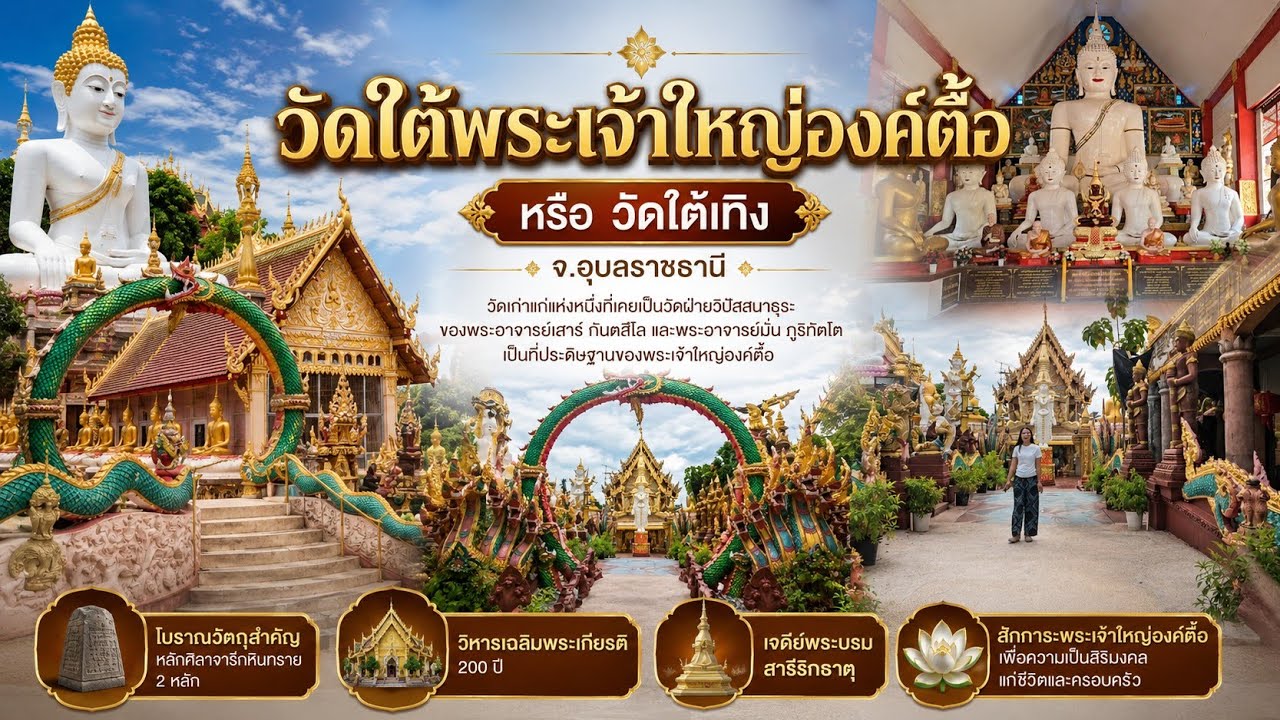
 Click to Access the Navigation Map GPS
Wat Tai Phra Chao Yai Ong Tue Map
Recommend

 Art, Culture and Heritage
 Historical Sites and Monuments(5)
 Landmarks and Memorials(2)
 Royal Palace(1)
 Art, Craft Centres, Tradition(7)
 Museums(3)
Temple(37)
Museums(3)
Temple(37)
 Other Sacred Sites(4)
 Research and Development
 Royal Project(2)
 Suburban Living
 Village, Community(2)
 Local Market(4)
 Nature and Wildlife
 National Parks and Marine Reserves(5)
 Mountain (Doi)(6)
 Dam, Reservoir, Lake(8)
 Waterfalls(12)
 Hot Springs(1)
 Caves(2)
 River, Canal(11)
 Bays and Beaches(8)
 Islands(2)
 Other natural attractions(6)
 Entertainment and Agricultural
 Zoos and Aquariums(2)
 Animal camps and shows(1)
 Farms, Parks and Ecotourism(1)
 Waterpark(1)
 Travel Articles, Recipes
 Travel Review, Food Review(1)


