
lovethailand home >Northeastern Travel Attractions >Ubon Ratchathani Travel Attractions >Khong Chiam >Napho Klang > Dong Na Tham Forest
TL;DR: Dong Na Tham Forest, Ubon Ratchathani attractions : Nature and Wildlife, National Parks and Marine Reserves.

Dong Na Tham Forest
Open Days: Daily During The Open Season Of The Dong Na Tham – Pha Chana Dai Route
Opening Hours: Ascending From Dong Na Tham Gate 04.30 – 06.30, 10.30 – 13.00, 16.00 – 18.00 / Descending From Pha Chana Dai 07.30 – 09.30, 14.00 – 15.00, 19.00 – 19.30
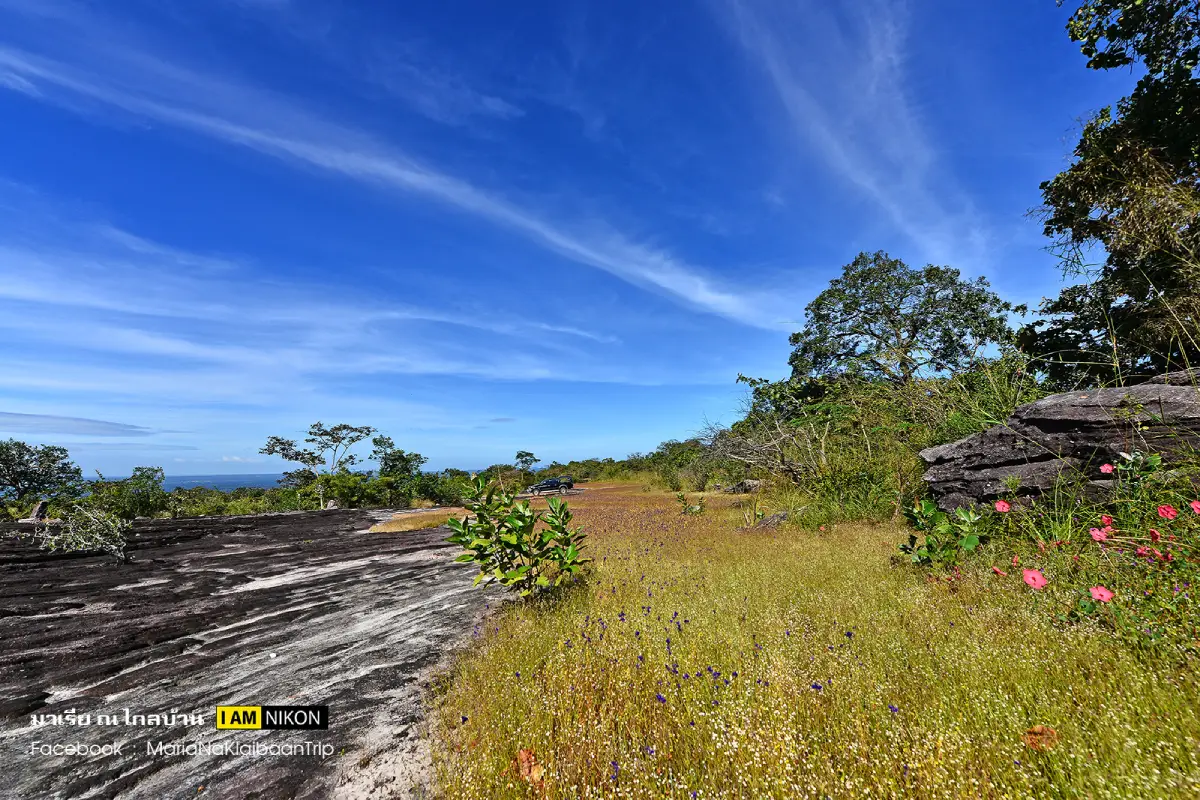
Dong Na Tham Forest in Ubon Ratchathani is one of the most remarkable deep-nature travel areas within Pha Taem National Park. Located around Phu Na Tham in the northern part of the park, in Na Pho Klang Subdistrict, Khong Chiam District, it lies about 36 kilometers from the main Pha Taem National Park office. This area brings together sandstone terraces, open forest, cliffs above the Mekong River, seasonal waterfalls, wildflowers, prehistoric rock paintings, and Pha Chana Dai, the famous sunrise cliff known as one of the first places in Thailand to receive the morning light. For travelers who want a deeper understanding of Ubon Ratchathani beyond standard viewpoints, Dong Na Tham offers a powerful experience of forest, stone, mist, river, and ancient human traces in one protected landscape.
Travel in Dong Na Tham is mainly nature-based and trail-based. The route passes through dry dipterocarp forest, sandstone plains, rocky cliffs, and viewpoints overlooking the Mekong River. Important places include stone terraces, Phlan Tham Hai, twin Sao Chaliang formations, two-needle pine areas, Huai Phok Waterfall, Pha Chana Dai, Pha Kampan, Pha Hin Taek, Kwang Ton Waterfall, the amazing rocking stone, Phu Chom Kom, Tham Patihan, and prehistoric paintings hidden along cliff shelters. This makes Dong Na Tham different from the main Pha Taem cliff area. It feels quieter, wilder, and more suitable for travelers who want to walk, observe, and spend time with the real landscape rather than simply stop for a quick photograph.
Pha Chana Dai is the most famous highlight of Dong Na Tham. It is widely known as the viewpoint where visitors can see the first sunrise in Thailand. The cliff opens toward the Mekong River and the mountainous landscape of Lao PDR. Before dawn, visitors reach the viewpoint in darkness and wait as the horizon slowly brightens. When the first light appears, the forest, mist, sandstone cliff, and Mekong-side geography gradually become visible. The experience is memorable not only because of the scenery but also because of the feeling of standing near Thailand’s eastern edge as a new day begins.
The sunrise at Pha Chana Dai is a journey of timing and atmosphere. Visitors travel through the forest route before dawn, arrive at the cliff while the sky is still dark, and wait for the first light to reveal the landscape. Mist often moves through the valley in the late rainy and cool seasons, while the mountains on the Lao side appear layer by layer as the light grows stronger. This gradual transformation gives the viewpoint its emotional power. Pha Chana Dai is not only a sunrise location; it is a place where geography, silence, cold air, forest, and light combine into a complete travel experience.
Dong Na Tham is especially famous for rock-terrace wildflowers. From September to November, after the rainy season brings moisture to the sandstone surface, small ground flowers bloom across cracks and shallow soil pockets. Visitors may see yard nam khang, daeng ubon, en-a, lueang phitsamon, and several royally named wildflowers associated with Queen Sirikit, including dusita, soi suwana, manee thewa, thip keson, and sarat chan. These flowers are small and delicate, so they reward slow walking and careful observation. Their beauty lies not in size but in their ability to bring color and life to rugged stone terraces.
The late rainy season and early cool season are the most vibrant period for Dong Na Tham. Waterfalls carry more water, ground flowers appear on the rock terraces, and morning mist can flow across the Mekong-side cliffs. Huai Phok Waterfall and Kwang Ton Waterfall add the element of water to the sandstone landscape. The sound of water falling over rock, the freshness of post-rain forest, and the cool morning air make this period ideal for travelers who want to experience Dong Na Tham at its richest. For visitors interested in flowers, waterfalls, mist, and sunrise, September to November is the most rewarding season.
From January to March, the forest changes character. The wet-season freshness gives way to dry-season tones, and the forest begins to show changing colors. Trees such as rang, tabaek lueat, phut pha, chang nao, and dry-season flowering plants create a landscape of yellow, orange, brown, and muted green. The clearer forest structure makes sandstone terraces, cliff lines, and distant views easier to see. This period is also associated with boat trips along the Mekong River between Ban Pak La and Khan Tha Kwian, allowing travelers to connect the highland walking route with a river-based experience.
The twin Sao Chaliang formations are important geological features on the Dong Na Tham route. These natural sandstone pillars were formed by long-term erosion from wind, water, and weather. Their unusual shapes show how softer lower layers can be worn away while stronger upper rock remains, creating mushroom-like or pillar-like forms. Seeing these formations together with the rock terraces and cracked sandstone surfaces helps visitors understand the geological foundation of the Pha Taem landscape. Dong Na Tham is therefore a field classroom of sandstone landforms as much as it is a scenic destination.
The amazing rocking stone is another memorable feature. This huge boulder, weighing around 50 tons, can move slightly because of its natural balance point. Its presence creates a sense of surprise because the stone appears massive and immovable, yet it responds to a small amount of force. The site shows how natural balance, erosion, and rock positioning can create unusual landforms. It also adds variety to the route, proving that Dong Na Tham is not only about wide views and sunrise but also about small geological wonders scattered throughout the forest.
Tham Patihan and the prehistoric paintings along cliff shelters add a cultural dimension to Dong Na Tham. The sandstone cliffs and overhangs in Pha Taem National Park have long been associated with ancient human activity. Rock paintings hidden in these natural shelters show that people used the landscape thousands of years ago for living, observing, communicating, and recording symbols. These paintings turn Dong Na Tham into more than a forest trail. It becomes a cultural landscape where ancient human traces and natural formations remain together.
Pha Kampan, Pha Hin Taek, and Phu Chom Kom are viewpoints and rock features that reveal different sides of the landscape. Pha Kampan offers wide views across forest and river terrain. Pha Hin Taek shows the cracked nature of sandstone formations. Phu Chom Kom adds another layer to the route by presenting the variation of elevation and landform within Dong Na Tham. When these points are combined into one journey, visitors pass through stone plains, open forest, waterfalls, cliffs, and Mekong-side viewpoints, creating a varied and complete nature experience.
Access to Dong Na Tham requires more planning than a visit to the main Pha Taem viewpoint. The area is located deeper in the northern part of the park, and the route from the main Pha Taem office to Dong Na Tham is about 36 kilometers. Some sections are natural roads that require a suitable vehicle and careful driving, especially during or after rain. The Pha Chana Dai route follows scheduled ascending and descending times for safety. This system helps control travel in forest terrain, especially during dark hours when visitors enter for sunrise viewing.
The usual route begins from Ubon Ratchathani city toward Khong Chiam District, then continues along Highway 2112 toward Na Pho Klang Subdistrict and the Dong Na Tham gate. The route passes Ban Sa Som before entering the park’s northern area. From the park unit, visitors continue toward the Pha Chana Dai viewpoint, with a final walk of about 500 meters. The route is best suited to vehicles in good condition, especially during the rainy season when the road surface may become slippery or rough in places.
Dong Na Tham suits travelers who want a real nature experience. Visitors walk across sandstone terraces, pass through dry dipterocarp forest, observe two-needle pine, see ground flowers, listen to seasonal waterfalls, and look over the Mekong River from high cliffs. This is a place where the visitor becomes part of the landscape through walking and observation. The experience includes beauty and physical reality: strong sun on open rock, slippery surfaces after rain, darkness before sunrise, and the importance of staying on the designated trail.
Facilities in Dong Na Tham are more basic than in urban-style attractions. The main facilities are provided through Pha Taem National Park, including the visitor center, accommodation, camping grounds, youth camp buildings, toilets, showers, a restaurant, a souvenir shop, and service areas in the main park zone. Camping or overnight stays on the Dong Na Tham and Pha Chana Dai route follow the park’s seasonal management. This makes the area most suitable for travelers who are prepared for nature-based travel and want an experience closer to the forest.
The entrance fee follows the Pha Taem National Park fee system. Thai adults pay 40 baht and Thai children pay 20 baht. Foreign adults pay 200 baht and foreign children pay 100 baht. Vehicle fees are charged separately, such as 20 baht for a motorcycle and 30 baht for a four-wheel car. The route is managed by the Department of National Parks, Wildlife and Plant Conservation through Pha Taem National Park. Visitors should keep the entrance ticket during travel because the attractions are spread across different zones.
Dong Na Tham can be explored as a half-day, full-day, or overnight route. A focused trip can begin before dawn for Pha Chana Dai sunrise, then continue to the twin Sao Chaliang formations, Huai Phok Waterfall, and nearby viewpoints. A full-day route can add Pha Kampan, Pha Hin Taek, the rocking stone, Phu Chom Kom, and Tham Patihan. The richest season for a complete experience is the late rainy to early cool season, when wildflowers, waterfalls, and mist appear together.
Dong Na Tham also connects well with other destinations in Pha Taem National Park. After exploring the forest route, travelers can continue to Sang Chan Waterfall, Thung Na Mueang Waterfall, Soi Sawan Waterfall, Sao Chaliang, and the main Pha Taem prehistoric cliff paintings. If staying in Khong Chiam, travelers can also visit the Two-Color River, Wat Tham Khuha Sawan, the Mekong riverside, Kaeng Tana National Park, and local riverside restaurants. Placing Dong Na Tham at the center of the itinerary creates a journey that includes trekking, geology, archaeology, Mekong views, waterfalls, and local riverside culture.
For foreign travelers, Dong Na Tham is one of the best places to understand the natural diversity of southern Isan. It combines dry dipterocarp forest, sandstone terraces, cliffs, Mekong River scenery, wildflowers, waterfalls, prehistoric paintings, and a famous sunrise viewpoint. Pha Chana Dai also helps explain Thailand’s eastern geography in a direct and memorable way. A visit here shows that Ubon Ratchathani is not only a province of temples and rivers, but also a landscape of deep forest routes, specialized ecosystems, and ancient cultural traces.
The value of Dong Na Tham goes beyond photography. Each point on the route has its own story. The stone terraces tell the story of season and small plants. The twin Sao Chaliang formations tell the story of erosion and time. The rocking stone tells the story of natural balance. Pha Chana Dai tells the story of geography and first light. Huai Phok and Kwang Ton waterfalls tell the story of seasonal water. The cliff paintings tell the story of ancient people who once used this landscape. Together, these elements make Dong Na Tham a place where nature and culture are inseparable.
Overall, Dong Na Tham Forest in Ubon Ratchathani is a deep-nature route within Pha Taem National Park that is ideal for nature lovers, hikers, photographers, stargazers, wildflower observers, and travelers interested in the Mekong border landscape. Pha Chana Dai is the most famous highlight as the first-sunrise viewpoint of Thailand, but the completeness of Dong Na Tham comes from much more: sandstone plains, ground flowers, twin Sao Chaliang, two-needle pine, Huai Phok Waterfall, Pha Kampan, Pha Hin Taek, Kwang Ton Waterfall, the amazing rocking stone, Phu Chom Kom, Tham Patihan, and prehistoric cliff paintings. It is one of the most distinctive and meaningful nature routes in Ubon Ratchathani.
| Name | Dong Na Tham Forest / Pha Chana Dai |
| Location | Phu Na Tham Area, Na Pho Klang Subdistrict, Khong Chiam District, Ubon Ratchathani Province, Inside Pha Taem National Park |
| Address | Pha Taem National Park, Huai Phai Subdistrict, Khong Chiam District, Ubon Ratchathani 34220 / Dong Na Tham Area Is In The Northern Part Of The Park In Na Pho Klang Subdistrict |
| Coordinates | 15.6330, 105.6120 |
| Highlights | Pha Chana Dai First-Sunrise Viewpoint, Stone Terraces, Ground Flowers, Twin Sao Chaliang, Two-Needle Pine, Huai Phok Waterfall, Pha Kampan, Pha Hin Taek, Kwang Ton Waterfall, Amazing Rocking Stone, Phu Chom Kom, Tham Patihan, And Prehistoric Cliff Paintings |
| History / Importance | A northern nature zone of Pha Taem National Park, important for sandstone landforms, Mekong-side forest, sunrise geography, seasonal wildflowers, waterfalls, and prehistoric cultural traces along cliff shelters |
| Protected Area | Pha Taem National Park, covering Khong Chiam, Si Mueang Mai, and Pho Sai districts in Ubon Ratchathani Province |
| Distinctive Features | Dry Dipterocarp Forest, Sandstone Terraces, Mekong Cliffs, Ground Flowers, Seasonal Waterfalls, Trekking Routes, Stargazing Areas, And Thailand’s First-Sunrise Viewpoint |
| Travel Information | From Ubon Ratchathani City, Travel Toward Khong Chiam District, Continue On Highway 2112 To Na Pho Klang Subdistrict, Pass Ban Sa Som To Dong Na Tham Gate And The Park Unit, Then Walk About 500 Meters To Pha Chana Dai Viewpoint |
| Current Status | Open During The Normal Travel Season Of The Dong Na Tham – Pha Chana Dai Route Under The Management Of Pha Taem National Park |
| Open Days | Daily During The Open Season Of The Dong Na Tham – Pha Chana Dai Route |
| Opening Hours | Ascending From Dong Na Tham Gate: Round 1 04.30 – 06.30, Round 2 10.30 – 13.00, Round 3 16.00 – 18.00 Descending From Pha Chana Dai: Round 1 07.30 – 09.30, Round 2 14.00 – 15.00, Round 3 19.00 – 19.30 |
| Fees | Thai Visitors: Adult 40 Baht, Child 20 Baht Foreign Visitors: Adult 200 Baht, Child 100 Baht Vehicle Fees: Motorcycle 20 Baht, Four-Wheel Car 30 Baht |
| Facilities | Pha Taem National Park Visitor Center, Accommodation, Camping Ground, Youth Camp Building, Toilets, Showers, Restaurant, Souvenir Shop, Dong Na Tham Camping Area, And Stargazing Activity Areas |
| Main Areas / Zones | Dong Na Tham Fee Gate Zone Pha Chana Dai Sunrise Viewpoint Zone Stone Terrace And Ground Flower Zone Twin Sao Chaliang And Sandstone Formation Zone Huai Phok And Kwang Ton Waterfall Zone Pha Kampan, Pha Hin Taek, And Phu Chom Kom Zone Amazing Rocking Stone Zone Tham Patihan And Prehistoric Cliff Painting Zone Camping And Seasonal Overnight Zone |
| Caretaker | Pha Taem National Park, Protected Area Regional Office 9, Department Of National Parks, Wildlife And Plant Conservation Park Chief: Mr. Pramuan Rattanawan |
| Main Contact Number | Pha Taem National Park, Tel. 045-252-581, 089-810-5532 Na Pho Klang Subdistrict Administrative Organization, Tel. 045-381-063 |
| Official Website / Official Page | Pha Taem National Park, Department Of National Parks, Wildlife And Plant Conservation / Na Pho Klang Subdistrict Administrative Organization |
| Best Seasonal Highlights | September – November: Ground Flowers, Waterfalls, And Mekong Mist January – March: Changing Forest Colors, Dry-Season Flowers, And Mekong River Scenery By Boat |
| Nearby Tourist Attractions | 1. Pha Chana Dai, About 0.5 Km 2. Huai Phok Waterfall, About 1 Km 3. Twin Sao Chaliang, About 2 Km 4. Pha Kampan, About 3 Km 5. Amazing Rocking Stone, About 4 Km 6. Tham Patihan, About 6 Km 7. Sang Chan Waterfall / Nam Tok Ru, About 25 Km 8. Thung Na Mueang Waterfall, About 26 Km 9. Pha Taem National Park Main Visitor Center, About 36 Km, Tel. 045-252-581, 089-810-5532 |
| Nearby Restaurants | 1. Krua Rim Fang Khong, Na Pho Klang Subdistrict, About 25 Km 2. Krua Khong Chiam, About 55 Km, Tel. 045-351-027, 062-829-3697 3. Chandara Khong Chiam, About 55 Km, Tel. 098-242-4464 4. Mae Nam Song Si Restaurant, About 55 Km, Tel. 064-152-9492 5. Cafe De Khong, About 56 Km, Tel. 045-351-174, 081-860-5905 6. Tong 999 Khong Chiam, About 57 Km, Tel. 066-137-1462 |
| Nearby Accommodations | 1. Dong Na Tham Camping Area, Inside Dong Na Tham Area, Tel. 045-252-581, 089-810-5532 2. Pha Taem National Park Accommodation, About 36 Km, Tel. 045-252-581, 089-810-5532 3. Baanrai Klai Laos Resort, About 45 Km, Tel. 081-470-9451, 091-136-5160 4. Peerada Riverview Khong Chiam, About 55 Km, Tel. 045-351-213, 086-240-9227 5. Tohsang Heritage Khong Chiam, About 56 Km, Tel. 045-351-174 6. Baan Kieng Tawan Khong Chiam, About 57 Km, Tel. 099-039-4290 7. Khong Chiam Marina Resort, About 57 Km, Tel. 089-427-8995 |
Frequently Asked Questions (FAQ)
Q: Where Is Dong Na Tham Forest Located?
A: Dong Na Tham Forest is located around Phu Na Tham in the northern part of Pha Taem National Park, Na Pho Klang Subdistrict, Khong Chiam District, Ubon Ratchathani Province. It is a forest and cliff-view route with Pha Chana Dai as its main highlight.
Q: What Days Is Dong Na Tham Open?
A: Dong Na Tham is open daily during the normal open season of the Dong Na Tham – Pha Chana Dai route, with scheduled ascending and descending times managed by Pha Taem National Park.
Q: What Are The Access Times For Pha Chana Dai?
A: Ascending from Dong Na Tham Gate is available in three rounds: 04.30 – 06.30, 10.30 – 13.00, and 16.00 – 18.00. Descending from Pha Chana Dai is available in three rounds: 07.30 – 09.30, 14.00 – 15.00, and 19.00 – 19.30.
Q: How Much Is The Entrance Fee For Dong Na Tham?
A: The area follows Pha Taem National Park fees. Thai adults pay 40 baht and Thai children 20 baht. Foreign adults pay 200 baht and foreign children 100 baht. Vehicle fees are charged separately.
Q: When Is The Best Time To Visit Dong Na Tham?
A: September to November is best for ground flowers, waterfalls, and Mekong mist. January to March is good for changing forest colors, dry-season flowers, and Mekong River scenery by boat.
Q: What Are The Main Highlights Of Dong Na Tham?
A: The main highlights include Pha Chana Dai, twin Sao Chaliang, two-needle pine, Huai Phok Waterfall, Pha Kampan, Pha Hin Taek, Kwang Ton Waterfall, the amazing rocking stone, Phu Chom Kom, Tham Patihan, seasonal flowers, and prehistoric cliff paintings.
Q: Is There Accommodation Or Camping At Dong Na Tham?
A: Camping and seasonal overnight areas are available under Pha Taem National Park management. The main park also has accommodation and camping facilities, while additional hotels and resorts are available in Khong Chiam District.
Q: Is Dong Na Tham Suitable For Foreign Travelers?
A: Yes. Dong Na Tham is suitable for foreign travelers interested in deep nature, trekking, sunrise viewpoints, the Mekong River, wildflowers, waterfalls, and prehistoric cultural evidence in southern Isan.
 Category: ●Nature and Wildlife
 Group: ●National Parks and Marine Reserves
Last Update : 3 MonthAgo
 Last Update : 3 MonthAgo
 Click to Access the Navigation Map GPS
Dong Na Tham Forest Map
Recommend

 Art, Culture and Heritage
 Historical Sites and Monuments(5)
 Landmarks and Memorials(2)
 Royal Palace(1)
 Art, Craft Centres, Tradition(7)
 Museums(3)
 Places of Worship
 Temple(37)
 Other Sacred Sites(4)
 Research and Development
 Royal Project(2)
 Suburban Living
 Village, Community(2)
 Local Market(4)
National Parks and Marine Reserves(5)
 Mountain (Doi)(6)
 Dam, Reservoir, Lake(8)
 Waterfalls(12)
 Hot Springs(1)
 Caves(2)
 River, Canal(11)
 Bays and Beaches(8)
 Islands(2)
 Other natural attractions(6)
 Entertainment and Agricultural
 Zoos and Aquariums(2)
 Animal camps and shows(1)
 Farms, Parks and Ecotourism(1)
 Waterpark(1)
 Travel Articles, Recipes
 Travel Review, Food Review(1)


