
lovethailand home >Northeastern Travel Attractions >Ubon Ratchathani Travel Attractions >Muang Ubon Ratchathani >Nai Muang > Wat Maha Wanaram
TL;DR: Wat Maha Wanaram is located at Luang Road And Sapphasit Road Area, Nai Mueang Subdistrict, Mueang Ubon Ratchathani District, Ubon Ratchathani Province, open Daily, hours 06.00 – 20.00.
Wat Maha Wanaram
Open Days: Daily
Opening Hours: 06.00 – 20.00
Wat Maha Wanaram in Ubon Ratchathani, also widely known among local people as Wat Pa Yai, is one of the most important royal temples and spiritual landmarks in the old city area of Ubon Ratchathani. Located around Luang Road and the Sapphasit Road area in Nai Mueang Subdistrict, Mueang Ubon Ratchathani District, this historic temple is deeply connected with the formation of the city, the faith of local people, and the long-standing Buddhist identity of the province. Its most revered sacred image is Phra Chao Yai In Plaeng, a large Lao-Lan Xang style Buddha image that has served as a spiritual centre of Ubon Ratchathani for generations. For international travelers, Wat Maha Wanaram is one of the clearest places to understand how Buddhism, local history, city memory, sacred art, and community devotion come together in Ubon Ratchathani.
The temple is meaningful not only because it is old, but because it preserves the early religious landscape of the city. Before the surrounding area became part of the modern urban centre, this place was associated with a quiet forest zone and a nearby pond known as Nong Saphang or Nong Taphang. It was suitable for meditation and monastic practice. The temple’s earlier name, Wat Pa Luang Mani Chot Si Sawat, reflected its role as a forest-oriented monastic place. Local people later called it Wat Nong Taphang, Wat Nong Saphang, or Wat Pa Yai, meaning the large forest temple. The present name, Wat Maha Wanaram, still carries the meaning of a great forest monastery, preserving the memory of the original landscape even though the temple now stands within the city.
The history of Wat Maha Wanaram is closely linked with the early rulers of Ubon Ratchathani. Phra Pathum Worarat Suriyawong, also known as Thao Kham Phong, the first ruler of Ubon Ratchathani, built Wat Luang near the Mun River as a community temple. Later, senior monks considered that Wat Luang was more suitable for town-based religious life than for quiet meditation. A new site was therefore chosen in the peaceful forest area north of the city. During the period of Phra Phrom Worarat Suriyawong, also known as Thao Thit Phrom, the second ruler of Ubon Ratchathani, the temple buildings were completed and the site was formally elevated as a temple in 1807.
A stone inscription behind Phra Chao Yai In Plaeng is one of the most important pieces of evidence for the temple’s history. It records the establishment of the temple and the creation of the sacred Buddha image under the patronage of the city ruler and the leadership of Phra Maha Ratchakhru Si Satthammawongsa, the first abbot of the temple. The name Phra Chao Yai In Plaeng is connected with a local legend that Indra, the celestial king, transformed himself and helped create the image. In the Isan pronunciation, the name is also understood as Phra Chao Yai In Paeng, meaning a Buddha image created by Indra. This gives the image a strongly auspicious and protective meaning in local belief.
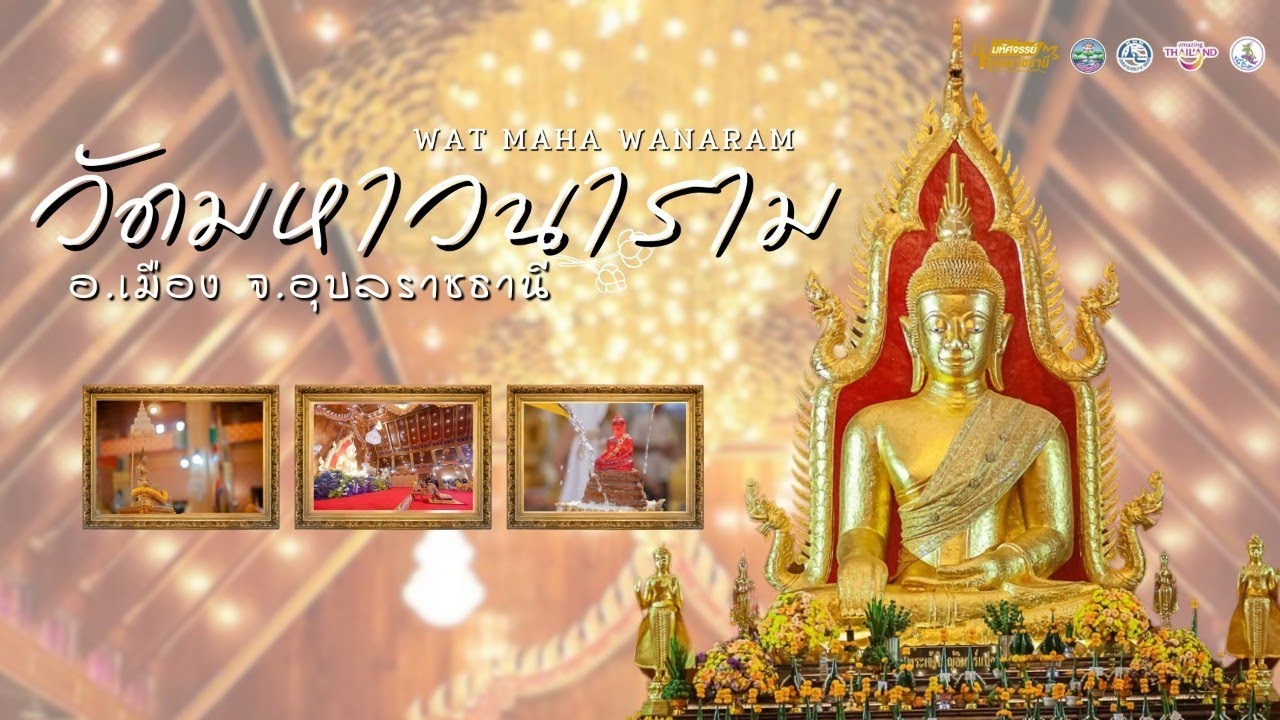
Phra Chao Yai In Plaeng is a large Buddha image in the subduing Mara posture. Built of brick and stucco, lacquered and gilded, it displays the calm and dignified character of Lao-Lan Xang Buddhist art. The image is approximately 3 metres wide across the lap and about 5 metres high from the base to the flame finial. Its expression is serene, composed, and deeply revered. The image is not only admired as an artwork; it is regarded as a guardian and spiritual refuge for the people of Ubon Ratchathani. Worshippers come to pay respect, make vows, give offerings, and seek blessings for work, study, family, health, and important life transitions.
The legend of Phra Chao Yai In Plaeng remains central to the temple’s identity. According to local belief, while the Buddha image was being constructed, heavy rain, thunder, and mysterious light appeared in the temple area. By the following morning, the unfinished image was found completed in extraordinary beauty. People therefore believed that Indra had transformed himself into a white-robed ascetic and finished the Buddha image. This story should be understood not merely as legend, but as an expression of how deeply the community feels the sacred power of the image. For local people, Phra Chao Yai In Plaeng is not simply an old Buddha statue; it is a living spiritual centre.
In the past, city rulers, officials, merchants, local families, and newcomers to Ubon Ratchathani often came to pay respect to Phra Chao Yai In Plaeng before beginning important duties. People taking up official positions would visit the image to ask for smooth work and protection from obstacles. In earlier community life, the image was also associated with vows, truth-telling, and moral accountability. The sacred reputation of Phra Chao Yai In Plaeng made it a place where people came to confirm sincerity and seek justice. This long-standing role explains why the image remains emotionally powerful for the city.
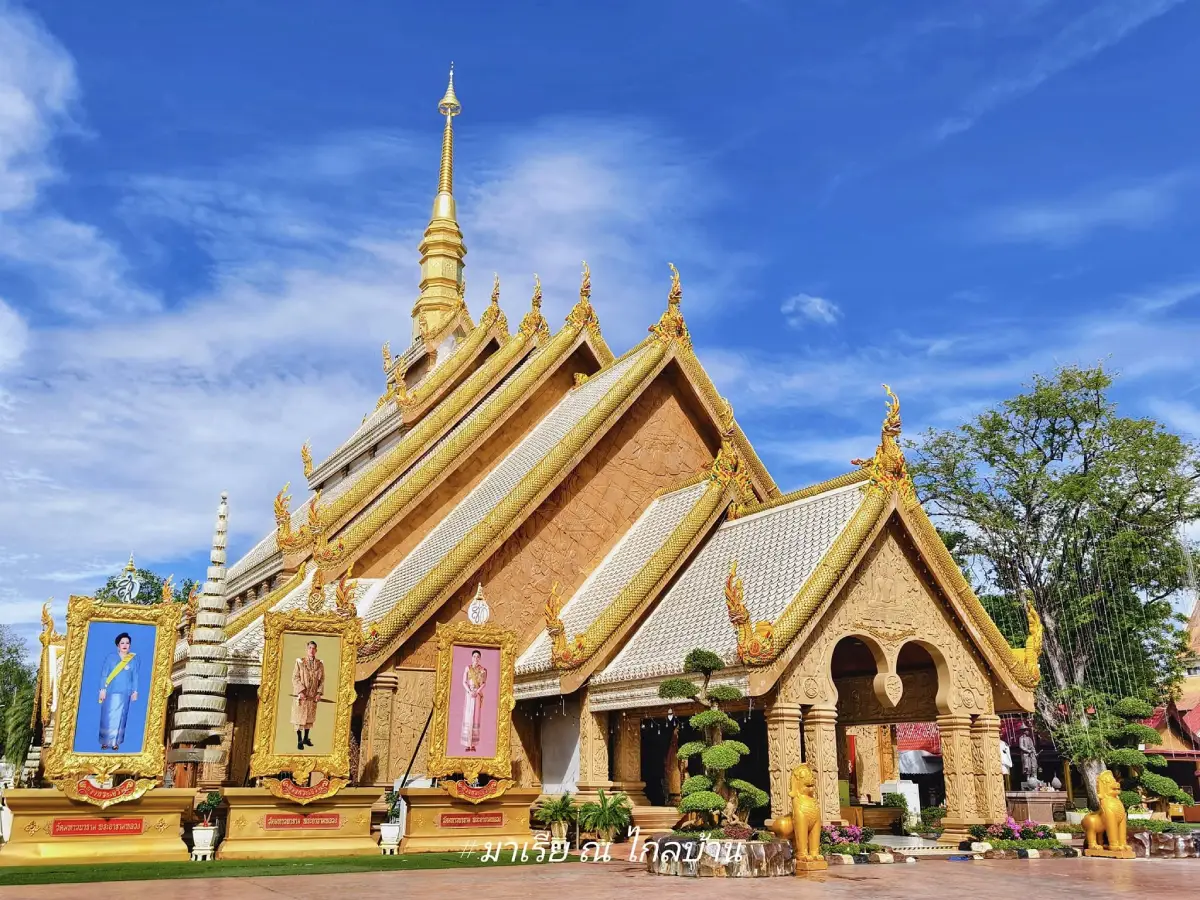
The Viharn of Phra Chao Yai In Plaeng is the most important area within Wat Maha Wanaram. The present hall is a large religious building designed to accommodate worshippers, ceremonies, and visitors. Inside, the Buddha image is enshrined on a raised platform, surrounded by offerings, flowers, candles, and devotional objects. The atmosphere is calm and solemn. Visitors entering the hall immediately understand that this is the spiritual heart of the temple. The space directs the eye toward the principal image while allowing people to sit, chant, pray, and join important Buddhist rituals.
On 30 April 2022, His Majesty the King and Her Majesty the Queen presided over the ceremony to raise and enshrine the royal umbrella above the principal Buddha image in the Viharn of Phra Chao Yai In Plaeng. This royal ceremony reinforced the sacred and civic importance of the image and the temple. It became a major contemporary event in the history of Wat Maha Wanaram and confirmed the temple’s status as a major religious landmark of Ubon Ratchathani. The ceremony also strengthened the emotional bond between the people of the province and their revered city Buddha image.
Wat Maha Wanaram was elevated to royal temple status on 31 May 1978 as a third-class royal monastery of the ordinary type under the Mahanikaya order. This status reflects the temple’s importance in religious, historical, and community life. The temple is not only a local worship place. It serves as a centre for provincial ceremonies, Buddhist events, monastic activities, royal-linked ceremonies, and community merit-making. Its role connects monks, government agencies, local residents, Buddhist devotees, and travelers within one living religious space.
The temple grounds include several important areas: the Viharn of Phra Chao Yai In Plaeng, the ordination hall, the sermon hall, the bell tower, the Phra Maha Chulabannakhan building, monastic residences, merit-making areas, courtyards, and spaces used for Buddhist activities. The Viharn is the main worship area. The ordination hall supports monastic ceremonies. The sermon hall and other buildings serve community gatherings and religious events. The temple also has educational functions connected with Buddhist learning, showing that Wat Maha Wanaram is not only a place of worship but also a centre of religious education and cultural continuity.
The most important annual event at Wat Maha Wanaram is the bathing and gilding ceremony for Phra Chao Yai In Plaeng on the full moon of the fifth lunar month, usually around April. This tradition has been carried on for generations. The event includes almsgiving, merit-making, sermons on the Vessantara Jataka, the bathing of the sacred image, and the application of gold leaf. It is both a religious ceremony and a social gathering. Local people return to the temple to renew their connection with the sacred image, ask for blessings, and preserve one of Ubon Ratchathani’s most meaningful local traditions.
During the Songkran period and the April festival season, the temple becomes especially active. Families, elderly residents, students, workers, government officials, and travelers come to pay respect and join the bathing ceremony. The event reveals the living faith of Ubon Ratchathani. Visitors can see that devotion to Phra Chao Yai In Plaeng is not a historical memory kept in books; it continues through ritual action, community participation, and repeated annual practice. This makes April one of the most meaningful times to visit the temple.
Wat Maha Wanaram has also played a contemporary role in major Buddhist events. In 2024, the temple was involved with the enshrinement and veneration of sacred relics of the Buddha and relics of the chief disciples, Sariputta and Moggallana, during an important religious programme connected with relics brought from India. This demonstrates that Wat Maha Wanaram continues to function as a major provincial centre of Buddhist faith. The temple is not important only because of its past; it remains active in present-day religious life.
Artistically, Phra Chao Yai In Plaeng is a significant example of Lao-Lan Xang style Buddhist sculpture in Ubon Ratchathani. Its brick-and-stucco structure, lacquered and gilded surface, seated posture, and calm expression reflect older regional craftsmanship. Unlike many modern Buddha images made from cast metal or new materials, this image carries the weight of hand-built local devotion. Its beauty comes not only from proportion and gold, but from age, legend, community memory, and continuous worship. Visitors should look at the image slowly to appreciate both its artistic form and its spiritual meaning.
Wat Maha Wanaram is highly suitable for travelers interested in the old city route of Ubon Ratchathani. It is located close to Wat Thung Si Mueang, Wat Si Ubon Rattanaram, Ubon Ratchathani National Museum, Thung Si Mueang, Wat Supattanaram Worawihan, and Wat Burapharam. A cultural itinerary can begin at Wat Maha Wanaram to pay respect to Phra Chao Yai In Plaeng, continue to Wat Thung Si Mueang to see the famous water scripture hall, and then visit the national museum to understand the broader history of the province. This route gives visitors a compact but deep introduction to Ubon Ratchathani’s religious and historical identity.
For photographers, the temple offers several memorable angles: the exterior of the Viharn, the golden architectural details, the entrance to the main hall, the interior view of Phra Chao Yai In Plaeng, the courtyard, and the atmosphere of a royal temple in the city. Morning light is good for a quiet visit, while late afternoon gives warmth to the exterior architecture. Photography should always be respectful. Visitors should not block worshippers, use flash in a disturbing way, or treat the sacred hall as a casual photo studio. The best photographs at Wat Maha Wanaram come from a calm and observant approach.
For families, students, and cultural travelers, Wat Maha Wanaram is an excellent learning site. It can be used to explain the history of Ubon Ratchathani through the temple, the meaning of stone inscriptions through the story of Phra Chao Yai In Plaeng, the role of a royal monastery through the temple’s status, and the meaning of living tradition through the annual bathing and gilding ceremony. Young visitors can understand that history is not something locked away in a textbook. It remains visible in places where people still pray, make offerings, and continue inherited rituals.
For international visitors, Wat Maha Wanaram is one of the best places to understand Buddhism in Ubon Ratchathani. It includes a city guardian Buddha image, Lao-Lan Xang artistic influence, a legend of Indra creating the Buddha image, an annual bathing ceremony, and the living role of a royal temple. The temple shows that Buddhism in Ubon Ratchathani is not only about belief or ritual. It is connected with city formation, rulers, local memory, art, community, and public life. Visitors interested in Thai Buddhism, Isan culture, or sacred art will find the temple especially meaningful.
Wat Maha Wanaram is open daily from 06.00 to 20.00, and admission is free. Visitors may enter the temple grounds, worship Phra Chao Yai In Plaeng, make merit, and walk around the main areas. Morning is suitable for quiet worship, while evening is good for a slower visit after the weather becomes cooler. On Buddhist holy days, major religious occasions, and the annual Phra Chao Yai In Plaeng ceremony, the temple may be busier than usual. Visitors should allow extra time and dress properly when visiting during these periods.
Respectful behaviour is essential because Wat Maha Wanaram is an active sacred place. Visitors should dress modestly, remove shoes before entering religious buildings, speak softly, avoid touching the Buddha image or ritual objects, and follow the route provided within the temple. If ceremonies are taking place, photography should not disturb monks or worshippers. A calm visit allows travelers to feel the spiritual atmosphere of the temple and appreciate why local people have revered this place for generations.
Getting There is easy because Wat Maha Wanaram is located in central Ubon Ratchathani. From Thung Si Mueang or Ubon Ratchathani National Museum, travelers can use Upparat Road, Luang Road, Sapphasit Road, or other connected old-city streets to reach the temple. The distance from Thung Si Mueang is about 1.5 to 2 km. It is about 5 km from Ubon Ratchathani International Airport and around 5 to 6 km from Ubon Ratchathani Railway Station in Warin Chamrap District. The temple can be reached by private car, taxi, local hired vehicle, songthaew, or ride-hailing service.
Wat Maha Wanaram can be included in several sightseeing routes. A temple-focused route can connect Wat Maha Wanaram with Wat Thung Si Mueang, Wat Si Ubon Rattanaram, Wat Supattanaram Worawihan, and Wat Phra That Nong Bua. A history-focused route can combine the temple with Ubon Ratchathani National Museum, Thung Si Mueang, the City Pillar Shrine, and the old-town area. For a half-day visit, Wat Maha Wanaram works well as either the first stop or the final stop because it is centrally located and surrounded by restaurants, accommodations, and local transport options.
Overall, Wat Maha Wanaram brings together several layers of value in one temple compound. The first layer is spiritual: it enshrines Phra Chao Yai In Plaeng, the revered city Buddha of Ubon Ratchathani. The second is historical: the temple is connected with the early formation of the city and its rulers. The third is artistic: the Buddha image reflects Lao-Lan Xang Buddhist sculpture and local craftsmanship. The fourth is cultural: the annual bathing and gilding ceremony continues as a living tradition. A visit to Wat Maha Wanaram is therefore not only a temple visit; it is a direct encounter with the spiritual heart of Ubon Ratchathani.
| Name | Wat Maha Wanaram / Wat Pa Yai Ubon Ratchathani |
| Location | Luang Road And Sapphasit Road Area, Nai Mueang Subdistrict, Mueang Ubon Ratchathani District, Ubon Ratchathani Province |
| Address | 370 Luang Road, Nai Mueang, Mueang Ubon Ratchathani, Ubon Ratchathani 34000, Thailand |
| Coordinates | 15.231000, 104.865900 |
| Highlights | Phra Chao Yai In Plaeng, A Lao-Lan Xang Style Buddha Image Revered As The City Buddha Of Ubon Ratchathani, The Viharn Of Phra Chao Yai In Plaeng, The Annual Bathing And Gilding Ceremony, And The Temple’s Royal Monastery Status |
| History | The site began as a meditation-oriented forest monastery around the early period of Ubon Ratchathani. It was originally known as Wat Pa Luang Mani Chot Si Sawat, formally elevated as a temple in 1807, and later elevated as a royal monastery in 1978. |
| Name Origin | Maha Wanaram means a great forest monastery, preserving the meaning of the older local name Wat Pa Yai and the temple’s original forest setting. |
| Distinctive Features | A third-class royal monastery of the ordinary type under the Mahanikaya order, with Phra Chao Yai In Plaeng, a brick-and-stucco, lacquered and gilded Buddha image about 3 metres wide and 5 metres high. |
| Travel Information | From Thung Si Mueang or Ubon Ratchathani National Museum, use Upparat Road, Luang Road, or Sapphasit Road toward the temple. The temple is about 1.5 to 2 km from Thung Si Mueang, about 5 km from Ubon Ratchathani International Airport, and about 5 to 6 km from Ubon Ratchathani Railway Station. |
| Current Status | Open To Visitors And Still Used As An Active Royal Buddhist Monastery In Ubon Ratchathani City |
| Open Days | Daily |
| Opening Hours | 06.00 – 20.00 |
| Fees | Free Admission |
| Facilities | Parking Area, Worship Area For Phra Chao Yai In Plaeng, Merit-Making Areas, Sermon Hall, Restrooms, Temple Walkways, And Spaces For Buddhist Activities |
| Main Areas / Zones | Viharn Of Phra Chao Yai In Plaeng Phra Chao Yai In Plaeng Stone Inscription Behind The Buddha Image Ordination Hall Sermon Hall Bell Tower Phra Maha Chulabannakhan Building Merit-Making Courtyard Monastic Residence And Buddhist Activity Areas |
| Caretaker | Wat Maha Wanaram Royal Monastery, The Mahanikaya Monastic Community, And Buddhist Supporters In Ubon Ratchathani |
| Abbot | Phra Wachirakitkoson (Sudjai Nissoko) |
| First Abbot | Phra Maha Ratchakhru Si Satthammawongsa |
| Main Contact Number | 084-641-8595, 045-264-501 |
| Important Annual Ceremony | The Bathing And Gilding Ceremony Of Phra Chao Yai In Plaeng On The Full Moon Of The Fifth Lunar Month, Usually Around April, With Almsgiving, Vessantara Jataka Sermons, Bathing Rituals, And Gold-Leaf Offering |
| Nearby Tourist Attractions | 1. Wat Chaeng Ubon Ratchathani, About 0.8 km 2. Wat Thung Si Mueang, About 1.2 km 3. Thung Si Mueang, About 1.3 km 4. Ubon Ratchathani City Pillar Shrine, About 1.4 km 5. Ubon Ratchathani National Museum, About 1.5 km 6. Wat Si Ubon Rattanaram, About 1.7 km 7. Wat Supattanaram Worawihan, About 2 km 8. Wat Burapharam, About 2 km |
| Nearby Restaurants | 1. Daily Dish Thung Si Mueang, About 1.5 km, Tel. 082-623-6942 2. PunThai Coffee Thung Si Mueang, About 1.6 km, Tel. 080-086-5527 3. Guay Jub Ubon, Phrommathep Road, About 2 km, Tel. 087-074-0499 4. Jungle Cafe Thung Si Mueang Branch, About 2 km, Tel. 091-852-0095 5. The Outside Inn, About 2 km, Tel. 088-581-2069, 088-731-3964 6. Hukikuni Coffee Bar And Restaurant, About 2 km, Tel. 098-282-1888 |
| Nearby Accommodations | 1. Laithong Hotel, About 0.5 km, Tel. 045-264-271 2. T3 House, About 0.9 km, Tel. 045-244-911 3. YUU Hotel & Cafe, About 1.5 km, Tel. 085-614-1111 4. The Ratchathani Hotel, About 1.6 km 5. Ubon Hotel, About 1.8 km 6. The Outside Inn, About 2 km, Tel. 088-581-2069, 088-731-3964 |
Frequently Asked Questions (FAQ)
Q: Where is Wat Maha Wanaram located?
A: Wat Maha Wanaram is located at 370 Luang Road, Nai Mueang Subdistrict, Mueang Ubon Ratchathani District, Ubon Ratchathani Province, in the old city area near Sapphasit Road, Thung Si Mueang, and Ubon Ratchathani National Museum.
Q: What are the opening hours of Wat Maha Wanaram?
A: The temple is open daily from 06.00 to 20.00.
Q: Is there an admission fee?
A: No. Admission to Wat Maha Wanaram is free.
Q: What is Wat Maha Wanaram famous for?
A: The temple is famous for Phra Chao Yai In Plaeng, a Lao-Lan Xang style Buddha image revered as the city Buddha of Ubon Ratchathani, as well as its royal monastery status and annual bathing and gilding ceremony.
Q: What kind of Buddha image is Phra Chao Yai In Plaeng?
A: Phra Chao Yai In Plaeng is a large Buddha image in the subduing Mara posture. It is made of brick and stucco, lacquered and gilded, and reflects Lao-Lan Xang Buddhist art. The image is about 3 metres wide and 5 metres high.
Q: Who is the abbot of Wat Maha Wanaram?
A: The abbot of Wat Maha Wanaram Royal Monastery is Phra Wachirakitkoson (Sudjai Nissoko).
Q: When is the annual ceremony for Phra Chao Yai In Plaeng held?
A: The annual bathing and gilding ceremony is held on the full moon of the fifth lunar month, usually around April. The event includes almsgiving, Vessantara Jataka sermons, ritual bathing, and gold-leaf offering.
Q: What nearby attractions can be visited after Wat Maha Wanaram?
A: Nearby attractions include Wat Chaeng, Wat Thung Si Mueang, Thung Si Mueang, Ubon Ratchathani City Pillar Shrine, Ubon Ratchathani National Museum, Wat Si Ubon Rattanaram, Wat Supattanaram Worawihan, and Wat Burapharam.
 Category: ●Places of Worship
 Group: ●Temple
Last Update : 3 MonthAgo
 Last Update : 3 MonthAgo
 Click to Access the Navigation Map GPS
Wat Maha Wanaram Map
Recommend

 Art, Culture and Heritage
 Historical Sites and Monuments(5)
 Landmarks and Memorials(2)
 Royal Palace(1)
 Art, Craft Centres, Tradition(7)
 Museums(3)
Temple(37)
 Other Sacred Sites(4)
 Research and Development
 Royal Project(2)
 Suburban Living
 Village, Community(2)
 Local Market(4)
 Nature and Wildlife
 National Parks and Marine Reserves(5)
 Mountain (Doi)(6)
 Dam, Reservoir, Lake(8)
 Waterfalls(12)
 Hot Springs(1)
 Caves(2)
 River, Canal(11)
 Bays and Beaches(8)
 Islands(2)
 Other natural attractions(6)
 Entertainment and Agricultural
 Zoos and Aquariums(2)
 Animal camps and shows(1)
 Farms, Parks and Ecotourism(1)
 Waterpark(1)
 Travel Articles, Recipes
 Travel Review, Food Review(1)


