
lovethailand home >Northeastern Travel Attractions >Ubon Ratchathani Travel Attractions >Warin Chamrap >Bung Wai > Wat Pah Nanachat
TL;DR: Wat Pah Nanachat is located at Bahn Bung Wai, Bung Wai Subdistrict, Warin Chamrap District, Ubon Ratchathani Province, open Daily, hours 06.00 – 18.00.

Wat Pah Nanachat
Open Days: Daily
Opening Hours: 06.00 – 18.00
Wat Pah Nanachat, also known as The International Forest Monastery, is one of the most important forest monasteries in Ubon Ratchathani and one of the best-known international Theravada forest monasteries in Thailand. It is located at Bahn Bung Wai, Bung Wai Subdistrict, Warin Chamrap District, about 14–15 kilometers from Ubon Ratchathani city on Highway 226 toward Si Sa Ket. The monastery is the 19th branch of Wat Nong Pah Pong, the great forest monastery founded by Luang Por Chah Subhaddo. Wat Pah Nanachat was created especially to give men from foreign countries the opportunity to train in the Thai forest tradition, study the Dhamma-Vinaya in English, and live according to the discipline and simplicity of traditional Buddhist monastic life.
The monastery is not a conventional tourist temple. Its value lies in silence, restraint, forest practice, and the living discipline of the monastic community. Visitors will not find a commercial sightseeing atmosphere, elaborate entertainment, or loud activity. Instead, they will find forest paths, meditation halls, simple monastic buildings, monks’ huts scattered among trees, and a quiet environment designed for mindfulness and renunciation. For foreign travelers, Wat Pah Nanachat offers a rare opportunity to see Thai Buddhism not as a museum or performance, but as a lived daily practice carried on by monks and practitioners from many countries.
Wat Pah Nanachat was established in 1975 by Venerable Ajahn Chah, one of the most influential Thai forest masters of the 20th century. In the late 1960s and early 1970s, a growing number of Western seekers came to Wat Nong Pah Pong to train with Ajahn Chah. Because they did not know Thai language and culture, they needed a place where they could learn the monastic life in a form that remained faithful to the Thai forest tradition while also being understandable through English. Ajahn Chah therefore allowed a forest monastery to be established at Ban Bung Wai, where foreign monks could live, train, and study under the same Dhamma-Vinaya principles.
The first community began in the old charnel-ground forest of Ban Bung Wai. Local villagers had faith in the monks of Wat Nong Pah Pong and invited a small group of monks and novices to stay, boil their alms bowls, and practice in the forest. After only a few days, villagers helped build a simple grass-roofed shelter to protect the monks from rain. Soon afterward, they invited the monks to remain for the rains retreat. Ajahn Chah gave permission for a monastic residence to be established and assigned Ajahn Sumedho, his American disciple, to lead the early community. This beginning shows that Wat Pah Nanachat grew from forest practice, local faith, and the sincere aspiration of foreign monks to train seriously in the Buddhist path.
Ajahn Sumedho became the first abbot and played a central role in shaping the early identity of the monastery. He had trained closely with Ajahn Chah and understood the challenge of introducing Western practitioners to the Thai forest way without diluting the discipline. Wat Pah Nanachat therefore became a bridge between Thai Theravada Buddhism and international practitioners. It did not create a new form of Buddhism for foreigners. It offered foreigners the chance to enter the old forest tradition through a language they could understand and through daily discipline they could practice directly.
During its first rains retreat, the monastery had 10 monks and 1 white-robed lay postulant. In 1976, local supporters offered Kathina and built a new hall. In 1985, construction began on a vihara or uposatha hall in the area where old boundary stones had been found, giving the monastery an important sacred space for Sangha acts. Wat Pah Nanachat was formally established as a Buddhist temple in 1987 and later received its consecrated boundary in September 1998. Over time, more land was offered, and the monastery developed into a large forest area with many huts, meditation spaces, and communal structures.
Wat Pah Nanachat follows the training style of Luang Por Chah. The practice is not limited to formal meditation sessions or doctrinal study. Every part of the day is used as training: waking early, chanting, sitting meditation, walking meditation, alms-round, sweeping, communal work, eating one meal, observing silence, listening to Dhamma, and living simply with others. This approach teaches that the Dhamma is not separate from ordinary life. Work, speech, eating, cleaning, resting, and walking all become opportunities to develop mindfulness, patience, contentment, effort, and wisdom.
English is the primary language of communication and instruction at the monastery. This is one of its defining features. Monks and trainees study the Dhamma-Vinaya in English, while also chanting in Pali and learning Thai for living in the local Buddhist culture. Many monks come from Europe, North America, Australia, New Zealand, and other parts of the world. Most are able to speak Thai and chant Pali well. The result is a unique monastic environment where many nationalities live under one discipline, with the Dhamma-Vinaya as the common language of conduct.
The current abbot is Phra Bhavana Vajirajarn, also known as Ajahn Kevali. He is a German-born monk in the lineage of Luang Por Chah and has served as abbot from 2008 to the present. The line of abbots shows the international character of the monastery: Ajahn Sumedho from the United States, Ajahn Pabhakaro from the United States, Ajahn Jagaro from Australia, Ajahn Pasanno from Canada, Ajahn Jayasaro from England, Ajahn Nyanadhammo from Australia, and Ajahn Kevali from Germany. This continuity makes Wat Pah Nanachat one of the most important training grounds for foreign-born Theravada forest monks.
The monastery was established to train foreigners who wished to become monks, and this purpose remains central. A man who wants to ordain does not immediately become a monk. He begins as a white-robed postulant for several months, then may become a novice for about a year before taking full ordination. This gradual process gives time for character training, discipline, humility, service, and adaptation to monastic life. After sufficient years of practice and study, monks trained at Wat Pah Nanachat may help teach, support, or establish branch monasteries in other countries.
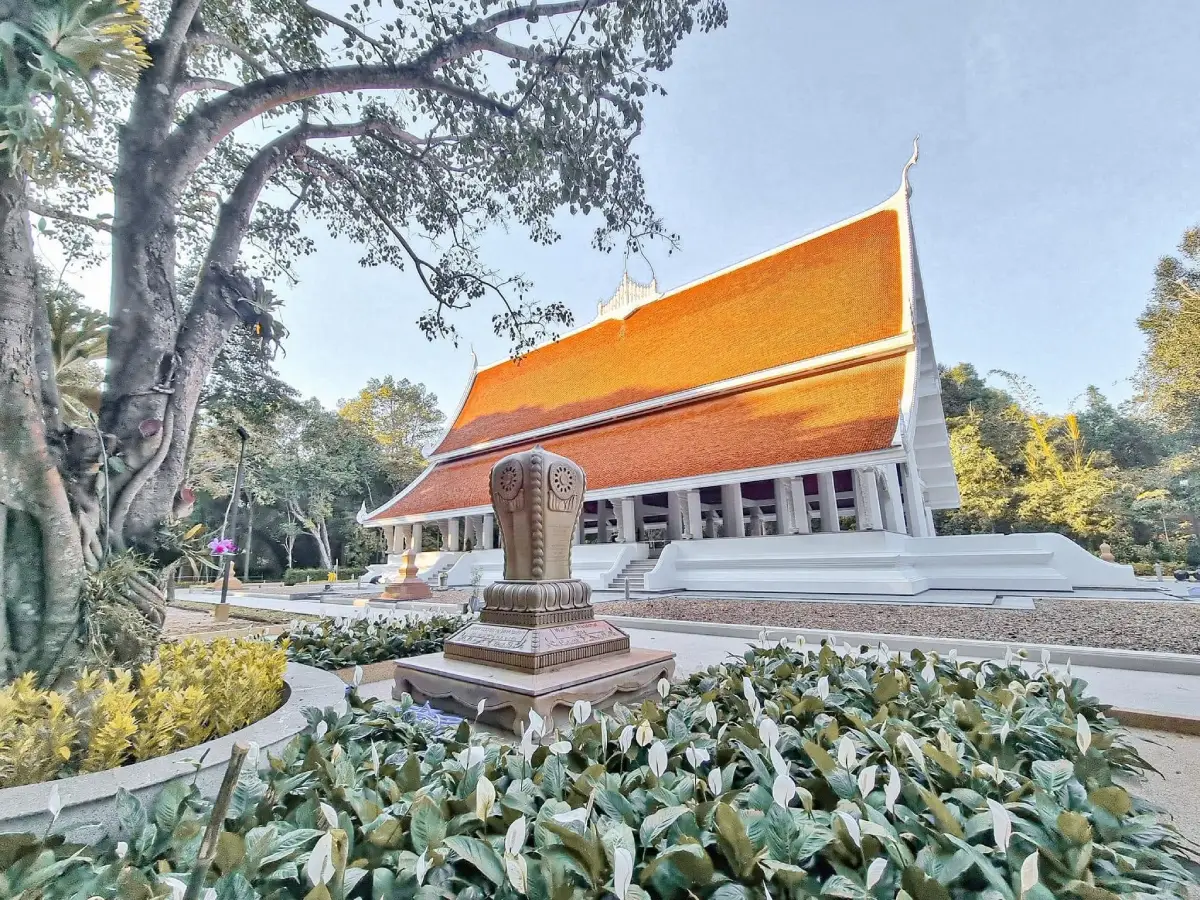
The monastery has several important areas: the uposatha hall, Thitadhamma Sala, meditation halls, monks’ huts, forest walking paths, walking-meditation areas, library, office area, guest area, and forest conservation zones. Thitadhamma Sala is an important communal hall built to replace the earlier assembly hall. Its construction began in 2010 and was completed in 2011 under the guidance of Luang Por Liem Thitadhammo. The hall is used for communal activities, Dhamma talks, meetings, and gatherings of monks and lay supporters.
The uposatha hall is a central sacred space for the Sangha. It is used for monastic acts and formal ceremonies under the Vinaya. The fact that it was built near the area where old boundary stones were found gives the site a deeper historical and spiritual significance. The newer ordination-hall complex also reflects inspiration from Lan Chang and old Isan temple architecture, especially the traditional sim style of Ubon Ratchathani. This connects the international forest monastery with the local cultural roots of northeastern Thailand.
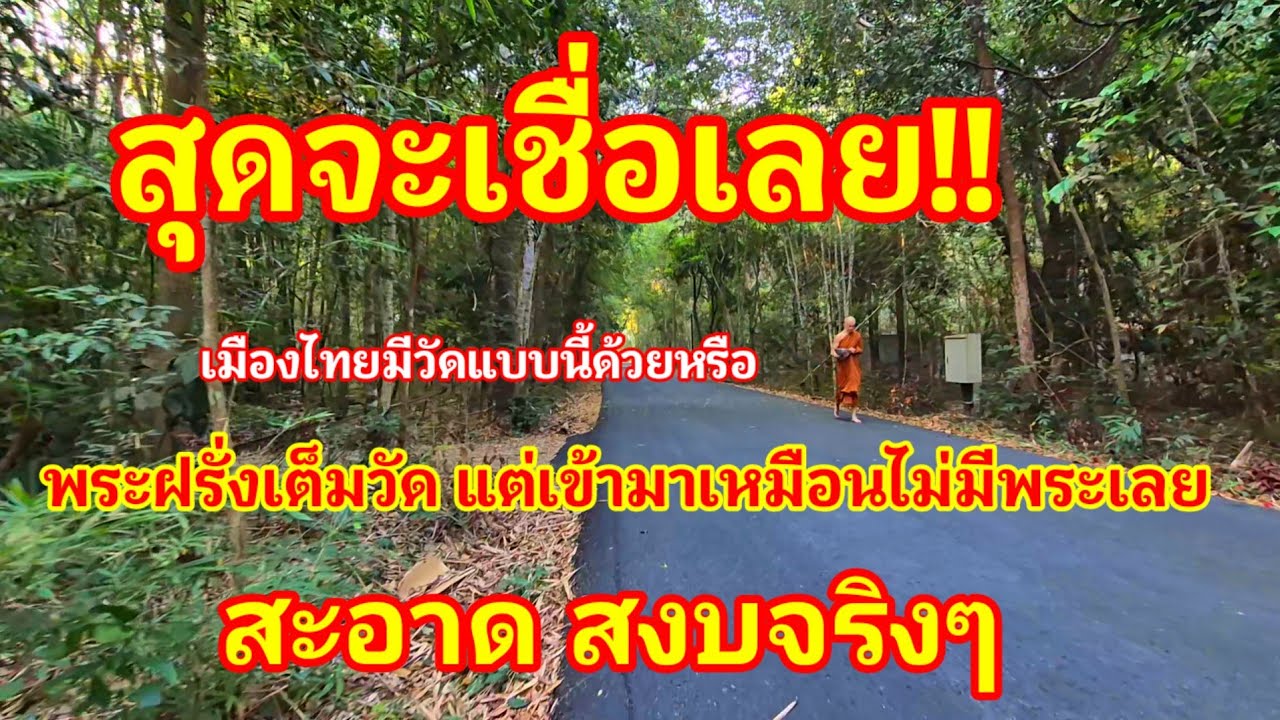
The forest itself is one of the most important parts of the monastery. Wat Pah Nanachat has more than 300 rai of land, with monks’ huts spread through the trees to support seclusion and meditation. Some areas were formerly abandoned farmland, but after enclosure and reforestation they developed into a mature forest environment. Walking through the monastery gives visitors a sense of separation from the outside world. Trees, birds, earth paths, silence, and simple buildings create a natural container for mindfulness.
The daily routine begins early. The wake-up bell is usually at 03.00, followed by morning chanting and meditation at 03.30. At dawn, monks go on alms-round while lay guests sweep or help in the kitchen. The meal is around 08.00, followed by a short Dhamma teaching. The afternoon includes chores and private practice, with evening chanting and meditation later in the day. Much of the day is reserved for sitting meditation, walking meditation, study, and work in silence. This routine is demanding but central to the monastery’s training.
Those who wish to stay overnight must contact the guest monk by email at least 2 weeks before the proposed visit. Initial stays are accepted for 3 days, and extensions depend on permission from the guest monk or abbot. Resident lay guests are expected to follow the daily routine, observe the 8 precepts, dress in the traditional lay-monastic attire required by the monastery, eat one meal a day, and live simply. Wat Pah Nanachat does not offer a commercial meditation retreat or private meditation course. It offers the opportunity to experience the disciplined life of a traditional forest monastery.
Day visitors are welcome during the daily opening hours from 06.00 to 18.00. Visitors may pay respect, walk quietly through suitable public areas, sit in meditation, and speak with a monk in the office area during appropriate morning hours. Around midday and afternoon, the monastic community often returns to individual huts for private practice, so visitors should not expect to meet monks throughout the day. A day visit is best approached with silence, respect, and the intention to experience the atmosphere of the monastery rather than to treat it as a sightseeing stop.
There is no admission ticket for day visits. The monastery is supported by voluntary donations from Thai and international lay communities. Food and lodging for lay guests are offered as part of the same tradition of generosity that supports the ordained Sangha. Visitors should honor that generosity by behaving appropriately, dressing modestly, using quiet speech, keeping the grounds clean, and not treating the monastery as a casual tourist accommodation. The simplicity of the monastery is part of its training environment.
Visitors should dress modestly, keep shoulders and knees covered, keep voices low, silence phones, avoid music, avoid smoking, avoid littering, and avoid entering monks’ huts or private monastic areas without permission. Photography should be discreet and should not disturb monks, novices, or lay practitioners. Overnight guests should not bring unnecessary electronic devices into the monastery atmosphere. The purpose of visiting Wat Pah Nanachat is to encounter silence, Dhamma practice, and monastic restraint.
Getting There is convenient by private car, taxi, or hired vehicle. From Ubon Ratchathani city, take Highway 226 toward Warin Chamrap and Si Sa Ket. The monastery is about 14–15 kilometers from the city, with a sign on the right-hand side. The entrance road is connected with the route toward Wat Pa Mongkhon and is close to Wat Nong Pah Pong. The final approach passes rice fields and forest, and the monastery itself is about 500 meters from the main road. Visitors should drive slowly and enter quietly.
Travelers from Bangkok can reach Ubon Ratchathani by plane, train, or long-distance bus. From Ubon Ratchathani Airport, a taxi or hired car can bring visitors directly to the monastery. From Ubon Ratchathani Railway Station in Warin Chamrap, the monastery is also within convenient driving distance. Those who want to visit both Wat Nong Pah Pong and Wat Pah Nanachat in one day should hire a vehicle or arrange transport in advance, especially if they also plan to visit Ubon city temples afterward.
The most important nearby place to combine with Wat Pah Nanachat is Wat Nong Pah Pong, the mother monastery of Luang Por Chah. Wat Nong Pah Pong is within walking or short driving distance. A meaningful route begins at Wat Nong Pah Pong to pay respect to Luang Por Chah and understand the origin of the lineage, then continues to Wat Pah Nanachat to see how that lineage was transmitted to international monks. This combination gives visitors a complete view of teacher, tradition, and international continuation.
Other nearby places include Wat Pa Mongkhon and Wat Bung Wai, which help visitors understand the local Buddhist landscape around Ban Bung Wai. Warin Chamrap town, Ubon Ratchathani Railway Station, and local market areas are also nearby. With more time, visitors can continue to Hat Khu Duea on the Mun River, Wat Thung Si Mueang, Ubon Ratchathani National Museum, Wat Maha Wanaram, and Wat Phrathat Nong Bua in Ubon city.
Wat Pah Nanachat is suitable for several kinds of visitors. Those interested in Luang Por Chah can see one of the most important branches of his lineage. Meditation practitioners can experience the atmosphere of a disciplined forest monastery. Foreign travelers can see how Thai Buddhism has been made accessible in English without abandoning the Vinaya. Cultural travelers can observe how many nationalities live together under one monastic discipline in rural northeastern Thailand.
For foreign visitors, Wat Pah Nanachat is especially valuable because it shows Thai Buddhism beyond temple architecture and tourist photography. The monastery demonstrates how the Thai forest tradition trains body, speech, and mind through ordinary daily life. It explains why monks from many countries have come to rural Ubon Ratchathani to learn from the lineage of Luang Por Chah, and why branch monasteries have spread to countries such as the United Kingdom, Germany, Italy, Portugal, Switzerland, Australia, New Zealand, the United States, Canada, and Malaysia.
Wat Pah Nanachat deserves a central place in any spiritual and cultural route through Ubon Ratchathani. Its strongest features are its status as the 19th branch of Wat Nong Pah Pong, its founding by Luang Por Chah in 1975, its first abbot Ajahn Sumedho, its present leadership under Ajahn Kevali, its English-language monastic training, its international community, its forest environment, and its strict emphasis on Dhamma-Vinaya. Visitors who come with respect will find more than a temple visit; they will encounter a living forest monastery where simplicity, silence, and training remain the heart of Buddhist practice.
| Name | Wat Pah Nanachat / The International Forest Monastery |
| Location | Bahn Bung Wai, Bung Wai Subdistrict, Warin Chamrap District, Ubon Ratchathani Province |
| Address | Bahn Bung Wai, Warin Chamrab, Ubon Ratchathani 34310, Thailand |
| Highlights | The 19th branch monastery of Wat Nong Pah Pong, founded by Luang Por Chah, English-language monastic training, international monks from many countries, forest meditation atmosphere, monks’ huts in the forest, Thitadhamma Sala, uposatha hall, and strict Thai forest tradition practice |
| History | Established in 1975 by Luang Por Chah Subhaddo of Wat Nong Pah Pong to allow foreign practitioners to study the Dhamma-Vinaya and train in the Thai forest tradition through English. Ajahn Sumedho served as the first abbot. The monastery was formally established as a Buddhist temple in 1987 and received its consecrated boundary in September 1998. |
| Name Origin / Local Role | The monastery was formerly associated with the name Wat Amerikawat before becoming Wat Pah Nanachat, a name reflecting its role as an international forest monastery for monks and practitioners from many countries. |
| Distinctive Features | A forest monastery where English is the primary language of instruction, with emphasis on Dhamma-Vinaya, simplicity, alms-round, chanting, meditation, communal work, one meal a day, and mindfulness in daily life |
| Travel Information | From Ubon Ratchathani city, take Highway 226 toward Warin Chamrap and Si Sa Ket. The monastery is about 14–15 km from the city, with a sign on the right-hand side. The entrance is on the same route as Wat Pa Mongkhon and near Wat Nong Pah Pong. |
| Current Status | Open for day visits, worship, quiet walking, meditation, and overnight practice by prior arrangement according to monastery regulations |
| Open Days | Daily |
| Opening Hours | 06.00 – 18.00 |
| Fees | No admission ticket |
| Facilities | Worship area, uposatha hall, Thitadhamma Sala, meditation halls, monks’ huts, forest walking paths, walking-meditation areas, Dhamma library, guest-monk contact area, restrooms, parking, and accommodation areas for accepted lay guests |
| Main Areas / Zones | 1. Buddhist Worship Area 2. Uposatha Hall 3. Thitadhamma Sala 4. Meditation Hall And Chanting Area 5. Walking-Meditation Paths 6. Monks’ And Novices’ Forest Hut Area 7. Lay Guest Practice Area 8. Dhamma Library And Study Area 9. Guest-Monk Contact Area 10. Forest Walking And Conservation Area |
| Abbot / Caretaker | Phra Bhavana Vajirajarn, also known as Ajahn Kevali |
| Email For Stay Requests | watpahnanachat20@gmail.com |
| Important Rules For Overnight Practice | Contact the guest monk at least 2 weeks before arrival. Initial acceptance is for 3 days, with any extension requiring permission from the guest monk or abbot. Lay guests follow the daily routine, observe the 8 precepts, wear the required lay-monastic attire, eat one meal a day, and live simply according to the forest-monastery discipline. |
| Nearby Tourist Attractions | 1. Wat Nong Pah Pong, about 2 km 2. Wat Pa Mongkhon, Ban Bung Wai, about 1 km 3. Wat Bung Wai, about 2 km 4. Ubon Ratchathani Railway Station, Warin Chamrap, about 9 km 5. Warin Chamrap Local Market Area, about 10 km 6. Hat Khu Duea / Mun River Area, about 15 km 7. Wat Thung Si Mueang, about 18 km 8. Ubon Ratchathani National Museum, about 18 km 9. Wat Maha Wanaram, about 19 km 10. Wat Phrathat Nong Bua, about 24 km |
| Nearby Restaurants | 1. Merai Restaurant, Warin Chamrap, about 10 km, Tel. 086-256-1800 2. Yuan Restaurant, Warin Chamrap Branch, about 10 km, Tel. 093-628-2635 3. Medium x Warin Coffee Shop, about 10 km, Tel. 063-626-0089 4. Kuai Chap Nam Khon Warin, about 10 km, Tel. 085-298-6460 5. Ran Kap Khao Warin, about 11 km, Tel. 081-876-4337 6. Amazing Pizza Warin Chamrap, about 11 km, Tel. 091-017-1915 |
| Nearby Accommodations | 1. Vela Warin Hotel, Warin Chamrap, about 10 km, Tel. 080-369-7639 2. U Duay Gan Garden Home, about 11 km, Tel. 091-835-9784 3. Janis Resort, Warin Chamrap, about 18 km, Tel. 083-728-8777 4. Tohsang Heritage Ubon Hotel, about 19 km, Tel. 045-245-531-5, 094-396-9626 5. De Lit Hotel Ubon Ratchathani, about 22 km, Tel. 098-279-9476 6. V Hotel Ubon Ratchathani, about 23 km, Tel. 097-334-4480 7. U-Place Ubon Ratchathani, about 24 km, Tel. 045-353-084 |
Frequently Asked Questions (FAQ)
Q: Where is Wat Pah Nanachat located?
A: Wat Pah Nanachat is located at Bahn Bung Wai, Bung Wai Subdistrict, Warin Chamrap District, Ubon Ratchathani 34310, Thailand, about 14–15 km from Ubon Ratchathani city on Highway 226 toward Si Sa Ket.
Q: What are the opening hours of Wat Pah Nanachat?
A: Wat Pah Nanachat is open daily for day visitors from 06.00 to 18.00.
Q: Is there an admission fee for Wat Pah Nanachat?
A: No. Visitors can enter the monastery, pay respect, walk quietly, and sit in meditation without an admission ticket.
Q: Why is Wat Pah Nanachat important?
A: Wat Pah Nanachat is the 19th branch monastery of Wat Nong Pah Pong and was founded by Luang Por Chah in 1975 to train foreign monks and practitioners in the Thai forest tradition through English-language Dhamma-Vinaya instruction.
Q: Who is the abbot of Wat Pah Nanachat?
A: The current abbot is Phra Bhavana Vajirajarn, also known as Ajahn Kevali, a German-born monk in the lineage of Luang Por Chah.
Q: Why is Wat Pah Nanachat suitable for foreign visitors?
A: English is the primary language of instruction at the monastery, and many monks come from different countries while training under the same Thai forest-monastery discipline. This makes the monastery highly meaningful for foreign visitors who want to understand lived Theravada practice in Thailand.
Q: How can someone request to stay at Wat Pah Nanachat?
A: A stay request should be sent to the guest monk at watpahnanachat20@gmail.com at least 2 weeks before the proposed arrival. Lay guests follow the monastery routine, observe the 8 precepts, dress according to the monastery rules, and live simply within the forest-monastery discipline.
Q: What nearby attractions can be visited with Wat Pah Nanachat?
A: Nearby attractions include Wat Nong Pah Pong, Wat Pa Mongkhon, Wat Bung Wai, Warin Chamrap local market area, Hat Khu Duea, Wat Thung Si Mueang, Ubon Ratchathani National Museum, Wat Maha Wanaram, and Wat Phrathat Nong Bua.
Website : www.watpahnanachat.org
 Website :
 Category: ●Places of Worship
 Group: ●Temple
Last Update : 3 MonthAgo
 Last Update : 3 MonthAgo
 Click to Access the Navigation Map GPS
Wat Pah Nanachat Map
Recommend

 Art, Culture and Heritage
 Historical Sites and Monuments(5)
 Landmarks and Memorials(2)
 Royal Palace(1)
 Art, Craft Centres, Tradition(7)
 Museums(3)
Temple(37)
 Other Sacred Sites(4)
 Research and Development
 Royal Project(2)
 Suburban Living
 Village, Community(2)
 Local Market(4)
 Nature and Wildlife
 National Parks and Marine Reserves(5)
 Mountain (Doi)(6)
 Dam, Reservoir, Lake(8)
 Waterfalls(12)
 Hot Springs(1)
 Caves(2)
 River, Canal(11)
 Bays and Beaches(8)
 Islands(2)
 Other natural attractions(6)
 Entertainment and Agricultural
 Zoos and Aquariums(2)
 Animal camps and shows(1)
 Farms, Parks and Ecotourism(1)
 Waterpark(1)
 Travel Articles, Recipes
 Travel Review, Food Review(1)


