
lovethailand home >Northeastern Travel Attractions >Ubon Ratchathani Travel Attractions >Phibun Mang Sa Han >Sai Mun > Wat Don That
TL;DR: Wat Don That is located at Don That Island in the Mun River, Ban Sai Mun, Sai Mun Subdistrict, Phibun Mangsahan District, Ubon Ratchathani Province, open Daily, hours 06.00 – 16.00.
Wat Don That
Open Days: Daily
Opening Hours: 06.00 – 16.00
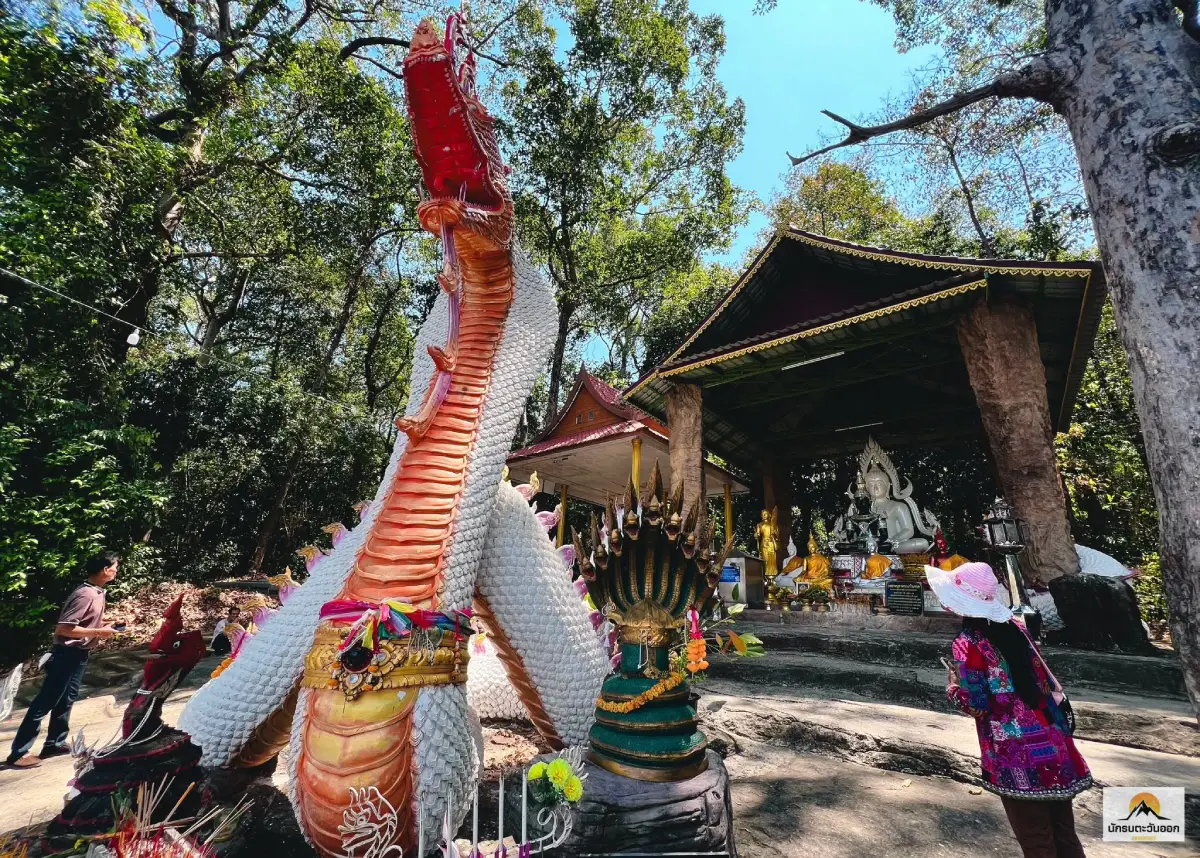
Wat Don That in Ubon Ratchathani is an important Thai forest monastery located on Don That Island in the middle of the Mun River. The temple is situated between Ban Sai Mun in Sai Mun Subdistrict and Ban Khan Rai in Khan Rai Subdistrict, Phibun Mangsahan District, Ubon Ratchathani Province. It is closely associated with Luang Pu Sao Kantasilo, also known as Phra Khru Wiwek Phutthakit, one of the most revered meditation masters in the Thai Forest Tradition. For foreign travelers who want to understand forest monastic life in northeastern Thailand, Wat Don That offers a rare combination of sacred history, river-island landscape, quiet forest atmosphere, and living local faith.
Wat Don That is not a temple of grand decoration or busy tourist crowds. Its character comes from stillness, simplicity, and the feeling of being physically separated from the outside world by the Mun River. Visitors cross the water to reach the island, and this short crossing changes the mood of the journey. The road, the town, and daily noise fall behind, while the island temple appears as a quiet forested space surrounded by water. This setting is one of the reasons Luang Pu Sao chose the island as a place suitable for meditation and forest monastic training.
The island covers about 130 rai and stretches lengthwise along the Mun River. Its northern channel is narrow and lies close to Ban Sai Mun, which has long connected the temple with the local community. The landscape is naturally suited to seclusion. Large trees shade the temple grounds, the river surrounds the island, and the atmosphere encourages slow walking and quiet reflection. For travelers accustomed to more ornate Thai temples, Wat Don That reveals another side of Thai Buddhism: the side of forest practice, discipline, renunciation, and direct spiritual training.
The name “Wat Don That” reflects both geography and sacred meaning. “Don” refers to a raised piece of land or island, while “That” is associated with relics and sacred remains. Local people traditionally called the area Ko Don That, meaning Don That Island. Luang Pu Sao later gave the monastery a longer formal name, Wat Ko Kaeo Phra Non Khon Sawan Wiwek Phutthakit Sasana, which refers to the reclining Buddha, the secluded island, and Buddhist activity. The temple is now widely known as Wat Don That.
The history of Wat Don That became firmly established in 1938, when Luang Pu Sao Kantasilo, Phra Achan Dee Channo, and disciples from Phibun Mangsahan explored small islands and rocky areas along the Mun River. When they reached Don That Island, Luang Pu Sao recognized the place as suitable for a forest meditation monastery. It was quiet, wooded, surrounded by water, and naturally separated from the distractions of settlement. He entrusted Phra Achan Dee Channo and local supporters with the work of developing the monastery and building the basic monastic structures.
In 1939, Luang Pu Sao selected the area near the temporary hall as the site for a reclining Buddha image. He explained that the chosen spot was connected with an old sacred relic site that had collapsed, so the reclining Buddha was created to cover and preserve the sacred place as an object of worship. Phra Achan Dee Channo shaped the reclining Buddha image. For this reason, the reclining Buddha at Wat Don That is not merely a devotional image; it is tied directly to the intention and spiritual vision of Luang Pu Sao.
Luang Pu Sao Kantasilo is one of the foundational figures of the Thai Forest Tradition. His approach emphasized direct practice, seclusion, monastic discipline, simplicity, and steady meditation. He trained in quiet places and encouraged practitioners to cultivate the mind through restraint and persistence. Wat Don That is especially meaningful because it is connected with his later years. He stayed and practiced here before his passing in 1942, making the island one of the most important sites for those who follow the lineage of Thai forest meditation masters.
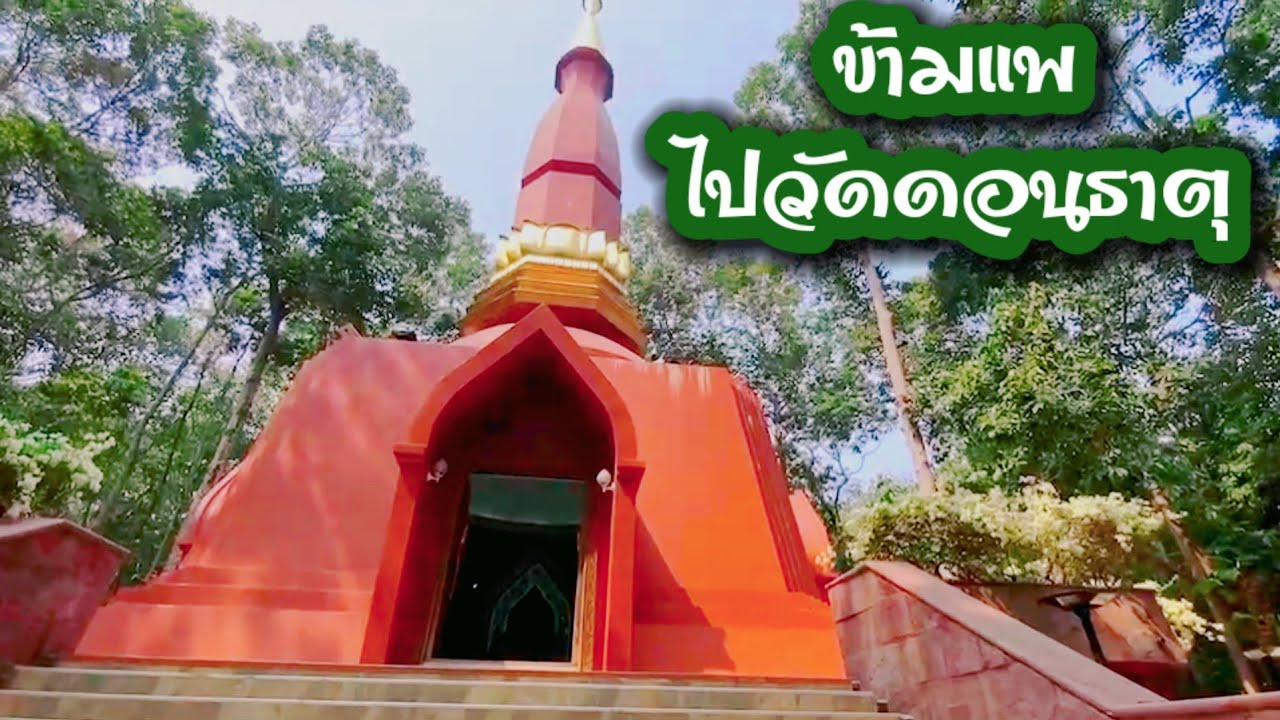
The most important structure inside the temple is Chedi Phiphitthaphan Phra Achan Sao Kantasilo, the museum chedi dedicated to Luang Pu Sao. Inside the chedi, visitors can pay respect to his cast image, relics, and personal monastic requisites displayed in glass cases. The chedi has an octagonal form, symbolizing the Noble Eightfold Path. Its upper form points toward the ideal of liberation. The building therefore functions not only as a memorial but also as a teaching structure, expressing Buddhist meaning through architecture.
The museum chedi is a meaningful place for both Thai and international visitors. It presents the life of a meditation master through simple objects rather than dramatic displays. Robes, utensils, requisites, and relics communicate the discipline of forest monastic life. Foreign travelers who are unfamiliar with Thai monastic culture can understand from these objects that the greatness of a forest master lies not in possessions, but in restraint, mindfulness, endurance, and purity of conduct.
Other important places within Wat Don That include Luang Pu Sao’s old kuti, a stone meditation seat, the reclining Buddha, the sermon hall, and shaded forest paths. These are not merely sightseeing points. They are traces of a way of life. The old kuti and meditation seat give visitors a sense of how simple and disciplined forest practice was. The forest grounds, surrounded by the Mun River, make it easier to understand why seclusion was central to the training of great meditation masters.
The atmosphere of Wat Don That is one of its greatest strengths. The island is covered with large trees, and the temple grounds are shaded and calm. The sound of the river and the quietness of the forest create a natural setting for contemplation. Travelers should not expect commercial facilities or entertainment. The value of this place lies in silence. It is best experienced slowly, with respect and attention.
Wat Don That was officially established as a temple on 24 November 1982 and received its consecrated boundary, or Wisungkhama Sima, on 6 October 1982. It is a Dhammayut forest monastery and a private temple with a consecrated boundary. This formal status developed long after the original forest practice site had been created by Luang Pu Sao and his disciples. The temple therefore carries both early forest-monastery history and later institutional recognition within the Thai Sangha system.
The current abbot of Wat Don That is Phra Achan Phinit Paphassaro. The line of abbots includes several significant monks connected with the temple’s forest meditation history, including Phra Achan Dee Channo, Luang Pu Sao Kantasilo, Luang Pu Somboon Khantiko, and Phra Achan Phinit Paphassaro. This continuity helps preserve the temple’s identity as a forest meditation monastery and a place of devotion to Luang Pu Sao.
For Thai visitors, Wat Don That is a place of reverence. For foreign travelers, it is also an important cultural and spiritual learning site. The temple helps explain why the Thai Forest Tradition became influential beyond Thailand. The tradition is practical, direct, disciplined, and rooted in simple living. Wat Don That allows visitors to see this tradition in a real landscape, not only in books or biographical accounts.
A good visit should begin with respectful entry onto the island. Visitors can first pay respect to the reclining Buddha, then continue to the museum chedi dedicated to Luang Pu Sao. After that, they can walk quietly to see the old kuti, the meditation seat, the sermon hall, and the shaded forest surroundings. The temple should not be rushed. Its meaning becomes clearer when visitors move slowly and let the quiet atmosphere shape the experience.
Proper temple etiquette is important. Visitors should dress modestly, covering shoulders and knees. Voices should be kept low. Photography should be respectful, especially around monks, people practicing meditation, sacred objects, and interior spaces. Areas reserved for monks or practice should not be entered without permission. Wat Don That is a living religious site, not only a tourist attraction.
Admission is free. Visitors may pay respect, walk around the accessible areas, and visit the museum chedi during temple opening hours. Donations may be made according to personal faith, but they are not required for entry. Since Wat Don That is a forest monastery on an island, visitors should prepare what they need before crossing and avoid leaving any litter on the island or near the pier.
The best time to visit is in the morning, when the weather is more comfortable and the temple grounds are especially calm. Late afternoon before closing is also pleasant, with softer light along the river. During the rainy season, the island becomes lush and green, but visitors should take care at the pier and on walking paths. During the cool season, the weather is suitable for walking and quiet reflection.
Wat Don That can be combined with nearby attractions in Phibun Mangsahan. Kaeng Saphue, a well-known riverside attraction of the district, is about 6 km away. Wat Phu Khao Kaeo, Kaeng Hai, Phu Kratae, Wat Pa Pak Dom, and Wat Sirindhorn Wararam Phu Prao can also be added depending on available time. This makes Wat Don That an excellent stop on a cultural and riverside route through eastern Ubon Ratchathani.
Getting There is most convenient by private car. From Phibun Mangsahan town, take Highway 2222 on the Phibun Mangsahan – Khong Chiam route for about 6 km toward Ban Sai Mun. From there, continue to the local crossing point and take a boat or raft across the Mun River to Don That Island. Travelers coming from Ubon Ratchathani city should first drive to Phibun Mangsahan, then continue along Highway 2222 toward Sai Mun Subdistrict.
The river crossing is part of the experience. It allows visitors to see the Mun River landscape and understand the physical seclusion that made the island suitable for forest practice. Elderly visitors, children, and those traveling during the rainy season should take extra care when boarding or leaving the boat or raft.
Families can use Wat Don That as a learning destination. The temple tells a story of Buddhism, landscape, local community, and the life of a forest meditation master. Young visitors can learn that sacred places are not only buildings, but also living spaces shaped by faith, geography, memory, and community support. This makes the visit educational as well as spiritual.
Photographers should focus on respectful images: the river view, shaded paths, the museum chedi, the reclining Buddha, large trees, and the island atmosphere. Flash photography should be avoided where inappropriate, and monks or meditation practitioners should not be photographed without permission. The best photographs at Wat Don That are those that preserve the quiet dignity of the place.
In the wider context of Ubon Ratchathani travel, Wat Don That adds depth to a province already known for rivers, temples, festivals, and natural attractions. Phibun Mangsahan is closely tied to the Mun River, with Kaeng Saphue as a major landmark. Wat Don That adds the dimension of forest meditation heritage to this riverside route. Travelers who visit the temple gain a deeper understanding of Ubon Ratchathani as a center of Thai Buddhist practice, not only as a scenic destination.
Wat Don That is best approached with patience and respect. Its beauty is quiet, its history is profound, and its location on Don That Island makes it unlike most temples in the region. For travelers interested in Luang Pu Sao, Thai Forest Tradition, Buddhist history, or peaceful temple visits in Ubon Ratchathani, Wat Don That is one of the most meaningful places to visit in Phibun Mangsahan District.
| Name | Wat Don That |
| Former Name | Wat Ko Kaeo Phra Non Khon Sawan Wiwek Phutthakit Sasana |
| Location | Don That Island in the Mun River, Ban Sai Mun, Sai Mun Subdistrict, Phibun Mangsahan District, Ubon Ratchathani Province |
| Address | Sai Mun Subdistrict, Phibun Mangsahan District, Ubon Ratchathani 34110, Thailand |
| Area | About 130 rai |
| Highlights | A forest meditation monastery on an island in the Mun River, associated with Luang Pu Sao Kantasilo, featuring the Luang Pu Sao museum chedi, reclining Buddha, old kuti, and meditation stone seat |
| History | Founded as a forest meditation monastery in 1938 by Luang Pu Sao Kantasilo, Phra Achan Dee Channo, and local disciples. It received its consecrated boundary on 6 October 1982 |
| Name Origin | The name comes from Don That Island, a raised island in the Mun River associated with local sacred belief and relic-related meaning |
| Distinctive Features | A quiet island forest monastery surrounded by the Mun River, shaded by large trees, and deeply connected with the Thai Forest Tradition of Luang Pu Sao |
| Travel Information | From Phibun Mangsahan town, take Highway 2222 toward Khong Chiam for about 6 km to Ban Sai Mun, then cross the Mun River by boat or raft to Don That Island |
| Current Status | Open to visitors and remains an important forest meditation monastery in Phibun Mangsahan District |
| Open Days | Daily |
| Opening Hours | 06.00 – 16.00 |
| Fees | No admission fee |
| Main Areas / Zones | Chedi Phiphitthaphan Phra Achan Sao Kantasilo Reclining Buddha Luang Pu Sao’s Old Kuti Stone Meditation Seat Sermon Hall Forest Paths And Island Grounds |
| Abbot / Caretaker | Phra Achan Phinit Paphassaro |
| Nearby Tourist Attractions | 1. Kaeng Saphue, about 6 km 2. Wat Phu Khao Kaeo, about 8 km 3. Kaeng Hai Phibun Mangsahan, about 12 km 4. Phu Kratae, about 13 km 5. Wat Pa Pak Dom, about 28 km 6. Wat Sirindhorn Wararam Phu Prao, about 39 km |
| Nearby Restaurants | 1. Kaeng Saphue Restaurant, about 6 km, Tel. 086-873-5714 2. Jib House Restaurant, about 8 km, Tel. 083-460-1866, 083-415-2489 3. Pimbunya Bakery House & Cafe, about 8 km, Tel. 096-417-7026, 099-220-0004 4. Chom Moon Floating Restaurant, about 15 km 5. Bluemoon Riverside Resort Ubon Ratchathani, about 15 km, Tel. 086-222-2384 |
| Nearby Accommodations | 1. Pimbunya House, about 8 km, Tel. 096-417-7026, 099-220-0004 2. O-Rich Gold Hotel, about 9 km, Tel. 045-441-289 3. OK Resort Phibun Mangsahan, about 12 km, Tel. 081-999-8666 4. Sabaithong Resort, about 12 km, Tel. 084-478-1108 5. Bluemoon Riverside Resort Ubon Ratchathani, about 15 km, Tel. 062-904-4441 |
Frequently Asked Questions (FAQ)
Q: Where is Wat Don That located?
A: Wat Don That is located on Don That Island in the Mun River, Ban Sai Mun, Sai Mun Subdistrict, Phibun Mangsahan District, Ubon Ratchathani Province.
Q: What are the opening hours of Wat Don That?
A: Wat Don That is open daily from 06.00 to 16.00.
Q: Is there an admission fee at Wat Don That?
A: There is no admission fee for Wat Don That or the Luang Pu Sao museum chedi.
Q: How is Wat Don That connected with Luang Pu Sao?
A: Wat Don That is a forest meditation monastery where Luang Pu Sao Kantasilo stayed, practiced, and helped establish the monastic community on Don That Island.
Q: What can visitors see inside Wat Don That?
A: Important places include the Luang Pu Sao museum chedi, the reclining Buddha, Luang Pu Sao’s old kuti, the stone meditation seat, the sermon hall, and shaded forest grounds.
Q: Who is the abbot of Wat Don That?
A: The abbot of Wat Don That is Phra Achan Phinit Paphassaro.
Q: How do travelers get to Wat Don That?
A: From Phibun Mangsahan town, take Highway 2222 for about 6 km to Ban Sai Mun, then cross the Mun River by boat or raft to Don That Island.
Q: What nearby places can be visited with Wat Don That?
A: Nearby places include Kaeng Saphue, Wat Phu Khao Kaeo, Kaeng Hai, Phu Kratae, Wat Pa Pak Dom, and Wat Sirindhorn Wararam Phu Prao.
 Category: ●Places of Worship
 Group: ●Temple
Last Update : 3 MonthAgo
 Last Update : 3 MonthAgo
 Click to Access the Navigation Map GPS
Wat Don That Map
Recommend

 Art, Culture and Heritage
 Historical Sites and Monuments(5)
 Landmarks and Memorials(2)
 Royal Palace(1)
 Art, Craft Centres, Tradition(7)
 Museums(3)
Temple(37)
 Other Sacred Sites(4)
 Research and Development
 Royal Project(2)
 Suburban Living
 Village, Community(2)
 Local Market(4)
 Nature and Wildlife
 National Parks and Marine Reserves(5)
 Mountain (Doi)(6)
 Dam, Reservoir, Lake(8)
 Waterfalls(12)
 Hot Springs(1)
 Caves(2)
 River, Canal(11)
 Bays and Beaches(8)
 Islands(2)
 Other natural attractions(6)
 Entertainment and Agricultural
 Zoos and Aquariums(2)
 Animal camps and shows(1)
 Farms, Parks and Ecotourism(1)
 Waterpark(1)
 Travel Articles, Recipes
 Travel Review, Food Review(1)


