
lovethailand home >Northeastern Travel Attractions >Ubon Ratchathani Travel Attractions >Muang Ubon Ratchathani >Nai Muang > Thung Si Mueang
TL;DR: Thung Si Mueang is located at Upparat Road, Nai Mueang Subdistrict, Mueang Ubon Ratchathani District, Ubon Ratchathani 34000, Thailand, open Daily, hours 05.00 – 22.00.
Thung Si Mueang
Open Days: Daily
Opening Hours: 05.00 – 22.00
Thung Si Mueang in Ubon Ratchathani is the central public park and civic landmark of Ubon Ratchathani city. It is more than a green space. This open urban ground is a cultural stage, a historic civic area, a daily exercise park, a family-friendly public space, and one of the best places for foreign travelers to understand why Ubon Ratchathani is known as Thailand’s city of candles and Buddhist merit-making traditions.
Thung Si Mueang is open daily from 05.00 to 22.00 and there is no admission fee. Its location in the heart of Ubon Ratchathani makes it a practical first stop for travelers staying in the city center. Within a short distance, visitors can walk or continue by car to the City Pillar Shrine, Wat Si Ubon Rattanaram, Ubon Ratchathani National Museum, Wat Thung Si Mueang, Wat Maha Wanaram, and Wat Supattanaram Worawihan. For travelers with limited time in the city, this park works well as the starting point for a compact cultural route.
The park is located along Upparat Road in Nai Mueang Subdistrict, Mueang Ubon Ratchathani District, Ubon Ratchathani Province. It sits within the old urban core, close to government offices, historic temples, museums, local restaurants, and hotels. Its value is not limited to leisure. Thung Si Mueang represents the way public space functions in a Thai provincial city: a place for daily recreation, civic ceremonies, religious festivals, local memory, and social gathering.
Historically, Thung Si Mueang was an open field associated with the old city landscape. Local accounts describe it as a former field connected to the city ruler before it was preserved as a public space during the reign of King Rama V. This transformation from an agricultural field into a civic park reflects the development of Ubon Ratchathani as an organized provincial center. Today, the park still preserves that sense of openness while serving modern needs such as exercise, relaxation, tourism, and cultural events.
The name “Thung Si Mueang” is meaningful in Thai. “Thung” refers to an open field, while “Si Mueang” conveys the grace, auspiciousness, and dignity of the city. Together, the name expresses both the physical character and symbolic role of the place. For local residents, Thung Si Mueang is like the city’s shared front yard: a familiar public ground used by people of different generations for different purposes, from morning exercise to major provincial festivals.
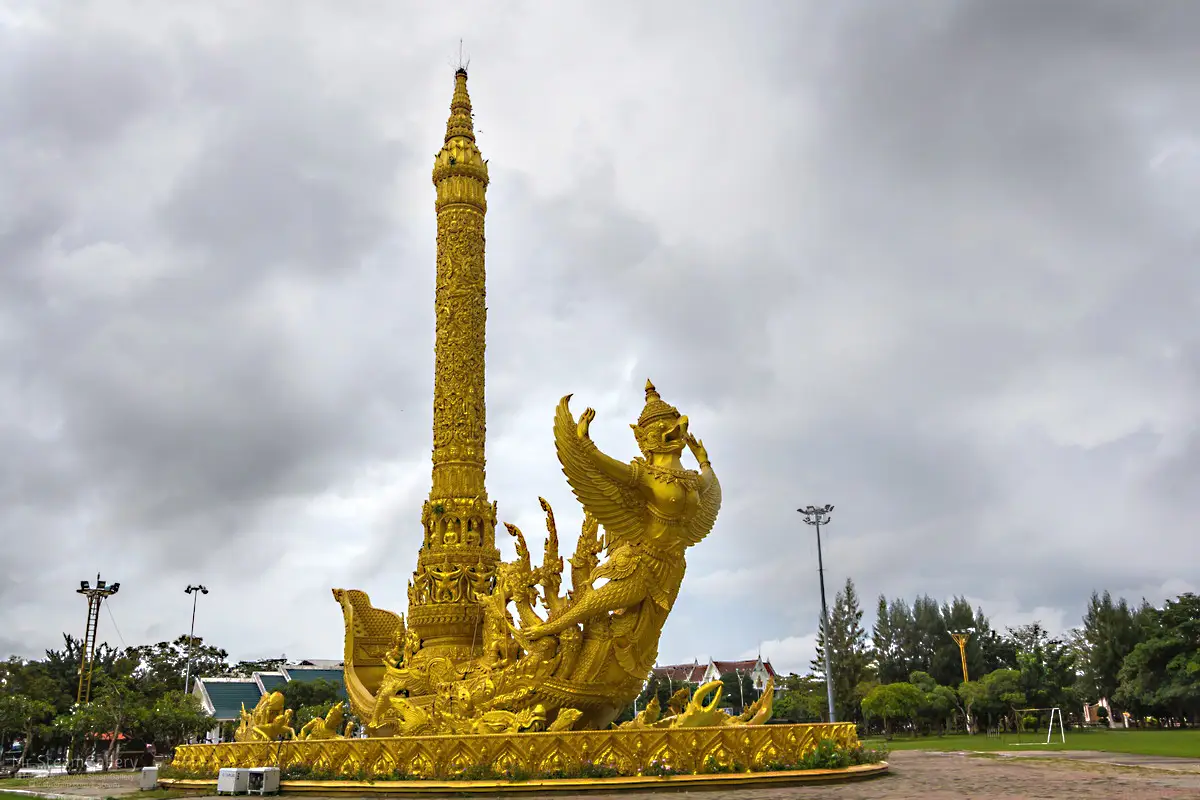
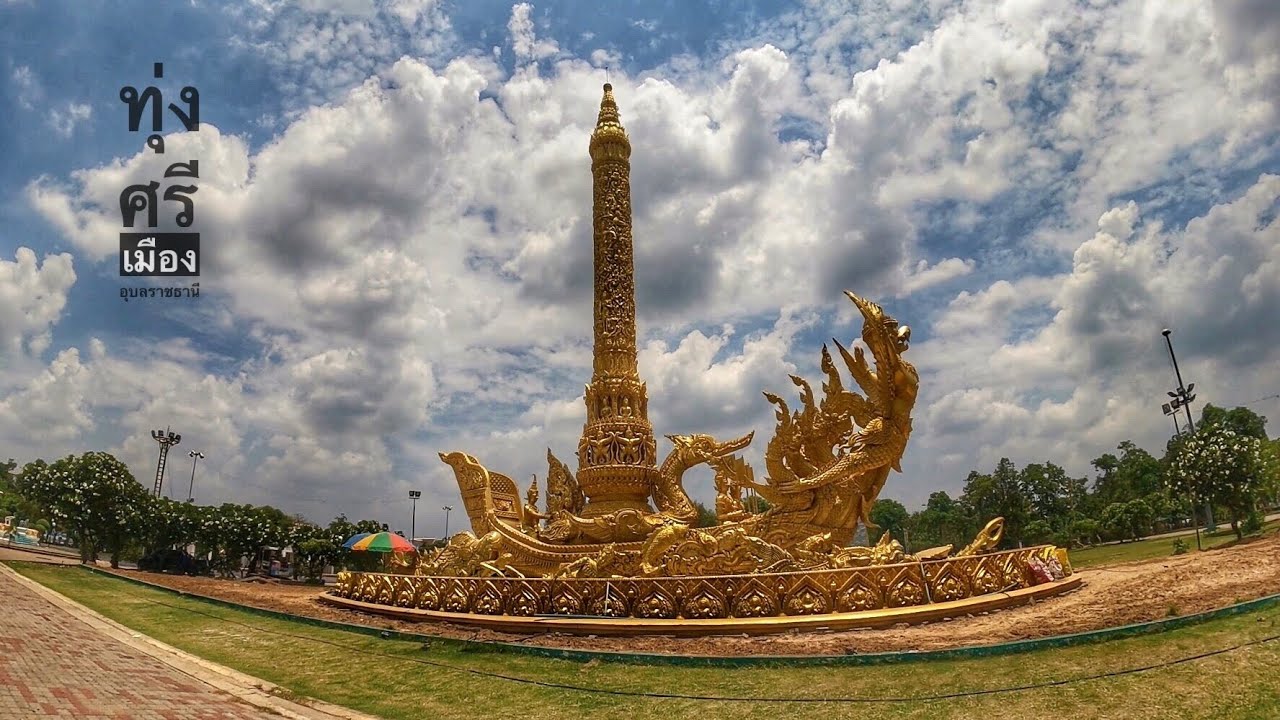
The most recognizable landmark inside Thung Si Mueang is the large candle sculpture. This golden sculptural monument symbolizes Ubon Ratchathani’s identity as the city of the Candle Festival. The detailed design reflects the craft tradition of candle carving, a highly developed local art form associated with Buddhist Lent. Even outside the festival season, travelers can see the cultural meaning of the Candle Festival through this permanent public artwork.
The candle sculpture is not merely decorative. It represents the relationship between Buddhism, craftsmanship, community faith, and public art in Ubon Ratchathani. The annual Candle Festival depends on the cooperation of temples, local communities, artisans, dancers, musicians, public agencies, and residents. By placing a candle monument in the central park, the city turns a seasonal religious tradition into a year-round cultural identity that visitors can experience at any time.
Thung Si Mueang has 4 entrance gates: Ubon Det Pracha Rak Gate, Ubon Sak Pracha Ban Gate, Ubon Kan Pracha Nit Gate, and Ubon Kit Pracha Kon Gate. These gates frame the park from different directions and reinforce the idea of the park as a formal public ground. Their names also reflect older civic language that emphasizes public order, community participation, and the role of the people in maintaining the city.
Inside the park, visitors will find broad walking areas, exercise zones, a children’s playground, open lawns, shaded resting areas, and spaces used for public ceremonies and events. Early morning and late afternoon are the most pleasant times to visit. In the morning, the park feels calm and fresh. In the evening, it becomes livelier as residents come to walk, jog, meet friends, bring children to play, or relax after work.
The City Pillar Shrine is one of the most important nearby spiritual sites. Located within the Thung Si Mueang area, it serves as a symbolic guardian of the city and a place of respect for local people. Many visitors stop at the shrine before walking through the park or photographing the candle sculpture. This combination of civic park and sacred space makes Thung Si Mueang richer than a typical urban garden.
Another major point of interest is the monument of Phra Pathum Woraratsuriyawong, also known as Chao Kham Phong, an important historical figure connected with the founding and development of Ubon Ratchathani. Ceremonies of remembrance and homage are held in this area, making Thung Si Mueang a living historical ground where the city continues to honor its roots.
The park also includes the Monument of Merit, which is connected to memories from the World War II period. This monument adds another historical layer to Thung Si Mueang. It reminds visitors that Ubon Ratchathani’s history is not only local and religious, but also linked to wider human stories of kindness, hardship, and remembrance.
Thung Si Mueang plays a central role during the Ubon Ratchathani Candle Festival. During the festival period, the area around the park becomes part of the main cultural route, especially for candle gathering activities before the grand procession. Travelers visiting during Buddhist Lent season can see huge candle floats, community preparations, traditional performances, and the festive energy of the city. This is the most spectacular time to experience Thung Si Mueang as a cultural stage.
Outside the festival period, the atmosphere becomes quieter and more local. The same space that hosts major processions and public celebrations returns to its daily function as a park. This contrast is one of the best ways to understand Ubon Ratchathani. The city can be ceremonial and festive, but it is also calm, community-based, and deeply connected to everyday public life.
For cultural travelers, Thung Si Mueang is best visited as part of an old-town route. Start at the candle sculpture and the City Pillar Shrine, then continue to Wat Si Ubon Rattanaram, Ubon Ratchathani National Museum, and Wat Thung Si Mueang. This route gives travelers a strong overview of the city’s identity: Buddhist art, local history, religious architecture, civic memory, and living urban culture.
Wat Thung Si Mueang is especially worth combining with the park. The temple is famous for its wooden scripture hall standing in the middle of a pond, one of the most admired architectural features in Ubon Ratchathani. A short visit to both Thung Si Mueang and Wat Thung Si Mueang helps travelers connect the city’s public space with its Buddhist heritage and traditional craftsmanship.
Ubon Ratchathani National Museum is another important nearby stop. The museum helps visitors understand the wider cultural and historical background of the province, including archaeology, local art, Buddhist heritage, and the development of the lower Isan region. Visiting the museum before or after Thung Si Mueang gives the park more context and turns a simple walk into a meaningful cultural experience.
Thung Si Mueang is also suitable for families. The open space, playground, walking areas, and nearby food options make it easy for visitors with children or older family members. Because the park is centrally located, travelers do not need to spend much time in transit. It can be added to a short city itinerary, an evening walk, or a longer cultural day trip around Ubon Ratchathani.
For photography, the best subjects include the golden candle sculpture, the entrance gates, the pathways, the open lawns, the City Pillar Shrine, and the daily life of local residents. Morning light gives a calmer mood, while late afternoon provides warmer tones and a stronger sense of community life. During the Candle Festival season, the area becomes one of the best places in the city to capture the atmosphere of Ubon Ratchathani’s most important cultural event.
Thung Si Mueang helps visitors understand Ubon Ratchathani beyond the idea of a transit city. In one central location, travelers can see history, religion, public art, local ceremonies, civic identity, and everyday life. This makes the park one of the most efficient and meaningful stops for first-time visitors to Ubon Ratchathani.
Getting There is straightforward. Visitors can reach Thung Si Mueang by private car, rental car, taxi, or local transport from anywhere in central Ubon Ratchathani. From Ubon Ratchathani International Airport, the journey into the city center is short. Travelers staying near Upparat Road, Phalochai Road, Phadaeng Road, or Phichitrangsan Road can reach the park easily, and some hotels are within walking distance.
Drivers can usually use roadside parking around the park or nearby public parking areas depending on traffic conditions. During major festivals, visitors should allow extra time because roads around Thung Si Mueang and nearby ceremonial routes may be busier than usual or temporarily adjusted for events. Walking from a nearby hotel is often the most convenient option during the Candle Festival period.
Because there is no admission fee, Thung Si Mueang is suitable for solo travelers, couples, families, elderly visitors, and foreign travelers who want a simple but meaningful stop in the city center. Practical items include comfortable walking shoes, drinking water, a hat or umbrella during the hot season, and a camera for the candle sculpture and old-town surroundings.
The best times to visit are early morning from about 06.00 to 08.00 and late afternoon from about 16.30 to 19.00. The morning is quieter and cooler, while the evening offers a more local atmosphere as residents come out to exercise and relax. After visiting the park, travelers can continue to nearby breakfast restaurants, coffee shops, Vietnamese restaurants, temples, and museums.
During the Candle Festival, Thung Si Mueang becomes much more energetic. The surrounding area turns into part of the city’s festive route, with candle floats, cultural displays, community participation, and religious merit-making traditions. Visiting during this period gives travelers the strongest sense of Ubon Ratchathani’s identity as Thailand’s candle city.
On ordinary days, the park offers a quieter but equally valuable experience. Visitors can observe how local people use shared public space: walking, exercising, resting, bringing children to the playground, paying respect at the shrine, and meeting friends. This everyday rhythm is one of the reasons Thung Si Mueang remains one of the most important places in Ubon Ratchathani.
Thung Si Mueang should be included in any Ubon Ratchathani travel plan, whether the purpose is to see the Candle Festival, explore old-town temples, photograph a city landmark, exercise in a public park, or understand the cultural identity of the province. It gives travelers history, public life, religious meaning, art, and local atmosphere in one accessible place.
| Name | Thung Si Mueang, Ubon Ratchathani |
| Location | Upparat Road, Nai Mueang Subdistrict, Mueang Ubon Ratchathani District, Ubon Ratchathani 34000, Thailand |
| Address | Central Ubon Ratchathani, near the City Pillar Shrine and the old-town cultural area |
| Highlights | Central public park, candle sculpture, City Pillar Shrine, Chao Kham Phong Monument, Monument of Merit, and key festival ground for the Ubon Ratchathani Candle Festival |
| History | Formerly an open field associated with the old city landscape and later preserved as a public recreation and civic space during the reign of King Rama V |
| Name Origin | The name refers to an auspicious open field at the heart of Ubon Ratchathani city |
| Distinctive Features | Four entrance gates, candle sculpture, exercise areas, children’s playground, open lawns, shaded resting areas, and public event spaces |
| Travel Information | Accessible by private car, rental car, taxi, and local transport. The park is close to the airport, city hotels, temples, museums, and local restaurants. |
| Current Status | Open as a public park, recreation area, exercise space, and civic event ground |
| Open Days | Daily |
| Opening Hours | 05.00 – 22.00 |
| Fees | No admission fee |
| Facilities | Exercise areas, children’s playground, walking paths, resting areas, open lawns, and parking around the park depending on traffic conditions |
| Main Areas / Zones | Candle sculpture plaza, City Pillar Shrine, Chao Kham Phong Monument, Monument of Merit, exercise zone, children’s playground, and event ground |
| Caretaker | Ubon Ratchathani Municipality |
| Main Contact Number | 045-246-061 |
| Official Website / Official Page | Ubon Ratchathani Municipality |
| Nearby Tourist Attractions | 1. Ubon Ratchathani City Pillar Shrine, about 0.1 km 2. Wat Si Ubon Rattanaram, about 0.5 km 3. Ubon Ratchathani National Museum, about 0.7 km 4. Wat Thung Si Mueang, about 0.8 km 5. Wat Maha Wanaram, about 1 km 6. Wat Supattanaram Worawihan, about 1.3 km |
| Nearby Restaurants | 1. Café Amazon, opposite Thung Si Mueang Night Market, about 0.2 km, Tel. 094-714-7426 2. Samchai Coffee, Na San Branch, about 0.4 km, Tel. 045-240-241 3. Samchai Coffee, Governor Residence Branch, about 0.8 km, Tel. 045-245-998 4. Indochine Vietnamese Restaurant, about 1 km, Tel. 045-245-584, 045-254-126, 081-876-5528 5. So Rich The Bistro, about 1.5 km, Tel. 081-790-3814 |
| Nearby Accommodations | 1. YUU HOTEL & Cafe, about 0.3 km, Tel. 085-614-1111 2. Tohsang Heritage Ubon Hotel, about 1.2 km, Tel. 045-245-531 3. Laithong Hotel, about 1.4 km, Tel. 098-118-0194 4. Rapeepan Ville Hotel, about 4.5 km, Tel. 045-312-841 5. V Hotel Ubon, about 4.7 km, Tel. 097-334-4480 |
Frequently Asked Questions (FAQ)
Q: What are the opening hours of Thung Si Mueang?
A: Thung Si Mueang is open daily from 05.00 to 22.00.
Q: Is there an admission fee for Thung Si Mueang?
A: No. Thung Si Mueang has no admission fee and is open as a public park.
Q: What is Thung Si Mueang known for?
A: It is known for its candle sculpture, City Pillar Shrine, Chao Kham Phong Monument, Monument of Merit, exercise areas, playground, and its role in the Ubon Ratchathani Candle Festival.
Q: When is the best time to visit Thung Si Mueang?
A: Early morning and late afternoon are the best times because the weather is more comfortable and the local atmosphere is most visible.
Q: How is Thung Si Mueang connected to the Candle Festival?
A: The park and its surrounding area are important festival grounds for candle gathering activities and cultural events during the Ubon Ratchathani Candle Festival.
Q: What attractions are within easy reach of Thung Si Mueang?
A: Nearby attractions include the City Pillar Shrine, Wat Si Ubon Rattanaram, Ubon Ratchathani National Museum, Wat Thung Si Mueang, Wat Maha Wanaram, and Wat Supattanaram Worawihan.
Q: Is Thung Si Mueang suitable for families?
A: Yes. The park has open space, a playground, exercise areas, walking paths, and nearby food options, making it suitable for family visits.
 Category: ●Art, Culture and Heritage
 Group: ●Historical Sites and Monuments
Last Update : 3 MonthAgo
 Last Update : 3 MonthAgo
 Click to Access the Navigation Map GPS
Thung Si Mueang Map
Recommend
 Historical Sites and Monuments(5)
 Landmarks and Memorials(2)
 Royal Palace(1)
 Art, Craft Centres, Tradition(7)
 Museums(3)
 Places of Worship
 Temple(37)
 Other Sacred Sites(4)
 Research and Development
 Royal Project(2)
 Suburban Living
 Village, Community(2)
 Local Market(4)
 Nature and Wildlife
 National Parks and Marine Reserves(5)
 Mountain (Doi)(6)
 Dam, Reservoir, Lake(8)
 Waterfalls(12)
 Hot Springs(1)
 Caves(2)
 River, Canal(11)
 Bays and Beaches(8)
 Islands(2)
 Other natural attractions(6)
 Entertainment and Agricultural
 Zoos and Aquariums(2)
 Animal camps and shows(1)
 Farms, Parks and Ecotourism(1)
 Waterpark(1)
 Travel Articles, Recipes
 Travel Review, Food Review(1)


