
lovethailand home >Northeastern Travel Attractions >Sakon Nakhon Travel Attractions >Muang Sakon Nakhon >Chiang Khruea > Bua Chaloem Phrakiat Park
TL;DR: Bua Chaloem Phrakiat Park, Sakon Nakhon attractions : Entertainment and Agricultural, Farms, Parks and Ecotourism.

Bua Chaloem Phrakiat Park
Open Days: Monday – Friday 08.30 – 16.30 / Saturday – Sunday 08.30 – 18.00
Opening Hours: Weekdays 08.30 – 16.30 / Weekends 08.30 – 18.00
Chaloem Phrakiat Lotus Park in Sakon Nakhon is located inside Kasetsart University, Chalermphrakiat Sakon Nakhon Province Campus, in Chiang Khruea Subdistrict, Mueang Sakon Nakhon District. It is one of Thailand’s largest lotus parks, featuring a wide lotus pond, red wooden walkways, a pavilion in the middle of the pond, a large white Naga sculpture, lotus collections, potted lotus displays, and an educational exhibition about lotus varieties. It is ideal for lotus viewing, photography, family visits, botanical learning, and a calm nature-focused stop near Nong Han Lake.
Chaloem Phrakiat Lotus Park in Sakon Nakhon is one of the province’s most attractive nature and learning destinations. Located within Kasetsart University, Chalermphrakiat Sakon Nakhon Province Campus, at 59 Moo 1, Chiang Khruea Subdistrict, Mueang Sakon Nakhon District, the park combines scenic beauty with botanical knowledge. It is widely known for its expansive lotus pond, red wooden walkways, central viewing pavilion, large white Naga sculpture, and educational sections dedicated to lotus varieties from Thailand and abroad.
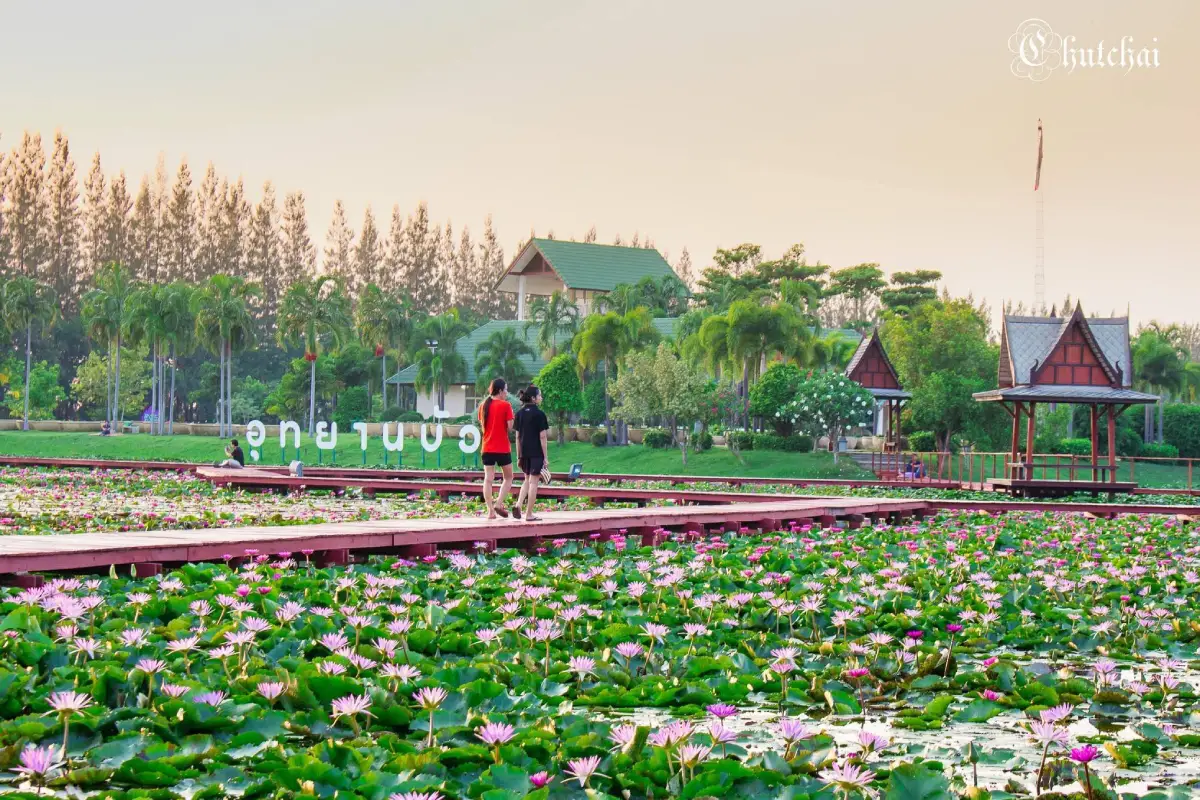
The first impression of the park is the wide lotus pond covered with green lotus leaves and colorful blossoms. Pink, purple, white, and soft-toned flowers rise above the water, creating a peaceful and photogenic landscape. The red wooden walkway allows visitors to walk close to the flowers without disturbing the pond environment. This makes the experience more immersive than simply viewing lotus flowers from a distance. Visitors can observe the structure of the flowers, the broad floating leaves, the stems, and the way lotus plants grow in a real aquatic setting.
The park was established in 2010 as a lotus collection and learning area and also to support the International Lotus Conference held at Kasetsart University’s Sakon Nakhon campus in the same year. Because of this academic background, the site is more than a scenic garden. It functions as a botanical resource, a public learning space, and a place where visitors can understand lotus plants through direct observation. Students, researchers, local residents, and travelers can all use the park as a living classroom.
Lotus flowers have deep cultural meaning in Thailand and across Asia. They are associated with purity, calmness, wisdom, and spiritual elevation. Botanically, lotus and waterlily groups show remarkable diversity in flower shape, color, leaf form, growth habit, and blooming behavior. At Chaloem Phrakiat Lotus Park, this diversity is brought together in one accessible location. Visitors can see different lotus groups and understand that lotus plants are not simply beautiful flowers, but also important aquatic plants with cultural, ecological, and educational value.
The park is organized into several key learning sections. The lotus collection area gathers varieties from Thailand and other countries in pond form. The potted lotus display area allows visitors to study different varieties more closely. The exhibition area provides knowledge about lotus classification, the history of lotus in Thailand, cultivation, care, important diseases and pests, breeding, lotus farming, and practical uses of lotus plants. These sections make the visit suitable for both casual travelers and serious learners.
The red wooden walkway is the most recognizable visual feature of the park. It stretches through the lotus pond and connects several viewing points. Walking along it gives visitors a close view of lotus leaves and blossoms on both sides. The contrast between the red walkway, green leaves, and soft-colored flowers creates one of the most memorable photo scenes in Sakon Nakhon. It is especially beautiful in the morning when the light is gentle and the flowers are fresh.
The pavilion in the middle of the lotus pond offers a quiet place to pause, rest, and look back across the water. From this point, visitors can enjoy a wide view of the pond, the walkways, the surrounding greenery, and the sky. The atmosphere is open and calm. Sitting in the pavilion with lotus flowers around the water and wind moving across the pond is one of the most pleasant experiences at the park.
The large white Naga sculpture adds a cultural and spiritual dimension to the site. In northeastern Thailand, the Naga is strongly associated with water, fertility, protection, and local belief. Its presence beside the lotus pond and near Nong Han Lake creates a symbolic connection between water, faith, and landscape. Many visitors stop at this area for photographs and respectful worship before continuing through the lotus garden.
The park’s location near Nong Han Lake and within an agricultural university campus gives it a special setting. It is not an isolated ornamental garden. It belongs to a wider educational and natural landscape connected with plant science, agriculture, water ecology, and public learning. The surrounding university environment reinforces the park’s role as a place where beauty and knowledge meet naturally.
The best time to visit is in the morning. Lotus flowers are usually at their best when the day is still cool and the sunlight is not too harsh. Morning light also makes photography easier and more attractive. Late afternoon is also a pleasant time for walking, relaxing, and taking landscape photographs, especially around the walkway, pavilion, and Naga sculpture. Midday visits are possible, but visitors should prepare for heat and strong sunlight.
For photographers, the park offers several strong compositions: the red walkway leading across the lotus pond, close-up shots of colorful lotus blossoms, the pavilion surrounded by water, the white Naga sculpture, and wide views of the pond under the sky. The park is suitable for travel photography, family portraits, graduation photos, nature photography, and quiet visual storytelling. Visitors should take photos respectfully and avoid blocking the walkway for long periods.
Families will find the park especially useful because children can learn about aquatic plants from direct observation. They can see how lotus leaves float, how flowers rise above the water, how different colors appear among different varieties, and how an aquatic plant environment supports small living things. This turns a simple family visit into a natural learning experience that is easy for children to understand.
For students and educational groups, Chaloem Phrakiat Lotus Park is suitable for lessons in botany, agriculture, aquatic ecology, plant breeding, landscape design, and local natural resources. The exhibition section supports deeper learning, while the pond and potted displays allow real observation. Group visitors should contact Kasetsart University’s Sakon Nakhon campus before the visit, especially for study tours or visits outside regular conditions.
Lotus plants have many practical uses. Flowers are used in Buddhist worship and cultural ceremonies. Seeds can be used in food and desserts. Rhizomes can be eaten as vegetables. Leaves can be used for wrapping food. Ornamental lotus varieties are valuable in garden design and water landscaping. Seeing many lotus varieties in one place helps visitors understand that lotus plants are important not only for beauty but also for culture, food, ecology, and local knowledge.
The park also adds a different dimension to travel in Sakon Nakhon. The province is well known for Buddhist temples, forest meditation traditions, Nong Han Lake, Phu Phan landscapes, and local culture. Chaloem Phrakiat Lotus Park adds a botanical and agricultural learning perspective. It shows visitors that Sakon Nakhon is also a province of water landscapes, plant diversity, university learning, and calm ecological tourism.
A normal visit should allow at least 1 – 2 hours. This gives enough time to walk along the bridge, view the lotus flowers, stop at the pavilion, photograph the Naga sculpture, and learn from the exhibition. A rushed visit may capture the main photos but miss the details that make the park meaningful: the difference between lotus varieties, the knowledge displays, and the relationship between the pond, university, and Nong Han environment.
Getting There is easiest by private car or local transport. Set the destination to Chaloem Phrakiat Lotus Park, Sakon Nakhon, or Kasetsart University, Chalermphrakiat Sakon Nakhon Province Campus, Chiang Khruea Subdistrict. From Sakon Nakhon city, the drive usually takes around 20 – 30 minutes depending on traffic. Travelers can combine the park with other destinations in the university area, Nong Han Lake, or central Sakon Nakhon.
Visitors should prepare sun protection, drinking water, comfortable walking shoes, a camera, and clothing suitable for outdoor walking. The walkways and pond areas are open to sunlight, so early morning and late afternoon are the most comfortable times. Families with children and elderly visitors should walk carefully on the wooden walkway and stay within the designated paths.
Good visitor etiquette is important. Do not pick lotus flowers, damage plants, throw trash into the pond, climb over railings, or disturb other visitors. Lotus plants are living elements of the landscape and learning collection. Keeping the area clean and using the walkways properly helps preserve the beauty of the park for future visitors.
Overall, Chaloem Phrakiat Lotus Park in Sakon Nakhon brings together nature, botanical education, culture, photography, and peaceful recreation in one place. The red walkway, broad lotus pond, central pavilion, white Naga sculpture, lotus collections, and exhibition area create a destination with a clear identity. Visitors leave not only with beautiful photos but also with a deeper appreciation of lotus plants and their importance in Thai life.
For foreign travelers, the park is an accessible and meaningful stop that explains Sakon Nakhon through water, flowers, local belief, and agricultural knowledge. It is calm, spacious, visually striking, and easy to understand even without a guide. Whether visited as a family outing, a photography stop, a study visit, or part of a wider Sakon Nakhon itinerary, Chaloem Phrakiat Lotus Park is one of the province’s most distinctive nature-based attractions.
| Name | Chaloem Phrakiat Lotus Park, Sakon Nakhon |
| Location | Inside Kasetsart University, Chalermphrakiat Sakon Nakhon Province Campus, Chiang Khruea Subdistrict, Mueang Sakon Nakhon District, Sakon Nakhon Province |
| Address | 59 Moo 1, Chiang Khruea Subdistrict, Mueang Sakon Nakhon District, Sakon Nakhon 47000, Thailand |
| Highlights | Large lotus pond, red wooden walkways, central viewing pavilion, white Naga sculpture, lotus variety collections, potted lotus displays, and a lotus knowledge exhibition |
| History / Background | Established in 2010 as a lotus collection and learning site and to support the International Lotus Conference held at Kasetsart University, Chalermphrakiat Sakon Nakhon Province Campus |
| Distinctive Features | One of Thailand’s largest lotus parks, combining scenic lotus viewing with botanical learning, potted displays, and educational exhibitions |
| Main Learning Areas | About 10 rai of lotus pond area, 34 lotus varieties in the collection section, 74 potted lotus varieties in the display section, and an exhibition area in the Research And Development Building |
| Travel Information | Travel by private car or local transport from Sakon Nakhon city to Kasetsart University, Chalermphrakiat Sakon Nakhon Province Campus. Search for Chaloem Phrakiat Lotus Park, Sakon Nakhon, in a navigation app |
| Current Status | Open as a tourist attraction, recreation area, and lotus learning center inside Kasetsart University’s Sakon Nakhon campus |
| Open Days | Monday – Friday And Saturday – Sunday |
| Opening Hours | Monday – Friday: 08.30 – 16.30 Saturday – Sunday: 08.30 – 18.00 |
| Fees | No Admission Fee |
| Facilities | Parking area, lotus-viewing walkway, central pavilion, photo spots, coffee and drink services, exhibition room, and basic services within the university area |
| Main Areas / Zones | Large Lotus Pond Area Red Wooden Walkway Area Central Lotus Pond Pavilion Area White Naga Sculpture Area 34-Variety Lotus Collection Area 74-Variety Potted Lotus Display Area Lotus Knowledge Exhibition Area Coffee And Drink Service Area |
| Caretaker | Kasetsart University, Chalermphrakiat Sakon Nakhon Province Campus, And The Campus Office |
| Main Contact Number | Kasetsart University, Chalermphrakiat Sakon Nakhon Province Campus, Tel. 042-725000 Campus Public Relations, Tel. 061-028-7788 |
| Official Website / Official Page | www.csc.ku.ac.th |
| Nearby Tourist Attractions | 1. Nong Han Noi And Kasetsart University Area, about 0.5 km 2. Nong Han Chaloem Phrakiat Park, about 1 km 3. 50th Anniversary Agricultural Park, about 2 km 4. Dry Dipterocarp Forest Nature Park, about 3 km 5. Phra Phuttha Chinnasi Replica Inside KU CSC, about 3 km 6. Isan Freshwater Fish Aquarium, about 11 km 7. Somdet Phra Srinagarindra Park And Sra Phang Thong, about 14 km 8. Wat Phra That Choeng Chum Worawihan, about 15 km |
| Nearby Restaurants | 1. PunThai Coffee Kasetsart University Sakon Nakhon, about 1 km, Tel. 098-282-1241 2. KFC PTT Kasetsart Sakon Nakhon, about 1 km, Tel. 080-042-3992 3. POOH WHAN COFFEE KU Sakon Nakhon, about 1.5 km, Tel. 091-254-1250 4. Zorari Boxzone KU Sakon Nakhon, about 2 km, Tel. 063-254-2244 5. Krua Chiang Khruea, about 3 km, Tel. 042-754-030 6. vetmon cafe' Sakon Nakhon, about 3 km, Tel. 093-326-9734 7. PunThai Coffee Chiang Khruea 2, about 5 km, Tel. 061-386-7803 |
| Nearby Accommodations | 1. Uthayan Chiang Khruea Hotel, Kasetsart University, about 1 km, Tel. 088-510-8007, 098-250-0210 2. Flourish Homes KU Sakon Nakhon, about 3 km, Tel. 080-400-2342 3. D-Home Apartment KU Sakon Nakhon, about 3 km, Tel. 085-019-2268 4. @Sakon Hotel, about 15 km, Tel. 042-713-234 5. NH Elegant Hotel, about 15 km, Tel. 042-713-338, 085-680-9155 6. Imperial Sakon Hotel, about 16 km, Tel. 042-711-119 7. Sakon Grand Palace Hotel, about 17 km, Tel. 042-714-886 |
Frequently Asked Questions (FAQ)
Q: Where is Chaloem Phrakiat Lotus Park in Sakon Nakhon located?
A: It is located inside Kasetsart University, Chalermphrakiat Sakon Nakhon Province Campus, at 59 Moo 1, Chiang Khruea Subdistrict, Mueang Sakon Nakhon District, Sakon Nakhon Province.
Q: What are the opening hours?
A: The park is open Monday to Friday from 08.30 to 16.30 and Saturday to Sunday from 08.30 to 18.00.
Q: Is there an admission fee?
A: No. There is no admission fee. Visitors can enjoy the lotus pond, walkway, pavilion, Naga sculpture, and learning areas free of charge.
Q: What can visitors see at the park?
A: Visitors can see a large lotus pond, red wooden walkways, a pavilion in the middle of the pond, a white Naga sculpture, lotus collections, potted lotus displays, and an educational exhibition about lotus plants.
Q: What is the best time to visit?
A: Morning is the best time because lotus flowers are fresh and blooming, the weather is cooler, and the light is suitable for photography. Late afternoon is also pleasant for walking and relaxing.
Q: Is the park suitable for children and families?
A: Yes. It is very suitable for families because children can learn about lotus plants, aquatic ecosystems, plant diversity, and nature through direct observation.
Q: Who should group visitors contact?
A: Group visitors should contact Kasetsart University, Chalermphrakiat Sakon Nakhon Province Campus, at 042-725000 or the campus public relations office at 061-028-7788.
Q: What nearby attractions can be combined with a visit?
A: Nearby places include Nong Han Chaloem Phrakiat Park, 50th Anniversary Agricultural Park, the Isan Freshwater Fish Aquarium, Somdet Phra Srinagarindra Park, Sra Phang Thong, and Wat Phra That Choeng Chum Worawihan.
 Category: ●Entertainment and Agricultural
 Group: ●Farms, Parks and Ecotourism
Last Update : 3 MonthAgo
 Last Update : 3 MonthAgo
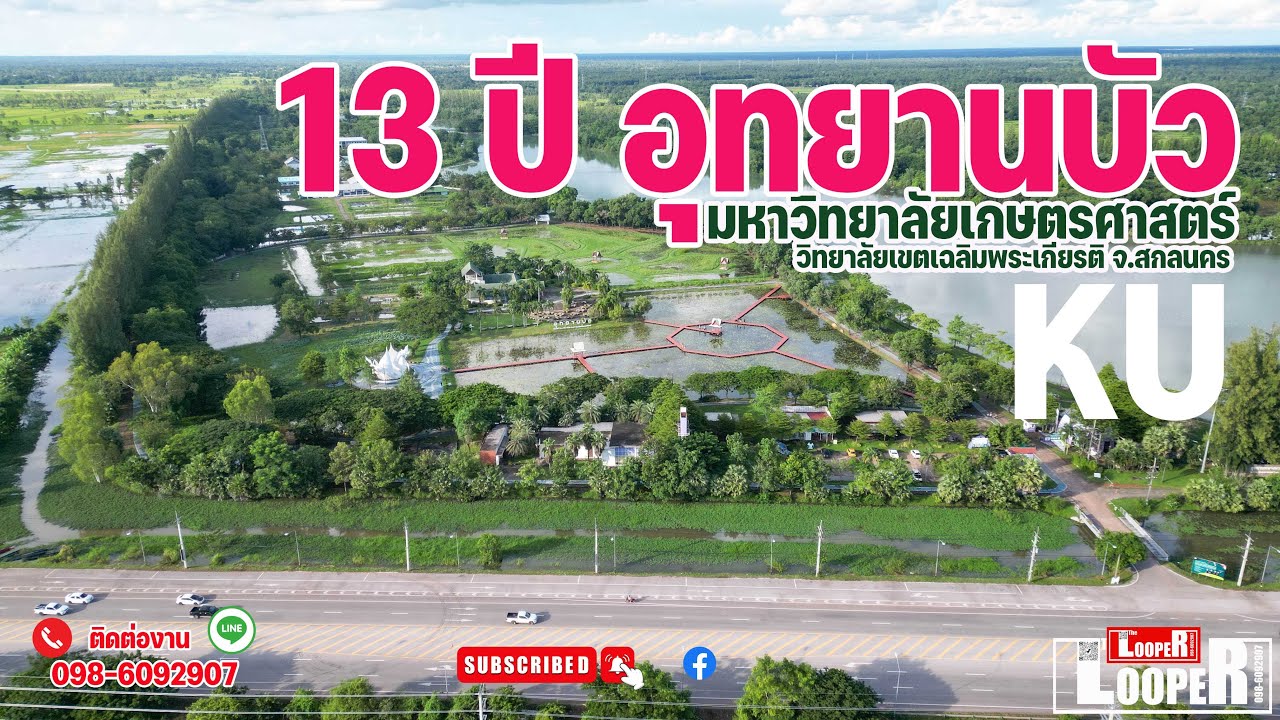
 Click to Access the Navigation Map GPS
Bua Chaloem Phrakiat Park Map
Recommend

 Art, Culture and Heritage
 Historical Sites and Monuments(9)
 Landmarks and Memorials(2)
 Royal Palace(1)
 Art, Craft Centres, Tradition(8)
 Museums(3)
 Educational Places
 Educational Gardens, Farm(2)
 Places of Worship
 Temple(18)
 Church(2)
 Other Sacred Sites(4)
 Research and Development
 Royal Project(3)
 Suburban Living
 Village, Community(7)
 Nature and Wildlife
 National Parks and Marine Reserves(4)
 Mountain (Doi)(3)
 Dam, Reservoir, Lake(14)
 Waterfalls(4)
 Caves(4)
 River, Canal(9)
 Bays and Beaches(1)
 Islands(1)
 Other natural attractions(5)
 Zoos and Aquariums(1)
Farms, Parks and Ecotourism(4)
 Outdoor and Adventure Activities(1)
 Travel Articles, Recipes
 Travel Review, Food Review(1)


