
lovethailand home >Northeastern Travel Attractions >Sakon Nakhon Travel Attractions >Muang Sakon Nakhon >That Choeng Chum > Ajahn Mun Bhuridatto Museum
TL;DR: Ajahn Mun Bhuridatto Museum is located at 1396 Moo 14, Suk Kasem Road, That Choeng Chum Subdistrict, Mueang Sakon Nakhon District, Sakon Nakhon 47000, Thailand, open Open Daily, hours The Museum Opens 06.00 - 18.00 / Wat Pa Sutthawat Temple Grounds Open 05.00.
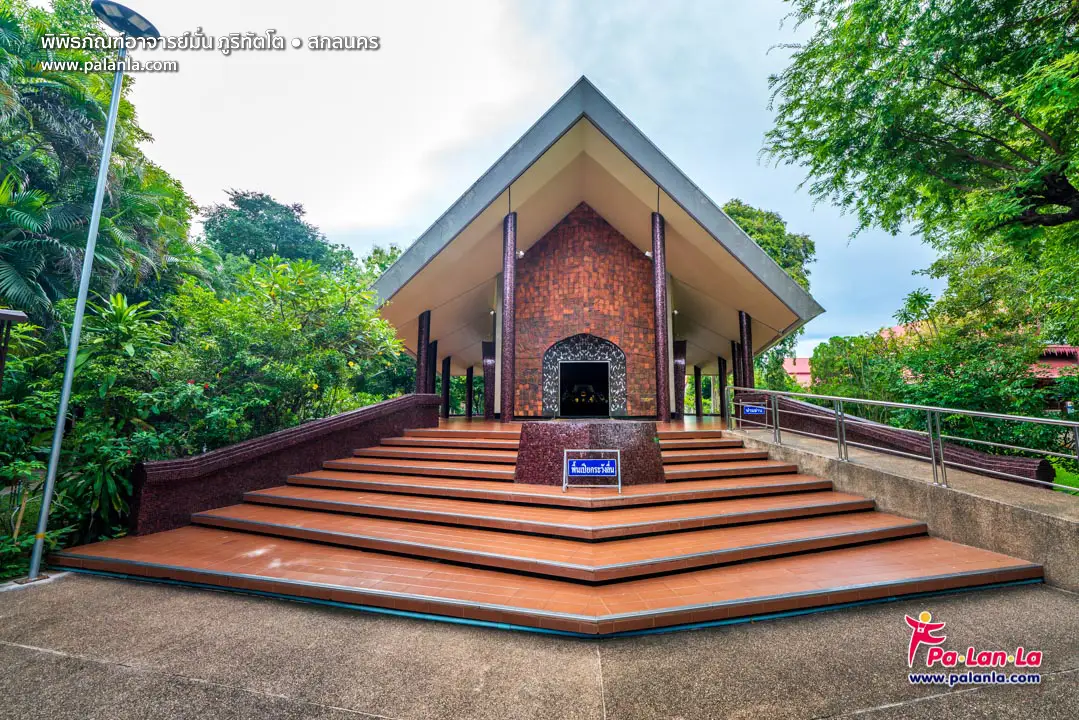
Ajahn Mun Bhuridatto Museum
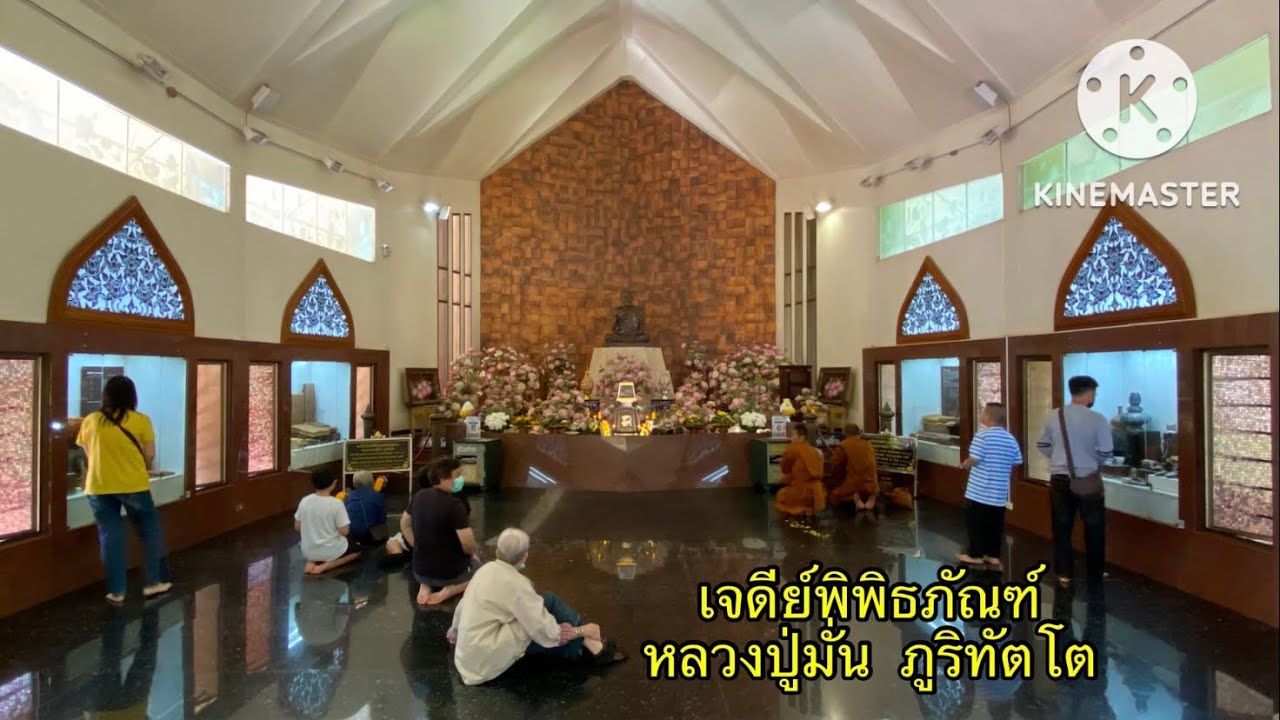
Open Days: Open Daily
Opening Hours: The Museum Opens 06.00 - 18.00 / Wat Pa Sutthawat Temple Grounds Open 05.00 - 21.00
Ajahn Mun Bhuridatto Museum In Sakon Nakhon is located inside Wat Pa Sutthawat on Suk Kasem Road, That Choeng Chum Subdistrict, Mueang Sakon Nakhon District, opposite the provincial government center. It is one of the most important spiritual and cultural sites in Sakon Nakhon, especially for visitors interested in the Thai Forest Tradition. The museum was created to honor Ajahn Mun Bhuridatto, one of the most influential masters of Thai forest meditation practice. Inside, visitors can pay respect to a lifelike seated image of Ajahn Mun, view his crystal-like relics preserved in a glass case, study his monastic requisites, and learn about his life from birth to passing away. The museum is both a sacred place of worship and a learning center for the history of Thai forest monks.
Wat Pa Sutthawat is a temple of deep importance in central Sakon Nakhon. Although it stands near government offices and urban areas, the temple still preserves the atmosphere of a forest monastery. Large trees, quiet walking spaces, simple architecture, and the presence of meditation-related heritage make the temple feel calm and contemplative. Its highest significance comes from the fact that Ajahn Mun spent the final period of his life here and passed away at this temple on 11 November 1949. Because of this, Wat Pa Sutthawat has become a major pilgrimage site for monks, meditation practitioners, Buddhists, and cultural travelers from across Thailand and beyond.
The museum building is a single-storey rectangular structure with applied Thai and contemporary architectural elements. Its design is simple, dignified, and closely connected with the spirit of forest practice. The front wall features terracotta relief work telling the story of Ajahn Mun’s ascetic life and forest wandering. The building does not rely on luxury or ornamentation to create meaning. Instead, its strength comes from restraint, balance, and quietness. This simplicity reflects Ajahn Mun’s own way of life: modest, disciplined, direct, and deeply devoted to inner practice.
Upon entering the museum, visitors first encounter the seated image of Ajahn Mun in meditation posture. The figure radiates calmness, discipline, and compassion. Many visitors pay respect here before walking through the exhibits. Nearby is a glass case containing the relics of Ajahn Mun, which are revered by disciples and Buddhists as sacred remains connected with his purity of practice. These relics are among the most important spiritual objects in the museum and form the emotional center of the visit.
The display of Ajahn Mun’s monastic requisites helps visitors understand the life of a forest monk in a direct and concrete way. Items on display include robes, the alms bowl, belt, razor, umbrella-tent, mosquito net, pillow, water vessel, drinking cup, knife, spoon, containers, medicinal tools, shoulder bag, candle holders, incense vessel, and other simple objects used in daily monastic life. These objects are not valuable because of material wealth. They are valuable because they show a life based on discipline, restraint, self-reliance, and mindfulness.
Every object in the museum points back to practice. The alms bowl represents dependence on alms and the humility of monastic livelihood. The umbrella-tent and mosquito net speak of forest dwelling and long periods of solitude. The robes show simplicity and restraint. The small personal objects show that a life of deep spiritual practice does not require many possessions. For foreign visitors, these objects provide a clear introduction to the practical reality of the Thai Forest Tradition.
Ajahn Mun Bhuridatto was born into the Kaenkaew family at Ban Kham Bong, Khong Chiam District, Ubon Ratchathani Province, on 20 January 1870. He entered novice ordination at the age of 15 and later returned to monastic life with full commitment. At the age of 22, he was ordained as a Buddhist monk in Ubon Ratchathani and received the Pali name “Bhuridatto,” meaning one who gives wisdom. After ordination, he studied and practiced under Ajahn Sao Kantasilo, one of the great early masters of the forest meditation lineage.
Ajahn Mun became known for his strict commitment to dhutanga practices and meditation. He wandered through forests, mountains, caves, remote villages, and quiet wilderness areas in the Northeast, the North, and the Mekong region. His wandering was not travel in the ordinary sense. It was a disciplined training of the mind through solitude, fear, hardship, uncertainty, and direct meditation. The forest became his classroom, silence became his teacher, and mindfulness became the tool for understanding the mind.
His influence on Thai Buddhism is immense. Ajahn Mun helped renew and strengthen the Thai forest meditation tradition by emphasizing strict discipline, mindful living, meditation, self-examination, and direct realization of Dhamma. His teaching focused on practice rather than display. He taught monks and laypeople to look inward, develop mindfulness, contemplate the body and mind, and live with restraint. This practical and uncompromising approach made his lineage one of the most respected meditation traditions in Thailand.
Many important Thai forest masters were connected with Ajahn Mun’s lineage, including Luang Pu Fan Ajaro, Luang Pu Khao Analayo, Luang Pu Waen Suchinno, Luang Pu Thate Thesarangsi, Luang Ta Maha Bua Ñanasampanno, and many others. Sakon Nakhon therefore holds a special place in the map of Thai forest Buddhism. Several major forest masters practiced, taught, or spent important periods of their lives in this province. The Ajahn Mun Museum at Wat Pa Sutthawat is one of the clearest places to understand this living spiritual heritage.
The final period of Ajahn Mun’s life is closely connected with Sakon Nakhon. He spent his later years teaching and guiding monks and lay followers in the province before passing away at Wat Pa Sutthawat on 11 November 1949. This event gave the temple permanent spiritual significance. The ordination hall is also connected with the final memory of Ajahn Mun, as it stands in the area associated with his passing and cremation. For this reason, the temple grounds hold several layers of meaning: active monastery, pilgrimage site, museum, meditation heritage, and memorial landscape.
Because Ajahn Mun’s relics are enshrined in the museum, the place functions as both a museum and a shrine. Some visitors come to study history. Others come to pay respect. Some come to sit quietly and recollect the Dhamma. Others visit as part of a wider journey along the forest monk trail in Sakon Nakhon. This flexibility makes the museum meaningful to many types of visitors, from devoted Buddhists to international travelers who are learning about Buddhist meditation for the first time.
Another major site inside Wat Pa Sutthawat is the Luang Pu Lui Chanthasaro Museum Chedi, also known as Chanthasara Chediyanuson. Luang Pu Lui Chanthasaro was a senior meditation monk and a disciple of Ajahn Mun. He lived a life of travel, practice, and strict forest-monk discipline. After his passing and royal cremation, King Rama IX expressed the wish that a chedi be built at Wat Pa Sutthawat so that Luang Pu Lui’s relics would be near those of Ajahn Mun. The King also graciously provided the initial design for the chedi.
The Luang Pu Lui Museum Chedi is located about 200 - 300 meters from the Ajahn Mun Museum. The building has an octagonal base and a chedi-like form. The lower level contains gilded narrative panels that present Buddhist themes such as ignorance, the arising of the Buddha, the Four Noble Truths, the Buddha’s teachings, the First Buddhist Council, the spread of the Dhamma by the elder monks, and the Thai Dhammayut order. The upper level displays the image, relics, and monastic requisites of Luang Pu Lui. Together, the two museums make Wat Pa Sutthawat one of the most important learning sites for the Thai Forest Tradition.
The ordination hall of Wat Pa Sutthawat is another important point. It is connected with the final period of Ajahn Mun’s life and with the religious functions of the temple. The hall is built in a Thai architectural style, surrounded by a boundary wall, and used for Buddhist ceremonies. Visitors often pay respect there before or after visiting the museum. Seeing the museum, the chedi of Luang Pu Lui, and the ordination hall together gives a complete understanding of why this temple is so important.
Wat Pa Sutthawat also holds an annual event known as Wan Buraphachan, a memorial day honoring Ajahn Mun and the forest meditation masters. The event is held around the anniversary of Ajahn Mun’s cremation and includes acts of homage, chanting, merit-making, and offerings. This annual ceremony shows that the temple is not only a place of historical memory. It remains an active center of devotion where the lineage of forest meditation is honored by monks and laypeople every year.
Visitors should take time when walking through the museum. The exhibits are best understood slowly. Ajahn Mun’s bowl, robes, umbrella-tent, mosquito net, and simple tools communicate more through silence than through spectacle. They invite visitors to consider what is necessary, what is unnecessary, and what kind of life supports inner freedom. The museum is suitable for Buddhists, meditation practitioners, students, scholars, families, and international travelers interested in Thai spiritual history.
For international visitors, this museum is one of the most accessible places to learn about the Thai Forest Tradition. It presents real objects connected with a highly respected meditation master. It also stands in the actual temple where he spent his final days and passed away. The museum therefore offers a stronger experience than reading a biography alone. Visitors can see the place, objects, relics, and atmosphere that connect directly with the life and legacy of Ajahn Mun.
Getting There is straightforward. From central Sakon Nakhon, travel along Suk Kasem Road toward the provincial government center. The entrance to Wat Pa Sutthawat is about 250 meters from the main road. The temple can be reached by private car, rental car, local taxi, or city transport. It is only a short drive from Wat Phra That Choeng Chum Worawihan and other central attractions. Travelers arriving from Sakon Nakhon Airport can reach the city and continue to the temple by taxi or rental car.
Visitors should allow at least 1 - 2 hours for the museum, the Luang Pu Lui Museum Chedi, and the ordination hall. Morning and late afternoon are especially pleasant times because the temple atmosphere is calm and the light is soft. The temple can also be visited during the day, but visitors should remain quiet because monks, novices, and meditation practitioners use the temple grounds regularly.
Respectful conduct is essential. Visitors should dress modestly, speak softly, avoid touching glass cases, relics, images, or displayed objects, and follow any signs inside the museum. Photography should be avoided in restricted areas. Monks and meditation practitioners should not be disturbed. These practices help preserve the dignity of the place and allow visitors to experience the temple in the right spirit.
The museum is also suitable for a cultural route through Sakon Nakhon. A meaningful itinerary can begin at Wat Pa Sutthawat, then continue to Wat Phra That Choeng Chum Worawihan, Nong Han Lake, Somdet Phra Srinagarindra Park, Sakon Nakhon City Gate, the Sakon Nakhon City Museum, and Phra That Narai Cheng Weng. Visitors interested in forest monks can also continue to other temples associated with important meditation masters in Sakon Nakhon Province.
The special power of the Ajahn Mun Museum lies in its silence. The simple objects in the glass cases do not overwhelm visitors with decoration. Instead, they point toward discipline, humility, and inner practice. A single robe, a bowl, an umbrella-tent, or a small personal item can say more about spiritual life than a grand monument. This is why the museum feels less like a conventional tourist attraction and more like a place for quiet reflection.
Ajahn Mun Bhuridatto is widely honored as one of the great masters of Thai forest meditation. In the 150th anniversary of his birth, he was recognized as an important world figure in the field of peace. This recognition reflects the wider value of his teachings: inner peace, discipline, mindfulness, and the training of the mind. The museum at Wat Pa Sutthawat preserves this legacy in the place most closely connected with the final chapter of his life.
For those interested in the history of Sakon Nakhon, Wat Pa Sutthawat helps explain why the province is known as a land of Dhamma. Sakon Nakhon is associated with sacred stupas, Buddhist heritage, forest meditation masters, and communities shaped by faith. The Ajahn Mun Museum gives visitors a deeper way to understand the province beyond scenery and sightseeing. It reveals Sakon Nakhon as a spiritual landscape.
As a museum, the Ajahn Mun Museum preserves not only objects but also a way of life. It shows how a monk committed to simplicity, meditation, and discipline became a national spiritual figure. The displays do not need technological complexity to create meaning. Their power comes from authenticity. Each object points back to practice, and each space invites calm observation.
Families can also benefit from visiting the museum. Children and young people can learn about discipline, gratitude, simplicity, and moral effort through real objects and real history. The museum teaches that greatness does not come from wealth or power, but from perseverance, self-training, and dedication to goodness. This makes the site valuable for both spiritual and educational visits.
The temple’s central location adds practical convenience. It is near restaurants, cafés, hotels, government offices, parks, and major attractions in Sakon Nakhon city. Visitors can include the museum in a half-day city trip, a full-day Buddhist heritage route, or a longer journey following forest monk sites across the province. During weekends or major temple events, visitors should allow extra time for traffic and parking.
Overall, the Ajahn Mun Bhuridatto Museum is a complete spiritual learning site. Visitors can pay respect to Ajahn Mun’s relics, see his monastic requisites, learn his biography, visit the ordination hall connected with his final days, and walk to the Luang Pu Lui Museum Chedi within the same temple. Few places offer such a concentrated view of the Thai Forest Tradition in one location.
The Ajahn Mun Bhuridatto Museum in Sakon Nakhon is therefore more than a tourist attraction. It is a place where visitors can see the traces of a life devoted to Dhamma, understand the simplicity of forest monk practice, and experience the quiet strength of Wat Pa Sutthawat. For travelers who want to understand Sakon Nakhon at a deeper level, this museum is one of the most important places to visit with respect, attention, and a calm mind.
| Place Name | Ajahn Mun Bhuridatto Museum / Phra Ajahn Mun Bhuridatto Museum At Wat Pa Sutthawat |
| Main Location | Inside Wat Pa Sutthawat, Suk Kasem Road, Opposite The Sakon Nakhon Provincial Government Center, Mueang Sakon Nakhon District |
| Address | 1396 Moo 14, Suk Kasem Road, That Choeng Chum Subdistrict, Mueang Sakon Nakhon District, Sakon Nakhon 47000, Thailand |
| Approximate Coordinates | 17.1616, 104.1484 |
| Highlights | Seated Image Of Ajahn Mun, Glass Case Containing His Crystal-Like Relics, Monastic Requisites, Forest-Wandering Items, Biographical Exhibition, Ordination Hall, And Luang Pu Lui Chanthasaro Museum Chedi |
| History / Importance | Built To Honor Ajahn Mun Bhuridatto, A Major Master Of The Thai Forest Meditation Tradition. The Museum Preserves His Relics, Monastic Requisites, And Life Story Inside Wat Pa Sutthawat, The Temple Where He Passed Away On 11 November 1949 |
| Name Origin | Named After Ajahn Mun Bhuridatto, A Highly Revered Forest Meditation Master Whose Lineage Strongly Influenced Thai Buddhist Practice |
| Architecture | A Single-Storey Rectangular Building With Applied Thai And Contemporary Design, A Thai-Style Roof, Terracotta Reliefs Telling Ajahn Mun’s Forest-Wandering Story, Marble Flooring, And Display Cases Along The Interior Walls |
| Travel Information | From Central Sakon Nakhon, Travel Along Suk Kasem Road Toward The Provincial Government Center, Then Turn Into Wat Pa Sutthawat About 250 Meters From The Main Road. The Temple Is Convenient By Private Car, Rental Car, Taxi, Or Local Transport |
| Current Status | Open To Visitors As A Spiritual Learning Site And Museum Inside Wat Pa Sutthawat |
| Open Days | Open Daily |
| Opening Hours | Museum: 06.00 - 18.00 / Wat Pa Sutthawat Temple Grounds: 05.00 - 21.00 |
| Fees | No Admission Fee |
| Facilities | Temple Parking Area, Walking Paths, Restrooms, Shrine Area, Museum Space, Biographical Information Boards, And Quiet Temple Grounds Suitable For Respectful Visits |
| Main Areas / Zones | Ajahn Mun Bhuridatto Museum Seated Image Of Ajahn Mun Zone Relic And Glass Case Zone Monastic Requisites And Forest-Wandering Items Zone Biographical Exhibition Zone Wat Pa Sutthawat Ordination Hall Luang Pu Lui Chanthasaro Museum Chedi Temple Hall And Meditation Areas |
| Caretaker / Abbot | Phra Thep Wachiraransi, Ecclesiastical Governor Of Sakon Nakhon Province (Dhammayut), Abbot Of Wat Pa Sutthawat |
| Contact Number | Wat Pa Sutthawat Tel. 042-733-041 |
| Visitor Guidelines | Dress Respectfully, Speak Softly, Do Not Touch Relics, Glass Cases, Images, Or Displayed Requisites, Do Not Disturb Monks Or Meditation Practitioners, And Follow Temple Signs |
| Nearby Tourist Attractions | 1. Luang Pu Lui Chanthasaro Museum Chedi, About 0.3 km 2. Somdet Phra Srinagarindra Park And Sa Phang Thong, About 2 km 3. Wat Phra That Choeng Chum Worawihan, About 3 km 4. Nong Han Lake, About 3 km 5. Sakon Nakhon City Gate And Ruam Jai Thai Square, About 4 km 6. Sakon Nakhon City Museum, About 6 km 7. Phra That Narai Cheng Weng, About 7 km |
| Nearby Restaurants | 1. Bai Tong Bakery And Thai Lod Chong, About 1 km, Tel. 088-510-5358 2. ChillCup, About 1 km, Tel. 081-059-6210, 097-158-5748 3. Ma-kin Behind Wat Phra That Choeng Chum, About 3 km 4. Mae Lek Pad Thai Beside Wat Phra That Choeng Chum, About 3 km 5. MK Restaurants Lotus Sakon Nakhon, About 4 km, Tel. 042-722-645 6. Café Amazon PTT Pratu Mueang, About 4 km, Tel. 084-031-4920 |
| Nearby Accommodations | 1. Imperial Sakon Hotel, About 1 km, Tel. 042-711-119 2. Dusit Hotel Sakon Nakhon, About 1 km, Tel. 042-711-198 3. The Majestic Sakon Nakhon Hotel, About 2 km, Tel. 042-733-771 4. The Room Boutique Hotel, About 3 km, Tel. 099-262-9269 5. Hop Inn Sakon Nakhon, About 4 km, Tel. 02-080-2222 6. Sakol Grand Palace Hotel, About 4 km, Tel. 042-714-886 |
Frequently Asked Questions (FAQ)
Q: Where is the Ajahn Mun Bhuridatto Museum located?
A: It is located inside Wat Pa Sutthawat on Suk Kasem Road, That Choeng Chum Subdistrict, Mueang Sakon Nakhon District, opposite the Sakon Nakhon Provincial Government Center.
Q: What are the opening hours?
A: The museum opens daily from 06.00 to 18.00, while Wat Pa Sutthawat temple grounds open daily from 05.00 to 21.00.
Q: Is there an admission fee?
A: No. There is no admission fee for visiting the museum or the temple grounds.
Q: What can visitors see inside the museum?
A: Visitors can see the seated image of Ajahn Mun, his crystal-like relics in a glass case, monastic requisites, forest-wandering items, and biographical exhibits about his life and practice.
Q: Why is Ajahn Mun Bhuridatto important?
A: Ajahn Mun was one of the most influential masters of the Thai Forest Tradition. His strict meditation practice, discipline, and teachings shaped many later forest meditation masters in Thailand.
Q: Are there other important sites inside Wat Pa Sutthawat?
A: Yes. Visitors can also see the ordination hall connected with Ajahn Mun’s final days and the Luang Pu Lui Chanthasaro Museum Chedi, which was built according to the royal wish of King Rama IX.
Q: How do visitors get there from central Sakon Nakhon?
A: Travel along Suk Kasem Road toward the provincial government center, then turn into Wat Pa Sutthawat about 250 meters from the main road. The temple is easy to reach by private car, taxi, rental car, or local transport.
Q: What nearby places can visitors see after the museum?
A: Nearby places include Wat Phra That Choeng Chum Worawihan, Nong Han Lake, Somdet Phra Srinagarindra Park, Sakon Nakhon City Gate, Sakon Nakhon City Museum, and Phra That Narai Cheng Weng.
 Category: ●Art, Culture and Heritage
 Group: ●Museums
Last Update : 3 MonthAgo
 Last Update : 3 MonthAgo
 Click to Access the Navigation Map GPS
Ajahn Mun Bhuridatto Museum Map
Recommend

 Historical Sites and Monuments(9)
 Landmarks and Memorials(2)
 Royal Palace(1)
 Art, Craft Centres, Tradition(8)
Museums(3)
 Educational Places
 Educational Gardens, Farm(2)
 Places of Worship
 Temple(18)
 Church(2)
 Other Sacred Sites(4)
 Research and Development
 Royal Project(3)
 Suburban Living
 Village, Community(7)
 Nature and Wildlife
 National Parks and Marine Reserves(4)
 Mountain (Doi)(3)
 Dam, Reservoir, Lake(14)
 Waterfalls(4)
 Caves(4)
 River, Canal(9)
 Bays and Beaches(1)
 Islands(1)
 Other natural attractions(5)
 Entertainment and Agricultural
 Zoos and Aquariums(1)
 Farms, Parks and Ecotourism(4)
 Outdoor and Adventure Activities(1)
 Travel Articles, Recipes
 Travel Review, Food Review(1)


