
lovethailand home >Northeastern Travel Attractions >Sakon Nakhon Travel Attractions >Phanna Nikhom >Na Hua Bo > Phra That Phu Phek
TL;DR: Phra That Phu Phek is located at Na Hua Bo Subdistrict, Phanna Nikhom District, Sakon Nakhon Province, open Daily, hours 06.00 – 18.00.
Phra That Phu Phek
Open Days: Daily
Opening Hours: 06.00 – 18.00
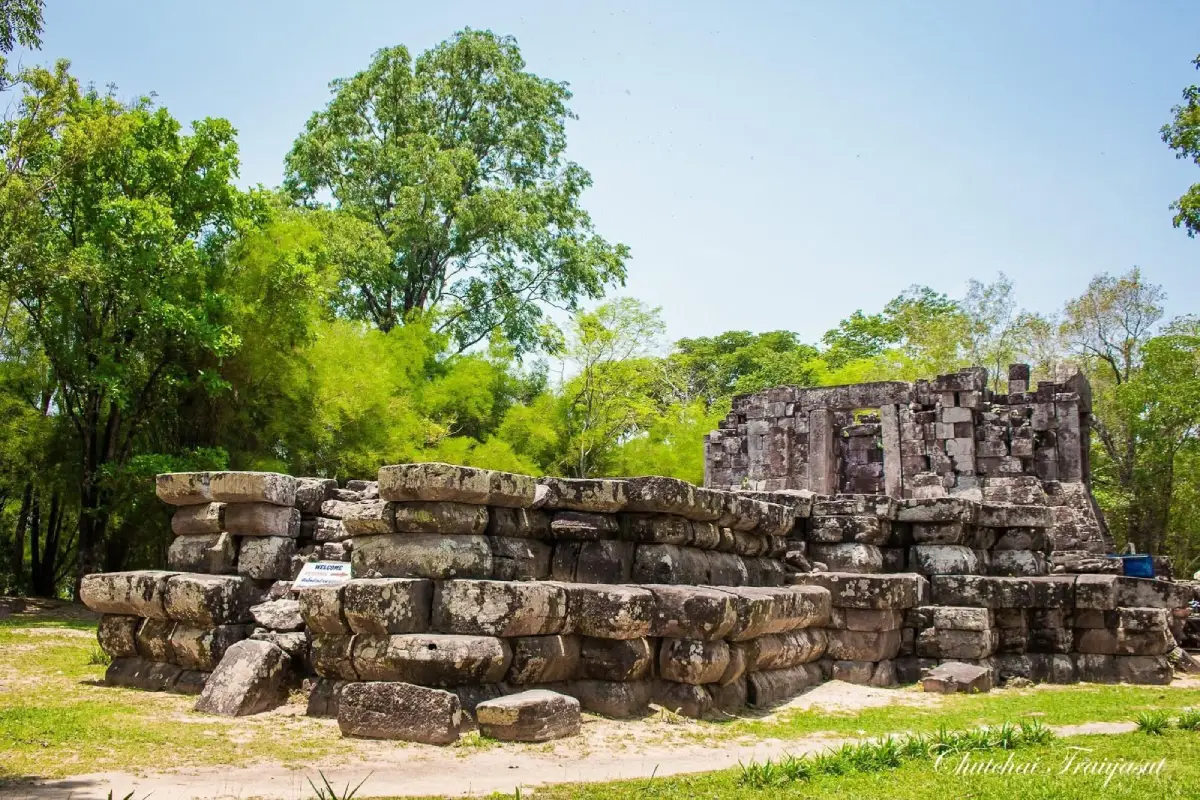
Phra That Phu Phek in Sakon Nakhon is an ancient Khmer-style sandstone sanctuary located on the summit of Phu Phek Mountain in Na Hua Bo Subdistrict, Phanna Nikhom District. Visitors climb about 491 steps to reach the monument. The sanctuary stands on a laterite base, has a recessed square plan, connects to a rectangular mandapa, and remains unfinished without a roof or upper tower. Built around the 16th–17th Buddhist centuries as a Hindu sacred mountain shrine, it was later absorbed into Buddhist belief through the Urangkhathat legend and the story of the Phek star.
Phra That Phu Phek, also known as Prasat Phra That Phu Phek, is one of the most distinctive archaeological and cultural landmarks in Sakon Nakhon Province. Located on Phu Phek Mountain in Na Hua Bo Subdistrict, Phanna Nikhom District, the site combines ancient Khmer architecture, sacred mountain symbolism, Buddhist devotion, local legend, and panoramic natural scenery. It is not a quick roadside attraction. Reaching the sanctuary requires a climb of about 491 steps, making the journey itself an important part of the experience.
The monument stands on the summit area of Phu Phek, part of the Phu Phan mountain range. The elevated location gives the site a strong sacred presence. From the foot of the hill, visitors walk upward through a forested route before emerging onto a broad summit area where the ancient sandstone sanctuary stands. This gradual ascent transforms the visit into a physical and spiritual journey, echoing the ancient concept of moving from the human world toward a sacred mountain realm.
Phra That Phu Phek is built of sandstone on a laterite base. Its plan is a recessed square, and the front section connects with a rectangular mandapa. The first base level is about 1.58 meters high, the second base level about 0.70 meters high, and the main sanctuary rises to about 7.67 meters. The central chamber, or garbhagriha, originally functioned as the sacred inner space for a deity image in Hindu worship. The eastern approach, mandapa, chamber, base, and surrounding landscape together reveal a carefully planned religious structure.
The most striking architectural feature of Phra That Phu Phek is its unfinished form. The sanctuary has no completed roof or upper spire, and only structural traces of the upper construction remain. This unfinished condition is not a weakness of the site; it is one of its greatest historical and cultural values. Visitors can clearly see the sandstone blocks, the massing of the main body, and the way the ancient builders organized the structure before completion was interrupted.
The monument was built around the 16th–17th Buddhist centuries, during a period when Khmer cultural and religious influence extended across much of northeastern Thailand. Its design reflects the idea of a sacred mountain, in which a natural summit becomes one with divine power. This concept is also seen in major Khmer-related monuments such as Phanom Rung and Preah Vihear. Phra That Phu Phek therefore belongs to a larger tradition of mountain sanctuaries where architecture, landscape, and cosmology are inseparable.
In ancient Hindu belief, mountains represented cosmic centers and divine dwelling places. Building a sanctuary on a mountaintop was a way of turning the natural landscape into a sacred axis. At Phra That Phu Phek, visitors experience this idea directly. The climb, the forest, the summit, the stone sanctuary, and the open sky all work together to create a sacred setting. The place feels physically elevated and symbolically elevated at the same time.
Over time, Phra That Phu Phek was reinterpreted within Buddhist belief. Like several ancient sacred sites in the Isan region, it became connected with the Urangkhathat legend, the tradition associated with the Buddha’s breastbone relic and Phra That Phanom. This transformation gave the site a new Buddhist meaning while preserving the memory of its older sacred function. Today, it is both an ancient Khmer-style monument and a place of Buddhist devotion for local communities and travelers.
One of the most memorable stories connected with Phra That Phu Phek is the legend of the construction contest between men and women. According to local tradition, a group of men built Phra That Phu Phek, while a group of women built Phra That Narai Cheng Weng. The contest required both groups to stop building when the Phek star appeared in the sky. The women cleverly hung lanterns high in the trees, causing the men to believe the star had risen. The men stopped working too early, leaving Phra That Phu Phek unfinished.
This legend explains both the name and the unfinished appearance of the monument. The word Phu refers to the mountain, while Phek refers to the Phek star in the story. The absence of the completed roof and spire becomes part of the narrative. Instead of being viewed only as an incomplete ruin, the sanctuary is remembered as a monument shaped by competition, intelligence, timing, and local cultural memory. This gives Phra That Phu Phek a strong identity unlike many other ancient sites.
The story also links Phra That Phu Phek directly with Phra That Narai Cheng Weng. Visiting both sites on the same trip helps travelers understand the local legend more clearly. Phra That Narai Cheng Weng represents the women’s side of the story and is known for its sandstone carvings and Hindu iconography. Phra That Phu Phek represents the men’s side and is known for its mountain setting, 491-step climb, and unfinished sanctuary. Together, the two sites form one of the most engaging cultural routes in Sakon Nakhon.
The architecture of Phra That Phu Phek deserves close attention. The laterite base gives structural strength to the sandstone sanctuary. The recessed square plan creates depth and shadow along the walls. The eastern entrance forms the main ritual axis, while the other sides include false-door elements typical of Khmer sacred architecture. These false doors were not functional entrances, but symbolic architectural devices that completed the sacred form of the building on all sides.
The front mandapa is another important element. It extends from the main sanctuary and forms a transition space before entering the inner sacred chamber. This sequence from approach, stairway, mandapa, and chamber reflects a highly organized ritual layout. Even without a finished roof, the remaining structure still clearly communicates the original architectural intention of the ancient builders.
The summit area also includes important surrounding elements such as a Buddhist shrine, worship area, ancient ponds, and natural stone surfaces. Two ponds are located to the north of the sanctuary. Water in ancient sacred landscapes was closely connected with purity, ritual use, and the organization of sacred space. These ponds help visitors understand that Phra That Phu Phek was not only a stone building, but part of a larger sacred landscape on the mountain.
Phra That Phu Phek is also associated with the observation of celestial movement and seasonal cycles. Because the sanctuary stands on a high mountain with open views, local interpretation has long connected the site with the sky, the sun, and the Phek star. Whether approached through legend or architectural orientation, the site clearly reflects the ancient relationship between sacred buildings, natural landscape, and cosmic order.
The climb of about 491 steps is the part of the visit most travelers remember. The route is physically demanding but manageable for visitors with general fitness. Good footwear is important because some sections can be steep or slippery, especially after rain. Visitors should bring drinking water, avoid rushing, and take breaks when needed. Morning is the best time to climb because the temperature is cooler and the light is softer.
The staircase is more than a practical route. It is part of the pilgrimage experience. Each step brings visitors farther from the road and closer to the sacred summit. The surrounding forest creates a peaceful atmosphere, and the climb encourages a slower, more mindful rhythm. By the time visitors reach the top, the ancient sanctuary feels earned rather than simply reached.
At the summit, the atmosphere changes. The ancient sandstone structure appears in a quiet natural setting, surrounded by trees and wide views. The weathered surfaces of the stone, the laterite base, the unfinished upper body, and the forested background combine to create a powerful visual impression. The site feels remote and contemplative, even though it remains accessible as a day trip from Sakon Nakhon city.
The viewpoint around Phra That Phu Phek is another reason to visit. From the summit area, travelers can enjoy views of the Phu Phan mountain range, forest, and surrounding plains. The landscape is especially beautiful in the morning and late afternoon, when the light gives the sandstone and laterite warmer tones. Photographers should allow enough time to walk around the sanctuary and capture different angles.
Phra That Phu Phek is suitable for several types of travelers. It appeals to people interested in Khmer architecture, archaeology, Buddhist pilgrimage, local legends, mountain scenery, and meaningful cultural hikes. It is less suitable for travelers looking for a quick stop with no walking. The climb requires effort, and visitors should plan enough time for both the ascent and the descent.
The best season to visit is from the late rainy season through the cool season. During this period, the surrounding forest is fresh, the weather is more comfortable, and the view from the summit is often clearer. The site can also be visited during the hot season, but early morning or late afternoon is preferable. During the rainy season, visitors should be especially careful on stairs and stone surfaces.
Because Phra That Phu Phek is a sacred site as well as an archaeological monument, visitors should dress respectfully and behave carefully. Climbing on the ancient structure, touching fragile stones, moving rocks, writing on surfaces, or leaving litter should be avoided. Responsible travel protects the monument, the forest environment, and the dignity of the place.
The site is also valuable as an outdoor classroom. Students, families, and cultural travelers can learn about sacred mountain architecture, Khmer construction techniques, laterite and sandstone materials, Hindu religious planning, Buddhist reinterpretation, and local oral tradition in one location. Few places in Sakon Nakhon show the relationship between mountain, monument, myth, and faith as clearly as Phra That Phu Phek.
Compared with other Khmer-related sites in Sakon Nakhon, Phra That Phu Phek has a very clear identity. Phra That Narai Cheng Weng is known for refined sandstone carvings and well-preserved iconographic scenes. Phra That Dum is known for its brick prang and laterite base in the city area. Phra That Phu Phek is known for its mountain location, demanding stairway, unfinished sanctuary, and the legend of the Phek star. Together, these sites show the richness of Sakon Nakhon’s ancient cultural landscape.
The site also reflects Sakon Nakhon’s identity as a province of Buddhism, nature, and culture. Buddhism appears in the continuing worship and sacred status of the place. Nature appears in the Phu Phan mountain range, forest route, and summit views. Culture appears in the Khmer architecture, the Urangkhathat legend, the Phek star story, and the connection with Phra That Narai Cheng Weng. Phra That Phu Phek therefore brings together all three dimensions in one memorable destination.
Travelers can include Phra That Phu Phek in a one-day cultural route. A meaningful itinerary can begin in Sakon Nakhon city, continue to Phra That Narai Cheng Weng, then travel to Phra That Phu Phek for the climb and summit visit. After returning, visitors can continue to Wat Phra That Choeng Chum Worawihan, Wat Pa Suthawat, Phu Phan Museum, or local restaurants in the city. This route connects legend, archaeology, Buddhism, and local culture within a single day.
For nature-focused travelers, Phra That Phu Phek can be combined with Phu Phan National Park, Kham Hom Waterfall, Seri Thai Cave, Pha Nang Moen, Lan Sao Ae, and the famous curving road known as Khong Ping Ngu. Because Phra That Phu Phek requires a climb, travelers should avoid overloading the day with too many strenuous stops. A well-paced itinerary will make the experience more enjoyable.
The surrounding area of Na Hua Bo and Phanna Nikhom offers a quieter rural atmosphere than central Sakon Nakhon. After descending from the sanctuary, visitors can stop at restaurants or cafes in Phanna Nikhom before returning to the city. Those who prefer more hotel choices can stay in Sakon Nakhon city, where accommodation, transport, restaurants, and evening attractions are easier to access.
Visitors should prepare properly before the climb. People with knee problems, breathing difficulties, heart conditions, or limited mobility should assess their condition before attempting the staircase. Walking slowly is better than rushing. Bringing water, wearing breathable clothing, using sun protection, and allowing enough time are simple steps that make the visit safer and more comfortable.
Photography at Phra That Phu Phek is most rewarding when the monument is framed with the laterite base and surrounding forest. The front angle shows the relationship between the mandapa and main sanctuary, while side views reveal the recessed square plan and the thickness of the sandstone walls. Morning light emphasizes texture, while late afternoon creates a warmer and more atmospheric image.
For foreign travelers, Phra That Phu Phek is an excellent introduction to the complexity of Thai cultural heritage. It is not simply a Buddhist temple, nor only a Khmer ruin. It is a Hindu-origin sacred mountain sanctuary, later absorbed into Buddhist tradition, preserved through local legend, and still visited as a place of faith. This layered identity makes it one of the most meaningful cultural sites in Sakon Nakhon.
Getting There from Sakon Nakhon city is best by private car, rental car, or hired local transport. Follow Highway 22, the Sakon Nakhon–Udon Thani route, for about 22 km toward Phanna Nikhom District. Then turn left onto the local road toward Phra That Phu Phek for about 14 km until reaching the foothill parking area. From there, climb about 491 steps to reach the sanctuary on the summit.
Travelers without a private vehicle can hire a car from Sakon Nakhon city or arrange a round-trip local ride. It is best to tell the driver the full destination name: Wat Phra That Phu Phek, Na Hua Bo Subdistrict, Phanna Nikhom District. Because public transport near the foothill is limited, visitors should arrange the return trip in advance, especially if planning to spend a long time at the summit.
Phra That Phu Phek is a destination that rewards effort. The climb, the quiet forest, the unfinished sandstone sanctuary, the sacred mountain setting, the legend of the Phek star, and the wide summit view all create an experience that is deeper than a normal sightseeing stop. For anyone who wants to understand Sakon Nakhon beyond the city center, this ancient mountain sanctuary is one of the province’s essential cultural journeys.
| Name | Phra That Phu Phek / Prasat Phra That Phu Phek |
| Location | Na Hua Bo Subdistrict, Phanna Nikhom District, Sakon Nakhon Province |
| Address | Wat Phra That Phu Phek, Ban Phu Phek, Na Hua Bo Subdistrict, Phanna Nikhom District, Sakon Nakhon 47220, Thailand |
| Coordinates | 17.2170825347, 103.958557673 |
| Highlights | Ancient sandstone Khmer-style sanctuary on Phu Phek Mountain, laterite base, recessed square plan, about 491 steps, the Phek star legend, and panoramic views of the Phu Phan mountain range |
| History | Built around the 16th–17th Buddhist centuries as a Hindu sacred mountain sanctuary and later reinterpreted as a Buddhist sacred site through the Urangkhathat legend |
| Name Origin | The name Phu Phek is connected with the Phek star in the local legend of a construction contest between the men who built Phra That Phu Phek and the women who built Phra That Narai Cheng Weng |
| Distinctive Features | The sanctuary is built of sandstone on a laterite base, with a front mandapa, sacred chamber, eastern entrance, false doors on other sides, and no completed roof or upper spire because construction was left unfinished |
| Travel Information | From Sakon Nakhon city, follow Highway 22 toward Udon Thani for about 22 km, then turn left for about 14 km toward the foothill. From the parking area, climb about 491 steps to reach the sanctuary. |
| Current Status | Open to visitors as an archaeological monument, sacred site, and mountain viewpoint in Phanna Nikhom District |
| Open Days | Daily |
| Opening Hours | 06.00 – 18.00 |
| Fees | Free Admission For Visiting Phra That Phu Phek |
| Facilities | Foothill parking area, stairway route, rest points, Buddhist shrine, worship area, ancient sanctuary area, and summit viewpoint |
| Main Areas / Zones | 1. Foothill Parking Area And Starting Point 2. Stairway Of About 491 Steps 3. Phu Phek Summit Area 4. Sandstone Sanctuary On Laterite Base 5. Front Mandapa 6. Sacred Inner Chamber And False Doors 7. Ancient Ponds To The North 8. Buddhist Shrine And Worship Area 9. Phu Phan Mountain Viewpoint |
| Caretaker | Wat Phra That Phu Phek, Na Hua Bo Subdistrict Municipality, And The Sakon Nakhon Local Conservation Unit For Natural And Cultural Environment |
| Main Contact Number | Na Hua Bo Subdistrict Municipality, Tel. 0-4275-9055 / Sakon Nakhon Local Conservation Unit For Natural And Cultural Environment, Tel. 0-4274-4009 |
| Nearby Tourist Attractions | 1. Phu Phek Reservoir, about 7 km 2. Phra That Narai Cheng Weng, about 22 km 3. Phu Phan Museum, about 31 km 4. Wat Pa Suthawat And Phra Ajarn Mun Bhuridatta Thera Museum, about 32 km 5. Sakon Nakhon Freshwater Aquarium, about 33 km 6. Wat Phra That Choeng Chum Worawihan, about 33 km 7. Suan Somdet Phra Srinagarindra Sakon Nakhon, about 34 km 8. Phu Phan National Park, about 52 km |
| Nearby Restaurants | 1. Jungle Cafe, Phanna Nikhom Branch, about 15 km, Tel. 092-984-1412 2. Tam Zab Phanna Nikhom, about 15 km, Tel. 099-614-4956 3. 3 Or Restaurant, Phanna Nikhom, about 16 km, Tel. 081-049-3051 4. Krua Rung Rueang, Phanna Nikhom, about 16 km, Tel. 082-312-0746 5. Pern Traditional Coffee, Phanna Nikhom Branch, about 16 km, Tel. 087-224-2242 6. PunThai Coffee Phanna Nikhom, about 19 km 7. Kanya Coffee, Phok Noi, about 23 km, Tel. 081-804-5739 |
| Nearby Accommodations | 1. Pimulano, about 10 km 2. Livable Hotel Sakon Nakhon, about 16 km, Tel. 095-229-6363 3. Baan Esan Country House & Coffee, about 16 km, Tel. 088-571-9373 4. NK Residence Sakon Nakhon, about 17 km, Tel. 089-391-6594 5. Hug Sakonnakhon Hotel, about 18 km, Tel. 081-661-0809 6. Vince Sakon, about 19 km, Tel. 042-707-852 7. HOP INN Sakon Nakhon, about 22 km, Tel. 042-716-399 |
Frequently Asked Questions (FAQ)
Q: Where is Phra That Phu Phek located?
A: Phra That Phu Phek is located at Wat Phra That Phu Phek in Ban Phu Phek, Na Hua Bo Subdistrict, Phanna Nikhom District, Sakon Nakhon Province, on the summit of Phu Phek Mountain in the Phu Phan range.
Q: What are the opening hours of Phra That Phu Phek?
A: It is open daily from 06.00 to 18.00.
Q: Is there an admission fee for Phra That Phu Phek?
A: No. Visiting Phra That Phu Phek itself is free of charge.
Q: How many steps are there to reach Phra That Phu Phek?
A: Visitors climb about 491 steps from the foothill to the summit where the ancient sanctuary is located.
Q: Why is Phra That Phu Phek historically important?
A: It is an ancient Khmer-style mountain sanctuary built around the 16th–17th Buddhist centuries. It was originally a Hindu sacred site and later became integrated into Buddhist belief through the Urangkhathat legend.
Q: Why is Phra That Phu Phek unfinished?
A: According to local legend, the men who built Phra That Phu Phek stopped construction after being tricked into believing that the Phek star had risen. This is why the sanctuary has no completed roof or upper spire.
Q: What should visitors prepare before climbing to Phra That Phu Phek?
A: Visitors should wear shoes with good grip, bring drinking water, climb slowly, dress respectfully, and avoid climbing during strong midday heat.
Q: What nearby attractions can be visited with Phra That Phu Phek?
A: Nearby attractions include Phra That Narai Cheng Weng, Phra That Dum, Wat Phra That Choeng Chum Worawihan, Phu Phan Museum, Wat Pa Suthawat, and Phu Phan National Park.
 Category: ●Art, Culture and Heritage
 Group: ●Historical Sites and Monuments
Last Update : 3 MonthAgo
 Last Update : 3 MonthAgo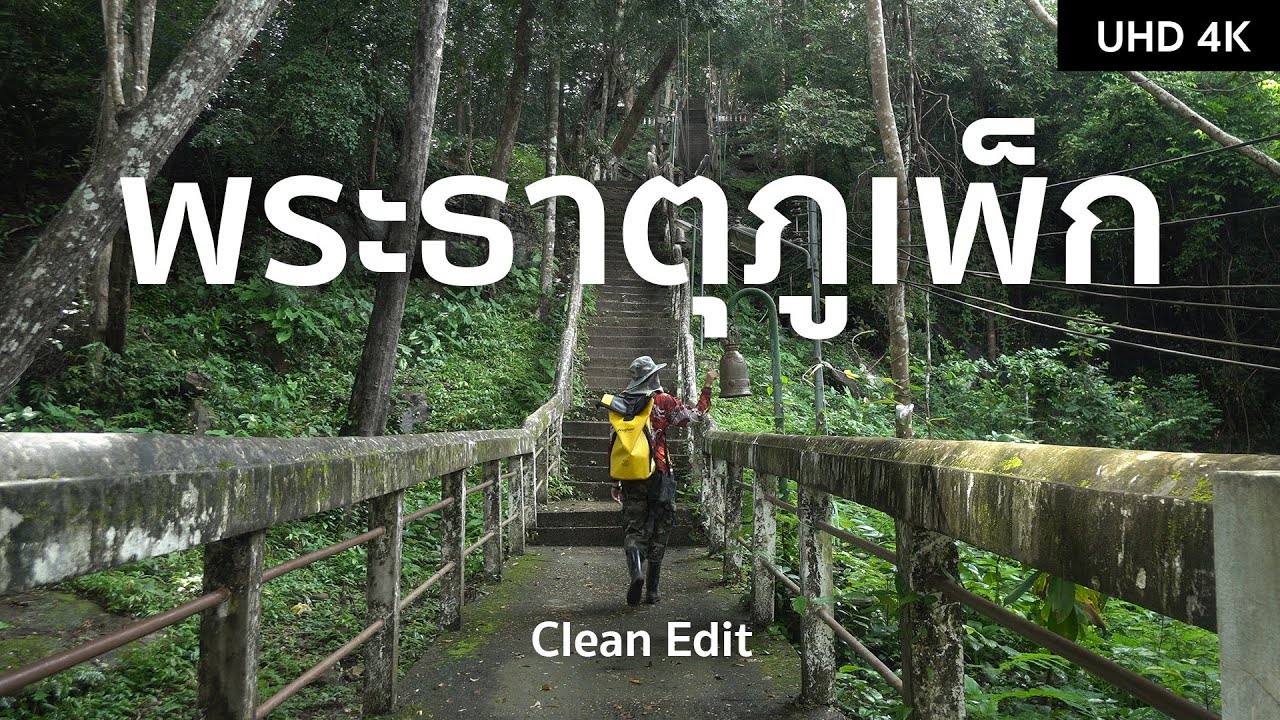
 Click to Access the Navigation Map GPS
Phra That Phu Phek Map
Recommend
 Historical Sites and Monuments(9)
 Landmarks and Memorials(2)
 Royal Palace(1)
 Art, Craft Centres, Tradition(8)
 Museums(3)
 Educational Places
 Educational Gardens, Farm(2)
 Places of Worship
 Temple(18)
 Church(2)
 Other Sacred Sites(4)
 Research and Development
 Royal Project(3)
 Suburban Living
 Village, Community(7)
 Nature and Wildlife
 National Parks and Marine Reserves(4)
 Mountain (Doi)(3)
 Dam, Reservoir, Lake(14)
 Waterfalls(4)
 Caves(4)
 River, Canal(9)
 Bays and Beaches(1)
 Islands(1)
 Other natural attractions(5)
 Entertainment and Agricultural
 Zoos and Aquariums(1)
 Farms, Parks and Ecotourism(4)
 Outdoor and Adventure Activities(1)
 Travel Articles, Recipes
 Travel Review, Food Review(1)


