
lovethailand home >Northeastern Travel Attractions >Sakon Nakhon Travel Attractions >Muang Sakon Nakhon >Huai Yang > Phu Phan Ratchaniwet Palace
TL;DR: Phu Phan Ratchaniwet Palace is located at Huai Yang Subdistrict, Mueang Sakon Nakhon District, Sakon Nakhon Province, In The Phu Phan Mountain Range, open Daily, When The Royal Residence Is Not In Use And Visitor Permission Is Granted, hours 08.30 – 16.30.

Phu Phan Ratchaniwet Palace
Open Days: Daily, When The Royal Residence Is Not In Use And Visitor Permission Is Granted
Opening Hours: 08.30 – 16.30
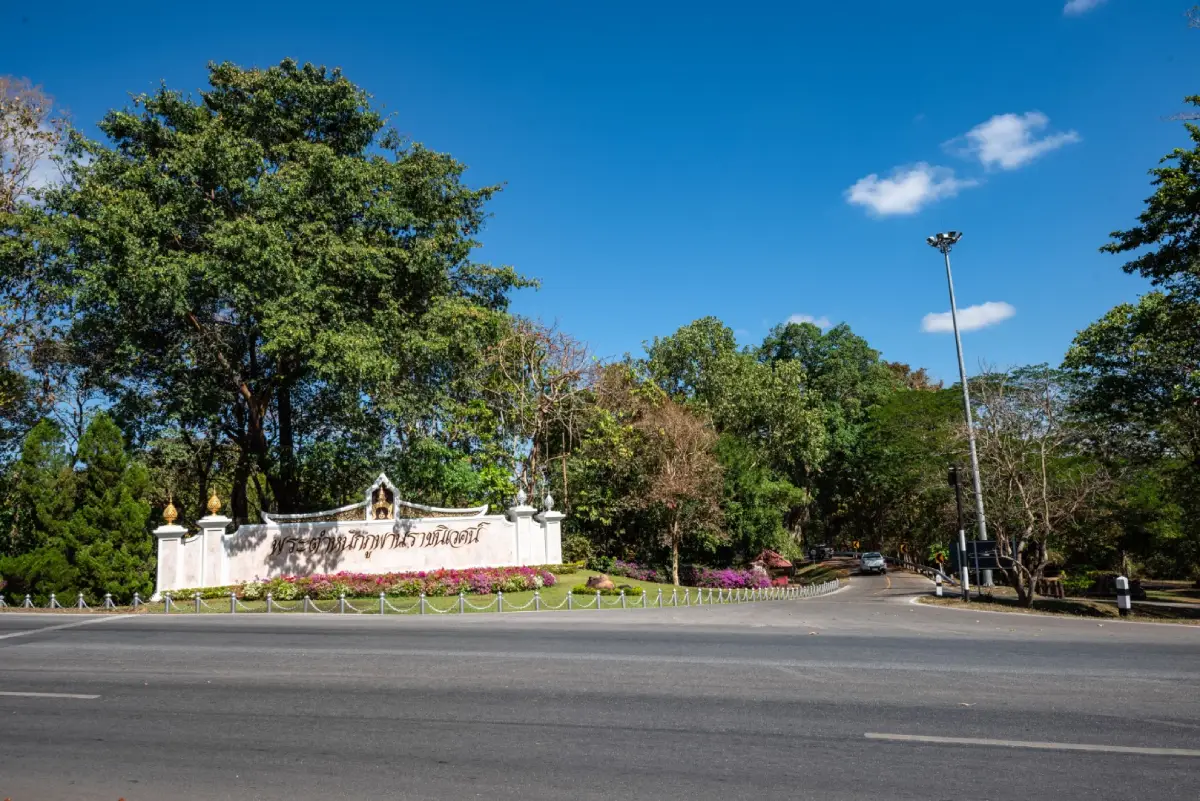
Phu Phan Ratchaniwet Palace in Sakon Nakhon Province is one of the most meaningful royal residences in Northeastern Thailand. Set amid the Phu Phan mountain range in Huai Yang Subdistrict, Mueang Sakon Nakhon District, the palace is located along the Sakon Nakhon-Kalasin route on Highway 213, about 13–16 km from Sakon Nakhon city. It served as a royal residence for King Bhumibol Adulyadej, Queen Sirikit, and members of the Royal Family during royal visits to the Northeast. For foreign travelers, this place is not simply a scenic palace surrounded by gardens. It is a living historical site connected with royal development work, forest landscapes, local culture, and the long relationship between the Thai monarchy and communities in the Isan region.
The atmosphere of Phu Phan Ratchaniwet Palace is defined by shade, quietness, and the natural character of the Phu Phan mountains. The approach road leads visitors through a green landscape before reaching the royal grounds. Inside the area, visitors can see landscaped gardens, ornamental plants, flowering trees, modern-classic palace buildings, the wooden-wing residence known as Phra Tamnak Pik Mai, guest areas, traditional rural house models, and a carefully maintained environment that blends royal architecture with forest scenery. The experience is calm and reflective rather than crowded or commercial.
The importance of Phu Phan Ratchaniwet Palace is rooted in King Rama IX’s royal duties in Northeastern Thailand. The palace was created so that the King could stay closer to the people of the region while visiting communities and following up on development projects. The Phu Phan area was well suited for this purpose because of its mountain geography, forest setting, natural resources, and proximity to Sakon Nakhon city. The palace therefore became a working royal residence and an important base for royal visits in the Northeast. Its value is not limited to its architecture; it also represents a practical royal presence in one of Thailand’s most important regional landscapes.
The buildings inside the palace grounds are often referred to as the palace group. Their design is modest, elegant, and carefully integrated into the surrounding environment. Most of the buildings reflect modern architecture with a refined and understated character. They are not excessively ornate, but they carry a sense of dignity appropriate to a royal residence in a mountain forest setting. Phra Tamnak Pik Mai, used as a reception residence, is especially distinctive because of its log-cabin character. It gives the site a warm, natural feeling and fits well with the Phu Phan landscape.
One of the most memorable features of the palace is its gardens. The grounds are rich with ornamental plants, flowering trees, forest flowers, and seasonal blossoms. Among the most admired plants are wild flowers associated with Phu Phan, including Dusita, Mani Thewa, and Thip Kesorn, which are especially appreciated during the cool season. Visitors who enjoy plants and gardens will find the palace area particularly rewarding, as the landscaping combines formal care with the natural softness of a forested mountain environment.
The front areas, internal roads, ponds, and gardens are arranged with a strong sense of order and calmness. Red sandstone, flowering plants, leafy shrubs, and shade trees appear throughout the landscape. Some parts of the gardens are designed in a more formal style, while others retain a more natural forest feeling. This balance makes the palace grounds feel neither artificial nor wild. Instead, they present a carefully managed royal landscape that still respects the original character of Phu Phan.
Another valuable section of the grounds is the group of 3 traditional rural house models. These houses have been restored and repaired so that they remain structurally strong, graceful, and suitable for use. They represent older forms of rural life in the Northeast, with elements such as agricultural tools, household objects, sitting pavilions, and a rice granary. For visitors, this section adds a cultural learning dimension to the palace. It shows that the royal residence is not isolated from local life, but connected with the everyday culture, agriculture, and rural memory of Isan communities.
The traditional houses also help visitors understand the broader meaning of royal development in the region. Royal work in the Northeast was not only about official visits or administrative presence; it was also about improving quality of life, agriculture, land use, water management, and the well-being of rural people. Seeing these house models within the royal grounds reminds visitors that the story of the palace is closely connected with the lives of local communities.
Phu Phan Ratchaniwet Palace is also associated with the idea of forest restoration and the careful use of natural landscapes. The surrounding area belongs to the Phu Phan mountain environment, where forest ecosystems, water sources, and cool upland air form an important part of the visitor experience. The palace grounds demonstrate how a royal residence can exist within nature without losing respect for the landscape. The result is a place where buildings, gardens, forest, water, and mountain scenery support one another.
For travelers, Phu Phan Ratchaniwet Palace is suitable for a route that combines royal history, natural scenery, and local culture. It is located near Phu Phan Royal Development Study Centre, Phu Phan National Park, Kham Hom Waterfall, Khong Ping Ngu Curve, Wat Tham Pha Daen, and attractions in Sakon Nakhon city. A well-planned day trip can begin in the city, continue along Highway 213, stop at the palace, and then proceed to nearby development, nature, or temple sites in the Phu Phan area.
Visitor access requires careful attention because Phu Phan Ratchaniwet Palace is a royal residence, not an ordinary public park. Visits are allowed when no member of the Royal Family is staying there and when visitor permission is granted. For the outer areas, visitors contact the guard unit or palace staff on site. For inner areas, visitors must submit a written request to the Bureau of the Royal Household at the Grand Palace, Na Phra Lan Road, Bangkok 10200, and visit only after receiving a written approval. These rules help preserve the dignity, safety, and proper use of the royal residence.
Visitors should dress respectfully, speak quietly, follow staff instructions, avoid restricted areas, and refrain from taking photographs in places where photography is not permitted. A visit to this palace is different from a casual visit to a public garden. It is a visit to a royal site with historical and institutional significance. Travelers who understand and follow these guidelines will have a more meaningful and respectful experience.
Getting There is easiest by private car, rental car, or arranged transport from Sakon Nakhon city. From the city center, take Highway 213 toward Kalasin and the Phu Phan mountains. The palace lies along the route about 13–16 km from the city. The road is paved and commonly used by travelers heading to attractions in the Phu Phan area. Along the way, visitors pass shops, fuel stations, local food stops, forested scenery, and certain curved sections of mountain road, including the well-known Khong Ping Ngu area.
The best time to visit is from morning to early afternoon, as this allows enough time for contacting staff and walking through the permitted areas without rushing. The cool season is especially pleasant because the weather is comfortable and some Phu Phan forest flowers are at their most attractive. The rainy season gives the area a fresh green appearance, while the hot season is still possible for travel if visitors choose the morning hours.
Although a visit to Phu Phan Ratchaniwet Palace does not need to take an entire day, the value of the place lies in its depth rather than its size. Visitors can learn about royal duties in the Northeast, observe a royal residence designed in harmony with the mountains, appreciate ornamental gardens and forest plants, and understand how the site connects with regional development. The best way to experience it is to walk slowly, observe the gardens and buildings carefully, and consider the broader story behind the palace.
A visit to the palace pairs naturally with Phu Phan Royal Development Study Centre, which is located nearby. The center provides learning areas related to agriculture, land, water, forestry, livestock, and livelihoods under royal development principles. When visited together, the two sites show how the palace was connected with practical development work in the region. This combination gives travelers a fuller understanding of King Rama IX’s work in Northeastern Thailand.
Nearby natural attractions also enrich the route. Kham Hom Waterfall is a Phu Phan waterfall that is most attractive during periods with enough water. Khong Ping Ngu Curve is a well-known scenic road bend that reflects the character of the mountain route. Phu Phan National Park offers forest, hills, waterfalls, and nature areas for visitors who want to extend the trip beyond the palace. These places make the palace part of a wider Phu Phan travel route rather than a single isolated stop.
For travelers interested in temples, Wat Tham Pha Daen can be included in the same broader itinerary. The temple sits on the Phu Phan mountain range and is known for its peaceful atmosphere, mountain views, and distinctive carved artworks. Many visitors combine Phu Phan Ratchaniwet Palace, the Royal Development Study Centre, and Wat Tham Pha Daen in one day because the route brings together royal history, nature, and Buddhist culture.
Food and accommodation planning is straightforward. The immediate palace area is not a dense commercial zone because it is located near a royal residence and the mountain route. Travelers will find some local stops and cafés along the route, while a wider selection of restaurants is available closer to Sakon Nakhon Rajabhat University, Lotus Sakon Nakhon, and the city center. For hotels, most travelers stay in Sakon Nakhon city and make a morning trip to the palace. This gives convenient access to restaurants, the airport, major temples, and other attractions.
Overall, Phu Phan Ratchaniwet Palace is a highly meaningful destination for anyone who wants to understand Sakon Nakhon through history, landscape, royal work, and local culture. It is peaceful, dignified, and deeply connected with the Phu Phan mountains. A visit here offers more than photographs; it gives travelers a clearer understanding of the Northeast as a region shaped by nature, community life, and royal development work.
For foreign visitors, this site should be approached with respect and patience. It is not a theme-park attraction, but a royal residence with rules, history, and cultural significance. The gardens, architecture, mountain setting, and learning value make it one of Sakon Nakhon’s most distinctive places. When combined with nearby development centers, waterfalls, temples, and city landmarks, Phu Phan Ratchaniwet Palace becomes one of the best starting points for understanding the deeper identity of Sakon Nakhon.
| Name | Phu Phan Ratchaniwet Palace |
| Location | Huai Yang Subdistrict, Mueang Sakon Nakhon District, Sakon Nakhon Province, In The Phu Phan Mountain Range |
| Address | Huai Yang Subdistrict, Mueang Sakon Nakhon District, Sakon Nakhon 47000, Thailand |
| Highlights | A royal residence in the Phu Phan mountains, connected with King Rama IX’s visits to the Northeast, landscaped gardens, Phra Tamnak Pik Mai, and 3 traditional rural house models |
| History / Period | Built in the reign of King Bhumibol Adulyadej as a royal residence and working base during royal visits to the people of Northeastern Thailand |
| Name Origin | The name refers to a royal residence located in the Phu Phan mountain range of Sakon Nakhon |
| Distinctive Features | Modern palace buildings in harmony with nature, Phra Tamnak Pik Mai in log-cabin style, Phu Phan forest flowers, landscaped gardens, and traditional rural house models |
| Travel Information | From Sakon Nakhon city, take Highway 213 toward Kalasin. The palace is about 13–16 km from the city and is located along the Phu Phan mountain route |
| Current Status | Open to visitors under royal residence conditions when the palace is not in use; inner areas require advance written permission |
| Open Days | Daily, When The Royal Residence Is Not In Use And Visitor Permission Is Granted |
| Opening Hours | 08.30 – 16.30 |
| Fees | No Admission Fee |
| Facilities | Guard Unit, Parking Area, Staff Contact Point, Walking Areas, Landscaped Gardens, Photo Spots, And Rest Areas In Permitted Zones |
| Main Areas / Zones | Palace Group Phra Tamnak Pik Mai Landscaped Gardens Outer Royal Residence Area 3 Traditional Rural House Models Pond And Surrounding Landscape Palace Guard Unit |
| Caretaker | Bureau Of The Royal Household / Phu Phan Ratchaniwet Palace Guard Unit |
| Main Contact Number | Phu Phan Ratchaniwet Palace Guard Unit Tel. 0-4271-1550 |
| Visitor Conditions | Visitors to the outer area contact the palace guard unit. Inner-area visits require a written request to the Bureau of the Royal Household, Grand Palace, Na Phra Lan Road, Bangkok 10200, and may proceed after written approval is received |
| Nearby Tourist Attractions | 1. Phu Phan Royal Development Study Centre, About 3 km 2. Kham Hom Waterfall And Khong Ping Ngu Curve, About 4 km 3. Phu Phan National Park, About 8 km 4. Wat Tham Pha Daen, About 13 km 5. Sakon Nakhon City Gate And Ruam Jai Thai Square, About 14 km 6. Wat Phra That Choeng Chum Worawihan, About 17 km |
| Nearby Restaurants | 1. Amazing Ping Ngu, About 2 km 2. Amphawa Fried Banana PTT Si Wicha, About 7 km 3. Yai Phen Crispy Pork Noodles Branch 5, Sakon Nakhon Rajabhat University Gate 5, About 9 km, Tel. 092-694-1656 4. Vegan House, About 9 km, Tel. 093-409-5249 5. Café Amazon PTT Pratu Mueang, About 14 km, Tel. 084-031-4920 6. MK Restaurants Lotus Sakon Nakhon, About 14 km, Tel. 042-722-645 |
| Nearby Accommodations | 1. Bang Chak Phu Phan Resort, About 9 km, Tel. 042-747-477 2. Chokdee Place Hotel, About 12 km, Tel. 042-972-098 3. Phu Phan Place Hotel, About 12 km 4. Hop Inn Sakon Nakhon, About 14 km, Tel. 042-716-399 5. The Room Boutique Hotel, About 16 km, Tel. 099-262-9269 6. The Majestic Sakon Nakhon Hotel, About 16 km, Tel. 042-733-771 |
Frequently Asked Questions (FAQ)
Q: Where is Phu Phan Ratchaniwet Palace located?
A: It is located in Huai Yang Subdistrict, Mueang Sakon Nakhon District, Sakon Nakhon Province, in the Phu Phan mountain range along Highway 213.
Q: Is Phu Phan Ratchaniwet Palace open every day?
A: Yes, it is open daily when the royal residence is not in use and visitor permission is granted under palace regulations.
Q: What are the opening hours?
A: The visitor hours are 08.30 to 16.30.
Q: Is there an admission fee?
A: No. There is no admission fee, but visits must follow royal residence regulations and staff instructions.
Q: How can visitors access the inner area?
A: Visitors must send a written request to the Bureau of the Royal Household at the Grand Palace, Na Phra Lan Road, Bangkok 10200, and visit only after receiving written approval.
Q: What are the main highlights of the palace?
A: The highlights include the palace group, landscaped gardens, Phra Tamnak Pik Mai, 3 traditional rural house models, Phu Phan forest flowers, and the peaceful mountain setting.
Q: When is the best time to visit?
A: The cool season and the morning-to-early-afternoon period are ideal because the weather is comfortable and visitors have enough time to complete entry procedures.
Q: What nearby places can travelers visit after the palace?
A: Nearby places include Phu Phan Royal Development Study Centre, Kham Hom Waterfall, Khong Ping Ngu Curve, Phu Phan National Park, Wat Tham Pha Daen, and Sakon Nakhon city attractions.
 Category: ●Art, Culture and Heritage
 Group: ●Royal Palace
Last Update : 3 MonthAgo
 Last Update : 3 MonthAgo
 Click to Access the Navigation Map GPS
Phu Phan Ratchaniwet Palace Map
Recommend

 Historical Sites and Monuments(9)
 Landmarks and Memorials(2)
Royal Palace(1)
 Art, Craft Centres, Tradition(8)
 Museums(3)
 Educational Places
 Educational Gardens, Farm(2)
 Places of Worship
 Temple(18)
 Church(2)
 Other Sacred Sites(4)
 Research and Development
 Royal Project(3)
 Suburban Living
 Village, Community(7)
 Nature and Wildlife
 National Parks and Marine Reserves(4)
 Mountain (Doi)(3)
 Dam, Reservoir, Lake(14)
 Waterfalls(4)
 Caves(4)
 River, Canal(9)
 Bays and Beaches(1)
 Islands(1)
 Other natural attractions(5)
 Entertainment and Agricultural
 Zoos and Aquariums(1)
 Farms, Parks and Ecotourism(4)
 Outdoor and Adventure Activities(1)
 Travel Articles, Recipes
 Travel Review, Food Review(1)


