
lovethailand home >North Travel Attractions >Mae Hong Son Travel Attractions >Pai >Pong Sa > Wat Pa Mae Mueang Luang
TL;DR: Wat Pa Mae Mueang Luang is located at Village No. 4, Ban Mae Mueang Luang, Pong Sa Subdistrict, Pai District, Mae Hong Son Province 58130, Thailand, open Daily, hours The temple does not operate on fixed tourist-attraction opening hours.
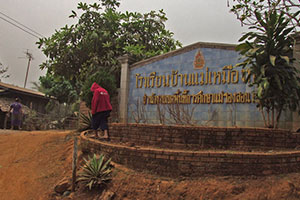
Wat Pa Mae Mueang Luang
Open Days: Daily
Opening Hours: The temple does not operate on fixed tourist-attraction opening hours
Wat Pa Mae Mueang Luang, Mae Hong Son Province is a forest monastery in Village No. 4, Ban Mae Mueang Luang, Pong Sa Subdistrict, Pai District, Mae Hong Son Province 58130, northern Thailand. It is a public Buddhist temple affiliated with the Dhammayut monastic order and occupies approximately 15 rai of land. The temple was officially established on December 20, 1991 and received its royal Wisungkhamasima boundary on February 6, 2013. The entire temple boundary adjoins national reserved forest, giving the monastery a distinctive forest-temple character defined by seclusion, mountain surroundings, meditation practice, and monastic life close to nature. Phra Khru Sutthipanya Koson (Suchat), formerly known as Phra Athikan Suchat Thitametho, currently serves as abbot.
The origins of Wat Pa Mae Mueang Luang are closely tied to the highland environment of Ban Mae Mueang Luang. The village forms Village No. 4 of Pong Sa Subdistrict and lies in a mountainous part of Pai that feels very different from Pai town. Forest, streams, agricultural areas, and steep terrain define the landscape. Establishing a Buddhist monastery in such an environment provided more than a religious center for nearby residents. It created a secluded setting where monks and practitioners could live and meditate away from the intensity of urban activity.
Before the temple was officially established, the site received permission for religious use from the Royal Forest Department under document Por Sor 23, Volume 142, Issue 18, dated September 21, 1987. The approved area covered approximately 15 rai. This earlier authorization is important because it demonstrates that development of the monastery followed a defined legal process connected with forest land management rather than unrestricted expansion into the surrounding reserved forest.
The temple boundaries are clearly defined. The northern boundary extends approximately 150 meters and adjoins national reserved forest. The eastern boundary extends approximately 160 meters and also meets reserved forest. The southern side measures approximately 150 meters, while the western side measures approximately 160 meters, with both boundaries again adjoining reserved forest. The monastery is therefore surrounded by forest on all four sides, creating a genuine forest-monastery environment rather than a conventional urban temple compound.
December 20, 1991 marked the formal establishment of Wat Pa Mae Mueang Luang as a Buddhist temple. This changed the status of the site from a forest-based monastic and practice area into an institution officially incorporated into Thailand's Sangha system. As a registered Dhammayut public temple, it could develop monastic buildings, public utilities, formal religious spaces, and facilities for Buddhist practice within an established administrative structure.
Wat Pa Mae Mueang Luang belongs to the Dhammayut monastic order, one of Thailand's two principal Sangha traditions. Dhammayut forest monasteries generally emphasize monastic discipline, simplicity, meditation, careful conduct, and restrained material development. These characteristics are particularly suited to Wat Pa Mae Mueang Luang because its physical environment already supports solitude and contemplation.
The monastery developed essential religious structures after its formal establishment. These include a consecrated Sangha boundary area, a meditation hall, a Dhamma sermon hall, and monks' residences. Each serves a specific purpose. The sacred boundary supports formal Sangha activities, the meditation hall provides space for mental training, the sermon hall accommodates Buddhist teachings and collective practice, and the monks' quarters support everyday monastic life.
The granting of a royal Wisungkhamasima boundary on February 6, 2013 was another major milestone. Wisungkhamasima formally defines an area in which important monastic acts can be carried out according to Buddhist discipline, including ordination and other Sangha proceedings. This status confirms that Wat Pa Mae Mueang Luang developed beyond the role of a simple monastic residence or meditation center into a fully established Buddhist temple capable of supporting formal ecclesiastical ceremonies.
The consecrated boundary should therefore be treated with particular respect. It is not simply an architectural feature or a photo location. When no ceremony is taking place, visitors may observe the area where permitted, but formal monastic proceedings require silence and distance. Understanding the function of this sacred zone helps visitors appreciate the monastery as a living religious institution.
The meditation hall is one of the most important spaces in the monastery. Its purpose directly reflects the identity of a forest temple. The hall supports sitting meditation, chanting, mindfulness training, and other forms of Buddhist practice. Forest on all sides naturally reduces external noise and allows practitioners to focus more easily than in densely populated urban surroundings.
The Dhamma sermon hall serves as a place where monks teach laypeople and where collective Buddhist activities can be held. Forest monasteries do not necessarily organize large entertainment-oriented festivals, but listening to Dhamma remains central to Buddhist life. The sermon hall therefore connects practical meditation with understanding of Buddhist teaching.
Monks' residences are private living areas used for rest, study, meditation, and everyday monastic duties. Visitors should not enter these areas without permission. Forest monasteries often place monks' quarters away from public gathering spaces in order to preserve quiet and privacy. Respecting this distinction is essential during a visit.
A notable element of the monastery's infrastructure is its mountain-water supply. Ban Mae Mueang Luang and other highland communities in Pong Sa depend heavily on natural mountain water systems. In 2025 the village was still involved in community volunteer work to improve its mountain-water network, demonstrating that upland water infrastructure remains central to daily life.
Mountain water supports daily temple functions including drinking, cleaning, sanitation, and accommodation for practitioners. The system also illustrates how a forest monastery adapts to local geography rather than relying entirely on urban infrastructure. Simplicity and compatibility with the surrounding environment are important aspects of the temple's identity.
Ban Mae Mueang Luang remains an active highland community. The village has its own school, which provides education through lower secondary level, and recent years have seen continued investment in roads, water systems, and community activities. The presence of families, children, teachers, and local institutions means that the monastery exists within a living community rather than an abandoned or isolated settlement.
Pong Sa Subdistrict is ethnically and religiously diverse. Residents include Karen, Lisu, Hmong, lowland northern Thai communities, and other groups. Ban Mae Mueang Luang has a significant Karen population. This diversity means that Wat Pa Mae Mueang Luang exists in a broader social environment where Buddhism is one of several religious traditions rather than the sole belief system of the entire population.
This setting gives the monastery an additional community role. Religious institutions in a diverse highland area must exist alongside churches, ancestral traditions, schools, shared water systems, roads, and agricultural land. Mutual respect and social cooperation are therefore as important to the community as the activities of any single religious institution.
Phra Khru Sutthipanya Koson (Suchat) currently serves as abbot. Earlier records identify him as Phra Athikan Suchat Thitametho, the name by which he was known before receiving his current ecclesiastical title. The change in title reflects his continuing service within the Sangha while his core responsibility remains the leadership and care of Wat Pa Mae Mueang Luang.
Leadership of a remote forest monastery requires practical knowledge of both Buddhist discipline and the realities of highland life. Food supply, water, road access, building maintenance, monastic routines, and the reception of visiting practitioners must all be managed according to available resources. An abbot familiar with both the monastery and the surrounding community is therefore essential to long-term continuity.
The atmosphere of Wat Pa Mae Mueang Luang is one of its defining qualities. With reserved forest adjoining the temple on all four sides, visitors immediately encounter a different environment from temples in Pai town. Traffic and commercial noise are greatly reduced. Wind, birds, forest sounds, and highland air become part of the religious experience.
Nature also has a practical role in Buddhist meditation. Mindfulness and concentration benefit from an environment with fewer distractions, which is one reason forest monasteries are often established away from markets and dense settlements. Visitors can experience this quality simply by walking slowly, speaking quietly, and allowing time for the environment to settle their attention.
Appropriate practices at the monastery include sitting meditation, walking meditation, chanting, and listening to Dhamma. Even visitors with little meditation experience can begin simply by sitting quietly and observing the breath. Those wishing to stay for extended practice should contact the monastery in advance because accommodation, food, and use of facilities must follow monastic rules.
Visitors coming primarily to worship should begin in the public religious area. Paying respect to the Buddha, chanting, or sitting quietly before exploring other parts of the monastery preserves the correct religious context. Wat Pa Mae Mueang Luang is not a site that requires a long checklist of visual attractions; its primary value is the experience of stillness and Buddhist practice.
The sermon hall becomes particularly meaningful when teachings are being given. Visitors should silence phones and listen quietly. Hearing Buddhist teaching in a forest monastery differs from listening through digital media because the environment, monastic routine, and direct presence of monks give additional context to the teachings.
The consecrated Sangha area deserves special care during ordinations or formal monastic proceedings. Visitors should not cross the ceremonial space unnecessarily or interrupt the sequence of events. Formal Sangha acts follow detailed Vinaya procedures and require an uninterrupted atmosphere.
Buddhist observance days bring closer interaction between monks and laypeople. Residents may offer food, keep precepts, listen to teachings, or spend time in meditation. The monastery remains restrained in character even on busier religious days, reflecting the contemplative nature of a forest temple.
Buddhist Lent is particularly significant. Monks remain in residence for three months according to monastic discipline, creating a sustained period of study and practice. Lay supporters provide food, candles, robes, daily necessities, and other appropriate support. During the rainy season the surrounding forest also becomes especially lush and quiet.
After the rains retreat comes the Kathin period, when robes may be formally offered to monks who have completed the retreat. In a forest monastery, Kathin generally emphasizes religious purpose and simplicity rather than entertainment. Visitors attending such an event should focus on the ceremony and preserve the quiet character of the temple.
Pha Pa provides another opportunity for lay Buddhists to support the monastery. Unlike Kathin, Pha Pa can be organized at different times and may help with maintenance, utilities, religious activities, or necessary monastic supplies. Support can be especially important in remote temples where transport and materials cost more than in town.
Because the monastery is surrounded by reserved forest, environmental care is naturally part of temple life. Visitors should avoid littering, removing plants, disturbing wildlife, or leaving established paths without good reason. Protecting the natural quiet of the forest also protects the religious atmosphere of the monastery.
The mountain-water system further demonstrates the relationship between the monastery and the watershed. Forest preservation directly affects the quantity and quality of water used by both monks and residents. Protecting the forest is therefore not an abstract environmental idea but a practical requirement for daily life.
Ban Mae Mueang Luang is a highland agricultural community where rice and commercial crops are cultivated. The area has also participated in highland development programs, including Arabica coffee cultivation. Economic practices have changed and diversified over time, but the temple continues to provide a spiritual anchor within these changes.
The village school confirms the continuing presence of younger generations. Education through lower secondary level means children and teenagers remain part of village life. The monastery can therefore serve not only elderly worshippers but also younger residents learning ethics, responsibility, Buddhist culture, and respect for shared spaces.
For students of society and culture, Wat Pa Mae Mueang Luang is particularly interesting because it stands within an ethnically and religiously diverse subdistrict. Pong Sa contains both Buddhist temples and Christian churches, while its population includes several highland communities. The monastery therefore represents northern Thai Buddhism within a multicultural highland setting rather than an exclusively Buddhist settlement.
Travelers should understand that Wat Pa Mae Mueang Luang is not developed as a commercial tourist attraction. There is no ticketing system, no major cluster of souvenir shops, and no large tourism infrastructure. This preserves the atmosphere but also means visitors should be more self-sufficient by bringing drinking water, appropriate clothing, and a clear travel plan.
The monastery does not operate according to fixed tourist-attraction opening hours. General visits are best made during daylight, when roads are easier to navigate and monastic routines can be respected. Unannounced late-evening or nighttime visits are inappropriate, particularly because the temple is surrounded by forest and mountain roads are darker and more difficult than roads in Pai town.
Clothing should be modest. Shoulders and knees should be covered, and shoes removed before entering designated buildings. Voices should remain low in meditation and sermon areas. Such etiquette is especially important in a forest monastery where other people may be engaged in extended meditation.
Photography should remain discreet. Public architecture and landscape may be photographed where permitted, but monks should not be photographed closely without consent, and monks' residences should not be entered for photographs. Drone use should not be assumed to be acceptable because the monastery borders reserved forest and requires quiet.
Families may bring children, but adults should ensure that children do not run noisily or wander into forest areas. A forest monastery can be a valuable educational setting where children learn quiet behavior, cleanliness, discipline, and respect for nature as well as Buddhist etiquette.
Elderly visitors should consider road and mobility conditions. Reaching Ban Mae Mueang Luang involves highland roads with curves and elevation changes. Those with mobility or health limitations should travel with assistance and avoid difficult weather. The monastery does not provide every convenience found at major tourist destinations.
The cool season offers particularly peaceful conditions. Early mornings can be cold and mist may reduce visibility on mountain roads. Warm clothing is recommended, especially for motorcycle travelers. Once the mist lifts, the forest environment becomes particularly suitable for quiet practice.
The rainy season brings dense green forest but also the greatest road challenges. Wet surfaces, fallen branches, mud, and heavier stream flow may occur. Motorcycle travel should be avoided during severe rain, and visitors should check weather conditions before leaving Pai.
The hot season is drier, though midday temperatures can still be uncomfortable. Northern Thailand may experience seasonal haze, so people with respiratory conditions should monitor air quality. Morning and late afternoon remain more comfortable than midday for a quiet temple visit.
Travel from Pai town requires more planning than visits to temples around the urban center. Local routes connect Pai with Mae Ya, Ban Mae Mueang Luang, Huai Duea, Huai Rai, and the wider Pong Sa area. Roads follow highland terrain and include rural sections. Travelers should allow sufficient time and avoid planning their return after dark if they do not know the route.
Getting There from Pai town, follow Highway 1095 before connecting with the local route through Mae Ya toward Ban Mae Mueang Luang in Pong Sa Subdistrict. Use map reference 5H95+7JQ for Wat Pa Mae Mueang Luang itself. A private car suited to mountain roads is the most practical option. Motorcycle riders should have experience on winding highland roads and should avoid heavy rain and night travel.
The village's distance from Pai's busiest tourist district means the monastery should be treated as a dedicated destination rather than a quick stop between cafés and the walking street. This remoteness is one of the temple's strengths because it prevents the constant flow of large tourist crowds and protects the contemplative atmosphere.
Doi Khun Mae Ya is one of the nearest natural destinations within Pong Sa Subdistrict. Its highland environment helps visitors understand the wider geography surrounding the monastery. Nature excursions should nevertheless be planned separately from temple time so that the monastery is not treated simply as a roadside rest stop.
Huai Nam Dang National Park provides another perspective on the mountainous ecosystem of the Pai–Mae Taeng region. Forested watersheds, high viewpoints, and mountain landscapes help explain why forest monasteries in this area have such a close relationship with nature and watershed protection.
Restaurants and full-service accommodation are more widely available along major roads and around Pai town than inside Ban Mae Mueang Luang. Travelers should therefore eat or prepare supplies before entering the deeper parts of Pong Sa Subdistrict. Village shops primarily serve residents rather than large numbers of tourists.
Accommodation within Pong Sa is limited compared with Pai town. Mr. Shin Farmstay is one of the accommodation options within the broader subdistrict, while additional choices are found toward Mae Na Toeng and central Pai. Staying at a nearby resort should not be confused with staying at the monastery; overnight religious practice requires direct arrangement with the temple.
Wat Pa Mae Mueang Luang should not be rushed. At least an hour is appropriate for worship, quiet sitting, observing public religious structures, and experiencing the forest environment. Those coming to hear Dhamma or meditate should allow much more time.
First-time visitors should focus on the meditation hall, sermon hall, consecrated Sangha area, and the forest setting. Monks' residences should remain private. These elements are sufficient to understand the identity of the temple because its significance comes from the relationship between monastic facilities and forest practice rather than from the number of buildings.
The simplicity of the architecture expresses an important forest-monastery principle: buildings exist to support practice. The meditation hall must support meditation, the sermon hall must support teaching, residences must support quiet monastic life, and water systems must support basic living. Beauty is therefore closely related to suitability and restraint rather than ornament alone.
Historically, the temple presents a clear development sequence: permission to use forest land in 1987, official establishment in 1991, and the granting of Wisungkhamasima in 2013. This timeline traces the transformation of a forest religious site into a fully established temple within Thailand's monastic system.
The approximately four-year period between land-use permission and formal temple establishment shows steady early development. The much longer period before the 2013 Wisungkhamasima reflects gradual institutional growth. Religious structures were developed as need, resources, and formal readiness increased.
The name “Wat Pa Mae Mueang Luang” itself explains the temple's identity. “Wat Pa” identifies it as a forest monastery, while “Mae Mueang Luang” directly connects it with the village. Although surrounded by forest, the temple remains a religious institution of the Ban Mae Mueang Luang community.
Ban Mae Mueang Luang includes a substantial Karen population living within a diverse highland environment. Visitors should therefore respect residents as carefully as they respect the temple. People should not be photographed without permission, private homes and fields should not be entered, and local cultures should not be treated merely as exotic tourism material.
The religious diversity of Pong Sa also means that the northern cultural context here is broader than a single urban Lanna model. Karen, Lisu, Hmong, northern Thai, Buddhist, Christian, and ancestral traditions coexist across the subdistrict. Wat Pa Mae Mueang Luang is part of northern Buddhism within this multicultural highland environment.
For students of Buddhism, the relationship among the Dhammayut tradition, forest-monastery practice, and the physical environment is especially important. Dhammayut discipline emphasizes careful conduct and Buddhist study, while the forest tradition emphasizes meditation and simplicity. The surrounding reserved forest gives physical form to those religious priorities.
Visitors should not expect numerous tourism activities. The important experiences are the quiet meditation hall, the sacred boundary area, the Dhamma hall, monastic architecture integrated into nature, and the forest itself. Worship, listening to teachings, and maintaining silence are more appropriate than trying to turn the monastery into a sightseeing checklist.
Road safety deserves serious attention. Travelers should carry sufficient fuel, drinking water, and a saved map. Mobile coverage may be inconsistent in some highland sections. Visitors should remain on established routes and postpone travel during severe weather.
Groups planning food offerings, Pha Pa, meditation visits, student activities, or other organized programs should coordinate with the monastery beforehand. A forest temple has limited resources and resident monks, so advance coordination protects both visitors and existing practitioners from disruption.
There is no commercial admission-ticket system at Wat Pa Mae Mueang Luang. Donations are voluntary and should be made through appropriate temple channels. Visitors wishing to donate large quantities of supplies should ask the monks what is actually needed before bringing items.
The monastery has several layers of importance. It is a Buddhist institution for local residents, a place for meditation and Dhamma study, a religious presence within an ethnically and religiously diverse highland community, and a site whose restrained use helps preserve a quiet forest environment.
Its value therefore does not depend on monumental architecture or large numbers of sacred images. Fifteen rai of forest-edge land, functional monastic structures, mountain water, and a disciplined religious routine combine to create a distinctive identity. Quietness is one of the temple's most important resources and should be protected by everyone who visits.
From 1987 to the present, Wat Pa Mae Mueang Luang has evolved from an authorized religious use area in reserved forest into a fully established Dhammayut temple with monastic structures, basic utilities, a royal sacred boundary, and continuing leadership. The development has been gradual and stable, reflecting the forest tradition's emphasis on practice rather than rapid physical expansion.
For travelers who know Pai mainly through the walking street, cafés, and viewpoints, this monastery reveals a very different side of the district. Pai also includes remote highland settlements, forest landscapes, agricultural communities, and Buddhist monasteries whose rhythm has little connection with mass tourism.
Preserving a forest monastery requires more than protecting old buildings. Forest, water sources, silence, access routes, monastic discipline, and the culture of meditation are all part of the heritage. If the surrounding environment disappears, the essential identity of the monastery weakens even if the buildings remain.
Visitors who slow down will find that the most memorable quality of Wat Pa Mae Mueang Luang is difficult to capture in photographs. Forest sounds, mountain air, quiet movement between monastic structures, and the restrained rhythm of monastic life create an experience that belongs to the place itself.
Overall, Wat Pa Mae Mueang Luang is a distinctive Dhammayut forest monastery whose identity is defined by its legally established forest site dating from 1987, official temple establishment in 1991, Wisungkhamasima granted in 2013, fifteen rai of land surrounded by national reserved forest, meditation facilities, mountain-water infrastructure, and the continuing leadership of Phra Khru Sutthipanya Koson (Suchat). It is particularly appropriate for visitors seeking Buddhist worship, Dhamma, meditation, and an authentic forest-monastery environment within the highland communities of Mae Hong Son.
| Name | Wat Pa Mae Mueang Luang |
| Temple Type | Public Forest Temple, Dhammayut Order |
| Temple Registration Code | 03580307002 |
| Location | Village No. 4, Ban Mae Mueang Luang, Pong Sa Subdistrict, Pai District, Mae Hong Son Province 58130, Thailand |
| Map Reference | 5H95+7JQ, Pong Sa, Pai District, Mae Hong Son |
| Temple Area | 15 Rai |
| Forest-Land Permission | Royal Forest Department Permission, Por Sor 23, Volume 142, Issue 18, Dated September 21, 1987 |
| Official Establishment | December 20, 1991 |
| Wisungkhamasima | Royal Boundary Granted on February 6, 2013 |
| Abbot | Phra Khru Sutthipanya Koson (Suchat), Formerly Phra Athikan Suchat Thitametho |
| Open Days | Daily |
| Opening Hours | No Fixed Tourist-Attraction Hours; Daytime Visits Are Appropriate |
| Boundaries | North Approx. 150 m, East Approx. 160 m, South Approx. 150 m, West Approx. 160 m; All Sides Adjoin National Reserved Forest |
| Important Monastic Structures | Consecrated Sangha Boundary Area, Meditation Hall, Dhamma Sermon Hall, and Monks' Residences |
| Utilities | Mountain-Water Supply and Basic Utilities Supporting Monastic Life and Meditation Practice |
| Main Temple Areas | 1. Consecrated Sangha Area 2. Meditation Hall 3. Dhamma Sermon Hall 4. Monastic Residential Zone 5. Forest and Quiet Meditation Areas |
| Highlights | Highland Dhammayut Forest Temple Surrounded on All Four Sides by National Reserved Forest, Suitable for Worship, Dhamma Study, Meditation, and Quiet Reflection |
| Buddhist Activities | Buddhist Observance Days, Chanting and Meditation, Buddhist Lent, End of Buddhist Lent, Kathin, Pha Pa, and Dhamma Teachings |
| Community Role | Buddhist Spiritual Center, Meditation Space, and Important Religious Institution of Ban Mae Mueang Luang Within an Ethnically and Religiously Diverse Highland Community |
| Getting There | From Pai, connect from Highway 1095 to the local Mae Ya–Mae Mueang Luang route and follow navigation to 5H95+7JQ. A vehicle suitable for winding mountain roads is recommended, with travel during daylight. |
| Nearby Tourist Attractions | 1. Doi Khun Mae Ya – approx. 8 km 2. Huai Nam Dang National Park – approx. 24 km, Tel. +66 63 643 1744 3. Tha-Pai Memorial Bridge – approx. 26 km, Tel. +66 94 716 2634 4. Pai Canyon – approx. 27 km, Tel. +66 86 113 7373 5. Wat Phra That Mae Yen – approx. 30 km |
| Nearby Restaurants And Cafés | 1. Pai Doi – approx. 24 km, Tel. +66 84 800 3142 2. Kaomakham Cafe Pai – approx. 29 km, Tel. +66 63 053 0697 3. Two Huts Pai – approx. 29 km, Tel. +66 81 169 9004 4. Lighthouse Pai Thailand – approx. 30 km, Tel. +66 94 449 7469 5. Free Bird Cafe Pai – approx. 31 km, Tel. +66 65 753 8976 |
| Nearby Accommodations | 1. Mr. Shin Farmstay – approx. 15 km, Tel. +66 93 694 6400 2. km4 Homestay – approx. 24 km, Tel. +66 89 551 5394 3. Odourpai – approx. 27 km, Tel. +66 80 081 2648 4. Pai Princess Resort – approx. 30 km, Tel. +66 61 997 5446 5. Pai Cherkaew Boutique – approx. 31 km, Tel. +66 53 699 050 |
Frequently Asked Questions (FAQ)
Q: Where is Wat Pa Mae Mueang Luang located?
A: The temple is in Village No. 4, Ban Mae Mueang Luang, Pong Sa Subdistrict, Pai District, Mae Hong Son Province 58130. Use map reference 5H95+7JQ. The compound is surrounded on all four sides by national reserved forest.
Q: When was Wat Pa Mae Mueang Luang officially established?
A: The site received forest-land permission on September 21, 1987, was formally established as a temple on December 20, 1991, and received its royal Wisungkhamasima boundary on February 6, 2013.
Q: Who is the abbot of Wat Pa Mae Mueang Luang?
A: The abbot is Phra Khru Sutthipanya Koson (Suchat), formerly known as Phra Athikan Suchat Thitametho. He oversees the monks, monastic property, religious activities, and continuing development of the forest monastery.
Q: What important structures are found at the monastery?
A: Important monastic facilities include the consecrated Sangha boundary, meditation hall, Dhamma sermon hall, monks' residences, and a mountain-water system supporting daily monastic life and meditation practice.
Q: What are the opening hours of Wat Pa Mae Mueang Luang?
A: The monastery does not operate on fixed tourist-attraction opening hours. General worship visits are most appropriate during daylight. Anyone planning extended meditation, an overnight stay, or a group visit should coordinate with the monastery in advance.
Q: Is there an admission fee?
A: The monastery does not operate a commercial admission-ticket system. Donations are voluntary and may be made through the designated temple channels.
Q: What is the main highlight of Wat Pa Mae Mueang Luang?
A: Its defining feature is the authentic Dhammayut forest-monastery environment. The 15-rai compound is bordered by national reserved forest on all four sides, creating a quiet setting well suited to Buddhist worship, Dhamma study, meditation, and contemplation.
Q: What should visitors prepare before traveling to the monastery?
A: Visitors should use a vehicle suitable for mountain roads, carry sufficient fuel and drinking water, save the map route in advance, travel during daylight, and take extra care during heavy rain or dense winter mist.
 Category: ●Places of Worship
 Group: ●Temple
Last Update : 3 WeekAgo
 Last Update : 3 WeekAgo
 Click to Access the Navigation Map GPS
Wat Pa Mae Mueang Luang Map
Recommend

 Muang Mae Hong Son(37)Kun Yuam(14)Pai(28)Mae Sariang(34)Mae Lanoi(7)Sop Moei(6)Pang Mapha(5)


