
lovethailand home >Northeastern Travel Attractions >Nong Khai Travel Attractions >Sang Khom >Pha Tang > Namtok Than Thong
TL;DR: Namtok Than Thong is located at Ban Pha Tang, Village No. 1, Pha Tang Subdistrict, Sangkhom District, Nong Khai Province, Thailand, open Daily, hours 08.30 – 16.30.
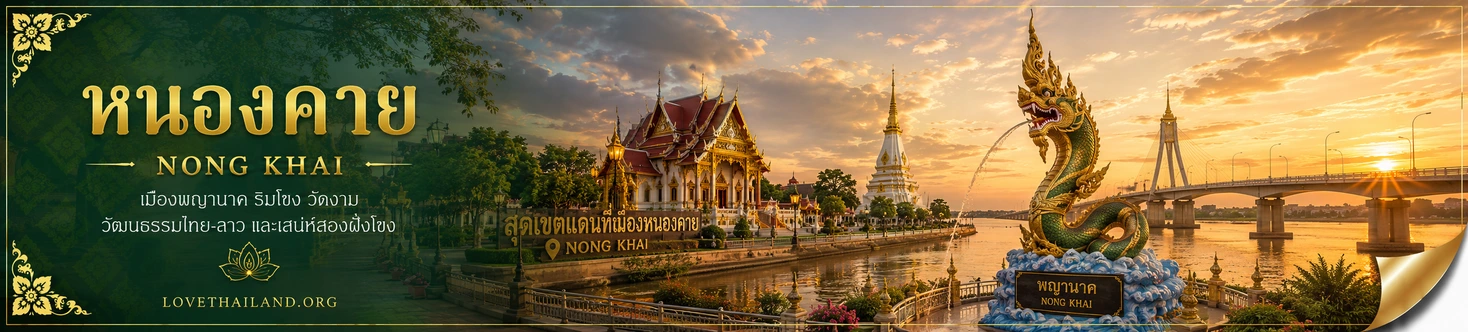
Namtok Than Thong
Open Days: Daily
Opening Hours: 08.30 – 16.30
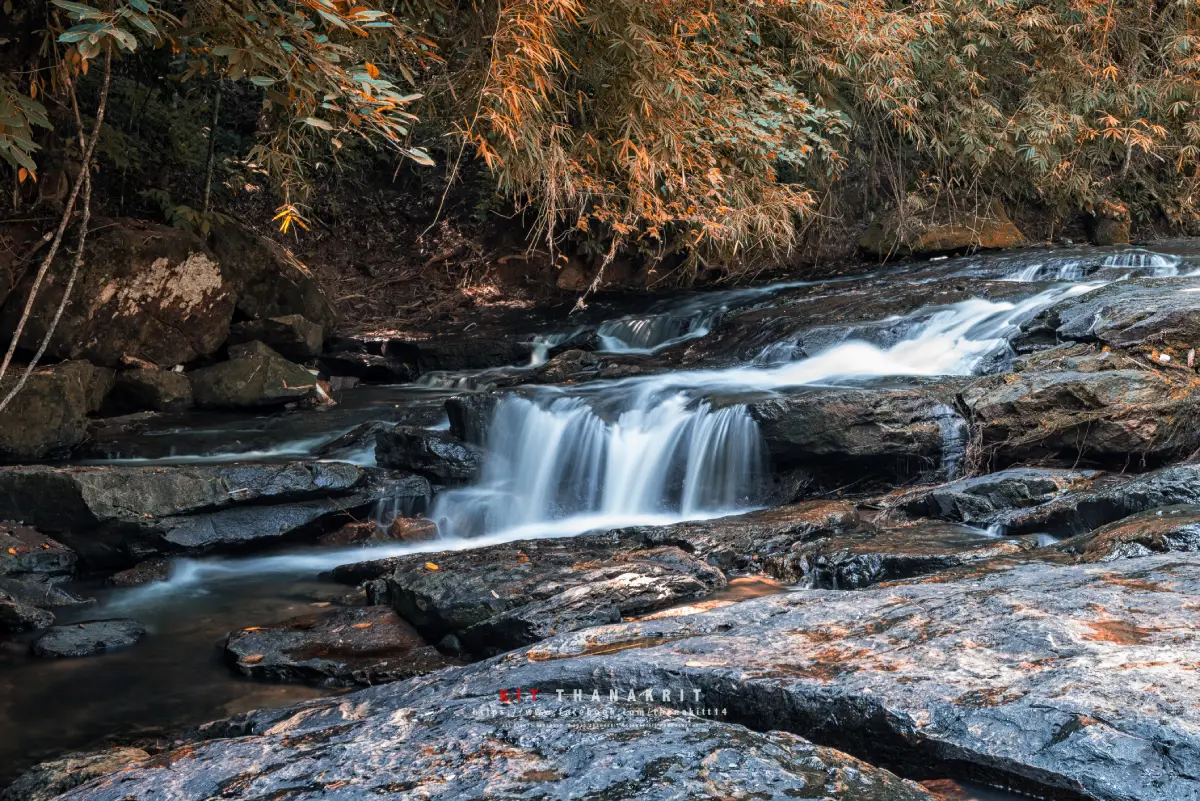
Than Thong Waterfall in Nong Khai Province is a nature attraction located in Ban Pha Tang, Village No. 1, Pha Tang Subdistrict, Sangkhom District, within the Than Thong Waterfall Arboretum. The waterfall is one of the most accessible natural stops along the Mekong-side travel route between Nong Khai, Si Chiang Mai, and Sangkhom. Its main feature is a clear stream that flows over broad rock terraces, forming natural pools where visitors can relax and play in the water before the stream drops in small cascades for about 30 meters and eventually flows into the Mekong River. Surrounded by dense arboretum forest, shaded trees, stone platforms, and a quiet stream environment, Than Thong Waterfall is suitable for families, road-trip travelers, nature photographers, and visitors who want a refreshing stop on the scenic Mekong route.
Than Thong Waterfall clearly reflects the natural identity of Sangkhom District. This part of Nong Khai is known not only for Mekong views and riverside communities but also for hills, forest streams, waterfalls, and elevated viewpoints. The waterfall is part of a landscape where water runs from the upland forest across rock terraces before joining the Mekong. A visit here allows travelers to understand the local geography more completely: forest, stream, stone, road, village, river, and mountain scenery all appear within a short travel route. For foreign visitors, this makes Than Thong more than a small waterfall; it is a practical introduction to the natural landscape of the upper Mekong side of Nong Khai.
The waterfall is not a high single-drop waterfall. Its beauty comes from the way the water spreads and descends gradually over the rock surface. Some sections flow gently across flat stone. Some form shallow pools. Other parts run through narrow channels between rocks before dropping into lower levels. This creates a relaxed and approachable atmosphere rather than a dramatic wilderness setting. Visitors can sit by the stream, listen to running water, take photographs, or choose safe shallow areas for water play during the wet season. The charm of Than Thong lies in its simplicity, accessibility, and natural shade.
The best time to visit Than Thong Waterfall is from June to October, when rainfall gives the waterfall enough water. During this period, the forest is green, the rock terraces are fresh, the stream is active, and the lower pools are more suitable for relaxing. Some travel descriptions extend the attractive season to November depending on rainfall, but June to October is the main period to use when planning a visit. In the dry season, water flow may decrease significantly, and some sections may appear as rocky terraces with only a small amount of water. Even then, the area can still work as a shaded rest stop and arboretum visit along the Mekong road.
One reason Than Thong Waterfall is popular is that it is easy to reach. Unlike waterfalls that require long forest walks, Than Thong is close to the main travel road. The parking area is on one side of the road, while the waterfall area lies on the other side. This makes it convenient for families, older visitors, and road travelers who want to stop for a short break. A quick visit may take less than an hour, but travelers who want to enjoy the forest shade, water, food stalls, and local atmosphere should allow one to two hours. The waterfall is especially pleasant in the morning, when the air is cooler and the area is quieter.
The Than Thong Waterfall Arboretum is an important part of the destination. It is not merely a forest surrounding the waterfall; it is a protected area for plant conservation, nature learning, and public recreation. The forest around the waterfall includes dry evergreen forest and mixed deciduous forest. Common local tree species include krabok, tabaek, mapok, pradu pa, and bamboo. These trees provide shade, help maintain humidity, and support the small stream system that gives the waterfall its character. Travelers should therefore see the site as both a waterfall and a forest-learning area.
The management history of Than Thong is also significant. In the past, food and drink stalls were built too close to the stream, causing the waterfall area to become disorganized and degraded. Nong Khai Province later proposed the establishment of an arboretum, and in 1994 the area was approved for development as Than Thong Waterfall Arboretum. Local authorities and residents then helped remove unsuitable structures from the stream area, allowing the natural landscape to recover. This history explains why the site is now more organized and why visitors are expected to respect the natural setting.
Today, Than Thong Waterfall is managed under the Department of National Parks, Wildlife and Plant Conservation, with local support from agencies in Pha Tang Subdistrict. The arboretum staff are responsible for cleanliness, visitor safety, natural resource care, and general visitor management. During weekends and holidays, the area can become busy, especially in the rainy season. Visitors should support the work of caretakers by using only permitted areas, avoiding loud noise, keeping food waste away from the stream, and taking rubbish out of the area.
The stream that forms the waterfall is known locally as Huai Sai Ngua. It flows through forest and rock terraces before descending in several small levels. The stream-and-waterfall system extends through the area for about two kilometers, while the final descending section before the water reaches the Mekong has a drop of about 30 meters. The result is a series of flowing water surfaces rather than one large fall. In the rainy season, visitors can see water spread across the rocks like thin sheets, gather in pools, and move through stone channels. This makes the waterfall visually attractive and suitable for casual nature photography.
Even though Than Thong is considered an easy and family-friendly waterfall, visitors should still treat it as a natural water environment. Wet rock can be slippery, especially after rain. Water levels can change depending on upstream rainfall. Children should be supervised at all times. Visitors should not jump into unknown pools, climb unsafe rocks, cross strong currents, or enter the water when it becomes muddy or unusually fast. The safest experience comes from choosing shallow, calm areas and following staff instructions.
The area around the waterfall offers several kinds of rest spaces: rock terraces by the stream, shaded spots under large trees, shallow pools, and service areas of the arboretum. Many Thai visitors come with family or friends to sit, eat, and play in the water during the wet season. The atmosphere combines natural scenery with local weekend recreation. Visitors who prefer a quieter mood should come on weekdays or early in the morning. During weekends in the rainy season, the waterfall can be lively because it is easy to reach and well known among local residents.
Food is part of the Than Thong experience. Around the entrance and nearby local area, visitors may find seasonal food stalls, simple Isan dishes, grilled chicken, som tam, fruits, and local products. Eating near the sound of the stream is part of the relaxed atmosphere, but visitors should be careful with waste. Food containers, plastic bags, bottles, and leftovers should not be left by the stream. Waste can affect the landscape, water quality, and small animals living in the area. Responsible visitors should keep the waterfall clean for the next group of travelers.
For photographers, Than Thong offers several useful scenes: water flowing over stone, shallow pools, shaded forest, small cascades, people relaxing by the stream, and the surrounding arboretum. Morning light is good for a quieter mood and less crowding. Later in the day, the water may be brighter and more visible in some parts, but the area can be busier. Photographers who want soft water-flow images should bring a tripod and waterproof protection, while staying clear of slippery edges and not blocking walkways.
For families, Than Thong Waterfall is a good place to introduce children to nature. The site is easier to access than many remote waterfalls, and there are shallow areas suitable for supervised water play during the right season. Children can learn about streams, rocks, forest shade, water flow, and why natural places must be kept clean. Parents should still watch children closely, especially on wet rocks and near flowing water. The waterfall is enjoyable when safety comes before photos or excitement.
For older travelers, Than Thong is also practical because it does not require a long forest hike. Visitors can rest in shaded areas, watch the stream, and enjoy the cool forest air without having to go far from the road. However, some surfaces can be uneven or slippery, especially during the wet season. Non-slip footwear is recommended. Morning visits are generally more comfortable because the weather is cooler and the site is less crowded.
Than Thong Waterfall can be combined easily with Wat Pha Tak Suea and the Nong Khai Skywalk, both of which are among the best-known attractions in Pha Tang Subdistrict. Travelers can enjoy the high Mekong viewpoint at Wat Pha Tak Suea and then stop at the waterfall for a shaded break, or visit the waterfall first and continue to the viewpoint later. This combination gives two contrasting experiences in one day: the cool stream and rock terraces of the waterfall, followed by a wide elevated view of the Mekong and Laos.
Phu Huai Isan is another strong nearby destination, especially for travelers who enjoy misty viewpoints. A full-day route can begin before sunrise at Phu Huai Isan, continue with breakfast or coffee in Sangkhom, then move to Than Thong Waterfall for a late morning or afternoon rest. This route is most attractive from the rainy season to the cool season, when mist, green scenery, and waterfall flow are more likely. Travelers who prefer a simpler route can combine only Wat Pha Tak Suea, Than Thong Waterfall, and a riverside restaurant in Sangkhom.
Wat Hin Mak Peng is another destination that fits naturally into the same wider route. Located along the Mekong in Si Chiang Mai District, the temple is associated with Luang Pu Thet Thetrangsi and is known for its peaceful meditation atmosphere. Travelers coming from Nong Khai town can stop at Wat Hin Mak Peng before continuing toward Than Thong Waterfall, Wat Pha Tak Suea, and Sangkhom. This route brings together Buddhist culture, river scenery, forest, stream, and waterfall in one journey.
The standard driving route from Nong Khai town follows Highway 211 along the Mekong through Tha Bo and Si Chiang Mai, then continues toward Sangkhom. After passing Ban Thai Charoen, travelers continue toward Ban Pha Tang via Highway 2186. Near kilometer marker 74, about 11 kilometers before Sangkhom town, Than Thong Waterfall is located on the right-hand side, while the parking area is on the left-hand side. A private car, rental car, or hired van is the most convenient way to visit because the route has several attractions spread along the Mekong road.
Public transport is less convenient for reaching Than Thong directly. Some local transport may pass through the wider Sangkhom route, but schedules and drop-off points may not match a flexible travel plan. Foreign travelers and visitors from other provinces will find private transport much easier, especially if they want to combine the waterfall with Wat Pha Tak Suea, Phu Huai Isan, Wat Hin Mak Peng, restaurants, and riverside accommodation. The drive itself is part of the experience because the Mekong-side road is one of the most scenic routes in Nong Khai.
Accommodation choices depend on the itinerary. Travelers who want to stay close to the waterfall should choose accommodation in Sangkhom District or near Pha Tang. This makes it easier to visit the waterfall, Wat Pha Tak Suea, and Phu Huai Isan. Those who prefer more urban convenience can stay in Nong Khai town and visit Than Thong as a day trip, but the distance is longer and requires more driving time. For travelers interested in sunrise, mist, and quiet riverside scenery, staying overnight in Sangkhom is usually more rewarding.
Food options are concentrated around Sangkhom town and Mekong riverside areas. Travelers can find Thai food, Isan food, Mekong fish dishes, cafés, and relaxed riverside restaurants. After visiting the waterfall, many travelers continue into Sangkhom for lunch or dinner. Local dishes such as grilled fish, spicy salads, soups, and northeastern-style shared dishes match the route well. Since attractions are spread along the road, it is better to plan meals according to the day’s direction rather than drive back and forth unnecessarily.
Environmental care is essential at Than Thong Waterfall. Waste left near the stream can eventually enter the Mekong River. Visitors should carry out bottles, plastic bags, food containers, foam boxes, and leftovers. They should not wash dishes with detergent in the stream and should not leave cigarette butts on the rocks. Keeping the waterfall clean is not only about appearance; it protects water quality, small aquatic life, and the experience of future visitors.
Visitors should also respect arboretum rules. They should not enter closed areas, camp outside permitted zones, cook in unauthorized spots, collect plants, damage plant-name signs, or do anything that increases fire risk. The forest around the waterfall helps keep the stream cool and shaded. If the forest is disturbed, the waterfall will lose much of its character. Responsible behavior helps preserve both the water and the forest.
Than Thong Waterfall works well as a half-day stop or as part of a full-day route. A half-day visit can include water play, a short forest walk, and a simple local meal. A full-day route can connect Nong Khai town, Wat Hin Mak Peng, Than Thong Waterfall, Wat Pha Tak Suea, and Sangkhom riverside dining. A two-day trip can add Phu Huai Isan, Than Thip Waterfall, and a relaxed overnight stay by the Mekong. The more time visitors give to the area, the more they will understand the natural and cultural variety of Nong Khai’s Mekong-side districts.
For foreign travelers, Than Thong Waterfall offers a view of Nong Khai that is different from the Thai-Lao Friendship Bridge, Tha Sadet Market, or famous city temples. It shows the rural and natural side of the province: forest streams, local families, seasonal food, roadside waterfalls, Mekong viewpoints, and small communities along the river. A visit here can be simple, but it is meaningful because it connects directly with how local people use and enjoy nature.
In summary, Than Thong Waterfall is valuable because of its accessibility, natural rock terraces, water-play pools, shaded arboretum forest, conservation history, and strong connection with the Mekong travel route. It is not the largest waterfall in Thailand, but it is one of the most practical and pleasant nature stops in Nong Khai. During the wet season, when water levels are good and the forest is green, the waterfall becomes especially refreshing. With respectful behavior and careful use of the area, Than Thong remains a rewarding stop for travelers exploring Sangkhom, Pha Tang, and the scenic Mekong road.
| Name | Than Thong Waterfall / Than Thong Waterfall Arboretum |
| Location | Ban Pha Tang, Village No. 1, Pha Tang Subdistrict, Sangkhom District, Nong Khai Province, Thailand |
| Address | Than Thong Waterfall Arboretum, Pha Tang Subdistrict, Sangkhom District, Nong Khai Province 43160, Thailand |
| Coordinates | 18.0277559, 102.3655033 |
| Highlights | Accessible Mekong-route waterfall, rock-terrace stream, natural pools for water play, shaded arboretum forest, and convenient connection with Wat Pha Tak Suea and Sangkhom District |
| History | The area was established as Than Thong Waterfall Arboretum in 1994 to restore and conserve the waterfall, stream, forest, and local plant environment |
| Name Origin | The name Than Thong refers to the stream flowing through natural rock terraces and forest before descending as a small waterfall and continuing toward the Mekong River |
| Distinctive Features | Huai Sai Ngua stream flows over rock terraces and forms several small cascades, with a descending section of about 30 meters, lower natural pools, and shaded forest surroundings |
| Travel Information | From Nong Khai town, take Highway 211 via Tha Bo and Si Chiang Mai toward Sangkhom, pass Ban Thai Charoen, then continue toward Ban Pha Tang via Highway 2186. Around kilometer marker 74, about 11 km before Sangkhom town, the waterfall is on the right-hand side and parking is on the left-hand side |
| Current Status | Open as a natural attraction and public recreation area in Sangkhom District, Nong Khai Province |
| Open Days | Daily |
| Opening Hours | 08.30 – 16.30 |
| Fees | No general admission fee |
| Best Visiting Period | June – October is the best period for stronger water flow. Morning is suitable for quieter photography and nature relaxation |
| Facilities | Parking area, restrooms, rest areas, seasonal local food stalls, camping area according to site management, and staff support during opening hours |
| Main Areas / Zones | Parking area across the road, waterfall entrance, streamside rock terraces, natural pools, Huai Sai Ngua stream zone, arboretum forest area, shaded rest areas, local food/product area, and plant-learning zone |
| Caretaker | Than Thong Waterfall Arboretum, Department of National Parks, Wildlife and Plant Conservation, with local support from Pha Tang Subdistrict authorities |
| Main Contact Number | Than Thong Waterfall Arboretum, Tel. 061-051-3723 / Pha Tang Subdistrict Administrative Organization, Tel. 042-424-855 |
| Official Website / Official Page | Facebook: Than Thong Waterfall Arboretum |
| Nearby Tourist Attractions | 1. Wat Pha Tak Suea / Nong Khai Skywalk, about 6 km 2. Phu Huai Isan Viewpoint, about 24 km 3. Wat Hin Mak Peng, about 25 km 4. Than Thip Waterfall, about 28 km 5. Lan Boeng Wiang, Si Chiang Mai, about 36 km 6. Wat Tham Si Mongkhon / Tham Din Phiang, about 40 km 7. Nong Khai Town / Tha Sadet Market, about 85 km |
| Nearby Restaurants | 1. Local Food Stalls At Than Thong Waterfall, about 0.5 km 2. Sunflower Restaurant, Sangkhom District, about 12 km, Tel. 042-441-433 3. Kin Im Rim Khong Restaurant, Ban Muang, about 15 km, Tel. 084-339-0957 4. Hug Khong Na Sangkhom, about 13 km, Tel. 095-192-3897 5. Cafe Bar Khon Khao Sangkhom, about 12 km, Tel. 061-994-6536 6. Sangkhom Mekong Riverside Restaurant Zone, about 12 km |
| Nearby Accommodations | 1. Chom Khong Resort, about 3 km, Tel. 081-739-2042 2. Huean Khamphaeng, about 4 km, Tel. 083-961-6661 3. Wixky Hotel, about 5 km, Tel. 094-435-5079 4. Sand & River Hotel – Sand And River Nong Khai, about 8 km, Tel. 095-375-5999 5. Vera Costa Hotel, about 10 km 6. Forest Park Resort Nongkhai, about 12 km 7. Riverside Homestays And Local Stays In Sangkhom, about 10 – 15 km |
Frequently Asked Questions (FAQ)
Q: Where is Than Thong Waterfall located?
A: Than Thong Waterfall is located in Ban Pha Tang, Village No. 1, Pha Tang Subdistrict, Sangkhom District, Nong Khai Province, within Than Thong Waterfall Arboretum.
Q: Is Than Thong Waterfall open every day?
A: Yes. It is open daily from 08.30 to 16.30. Morning and early afternoon are the most suitable times for water play and nature relaxation.
Q: Is there an entrance fee for Than Thong Waterfall?
A: There is no general admission fee for the public waterfall area.
Q: When is the best time to visit Than Thong Waterfall?
A: June to October is the best period because the waterfall has more water, the forest is green, and the natural pools are more suitable for resting and water play.
Q: Is Than Thong Waterfall suitable for children and families?
A: Yes. It is suitable for families because it is easy to access and has shallow water areas in the right season, but children must be supervised closely near wet rocks and flowing water.
Q: Can visitors swim or play in the water at Than Thong Waterfall?
A: Yes, visitors can play in the water when the water level is safe. They should avoid strong currents, slippery rocks, and entering the water after heavy rain or when the water becomes muddy.
Q: What nearby attractions can be combined with Than Thong Waterfall?
A: Travelers can combine it with Wat Pha Tak Suea, Nong Khai Skywalk, Phu Huai Isan, Wat Hin Mak Peng, Than Thip Waterfall, and the Mekong-side route through Sangkhom.
Q: Who manages Than Thong Waterfall?
A: Than Thong Waterfall is located within Than Thong Waterfall Arboretum under the Department of National Parks, Wildlife and Plant Conservation, with local support from Pha Tang Subdistrict authorities.
 Category: ●Nature and Wildlife
 Group: ●Waterfalls
Last Update : 3 MonthAgo
 Last Update : 3 MonthAgo
 Click to Access the Navigation Map GPS
Namtok Than Thong Map
Recommend

 Art, Culture and Heritage
 Historical Sites and Monuments(1)
 Landmarks and Memorials(2)
 Art, Craft Centres, Tradition(1)
 Educational Places
 Educational Gardens, Farm(1)
 Places of Worship
 Temple(16)
 Mosque(1)
 Other Sacred Sites(8)
 Suburban Living
 Village, Community(3)
 Local Market(4)
 National Parks and Marine Reserves(2)
 Dam, Reservoir, Lake(2)
Waterfalls(4)
Dam, Reservoir, Lake(2)
Waterfalls(4)
 River, Canal(8)
 Bays and Beaches(1)
 Entertainment and Agricultural
 Farms, Parks and Ecotourism(2)
 Shopping
 Shopping and Night Market(1)
 Travel Articles, Recipes
 Travel Review, Food Review(1)


